
CULTURAL CONFLICT By Neni Kurniawati M Hum Communication
CULTURAL CONFLICT By: Neni Kurniawati, M. Hum.
Communication and Culture � Intercultural communication is communication between members of different cultures. � Communication process: differing perceptions, attitudes, and interpretations. � Culture determine their member’s communication style
Interaction between groups � Humans are by nature social beings, forming groups out of shared interests and needs. � The interests and needs of groups interact and produce competition with other groups. � Competition between groups is expressed as a political struggle/conflict � Conflict occurs when behavioral differences are compounded by cultural differences.
Conflict Theory � There are two broad categories of conflict theory: 1. Pluralistic (liberal/conservative) conflicts emerge in response to particular situations or events that bring into sharp relief groups’ competition for social or economic advantage 2. Radical (critical/Marxist) social conflict mainly in terms of struggle between social classes in the context of the structured inequalities of capitalists societies
Conflict Theory � Marx’ communist manifesto means of production determine the structure of society � Richard Quinney: All conflict is organized around capitalist versus the poor � Primary power � The goal of capitalist is maintaining the real power and authority is exclusive to the ruling class/group
Conflict theory � Thorsten Seilin: Culture conflict is a condition that occurs when the rules and norms of an individual’s culture conflict with the role demands of conventional society - Cultural conflict has to do with discrepant norms and values that derive from differing definitions of right and wrong. - Cultural conflict said to bring about criminal behavior
Ethnocentrism � Judging another culture solely by the values and standards of one’s culture � Concern religion � Define to language, behavior, customs, and cultural identity � Ethnocentric individual believe that they are better than other individuals
Ethnocentrism � Examples: - European Imperialism - The Mandate of Heaven - Nazi Germany
Stereotype �A thought about specific types of individuals or certain ways of doing things, but that belief may or may not reflect reality. � Etymology: solid impression � Reflect expectations and beliefs about the characteristics of members of groups perceived as different from one’s own. � What people think of others. � Serve cognitive functions on an interpersonal level and social functions on an intergroup level
Stereotype � common stimuli or socialization � The biggest stereotypes: racial. Sexual, and gender remarks � Common in various cultural media, e. g. Hollywood movies - Latin Americans: gang members, illegal immigrants, house maid, etc. - Nigger: ? - Chinese: ? - Russian: ?
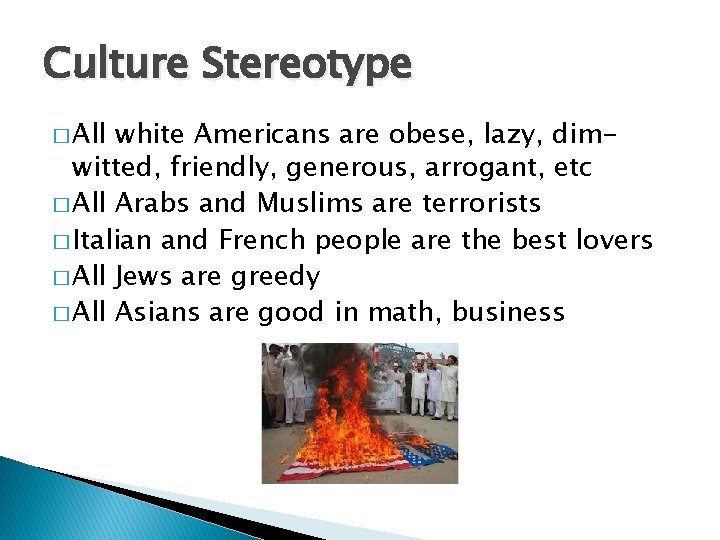
Culture Stereotype � All white Americans are obese, lazy, dimwitted, friendly, generous, arrogant, etc � All Arabs and Muslims are terrorists � Italian and French people are the best lovers � All Jews are greedy � All Asians are good in math, business
Prejudice � Represents the emotional response � The affective component of intergroup attitudes � People create stereotypes to justify ingroup actions towards outgroup. � Example: 1. Justification or ignorance 2. unwillingness to rethink one’s attitudes and behavior 3. Preventing some people entering some fields or activities
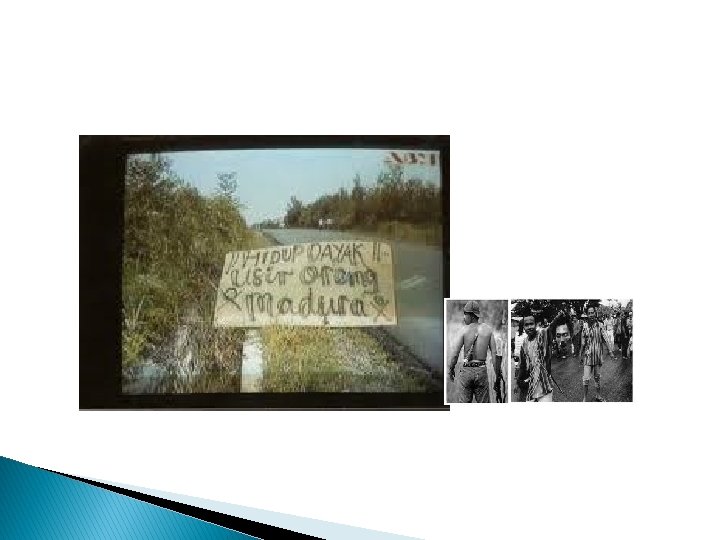
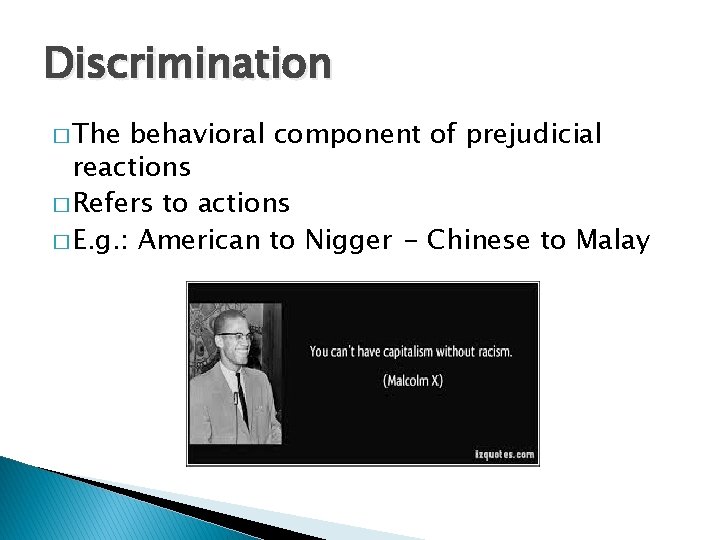
Discrimination � The behavioral component of prejudicial reactions � Refers to actions � E. g. : American to Nigger - Chinese to Malay
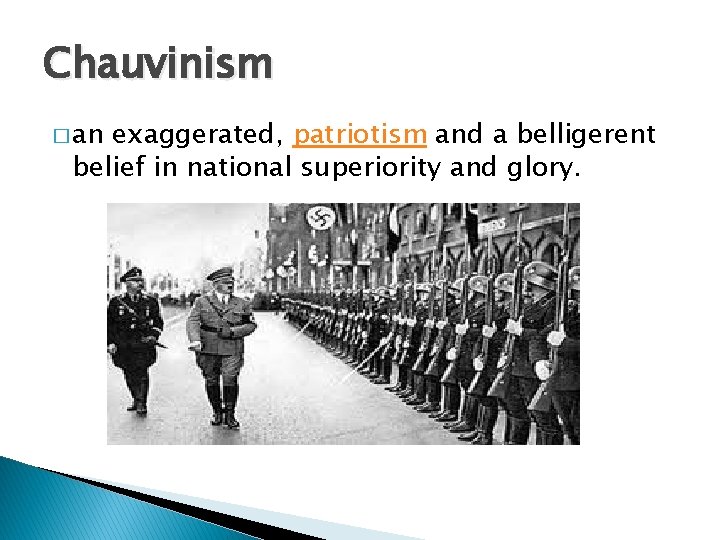
Chauvinism � an exaggerated, patriotism and a belligerent belief in national superiority and glory.
- Slides: 15