
CULTURAL COMPETENCE CULTURAL HUMILITY ARE THEY THE SAME

- Slides: 19
CULTURAL COMPETENCE CULTURAL HUMILITY: ARE THEY THE SAME?
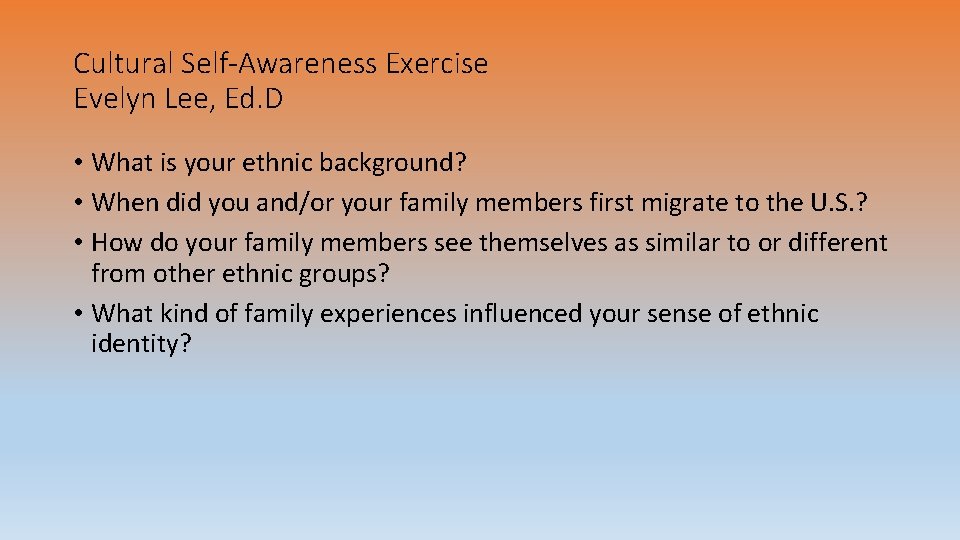
Cultural Self-Awareness Exercise Evelyn Lee, Ed. D • What is your ethnic background? • When did you and/or your family members first migrate to the U. S. ? • How do your family members see themselves as similar to or different from other ethnic groups? • What kind of family experiences influenced your sense of ethnic identity?
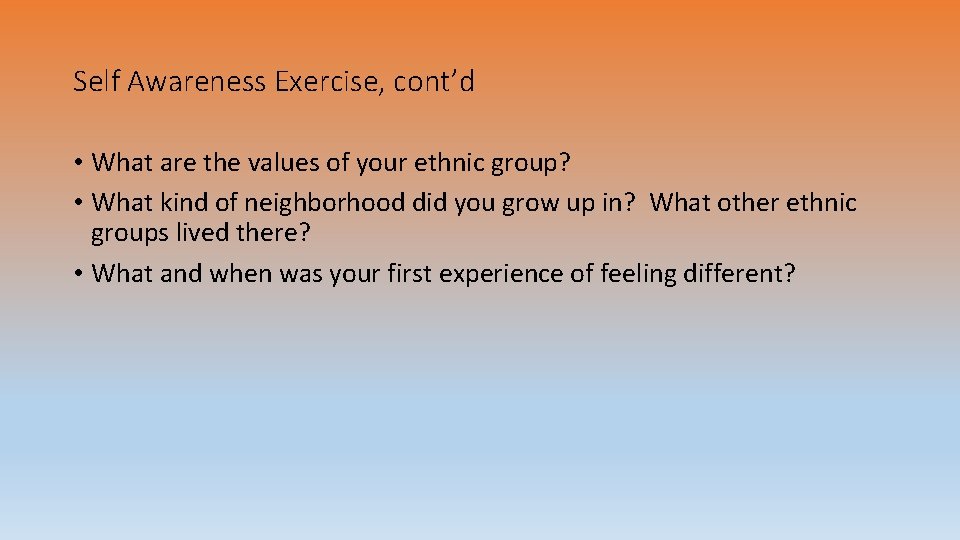
Self Awareness Exercise, cont’d • What are the values of your ethnic group? • What kind of neighborhood did you grow up in? What other ethnic groups lived there? • What and when was your first experience of feeling different?
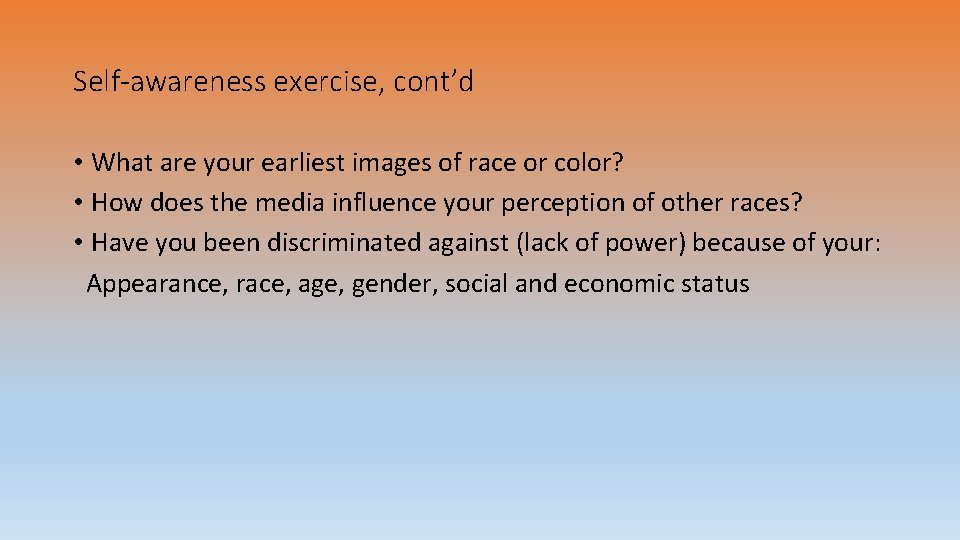
Self-awareness exercise, cont’d • What are your earliest images of race or color? • How does the media influence your perception of other races? • Have you been discriminated against (lack of power) because of your: Appearance, race, age, gender, social and economic status
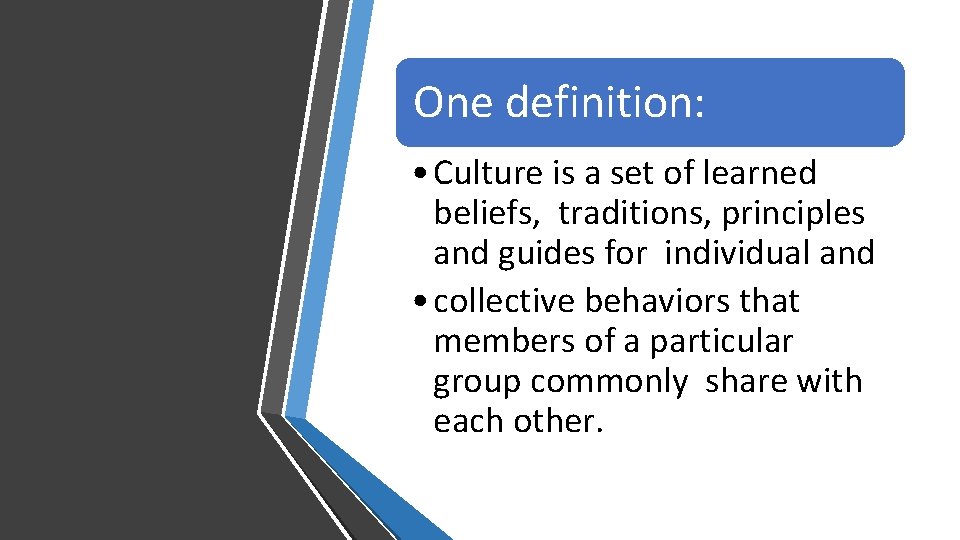
One definition: • Culture is a set of learned beliefs, traditions, principles and guides for individual and • collective behaviors that members of a particular group commonly share with each other.
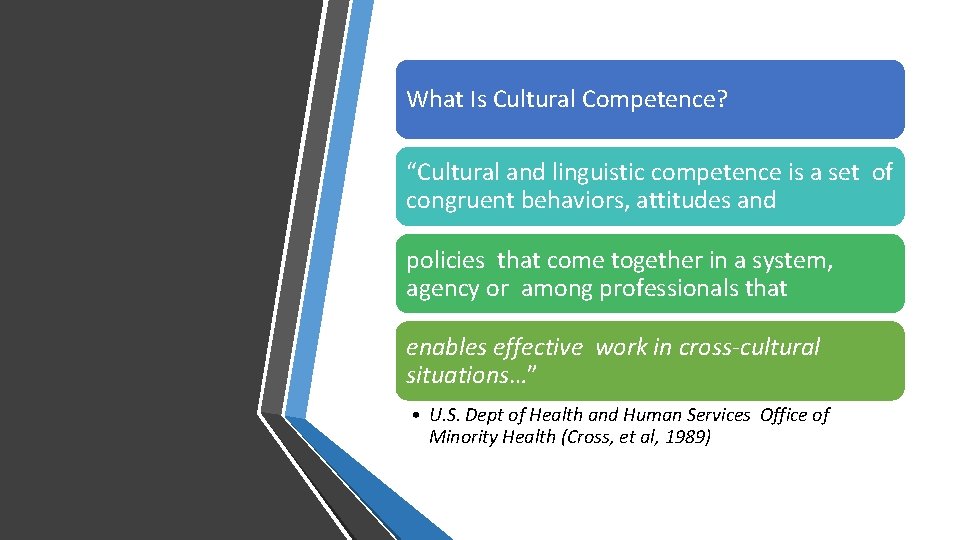
What Is Cultural Competence? “Cultural and linguistic competence is a set of congruent behaviors, attitudes and policies that come together in a system, agency or among professionals that enables effective work in cross-cultural situations…” • U. S. Dept of Health and Human Services Office of Minority Health (Cross, et al, 1989)
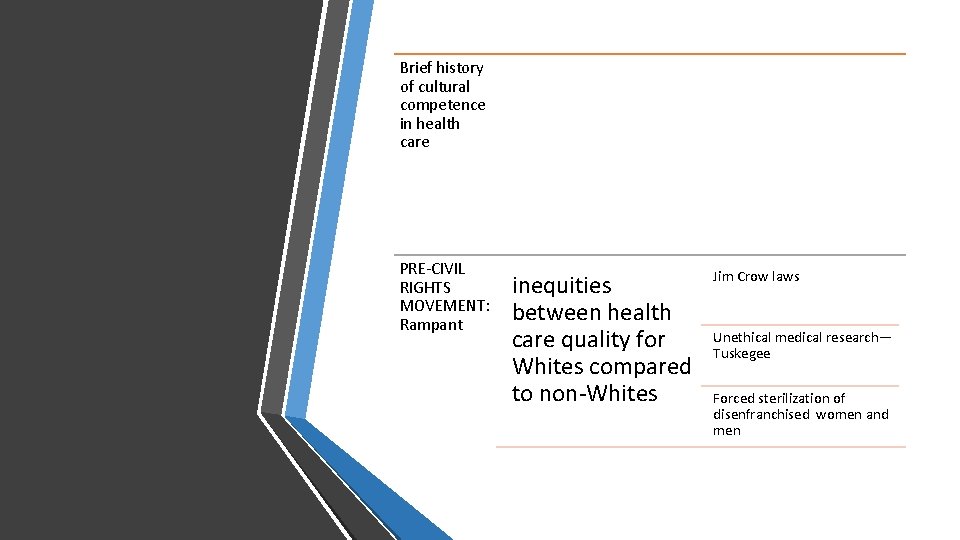
Brief history of cultural competence in health care PRE-CIVIL RIGHTS MOVEMENT: Rampant inequities between health care quality for Whites compared to non-Whites Jim Crow laws Unethical medical research— Tuskegee Forced sterilization of disenfranchised women and men
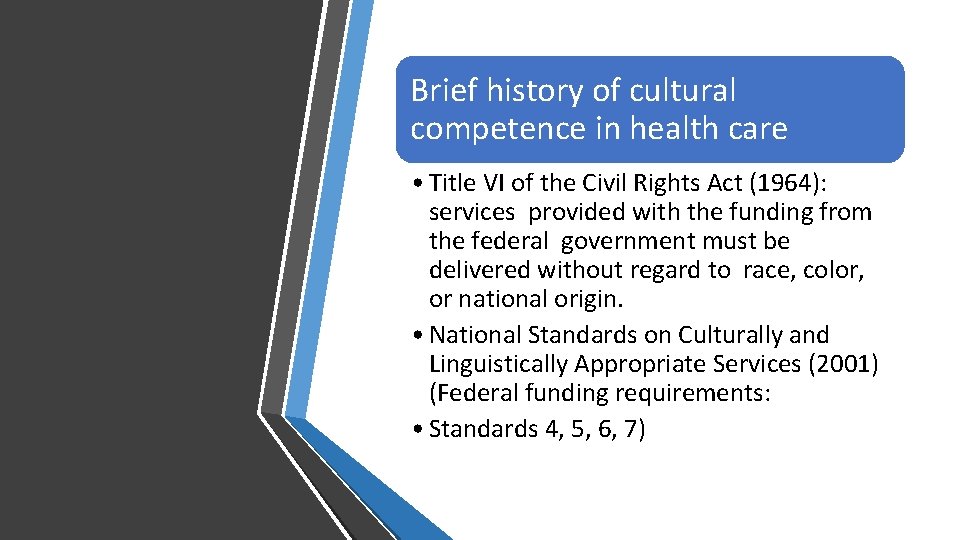
Brief history of cultural competence in health care • Title VI of the Civil Rights Act (1964): services provided with the funding from the federal government must be delivered without regard to race, color, or national origin. • National Standards on Culturally and Linguistically Appropriate Services (2001) (Federal funding requirements: • Standards 4, 5, 6, 7)
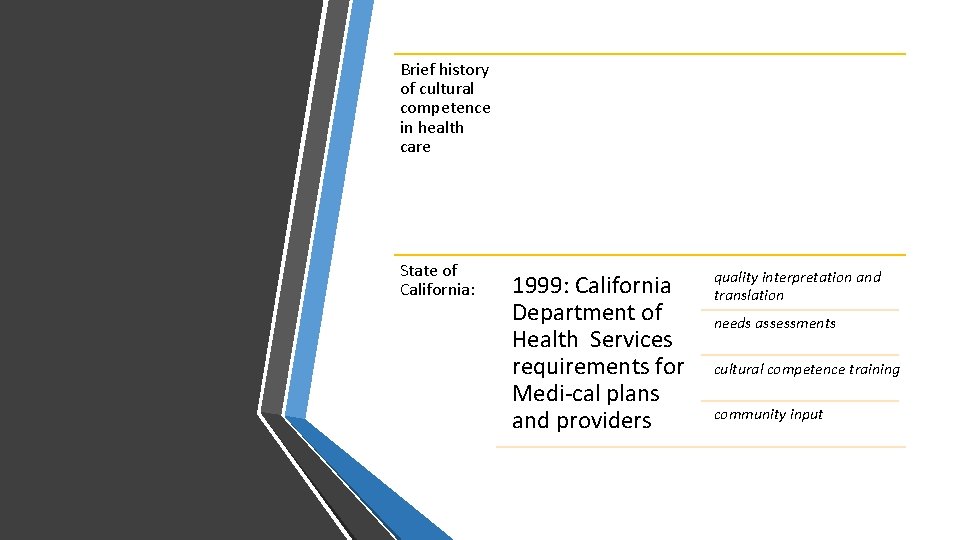
Brief history of cultural competence in health care State of California: 1999: California Department of Health Services requirements for Medi-cal plans and providers quality interpretation and translation needs assessments cultural competence training community input
Cultural Humility Does not require mastery of lists of different cultures and peculiar health beliefs and behaviors. Entails developing a respectful partnership with diverse individuals, groups and communities. • -Drs. Melanie Tervalon and Jan Murray-Garcia
Cultural Humility: Values Openness Appreciation Acceptance Flexibility
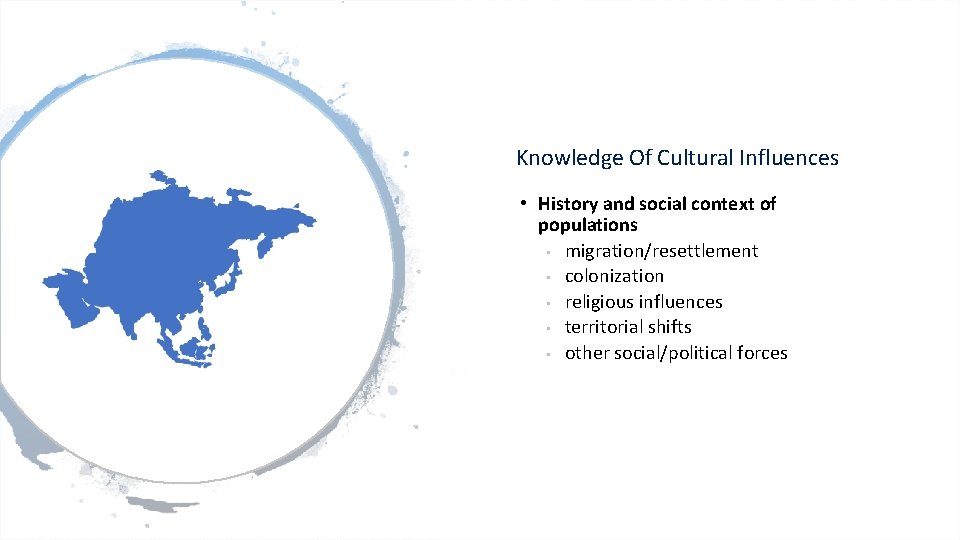
Knowledge Of Cultural Influences • History and social context of populations • migration/resettlement • colonization • religious influences • territorial shifts • other social/political forces
Knowledge Of Cultural Influences Relationships Values and norms Beliefs and attitudes Mental processes and learning Work habits and practices
Tervalon & Murray-Garcia, 1998 Cultural humility is best defined …as a commitment and active engagement in a lifelong process that individuals enter into on an ongoing basis with patients, communities, colleagues, and with themselves…a process that requires humility in how we bring into check the power imbalances that exist in the dynamics of communication.
• • Ability to regularly conduct self-evaluation about how values and beliefs impact worldviews Commitment to continued learning about other cultures Ability to communicate with others who have different language and worldview Capability to translate ways of seeing and behaving from one culture into another
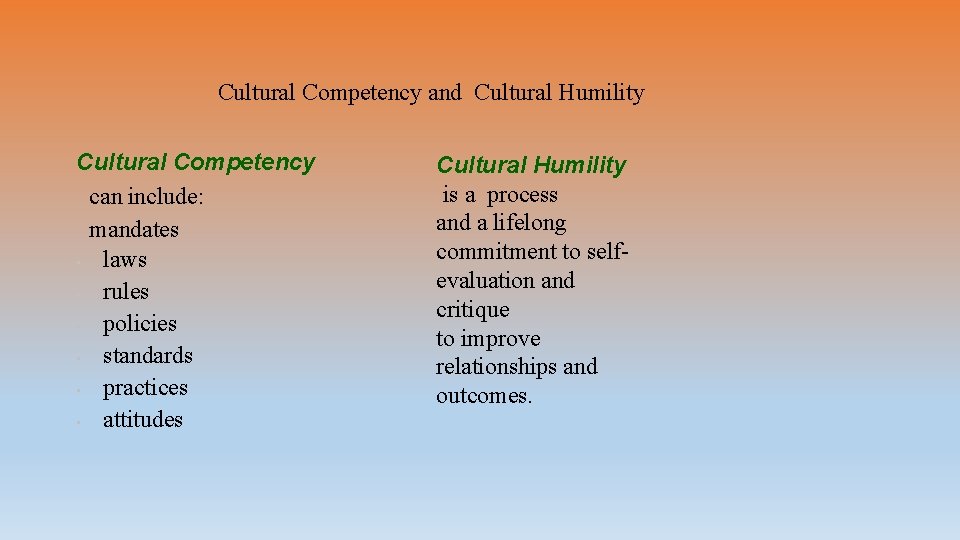
Cultural Competency and Cultural Humility Cultural Competency can include: mandates • laws • rules • policies • standards • practices • attitudes Cultural Humility is a process and a lifelong commitment to selfevaluation and critique to improve relationships and outcomes.
“In just 30 years from now, 40% of Americans will belong to ethnic and cultural groups that are not predominantly European in origin. People who were once considered to be minorities will become emerging majorities…. Professionals devoted to caring for them will need to equip themselves to respond to the major demographic changes we are experiencing. ” 1999 -Department of Health Service 20 years has passed its now 2019…and?
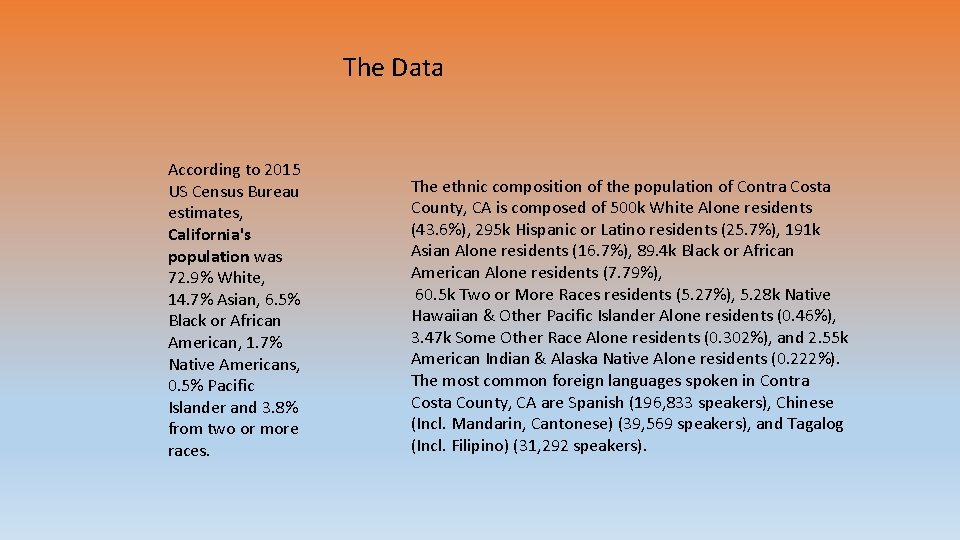
The Data According to 2015 US Census Bureau estimates, California's population was 72. 9% White, 14. 7% Asian, 6. 5% Black or African American, 1. 7% Native Americans, 0. 5% Pacific Islander and 3. 8% from two or more races. The ethnic composition of the population of Contra Costa County, CA is composed of 500 k White Alone residents (43. 6%), 295 k Hispanic or Latino residents (25. 7%), 191 k Asian Alone residents (16. 7%), 89. 4 k Black or African American Alone residents (7. 79%), 60. 5 k Two or More Races residents (5. 27%), 5. 28 k Native Hawaiian & Other Pacific Islander Alone residents (0. 46%), 3. 47 k Some Other Race Alone residents (0. 302%), and 2. 55 k American Indian & Alaska Native Alone residents (0. 222%). The most common foreign languages spoken in Contra Costa County, CA are Spanish (196, 833 speakers), Chinese (Incl. Mandarin, Cantonese) (39, 569 speakers), and Tagalog (Incl. Filipino) (31, 292 speakers).
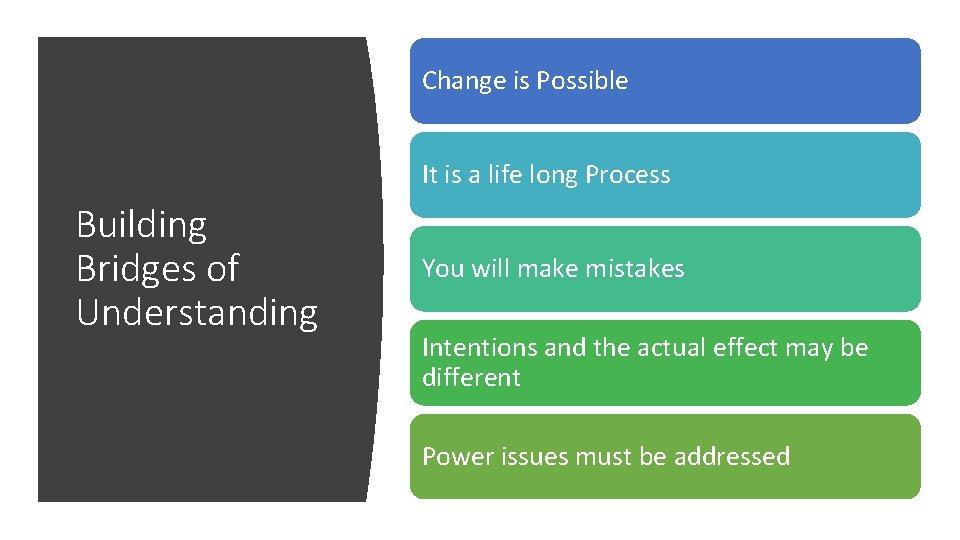
Change is Possible It is a life long Process Building Bridges of Understanding You will make mistakes Intentions and the actual effect may be different Power issues must be addressed