
Cultural Competence CLAS Webinar SeriesPart 3 Midwest Center
Cultural Competence & CLAS Webinar Series-Part 3 Midwest Center for Cultural Competence, LLC & Great Lakes Addiction Technology Transfer Center/NIATx August 8, 2018
Learning Objectives To understand… how to create a cultural and linguistic competence action plan. how to successfully move along the cultural competence continuum. how the CLAS assessment tool can change service delivery.
Cultural and Linguistic Competence: Action Planning (1)
Cultural and Linguistic Competence: Action Planning Continued… (2)
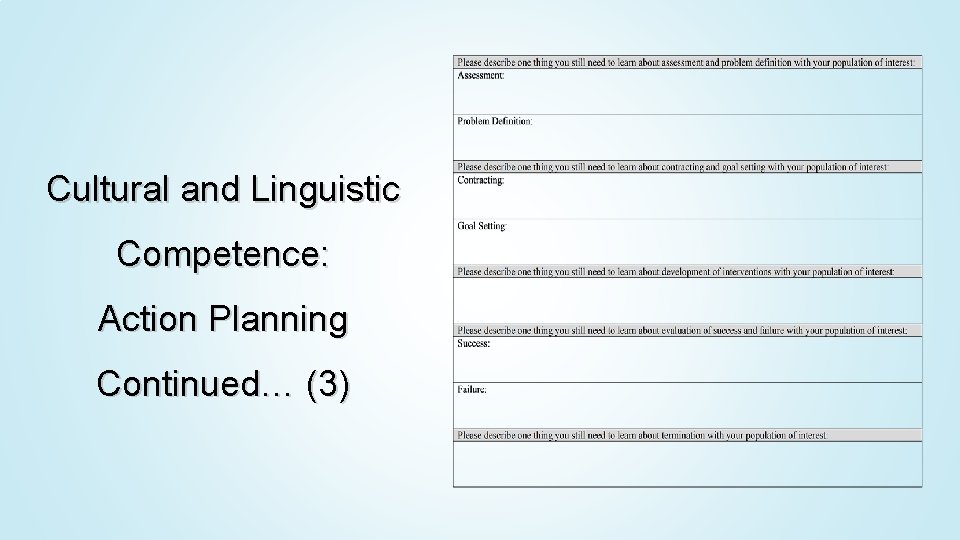
Cultural and Linguistic Competence: Action Planning Continued… (3)
Reflection How can you use the information from the action plan in your counseling practice? What would incorporating cultural competence in your practice look like?
What is a Culturally Competent Organization? Understanding Responsiveness Agency wide
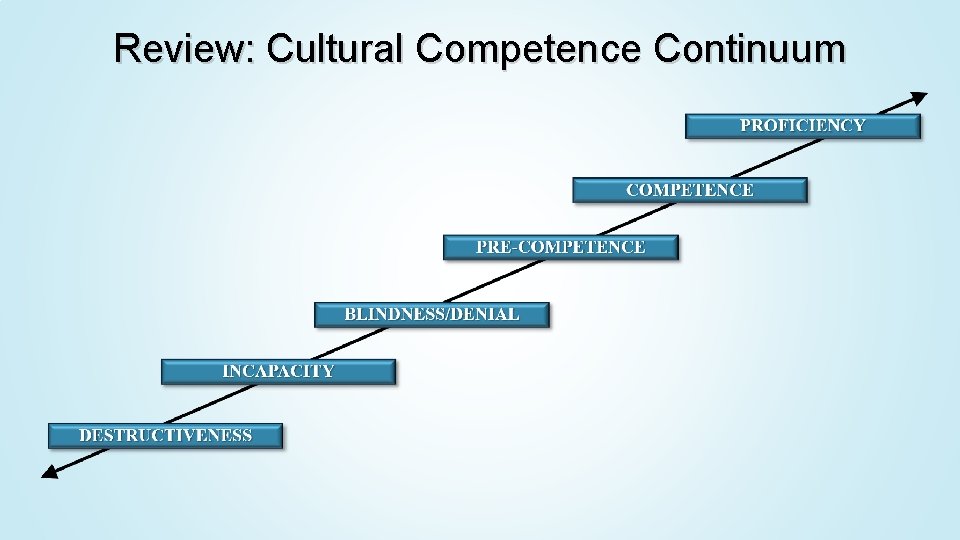
Review: Cultural Competence Continuum
Successful Movement Along the Continuum Progress does not happen by chance Change agents and change teams Change pre-crisis Integration Behavioral response Responding to culture and difference Identifying where we are on the continuum Movement along continuum
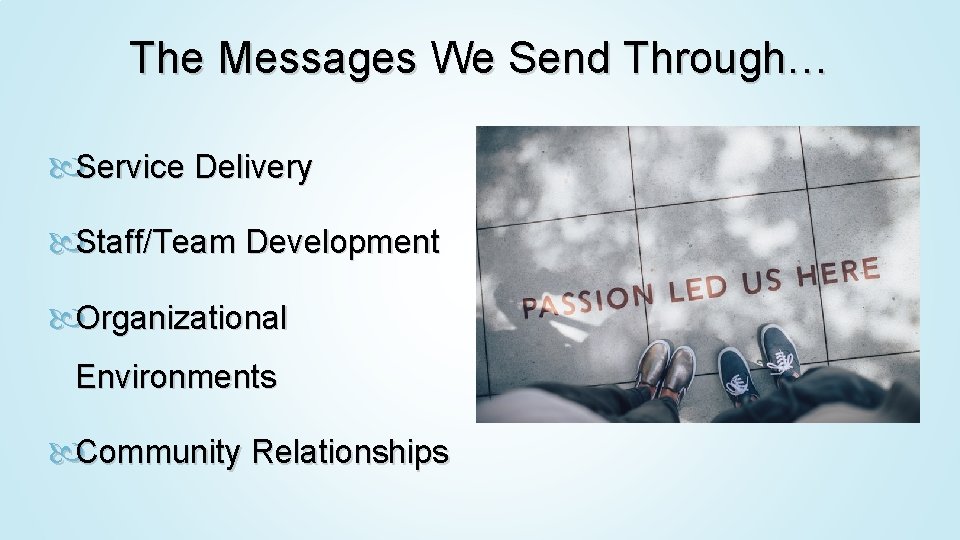
The Messages We Send Through… Service Delivery Staff/Team Development Organizational Environments Community Relationships
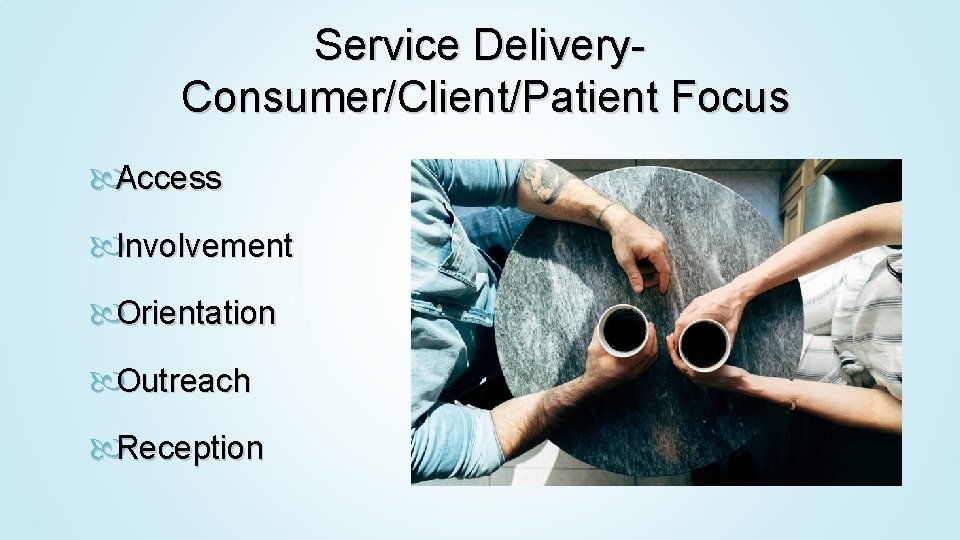
Service Delivery. Consumer/Client/Patient Focus Access Involvement Orientation Outreach Reception
Service Delivery - Documentation Recruitment PR materials Enrollment Direct Service Materials
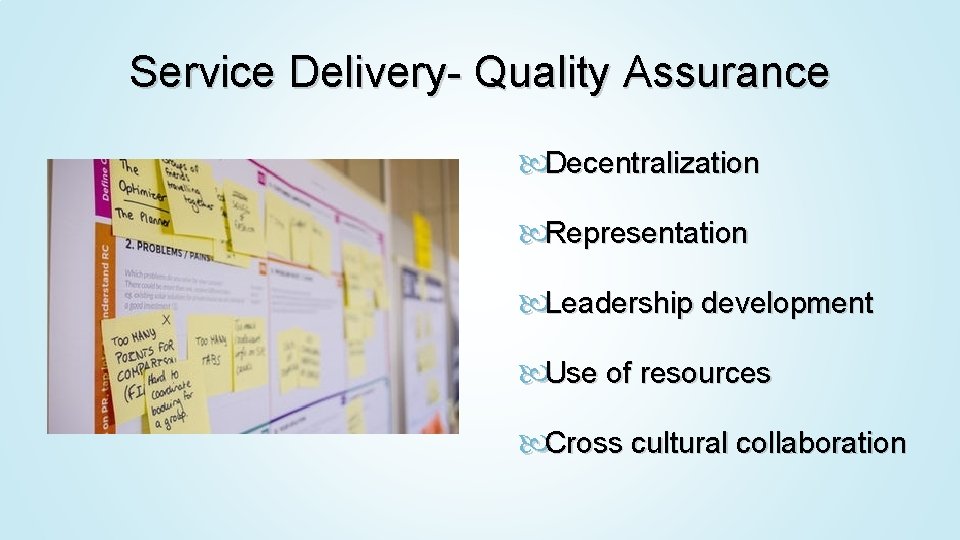
Service Delivery- Quality Assurance Decentralization Representation Leadership development Use of resources Cross cultural collaboration
Staff/Team Development- Recruitment Selection criteria Hiring Language/cultural skill Quality assurance
Staff/Team Development. Compensation & Benefits Pay structure Compensation Performance Personnel policies
Staff/Team Development and Retention Mentoring/support Conflict resolution processes Empowerment Reflective supervision/practice Personal development Removing barriers Training opportunities Supporting success! Performance reviews/accountability
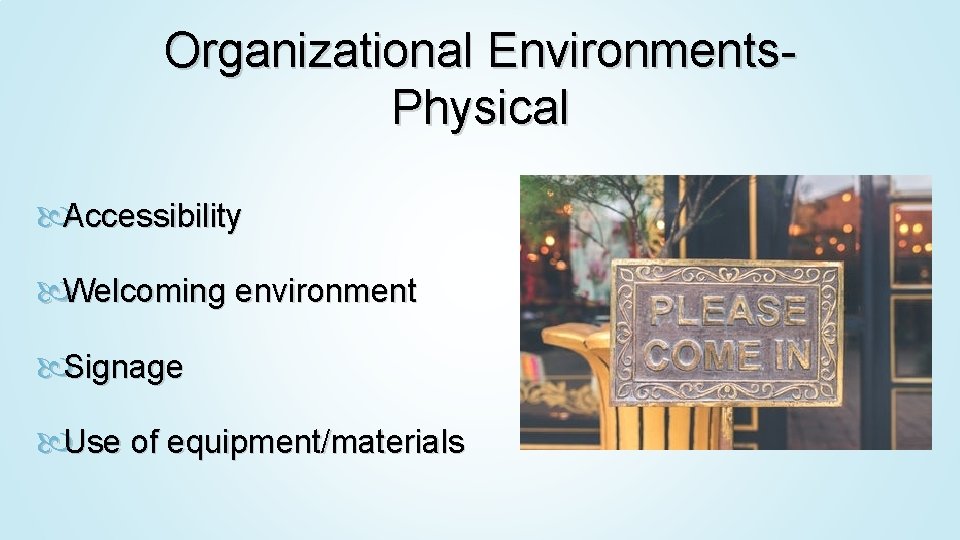
Organizational Environments. Physical Accessibility Welcoming environment Signage Use of equipment/materials
Organizational Environments- Communication Language ability Vision and values Communication Shared language Cultural knowledge
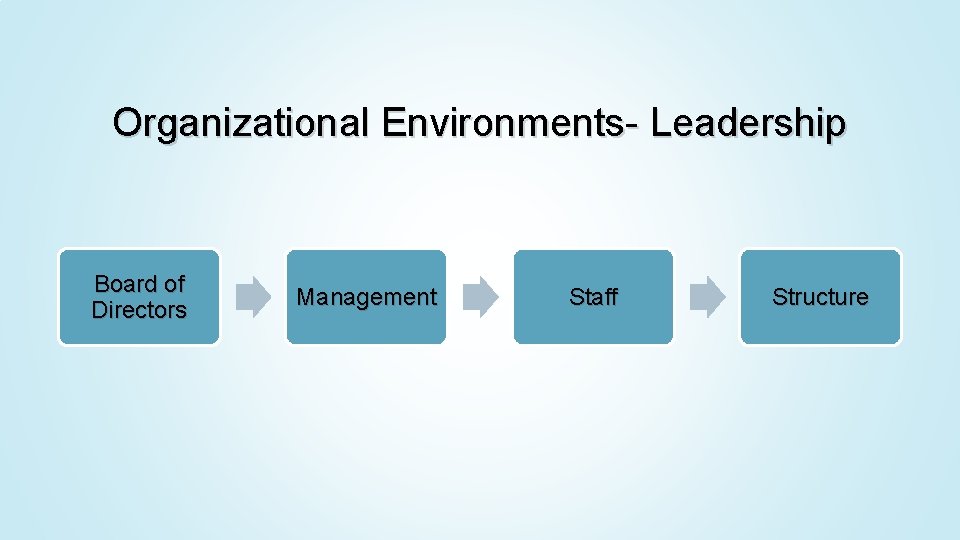
Organizational Environments- Leadership Board of Directors Management Staff Structure
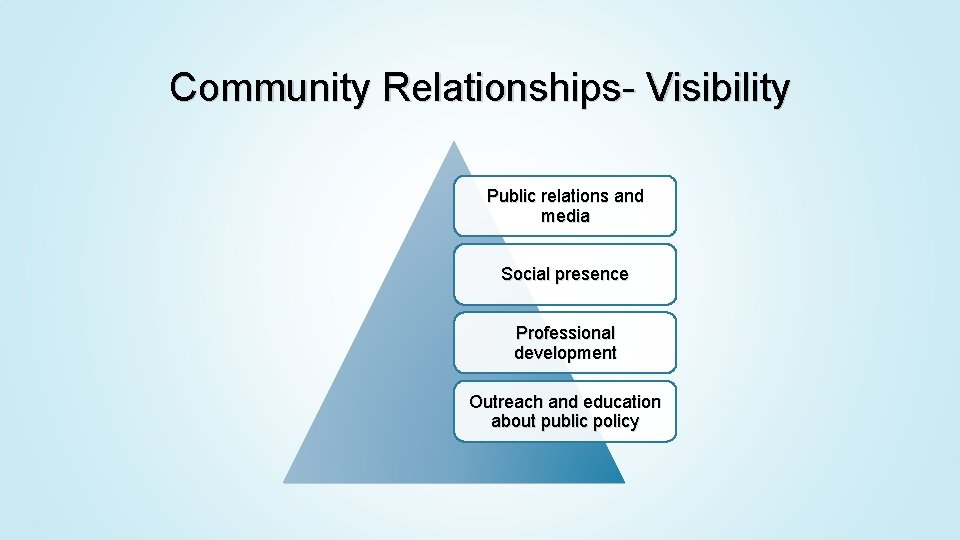
Community Relationships- Visibility Public relations and media Social presence Professional development Outreach and education about public policy
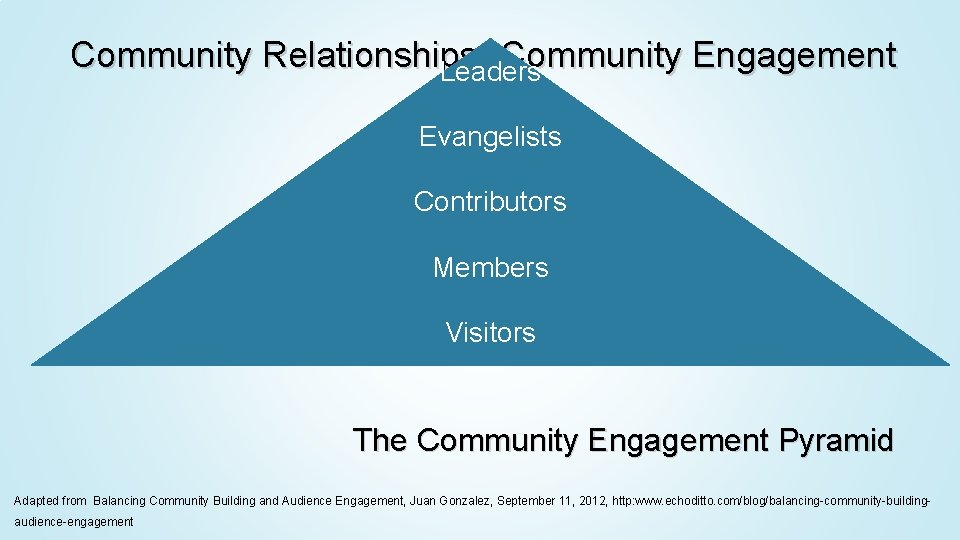
Community Relationships. Community Engagement Leaders Evangelists Contributors Members Visitors The Community Engagement Pyramid Adapted from Balancing Community Building and Audience Engagement, Juan Gonzalez, September 11, 2012, http: www. echoditto. com/blog/balancing-community-buildingaudience-engagement
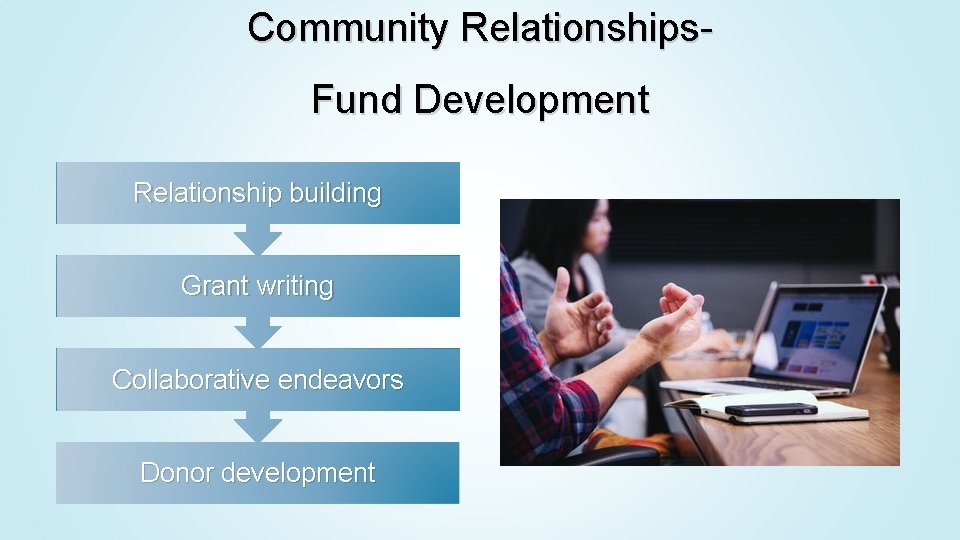
Community Relationships. Fund Development Relationship building Grant writing Collaborative endeavors Donor development
Characteristics of a Culturally Competent Agency (1) Acceptance and respect Attention paid Cultural self assessment Cultural groups Hiring diversity
Characteristics of a Culturally Competent Agency (2) Clear expectations Continuous expansion Support to staff Policies
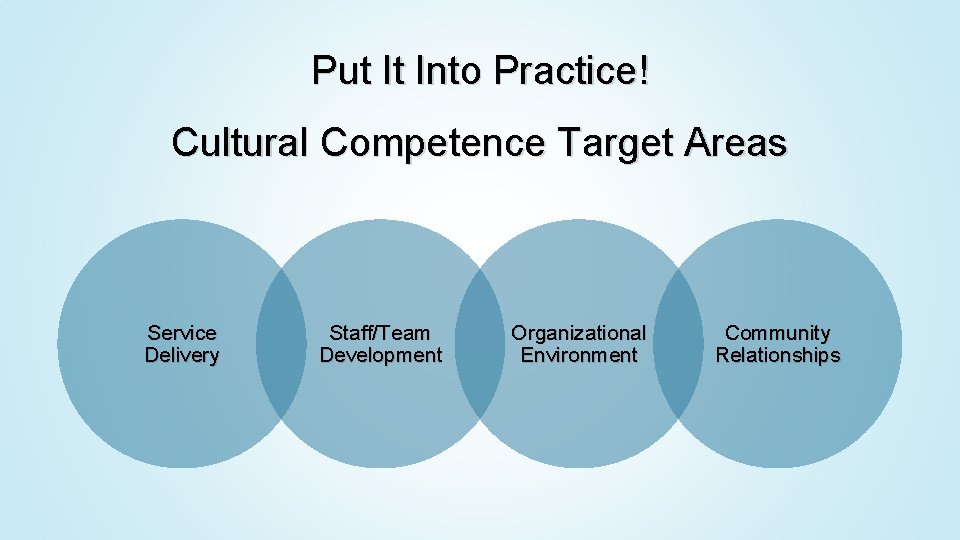
Put It Into Practice! Cultural Competence Target Areas Service Delivery Staff/Team Development Organizational Environment Community Relationships

CLAS Self Assessment Tool Pages 1 & 2 of 3
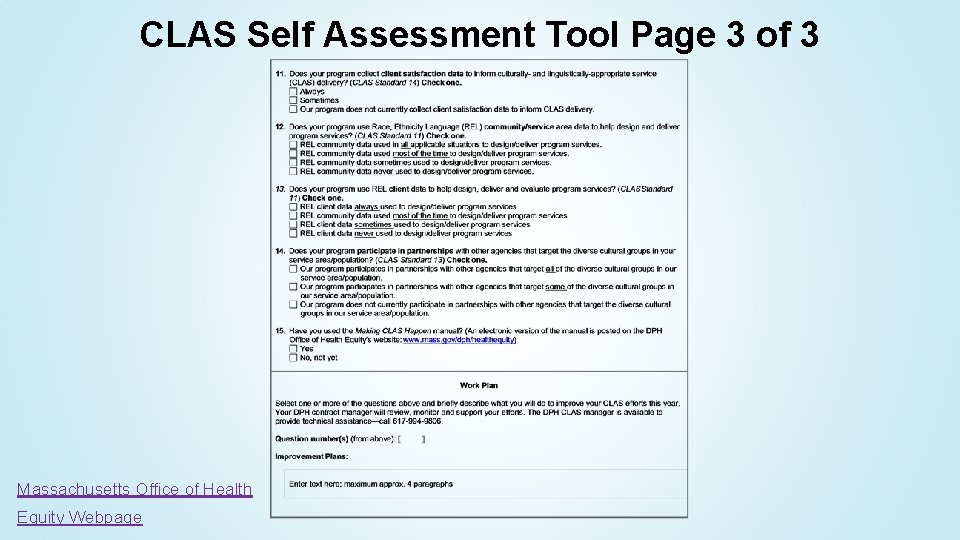
CLAS Self Assessment Tool Page 3 of 3 Massachusetts Office of Health Equity Webpage
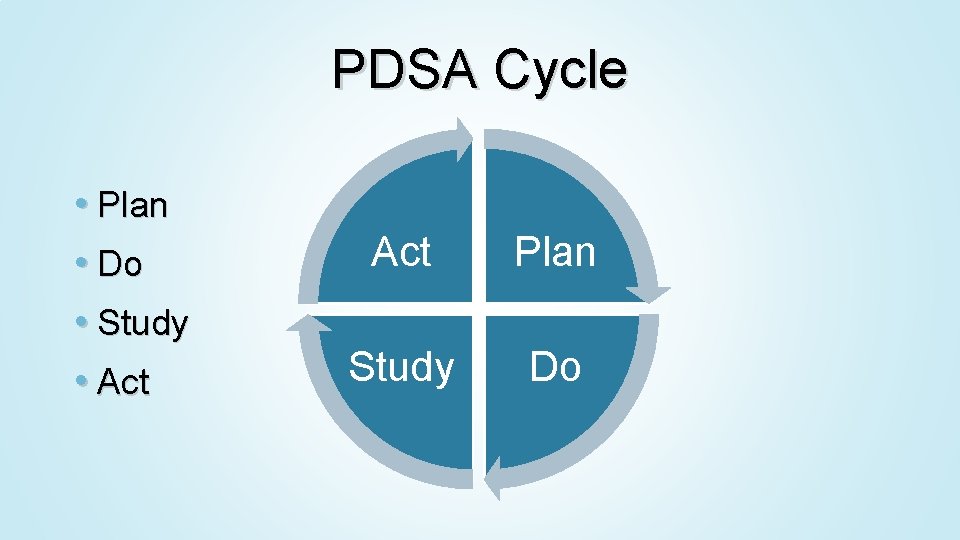
PDSA Cycle • Plan • Do • Study • Act Plan Study Do
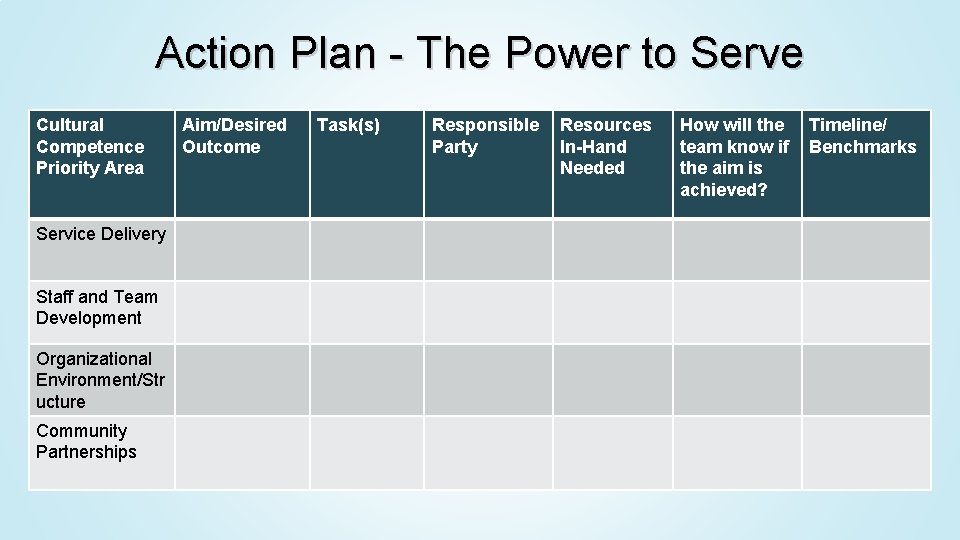
Action Plan - The Power to Serve Cultural Competence Priority Area Service Delivery Staff and Team Development Organizational Environment/Str ucture Community Partnerships Aim/Desired Outcome Task(s) Responsible Party Resources In-Hand Needed How will the team know if the aim is achieved? Timeline/ Benchmarks
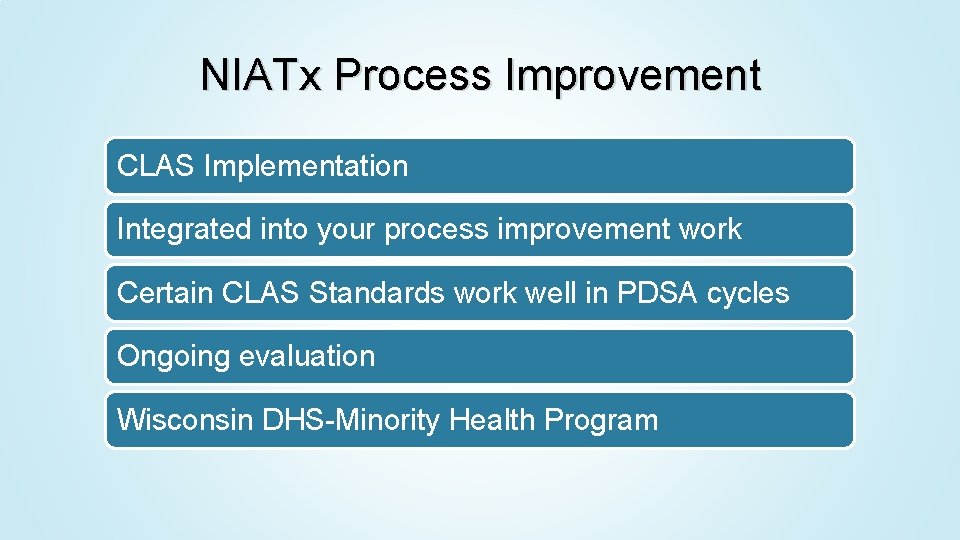
NIATx Process Improvement CLAS Implementation Integrated into your process improvement work Certain CLAS Standards work well in PDSA cycles Ongoing evaluation Wisconsin DHS-Minority Health Program
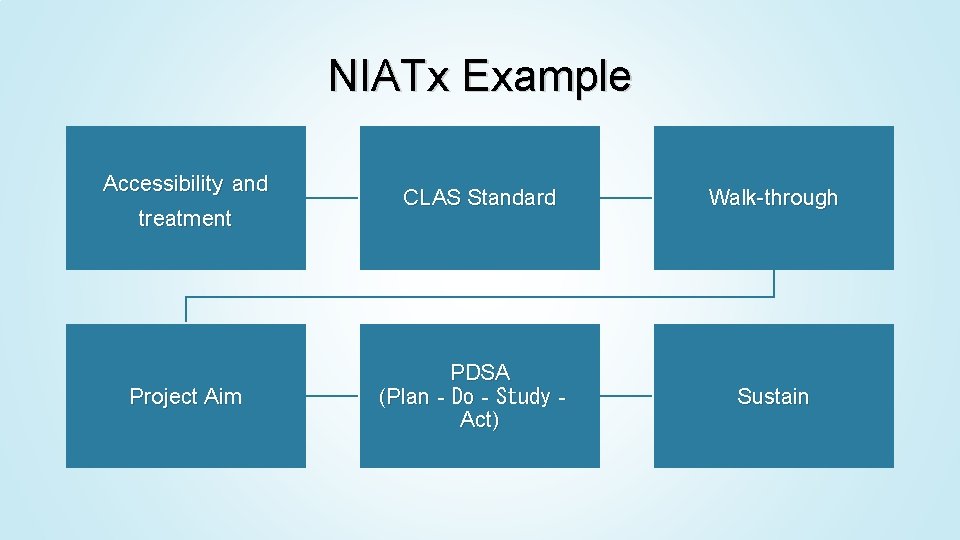
NIATx Example Accessibility and treatment Project Aim CLAS Standard Walk-through PDSA (Plan‐Do‐Study‐ Act) Sustain
Nominal Group Technique Culturally & Linguistically Appropriate Services Discussion Questions from the Self-Study materials: 1) What do well? 2) What could we do better? 3) What would we like to change?
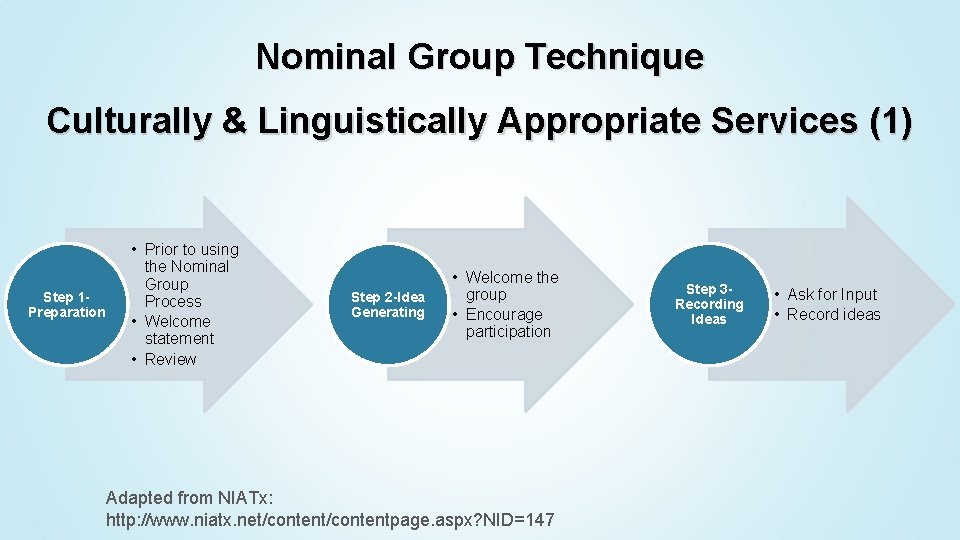
Nominal Group Technique Culturally & Linguistically Appropriate Services (1) Step 1 Preparation • Prior to using the Nominal Group Process • Welcome statement • Review Step 2 -Idea Generating • Welcome the group • Encourage participation Adapted from NIATx: http: //www. niatx. net/contentpage. aspx? NID=147 Step 3 Recording Ideas • Ask for Input • Record ideas
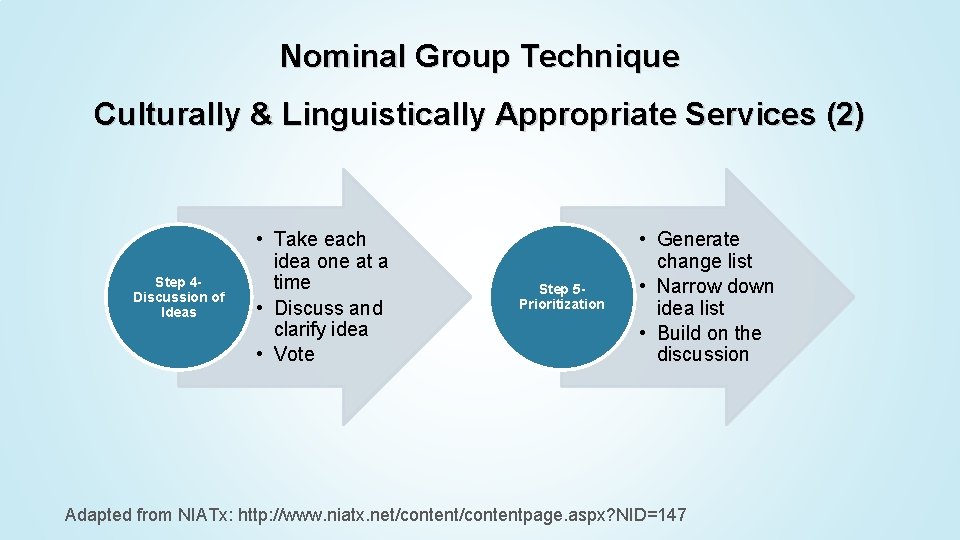
Nominal Group Technique Culturally & Linguistically Appropriate Services (2) Step 4 Discussion of Ideas • Take each idea one at a time • Discuss and clarify idea • Vote Step 5 Prioritization • Generate change list • Narrow down idea list • Build on the discussion Adapted from NIATx: http: //www. niatx. net/contentpage. aspx? NID=147
Questions? Comments? Harold Gates, MSSW, CISW, HS-BCP Midwest Center for Cultural Competence, LLC haroldgates@charter. net
Resources National CLAS Standards Community Engagement Pyramid, Adapted from Balancing Community Building and Audience Engagement, Juan Gonzalez, September 11, 2012 CLAS Assessment Tool Cultural and Linguistic Competence Action Plan, Midwest Center for Cultural Competence LLC
- Slides: 36