
Cultural and Linguistic Health Literacy Needs of Floridas
- Slides: 40
Cultural and Linguistic Health Literacy Needs of Florida’s Multicultural Population Florida Health Literacy Summit January 20, 2017 Laura K. Guyer, Ph. D, MEd, RDN
Instructional Goals 1. Explore the changing demographic, social and political landscape in the U. S. and Florida. 2. Describe the role of cultural and linguistic factors in health literacy. 3. Explain why a multicultural health professions workforce can effectively meet the cultural and linguistic health literacy needs of a multicultural population. 4. Propose strategies to increase diversity in the health professions.
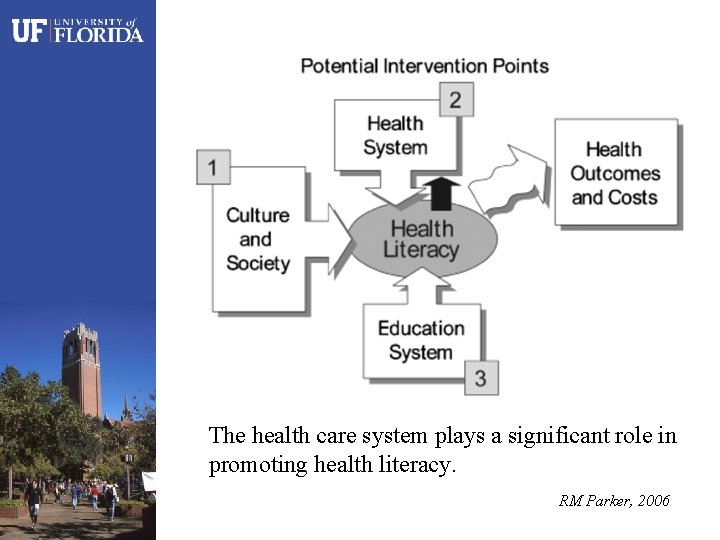
Health Literacy No standard definition. 2003 NAAL reported 88% adults do NOT have proficient health literacy The goal of health literacy is to “. . . understand basic health information and services to make appropriate health decisions. . . ’’ Health literacy is ‘‘based on the interaction of the individual’s skills with health contexts. . . the health care system, the education system, and broad social and cultural factors at home, at work, and in the community. ” IOM, 2004
The health care system plays a significant role in promoting health literacy. RM Parker, 2006
What is Culture? “Culture” is the totality of socially transmitted behavioral patterns, beliefs, attitudes, values and customs. It guides the worldview and decision-making of a population of people. Dictionary. com, 2015
Culture is explained by membership in racial, ethnic and linguistic groups, as well as by geographical, religious and spiritual, biological and sociological characteristics. USDHHS, Office of Minority Health There is a culture of medicine.
Culture, Health & Illness Culture takes a prominent role that must be understood and respected • Defines health and illness • Explains reason(s) for disease • Determines health practices • Determines who is involved in care and their roles/responsibilities
Explanatory Models of Illness Explanatory models of illness form around cultural health beliefs and practices. Experience (short and long term) with illness influences health behaviors. What do you do when you are starting to feel sick? Why? What do you do when you do NOT feel sick?
Health professionals focus on the experience of disease – symptoms, diagnostics. Patients focus on the experience of illness – impact on relationships, lifestyle. When the explanatory model of health professionals differs from the explanatory model of patients – we often label the outcome as patient “non-adherence” or “non-compliance. ” Ventriglio, Torales, Bhugra, 2016
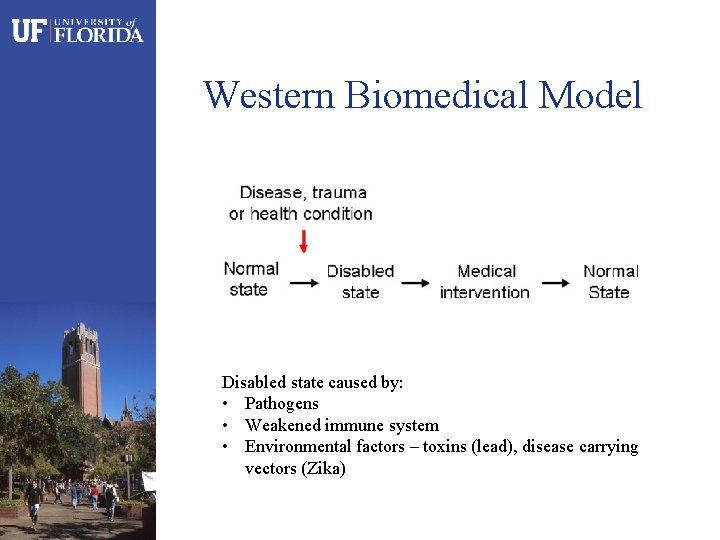
Western Biomedical Model Disabled state caused by: • Pathogens • Weakened immune system • Environmental factors – toxins (lead), disease carrying vectors (Zika)
Principles Disease results from natural, physical scientific phenomena. Little emphasis on spiritual, relational or emotional dimensions of health. Physicians advocate medical treatments to combat microorganisms; use sophisticated technology to diagnose and treat disease By taking positive health-related actions, negative health conditions can be avoided. Wade & Halligan, 2004
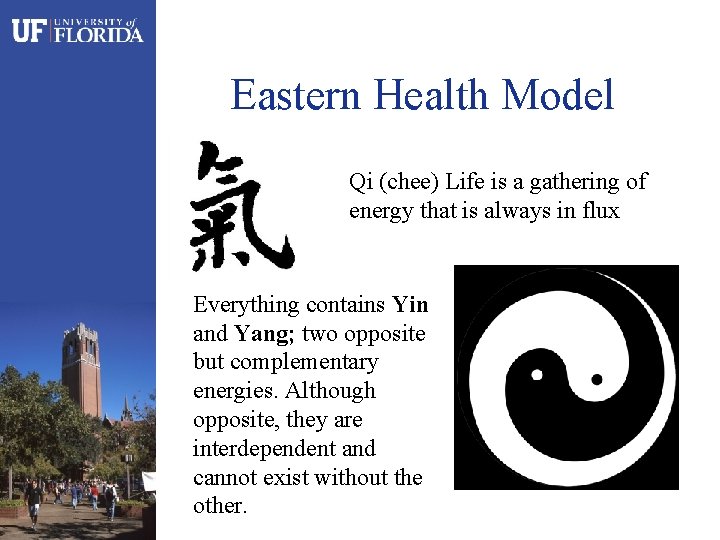
Eastern Health Model Qi (chee) Life is a gathering of energy that is always in flux Everything contains Yin and Yang; two opposite but complementary energies. Although opposite, they are interdependent and cannot exist without the other.
Assumes that the body is whole and each part of is intimately connected. Each organ has a mental and physical function. Health is the state of balance between the physical, social and super-natural environment.
Culture and Health Literacy Do non-adherent patients have low health literacy or do they understand treat disease differently? Cultural beliefs contribute to ability to understand follow provider recommendations. Cultural differences influence perceptions of symptoms.
Many chronic diseases (diabetes, hypertension) have periods when patients are asymptomatic. Is the absence of symptoms = healthy? Shaw, et al, 2008.
From the field. . . 2 examples: 1. Haitian patient with diabetes and gangrene. 2. Rural African American man with diabetes and poorly managed A 1 c’s at risk for bilateral amputation.
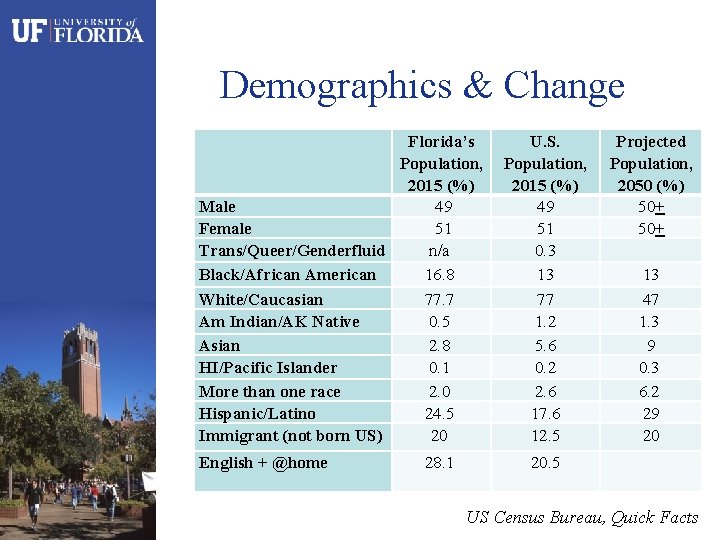
Demographics & Change Florida’s U. S. Population, 2015 (%) Male 49 49 Female 51 51 Trans/Queer/Genderfluid n/a 0. 3 Black/African American 16. 8 13 White/Caucasian 77. 7 77 Am Indian/AK Native 0. 5 1. 2 Asian 2. 8 5. 6 HI/Pacific Islander 0. 1 0. 2 More than one race 2. 0 2. 6 Hispanic/Latino 24. 5 17. 6 Immigrant (not born US) 20 12. 5 English + @home 28. 1 20. 5 Projected Population, 2050 (%) 50+ 13 47 1. 3 9 0. 3 6. 2 29 20 US Census Bureau, Quick Facts
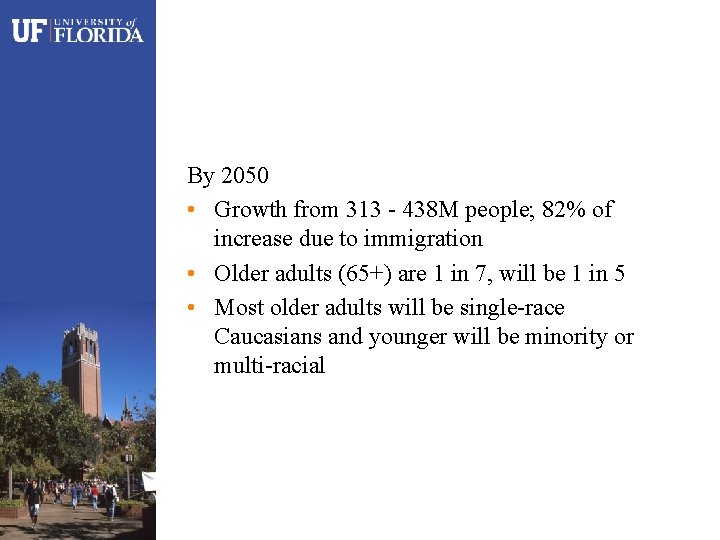
By 2050 • Growth from 313 - 438 M people; 82% of increase due to immigration • Older adults (65+) are 1 in 7, will be 1 in 5 • Most older adults will be single-race Caucasians and younger will be minority or multi-racial
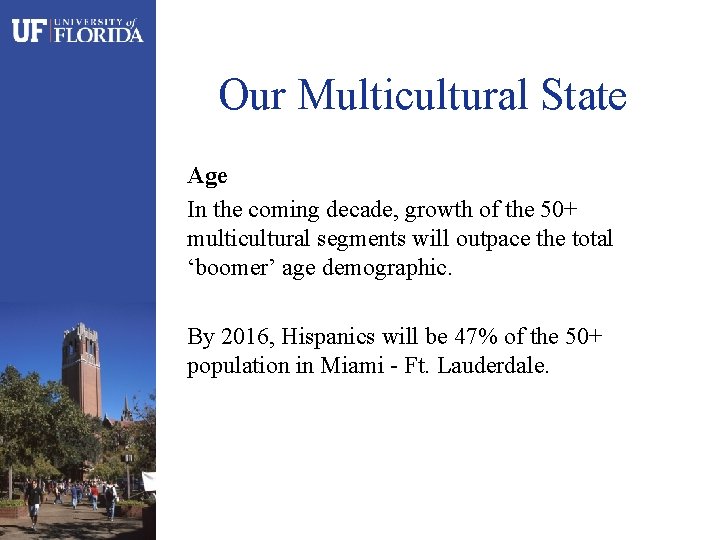
Our Multicultural State Age In the coming decade, growth of the 50+ multicultural segments will outpace the total ‘boomer’ age demographic. By 2016, Hispanics will be 47% of the 50+ population in Miami - Ft. Lauderdale.
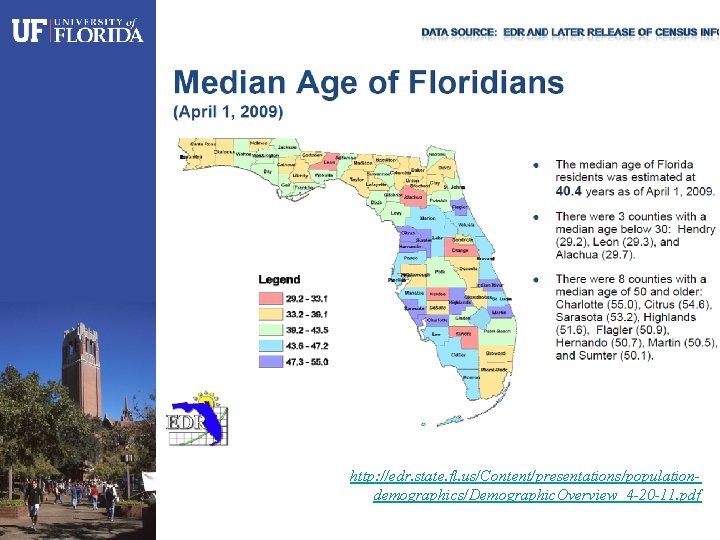
http: //edr. state. fl. us/Content/presentations/populationdemographics/Demographic. Overview_4 -20 -11. pdf
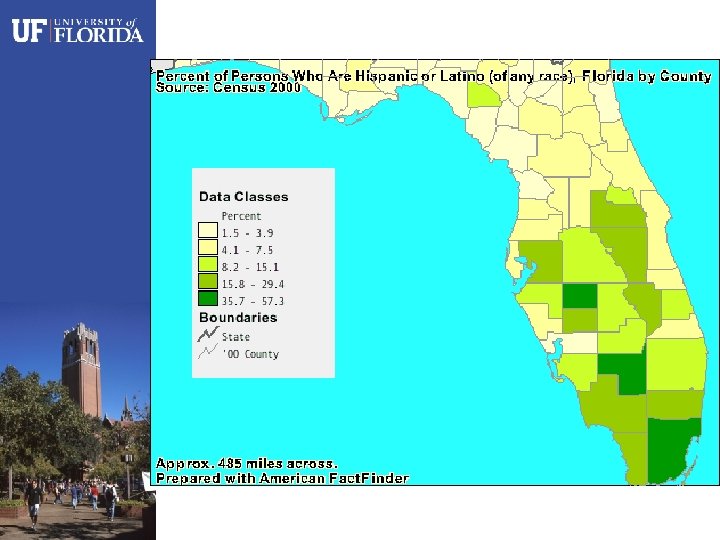
Race/ethnicity Two-thirds of Florida’s three main multicultural populations reside in Miami, Orlando and Tampa combined. The Miami-Ft. Lauderdale metropolitan area has the largest population of Hispanic/Latino and African-American/Black residents. As a metropolitan area, Orlando has the largest Asian population. http: //assets. aarp. org/rgcenter/general/Multicultu ral-Engagement-Florida-Fact-Sheet-AARP. pdf
The Triple Threats Low health literacy, cultural barriers and limited English proficiency (LEP) are the “triple threats” to effective health communication. Health literacy is a new construct. Roles of culture and language have not been well investigated. Literacy assessments and tools to evaluate written materials are designed for English-speakers.
Knowing a patient’s language and culture is a starting point for estimating health literacy in a given situation. When literacy skills are poor, health literacy will almost always be compromised. Many minorities and immigrants have LEP. When health literacy is low, health may be in jeopardy. Singleton & Krause, 2009
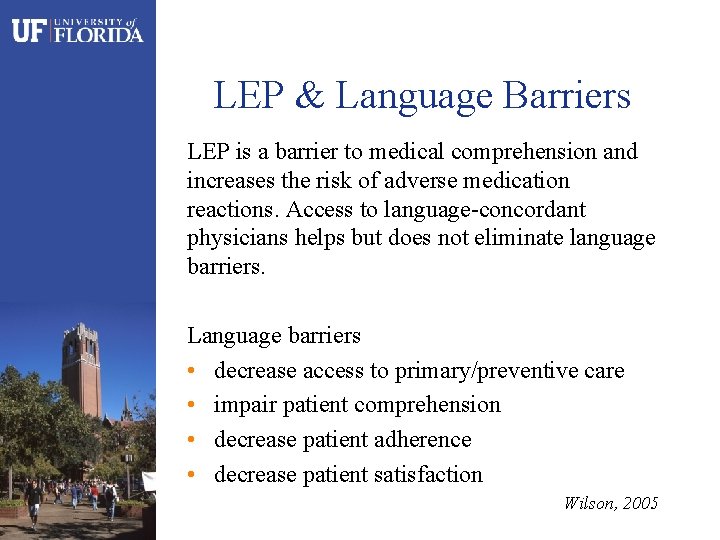
LEP & Language Barriers LEP is a barrier to medical comprehension and increases the risk of adverse medication reactions. Access to language-concordant physicians helps but does not eliminate language barriers. Language barriers • decrease access to primary/preventive care • impair patient comprehension • decrease patient adherence • decrease patient satisfaction Wilson, 2005
From the field. . . Two examples: 1. You have a clot in your brain. . . 2. Take once daily. . .
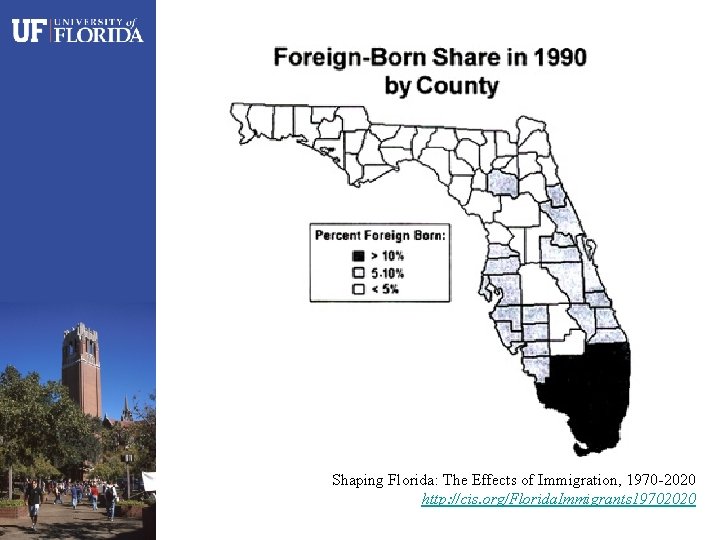
Shaping Florida: The Effects of Immigration, 1970 -2020 http: //cis. org/Florida. Immigrants 19702020
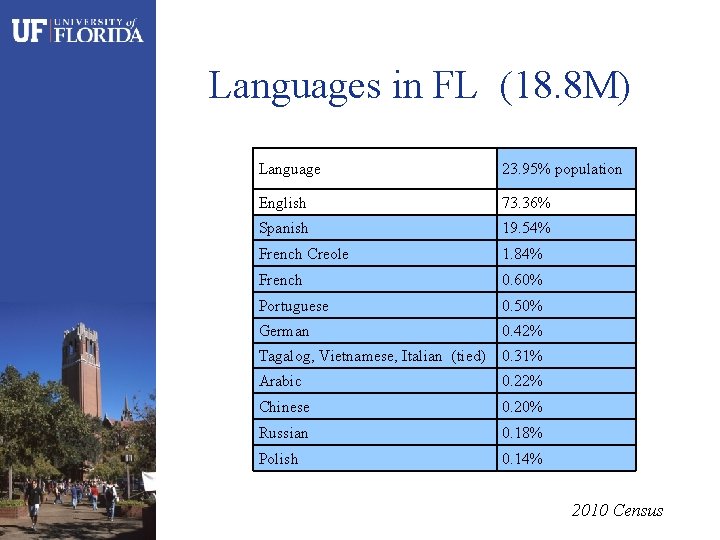
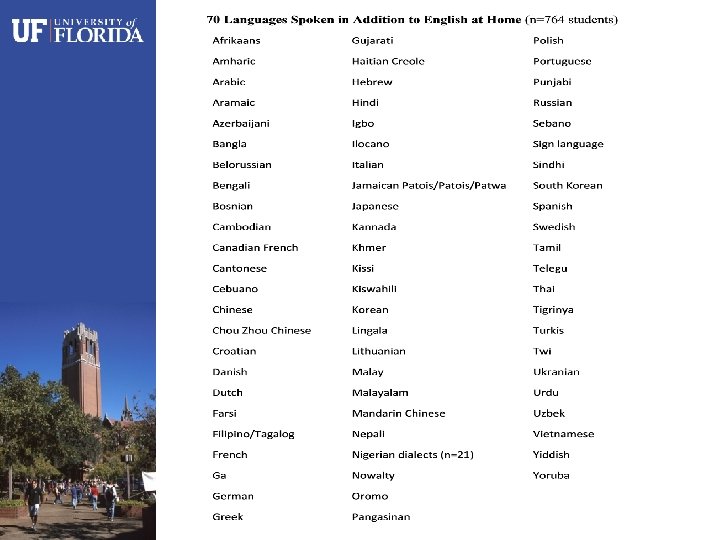
Languages in FL (18. 8 M) Language 23. 95% population English 73. 36% Spanish 19. 54% French Creole 1. 84% French 0. 60% Portuguese 0. 50% German 0. 42% Tagalog, Vietnamese, Italian (tied) 0. 31% Arabic 0. 22% Chinese 0. 20% Russian 0. 18% Polish 0. 14% 2010 Census
Strategies for Overcoming Cultural and Linguistic Barriers to Health Literacy
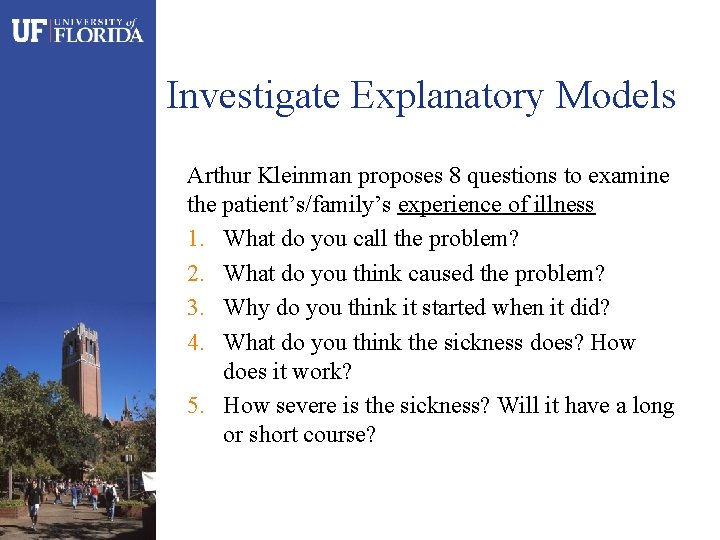
Investigate Explanatory Models Arthur Kleinman proposes 8 questions to examine the patient’s/family’s experience of illness 1. What do you call the problem? 2. What do you think caused the problem? 3. Why do you think it started when it did? 4. What do you think the sickness does? How does it work? 5. How severe is the sickness? Will it have a long or short course?
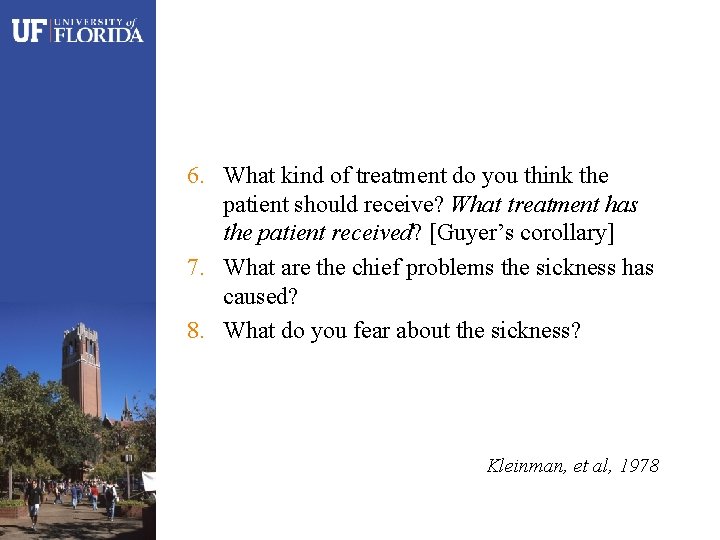
6. What kind of treatment do you think the patient should receive? What treatment has the patient received? [Guyer’s corollary] 7. What are the chief problems the sickness has caused? 8. What do you fear about the sickness? Kleinman, et al, 1978
Reducing Language Barriers Failure to provide access to language services is violation of civil rights (1964 Civil Rights Act) In 2000, Executive Order 13166, "Improving Access to Services for Persons with Limited English Proficiency. " Requires Federal agencies to examine the services provided, identify need for LEP services and develop and implement a system to provide services so LEP persons can have meaningful access.
Section 1577 ACA enhances language assistance for people with limited English proficiency and helps to ensure effective communication for individuals with disabilities.
Joint Commission revised Requirement HR. 01. 02. 01 which addressed hospital's responsibility to establish and verify staff qualifications used to support the care and treatment provided as an institution [language proficiency is one qualification] Need to increase use of trained medical interpreters
UF’s Solution Developed an undergraduate minor, Health Disparities in Society, to prepare a qualified multicultural workforce. Students represent all dimensions of diversity: race, ethnicity, language, gender identity, sexual orientation, religion, disability, geography. A better match between health professionals and the population served promotes health equity and social justice.
Questions? Thanks for your participation!
References 1. Institute of Medicine. Health Literacy: A Prescription to End Confusion. Washington, DC: National Academies Press; 2004. 2. RM Parker, DA Kindig. (2006). Beyond the Institute of Medicine Health Literacy Report: Are the Recommendations Being Taken Seriously? J Gen Intern Med. 21: 891 -892. 3. DT Wade, PW Halligan. (2004). Do Biomedical Models of Illness Make for Good Healthcare Systems? BMJ. 329(7479): 1398– 1401.
4. A Ventriglio, J Torales, D Bhugra. (2016). Disease versus Illness: What Do Clinicians Need To Know? Int J Soc Psychiatr. DOI: 10. 1177/0020764016658677. 5. SJ Shaw, et al. (2008). The Role of Culture in Health Literacy and Chronic Disease Screening and Management. J Immigrant Minority Health. DOI: 10. 1007/s 10903 -008 -9135 -5. 6. AARP. (2012). Florida’s Multicultural Engagement Fact Sheet. http: //assets. aarp. org/rgcenter/general/ Multicultural-Engagement-Florida-Fact-Sheet. AARP. pdf
7. K Singleton, EMA Krause. (2009). Understanding Cultural and Linguistic Barriers to Health Literacy. OIJN. 14(3). 8. E Wilson, et al. (2005). Effects of Limited English Proficiency and Physician Language on Health Care Comprehension. J Gen Int Med. 20(9): 800– 806. 9. A Kleinman, L Eisenberg, B Good. (1978). Culture, Illness and Care: clinical Lessons from Anthropologic and Cross-Cultural Research. Ann Int Med. 88: 251258.