
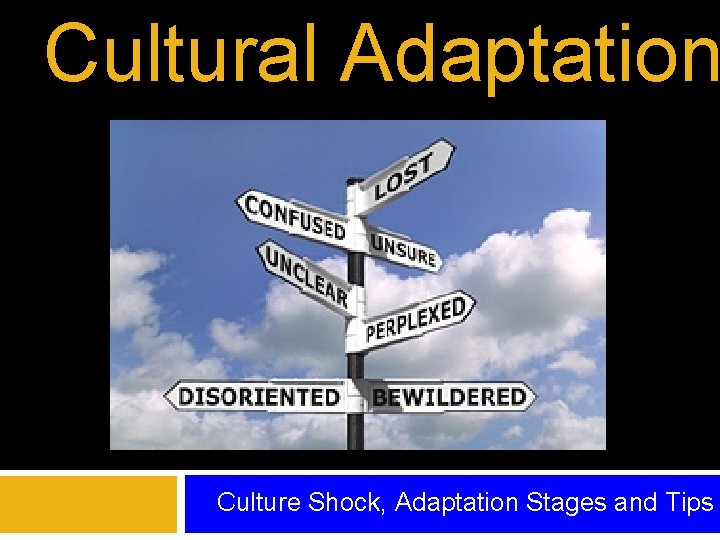
Cultural Adaptation Culture Shock Adaptation Stages and Tips

- Slides: 17
Cultural Adaptation Culture Shock, Adaptation Stages and Tips
Culture Shock Feeling isolated while living abroad for an extended period of time u Being cut off from one’s culture, family, language u Having one’s values, traditions, routines in question u Being expected to be highly functional within a foreign environment u
Some Symptoms Homesickness u Withdrawal u Sadness/crying u Family conflict u Inability to concentrate u Too much/little sleep u Too much/little eating/drinking u Anger/irritability u Illness u
Cultural Variations u Body language u Courtship practices u Perceptions of beauty u Hierarchy & leadership u Cleanliness & hygiene u Concepts of fairness
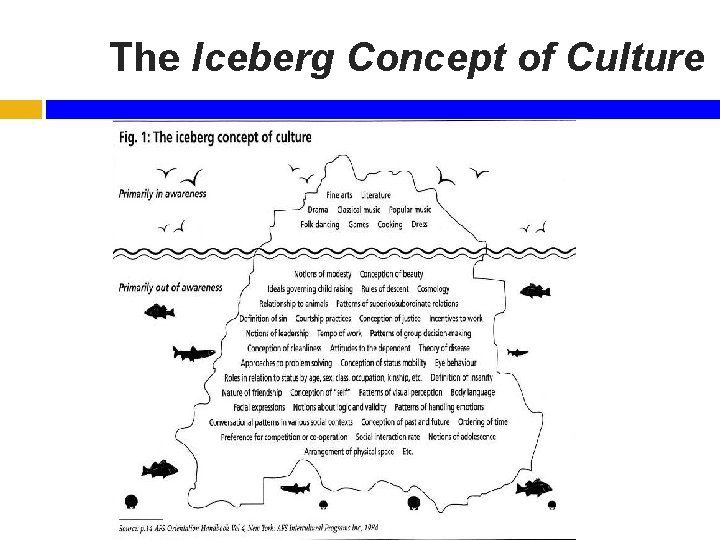
The Iceberg Concept of Culture
CHANGE TIME EQUALITY INDIVIDUAL INITIATIVE FUTURE INFORMALITY DIRECTNESS RULES TRADITION HUMAN INTERACTION RANK GROUP INHERITANCE PAST FORMALITY INDIRECTNESS NEGOTIATION Adapted from “The Values Americans Live By” by L. Robert Kohls
Ask your neighbor… Have you experienced culture shock before? u What is one way you’ve been surprised since arriving in the US? u How do you think your experience of those ‘surprises’ might evolve over time? u
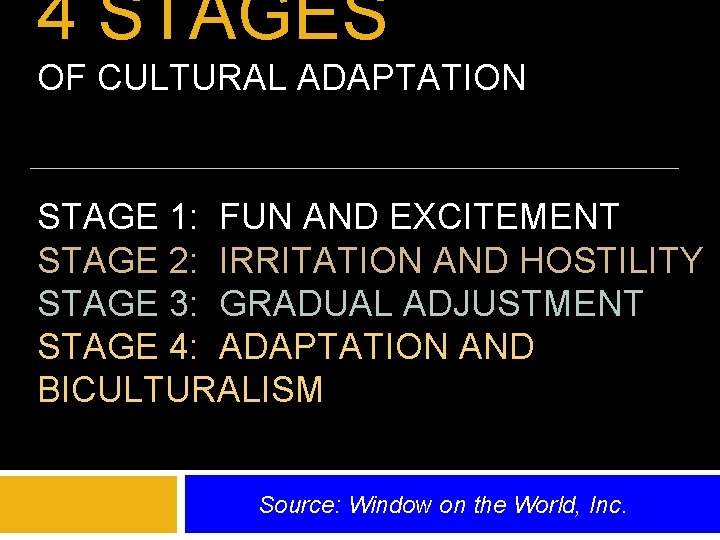
4 STAGES OF CULTURAL ADAPTATION STAGE 1: FUN AND EXCITEMENT STAGE 2: IRRITATION AND HOSTILITY STAGE 3: GRADUAL ADJUSTMENT STAGE 4: ADAPTATION AND BICULTURALISM Source: Window on the World, Inc.
Stage 1: Fun and Excitement The “honeymoon” period u Relief that you are finally here u Great expectations u Everything is new, fascinating, intriguing, exciting u Focus is on how we are all alike u
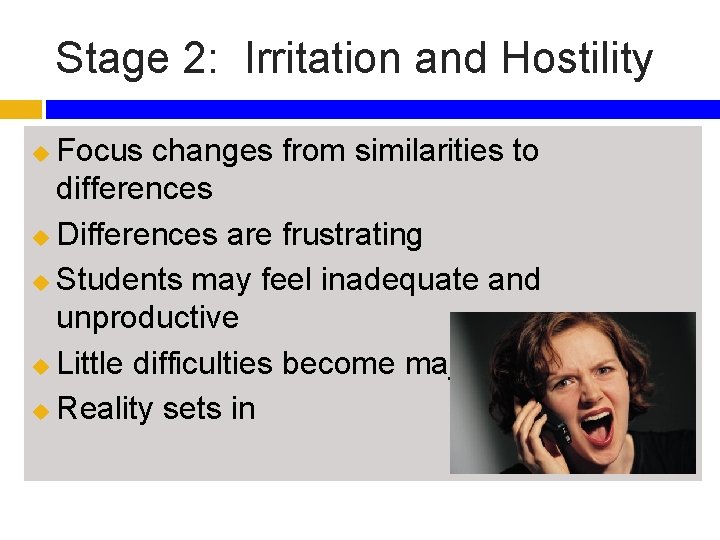
Stage 2: Irritation and Hostility Focus changes from similarities to differences u Differences are frustrating u Students may feel inadequate and unproductive u Little difficulties become major problems u Reality sets in u
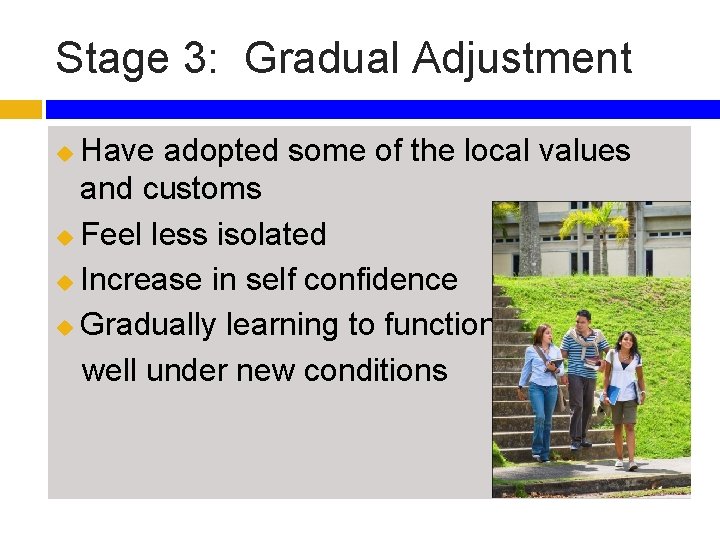
Stage 3: Gradual Adjustment Have adopted some of the local values and customs u Feel less isolated u Increase in self confidence u Gradually learning to function well under new conditions u
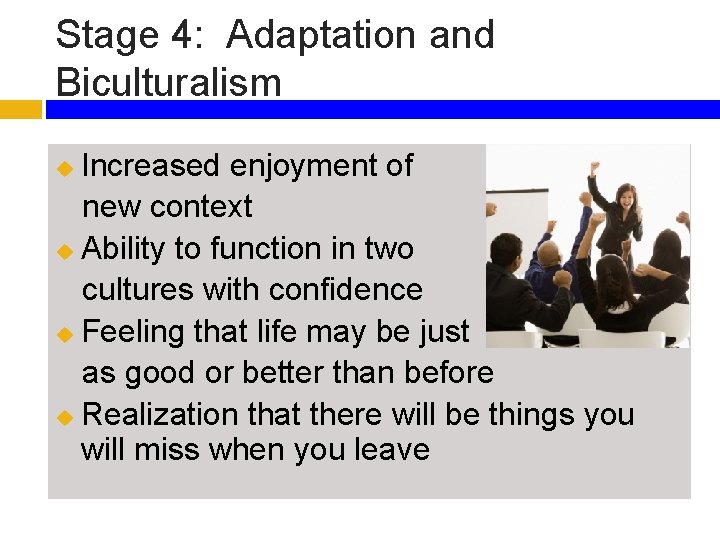
Stage 4: Adaptation and Biculturalism Increased enjoyment of new context u Ability to function in two cultures with confidence u Feeling that life may be just as good or better than before u Realization that there will be things you will miss when you leave u
Key Challenges Formal vs. informal writing u Understanding instructions u Communicating with faculty and classmates u Participating in group/classroom discussions u Managing coursework load u
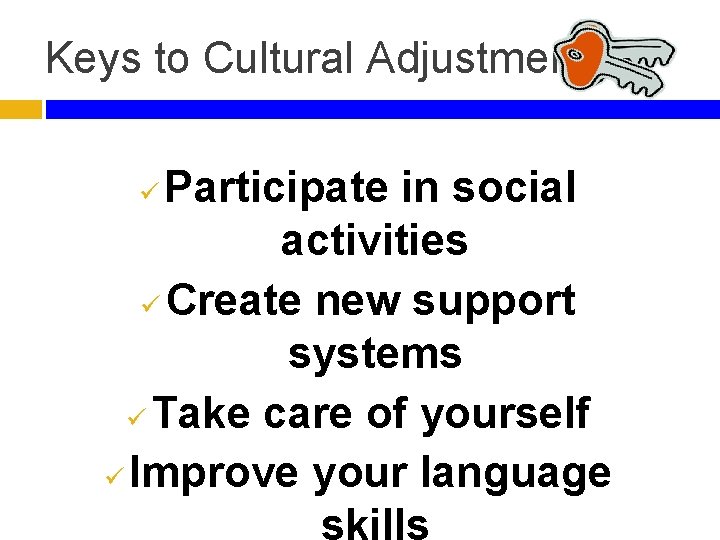
Keys to Cultural Adjustment Participate in social activities ü Create new support systems ü Take care of yourself ü Improve your language ü
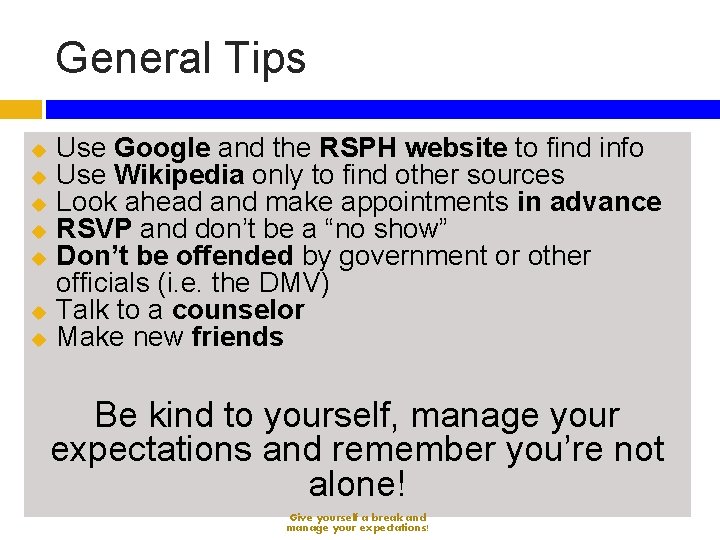
General Tips Use Google and the RSPH website to find info u Use Wikipedia only to find other sources u Look ahead and make appointments in advance u RSVP and don’t be a “no show” u Don’t be offended by government or other officials (i. e. the DMV) u Talk to a counselor u Make new friends u Be kind to yourself, manage your expectations and remember you’re not alone! Give yourself a break and manage your expectations!
“Just when the caterpillar thought the world was over, she became a butterfly. ” ― Barbara Haines Howett, Ladies of the Borobudur
YOUR RSPH STUDENT/ALUMNI PANELISTS: Shreya Kothari Joyce Beyamu Bishan Huang Jiabei He Got questions? Ask the experts!