
Cubital tunnel syndrom current concepts Hossein Saremi MD


Cubital tunnel syndrom (current concepts) ﺳﻨﺪﺭﻡ ﺗﻮﻧﻞ کﻮﺑیﺘﺎﻝ Hossein Saremi MD Orthopaedic Hand&shoulder surgeon Hamedan University of Medical sciences Hamedan, IRAN
Entrapment of ulnar nerve The second most common compression neuropathy in the upper extremity after CTS
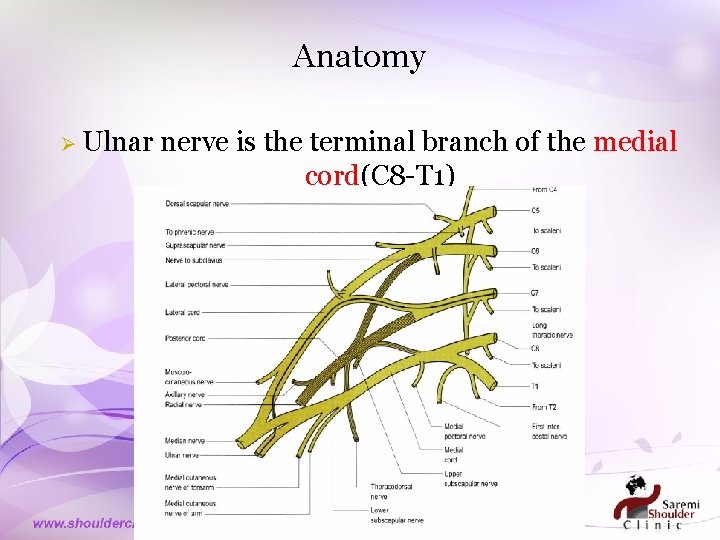
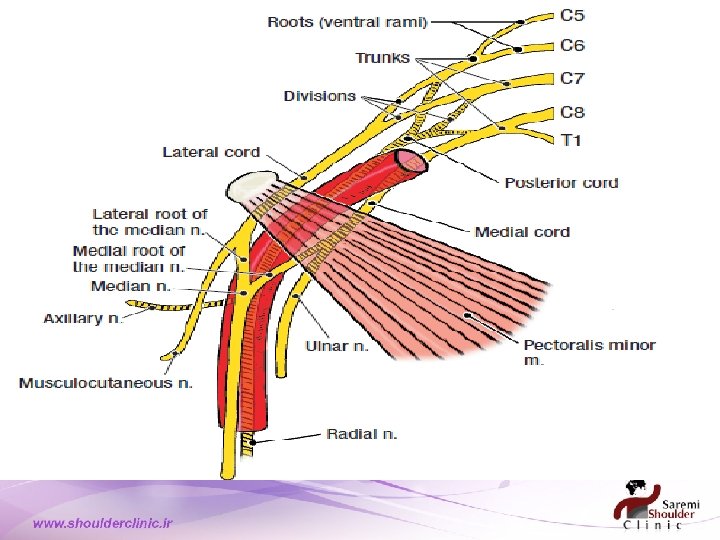
Anatomy Ø Ulnar nerve is the terminal branch of the medial cord(C 8 -T 1)
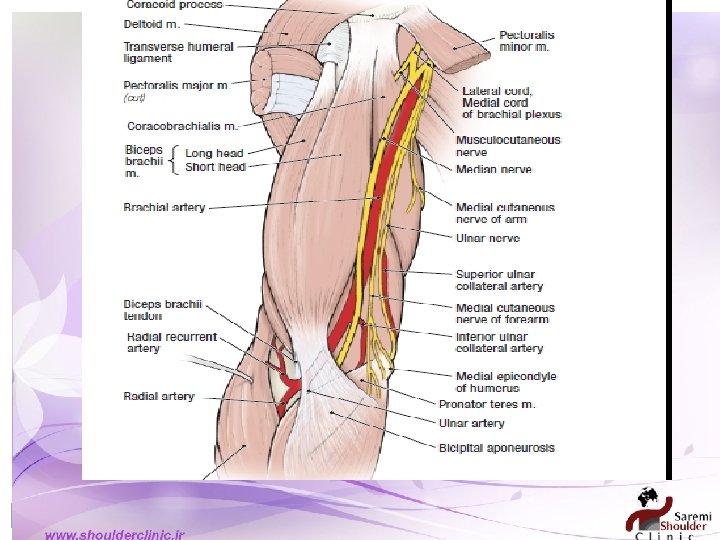
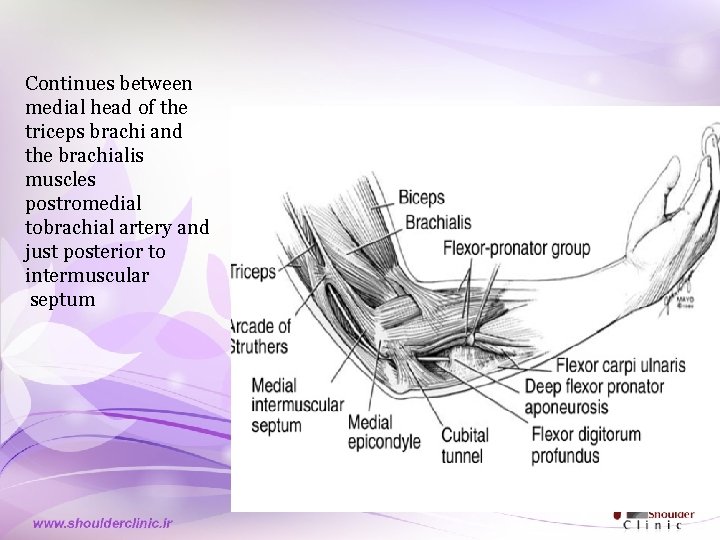
Continues between medial head of the triceps brachi and the brachialis muscles postromedial tobrachial artery and just posterior to intermuscular septum Anatomy of ulnar nerve
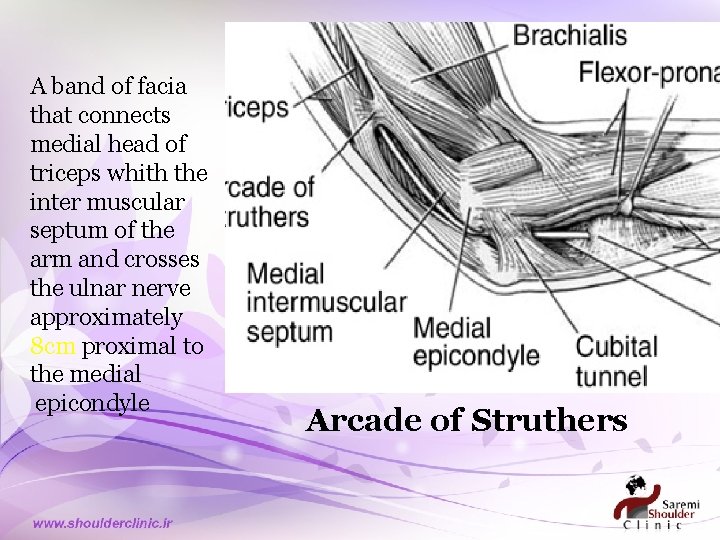
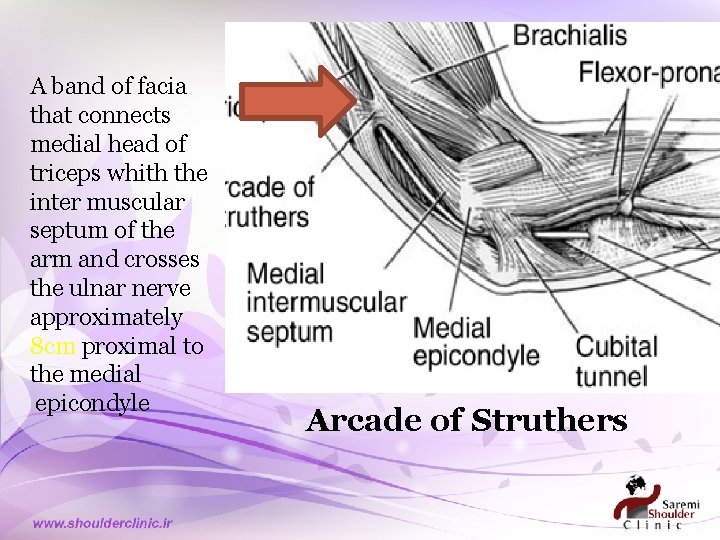
A band of facia that connects medial head of triceps whith the inter muscular septum of the arm and crosses the ulnar nerve approximately 8 cm proximal to the medial epicondyle Arcade of Struthers
A band of facia that connects medial head of triceps whith the inter muscular septum of the arm and crosses the ulnar nerve approximately 8 cm proximal to the medial epicondyle Arcade of Struthers
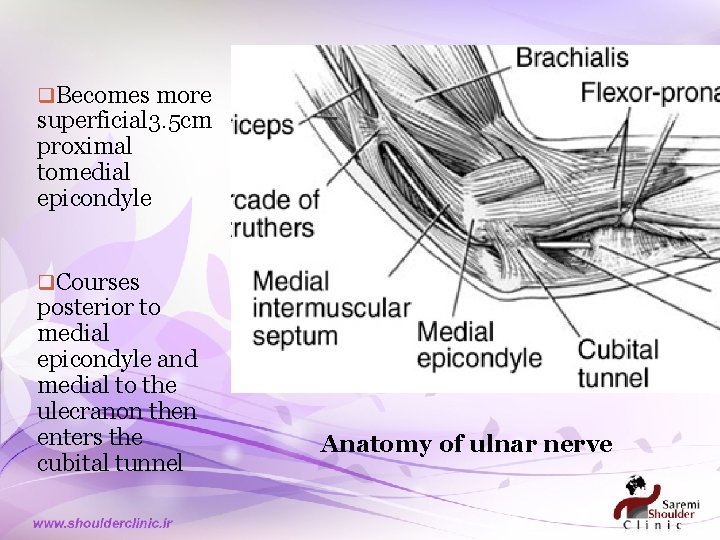
q. Becomes more superficial 3. 5 cm proximal tomedial epicondyle q. Courses posterior to medial epicondyle and medial to the ulecranon then enters the cubital tunnel Anatomy of ulnar nerve
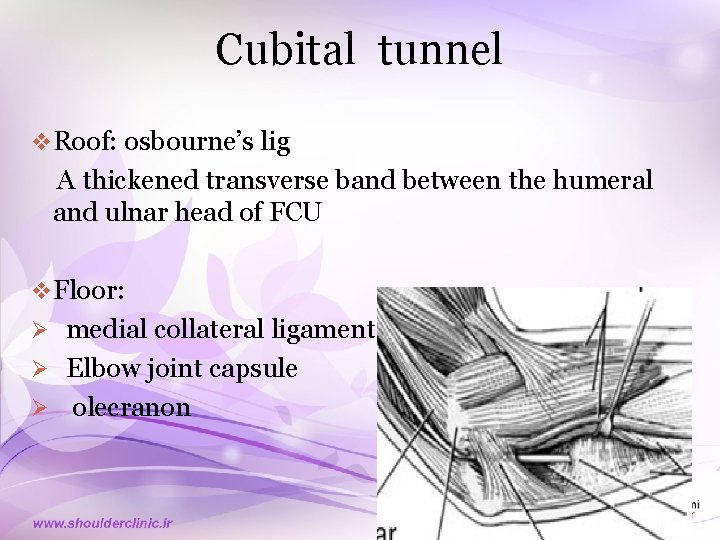
Cubital tunnel v Roof: osbourne’s lig A thickened transverse band between the humeral and ulnar head of FCU v Floor: Ø medial collateral ligament of the elbow Ø Elbow joint capsule Ø olecranon
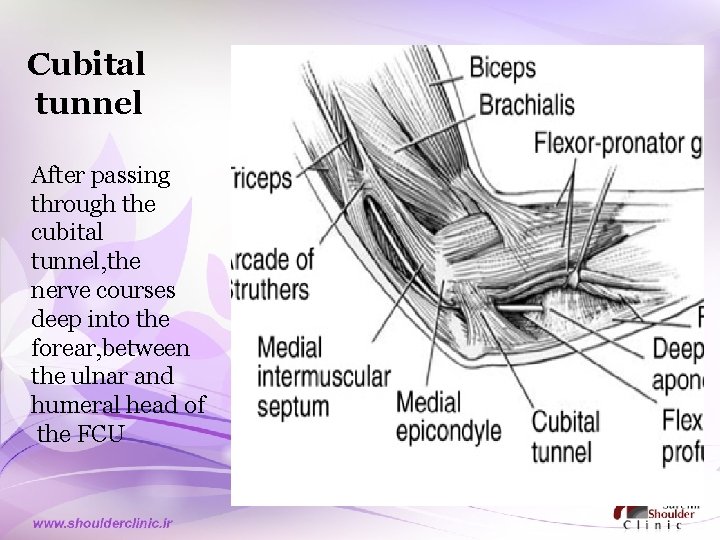
Cubital tunnel After passing through the cubital tunnel, the nerve courses deep into the forear, between the ulnar and humeral head of the FCU
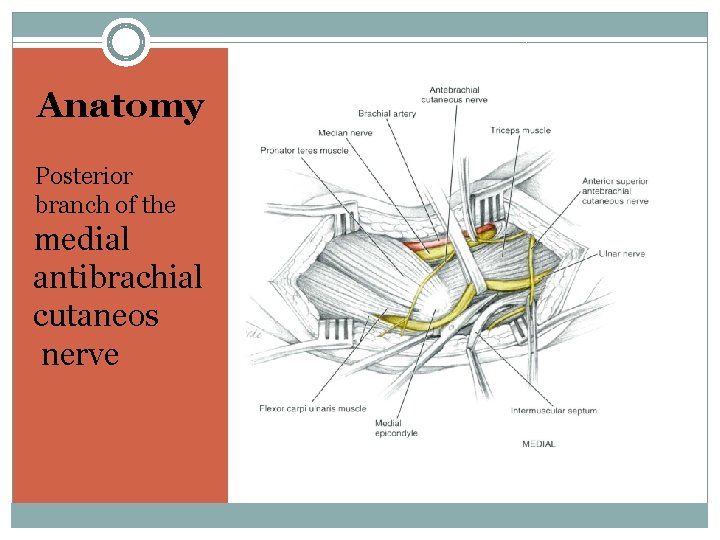
Anatomy Posterior branch of the medial antibrachial cutaneos nerve
Potential ulnar nerve entrapment v The arcade of struthers v Medial intermuscular symptom v Medial epicondyle v Cubital tunnel v Deep flexor pronator aponeurosis
Anatomical variations of fibrous bands Karatsa A, Apaydin N, Uz A, Tubbs SR, Loukas M, Gezen F. Regional anatomic structures of the elbow that may potentially compress the ulnar. J Shoulder Elbow Surg 2009; 18: 627– 631
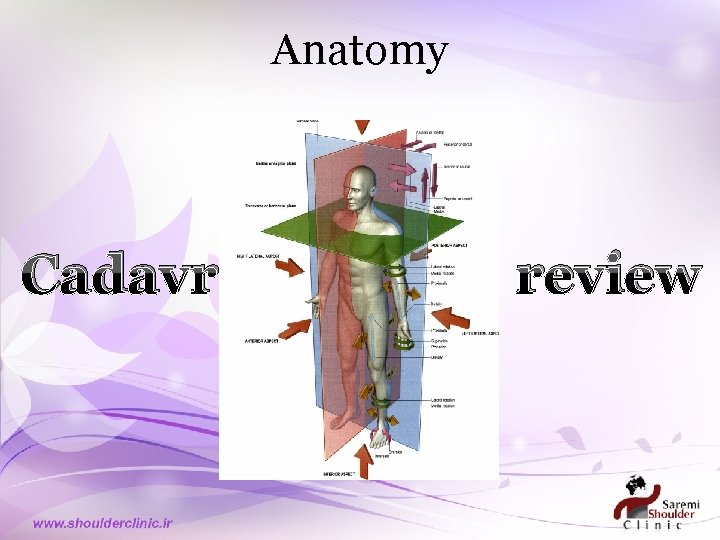
Anatomy Cadavr anatomy review
Diagnosis History Ø Co morbidities such as diabetes, thyroid disease, hemophilia and peripheral neuropathies Ø Onset of symptoms , Ø Grip or pinch weakness Ø Aggravating activities and positions
History v May be the most important historical piece of information is whether or not the symptoms are constant v Numbness and paresthesias are the predominant presenting features( difficulty in localizing) v Pain is less common v Questions focusing on hand activity § Buttoning buttons § Opening bottles § typing
Physical Examination v Presentation with muscle atrophy 4 times than. CTS Muscle atrophy at diagnosis of carpal and cubital tunnel syndrome. J Hand Surg 2007; 32 A; 855– 858
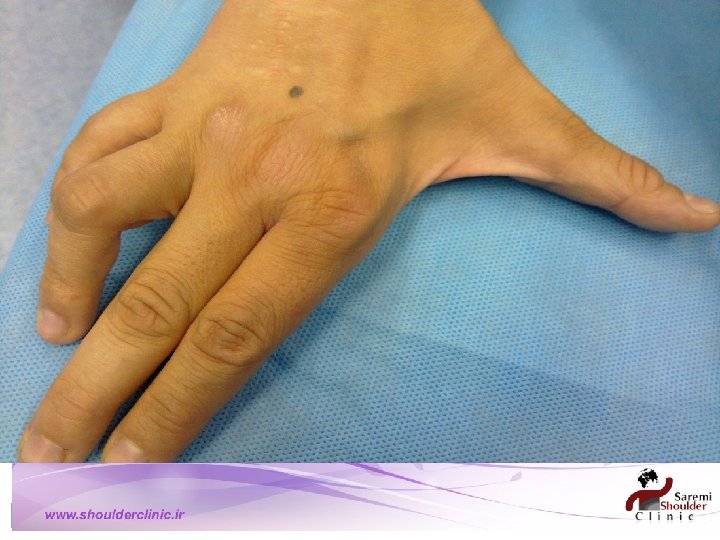
Physical Examination The extent of ulnar nerve dysfunction has been divided into three categories: �Mild: intermittent paresthesias, subjective weakness �Moderate: intermittent paresthesias, measurable weakness �Severe: persistent paresthesias, measurable weakness
Provocative tests v Tinel test---------70% sensitive v Elbow flexion test-----75%sensetive after 60 seconds v Pressure test--------89%sensetive after 60 seconds v Combined elbow flexion-pressure test------98%sensetive v Scratch collapse test(recently)

Provocative tests Scratch collapse test for evaluation of carpal and cubital tunnel syndrome. J Hand Surg 2008; 33 A; 1518– 1524
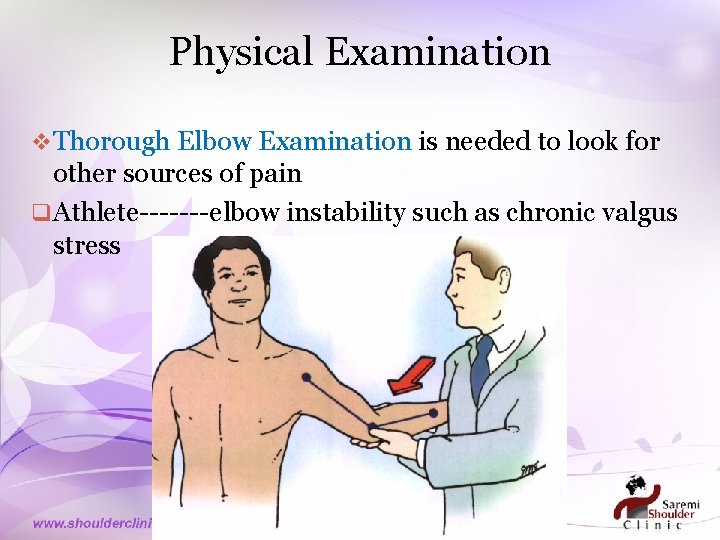
Physical Examination v Thorough Elbow Examination is needed to look for other sources of pain q Athlete-------elbow instability such as chronic valgus stress
Physical Examination q Trauma------childhood supracondylar FX (Tardy ulnar nerve palsy) q Ulnar nerve subluxation Full ROM exam is mandatory q Medial elbow pain can be seen after elbow Fx that are treated without ulnar nerve transposition (olecranon fx, distal humerus, medial epicondyle)
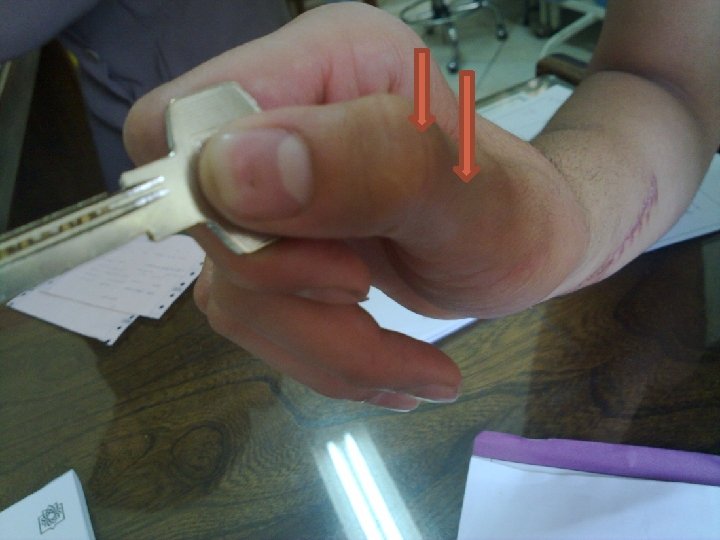
Physical Examination LONG STANDING ULNAR NERVE PALSY
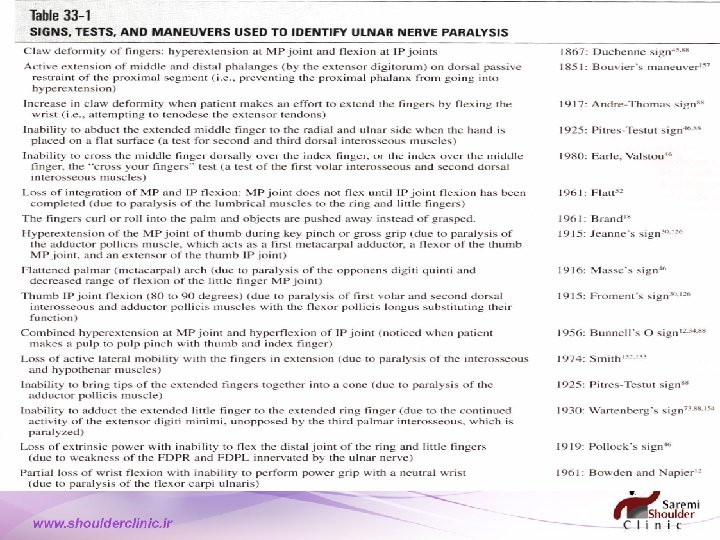
Physical Examination
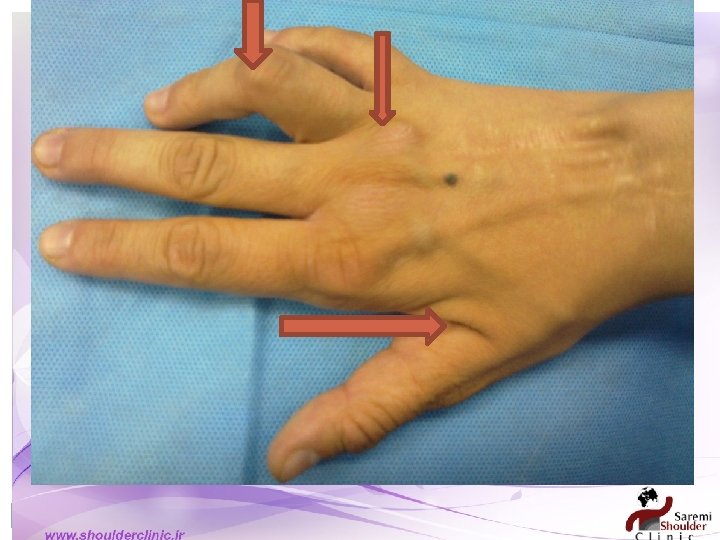
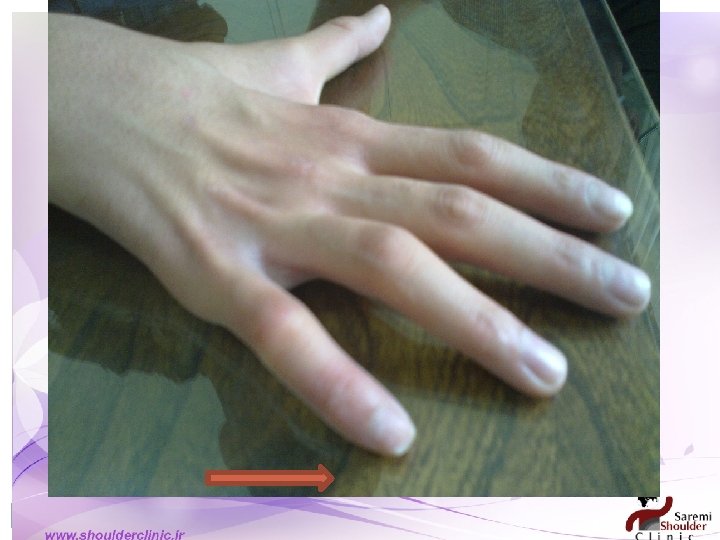
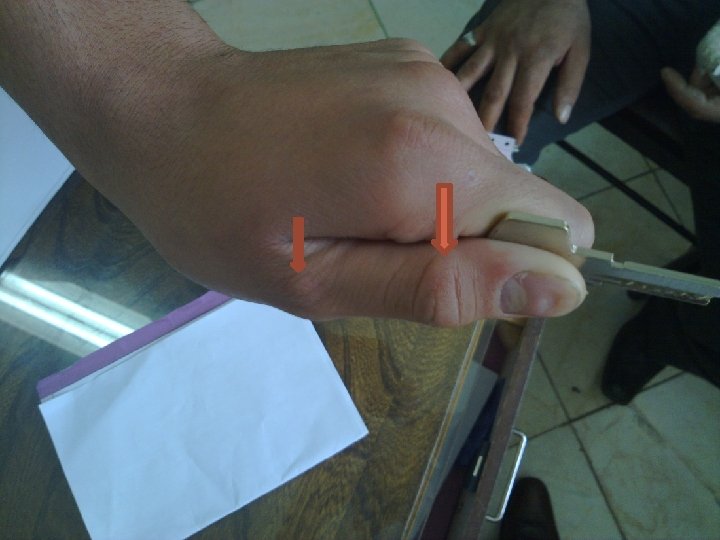
Radiography Should be obtained in all patients to evaluate for elbow arthritis which may lead to osteophytic impingement on the cubital tunnel
Electrodiagnostic study Ø Ulnar nerve conduction velocity<50 m/s is positive Ø Can be used for diagnosis and prognosis(advanced) Ø Help to localize site of compression Ø Have a false-negative rate in excess of 10%
High –resolution ultrasound ? Ø Enlargement of the ulnar nerve is seen in cubital tunnel Ø More standardization is required

Treatment Non operative treatment �Mild cubital tunnel syndrom �If NCV>40 m/s Operative treatment �In situ decompression �Subcutaneous anterior transposition �Intramuscular transposition �Submuscular transposition �Medial epicondylectomy �Endoscopic decompression
Non surgical Treatment Ø Activity modification Ø Splinting Ø Specific stretching and nerve gliding EX Ø 80 -89. 5% improved
Non surgical Treatment 24. Svernlov B, Larsson M, Rehn K, Adolfsson L. Conservative treatment of the cubital tunnel syndrome. J Hand Surg 2009; 34 B: 201– 207.
In situ decompression � 6 -8 cm incision is made along the course of the ulnar nerve between the medial epicondyle and the olecranon �Struther’s and osbourne’s ligaments are released �Neurolysis is not performed �Prospective randomized studies have shown results of simple decompression to be equal to those of anterior transposition
Subcutaneous anterior transposition q Prevents tension during flexion q May compromise the blood supply to the nerve q Care should be taken to insure a new site of compression q A longer incision is required q Care should be taken to preserve the motor branches to the FCU and FDPs
Operative treatment which Procedure? 31. Biggs M, Curtis JA. Randomized, prospective study comparing ulnar neurolysis in situ with submuscular transposition. Neurosurgery 2006 Nabhan A, Ahlhelm F, Kelm J, Reith W, Schwerdtfeger K, Steudel WI. Simple decompression or subcutaneous anterior transposition of the ulnar nerve for cubital tunnel syndrome. J Hand Surg 2005; 30 B:
Study of 56 patient(69 extremities): 7% had persistant symptoms post 34. Goldfarb CA, Sutter MM, operatively Martens EJ, Manske PR. which were Incidence of relived after re-operation and subjective anterior outcome following in situ submuscular decompression transposition of the ulnar nerve at the cubital tunnel. J Hand Surg 2009; 34 B: 379–.
Intra muscular transposition q A groove is created in the flexor pronator muscles to serve as a tract into which the nerve is transposed q Proponents: it places the nerve in a straighter line across the elbow joint q Opponents: it can cause scarring of the nerve
Sub muscular transposition q Requires the largest incision and most extensive dissection q The flexor pronator mass is incised 1 -2 cm distal to medial epicondyle in a step-cut fashion to allow for fractional lengthening of the muscle q Identification and protection of UCL and the median nerve is required q Ulnar nerve is transposed anteriorly adjacent and parallel to the median nerve
Sub muscular transposition Prospective randomized study(only subjective) �NO statistical difference with simple nerve decompression Acta Neurochir 2009; 151: 311– 316. mpression Retrospective study No statistical difference � with sub cutaneous transposition J Hand Surg 2009; 34 A: 866– 874. ition
Meta analysis of litrature No statistical differences in reported outcomes between simple decompression and anterior transposition of any type, in patients with cubital tunnel syndrom J Bone Joint Surg 2007; J Hand Surg 2008;
Medial epicondylectomy q The nerve is decompressed as insitu decompression q Osteotomy plane is between the sagital and coronal plane to avoid detachment of the anterior band of. UCL q The flexor pronator origin is reattached to the perioseal sleeve with absorbable suture q 45%had medial elbow pain at 6 month follow-up q Prospective randomized trials comparing to other surgical treatment options are needed
Endoscopic decompression v Was first discribed in 1995 Tsai et al v All techniques use a small 15 -35 mm incision located over the ulnar nerve at the condylar groove In the study of 76 nerves in 75 patien sensory loss improved in 96% grip strength significantely improved 4 patient had superficial hematoma 9 patient developed decreased feeling in the medial antibrachial nerve which Ø resolved by 3 month in 8 patient Hand Surg 2006; J
Endoscopic decompression v A recent comparison between endoscopic technique and insitu decompression demonstrated statistically significant less pain and greater satisfaction with the endoscopic technique Patient-rated outcome of ulnar nerve decompression: a comparison of endoscopic and open in situ decompression. J Hand Surg 2009; 34 A: 1492– 1498.
Treatment Algorithm v In most cases simple decompression is adiquate v In the future the simplest technique may be an endoscopic release v Certain situations will likely recommend a different surgical treatment § Nerve subluxation § Post traumatic elbow stiffness § Over head throwing athletes with valgus instability v Surgical options for failed cubital tunnel syndrom include anterior transposition(sub muscular, intramuscular, subcutaneous)
Treatment Algorithm Selection of a surgical approach is based on the ETHIOLOGY. of nerve compression, ANATOMIC VARIATIONS, andsurgeon’s EXPERIENCE

THANK YOU
- Slides: 53