
CUBIST STILL LIFE VOCABULARY Line A line is
CUBIST STILL LIFE
VOCABULARY Line – A line is defined as a moving point through space
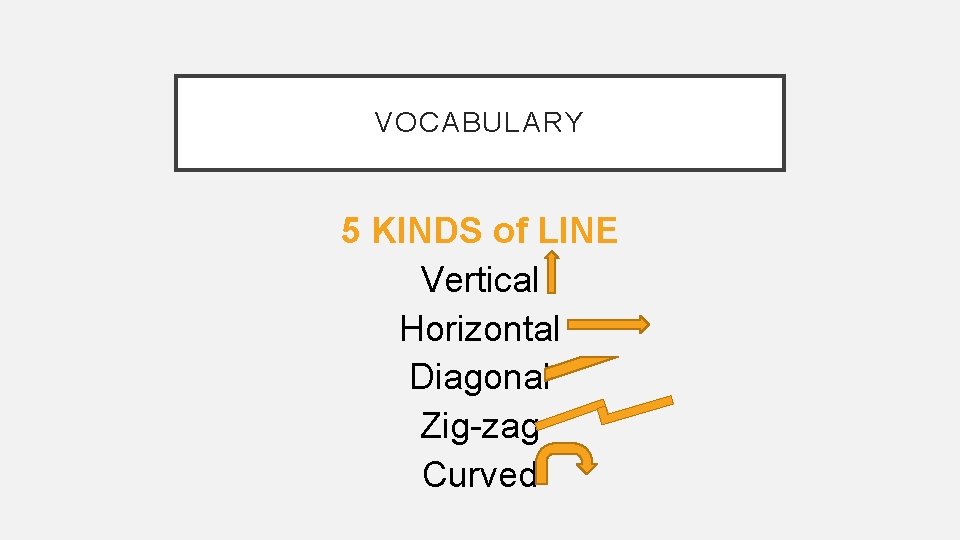
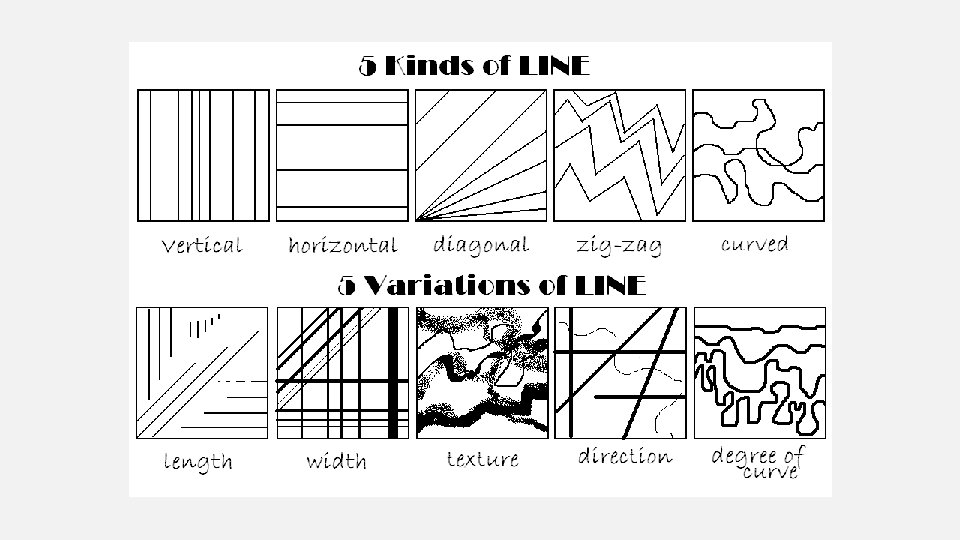
VOCABULARY 5 KINDS of LINE Vertical Horizontal Diagonal Zig-zag Curved
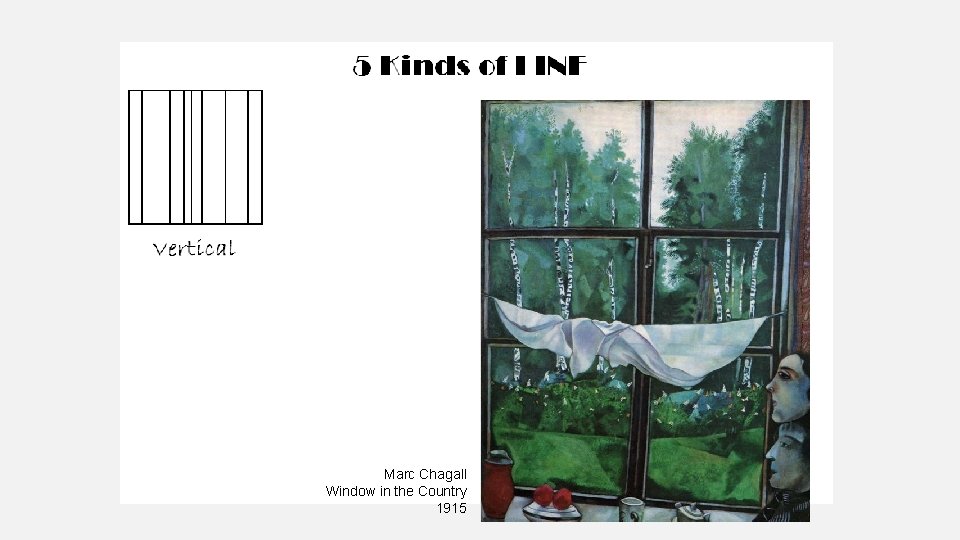
Marc Chagall Window in the Country 1915
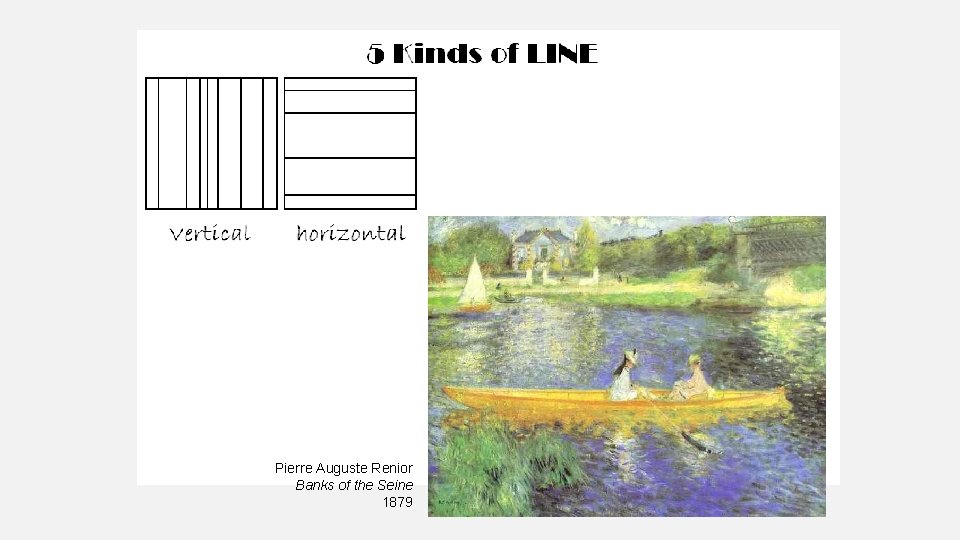
Pierre Auguste Renior Banks of the Seine 1879
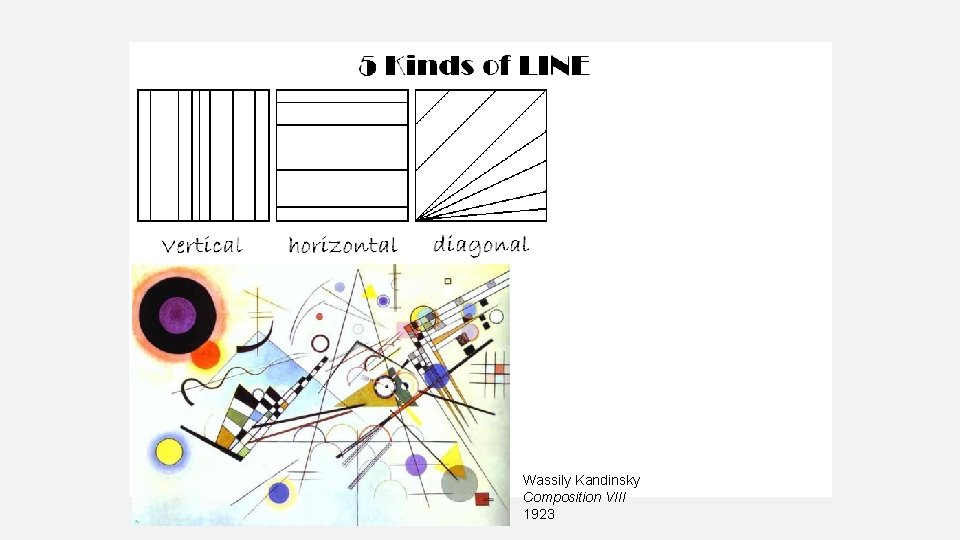
Wassily Kandinsky Composition VIII 1923
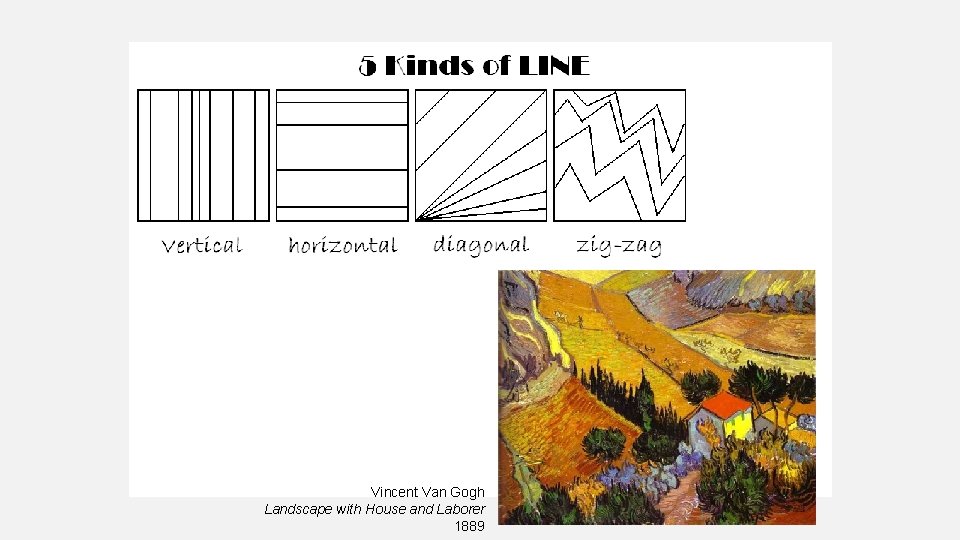
Vincent Van Gogh Landscape with House and Laborer 1889
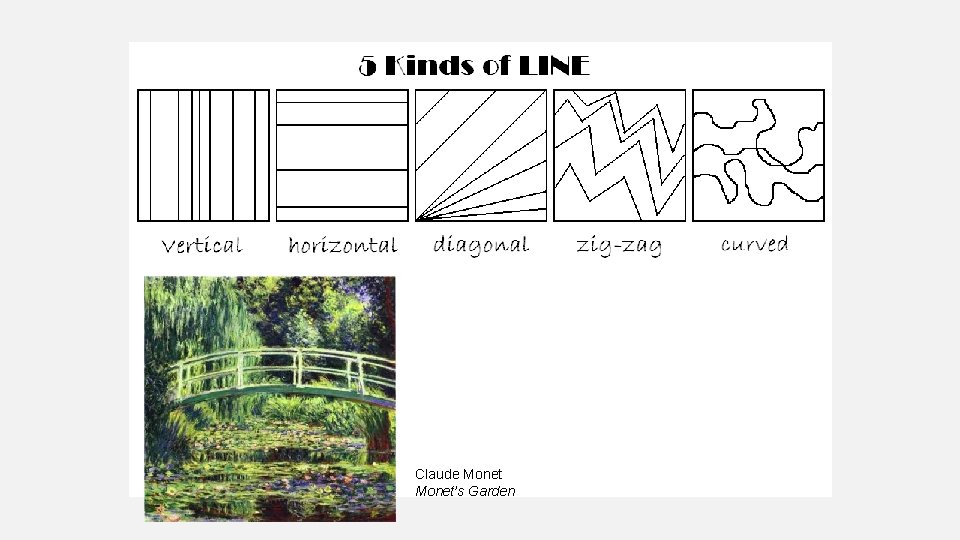
Claude Monet’s Garden
VOCABULARY Line Variation – The ways a line can vary (or be altered) to change their appearance.
VOCABULARY 5 TYPES of LINE VARIETY Length: how long a line is Width: how wide a line is Texture: how a line looks like it feels Direction: where a line can go Degree of Curve: the looseness or tightness of a curve
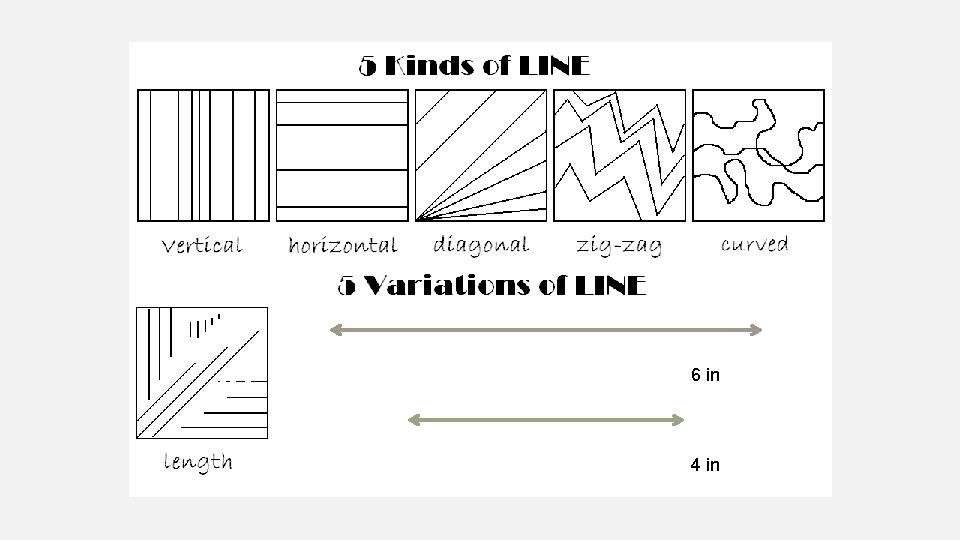
6 in 4 in
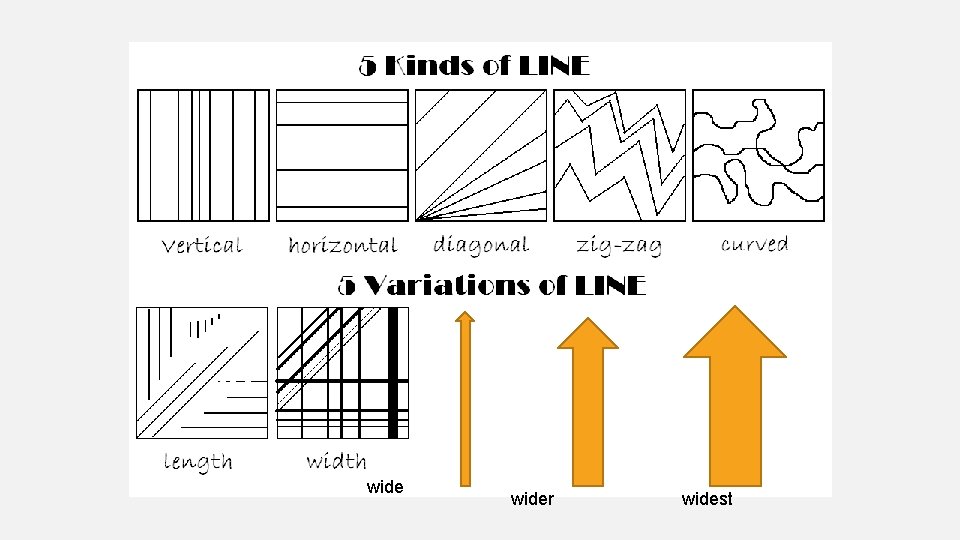
wider widest

rough smooth
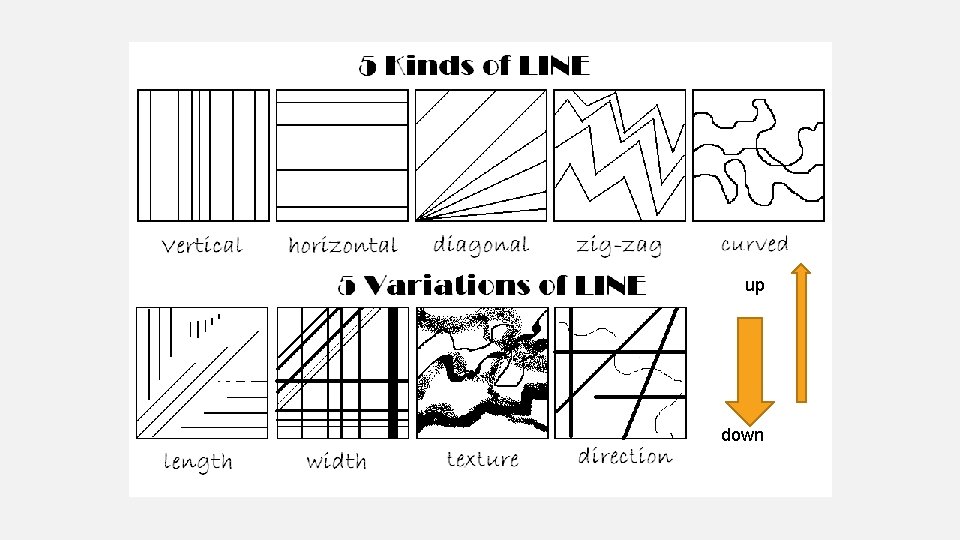
up down
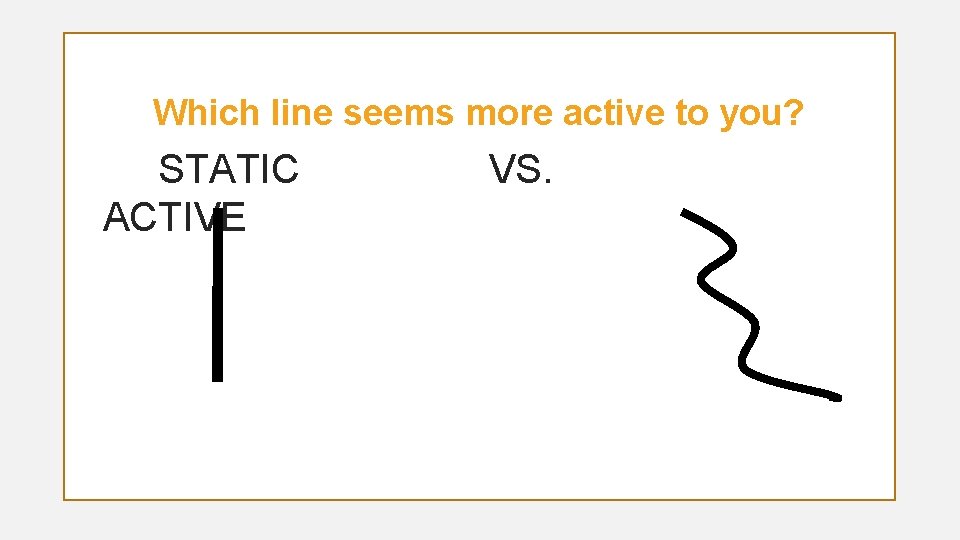
Which line seems more active to you? STATIC ACTIVE VS.
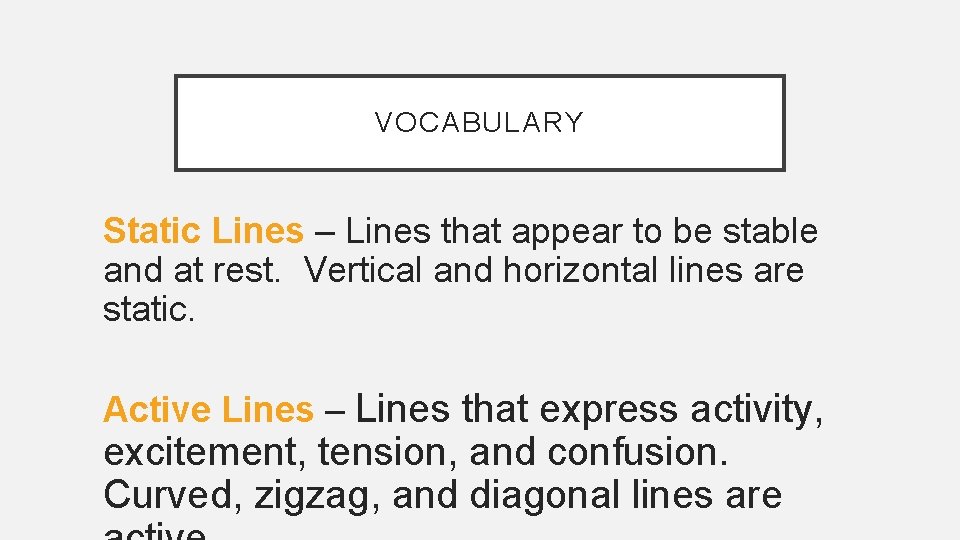
VOCABULARY Static Lines – Lines that appear to be stable and at rest. Vertical and horizontal lines are static. Active Lines – Lines that express activity, excitement, tension, and confusion. Curved, zigzag, and diagonal lines are
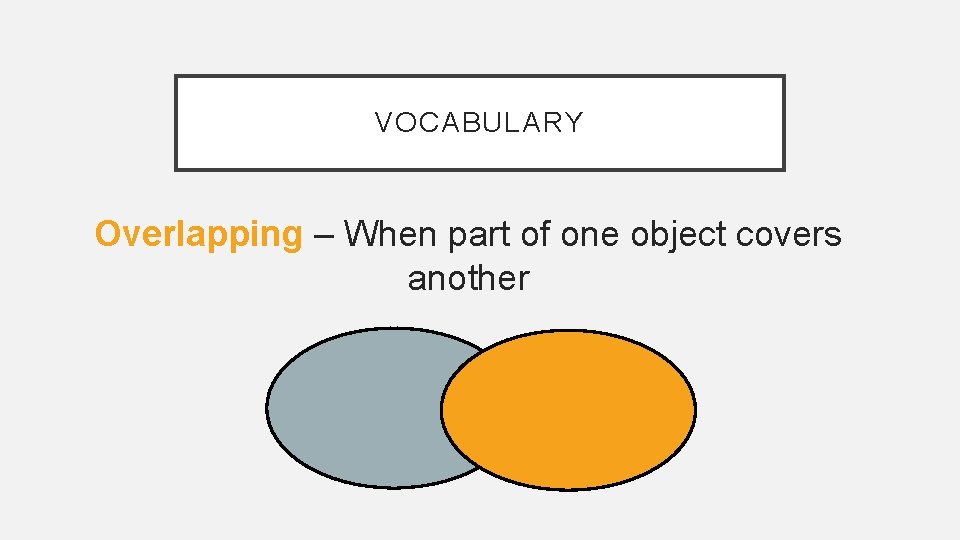
VOCABULARY Overlapping – When part of one object covers another
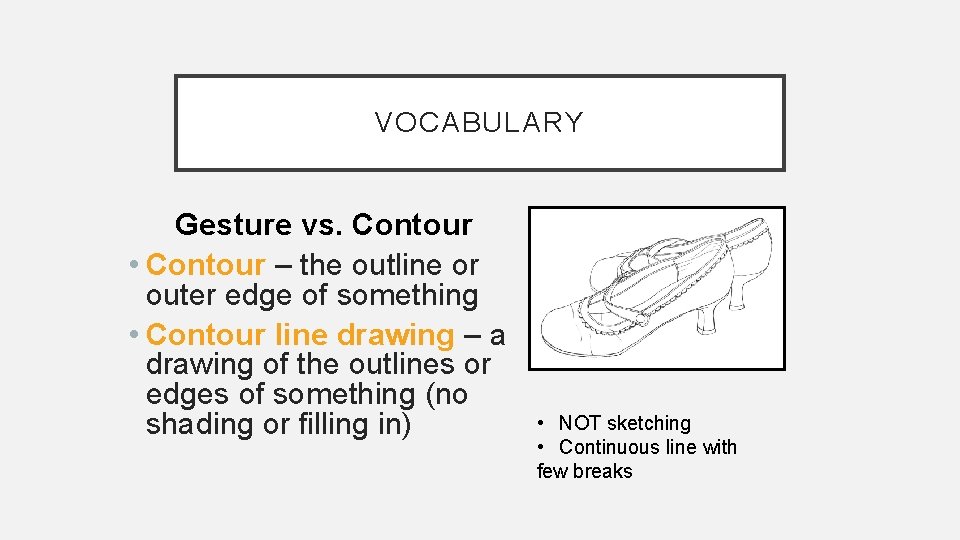
VOCABULARY Gesture vs. Contour • Contour – the outline or outer edge of something • Contour line drawing – a drawing of the outlines or edges of something (no shading or filling in) • NOT sketching • Continuous line with few breaks
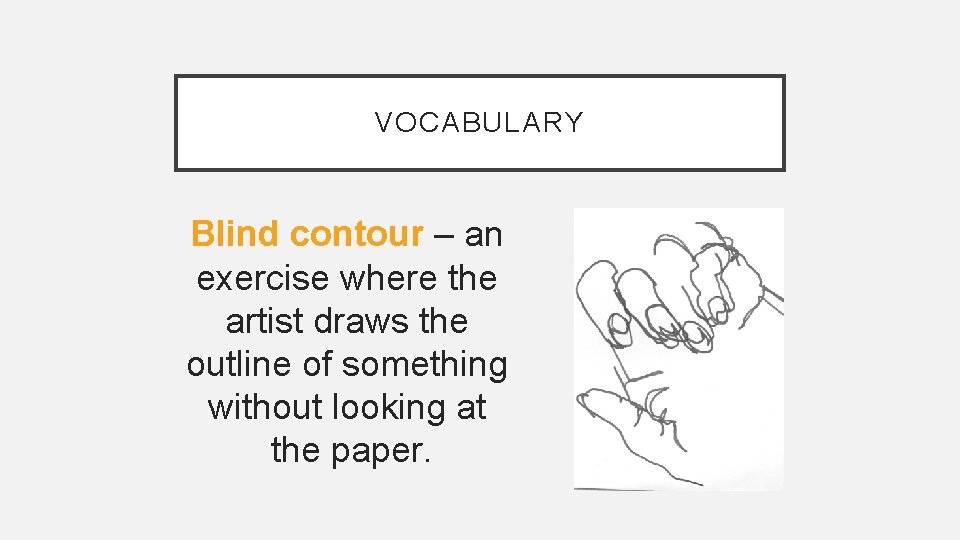
VOCABULARY Blind contour – an exercise where the artist draws the outline of something without looking at the paper.
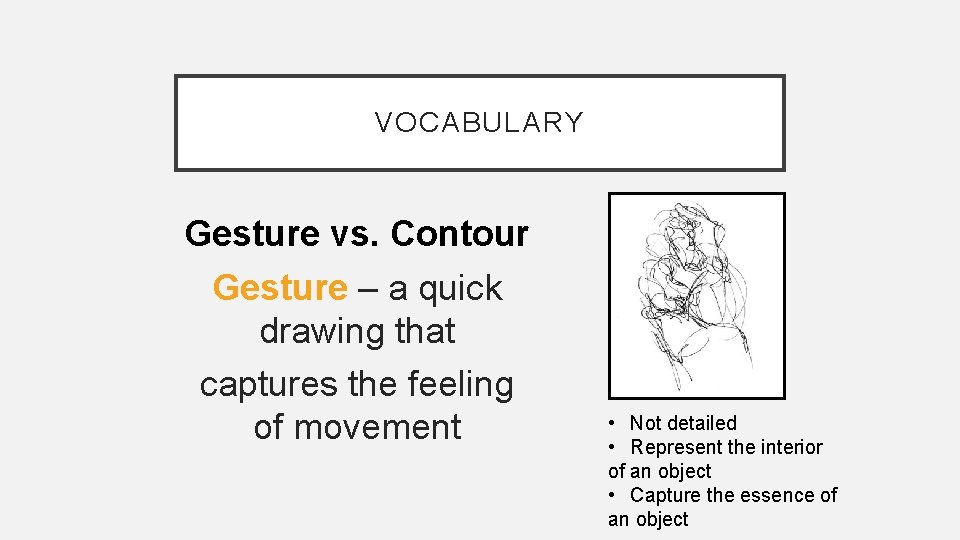
VOCABULARY Gesture vs. Contour Gesture – a quick drawing that captures the feeling of movement • Not detailed • Represent the interior of an object • Capture the essence of an object
DRAWING EXERCISES • Blind Contour • Contour Line • Continuous Line • Gesture
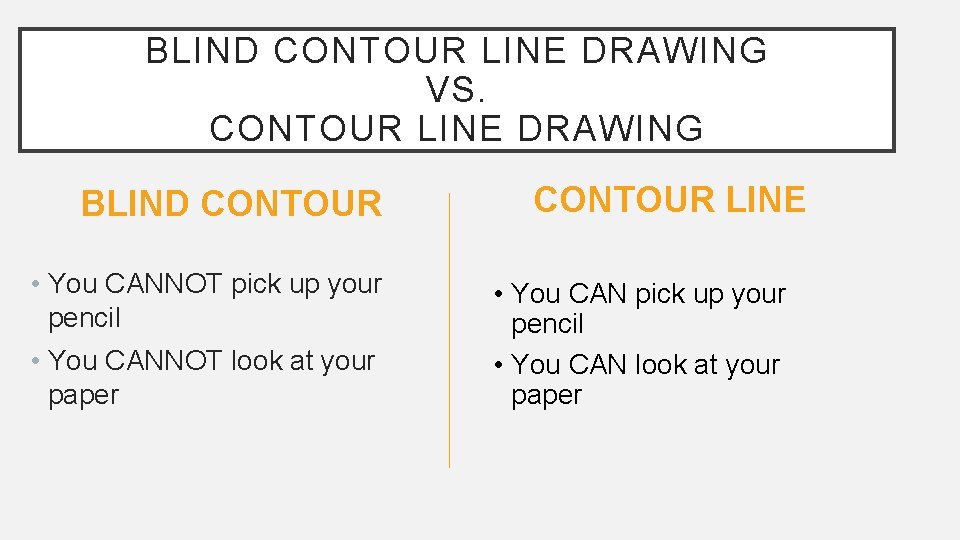
BLIND CONTOUR LINE DRAWING VS. CONTOUR LINE DRAWING BLIND CONTOUR • You CANNOT pick up your pencil • You CANNOT look at your paper CONTOUR LINE • You CAN pick up your pencil • You CAN look at your paper
BLIND CONTOUR EXERCISE • It is an exercise, or practice (like our timed gesture drawings) • Helps you to develop hand-eye coordination and study an object • Teaches you to rely on your eyes rather than your memory to draw something accurately
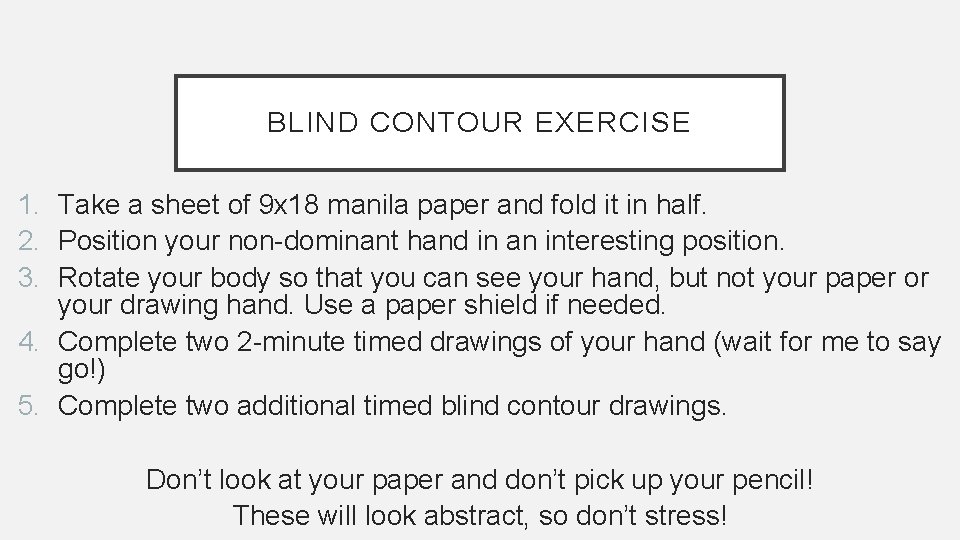
BLIND CONTOUR EXERCISE 1. Take a sheet of 9 x 18 manila paper and fold it in half. 2. Position your non-dominant hand in an interesting position. 3. Rotate your body so that you can see your hand, but not your paper or your drawing hand. Use a paper shield if needed. 4. Complete two 2 -minute timed drawings of your hand (wait for me to say go!) 5. Complete two additional timed blind contour drawings. Don’t look at your paper and don’t pick up your pencil! These will look abstract, so don’t stress!
CONTOUR LINE EXERCISE • Draw the outline of an object – lines should be continuous, not sketchy • In addition to the outline, include lines that show the shape of inner details • Try to move your eye at the same rate you move your pencil
CONTOUR LINE EXERCISE 1. Take a sheet of 9 x 18 manila paper and fold it in half. 2. Position your non-dominant hand in an interesting shape. 3. Rotate your body so that you can see your hand, but not your paper or your drawing hand 4. Complete two timed drawings of your hand (wait for me to say go!) 5. Complete two additional timed contour drawings. You may look at your paper and you may pick up your pencil!
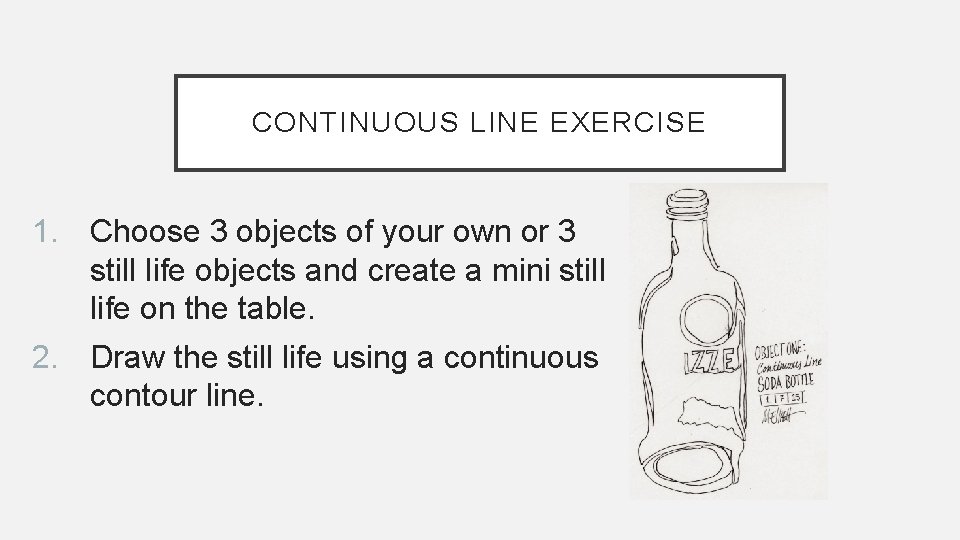
CONTINUOUS LINE EXERCISE 1. Choose 3 objects of your own or 3 still life objects and create a mini still life on the table. 2. Draw the still life using a continuous contour line.
GESTURE EXERCISE 1. 2. 3. 4. Take a sheet of newsprint and fold it in half twice (four boxes) Choose a student at each table to select an object to draw. Rotate your object to the right after each gesture drawing. Complete 8 timed drawings (wait for me to say go!) • 30 seconds • 45 seconds (2) • 1 minute (2) • 2 minutes (2) • 3 minutes
ART MOVEMENT Cubism - Cubism was a revolutionary new approach to representing reality invented in around 1907– 08 by artists Pablo Picasso and Georges Braque. They brought different views of subjects (usually objects or figures) together in the same picture, resulting in paintings that appear fragmented and abstracted. Tate Museum: https: //www. tate. org. uk/art-terms/c/cubism
ART MOVEMENT • Influences: • African art (masks)– not in the religious or social symbolism – purely for the aesthetic • Modern urban street life • Fascination with construction and deconstruction
ART MOVEMENT • Characteristics • Often include elements of text • Common themes such as musical instruments, bottles, pitchers, glasses, newspapers, playing cards, human face/figure • As movement progressed included elements of collage (pasted colored/printed pieces of paper into paintings)
ART MOVEMENT • Characteristics • Simplify figures and objects into geometric components/planes that may or may not add up to the whole figure or object as it would appear in the natural world • Distorted figures and forms • Simultaneously depict different points of view on one plane (suggested surface) • Typical color palette of monochromatic browns, grays, blacks
CUBIST ARTISTS
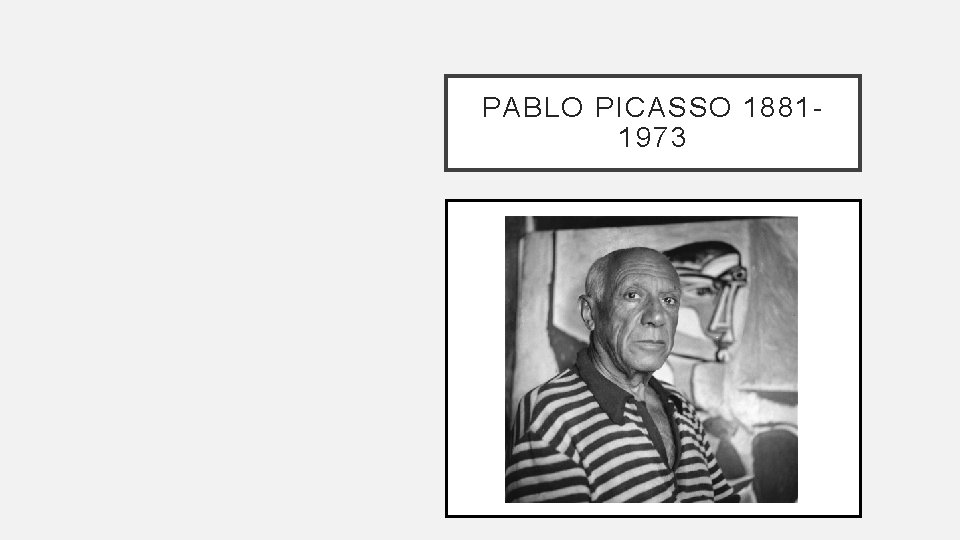
PABLO PICASSO 18811973
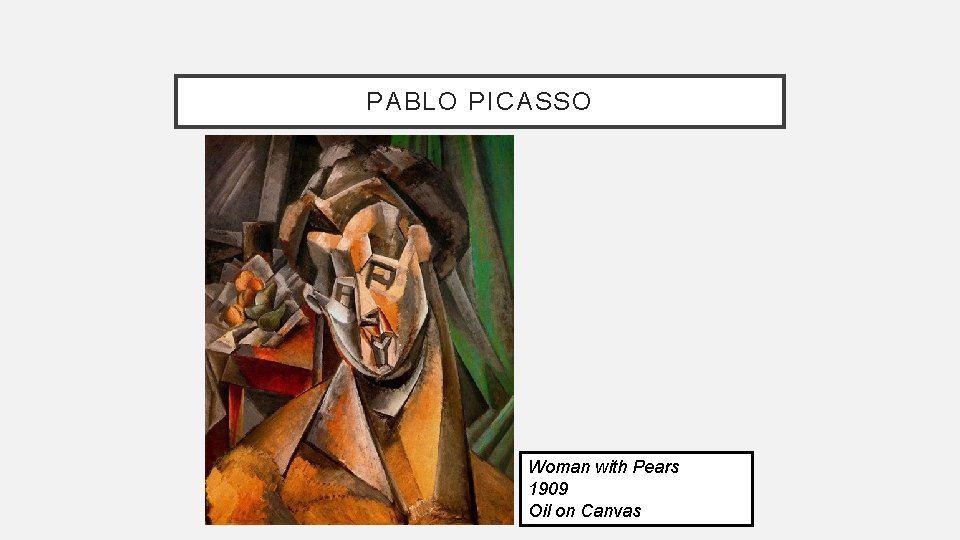
PABLO PICASSO Woman with Pears 1909 Oil on Canvas
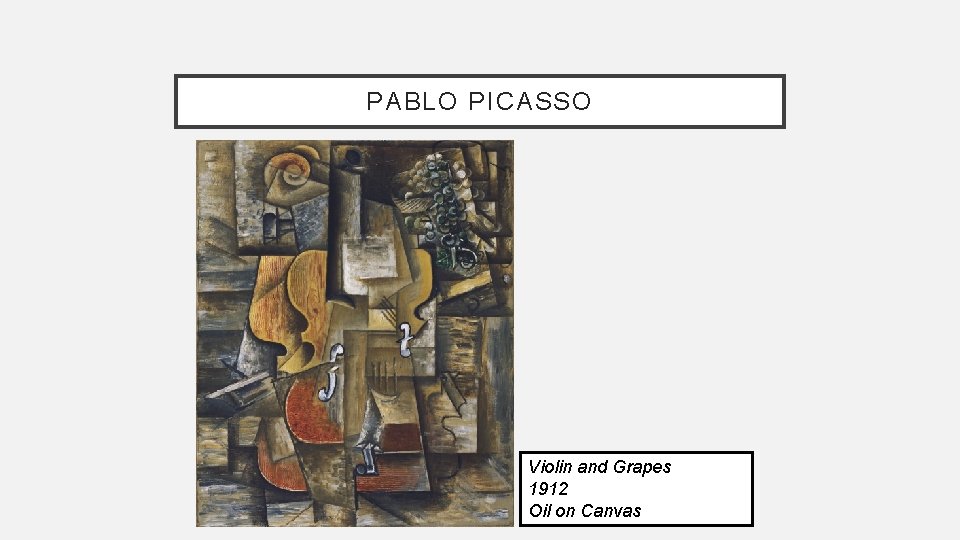
PABLO PICASSO Violin and Grapes 1912 Oil on Canvas
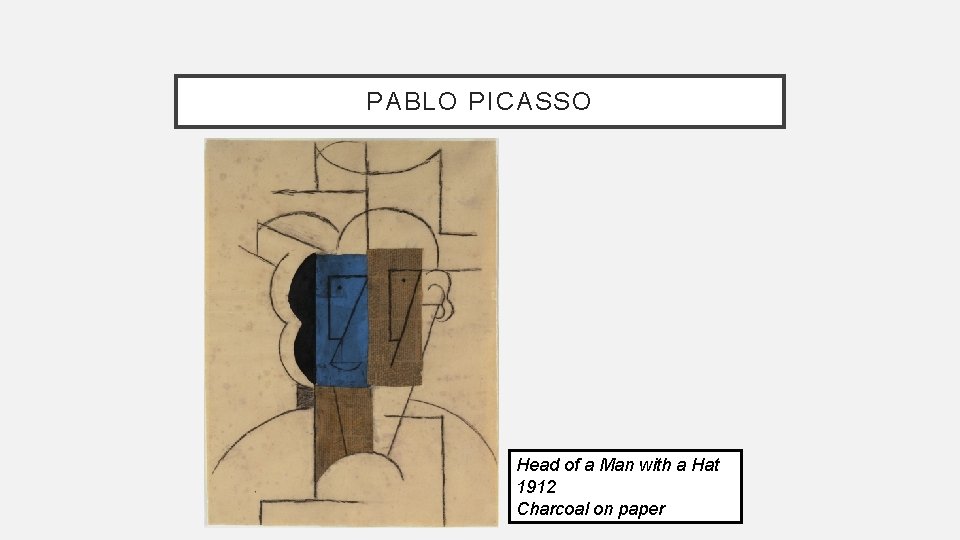
PABLO PICASSO Head of a Man with a Hat 1912 Charcoal on paper
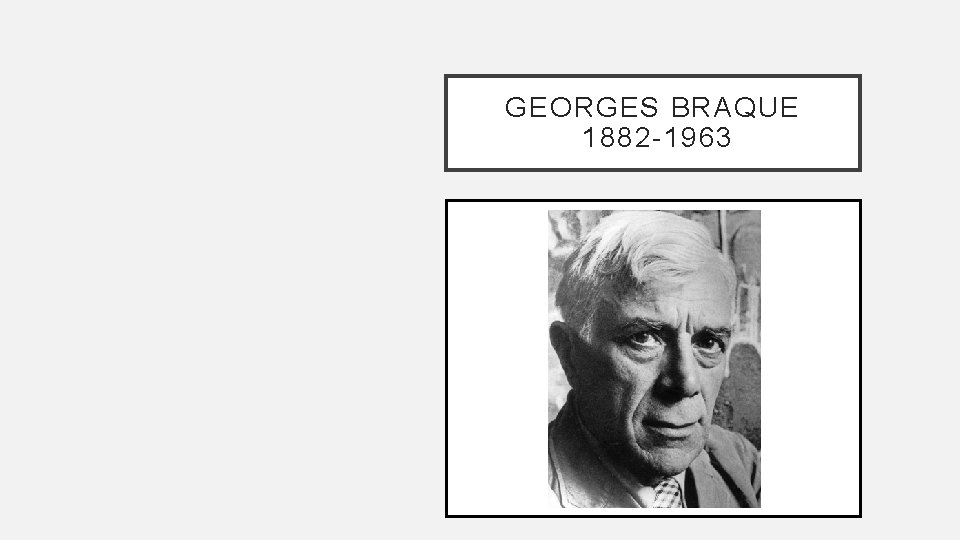
GEORGES BRAQUE 1882 -1963
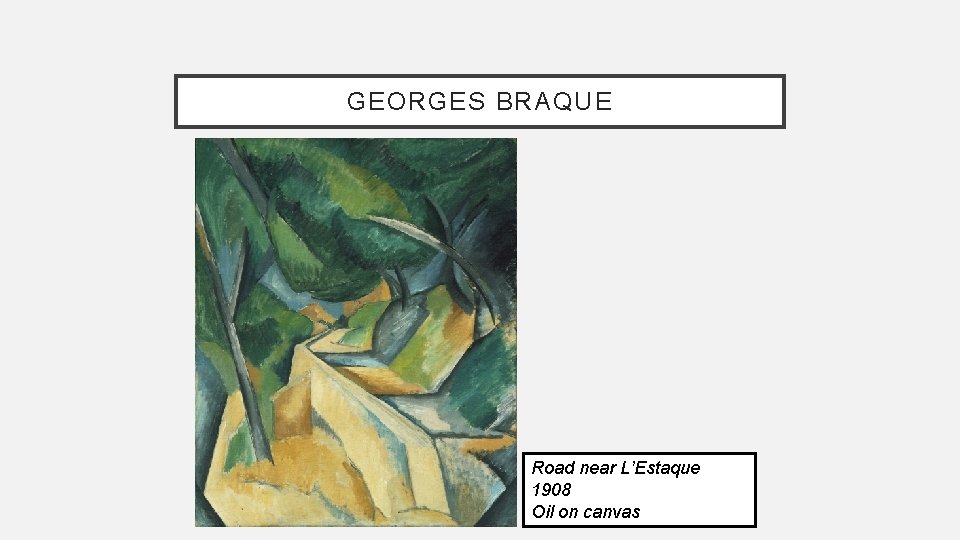
GEORGES BRAQUE Road near L’Estaque 1908 Oil on canvas
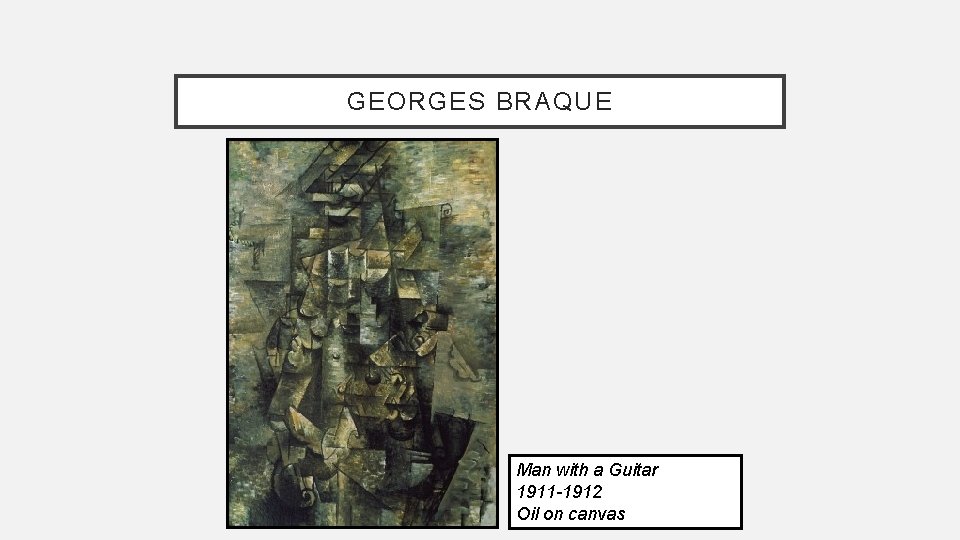
GEORGES BRAQUE Man with a Guitar 1911 -1912 Oil on canvas
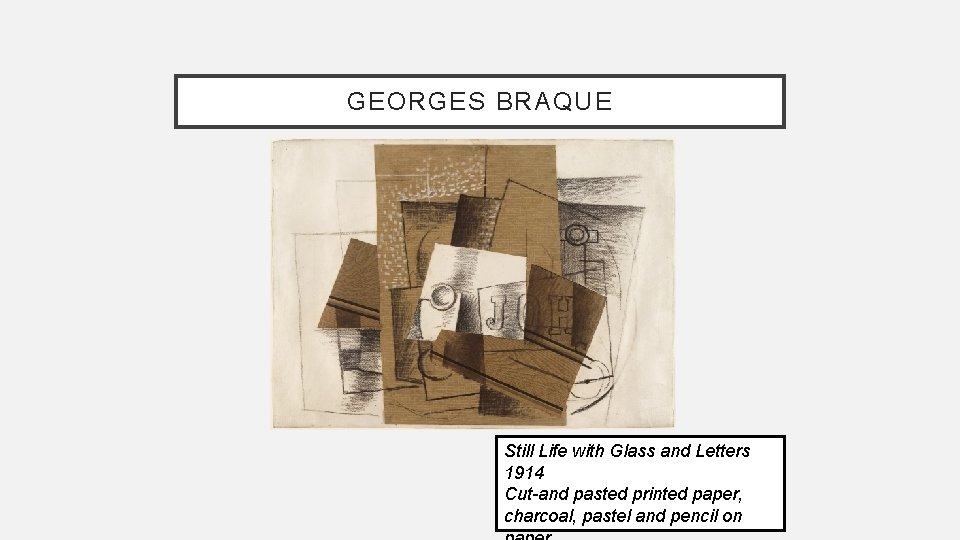
GEORGES BRAQUE Still Life with Glass and Letters 1914 Cut-and pasted printed paper, charcoal, pastel and pencil on
EXPLORING CUBISM Choose 2 of the provided artworks and answer each of the questions below: • What do you see in this image? Where? • What do you think the overall subject is intended to be? • What influences and characteristics of Cubism that we just discussed do you see in this image? • How did the artist use line/shape/form/color/value/texture? Place answers in your sketchbook with the project notes.
CUBISM STILL LIFE CREATING THE COMPOSITION 1. Choose two objects. 2. Draw a contour outline of these objects in your sketchbook. Overlapping the objects is encouraged. 3. Draw a FINAL contour outline of the two objects on 9 x 12 drawing paper. 4. Trace stencils of a LETTER and a NUMBER on your paper. Rotate your stencil in directions that will add interest to your composition. 5. Draw lines in a variety of directions using a ruler (approximately 6 lines. ) 6. Draw half-lines in a variety of directions using a ruler (approximately 5 lines. )
CUBISM STILL LIFE ADDING VALUE 1. Create a 1 x 6 inch gradient scale in your sketchbook with charcoal pencil. 2. Create a value gradient using charcoal pencil in each section of your FINAL drawing. 3. Rotate your paper often and avoid placing a VALUE 6 next to another VALUE.
CREDIT • Woman with Pear - https: //www. moma. org/collection/works/80394 • Head of a Man with a Hat https: //www. moma. org/collection/works/35867? artist_id=4609&locale=en&p age=1&sov_referrer=artist • Violin and Grapes https: //www. moma. org/collection/works/78578? artist_id=4609&locale=en&p age=1&sov_referrer=artist • Road near L’Estaque https: //www. moma. org/collection/works/78787? artist_id=744&locale=en&pa ge=1&sov_referrer=artist • Still Life with Glass and Letters https: //www. moma. org/collection/works/33278? artist_id=744&locale=en&pa ge=1&sov_referrer=artist • Man with a Guitar https: //www. moma. org/collection/works/79048? artist_id=744&locale=en&pa ge=1&sov_referrer=artist
- Slides: 46