
Cubenometry Unit Inspired by Math Science Innovation Center
Cube-n-ometry Unit Inspired by: Math. Science Innovation Center (Permission Granted to Modify) Modified for: Wake County’s 7 th Grade Math Classes
Part 1: Questions to Ponder n As you view the next few slides, ask yourself the following questions: n n What can be seen in the pictures? How were the pictures taken? Where would you need to be to take the pictures? Why are these pictures important to the specified professions? 2
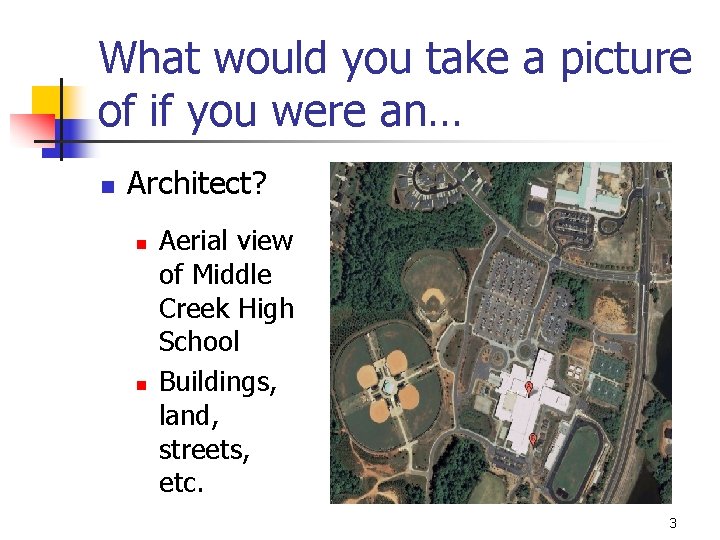
What would you take a picture of if you were an… n Architect? n n Aerial view of Middle Creek High School Buildings, land, streets, etc. 3
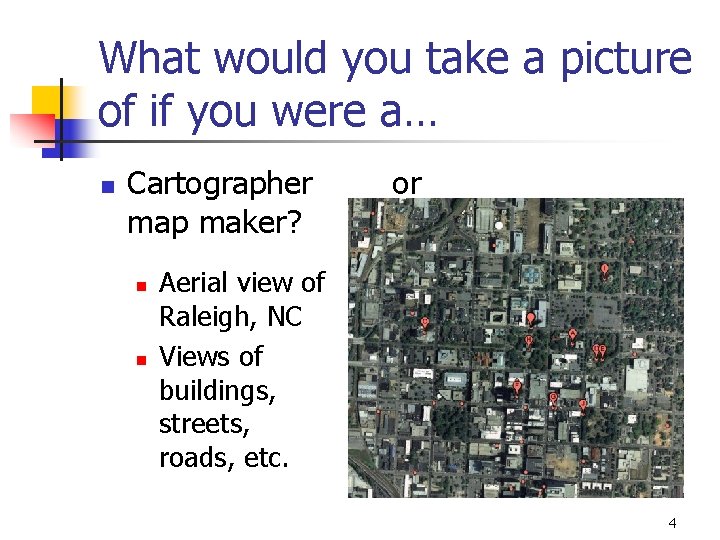
What would you take a picture of if you were a… n Cartographer map maker? n n or Aerial view of Raleigh, NC Views of buildings, streets, roads, etc. 4
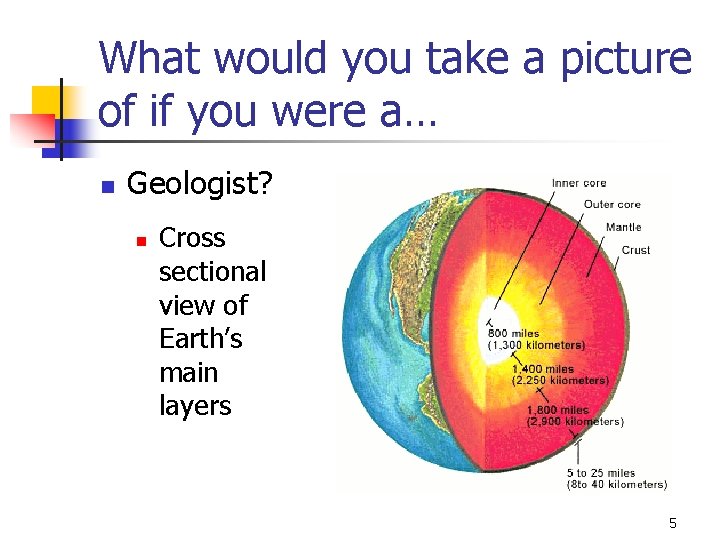
What would you take a picture of if you were a… n Geologist? n Cross sectional view of Earth’s main layers 5
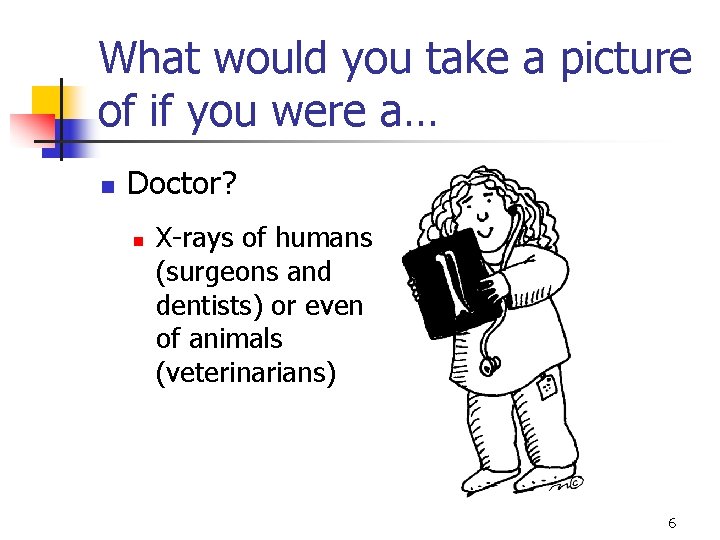
What would you take a picture of if you were a… n Doctor? n X-rays of humans (surgeons and dentists) or even of animals (veterinarians) 6
Questions to Answer n So, let’s answer the questions now: n n What could be seen in the pictures? How were the pictures taken? Where would you need to be to take the pictures? Why are these pictures important to the specified professions (map-maper, architect, scientist, doctor, etc) 7
Introduction to Visualizing Figures n n As you can see, POINTS OF VIEW are extremely important in all careers and professions. In this unit – “Cube-n-ometry” – we’re going to: n n Strengthen our ability to visualize threedimensional objects, and Explore methods for representing cubic structures. 8
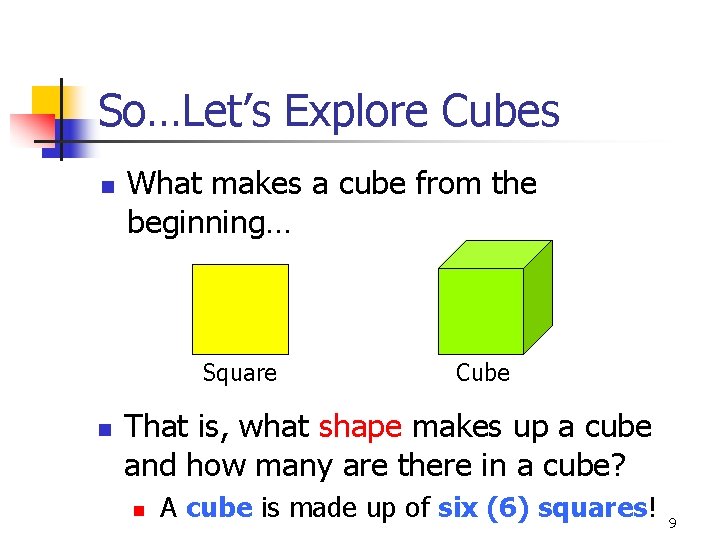
So…Let’s Explore Cubes n What makes a cube from the beginning… Square n Cube That is, what shape makes up a cube and how many are there in a cube? n A cube is made up of six (6) squares! 9
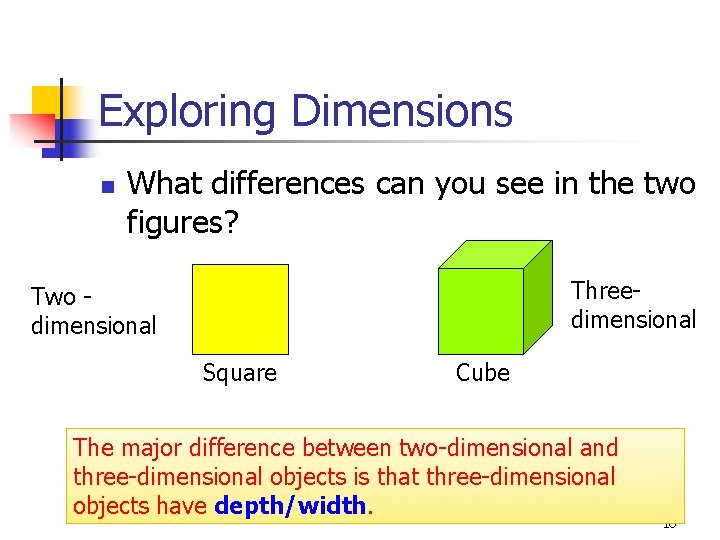
Exploring Dimensions n What differences can you see in the two figures? Threedimensional Two dimensional Square Cube The major difference between two-dimensional and three-dimensional objects is that three-dimensional objects have depth/width. 10
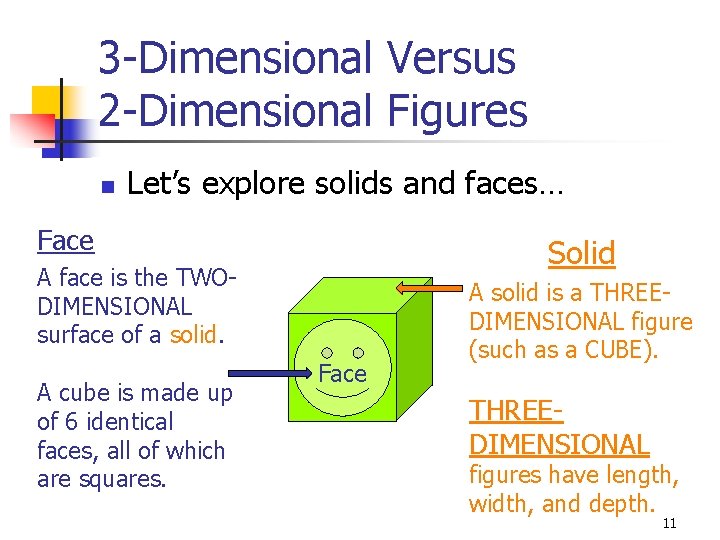
3 -Dimensional Versus 2 -Dimensional Figures n Let’s explore solids and faces… Face Solid A face is the TWODIMENSIONAL surface of a solid. A cube is made up of 6 identical faces, all of which are squares. Face A solid is a THREEDIMENSIONAL figure (such as a CUBE). THREEDIMENSIONAL figures have length, width, and depth. 11
Exploring Cubic Arrangements n Today we are going to explore possible arrangements of: n n n 3 Cubes, 4 Cubes, and Upon each task, we’ll create ISOMETRIC DRAWINGS of our 3 D figures using isometric dot paper. 12
Part 2: Isometric Drawings n What’s an ISOMETRIC DRAWING? n An isometric drawing is a perspective drawing of a three-dimensional figure. n n Hence, isometric drawings show the 3 RD dimension – “width” or “depth. ” ISOMETRIC DRAWINGS are drawn from the CORNER of a three-dimensional figure and can be placed onto isometric dot paper. 13
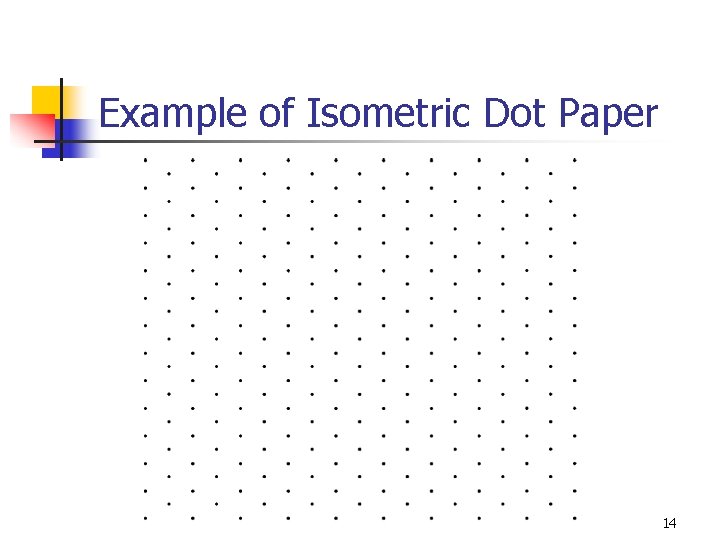
Example of Isometric Dot Paper 14
Arrangements of 3 Cubes n n n 3 Cubes are arranged so that at least one face of each cube must meet the face of another cube. You cannot have a second story on a house, unless there is a first story below it- it needs support! Rotations of the same arrangement do not count as different houses. If you have to PICK UP or DROP an arrangement, it is considered a different house. 15

Arrangements of 3 Cubes n How many arrangements of 3 cubes are there? n There are FOUR arrangements of 3 cubes. 16
Create Isometric Drawings of Your Cubic Arrangements n Using isometric dot paper, record each arrangement by creating an ISOMETRIC DRAWING of the cubic arrangement. 17
Create Isometric Drawings of Your Cubic Arrangements 18
Arrangements of 4 Cubes n n n New scenario! Four cubes are arranged so that at least one face of each cube must meet the face of another cube. How many arrangements of 4 cubes are possible? 19

Arrangements of 4 Cubes n n How many arrangements of 4 cubes are there? A few examples are… 20
Create Isometric Drawings of Your Cubic Arrangements 21

How Many Arrangements of 4 Cubes Are There? n There are FIFTEEN arrangements of 4 cubes! 22
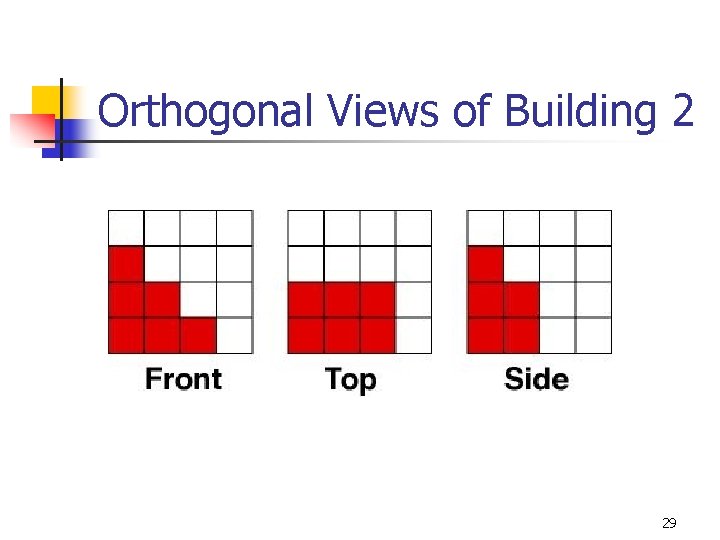
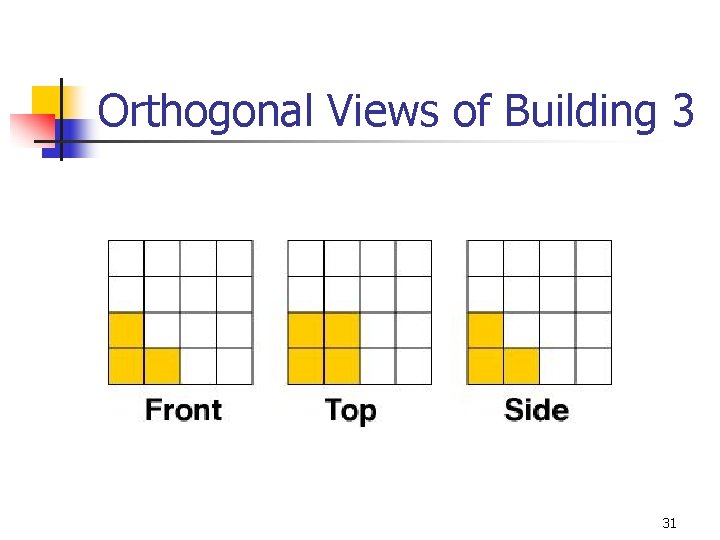
Part 3: Orthogonal Drawings n What’s an ORTHOGONAL DRAWING? n n An orthogonal drawing is a twodimensional sketch of a three-dimensional figures’ face. Orthogonal drawings are the FRONT, TOP, and SIDE views of a three-dimensional figure. 23
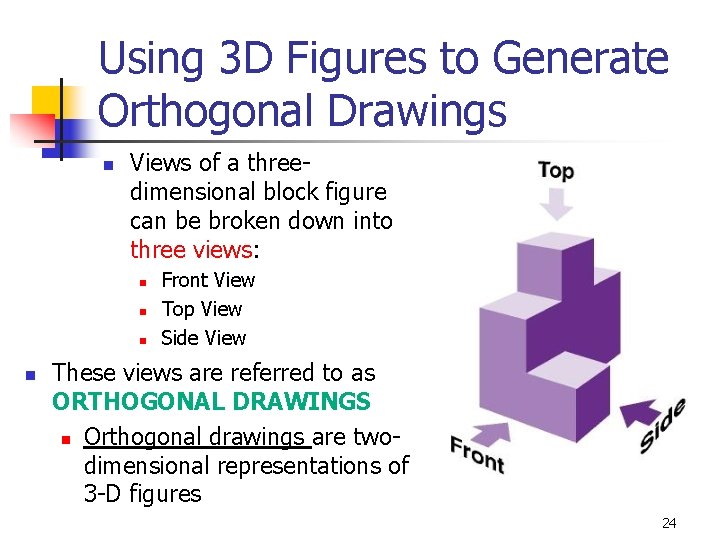
Using 3 D Figures to Generate Orthogonal Drawings n Views of a threedimensional block figure can be broken down into three views: n n Front View Top View Side View These views are referred to as ORTHOGONAL DRAWINGS n Orthogonal drawings are twodimensional representations of 3 -D figures 24

Construct Building 1 n Build this three dimensional block figure. n What does it look like from the: n Front? Top? Side? Sketch what you see. 25
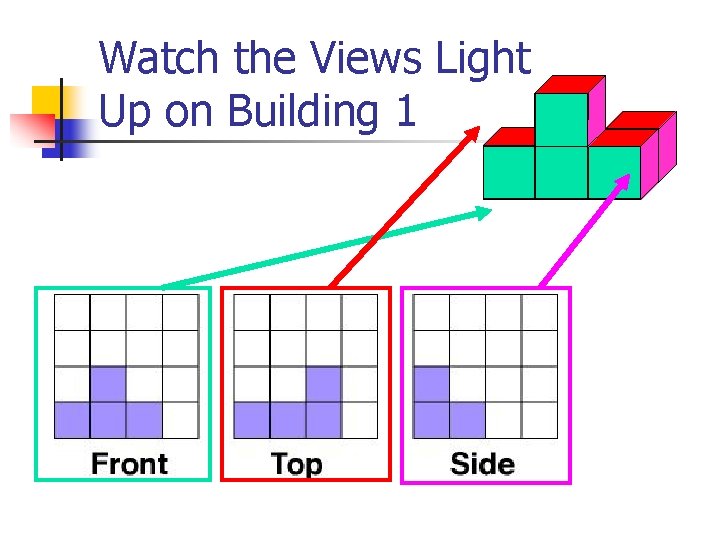
Watch the Views Light Up on Building 1
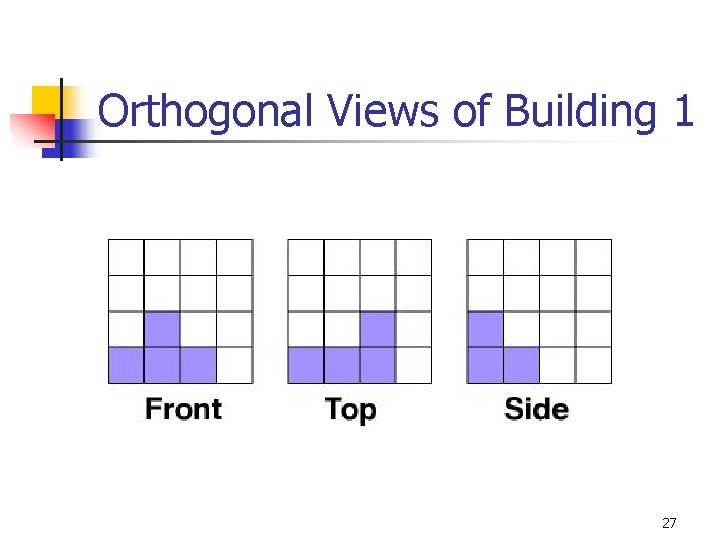
Orthogonal Views of Building 1 27
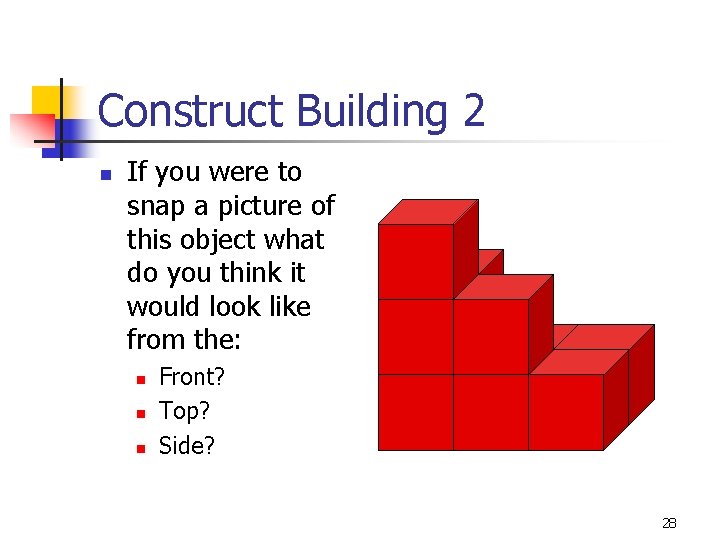
Construct Building 2 n If you were to snap a picture of this object what do you think it would look like from the: n n n Front? Top? Side? 28
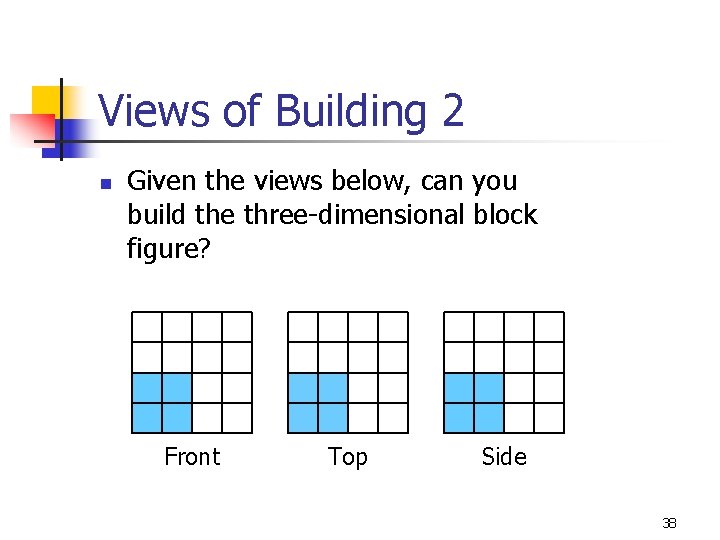
Orthogonal Views of Building 2 29
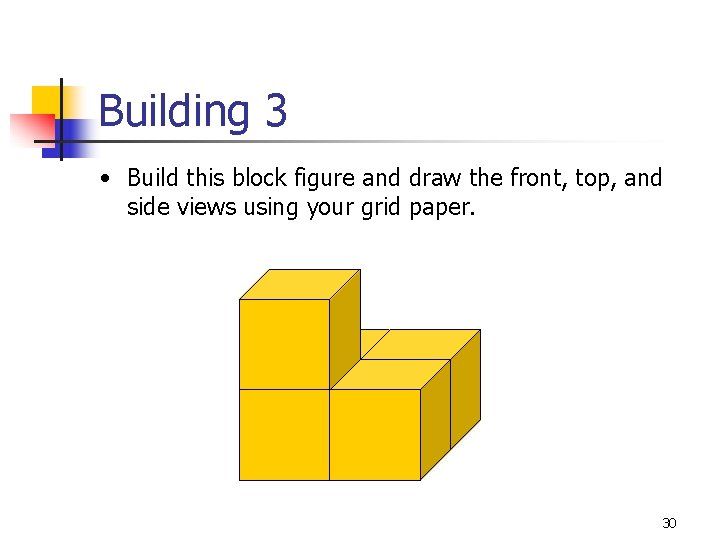
Building 3 • Build this block figure and draw the front, top, and side views using your grid paper. 30
Orthogonal Views of Building 3 31
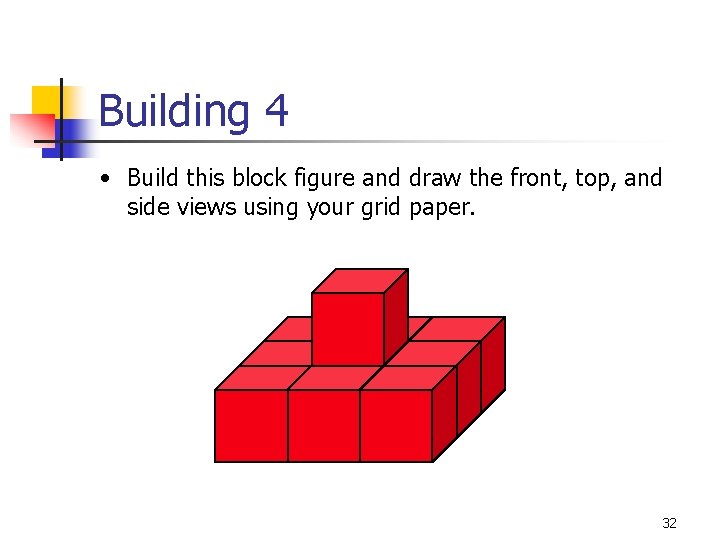
Building 4 • Build this block figure and draw the front, top, and side views using your grid paper. 32
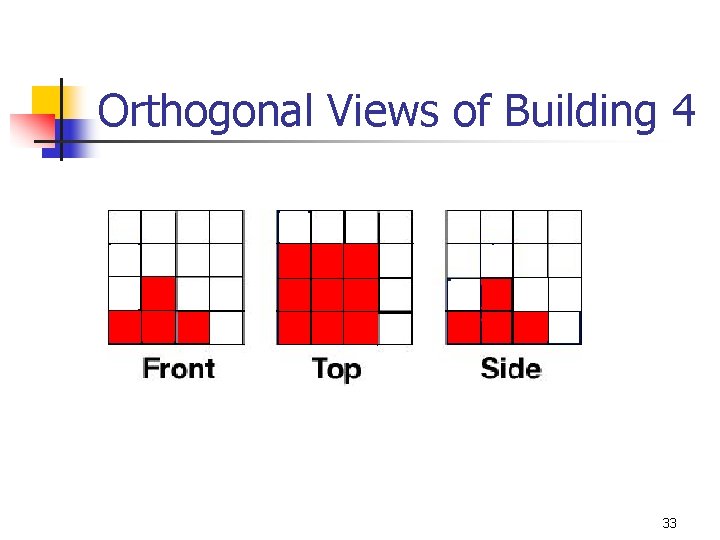
Orthogonal Views of Building 4 33
Part 4: Building 3 D Figures Using Orthogonal Drawings n n Power. Point Presentation – Building 3 D figures using orthogonal views Designing Spaces Section 3: “Seeing all Possibilities” n n Drawing 3 -D Views Packet n n Construct Homes from Orthogonal Views Figures 1 -6 (Classroom Strategies) Orthogonal to 3 -D to Isometric n 4 Buildings 34
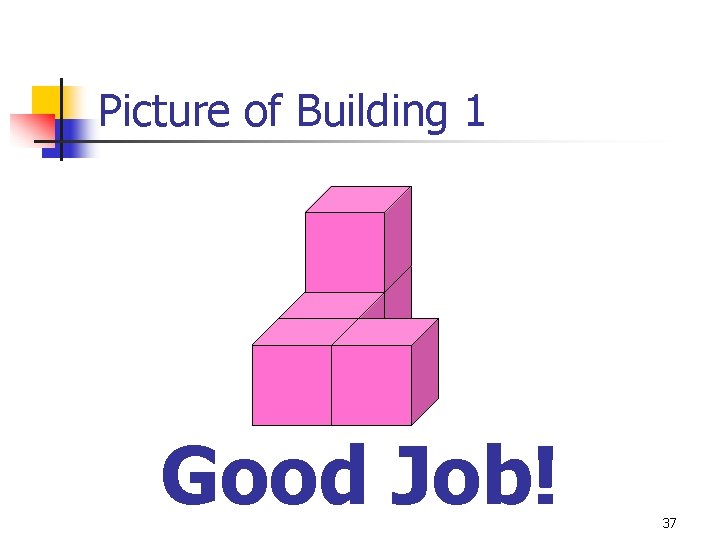
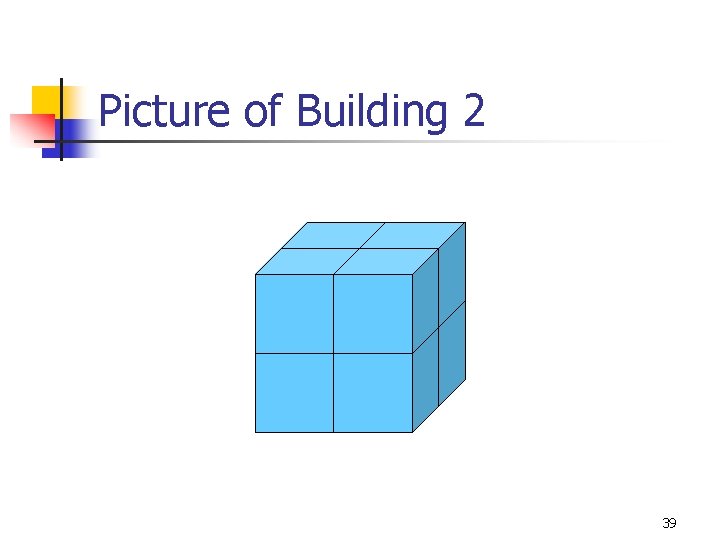
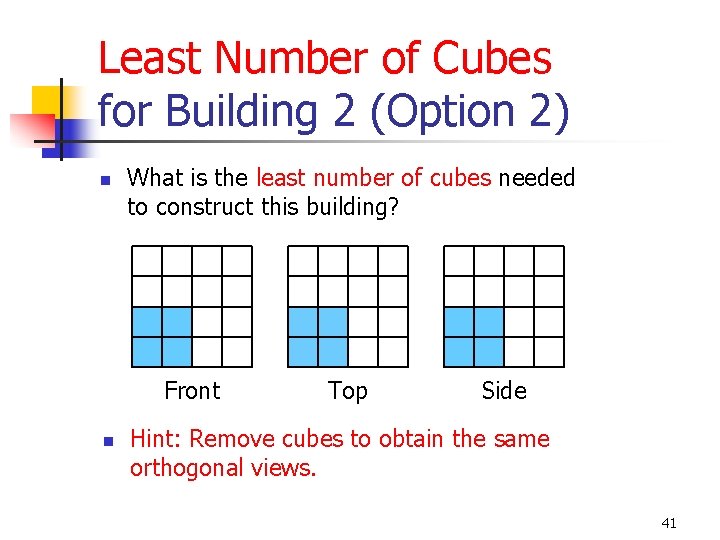
Building 3 D Figures Using Orthogonal Drawings n n Now. . . let’s do the opposite! Given the orthogonal drawings front, top, and side views - can you build the three-dimensional block figures using the least number of cubes possible. n Hint: Once you’ve constructed the 3 -D figure, see if one or more cubes can be removed to generate the same orthogonal drawings or views. 35
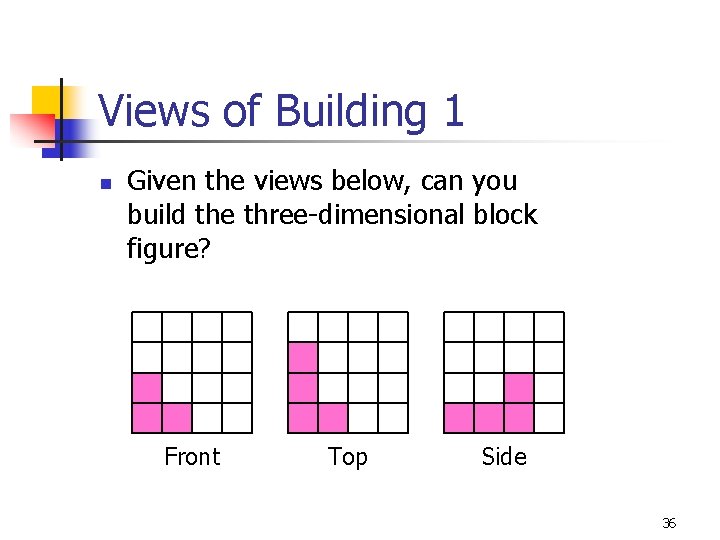
Views of Building 1 n Given the views below, can you build the three-dimensional block figure? Front Top Side 36
Picture of Building 1 Good Job! 37
Views of Building 2 n Given the views below, can you build the three-dimensional block figure? Front Top Side 38
Picture of Building 2 39

Number of Cubes for Building 2 (Option 1) n How many cubes are needed to construct this building? Front n Top Side 8 Cubes 40
Least Number of Cubes for Building 2 (Option 2) n What is the least number of cubes needed to construct this building? Front n Top Side Hint: Remove cubes to obtain the same orthogonal views. 41
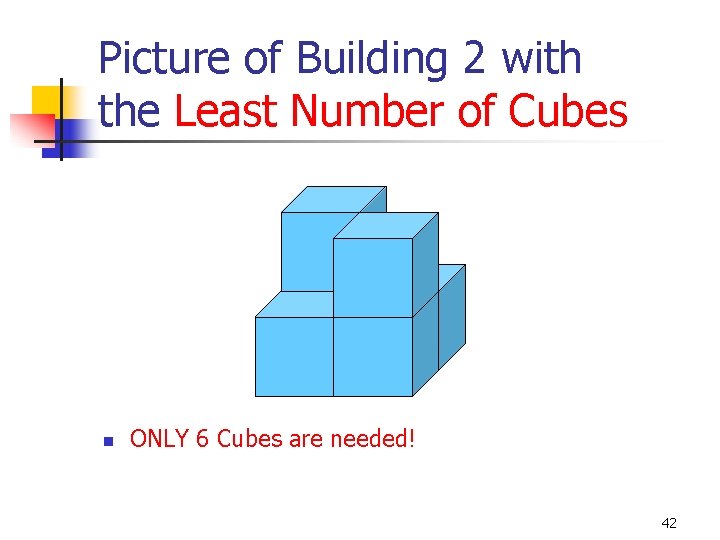
Picture of Building 2 with the Least Number of Cubes n ONLY 6 Cubes are needed! 42
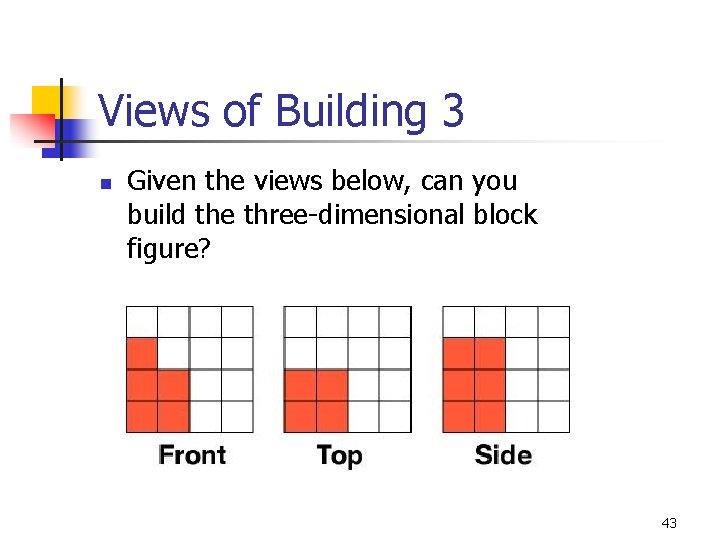
Views of Building 3 n Given the views below, can you build the three-dimensional block figure? 43
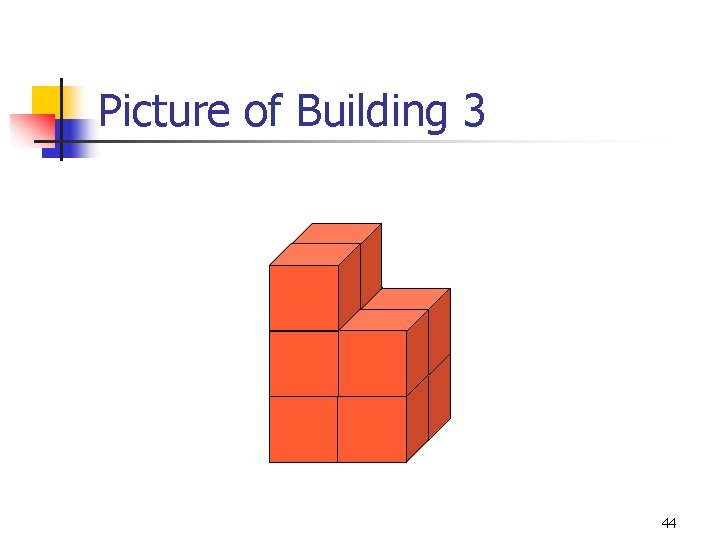
Picture of Building 3 44
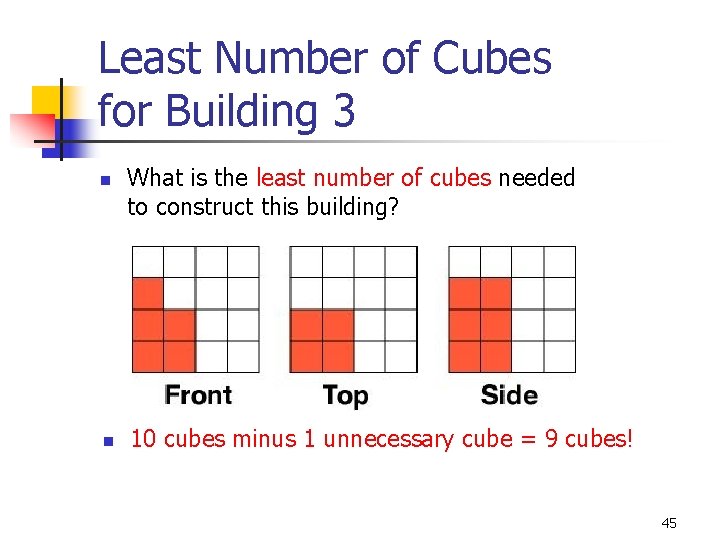
Least Number of Cubes for Building 3 n n What is the least number of cubes needed to construct this building? 10 cubes minus 1 unnecessary cube = 9 cubes! 45
- Slides: 45