
CUBE Surface Area We will need to find
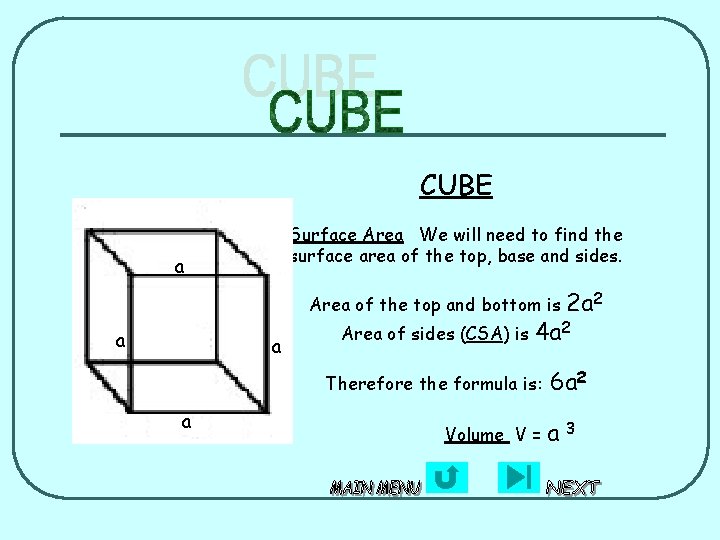
CUBE Surface Area We will need to find the surface area of the top, base and sides. a Area of the top and bottom is a a Area of sides (CSA) is 4 a 2 Therefore the formula is: a 2 a 2 Volume V = 6 a 2 a 3
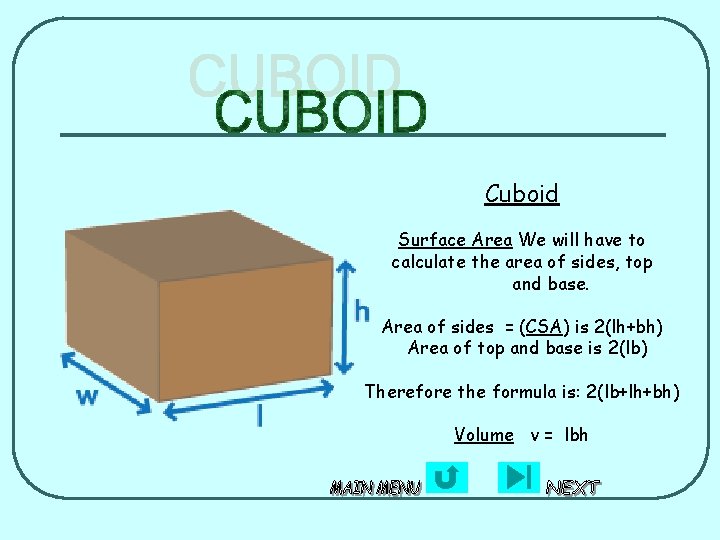
Cuboid Surface Area We will have to calculate the area of sides, top and base. Area of sides = (CSA) is 2(lh+bh) Area of top and base is 2(lb) Therefore the formula is: 2(lb+lh+bh) Volume v = lbh
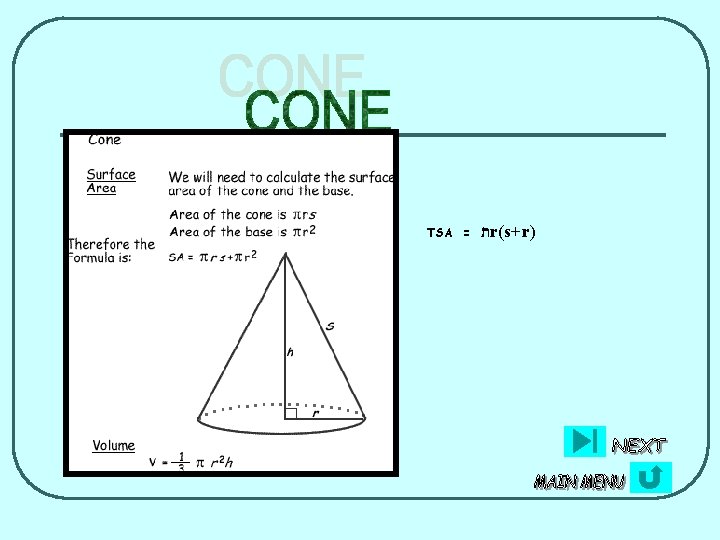
TSA = ת r(s+r)
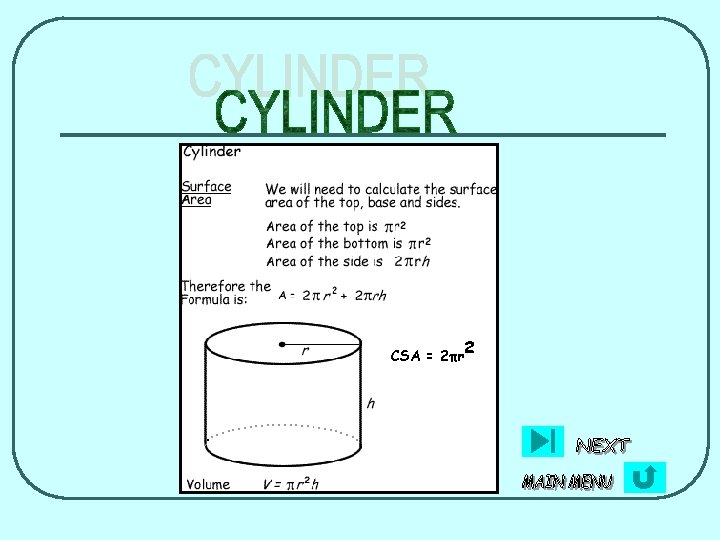
CSA = 2πr 2
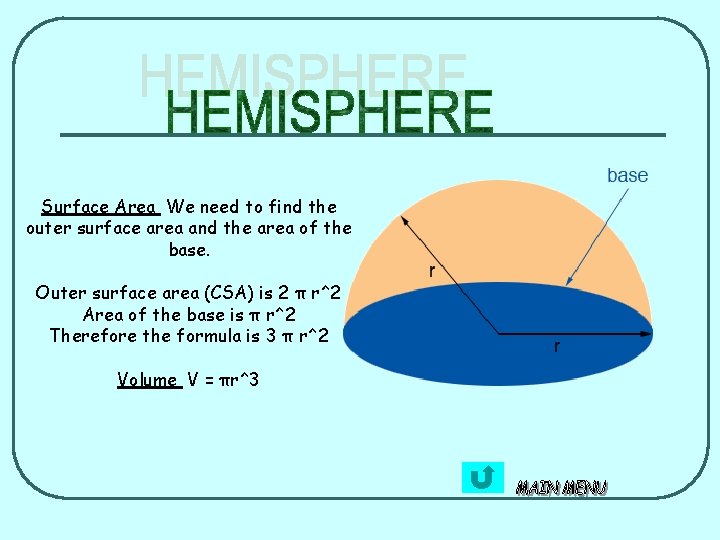
Surface Area We need to find the outer surface area and the area of the base. Outer surface area (CSA) is 2 π r^2 Area of the base is π r^2 Therefore the formula is 3 π r^2 Volume V = πr^3
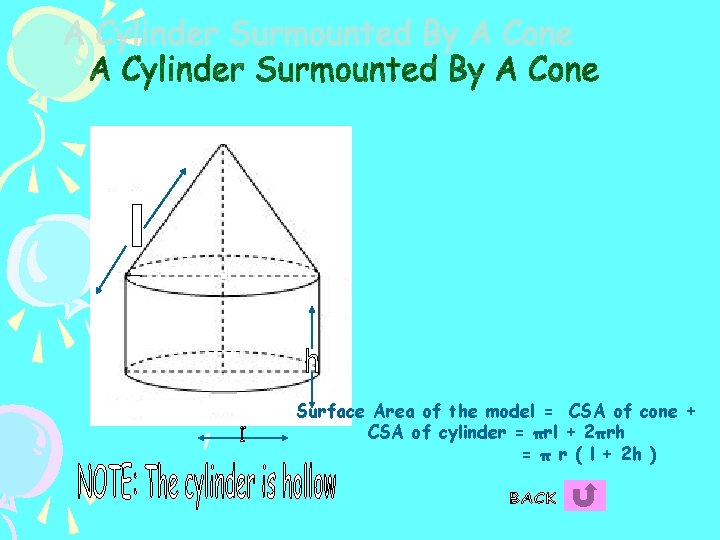
Surface Area of the model = CSA of cone + CSA of cylinder = πrl + 2πrh = π r ( l + 2 h )

Surface Area of the model = CSA of the cylinder + CSA Of the cone + Area of the cylinder’s base = 2πrh + πrl + πr 2 = πr ( 2 h + l + r )

Surface Area of the model = CSA of hemisphere + CSA of the cone = 2πr 2 + πrl = πr ( 2 r + l )
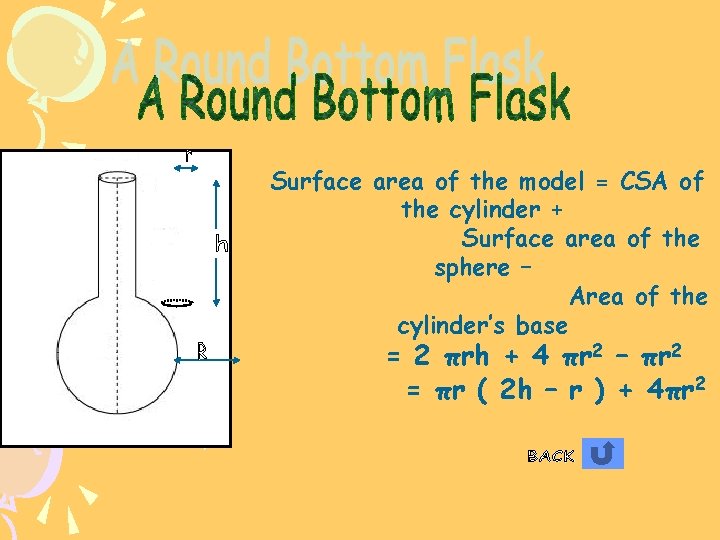
Surface area of the model = CSA of the cylinder + Surface area of the sphere – Area of the cylinder’s base = 2 πrh + 4 πr 2 – πr 2 = πr ( 2 h – r ) + 4πr 2
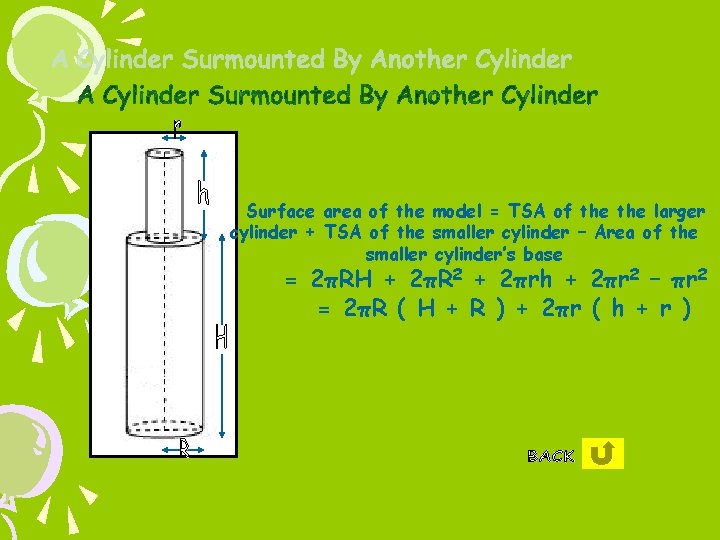
Surface area of the model = TSA of the larger cylinder + TSA of the smaller cylinder – Area of the smaller cylinder’s base = 2πRH + 2πR 2 + 2πrh + 2πr 2 – πr 2 = 2πR ( H + R ) + 2πr ( h + r )
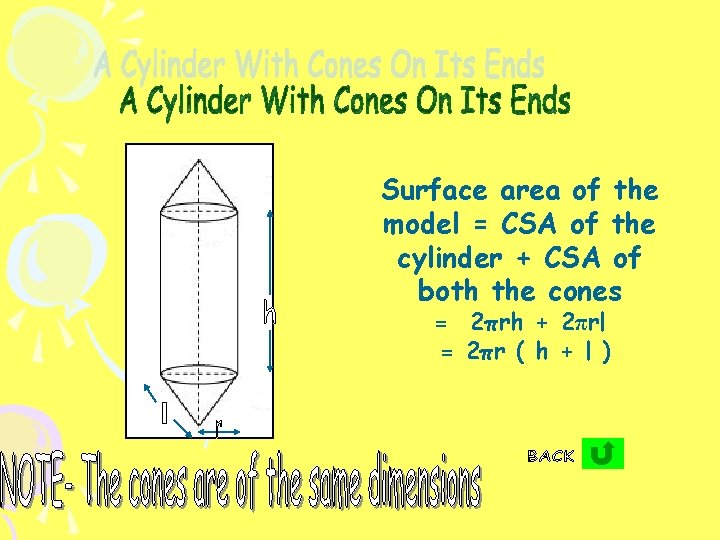
Surface area of the model = CSA of the cylinder + CSA of both the cones = 2πrh + 2πrl = 2πr ( h + l )

Surface area of the model = CSA of the cylinder + CSA of the two hemispheres = 2πrh + 2 ( 2πr 2 ) = 2πrh + 4πr 2 = 2πr ( h + 2 r )
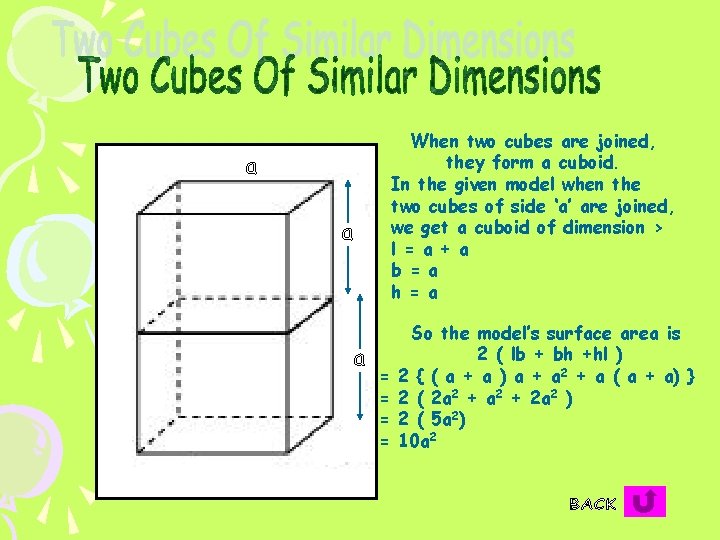
When two cubes are joined, they form a cuboid. In the given model when the two cubes of side ‘a’ are joined, we get a cuboid of dimension > l = a + a b = a h = a = = So the model’s surface area is 2 ( lb + bh +hl ) 2 { ( a + a ) a + a 2 + a ( a + a) } 2 ( 2 a 2 + 2 a 2 ) 2 ( 5 a 2) 10 a 2
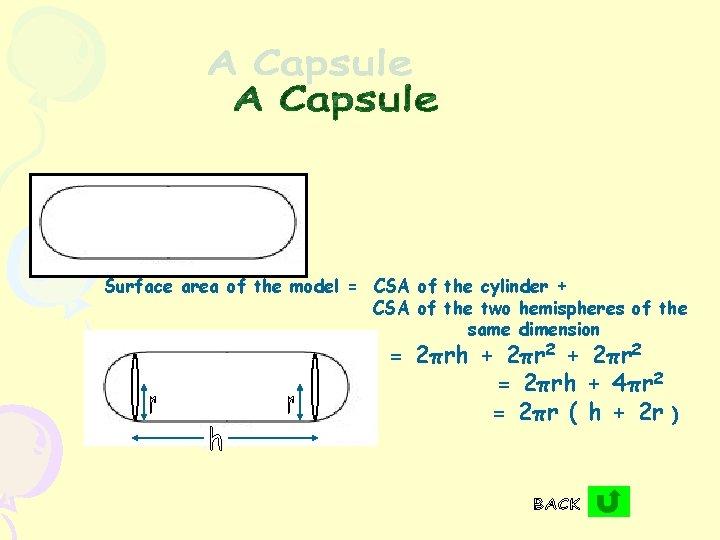
Surface area of the model = CSA of the cylinder + CSA of the two hemispheres of the same dimension = 2πrh + 2πr 2 = 2πrh + 4πr 2 = 2πr ( h + 2 r )

Surface area of the model = TSA of the cuboid + CSA of the hemisphere - CSA of the top of the hemisphere = 2 ( lb + hl + hb ) + 2πr 2 – πr 2 = 2 ( lb + hl + hb ) + πr 2
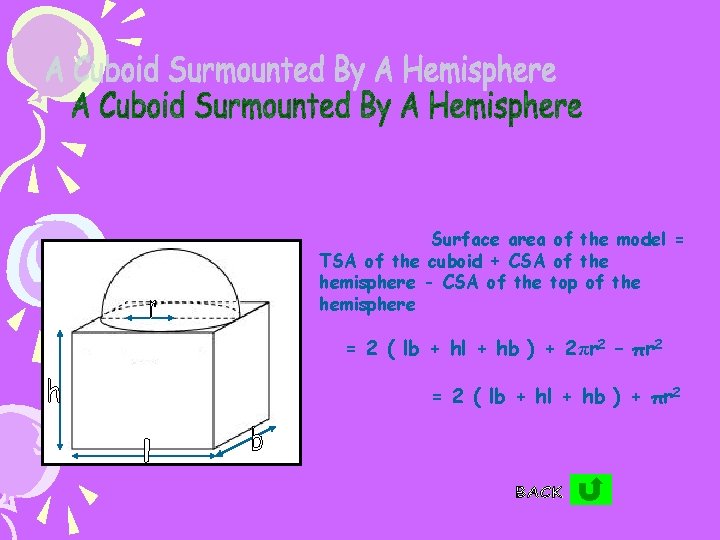
Surface area of the model = TSA of the cuboid + CSA of the hemisphere - CSA of the top of the hemisphere = 2 ( lb + hl + hb ) + 2πr 2 – πr 2 = 2 ( lb + hl + hb ) + πr 2
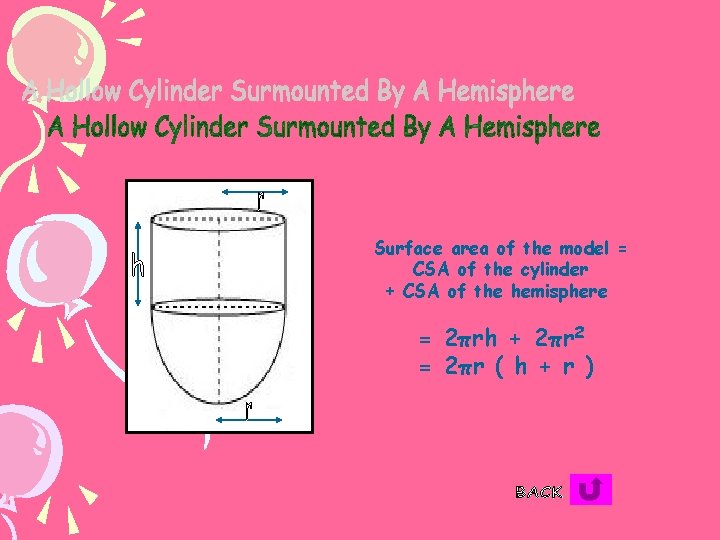
Surface area of the model = CSA of the cylinder + CSA of the hemisphere = 2πrh + 2πr 2 = 2πr ( h + r )

• Thank you - Dhruv Sahdev
- Slides: 23