
CTIP Real Time Traffic Monitoring RTTM and Dynamic
- Slides: 12
C-TIP Real Time Traffic Monitoring (RTTM) and Dynamic Route Guidance (DRG) In association with: Talking Freight Seminar November 17, 2010 Paul Belella 1
Agenda Ø Project Overview Ø RTTM & DRG Concept Ø RTTM Overview Ø DRG Overview Ø RTTM & DRG Functional Layout Ø RTTM & DRG Operation Ø RTTM & DRG Schematic Ø Important Factors 2
Project Overview Ø Primary Objective: Make tailored real-time traffic information and route guidance available to motor carriers to mitigate congestion and reduce delay Ø Major Project Components Ø Design and Development of RTTM Module Ø Design and Development of DRG Module Ø Implementation of both in Kansas City Ø Connection with C-TIP Ø Two of several components Ø Fully integrated with other modules Ø Scalable and transferable to other locations 3
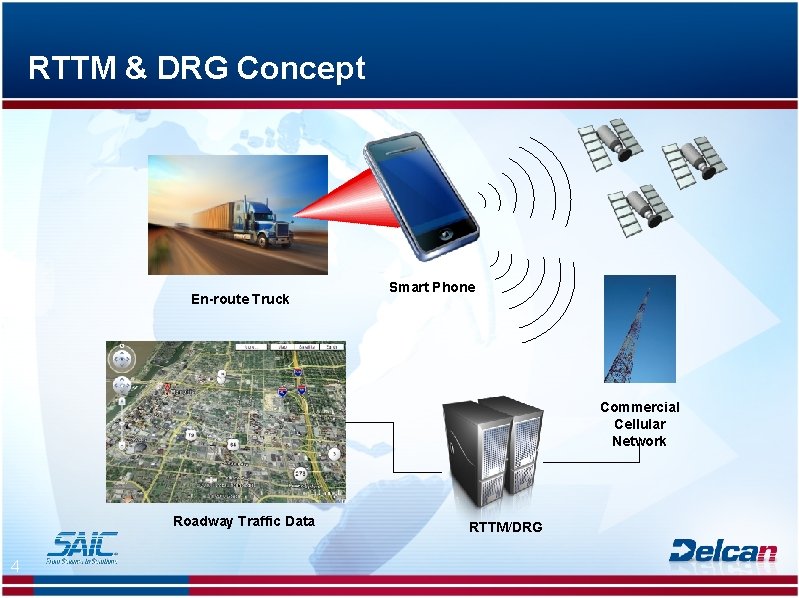
RTTM & DRG Concept En-route Truck Smart Phone Commercial Cellular Network Roadway Traffic Data 4 RTTM/DRG
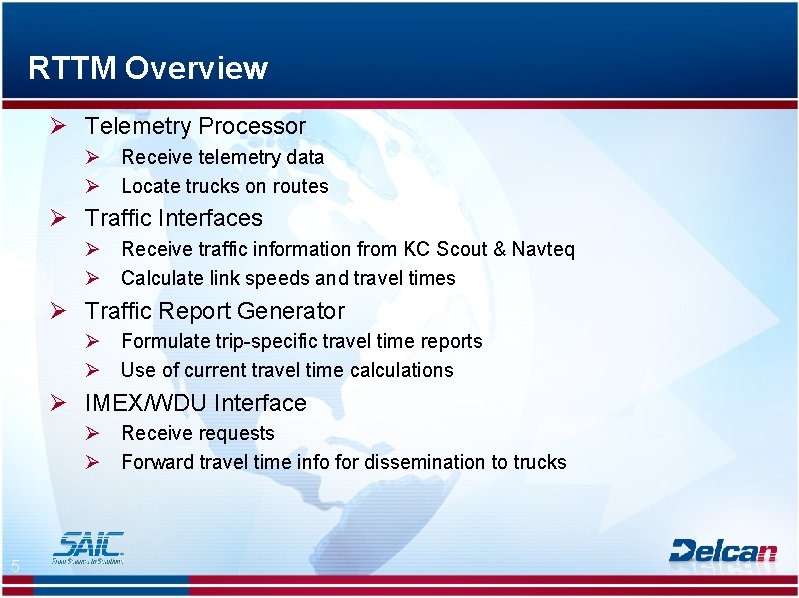
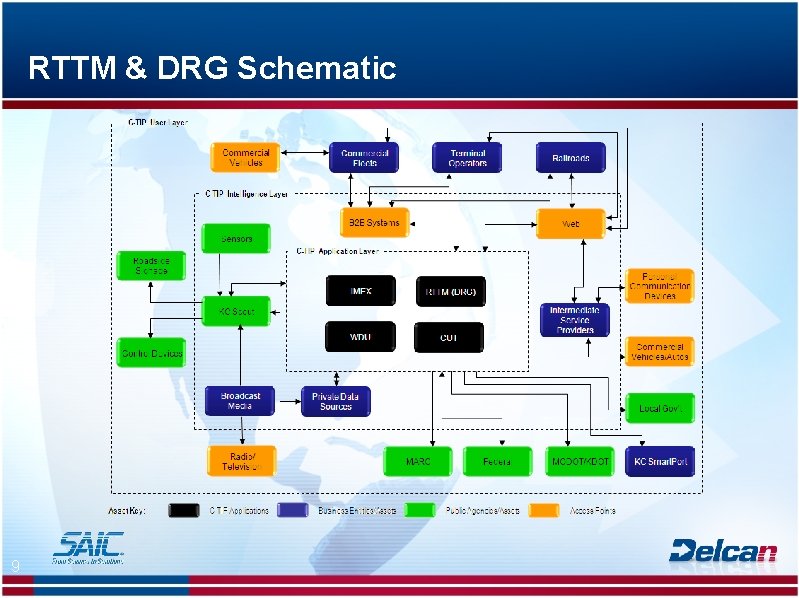
RTTM Overview Ø Telemetry Processor Ø Receive telemetry data Ø Locate trucks on routes Ø Traffic Interfaces Ø Receive traffic information from KC Scout & Navteq Ø Calculate link speeds and travel times Ø Traffic Report Generator Ø Formulate trip-specific travel time reports Ø Use of current travel time calculations Ø IMEX/WDU Interface Ø Receive requests Ø Forward travel time info for dissemination to trucks 5
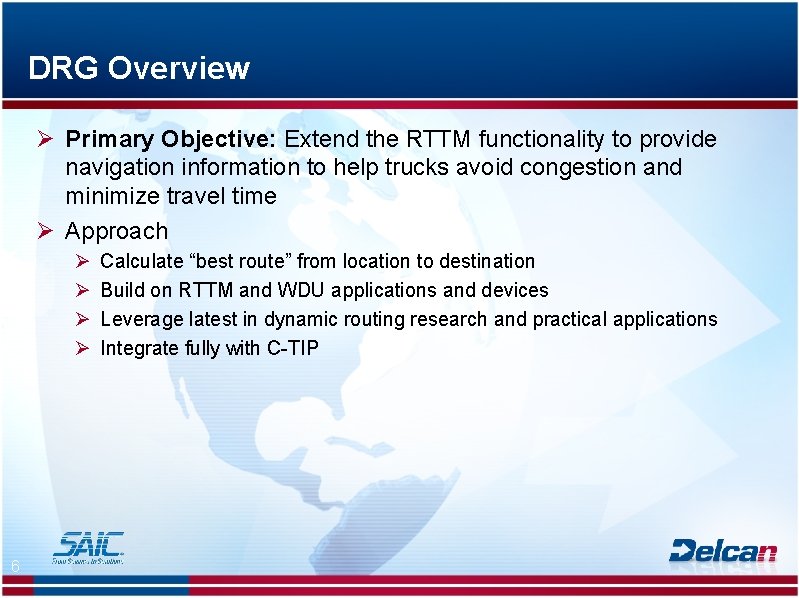
DRG Overview Ø Primary Objective: Extend the RTTM functionality to provide navigation information to help trucks avoid congestion and minimize travel time Ø Approach Ø Ø 6 Calculate “best route” from location to destination Build on RTTM and WDU applications and devices Leverage latest in dynamic routing research and practical applications Integrate fully with C-TIP
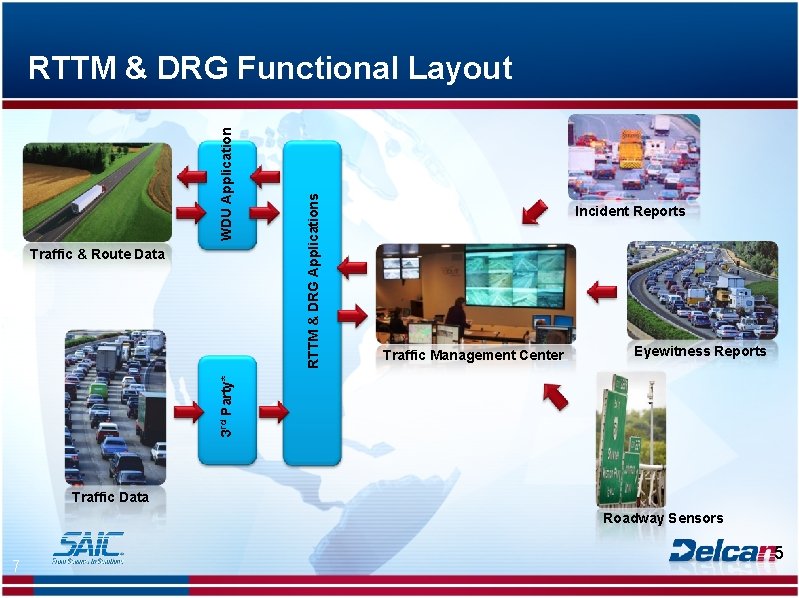
Incident Reports Traffic Management Center Eyewitness Reports 3 rd Party* Traffic & Route Data RTTM & DRG Applications WDU Application RTTM & DRG Functional Layout Traffic Data Roadway Sensors 7 5
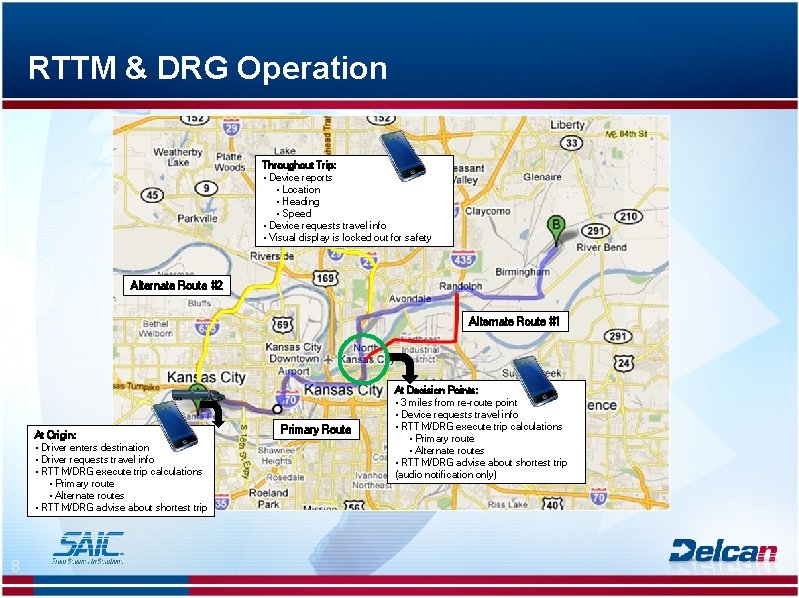
RTTM & DRG Operation Throughout Trip: • Device reports • Location • Heading • Speed • Device requests travel info • Visual display is locked out for safety Alternate Route #2 Alternate Route #1 At Origin: • Driver enters destination • Driver requests travel info • RTTM/DRG execute trip calculations • Primary route • Alternate routes • RTTM/DRG advise about shortest trip 8 Primary Route At Decision Points: • 3 miles from re-route point • Device requests travel info • RTTM/DRG execute trip calculations • Primary route • Alternate routes • RTTM/DRG advise about shortest trip (audio notification only)
RTTM & DRG Schematic 9
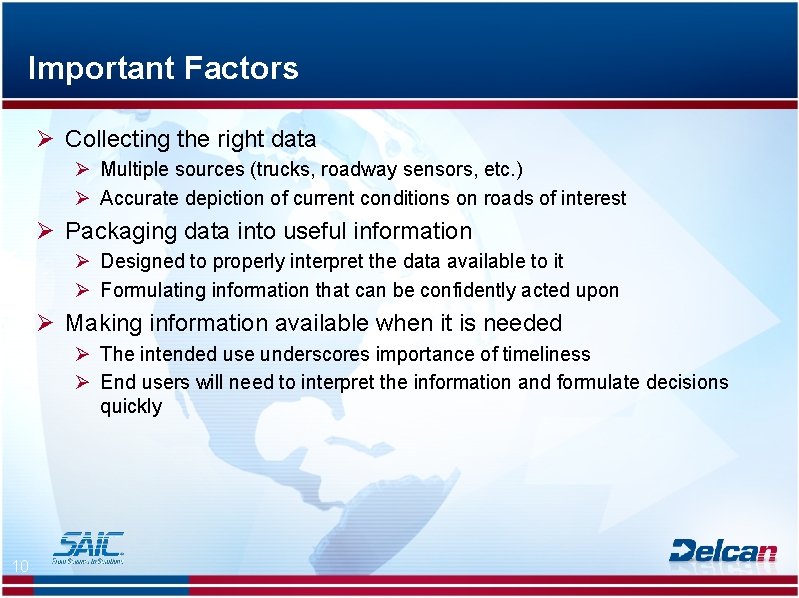
Important Factors Ø Collecting the right data Ø Multiple sources (trucks, roadway sensors, etc. ) Ø Accurate depiction of current conditions on roads of interest Ø Packaging data into useful information Ø Designed to properly interpret the data available to it Ø Formulating information that can be confidently acted upon Ø Making information available when it is needed Ø The intended use underscores importance of timeliness Ø End users will need to interpret the information and formulate decisions quickly 10
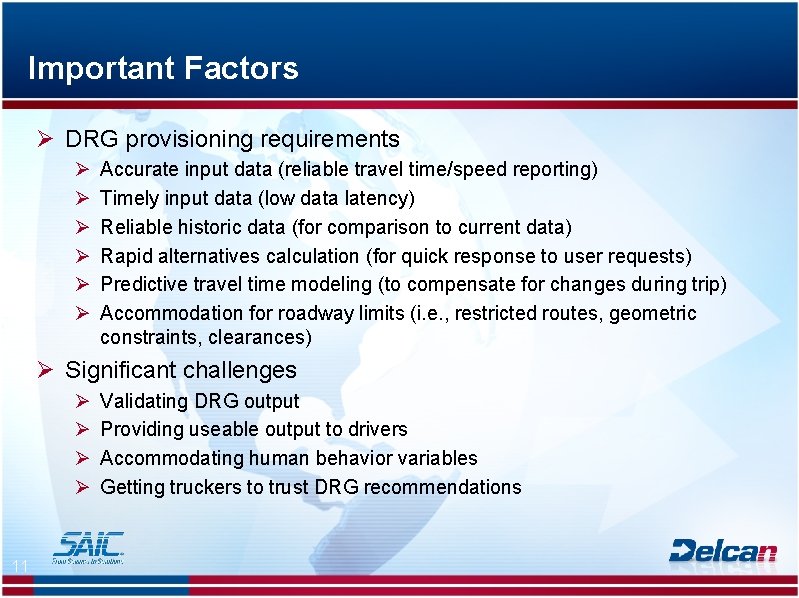
Important Factors Ø DRG provisioning requirements Ø Ø Ø Accurate input data (reliable travel time/speed reporting) Timely input data (low data latency) Reliable historic data (for comparison to current data) Rapid alternatives calculation (for quick response to user requests) Predictive travel time modeling (to compensate for changes during trip) Accommodation for roadway limits (i. e. , restricted routes, geometric constraints, clearances) Ø Significant challenges Ø Ø 11 Validating DRG output Providing useable output to drivers Accommodating human behavior variables Getting truckers to trust DRG recommendations
Project Contacts Ø Randy Butler – FHWA Project Manager Ø randy. butler@dot. gov Ø (202) 366 -9215 Ø Paul Belella – RTTM/DRG Project Manager Ø p. belella@delcan. com Ø (703) 752 -6060 x 104 Ø Ron Schaefer – C-TIP Project Manager Ø schaeferrl@saic. com Ø (618) 257 -8435 12