
CTE AWARENESS IN SECONDARY STUDENTS Jaclyn Harris ECT

- Slides: 11
CTE AWARENESS IN SECONDARY STUDENTS Jaclyn Harris ECT 6767: Improving CTE Programs University of South Florida
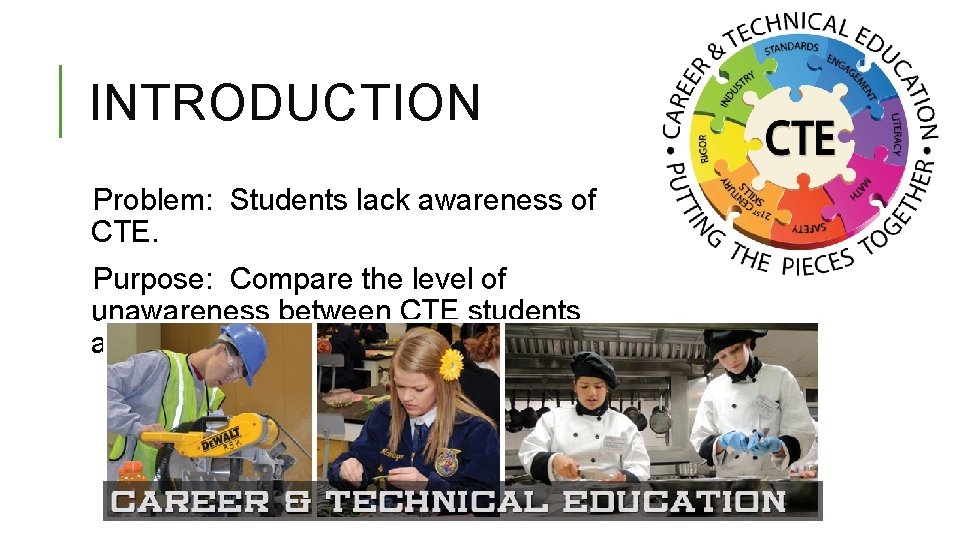
INTRODUCTION Problem: Students lack awareness of CTE. Purpose: Compare the level of unawareness between CTE students and non-CTE students.
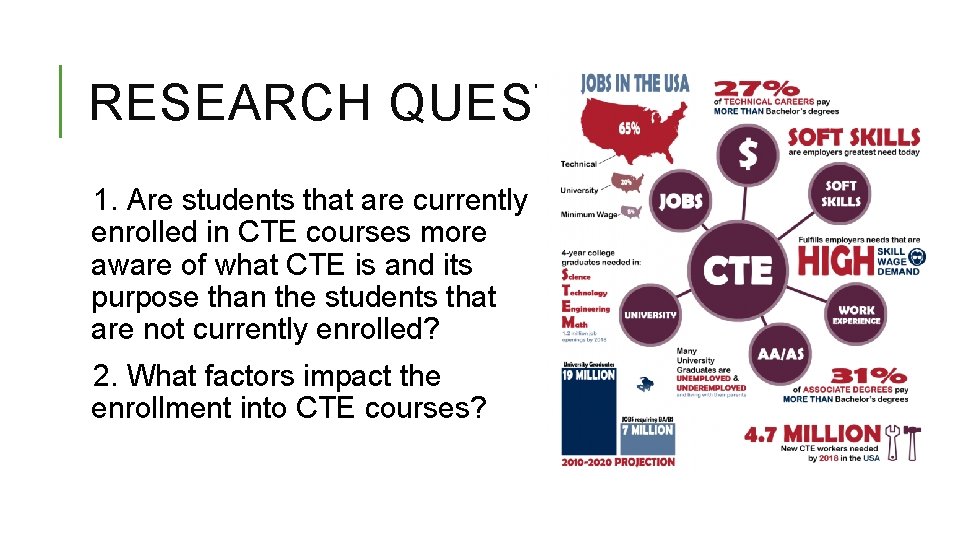
RESEARCH QUESTIONS 1. Are students that are currently enrolled in CTE courses more aware of what CTE is and its purpose than the students that are not currently enrolled? 2. What factors impact the enrollment into CTE courses?
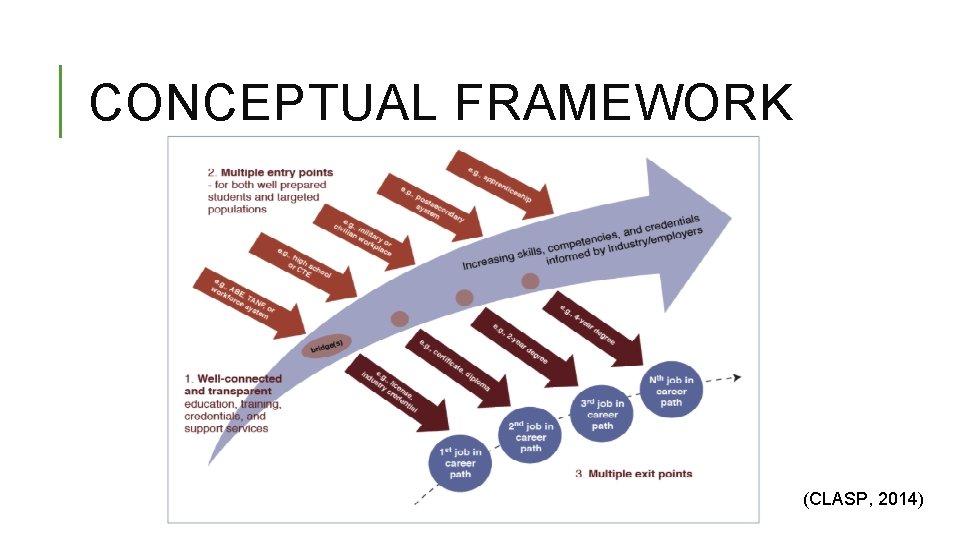
CONCEPTUAL FRAMEWORK (CLASP, 2014)
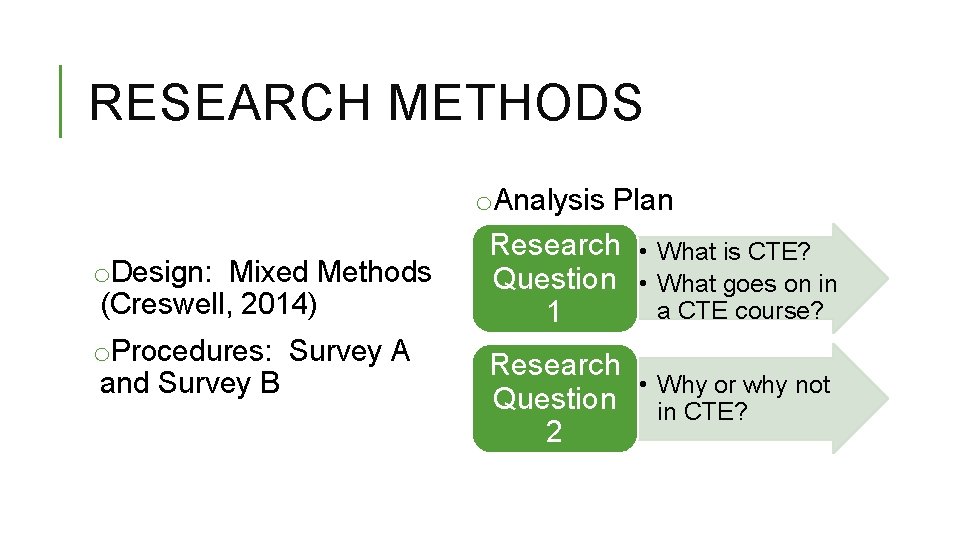
RESEARCH METHODS o. Design: Mixed Methods (Creswell, 2014) o. Procedures: Survey A and Survey B o. Analysis Plan Research • What is CTE? Question • What goes on in a CTE course? 1 Research • Why or why not Question in CTE? 2
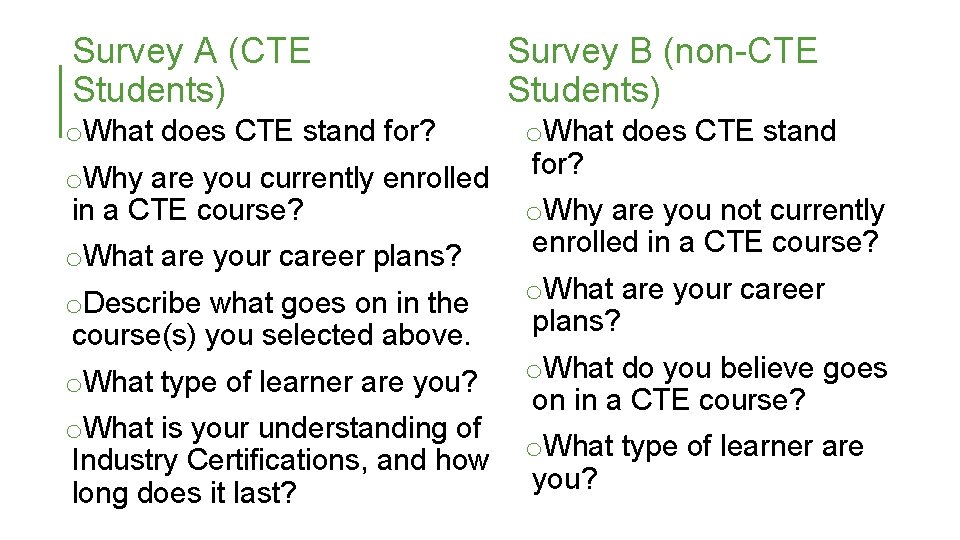
Survey A (CTE Students) o. What does CTE stand for? o. Why are you currently enrolled in a CTE course? o. What are your career plans? o. Describe what goes on in the course(s) you selected above. o. What type of learner are you? o. What is your understanding of Industry Certifications, and how long does it last? Survey B (non-CTE Students) o. What does CTE stand for? o. Why are you not currently enrolled in a CTE course? o. What are your career plans? o. What do you believe goes on in a CTE course? o. What type of learner are you?
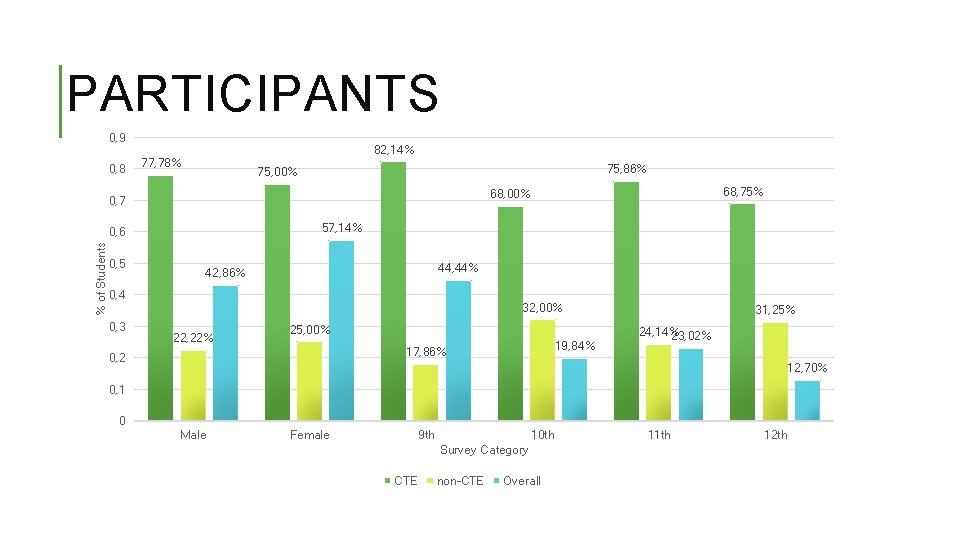
PARTICIPANTS 0, 9 0, 8 82, 14% 77, 78% 75, 86% 75, 00% 57, 14% % of Students 0, 6 0, 5 44, 44% 42, 86% 0, 4 0, 3 68, 75% 68, 00% 0, 7 32, 00% 22, 22% 25, 00% 19, 84% 17, 86% 0, 2 31, 25% 24, 14% 23, 02% 12, 70% 0, 1 0 Male Female 9 th 10 th Survey Category CTE non-CTE Overall 11 th 12 th
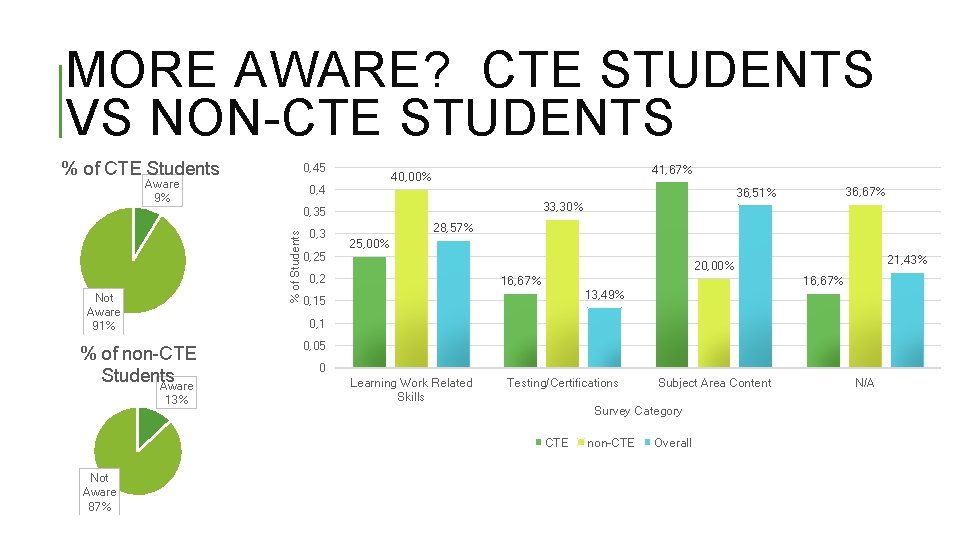
MORE AWARE? CTE STUDENTS VS NON-CTE STUDENTS % of CTE Students 0, 45 Aware 9% 41, 67% 40, 00% 0, 4 % of Students 0, 35 Not Aware 91% 0, 3 0, 25 28, 57% 25, 00% 21, 43% 20, 00% 0, 2 16, 67% 13, 49% 0, 15 0, 1 % of non-CTE Students Aware 13% 0, 05 0 Learning Work Related Skills Testing/Certifications Subject Area Content Survey Category CTE Not Aware 87% 36, 67% 36, 51% 33, 30% non-CTE Overall N/A
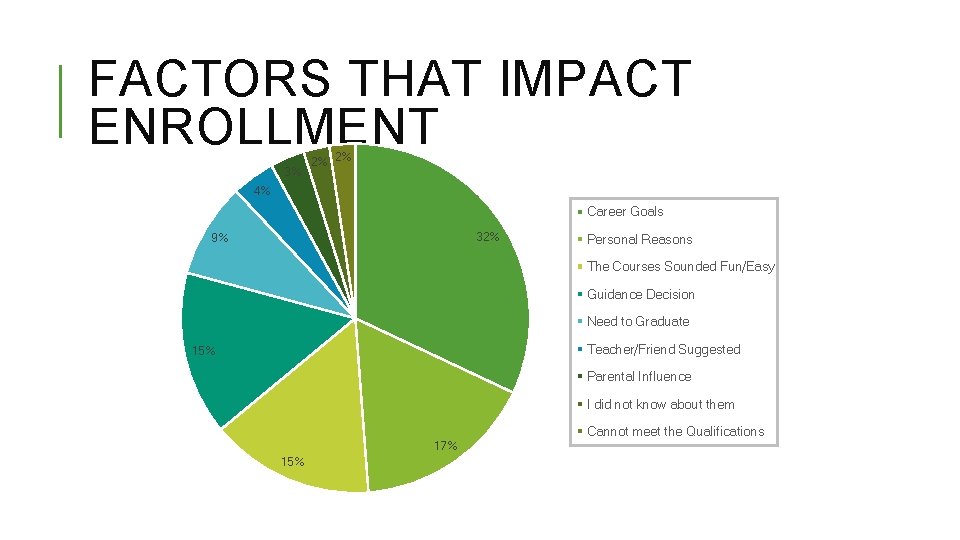
FACTORS THAT IMPACT ENROLLMENT 3% 2% 2% 4% Career Goals 32% 9% Personal Reasons The Courses Sounded Fun/Easy Guidance Decision Need to Graduate Teacher/Friend Suggested 15% Parental Influence I did not know about them 17% 15% Cannot meet the Qualifications
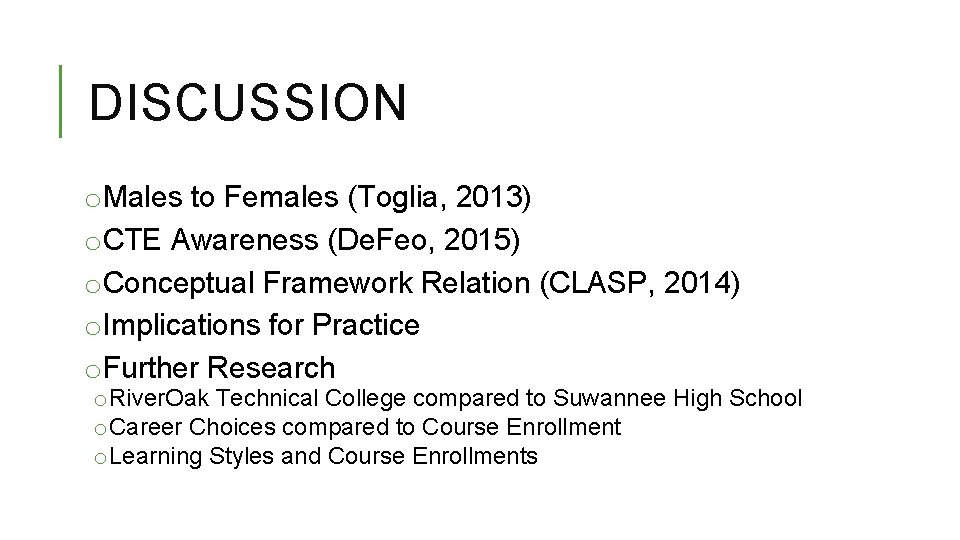
DISCUSSION o. Males to Females (Toglia, 2013) o. CTE Awareness (De. Feo, 2015) o. Conceptual Framework Relation (CLASP, 2014) o. Implications for Practice o. Further Research o. River. Oak Technical College compared to Suwannee High School o. Career Choices compared to Course Enrollment o. Learning Styles and Course Enrollments
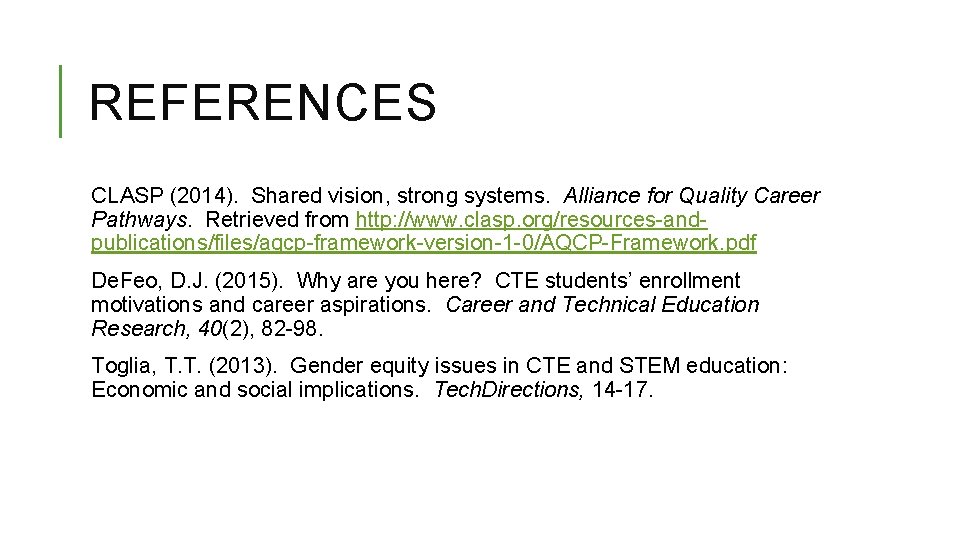
REFERENCES CLASP (2014). Shared vision, strong systems. Alliance for Quality Career Pathways. Retrieved from http: //www. clasp. org/resources-andpublications/files/aqcp-framework-version-1 -0/AQCP-Framework. pdf De. Feo, D. J. (2015). Why are you here? CTE students’ enrollment motivations and career aspirations. Career and Technical Education Research, 40(2), 82 -98. Toglia, T. T. (2013). Gender equity issues in CTE and STEM education: Economic and social implications. Tech. Directions, 14 -17.