
CT MultiSlice CT Third Generation CT Single or
- Slides: 37
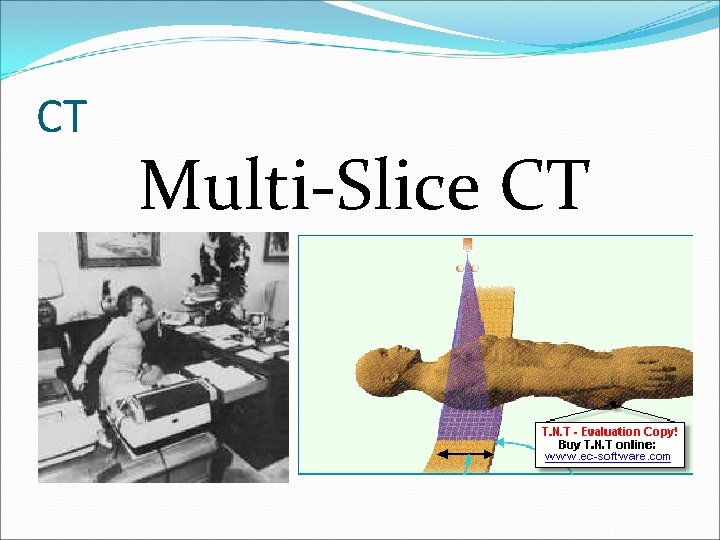
CT Multi-Slice CT
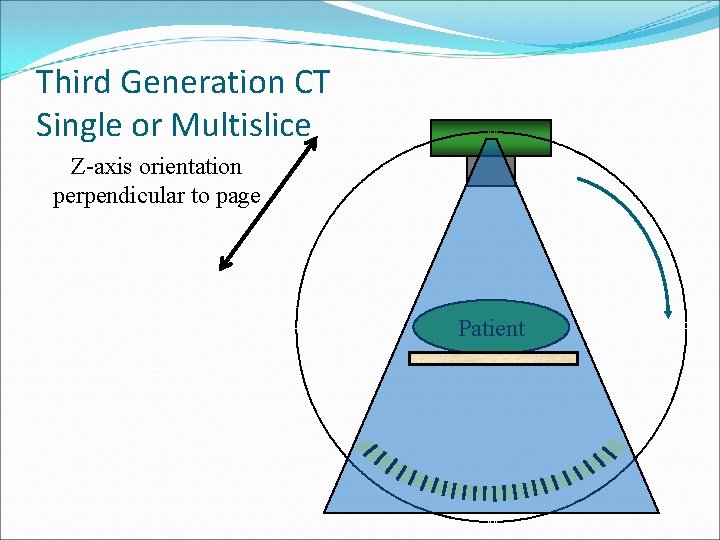
Third Generation CT Single or Multislice Z-axis orientation perpendicular to page Patient
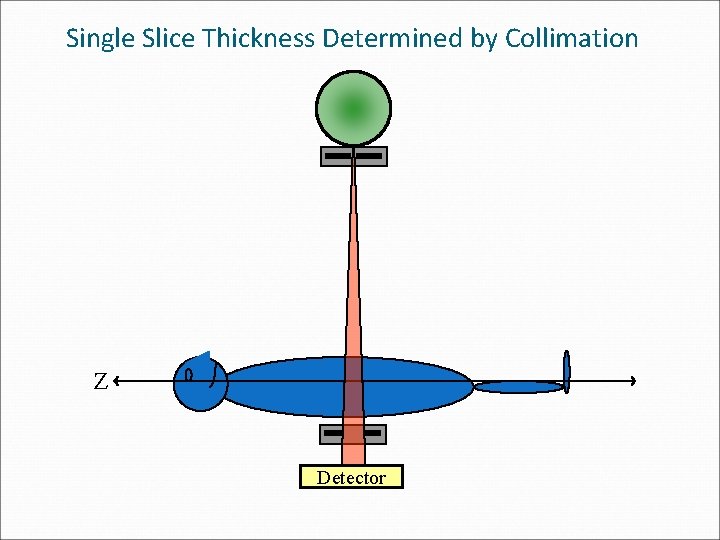
Single Slice Thickness Determined by Collimation Z Detector
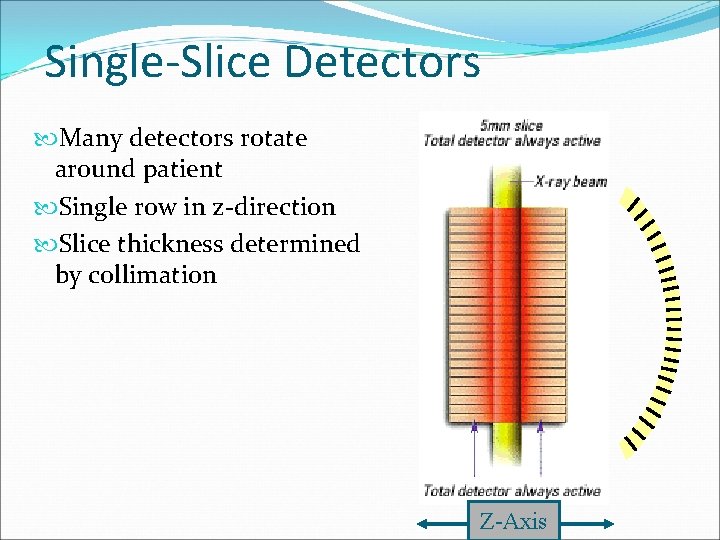
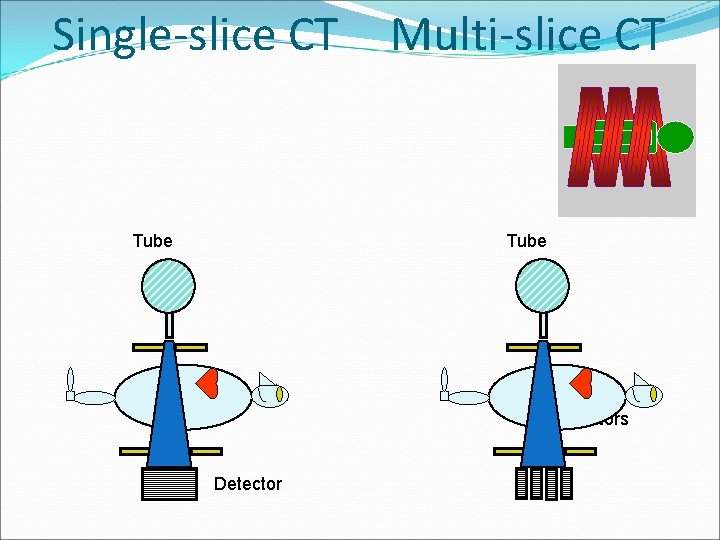
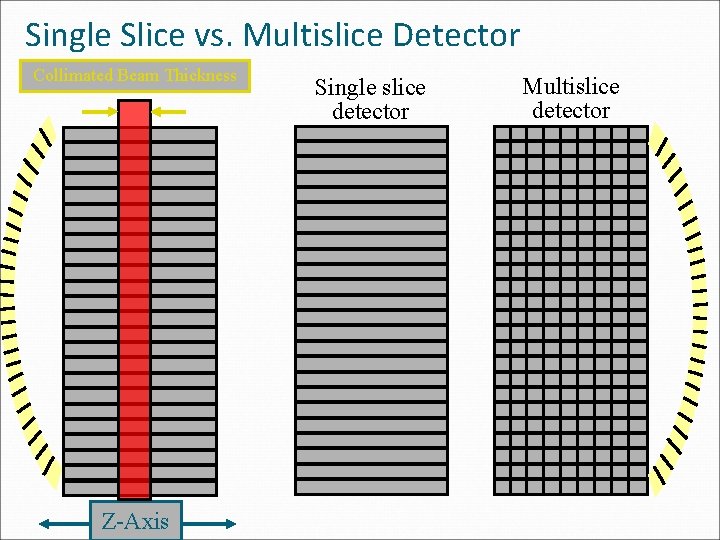
Single-Slice Detectors Many detectors rotate around patient Single row in z-direction Slice thickness determined by collimation Z-Axis
Single-slice CT Multi-slice CT Tube Detectors Detector
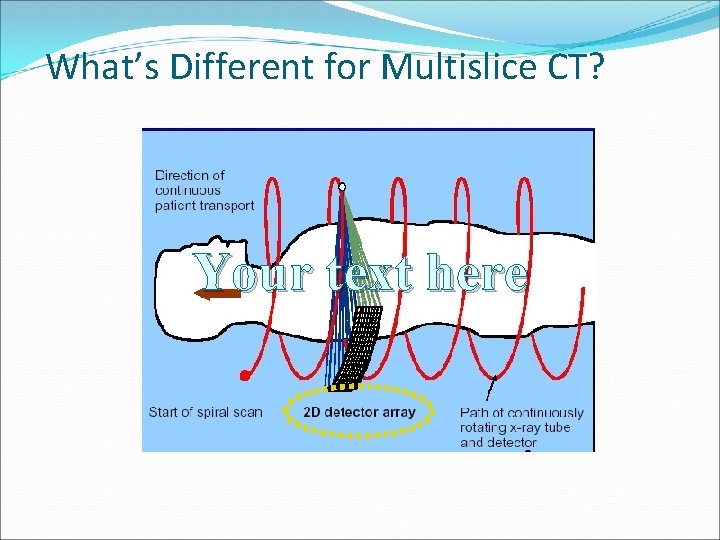
What’s Different for Multislice CT? Your text here
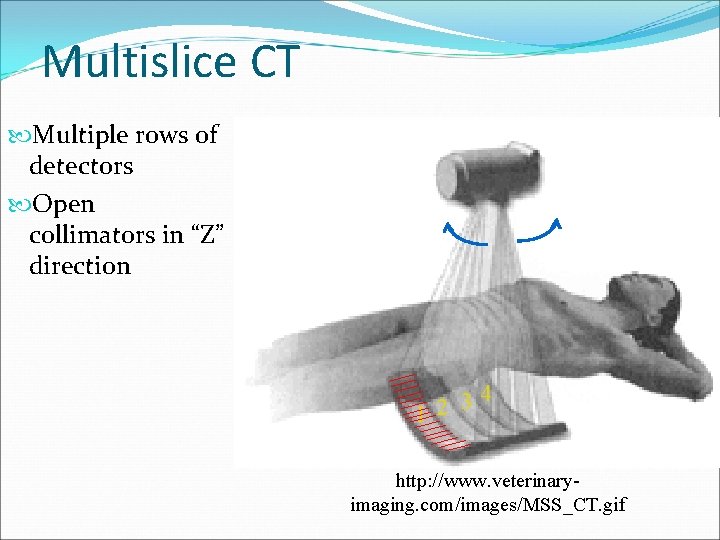
Multislice CT Multiple rows of detectors Open collimators in “Z” direction 34 2 1 http: //www. veterinaryimaging. com/images/MSS_CT. gif
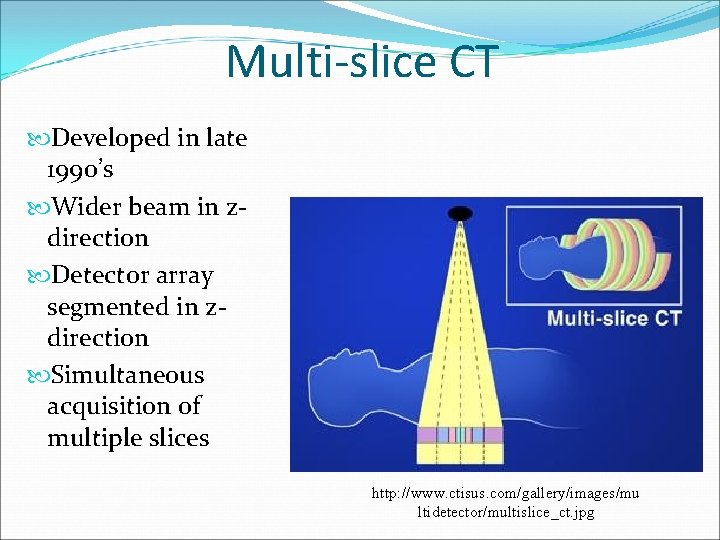
Multi-slice CT Developed in late 1990’s Wider beam in zdirection Detector array segmented in zdirection Simultaneous acquisition of multiple slices http: //www. ctisus. com/gallery/images/mu ltidetector/multislice_ct. jpg
Single Slice vs. Multislice Detector Collimated Beam Thickness Z-Axis Single slice detector Multislice detector
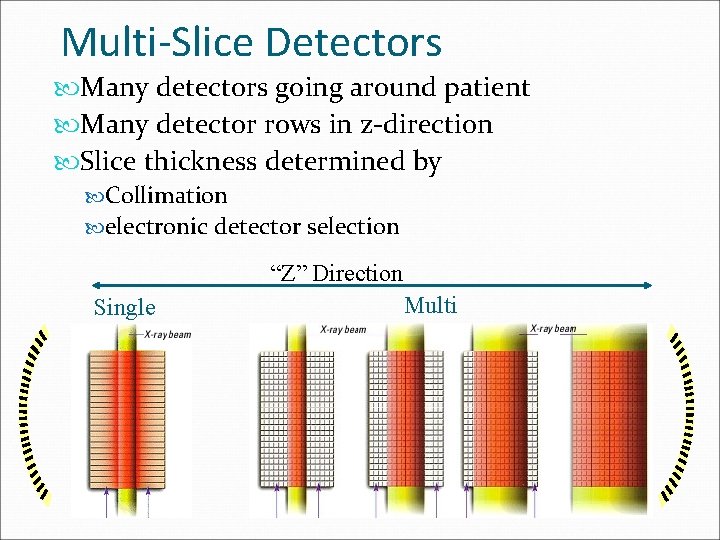
Multi-Slice Detectors Many detectors going around patient Many detector rows in z-direction Slice thickness determined by Collimation electronic detector selection “Z” Direction Single Multi
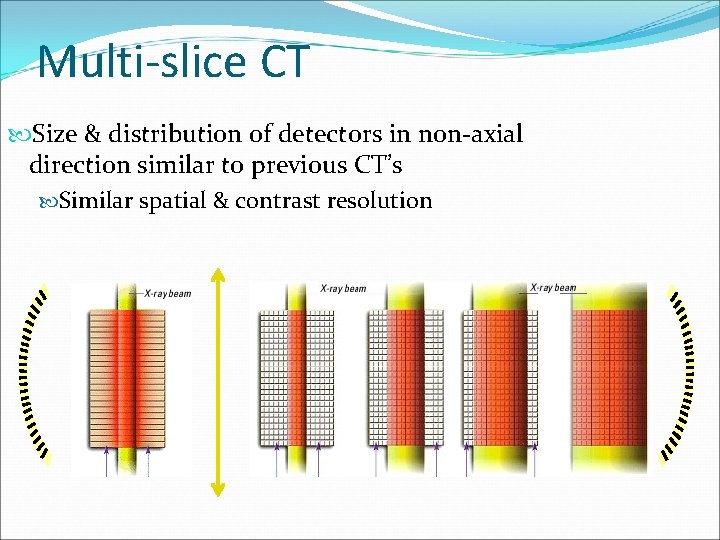
Multi-slice CT Size & distribution of detectors in non-axial direction similar to previous CT’s Similar spatial & contrast resolution
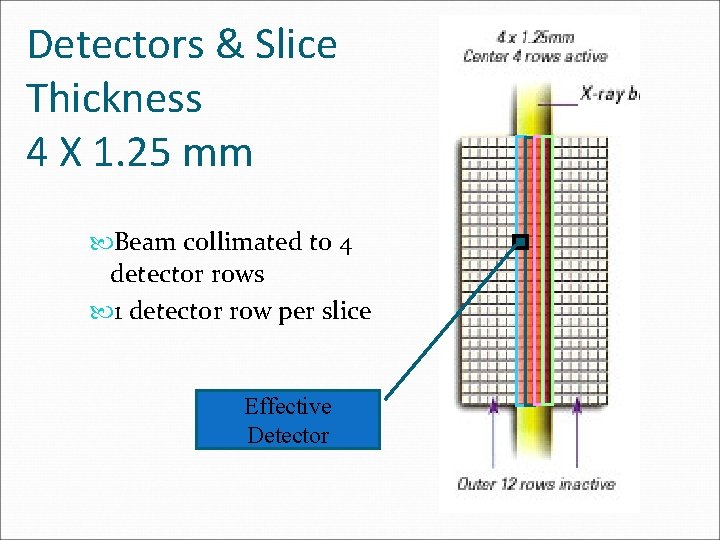
Detectors & Slice Thickness 4 X 1. 25 mm Beam collimated to 4 detector rows 1 detector row per slice Effective Detector
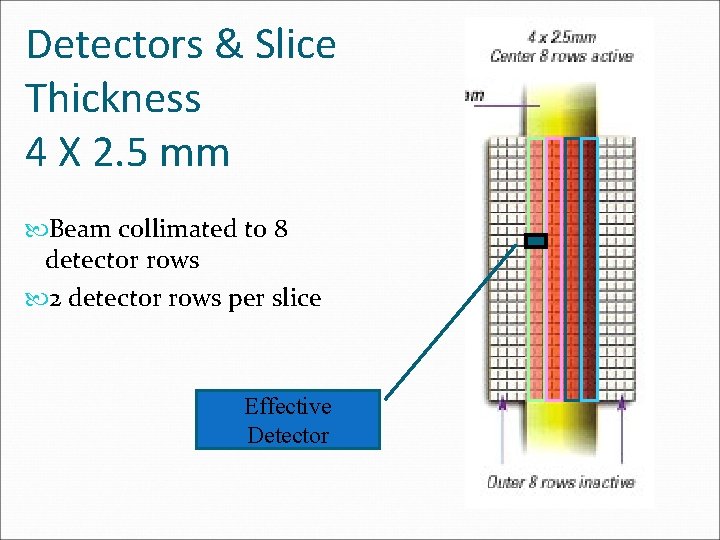
Detectors & Slice Thickness 4 X 2. 5 mm Beam collimated to 8 detector rows 2 detector rows per slice Effective Detector
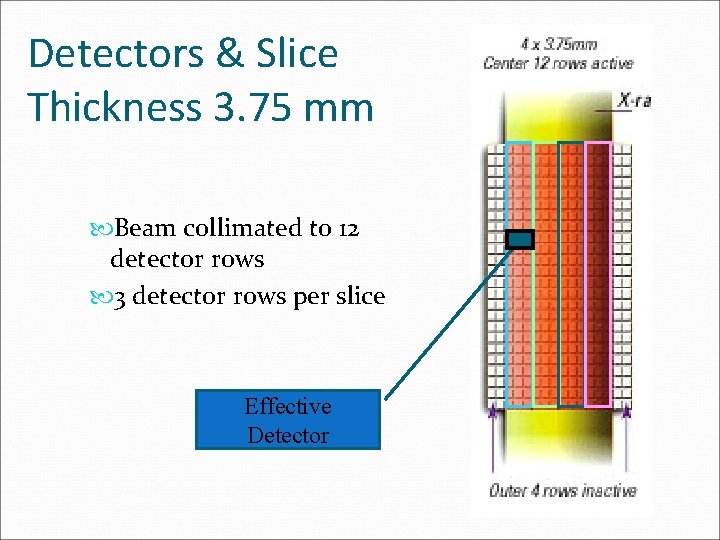
Detectors & Slice Thickness 3. 75 mm Beam collimated to 12 detector rows 3 detector rows per slice Effective Detector
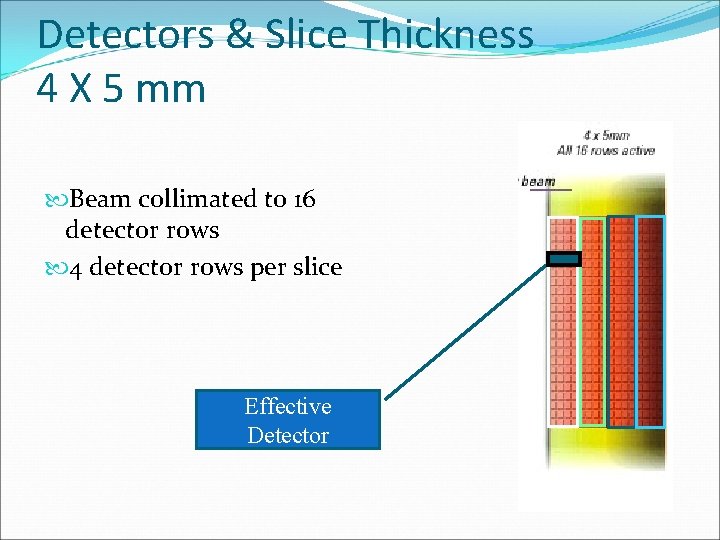
Detectors & Slice Thickness 4 X 5 mm Beam collimated to 16 detector rows 4 detector rows per slice Effective Detector
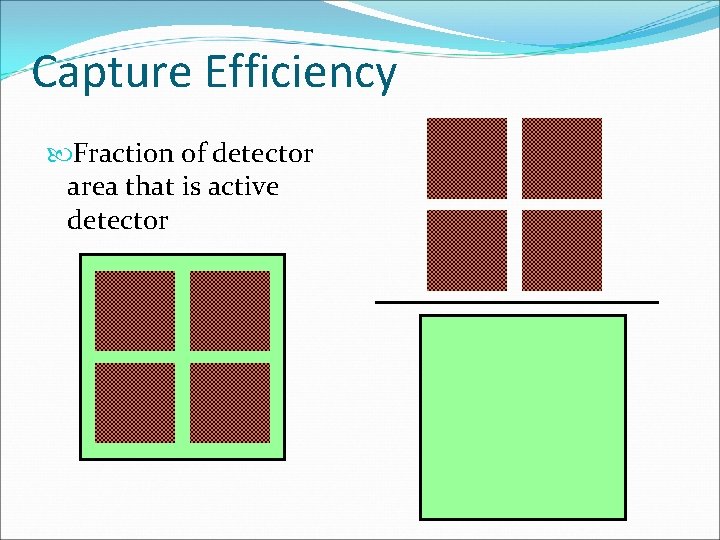
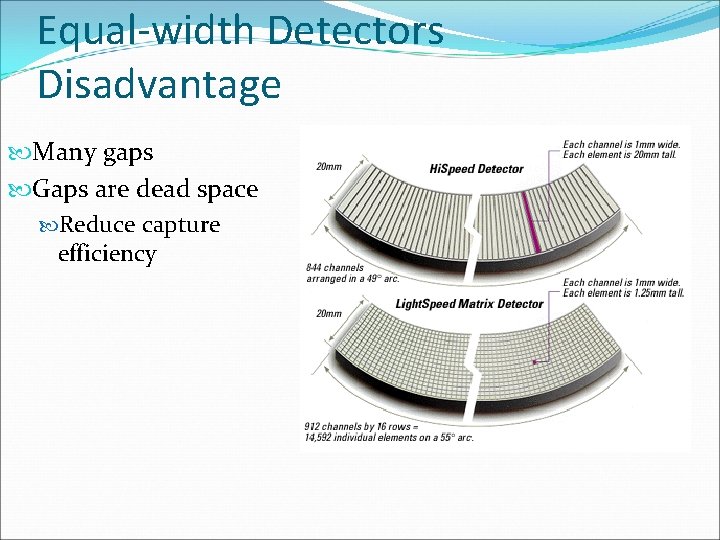
Capture Efficiency Fraction of detector area that is active detector
Equal-width Detectors Disadvantage Many gaps Gaps are dead space Reduce capture efficiency
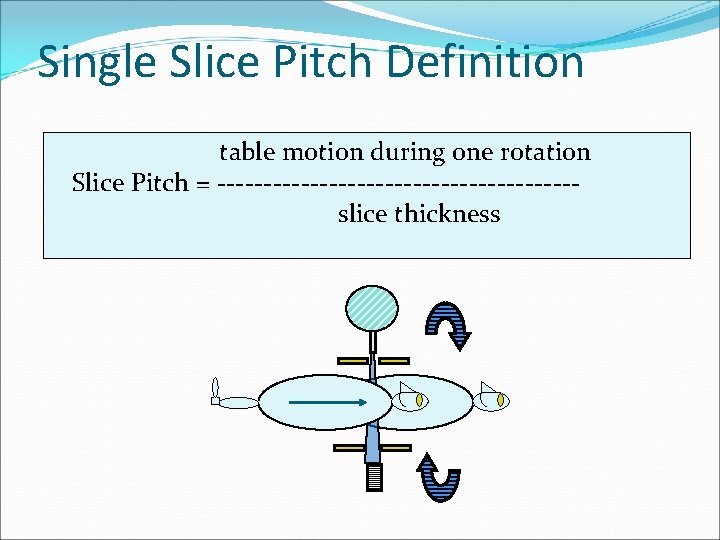
Single Slice Pitch Definition table motion during one rotation Slice Pitch = -------------------slice thickness
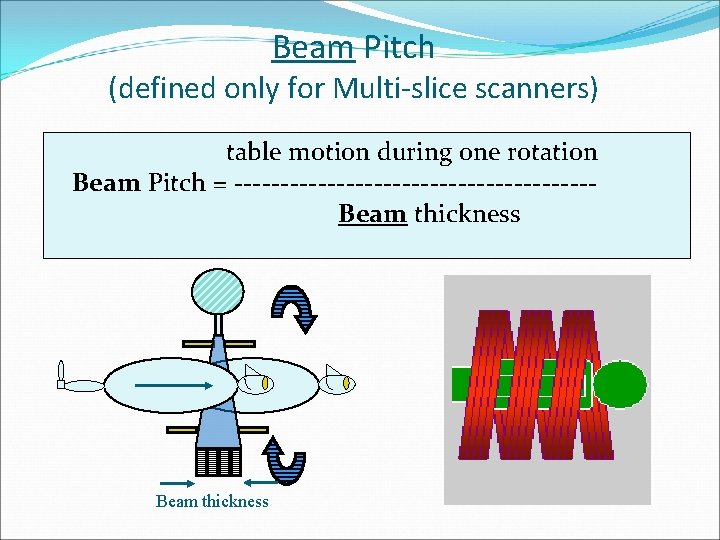
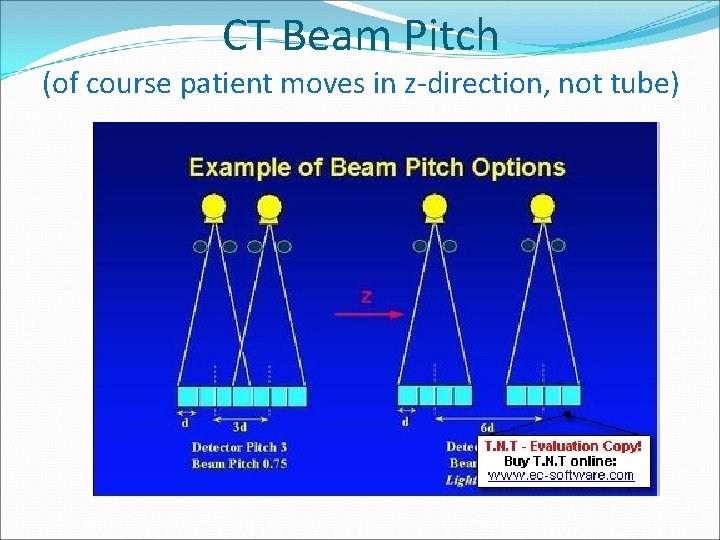
Beam Pitch (defined only for Multi-slice scanners) table motion during one rotation Beam Pitch = -------------------Beam thickness
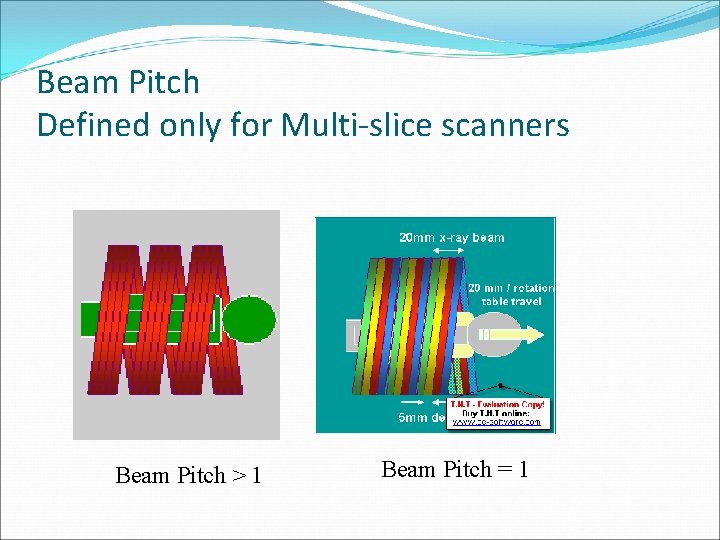
Beam Pitch Defined only for Multi-slice scanners Beam Pitch > 1 Beam Pitch = 1
CT Beam Pitch (of course patient moves in z-direction, not tube)
Gap or No Gap? Like single slice, no gaps in data acquisition slice can be reconstructed for any axial position
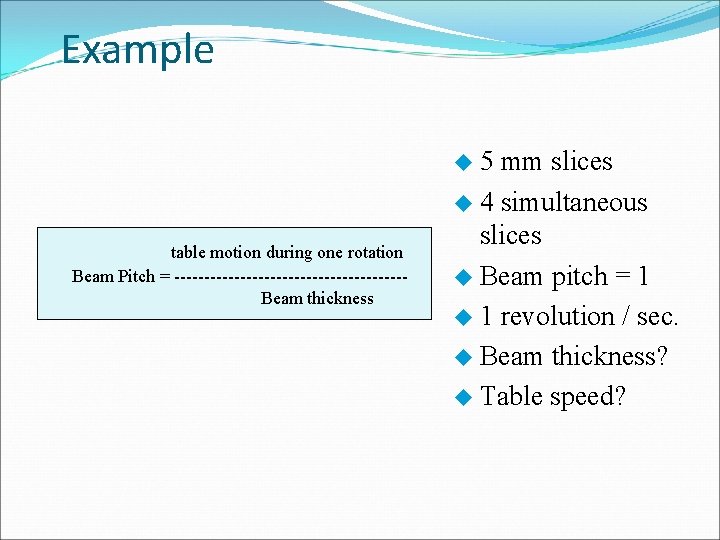
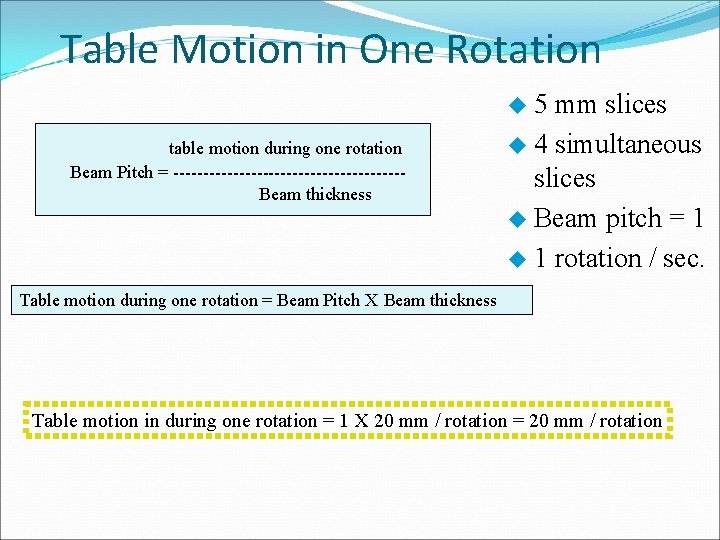
Example u 5 table motion during one rotation Beam Pitch = -------------------Beam thickness mm slices u 4 simultaneous slices u Beam pitch = 1 u 1 revolution / sec. u Beam thickness? u Table speed?
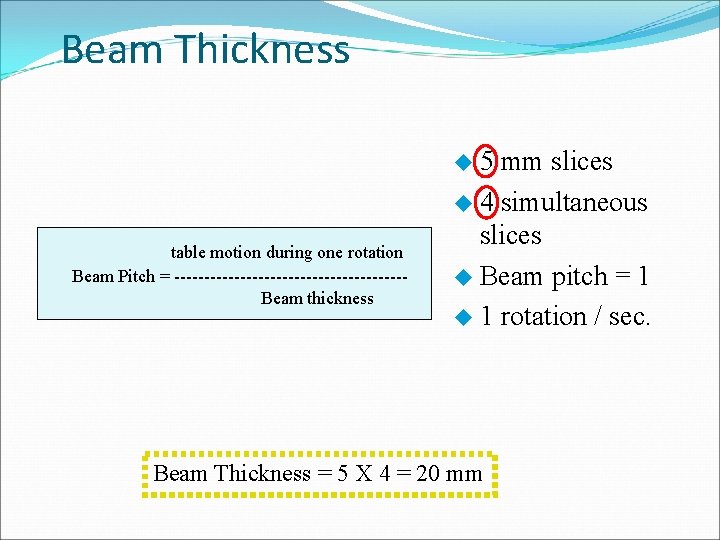
Beam Thickness u 5 table motion during one rotation Beam Pitch = -------------------Beam thickness mm slices u 4 simultaneous slices u Beam pitch = 1 u 1 rotation / sec. Beam Thickness = 5 X 4 = 20 mm
Table Motion in One Rotation u 5 table motion during one rotation Beam Pitch = -------------------Beam thickness mm slices u 4 simultaneous slices u Beam pitch = 1 u 1 rotation / sec. Table motion during one rotation = Beam Pitch X Beam thickness Table motion in during one rotation = 1 X 20 mm / rotation = 20 mm / rotation
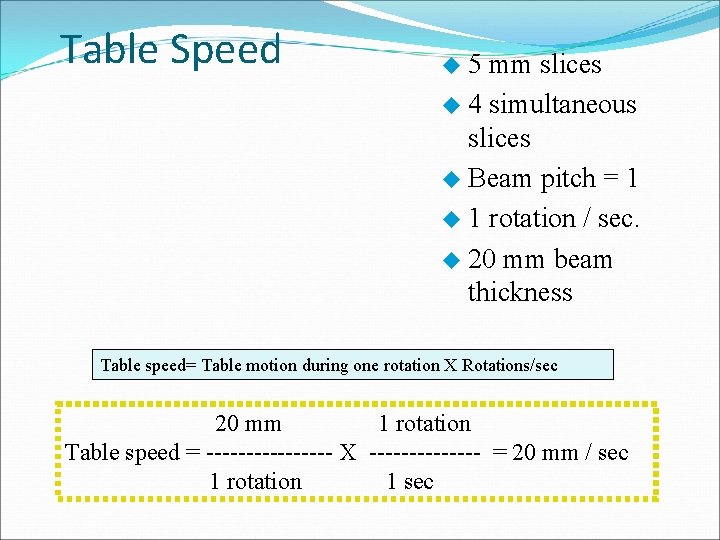
Table Speed u 5 mm slices u 4 simultaneous slices u Beam pitch = 1 u 1 rotation / sec. u 20 mm beam thickness Table speed= Table motion during one rotation X Rotations/sec 20 mm 1 rotation Table speed = -------- X ------- = 20 mm / sec 1 rotation 1 sec
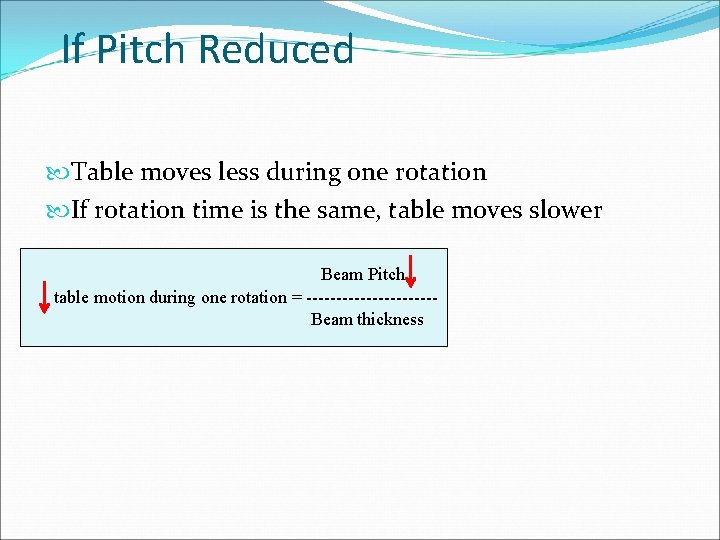
If Pitch Reduced Table moves less during one rotation If rotation time is the same, table moves slower Beam Pitch table motion during one rotation = -----------Beam thickness
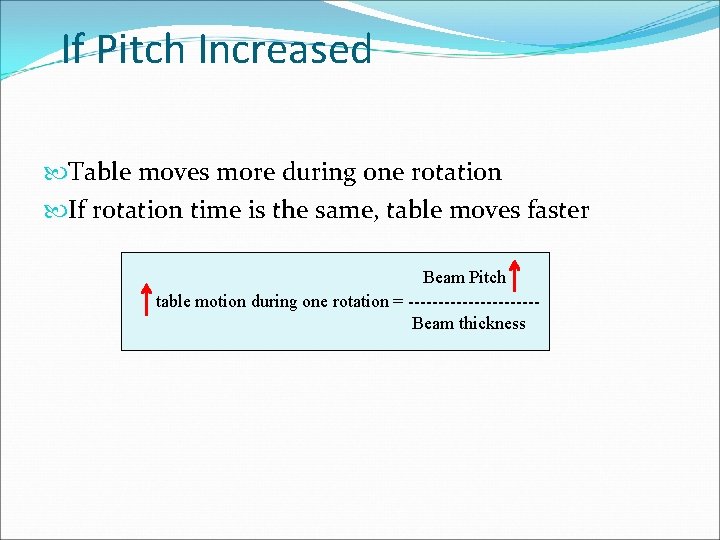
If Pitch Increased Table moves more during one rotation If rotation time is the same, table moves faster Beam Pitch table motion during one rotation = -----------Beam thickness
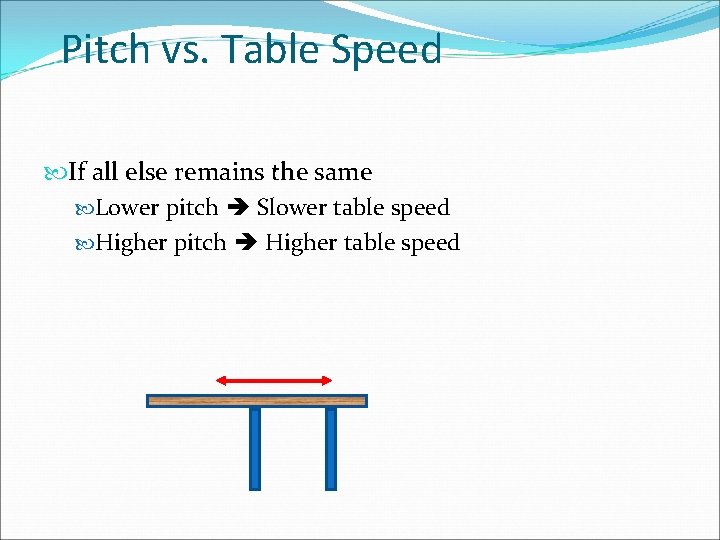
Pitch vs. Table Speed If all else remains the same Lower pitch Slower table speed Higher pitch Higher table speed
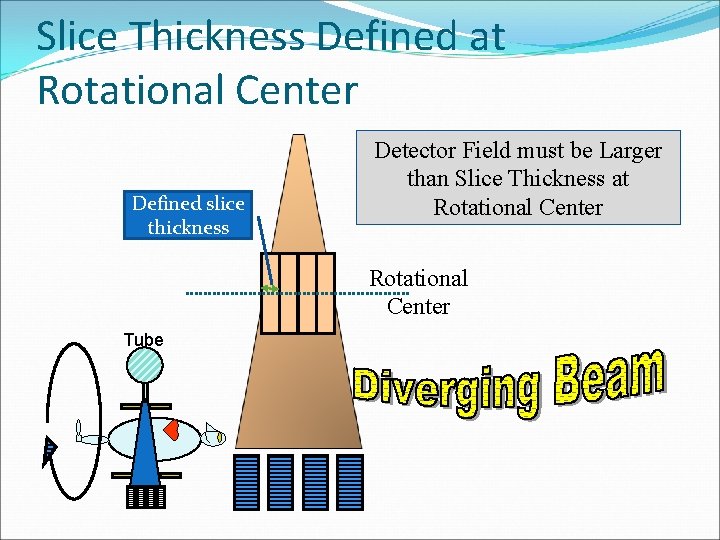
Slice Thickness Defined at Rotational Center Defined slice thickness Detector Field must be Larger than Slice Thickness at Rotational Center Tube
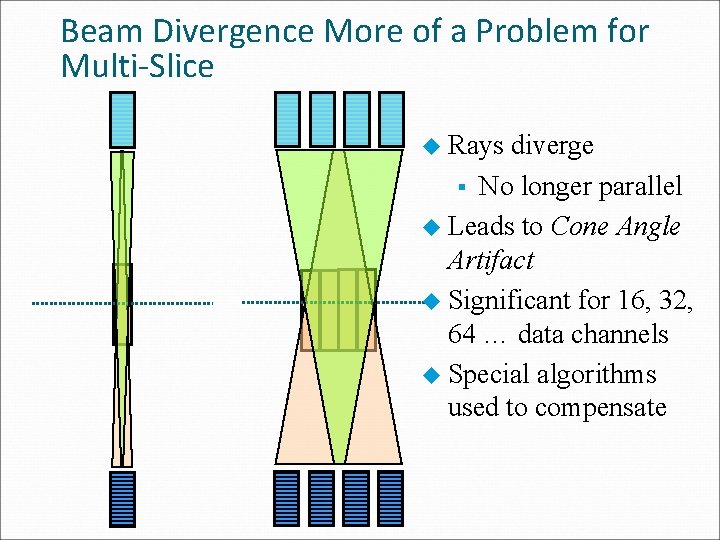
Beam Divergence More of a Problem for Multi-Slice u Rays diverge § No longer parallel u Leads to Cone Angle Artifact u Significant for 16, 32, 64 … data channels u Special algorithms used to compensate
Multislice CT Doses Dose inversely proportional to beam pitch Can be 10 -30% higher than for single slice units (ICRP #47) depending on implementation Other considerations Tendency to cover more volume (anatomy) Better availability of equipment because of greater speed
Other Reasons for High CT Doses Repeat Exams No adjustment of technique factors for different size patients No adjustment for different areas of body
Multislice CT Advantage? Speed!
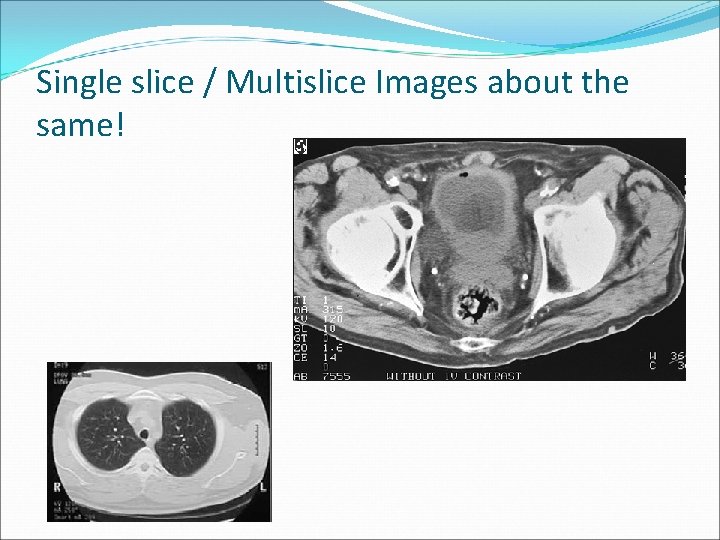
Single slice / Multislice Images about the same!
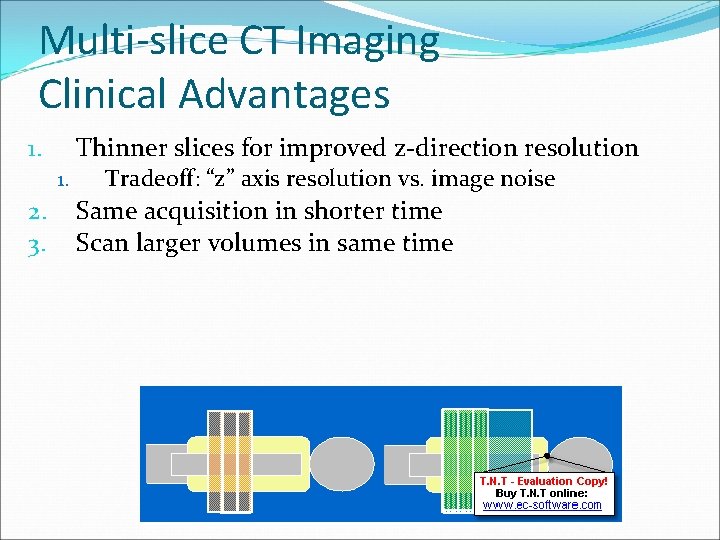
Multi-slice CT Imaging Clinical Advantages Thinner slices for improved z-direction resolution 1. 1. 2. 3. Tradeoff: “z” axis resolution vs. image noise Same acquisition in shorter time Scan larger volumes in same time
Multi-slice challenges: More Slices Computer issues More archival capacity Requires faster computer systems Requires faster communications for remote viewing Radiologist responsible for all images