
CSTNET and Its Applications Computer Network Info Center










- Slides: 36
CSTNET and Its Applications Computer Network Info. Center, CAS
Content • CSTNET • Partner Networks – NSFCNET – CAINONET – CAINET – NHPCE • Applications – China Popular Science Exhibition – Virtual Geographical Lab
CSTNET – Overview • One of the earliest networks in China, founded in 1989 • The first China’s network to connect with US Internet with full functionality (in 1994) • 55 Mbps international link • Provide services for about 800+ research organizations and high-tech companies • More than 600, 000 users in 2000
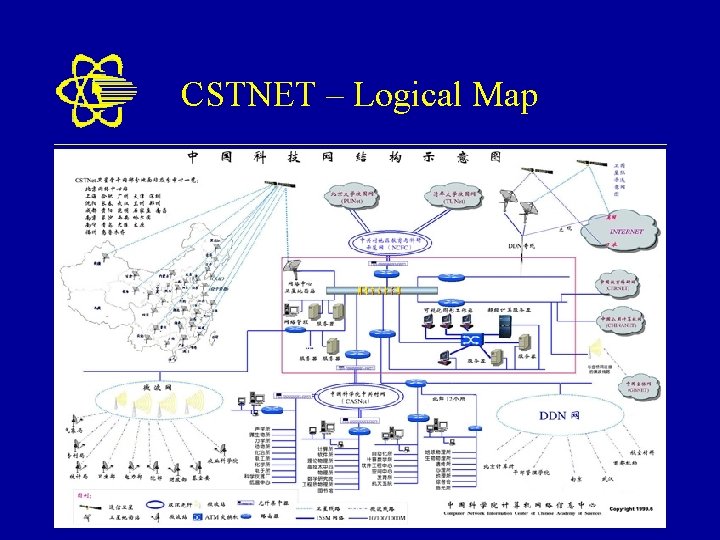
CSTNET – Logical Map
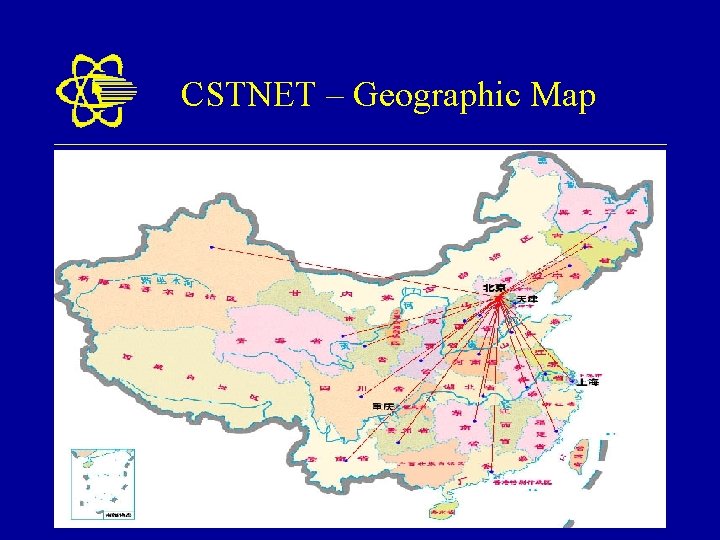
CSTNET – Geographic Map
CSTNET – CNIC • Computer Network Information Center, Chinese Academy of Sciences • Operating and managing CSTNET • Located in China’s “Silicon Valley” – Zhongguancun, Beijing • 140 professionals out of 170 employees • Graduates: master 18, Ph. D. 9
CSTNET – Services and Resources • Services – ISP – ICP – Domain Name Registry (CNNIC) – High Performance Computing • Info. Resources – Scientific Databases (SDB) – China Popular Science Exhibition
CSTNET – SDB • Founded in 1986, by CAS • Multi-discipline databases, covering chemistry, biology, astronomy, material, energy, eco-environment, etc. • 180 specialized sub-databases • 725 GB data • The largest scientific database in China
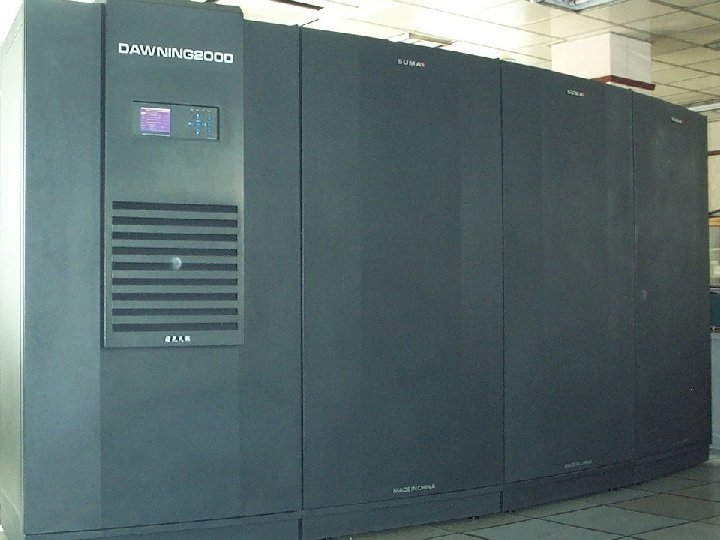
CSTNET – HPC Center • Dawning 2000 -II, 110 Gflops – 82 nodes, 164 CPUs – 50 GB RAM – 1. 5 TB RAID – HP 5000 Laser Printer • Hitachi SR 2201, 9. 6 Gflops • SGI Power Challenge XL, 6. 4 Gflops • SGI Hi Impact Power Indigo 2 multimedia workstation
Content • CSTNET • Partner Networks – CAINONET – NSFCNET – CAINET – NHPCE • Applications – China Popular Science Exhibition – Virtual Geographical Lab
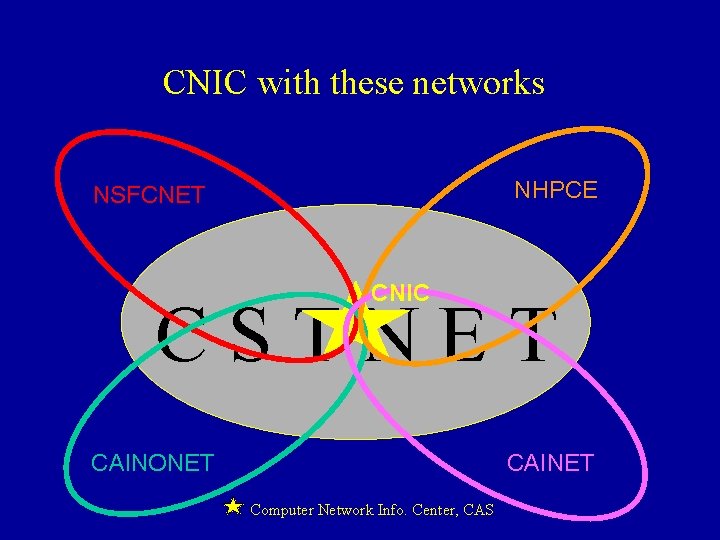
Partner Networks • NSFCNET – National Science Foundation of China NET • CAINONET – China Advanced INfo. Optic NET • CAINET – China Advanced Internet Initiative • NHPCE – National High Performance Computing Environment
Partner Network – NSFCNET • Support research, development, and testing of next-generation network technologies • High-speed connection with v. BNS and Abilene (Connected to STARTAP in Sept. 2000, CSTNET too) • 2. 5/10 G DWDM Backbone (two rings) • CNIC is one of the six main nodes
NSFCNET Topology
Partner Networks – CAINONET • A 863 -300 key project • self-owned technologies and products for next -generation inter-networks • IP/DWDM,2. 5 G • CNIC is one of the five nodes in Beijing
Partner Networks – CAINET • Based on CAS and CNC – CNC Inc. Is the 3 rd telecom operator in China – CNCNET’s broadband IP backbone covers 17 major cities • Found a research center in CNIC, CAS • CNC provides communication facilities (one ) • Focus on advanced internet technologies and applications
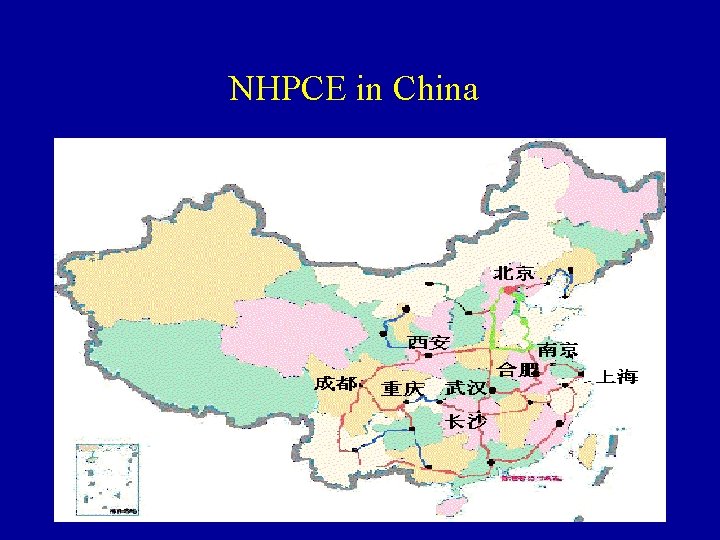
Partner Networks – NHPCE • Construct several HPC centers based on homemade supercomputers • Through broadband networks to build NHPCE • Provide HPC, massive info. processing, resource sharing, etc. services for national critical applications • one HPC center located in CNIC
NHPCE in China
CNIC with these networks NHPCE NSFCNET CNIC CSTNET CAINONET CAINET Computer Network Info. Center, CAS
Content • CSTNET • Partner Networks – NSFCNET – CAINONET – CAINET – NHPCE • Applications – China Popular Science Exhibition – Virtual Geographical Lab
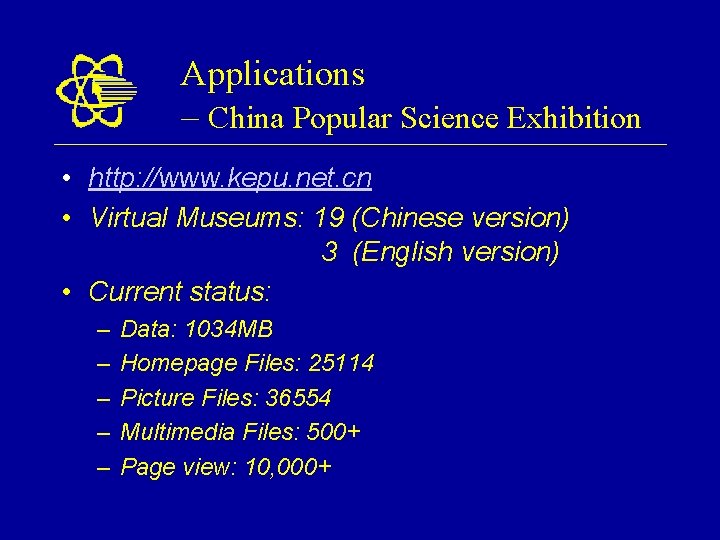
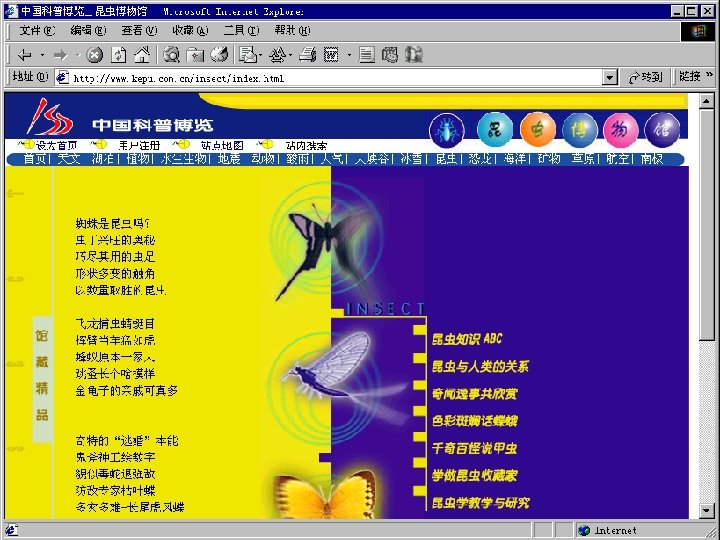
Applications – China Popular Science Exhibition • http: //www. kepu. net. cn • Virtual Museums: 19 (Chinese version) 3 (English version) • Current status: – – – Data: 1034 MB Homepage Files: 25114 Picture Files: 36554 Multimedia Files: 500+ Page view: 10, 000+
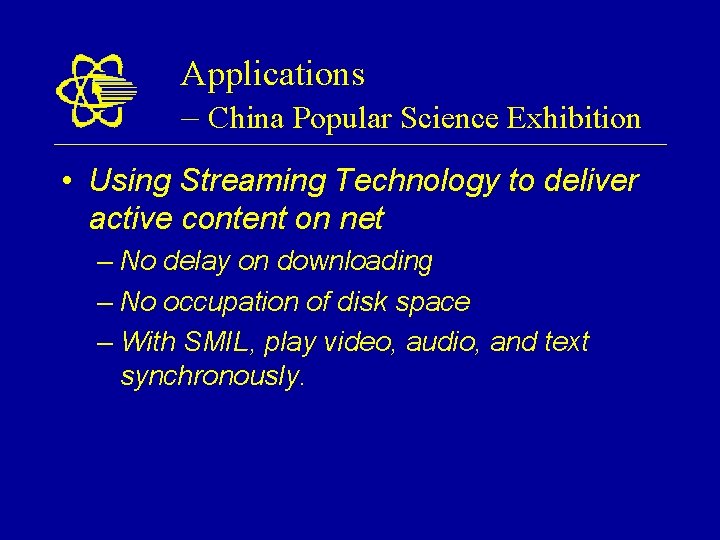
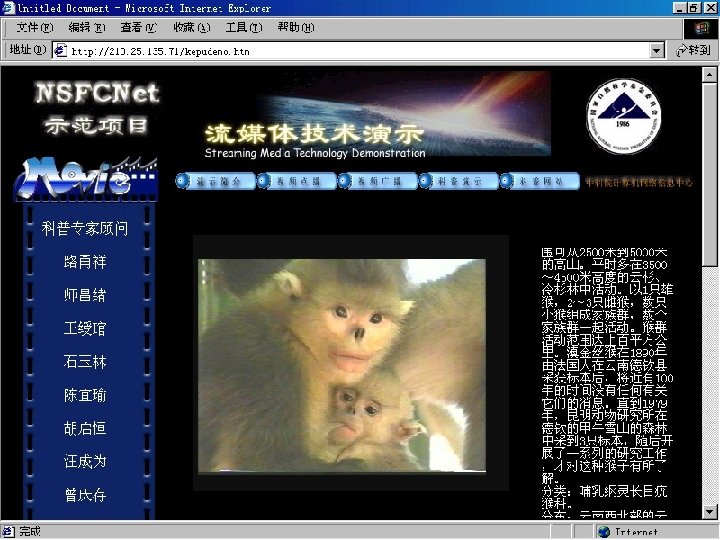
Applications – China Popular Science Exhibition • Using Streaming Technology to deliver active content on net – No delay on downloading – No occupation of disk space – With SMIL, play video, audio, and text synchronously.
Applications – Virtual Geographical Lab • Characteristics: – Visualization (3 D) – Include scientific databases about object. – Have a tool library to help geo-scientists to do data analysis. – Provide a single friendly interface for users. – Provide an open platform for users to add databases and tools.
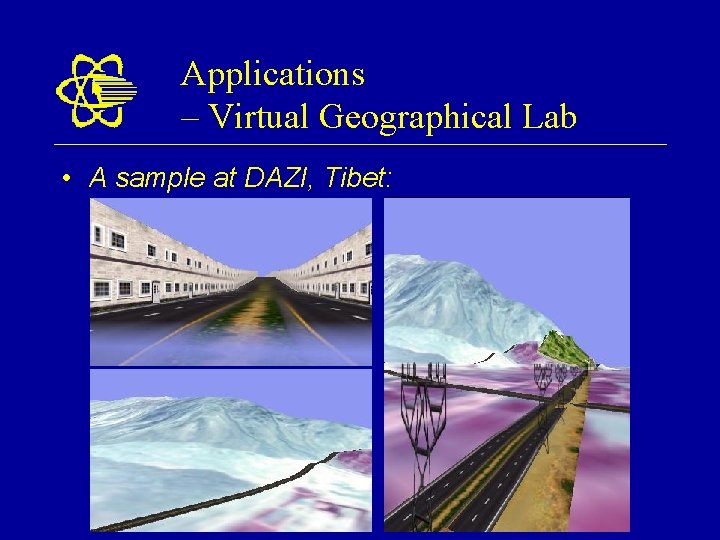
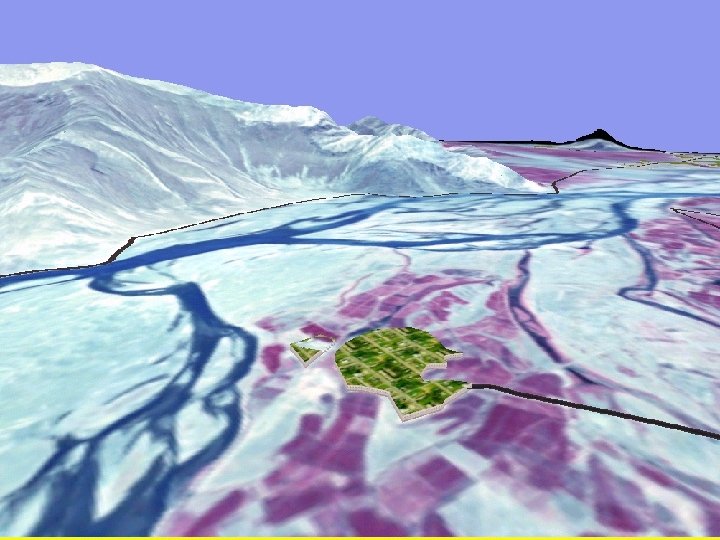
Applications – Virtual Geographical Lab • A sample at DAZI, Tibet:
Conclusion CNIC pays much attention in nextgeneration networks. CNIC hopes to cooperate with you in this field.
Thank you! for questions, please email chuck_song@yahoo. com nankai@sdb. ac. cn