
CSS 342 DATA STRUCTURES ALGORITHMS AND DISCRETE MATHEMATICS


- Slides: 27
CSS 342 DATA STRUCTURES, ALGORITHMS, AND DISCRETE MATHEMATICS I MIDTERM REVIEW.
Midterm: Carrano Sections Covered • Chapter 1, Data Abstraction : All except UML • C++ Interlude 1: All, except 1. 4, 1. 5 • Chapter 2, Recursion: All • Chapter 3, Arrays: All • C++ Interlude 2, Pointers/Memory: All, except 2. 4 • Chapter 4, Linked lists: All • Chapter 5, Recursion++: 5. 3, 5. 4 only • Chapter 7, Stacks: All • Chapter 8/9, Lists: All • Appendix A, C++: All • Appendix D, Software Lifecycle: All • Appendix E, Induction: All
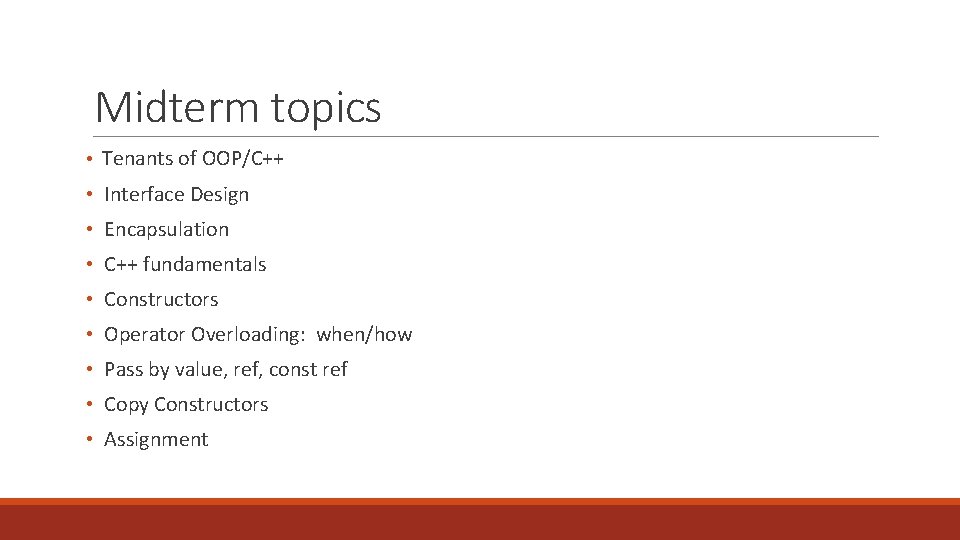
Midterm topics • Tenants of OOP/C++ • Interface Design • Encapsulation • C++ fundamentals • Constructors • Operator Overloading: when/how • Pass by value, ref, const ref • Copy Constructors • Assignment
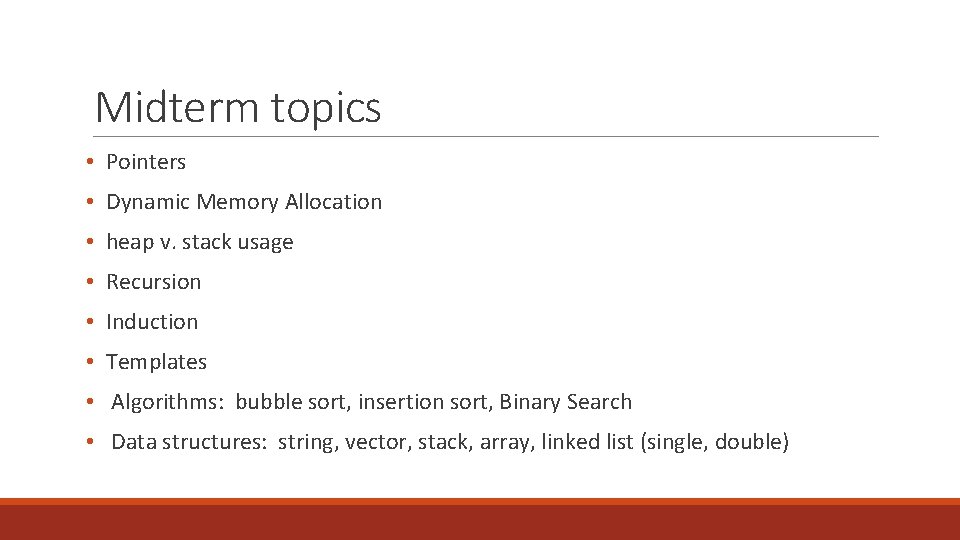
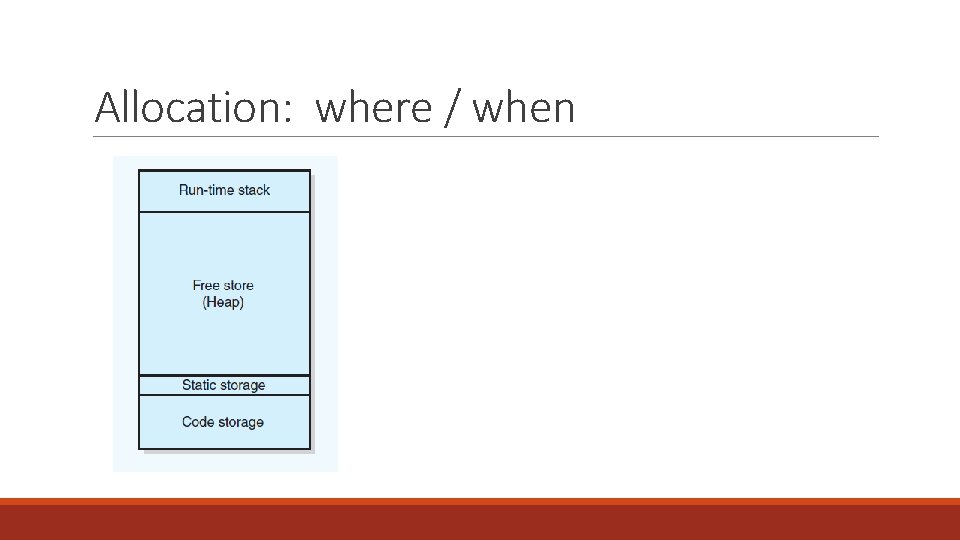
Midterm topics • Pointers • Dynamic Memory Allocation • heap v. stack usage • Recursion • Induction • Templates • Algorithms: bubble sort, insertion sort, Binary Search • Data structures: string, vector, stack, array, linked list (single, double)
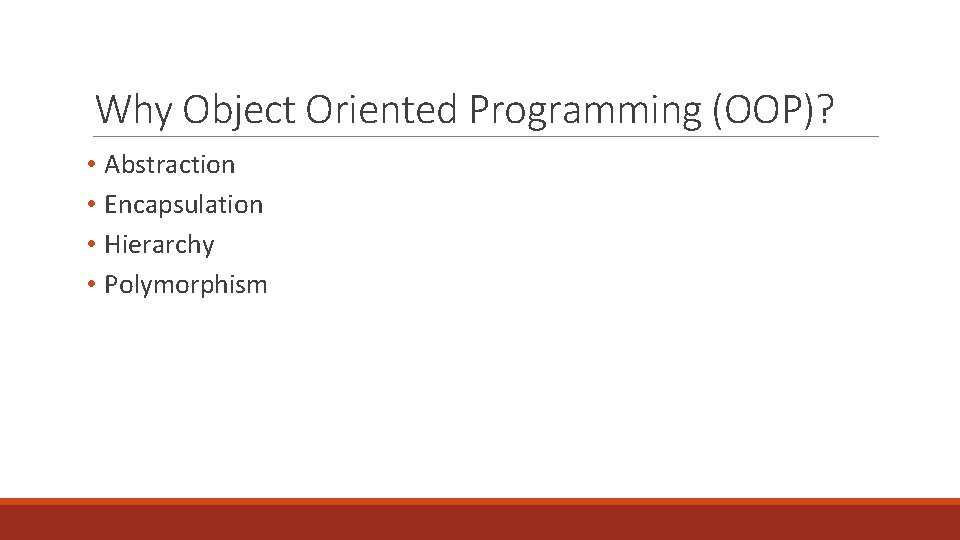
Why Object Oriented Programming (OOP)? • Abstraction • Encapsulation • Hierarchy • Polymorphism
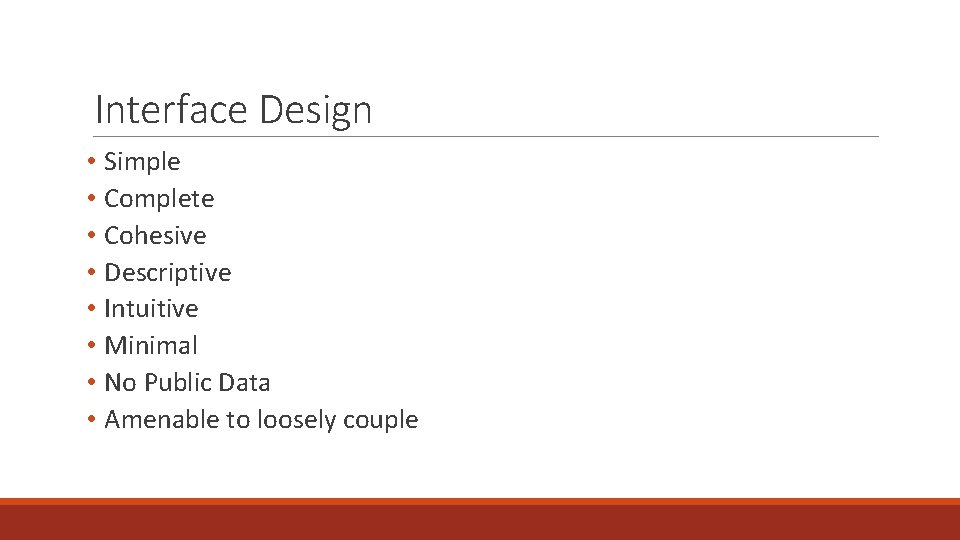
Interface Design • Simple • Complete • Cohesive • Descriptive • Intuitive • Minimal • No Public Data • Amenable to loosely couple
Problem Design an interface to represent a Book
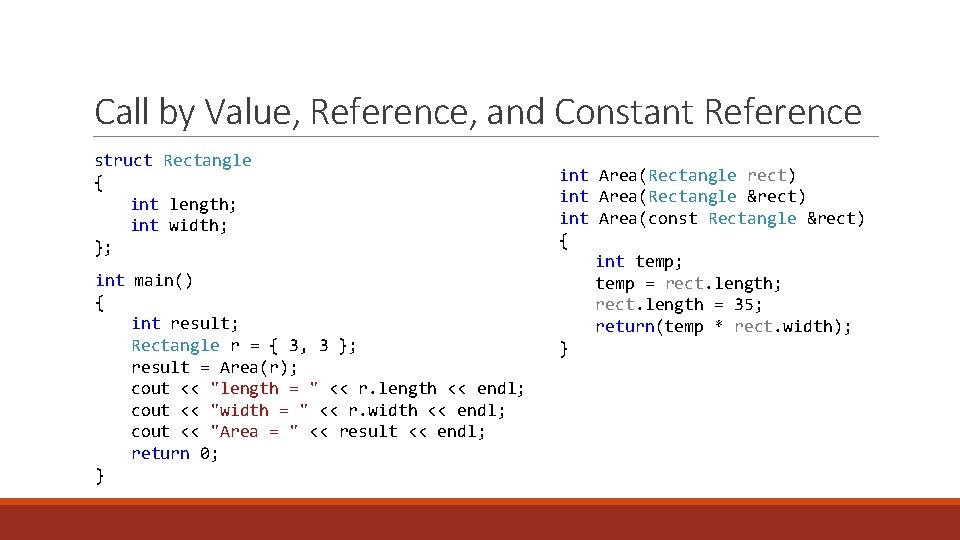
Call by Value, Reference, and Constant Reference struct Rectangle { int length; int width; }; int main() { int result; Rectangle r = { 3, 3 }; result = Area(r); cout << "length = " << r. length << endl; cout << "width = " << r. width << endl; cout << "Area = " << result << endl; return 0; } int Area(Rectangle rect) int Area(Rectangle &rect) int Area(const Rectangle &rect) { int temp; temp = rect. length; rect. length = 35; return(temp * rect. width); }
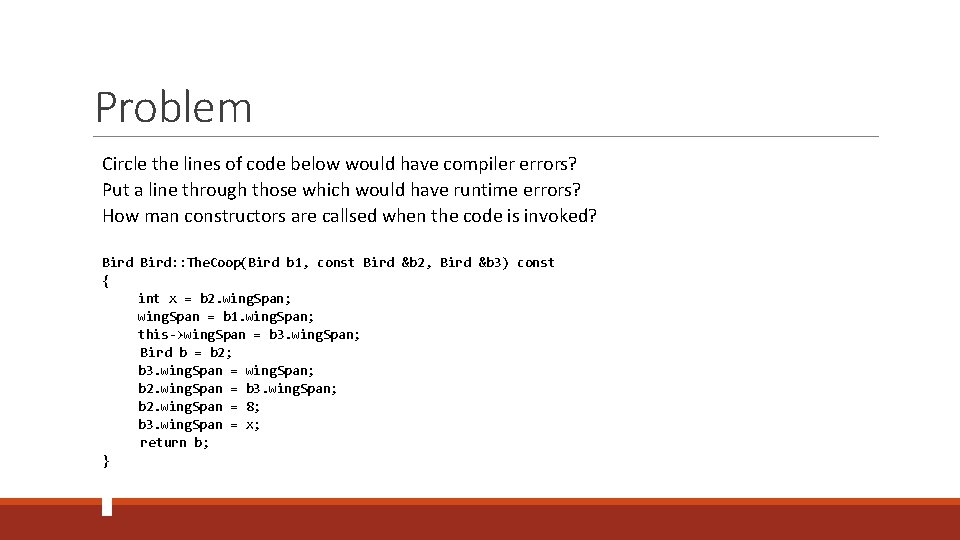
Problem Circle the lines of code below would have compiler errors? Put a line through those which would have runtime errors? How man constructors are callsed when the code is invoked? Bird: : The. Coop(Bird b 1, const Bird &b 2, Bird &b 3) const { int x = b 2. wing. Span; wing. Span = b 1. wing. Span; this->wing. Span = b 3. wing. Span; Bird b = b 2; b 3. wing. Span = wing. Span; b 2. wing. Span = b 3. wing. Span; b 2. wing. Span = 8; b 3. wing. Span = x; return b; }
Problem: Operating Overloading What is the signature for overloading the == operator? Given a class Foo with the assignment operator overloaded, overload the copy constructor.
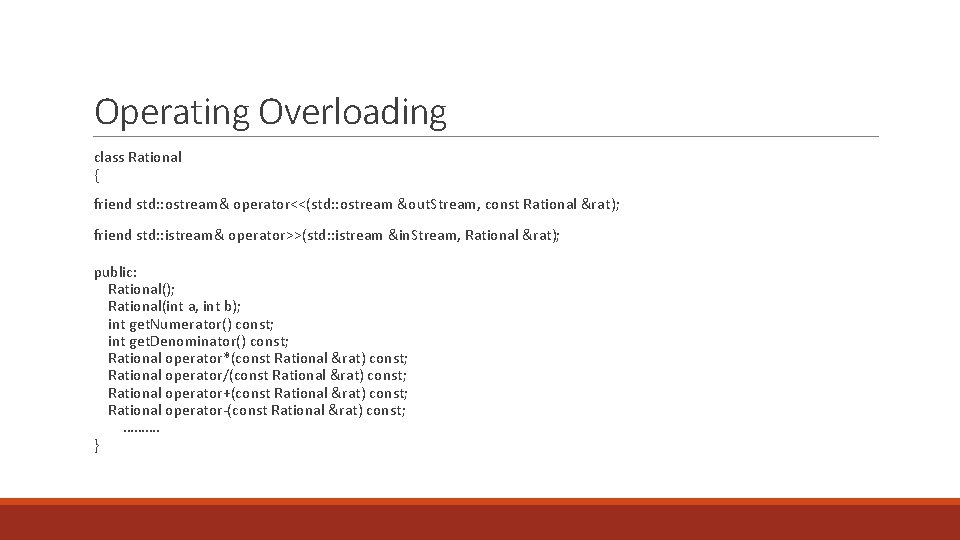
Operating Overloading class Rational { friend std: : ostream& operator<<(std: : ostream &out. Stream, const Rational &rat); friend std: : istream& operator>>(std: : istream &in. Stream, Rational &rat); public: Rational(); Rational(int a, int b); int get. Numerator() const; int get. Denominator() const; Rational operator*(const Rational &rat) const; Rational operator/(const Rational &rat) const; Rational operator+(const Rational &rat) const; Rational operator-(const Rational &rat) const; ………. }
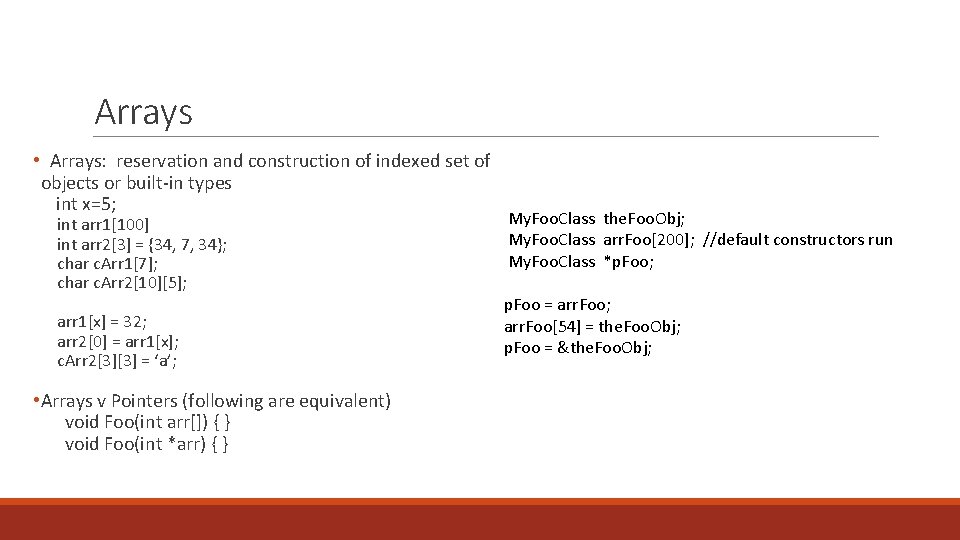
Arrays • Arrays: reservation and construction of indexed set of objects or built-in types int x=5; int arr 1[100] int arr 2[3] = {34, 7, 34}; char c. Arr 1[7]; char c. Arr 2[10][5]; arr 1[x] = 32; arr 2[0] = arr 1[x]; c. Arr 2[3][3] = ‘a’; • Arrays v Pointers (following are equivalent) void Foo(int arr[]) { } void Foo(int *arr) { } My. Foo. Class the. Foo. Obj; My. Foo. Class arr. Foo[200]; //default constructors run My. Foo. Class *p. Foo; p. Foo = arr. Foo; arr. Foo[54] = the. Foo. Obj; p. Foo = &the. Foo. Obj;
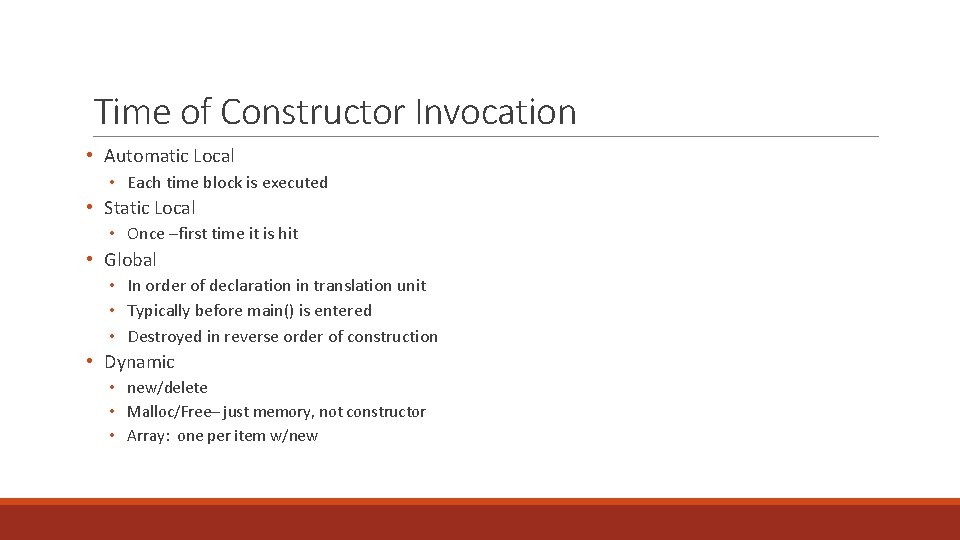
Time of Constructor Invocation • Automatic Local • Each time block is executed • Static Local • Once –first time it is hit • Global • In order of declaration in translation unit • Typically before main() is entered • Destroyed in reverse order of construction • Dynamic • new/delete • Malloc/Free– just memory, not constructor • Array: one per item w/new
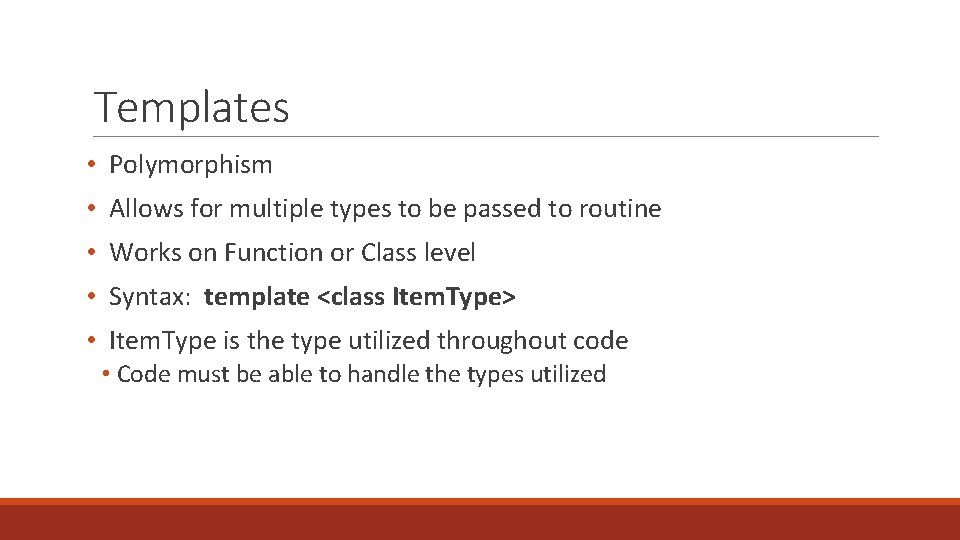
Templates • Polymorphism • Allows for multiple types to be passed to routine • Works on Function or Class level • Syntax: template <class Item. Type> • Item. Type is the type utilized throughout code • Code must be able to handle the types utilized
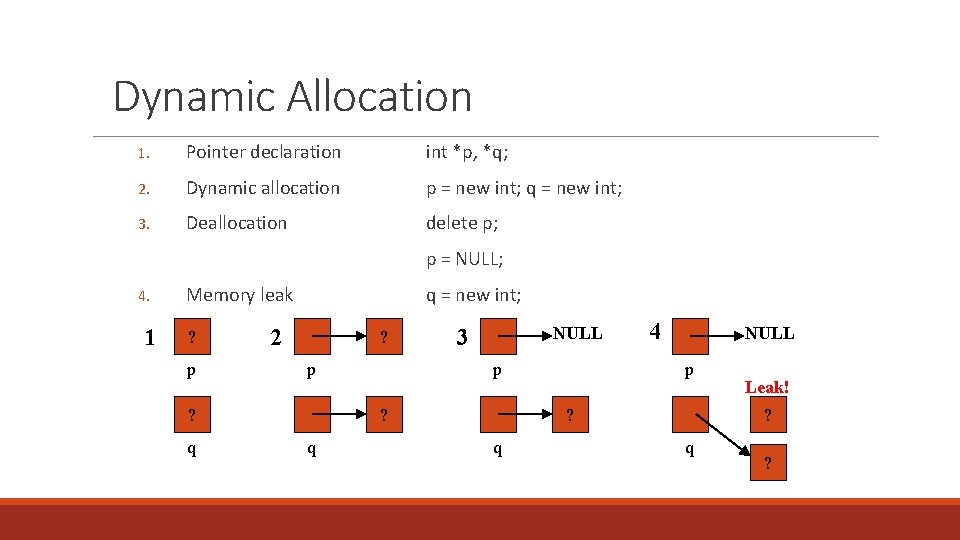
Dynamic Allocation 1. Pointer declaration int *p, *q; 2. Dynamic allocation p = new int; q = new int; 3. Deallocation delete p; p = NULL; 4. 1 Memory leak ? p q = new int; 2 ? p p ? ? q NULL 3 q 4 NULL p ? q Leak! ? q ?
Dangling References: common causes • A pointer which is initialized but not set to NULL • Delete or free is called and pointer is not set to NULL • Aliasing of pointers which are not updated in tandem
Allocation: where / when
Induction Axiom: The principle of mathematical induction A property P(n) that involves an integer n is true for all n ≥ 0 if the following are true: 1. P(0) is true. 2. If P(k) is true for any k ≥ 0, then P(k+1) is true.
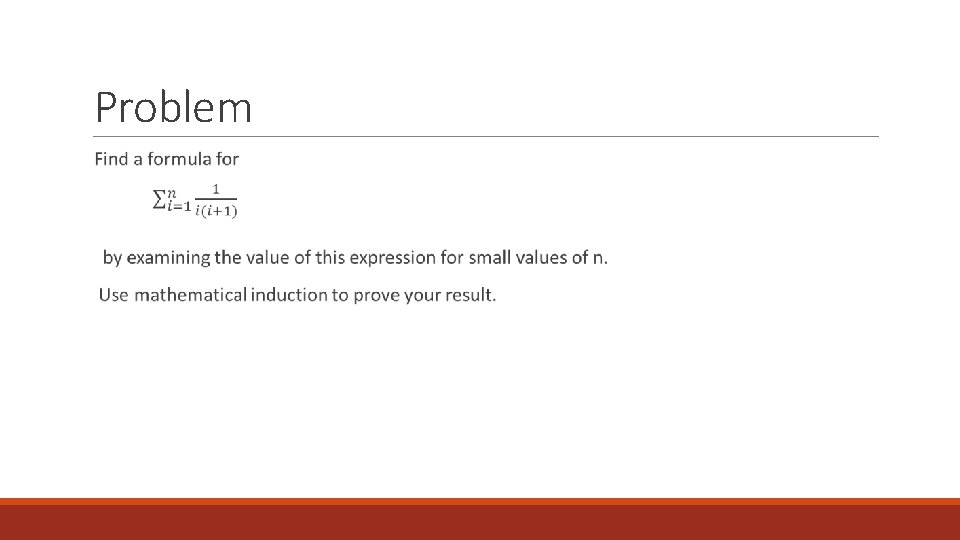
Problem
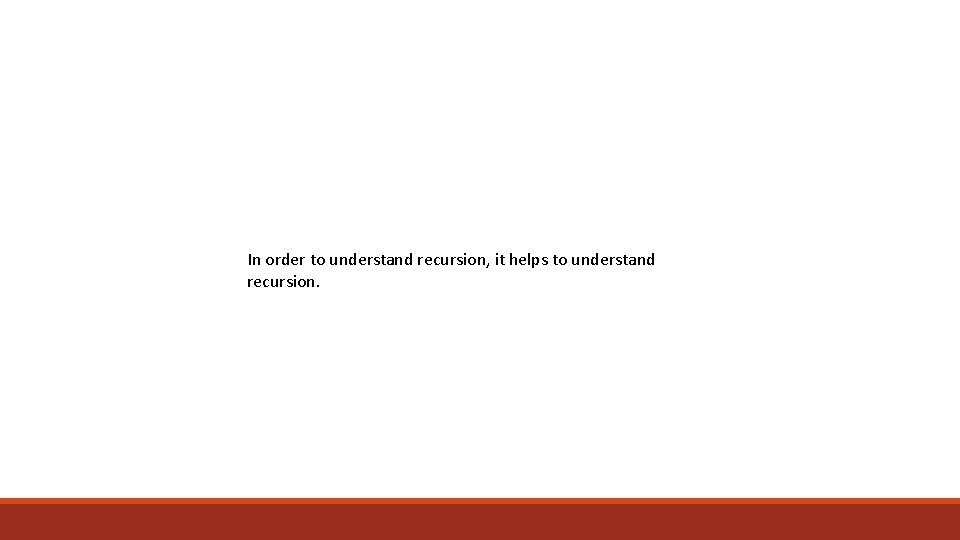
In order to understand recursion, it helps to understand recursion
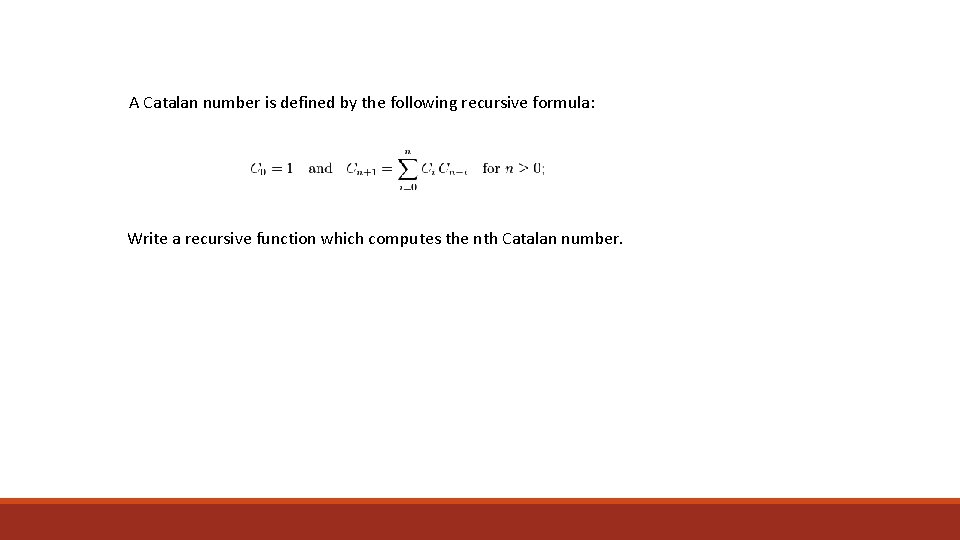
A Catalan number is defined by the following recursive formula: Write a recursive function which computes the nth Catalan number.
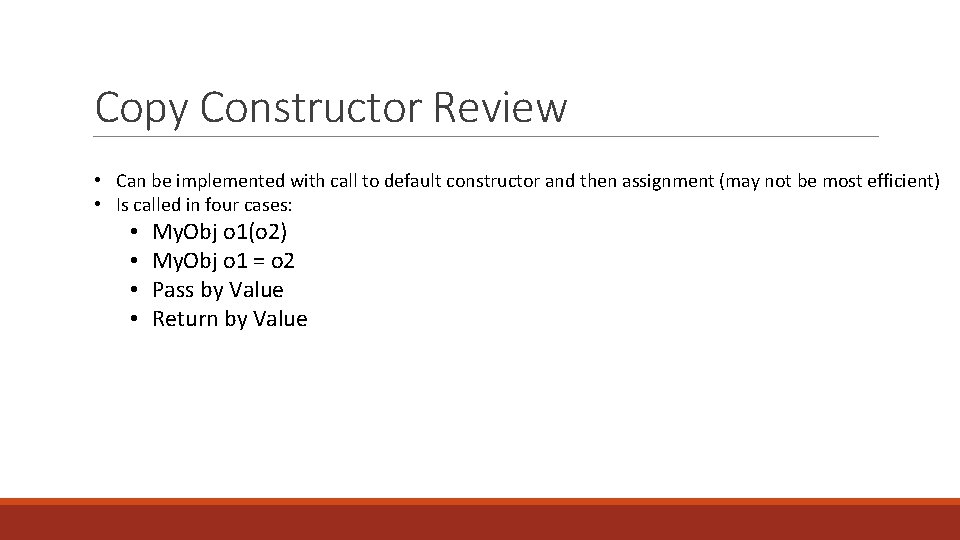
Copy Constructor Review • Can be implemented with call to default constructor and then assignment (may not be most efficient) • Is called in four cases: • • My. Obj o 1(o 2) My. Obj o 1 = o 2 Pass by Value Return by Value
Problem There is no copy constructor in the Rational class we built in class (with int numerator and denominator data members), yet it works correctly, Why?
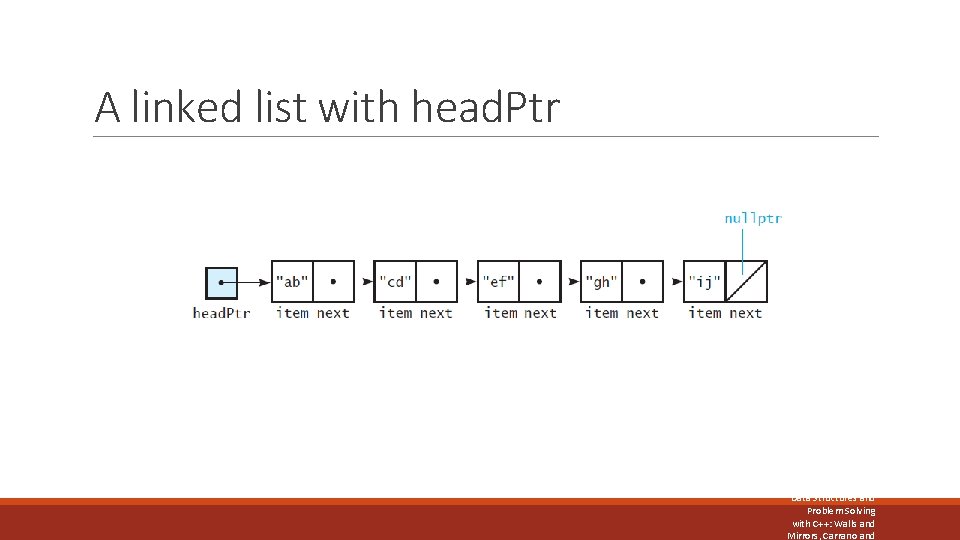
A linked list with head. Ptr FIGURE 4 -3 A HEAD POINTER TO THE FIRST OF SEVERAL LINKED NODES Data Structures and Problem Solving with C++: Walls and Mirrors, Carrano and
Problem • Insert or move a node in a singly linked list
Array v. Linked List for Stack • Arrays easy to use, but have fixed size • Increasing size of dynamically allocated array can waste storage, time • Array based implementation good for small bag • Linked chains do not have fixed size
Resources • • • Do the posted tests / quizzes Do the Induction problems Review all slides Read Carrano chapters and do problems in back Want even more? Cusack on Induction