
CSR Communication Strategy Using Communication Channels and Message

- Slides: 13
CSR Communication Strategy: Using Communication Channels and Message Development to Impact Employee Performance in LHDs Jeniece L. Carter NFBPA ELI 2017 -2018 April 17, 2018
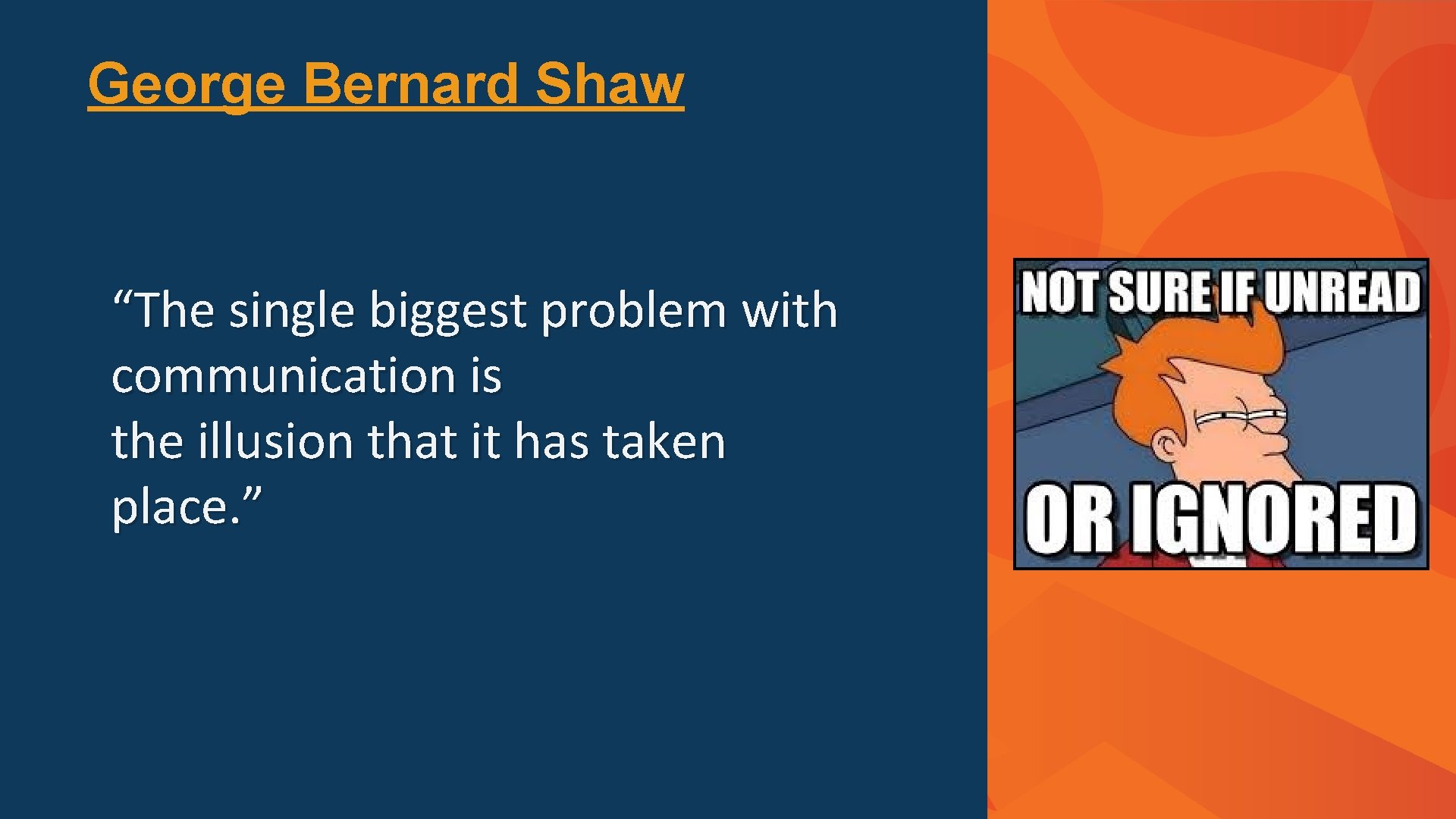
George Bernard Shaw “The single biggest problem with communication is the illusion that it has taken place. ”
Problem Statement: Local health departments (LHDs) with ineffective communication channels result in workplace conflicts, distorted information, and decreased employee engagement and performance.
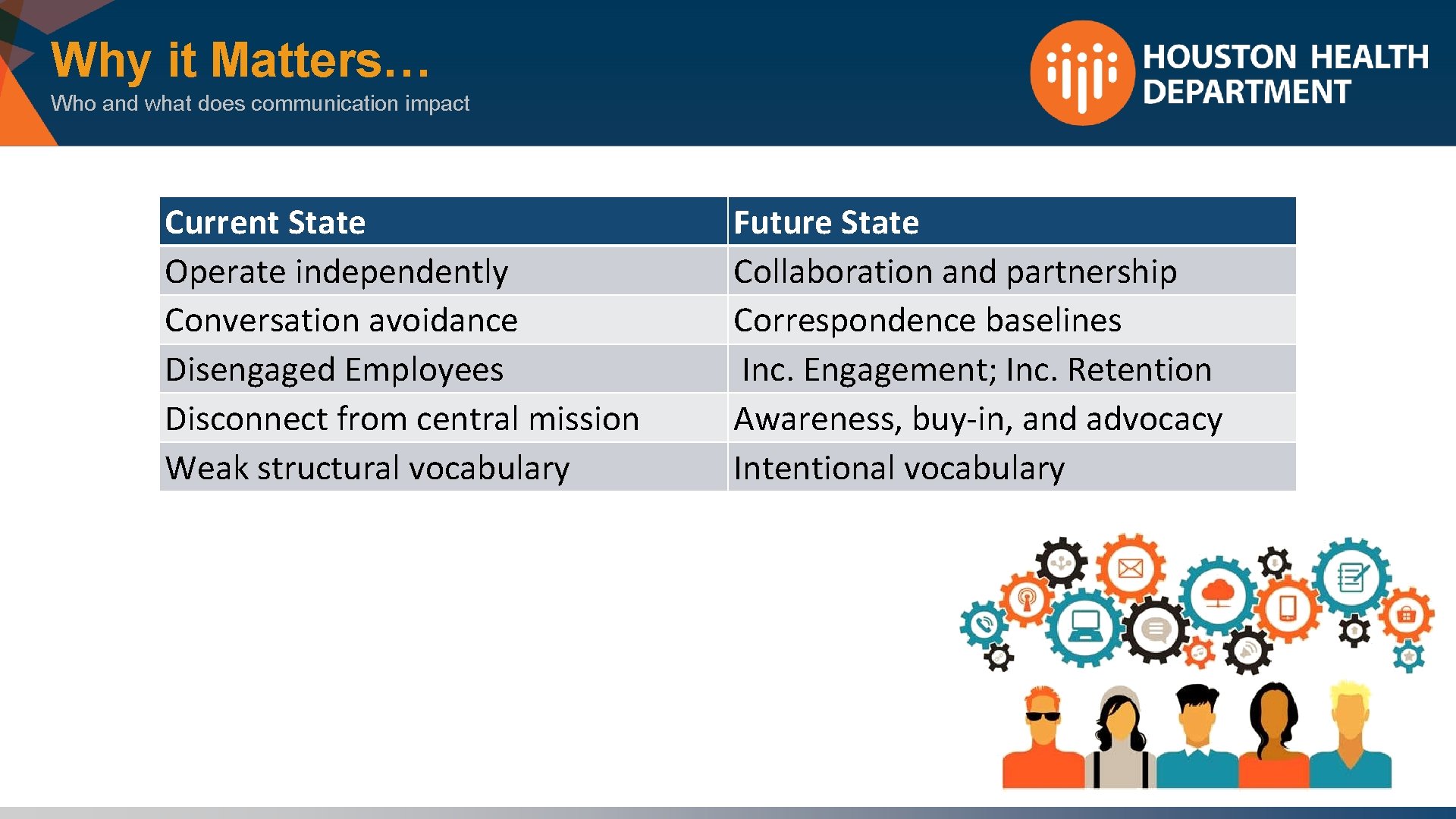
Why it Matters… Who and what does communication impact Current State Operate independently Conversation avoidance Disengaged Employees Disconnect from central mission Weak structural vocabulary Future State Collaboration and partnership Correspondence baselines Inc. Engagement; Inc. Retention Awareness, buy-in, and advocacy Intentional vocabulary
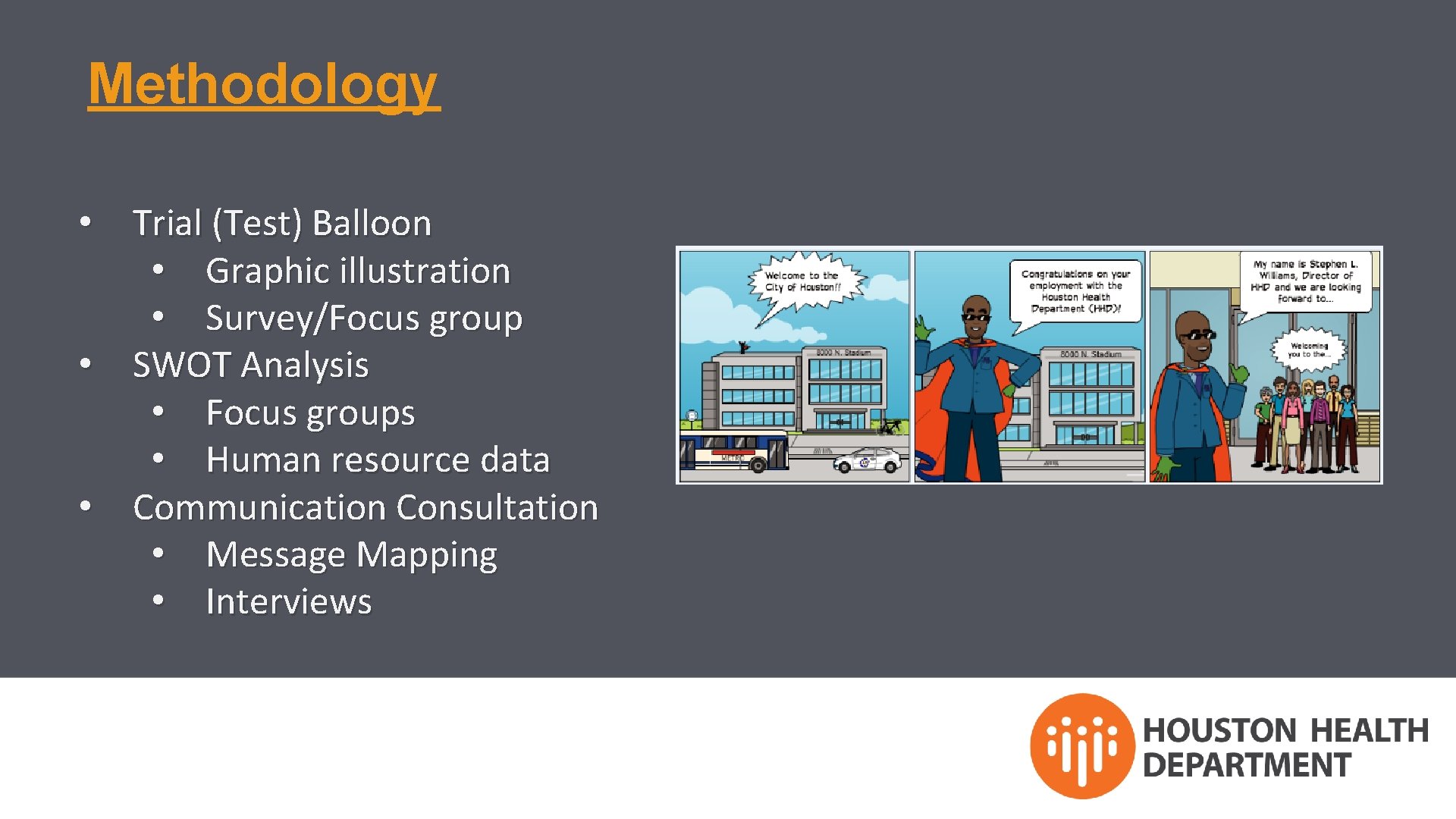
Methodology • Trial (Test) Balloon • Graphic illustration • Survey/Focus group • SWOT Analysis • Focus groups • Human resource data • Communication Consultation • Message Mapping • Interviews
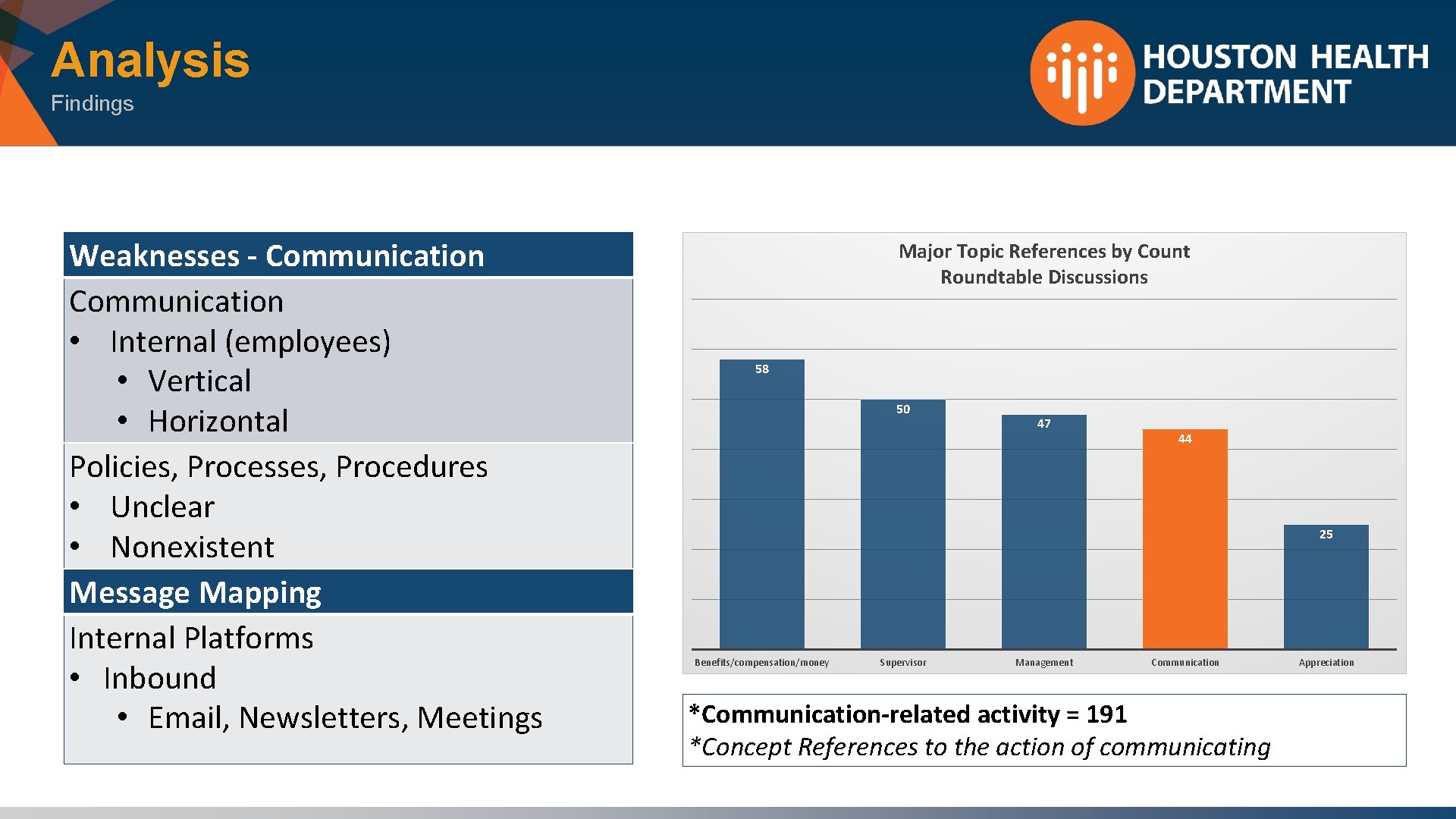
Analysis Findings Weaknesses - Communication • Internal (employees) • Vertical • Horizontal Policies, Processes, Procedures • Unclear • Nonexistent Message Mapping Internal Platforms • Inbound • Email, Newsletters, Meetings Major Topic References by Count Roundtable Discussions 58 50 47 44 25 Benefits/compensation/money Supervisor Management Communication *Communication-related activity = 191 *Concept References to the action of communicating Appreciation
Alternative 1. Introduce CSR Communication Strategy: CSR market brand communication enables business operations to create shared value amongst employees by sharing its goals, progress and achievements with them.
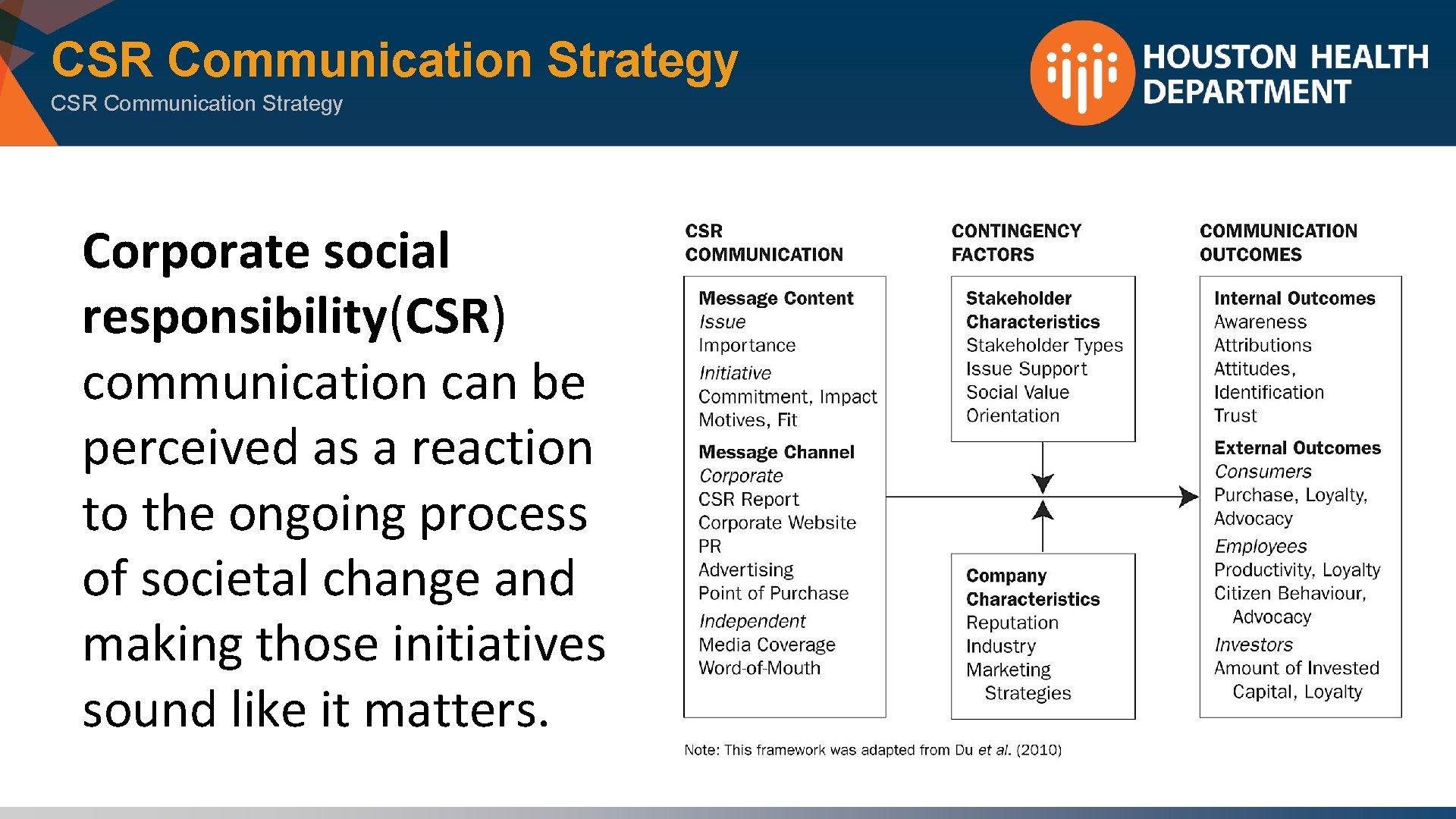
CSR Communication Strategy Corporate social responsibility(CSR) communication can be perceived as a reaction to the ongoing process of societal change and making those initiatives sound like it matters.
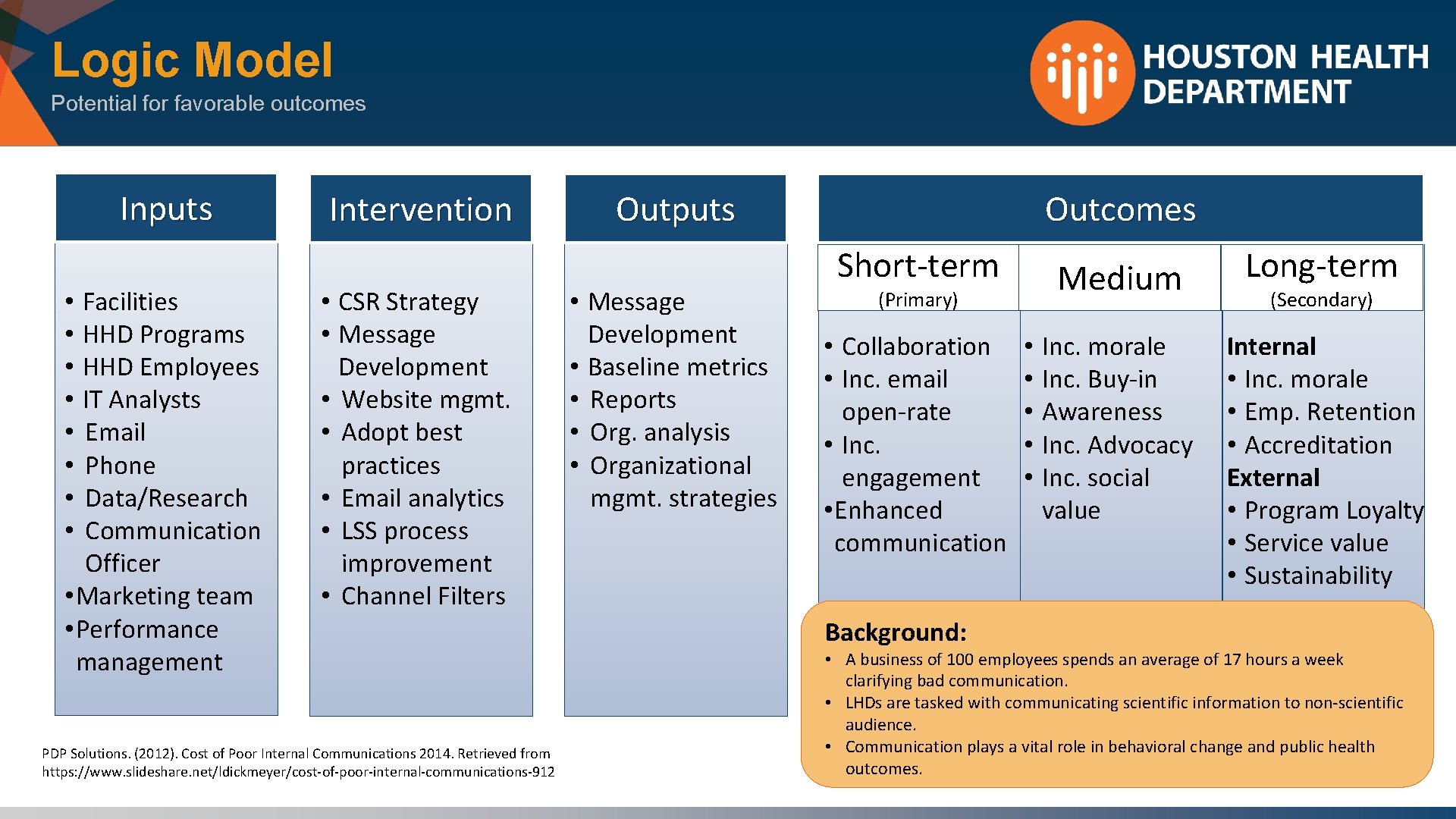
Logic Model Potential for favorable outcomes Inputs • Facilities • HHD Programs • HHD Employees • IT Analysts • Email • Phone • Data/Research • Communication Officer • Marketing team • Performance management Intervention • CSR Strategy • Message Development • Website mgmt. • Adopt best practices • Email analytics • LSS process improvement • Channel Filters PDP Solutions. (2012). Cost of Poor Internal Communications 2014. Retrieved from https: //www. slideshare. net/ldickmeyer/cost-of-poor-internal-communications-912 Outputs • Message Development • Baseline metrics • Reports • Org. analysis • Organizational mgmt. strategies Outcomes Short-term (Primary) • Collaboration • Inc. email open-rate • Inc. engagement • Enhanced communication Background: Medium • Inc. morale • Inc. Buy-in • Awareness • Inc. Advocacy • Inc. social value Long-term (Secondary) Internal • Inc. morale • Emp. Retention • Accreditation External • Program Loyalty • Service value • Sustainability • A business of 100 employees spends an average of 17 hours a week clarifying bad communication. • LHDs are tasked with communicating scientific information to non-scientific audience. • Communication plays a vital role in behavioral change and public health outcomes.
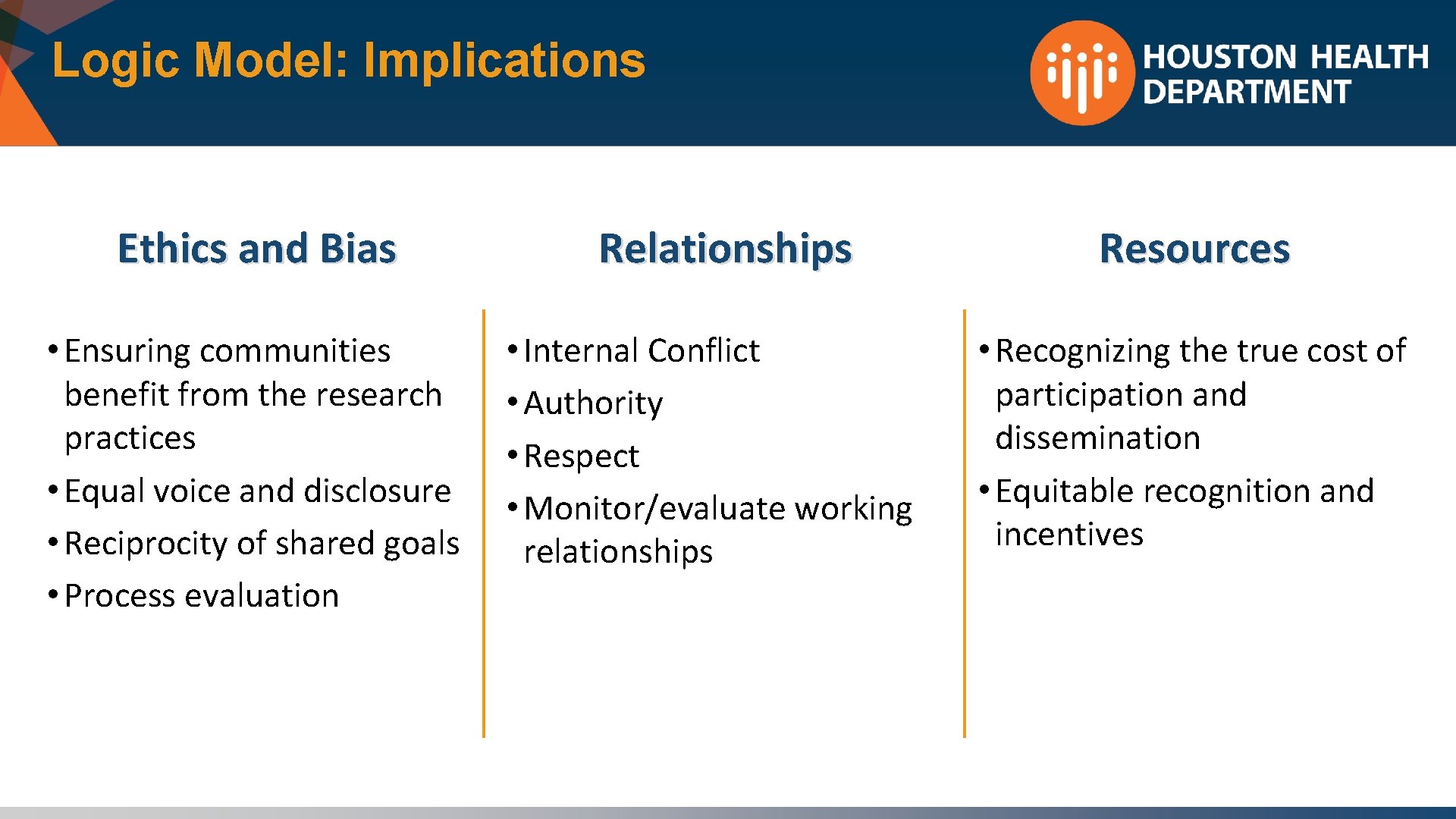
Logic Model: Implications Ethics and Bias • Ensuring communities benefit from the research practices • Equal voice and disclosure • Reciprocity of shared goals • Process evaluation Relationships • Internal Conflict • Authority • Respect • Monitor/evaluate working relationships Resources • Recognizing the true cost of participation and dissemination • Equitable recognition and incentives
Recommendations • Develop CSR communication strategy to improve upon existing resources. • Implement message development and pre-testing. • Create communication baselines. • Perform organizational network analysis (ONA). Merrill, J. , Keeling, J. W. , & Carley, K. M. (2010). A Comparative Study of 11 Local Health Department Organizational Networks. Journal of Public Health Management and Practice, 16(6), 564 -576. doi: 10. 1097/phh. 0 b 013 e 3181 e 31 cee
Acknowledgments… I would like to express my gratitude and appreciation for all of the individuals, teams, and programs that contributed resources, support, and data for the completion and presentation of this experience. • National Forum of Black Public Administrators (NFBPA) • Marcia L. Conner, Executive Director ELI • 2017 -2018 ELI Cohort • Houston Health Department • Stephen L. Williams, Director • Benjamin Hernandez, Assistant Director ASD • Kellen Sweny, Sponsor, Registrar Bureau of Vital Statistics • Scott Packard, Chief Communications & Public Affairs Officer • OPERE/OPM