
CSPE Action Project 2 nd Year St Josephs
- Slides: 16
CSPE Action Project – 2 nd Year St Joseph’s Secondary School 9 th of May 2017 Fingal Beaches & Environment Presented by Joe Corr MIPI
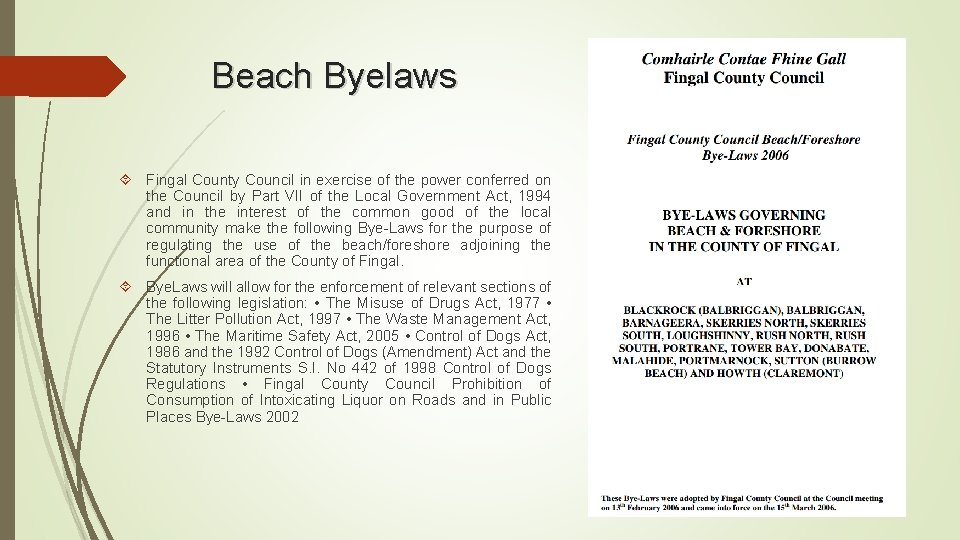
Beach Byelaws Fingal County Council in exercise of the power conferred on the Council by Part VII of the Local Government Act, 1994 and in the interest of the common good of the local community make the following Bye-Laws for the purpose of regulating the use of the beach/foreshore adjoining the functional area of the County of Fingal. Bye. Laws will allow for the enforcement of relevant sections of the following legislation: • The Misuse of Drugs Act, 1977 • The Litter Pollution Act, 1997 • The Waste Management Act, 1996 • The Maritime Safety Act, 2005 • Control of Dogs Act, 1986 and the 1992 Control of Dogs (Amendment) Act and the Statutory Instruments S. I. No 442 of 1998 Control of Dogs Regulations • Fingal County Council Prohibition of Consumption of Intoxicating Liquor on Roads and in Public Places Bye-Laws 2002
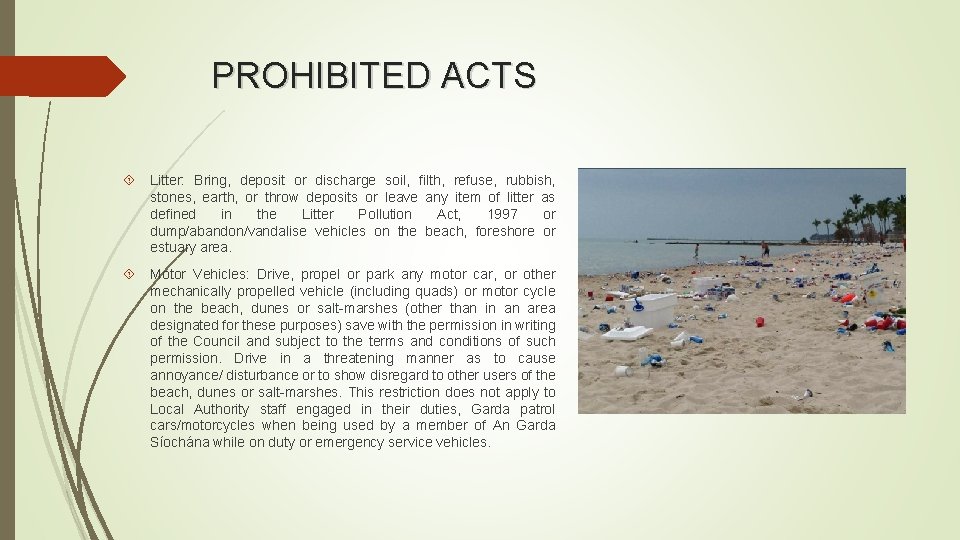
PROHIBITED ACTS Litter: Bring, deposit or discharge soil, filth, refuse, rubbish, stones, earth, or throw deposits or leave any item of litter as defined in the Litter Pollution Act, 1997 or dump/abandon/vandalise vehicles on the beach, foreshore or estuary area. Motor Vehicles: Drive, propel or park any motor car, or other mechanically propelled vehicle (including quads) or motor cycle on the beach, dunes or salt-marshes (other than in an area designated for these purposes) save with the permission in writing of the Council and subject to the terms and conditions of such permission. Drive in a threatening manner as to cause annoyance/ disturbance or to show disregard to other users of the beach, dunes or salt-marshes. This restriction does not apply to Local Authority staff engaged in their duties, Garda patrol cars/motorcycles when being used by a member of An Garda Síochána while on duty or emergency service vehicles.
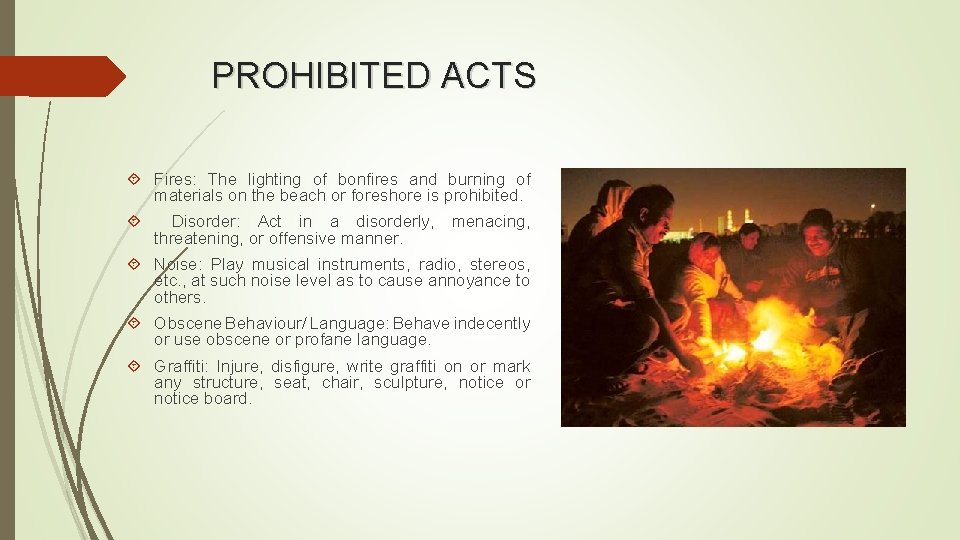
PROHIBITED ACTS Fires: The lighting of bonfires and burning of materials on the beach or foreshore is prohibited. Disorder: Act in a disorderly, threatening, or offensive manner. menacing, Noise: Play musical instruments, radio, stereos, etc. , at such noise level as to cause annoyance to others. Obscene Behaviour/ Language: Behave indecently or use obscene or profane language. Graffiti: Injure, disfigure, write graffiti on or mark any structure, seat, chair, sculpture, notice or notice board.
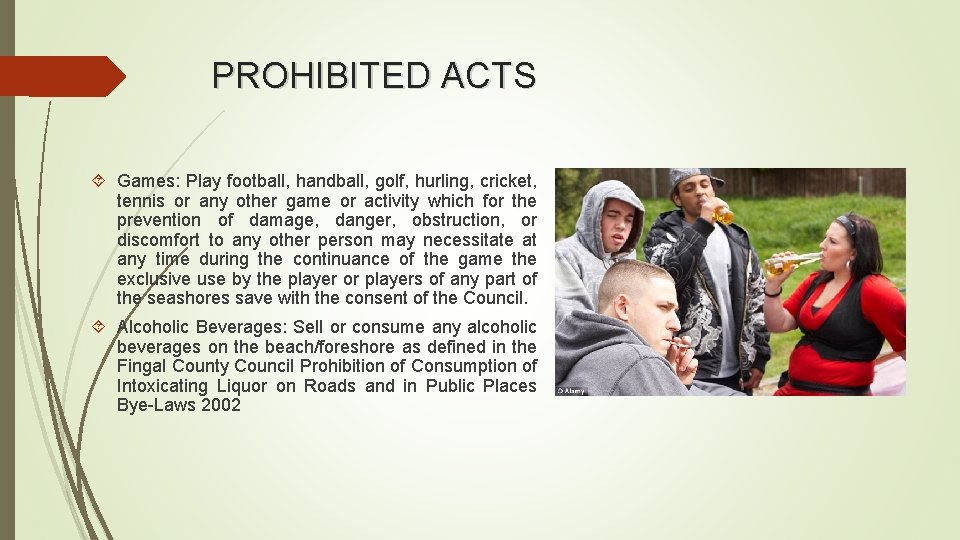
PROHIBITED ACTS Games: Play football, handball, golf, hurling, cricket, tennis or any other game or activity which for the prevention of damage, danger, obstruction, or discomfort to any other person may necessitate at any time during the continuance of the game the exclusive use by the player or players of any part of the seashores save with the consent of the Council. Alcoholic Beverages: Sell or consume any alcoholic beverages on the beach/foreshore as defined in the Fingal County Council Prohibition of Consumption of Intoxicating Liquor on Roads and in Public Places Bye-Laws 2002
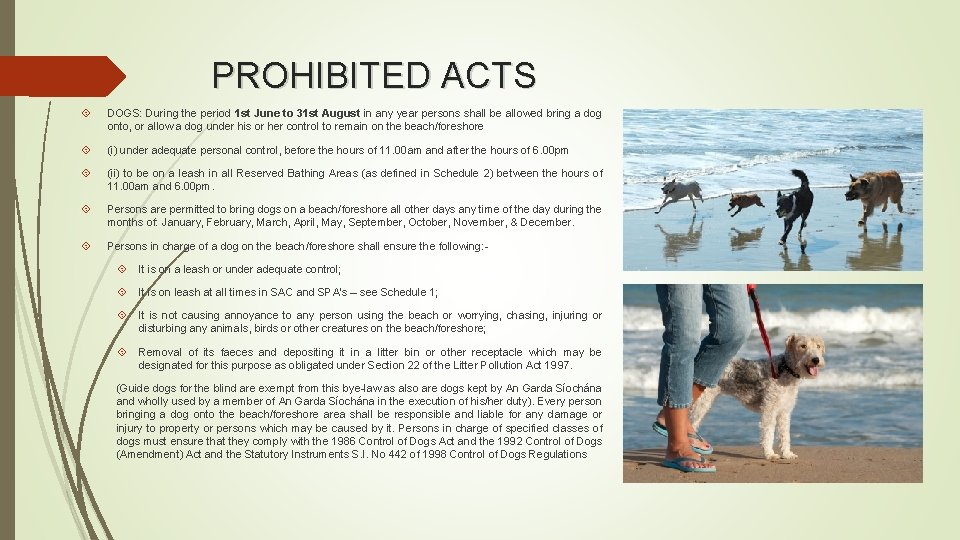
PROHIBITED ACTS DOGS: During the period 1 st June to 31 st August in any year persons shall be allowed bring a dog onto, or allow a dog under his or her control to remain on the beach/foreshore (i) under adequate personal control, before the hours of 11. 00 am and after the hours of 6. 00 pm (ii) to be on a leash in all Reserved Bathing Areas (as defined in Schedule 2) between the hours of 11. 00 am and 6. 00 pm. Persons are permitted to bring dogs on a beach/foreshore all other days any time of the day during the months of: January, February, March, April, May, September, October, November, & December. Persons in charge of a dog on the beach/foreshore shall ensure the following: - It is on a leash or under adequate control; It is on leash at all times in SAC and SPA’s – see Schedule 1; It is not causing annoyance to any person using the beach or worrying, chasing, injuring or disturbing any animals, birds or other creatures on the beach/foreshore; Removal of its faeces and depositing it in a litter bin or other receptacle which may be designated for this purpose as obligated under Section 22 of the Litter Pollution Act 1997. (Guide dogs for the blind are exempt from this bye-law as also are dogs kept by An Garda Síochána and wholly used by a member of An Garda Síochána in the execution of his/her duty). Every person bringing a dog onto the beach/foreshore area shall be responsible and liable for any damage or injury to property or persons which may be caused by it. Persons in charge of specified classes of dogs must ensure that they comply with the 1986 Control of Dogs Act and the 1992 Control of Dogs (Amendment) Act and the Statutory Instruments S. I. No 442 of 1998 Control of Dogs Regulations
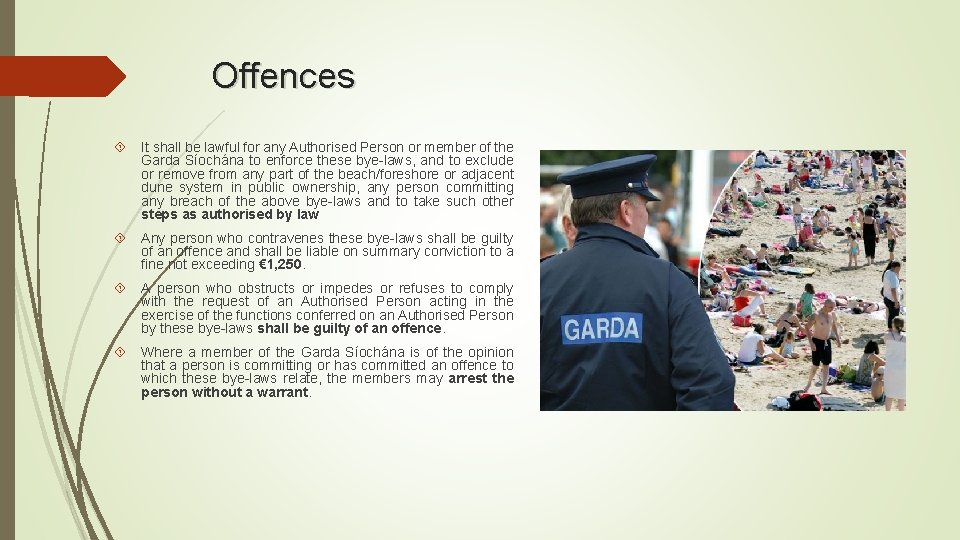
Offences It shall be lawful for any Authorised Person or member of the Garda Síochána to enforce these bye-laws, and to exclude or remove from any part of the beach/foreshore or adjacent dune system in public ownership, any person committing any breach of the above bye-laws and to take such other steps as authorised by law Any person who contravenes these bye-laws shall be guilty of an offence and shall be liable on summary conviction to a fine not exceeding € 1, 250. A person who obstructs or impedes or refuses to comply with the request of an Authorised Person acting in the exercise of the functions conferred on an Authorised Person by these bye-laws shall be guilty of an offence. Where a member of the Garda Síochána is of the opinion that a person is committing or has committed an offence to which these bye-laws relate, the members may arrest the person without a warrant.
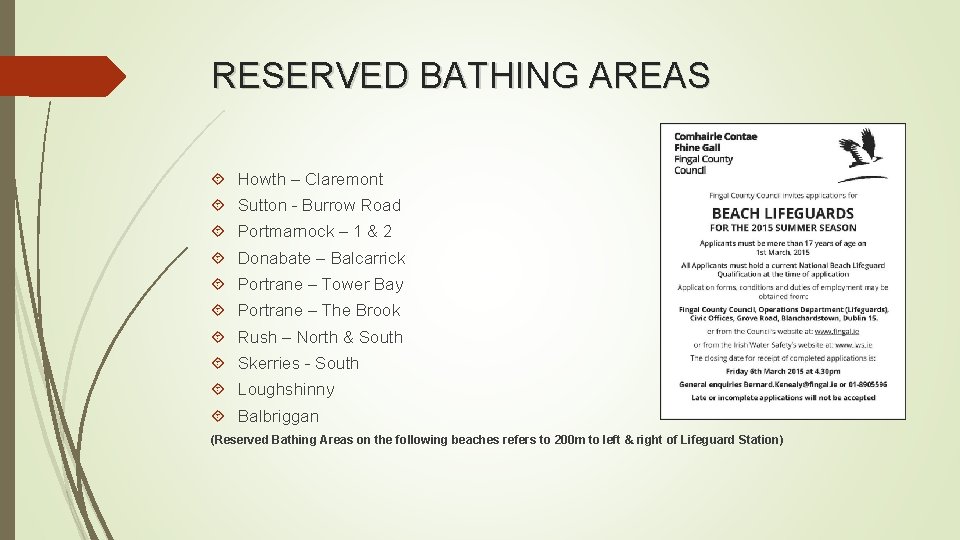
RESERVED BATHING AREAS Howth – Claremont Sutton - Burrow Road Portmarnock – 1 & 2 Donabate – Balcarrick Portrane – Tower Bay Portrane – The Brook Rush – North & South Skerries - South Loughshinny Balbriggan (Reserved Bathing Areas on the following beaches refers to 200 m to left & right of Lifeguard Station)
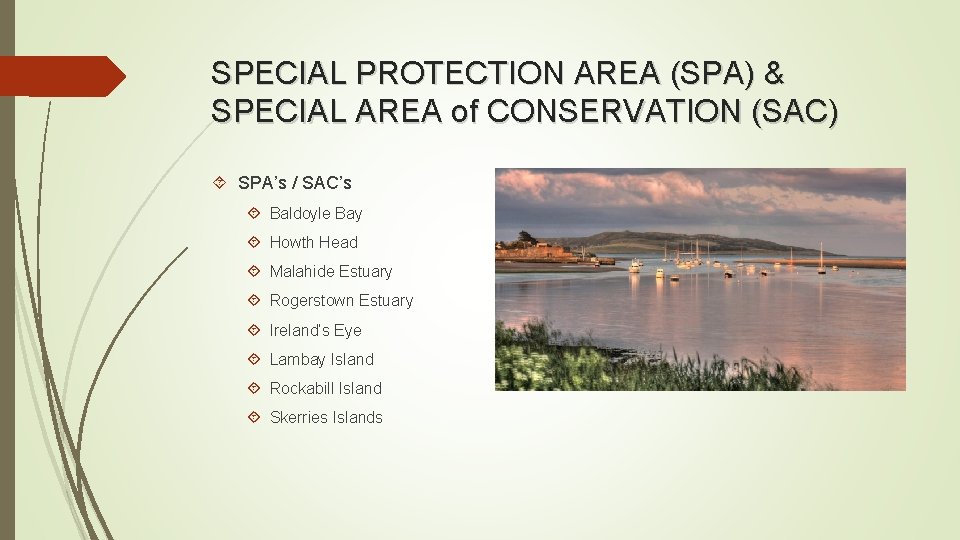
SPECIAL PROTECTION AREA (SPA) & SPECIAL AREA of CONSERVATION (SAC) SPA’s / SAC’s Baldoyle Bay Howth Head Malahide Estuary Rogerstown Estuary Ireland’s Eye Lambay Island Rockabill Island Skerries Islands
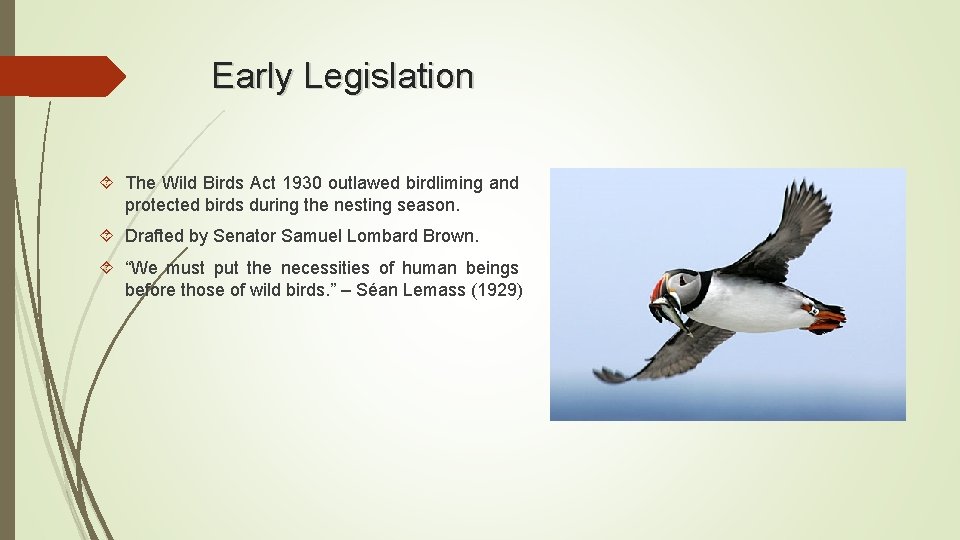
Early Legislation The Wild Birds Act 1930 outlawed birdliming and protected birds during the nesting season. Drafted by Senator Samuel Lombard Brown. “We must put the necessities of human beings before those of wild birds. ” – Séan Lemass (1929)
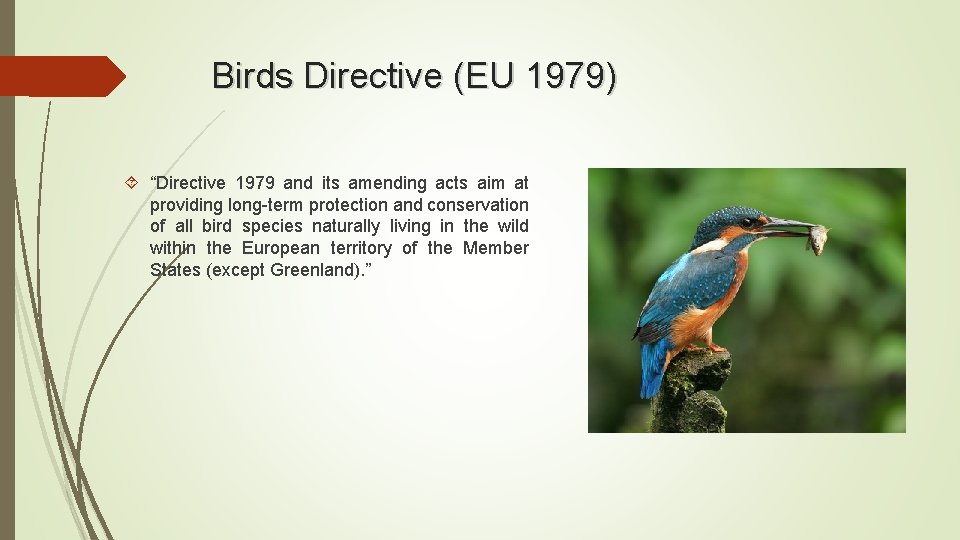
Birds Directive (EU 1979) “Directive 1979 and its amending acts aim at providing long-term protection and conservation of all bird species naturally living in the wild within the European territory of the Member States (except Greenland). ”
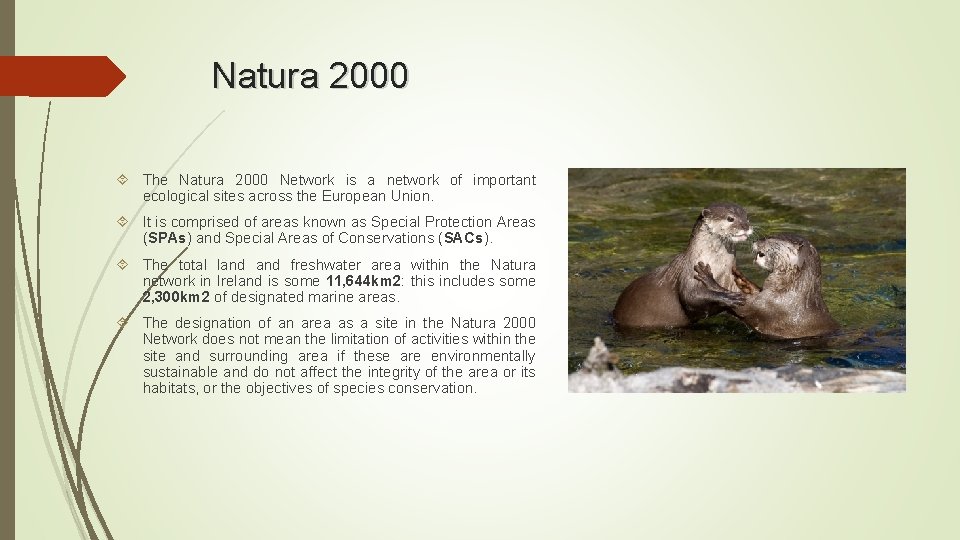
Natura 2000 The Natura 2000 Network is a network of important ecological sites across the European Union. It is comprised of areas known as Special Protection Areas (SPAs) and Special Areas of Conservations (SACs). The total land freshwater area within the Natura network in Ireland is some 11, 644 km 2: this includes some 2, 300 km 2 of designated marine areas. The designation of an area as a site in the Natura 2000 Network does not mean the limitation of activities within the site and surrounding area if these are environmentally sustainable and do not affect the integrity of the area or its habitats, or the objectives of species conservation.
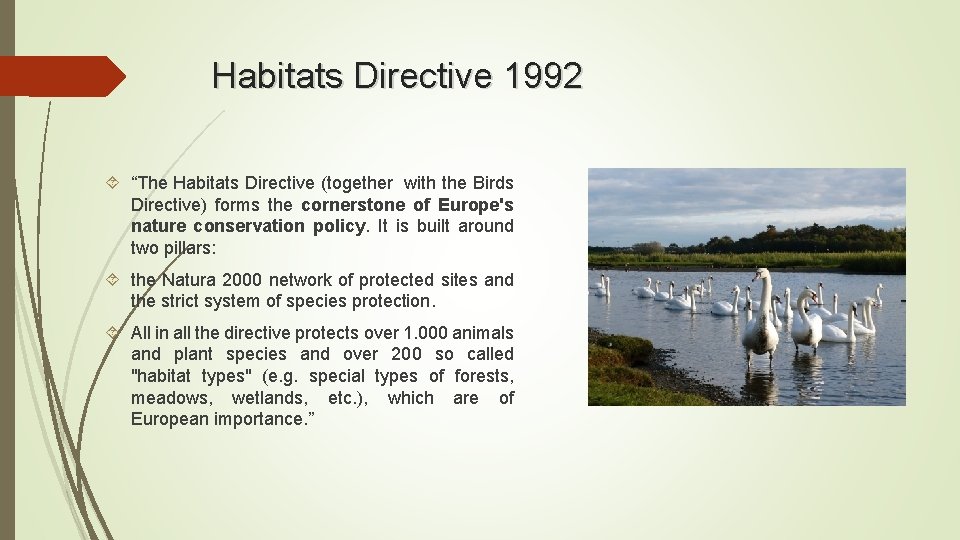
Habitats Directive 1992 “The Habitats Directive (together with the Birds Directive) forms the cornerstone of Europe's nature conservation policy. It is built around two pillars: the Natura 2000 network of protected sites and the strict system of species protection. All in all the directive protects over 1. 000 animals and plant species and over 200 so called "habitat types" (e. g. special types of forests, meadows, wetlands, etc. ), which are of European importance. ”
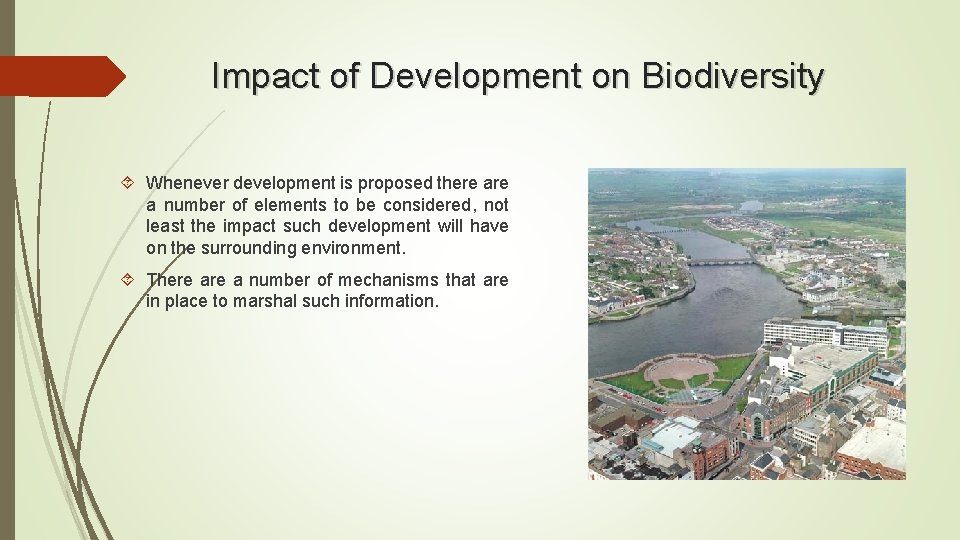
Impact of Development on Biodiversity Whenever development is proposed there a number of elements to be considered, not least the impact such development will have on the surrounding environment. There a number of mechanisms that are in place to marshal such information.
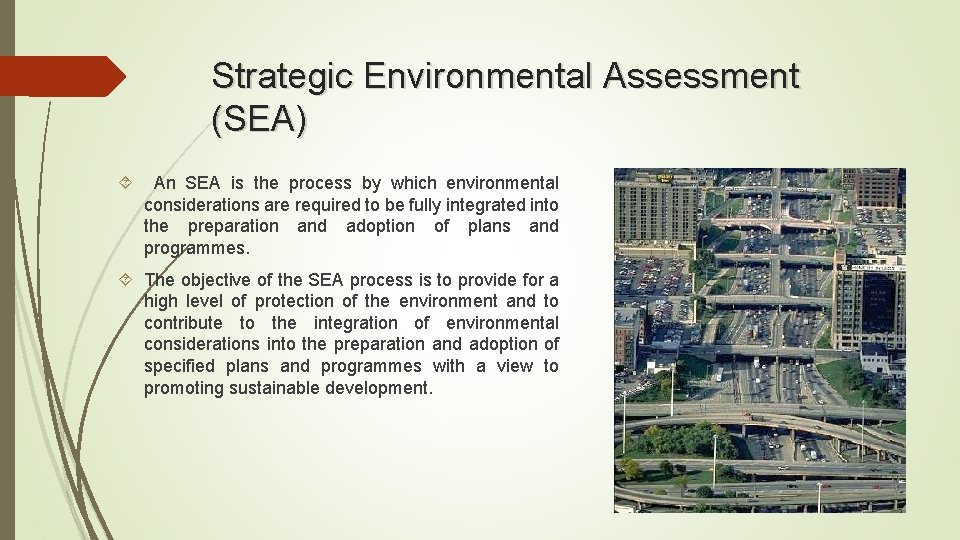
Strategic Environmental Assessment (SEA) An SEA is the process by which environmental considerations are required to be fully integrated into the preparation and adoption of plans and programmes. The objective of the SEA process is to provide for a high level of protection of the environment and to contribute to the integration of environmental considerations into the preparation and adoption of specified plans and programmes with a view to promoting sustainable development.
What has the EU done for us? Forced Ireland to implement the Birds Directive Fines for discharging raw sewage into the sea Helping to keep our environment clean for humans and wildlife Beach Litter Through A Child's Eyes