
CSF Bilirubin Measurements on the Roche Modular Better
CSF Bilirubin Measurements on the Roche Modular: Better than Spectrophotometry? G Jones, M Roser Department of Chemical Pathology St Vincent’s Hospital, Sydney
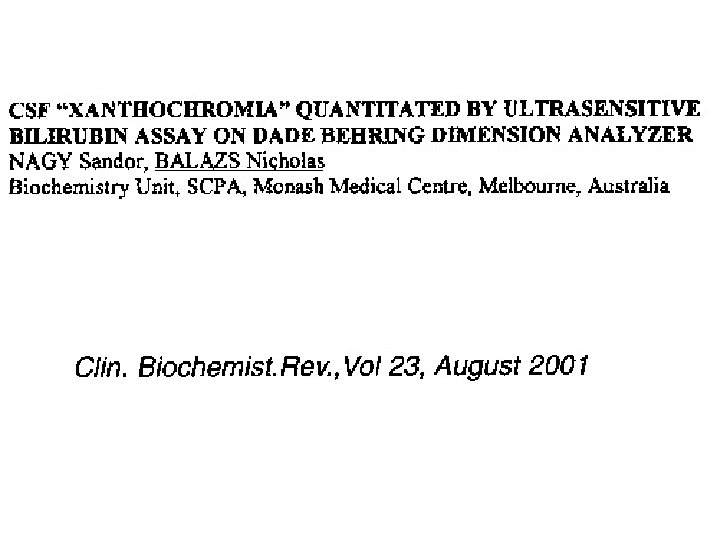
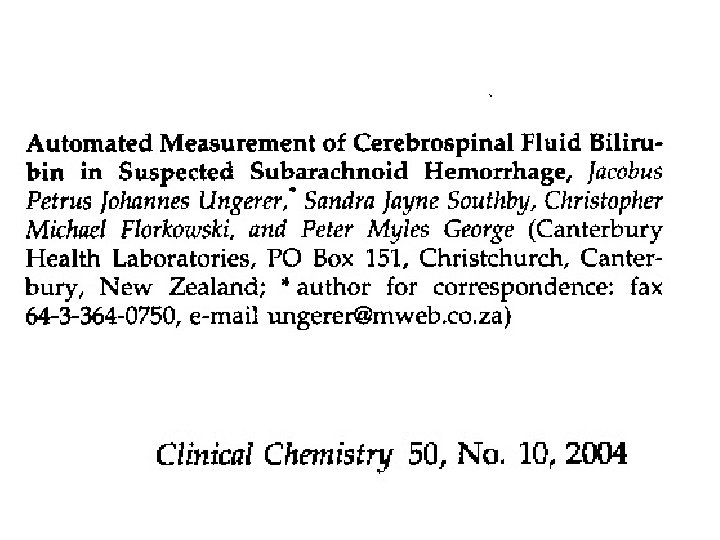
Background • CSF Bilirubin is an important test for excluding subarachnoid haemorrhage. • The “Gold Standard” test is scanning spectrophotometry. • Methods for measurements of bilirubin in CSF have been presented for Dade 1 and Abbott 2 analysers. • We present a method for use on the Roche Modular system and illustrate benefits compared to spectrophotometry 1. Balsz et al; 2, Ungerer et al
CSF Bilirubin measurement Potential benefits of measurement on an autoanalyser compared to spectrophotometry: • Does not require specialised equipment • Does not require specialised training • Requires a smaller sample volume • Can be performed at all hours
But. . . • Low bilirubin concentrations (<0. 5 umol/L) • Measurement of precision is difficult due to poor QC stability • Haemoglobin interferes with many bilirubin assays • Information from the presence of haemoglobin is not available for interpretation
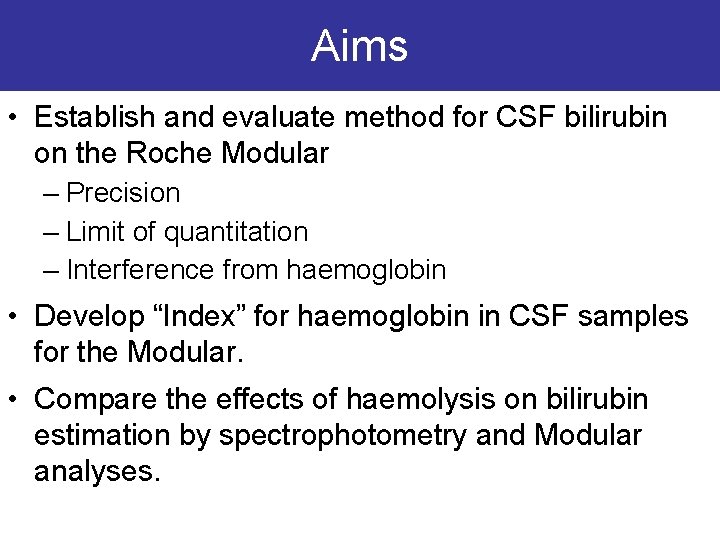
Aims • Establish and evaluate method for CSF bilirubin on the Roche Modular – Precision – Limit of quantitation – Interference from haemoglobin • Develop “Index” for haemoglobin in CSF samples for the Modular. • Compare the effects of haemolysis on bilirubin estimation by spectrophotometry and Modular analyses.
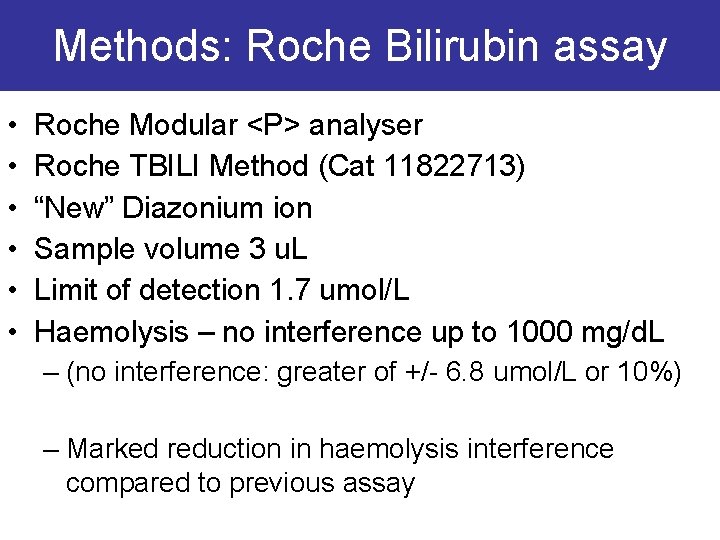
Methods: Roche Bilirubin assay • • • Roche Modular <P> analyser Roche TBILI Method (Cat 11822713) “New” Diazonium ion Sample volume 3 u. L Limit of detection 1. 7 umol/L Haemolysis – no interference up to 1000 mg/d. L – (no interference: greater of +/- 6. 8 umol/L or 10%) – Marked reduction in haemolysis interference compared to previous assay

Methods: CSF modifications • Set up as user-defined chemistry with CSF application linked to routine serum application • Used serum calibration protocols • Sample volume increased – 35 u (11. 6 fold increase) • All samples for CSF protein get CSF bilirubin – data available on fresh samples if Xanthchromia added later – accumulation of data
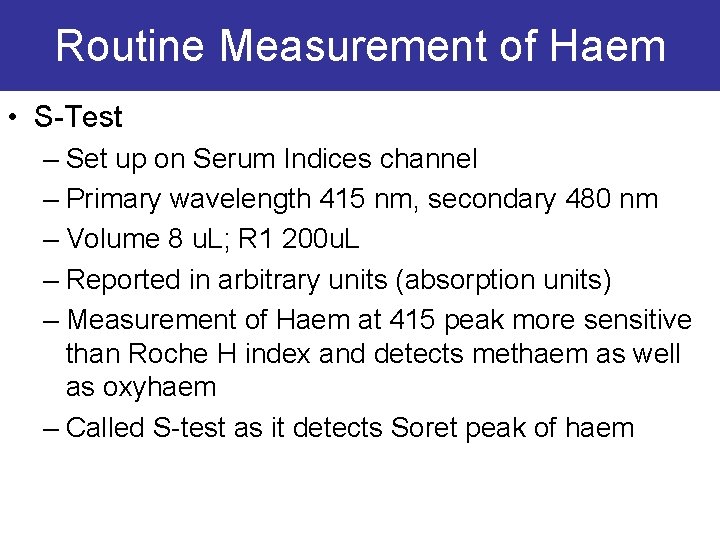
Routine Measurement of Haem • S-Test – Set up on Serum Indices channel – Primary wavelength 415 nm, secondary 480 nm – Volume 8 u. L; R 1 200 u. L – Reported in arbitrary units (absorption units) – Measurement of Haem at 415 peak more sensitive than Roche H index and detects methaem as well as oxyhaem – Called S-test as it detects Soret peak of haem
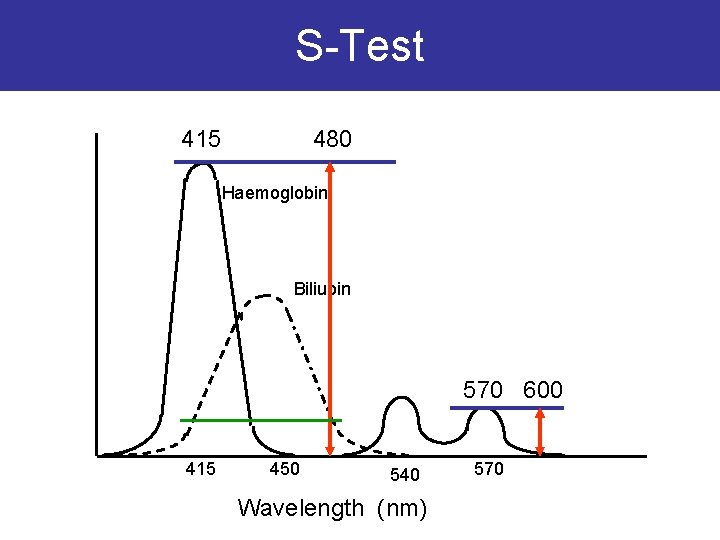
S-Test 415 480 Haemoglobin Biliubin 570 600 415 450 540 Wavelength (nm) 570
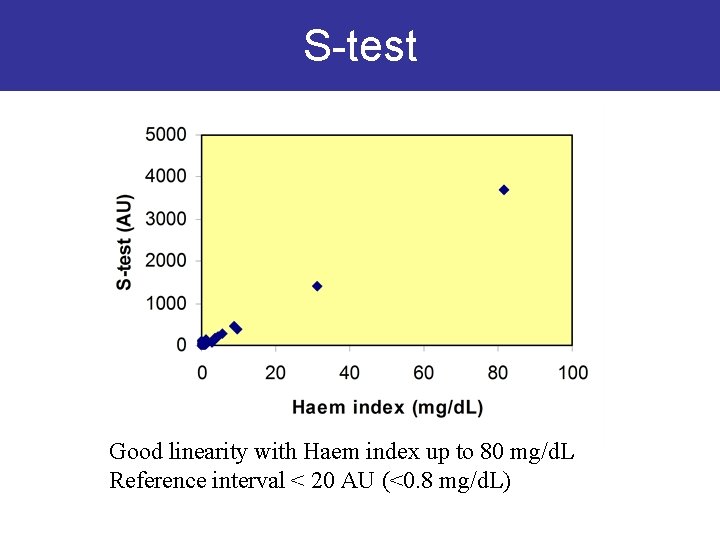
S-test Good linearity with Haem index up to 80 mg/d. L Reference interval < 20 AU (<0. 8 mg/d. L)
Precision Measurement • Bilirubin measurements established using Modular “supernatant” and “urine” descriptors. • Sample Vol: 3 u. L, pre-diluted 1/10 (“supernatant”) and 1/5 (“urine”) • Serum QC run on these channels as patients • QC performed with Biorad serum QC – Bio. Rad L 1 (15 umol/L) – Biorad L 2 (80 umol/L)
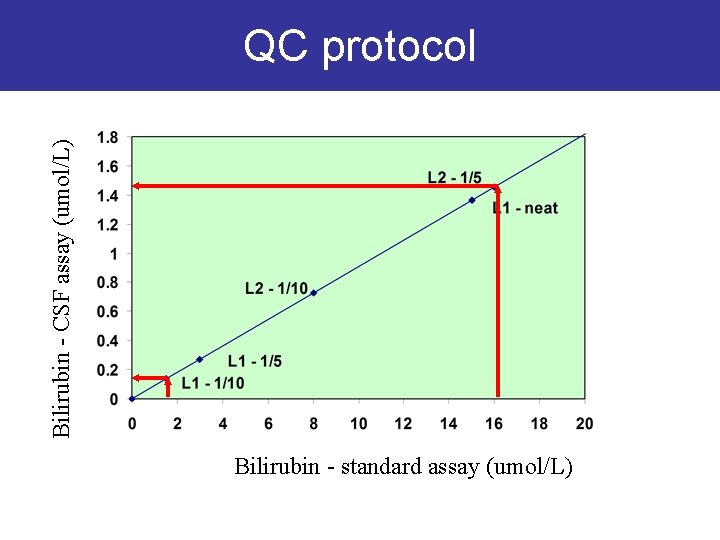
Bilirubin - CSF assay (umol/L) QC protocol Bilirubin - standard assay (umol/L)
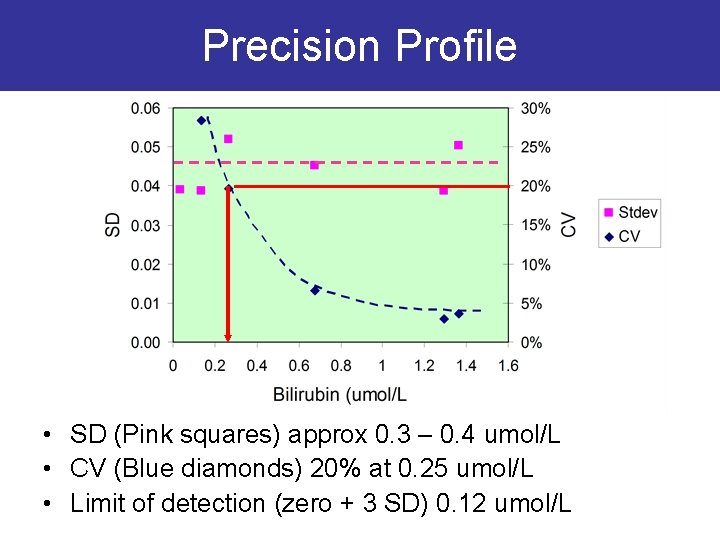
Precision Profile • SD (Pink squares) approx 0. 3 – 0. 4 umol/L • CV (Blue diamonds) 20% at 0. 25 umol/L • Limit of detection (zero + 3 SD) 0. 12 umol/L
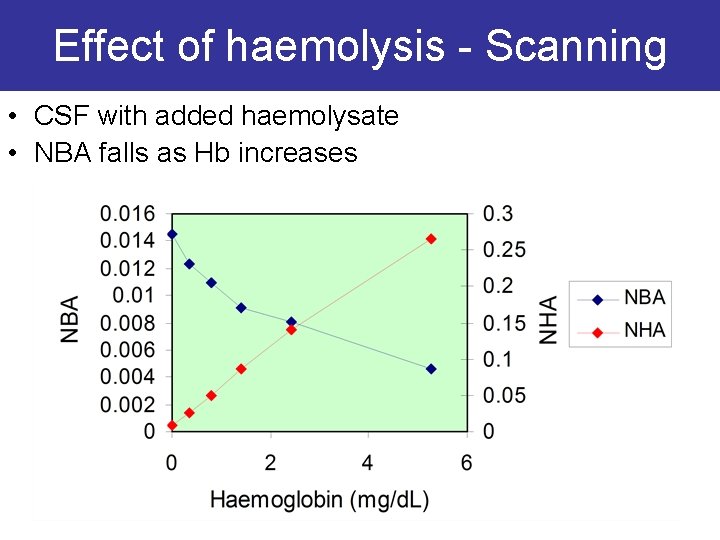
Effect of haemolysis - Scanning • CSF with added haemolysate • NBA falls as Hb increases
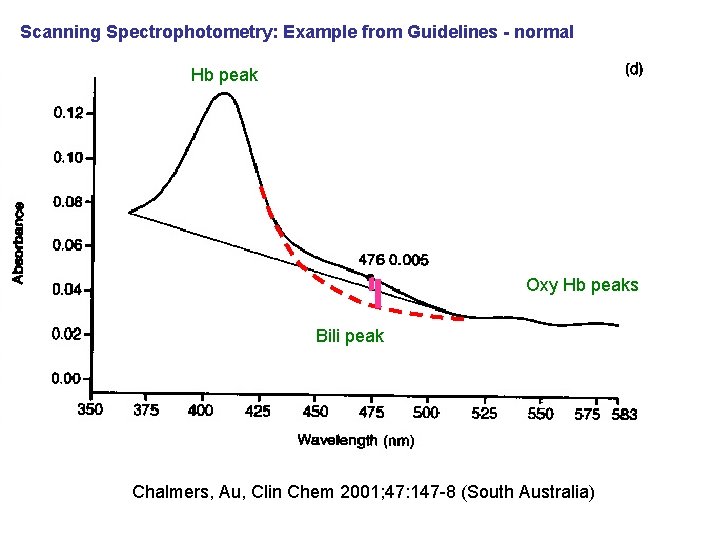
Scanning Spectrophotometry: Example from Guidelines - normal Hb peak Oxy Hb peaks Bili peak Chalmers, Au, Clin Chem 2001; 47: 147 -8 (South Australia)
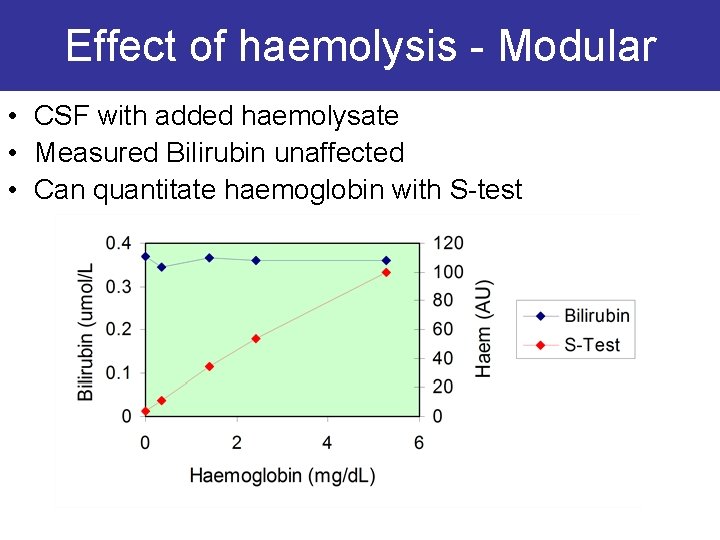
Effect of haemolysis - Modular • CSF with added haemolysate • Measured Bilirubin unaffected • Can quantitate haemoglobin with S-test
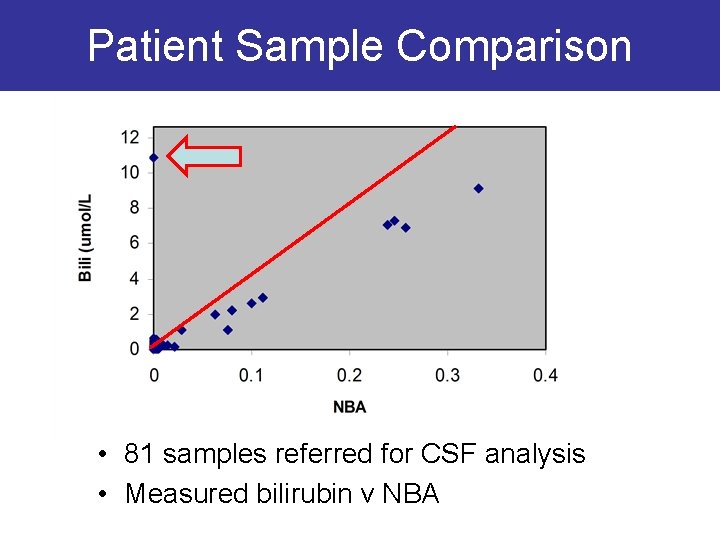
Patient Sample Comparison • 81 samples referred for CSF analysis • Measured bilirubin v NBA
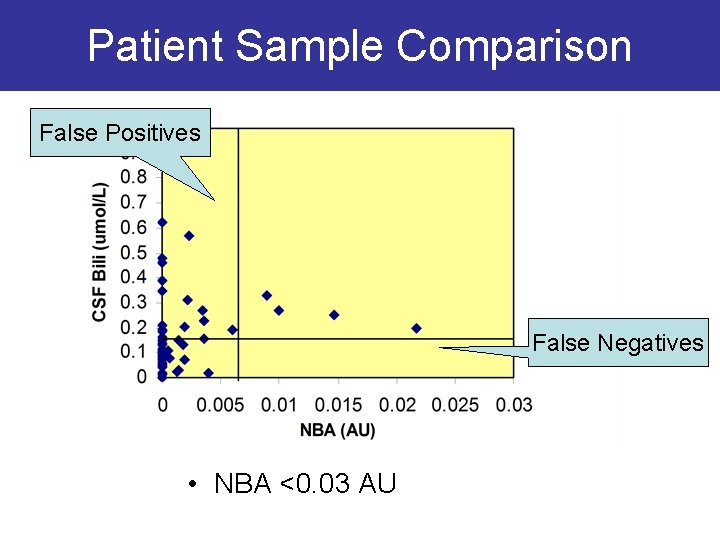
Patient Sample Comparison False Positives False Negatives • NBA <0. 03 AU
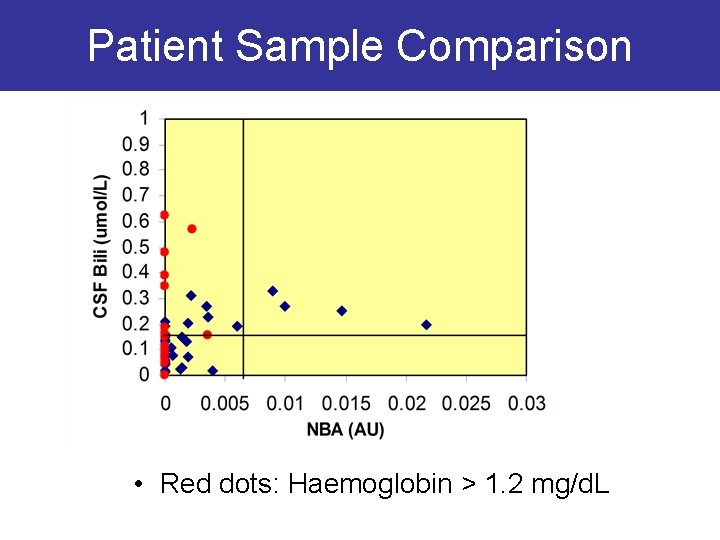
Patient Sample Comparison • Red dots: Haemoglobin > 1. 2 mg/d. L
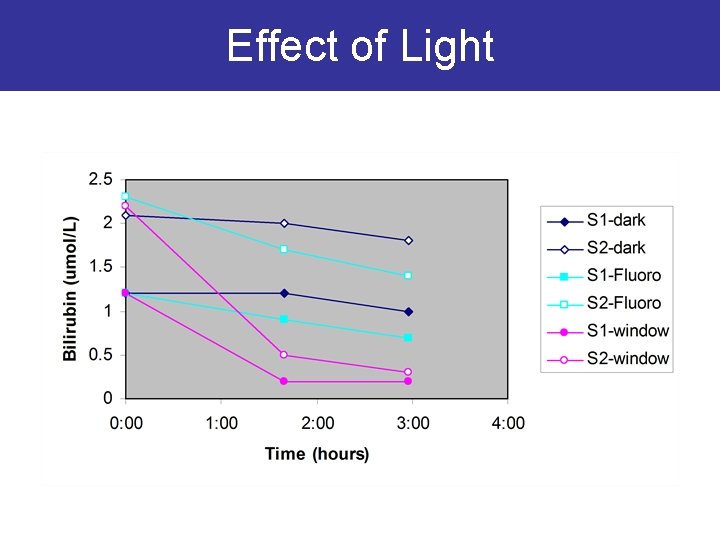
Effect of Light
Conclusion • The Modular CSF bilirubin assay is simple and robust. • The S-test allow simultaneous measurement of CSF haem. • The bilirubin assay is resistant to haemolysis improving clinical sensitivity compared to spectrophotometry. • Clinical correlation remains to be confirmed but given the clinical requirements for sensitivity the use of this assay, we use this assay for routine rule-out purposes
- Slides: 23