
CSE 591 575 Data Mining 1212003 562003 Computer
- Slides: 22
CSE 591 (575) Data Mining 1/21/2003 - 5/6/2003 Computer Science & Engineering ASU 1
Introduction to this Course Introduction to Data Mining 2
Introduction to the Course n First, about you - why take this course? n Your background and strength n n n AI, DBMS, Statistics, Biology, … Your interests and requests What is this course about? n n Problem solving Handling data n n transform data to workable data Mining data n n turn data to knowledge validation and presentation of knowledge 3
This course n What can you expect from this course? n n n How is this course conducted? n n n Knowledge and experience about DM Problem solving and solution presentation Presentations Individual projects Course Format n n n Individual Projects 40% Exams and/or quizzes 40% Class participation 20% n off-campus students? 4
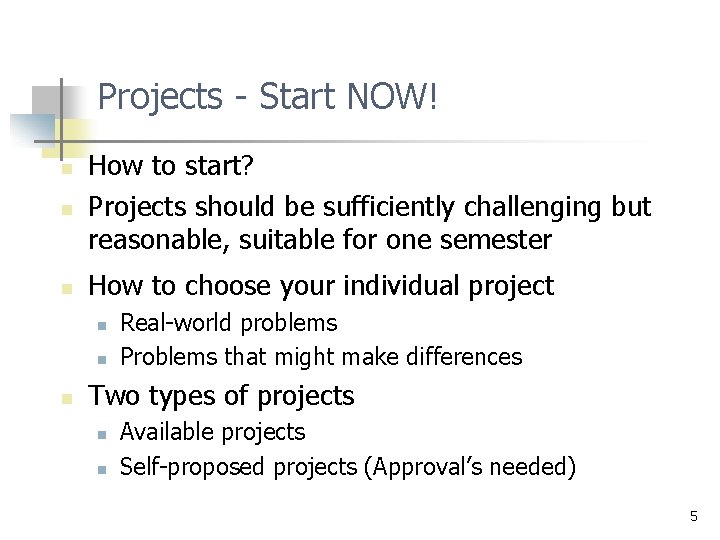
Projects - Start NOW! n How to start? Projects should be sufficiently challenging but reasonable, suitable for one semester n How to choose your individual project n n Real-world problems Problems that might make differences Two types of projects n n Available projects Self-proposed projects (Approval’s needed) 5
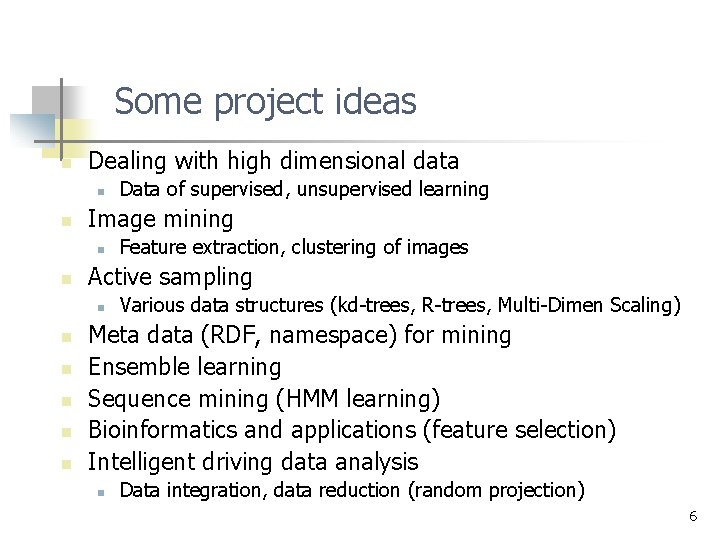
Some project ideas n Dealing with high dimensional data n n Image mining n n n Feature extraction, clustering of images Active sampling n n Data of supervised, unsupervised learning Various data structures (kd-trees, R-trees, Multi-Dimen Scaling) Meta data (RDF, namespace) for mining Ensemble learning Sequence mining (HMM learning) Bioinformatics and applications (feature selection) Intelligent driving data analysis n Data integration, data reduction (random projection) 6
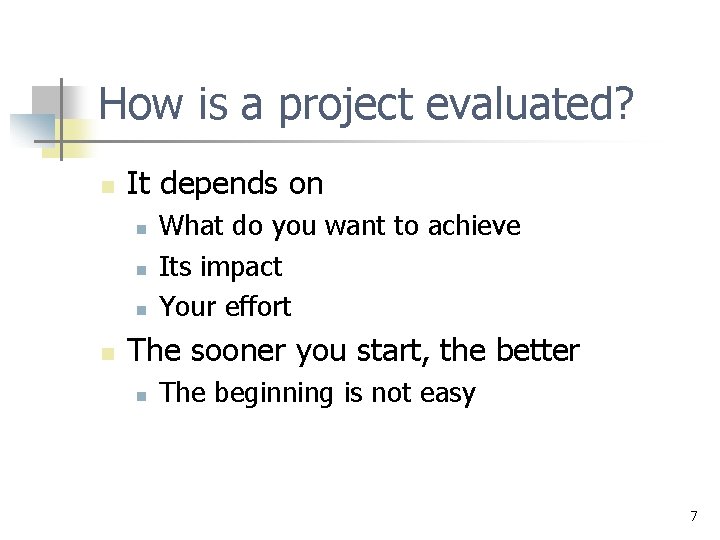
How is a project evaluated? n It depends on n n What do you want to achieve Its impact Your effort The sooner you start, the better n The beginning is not easy 7
Course Web Site n n http: //www. public. asu. edu/~huanliu/cse 591. html My office and office hours n GWC 342 n T 10: 30 - 11: 30 am and Th 4: 00 -5: 00 pm My email: hliu@asu. edu Slides and relevant information will be made available at the course web site 8
Any questions and suggestions? n Your feedback is most welcome! I need it to adapt the course to your needs. Please feel free to provide yours anytime. Share your questions and concerns with the class – very likely others may have the same. No pain no gain – no magic for data mining. n n n The more you put in, the more you get Your grades are proportional to your efforts. 9
Introduction to Data Mining Definitions Motivations of DM Interdisciplinary Links of DM 10
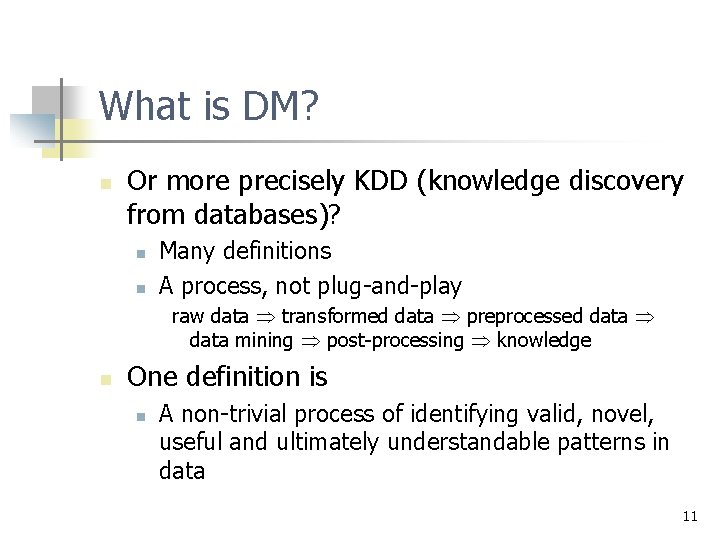
What is DM? n Or more precisely KDD (knowledge discovery from databases)? n n Many definitions A process, not plug-and-play raw data transformed data preprocessed data mining post-processing knowledge n One definition is n A non-trivial process of identifying valid, novel, useful and ultimately understandable patterns in data 11
Need for Data Mining n n n Data accumulate and double every 9 months There is a big gap from stored data to knowledge; and the transition won’t occur automatically. Manual data analysis is not new but a bottleneck Fast developing Computer Science and Engineering generates new demands Seeking knowledge from massive data n Any personal experience? 12
When is DM useful n Data rich n n Large data (dimensionality and size) n n n Two invited talks so far have convincingly demonstrate it Image data (size) Gene data (dimensionality) Little knowledge about data (exploratory data analysis) n What if we have some knowledge? 13
DM perspectives n n Prediction, description, explanation, optimization, and exploration Completion of knowledge (patterns vs. models) Understandability and representation of knowledge Some applications n n n Business intelligence (CRM) Security (Info, Comp Systems, Networks, Data, Privacy) Scientific discovery (bioinformatics) 14
Challenges n n n Increasing data dimensionality and data size Various data forms New data types n n n Streaming data, multimedia data Efficient search and data access Intelligent update and integration 15
Interdisciplinary Links of DM n n n Statistics Databases AI Machine Learning Visualization High Performance Computing n supercomputers, distributed/parallel/cluster computing 16
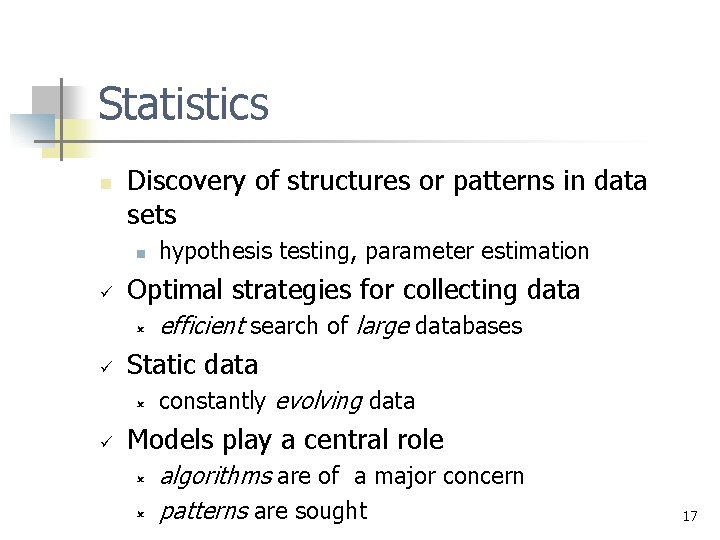
Statistics n Discovery of structures or patterns in data sets n ü Optimal strategies for collecting data û ü efficient search of large databases Static data û ü hypothesis testing, parameter estimation constantly evolving data Models play a central role û û algorithms are of a major concern patterns are sought 17
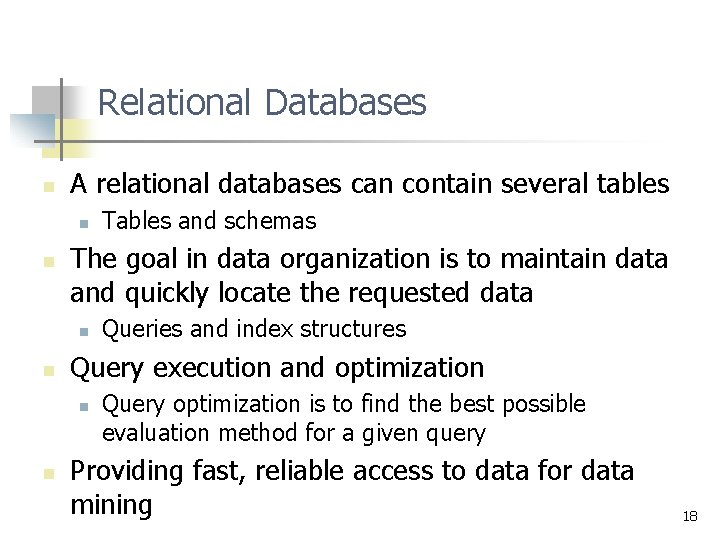
Relational Databases n A relational databases can contain several tables n n The goal in data organization is to maintain data and quickly locate the requested data n n Queries and index structures Query execution and optimization n n Tables and schemas Query optimization is to find the best possible evaluation method for a given query Providing fast, reliable access to data for data mining 18
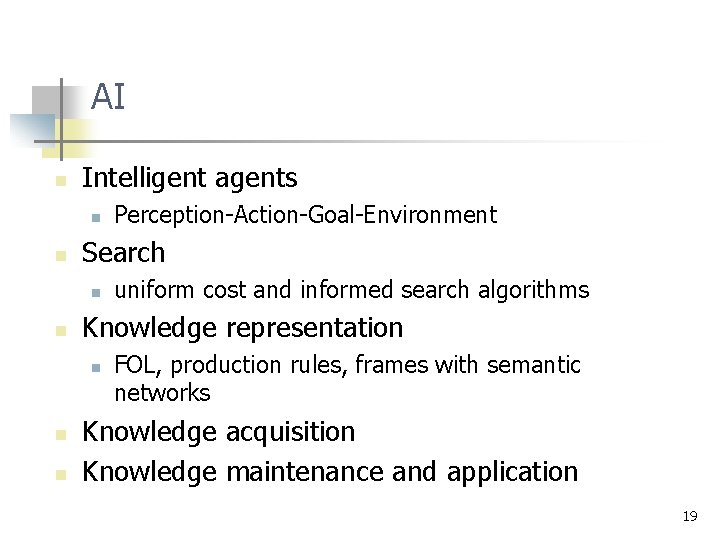
AI n Intelligent agents n n Search n n n uniform cost and informed search algorithms Knowledge representation n n Perception-Action-Goal-Environment FOL, production rules, frames with semantic networks Knowledge acquisition Knowledge maintenance and application 19
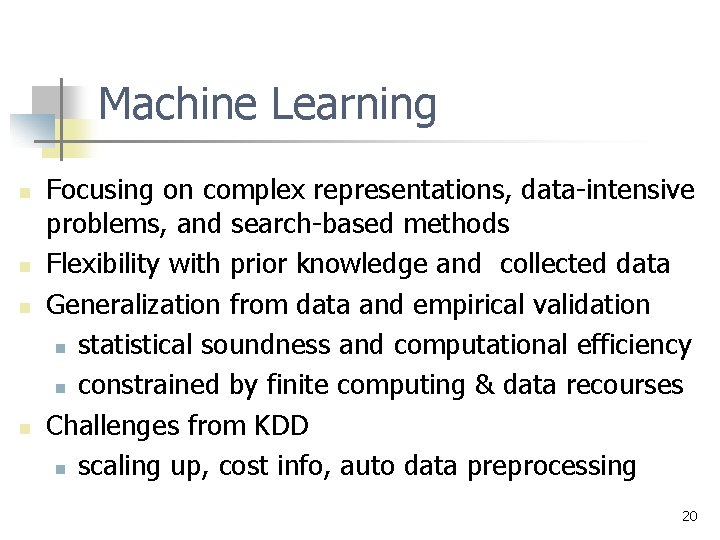
Machine Learning n n Focusing on complex representations, data-intensive problems, and search-based methods Flexibility with prior knowledge and collected data Generalization from data and empirical validation n statistical soundness and computational efficiency n constrained by finite computing & data recourses Challenges from KDD n scaling up, cost info, auto data preprocessing 20
Visualization n n Producing a visual display with insights into the structure of the data with interactive means n zoom in/out, rotating, displaying detailed info Various branches of visualization methods n n show summary properties and explore relationships between variables investigate large databases and convey lots of information analyze data with geographic/spatial location A pre- and post-processing tool for KDD 21
Bibliography n W. Klosgen & J. M. Zytkow, edited, 2001, Handbook of Data Mining and Knowledge Discovery. 22