
CSE 416 DIGITAL CONTROL Lecture 04 Emulation Techniques




- Slides: 17
CSE 416: DIGITAL CONTROL Lecture 04: Emulation Techniques Dr. Ahmed Mahmoud, 21/10/2019
Controller Emulation 21/10/2019 CSE 416: DIGITAL CONTROL 2
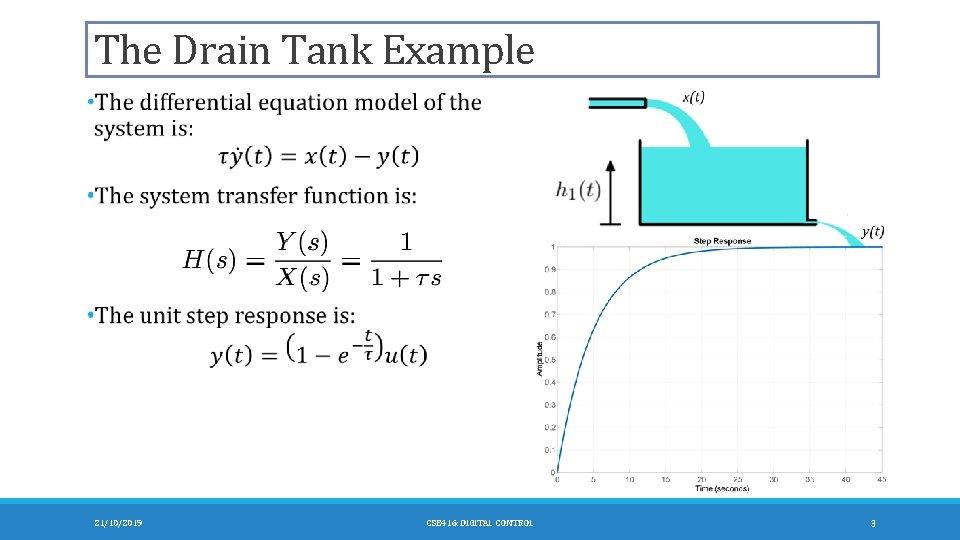
The Drain Tank Example 21/10/2019 CSE 416: DIGITAL CONTROL 3
Forward Euler Approximation • Forward Euler rule approximate derivate by: • Approximate the drain tank DE: • The approximated difference equation model is: 21/10/2019 CSE 416: DIGITAL CONTROL 4
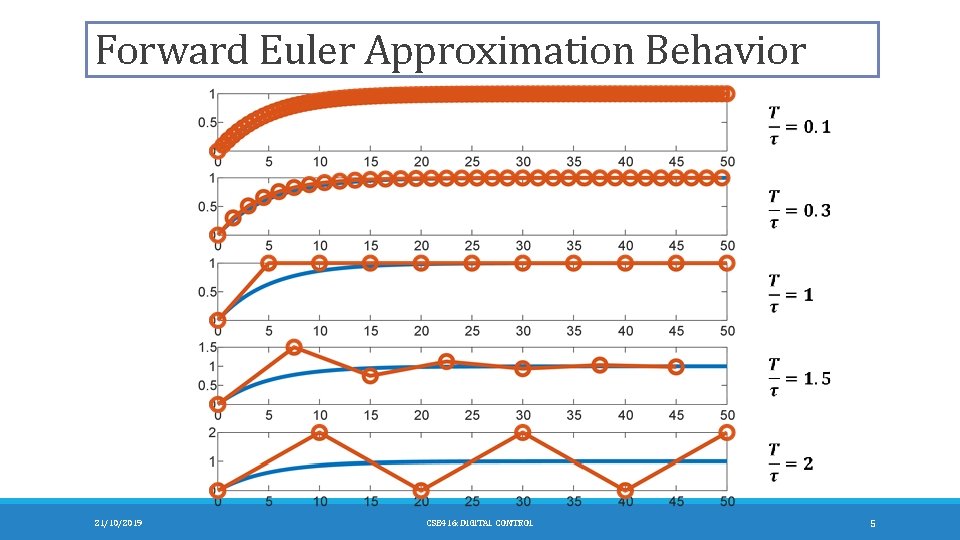
Forward Euler Approximation Behavior 21/10/2019 CSE 416: DIGITAL CONTROL 5
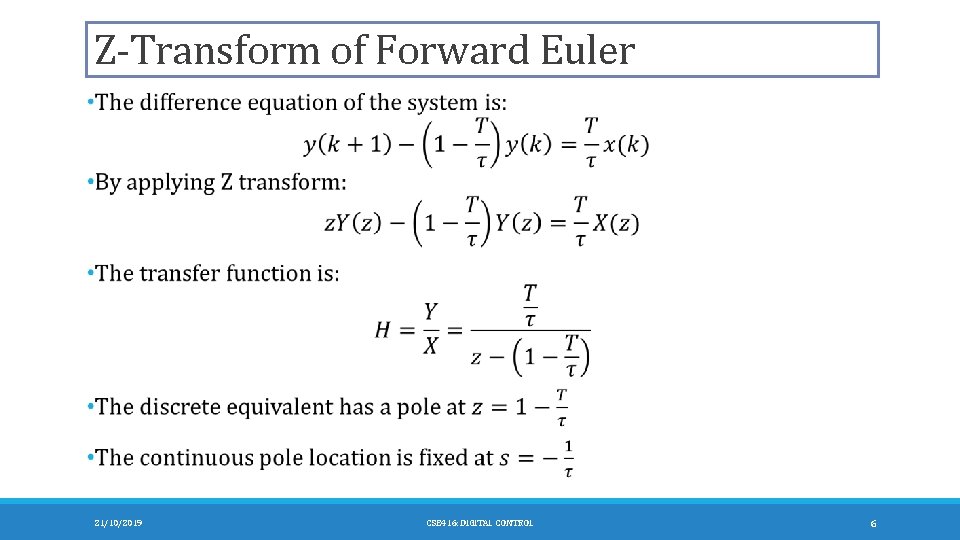
Z-Transform of Forward Euler 21/10/2019 CSE 416: DIGITAL CONTROL 6
Forward Euler Pole Location 21/10/2019 CSE 416: DIGITAL CONTROL 7
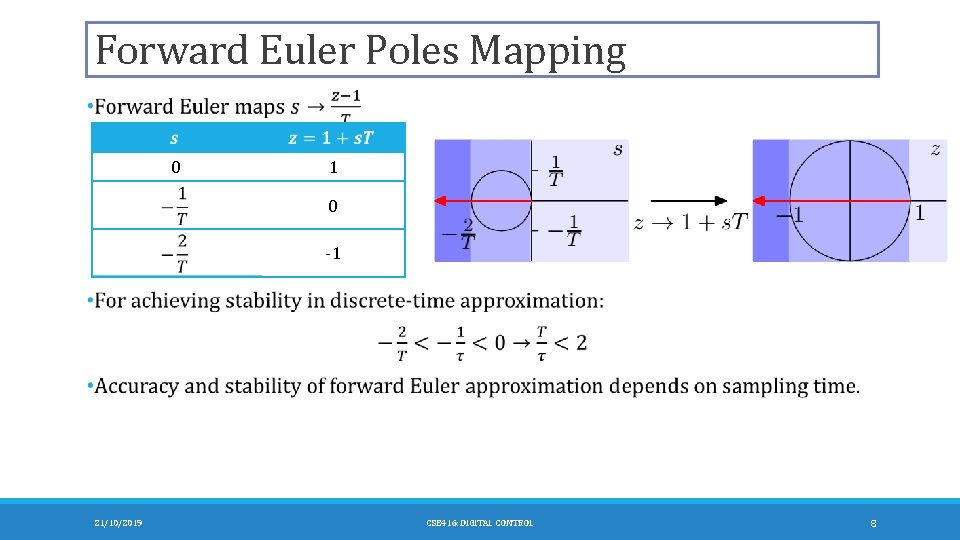
Forward Euler Poles Mapping 0 1 0 -1 21/10/2019 CSE 416: DIGITAL CONTROL 8
Backward Euler Approximation • Backward Euler rule approximates derivate by: • Approximate the drain tank DE: • The approximated difference equation model is: 21/10/2019 CSE 416: DIGITAL CONTROL 9
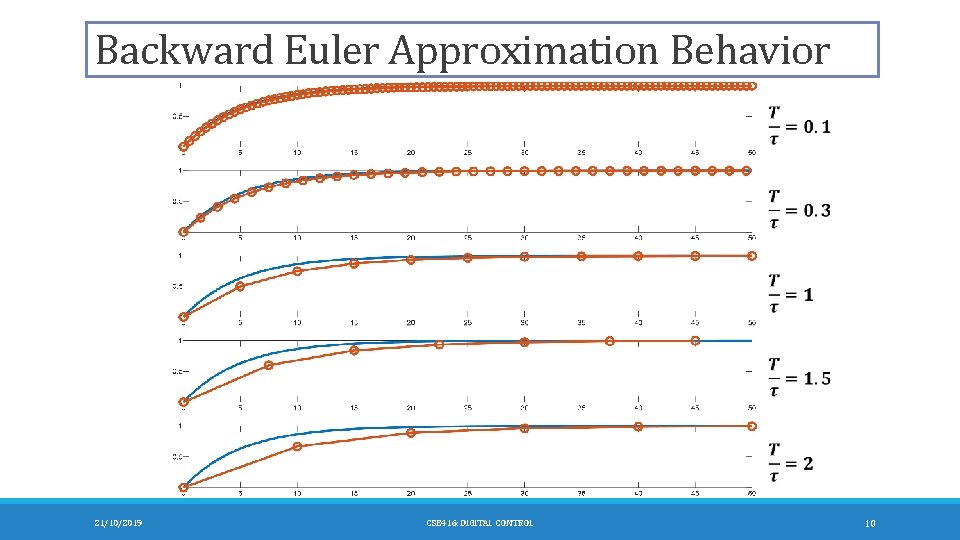
Backward Euler Approximation Behavior 21/10/2019 CSE 416: DIGITAL CONTROL 10
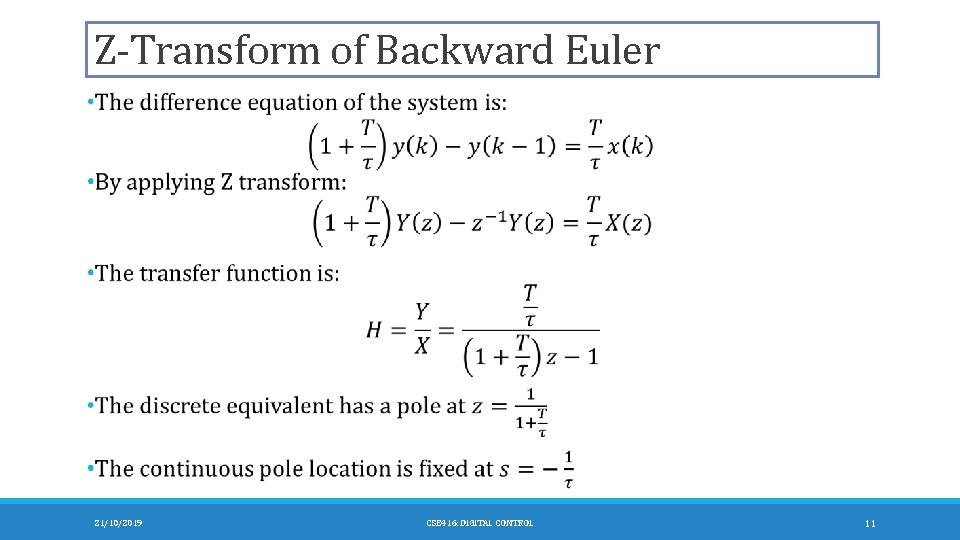
Z-Transform of Backward Euler 21/10/2019 CSE 416: DIGITAL CONTROL 11
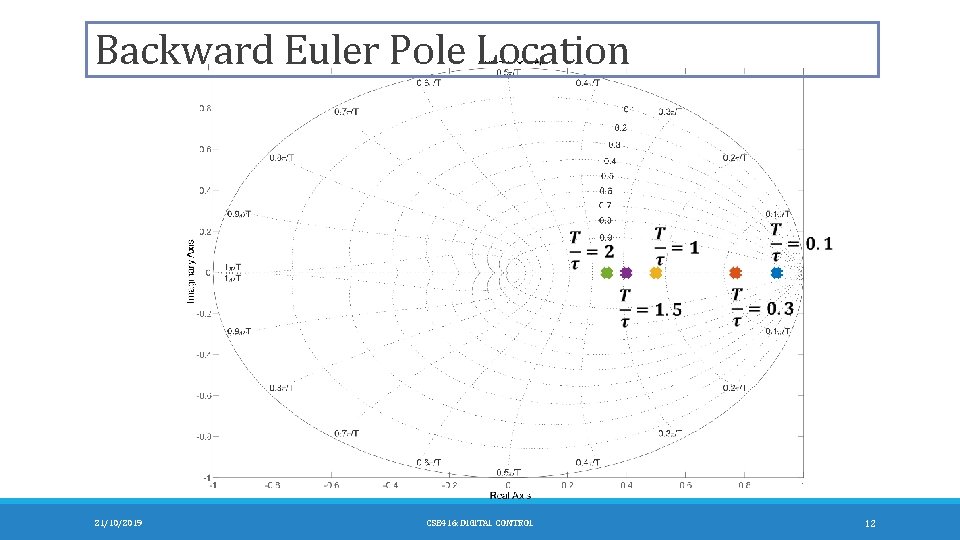
Backward Euler Pole Location 21/10/2019 CSE 416: DIGITAL CONTROL 12
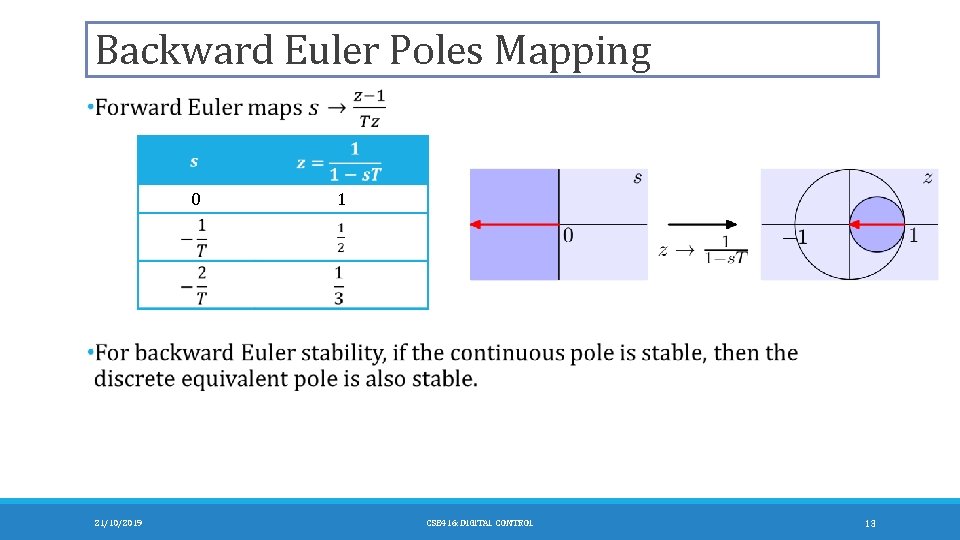
Backward Euler Poles Mapping 0 21/10/2019 1 CSE 416: DIGITAL CONTROL 13
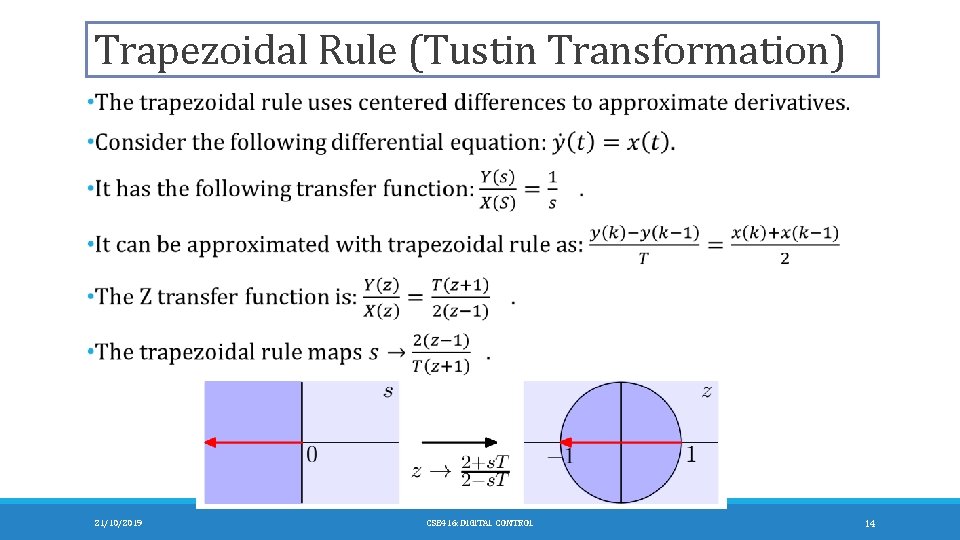
Trapezoidal Rule (Tustin Transformation) 21/10/2019 CSE 416: DIGITAL CONTROL 14
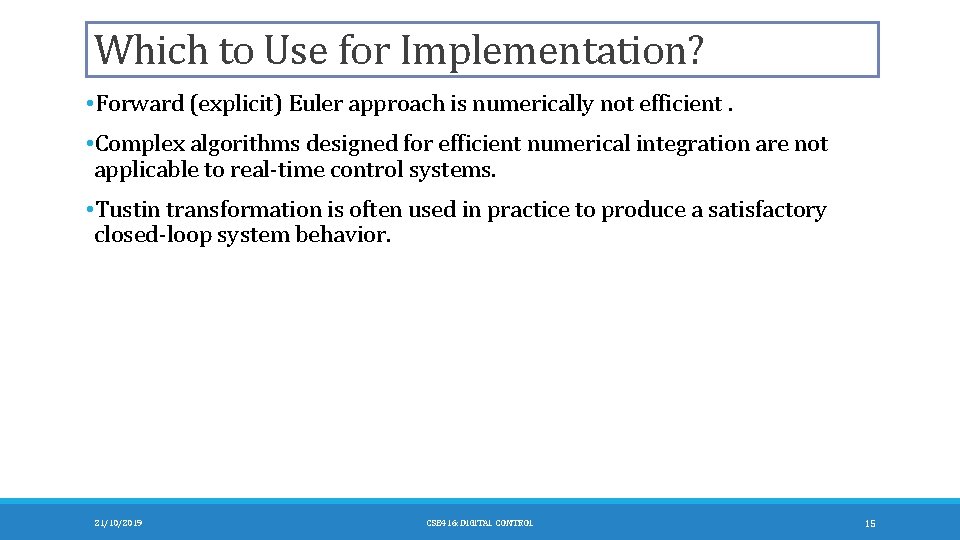
Which to Use for Implementation? • Forward (explicit) Euler approach is numerically not efficient. • Complex algorithms designed for efficient numerical integration are not applicable to real-time control systems. • Tustin transformation is often used in practice to produce a satisfactory closed-loop system behavior. 21/10/2019 CSE 416: DIGITAL CONTROL 15
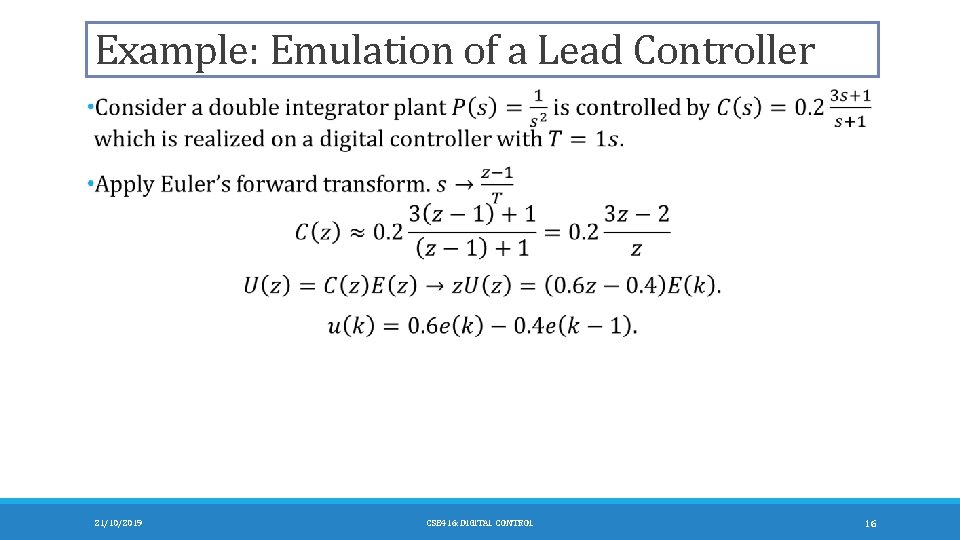
Example: Emulation of a Lead Controller 21/10/2019 CSE 416: DIGITAL CONTROL 16
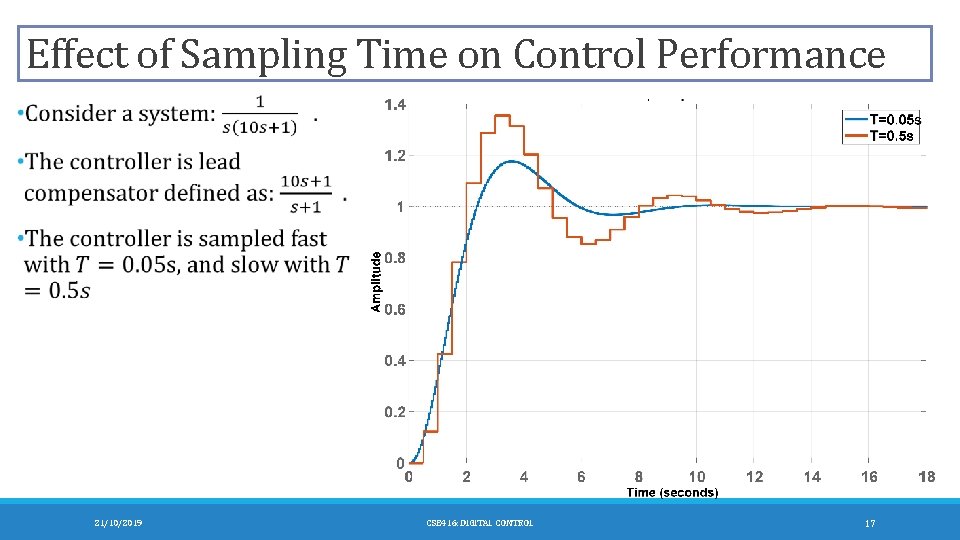
Effect of Sampling Time on Control Performance 21/10/2019 CSE 416: DIGITAL CONTROL 17