
CSCI365 Computer Organization Lecture 26 Note Some slides
- Slides: 16
CSCI-365 Computer Organization Lecture 26 Note: Some slides and/or pictures in the following are adapted from: Computer Organization and Design, Patterson & Hennessy, © 2005
Hazards • Situations that prevent starting the next instruction in the next cycle – Structure hazards – Data hazard – Control hazard
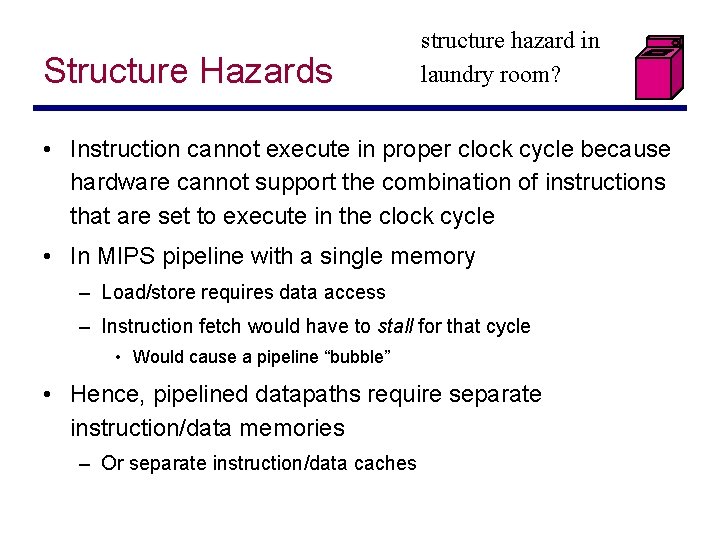
Structure Hazards structure hazard in laundry room? • Instruction cannot execute in proper clock cycle because hardware cannot support the combination of instructions that are set to execute in the clock cycle • In MIPS pipeline with a single memory – Load/store requires data access – Instruction fetch would have to stall for that cycle • Would cause a pipeline “bubble” • Hence, pipelined datapaths require separate instruction/data memories – Or separate instruction/data caches
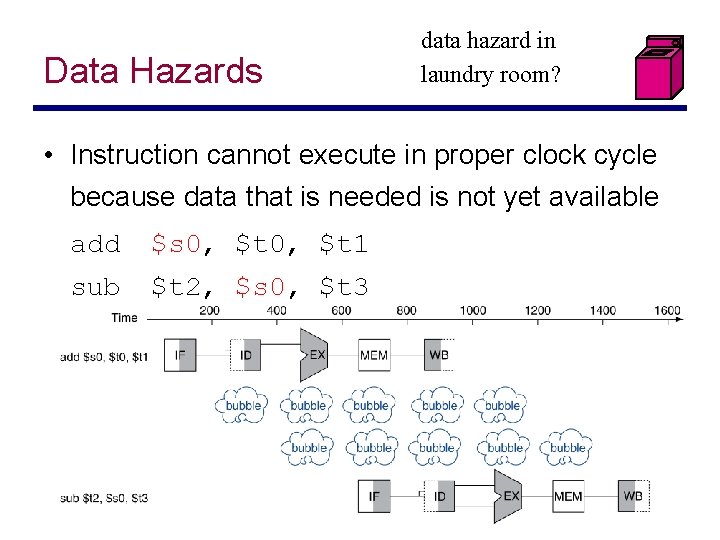
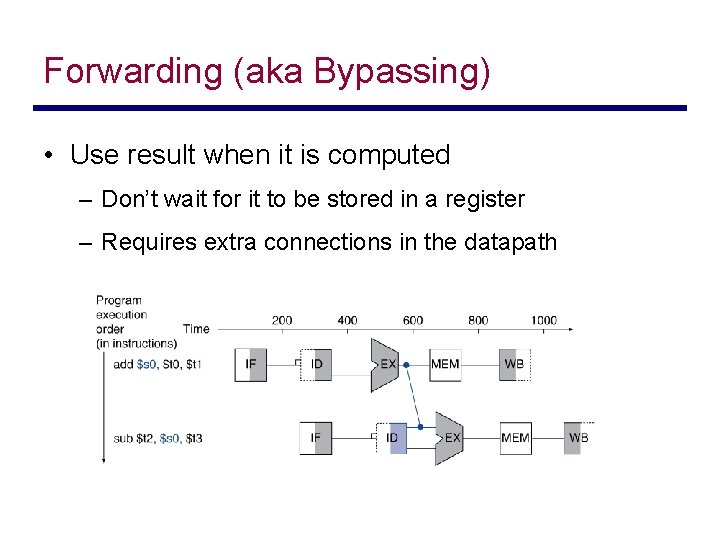
Data Hazards data hazard in laundry room? • Instruction cannot execute in proper clock cycle because data that is needed is not yet available add $s 0, $t 1 sub $t 2, $s 0, $t 3
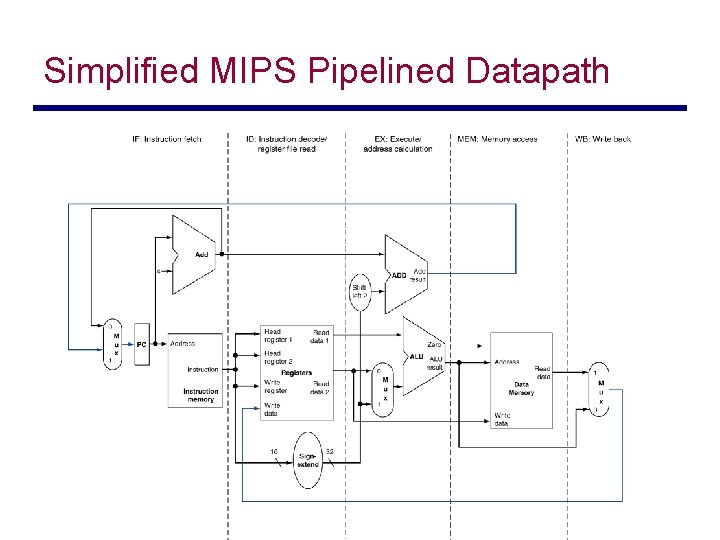
Simplified MIPS Pipelined Datapath
Forwarding (aka Bypassing) • Use result when it is computed – Don’t wait for it to be stored in a register – Requires extra connections in the datapath
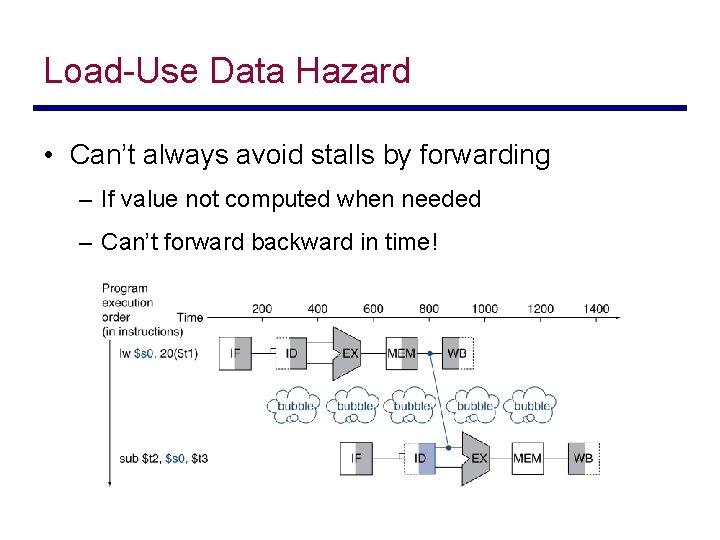
Load-Use Data Hazard • Can’t always avoid stalls by forwarding – If value not computed when needed – Can’t forward backward in time!
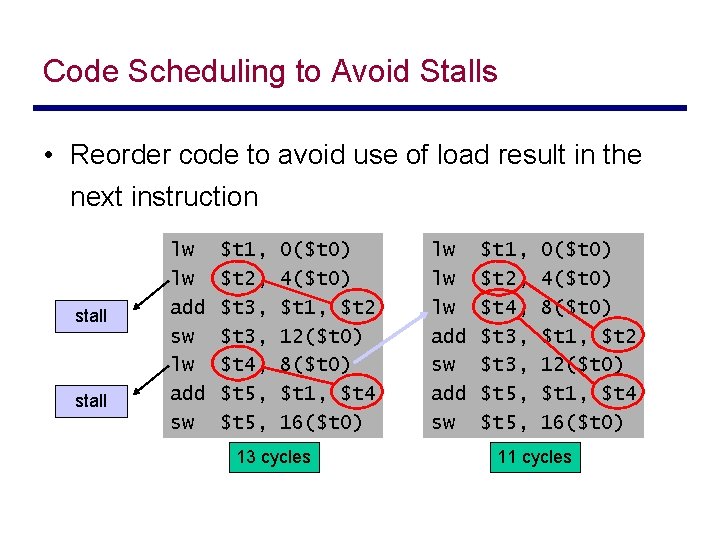
Code Scheduling to Avoid Stalls • Reorder code to avoid use of load result in the next instruction stall lw lw add sw $t 1, $t 2, $t 3, $t 4, $t 5, 0($t 0) 4($t 0) $t 1, $t 2 12($t 0) 8($t 0) $t 1, $t 4 16($t 0) 13 cycles lw lw lw add sw $t 1, $t 2, $t 4, $t 3, $t 5, 0($t 0) 4($t 0) 8($t 0) $t 1, $t 2 12($t 0) $t 1, $t 4 16($t 0) 11 cycles
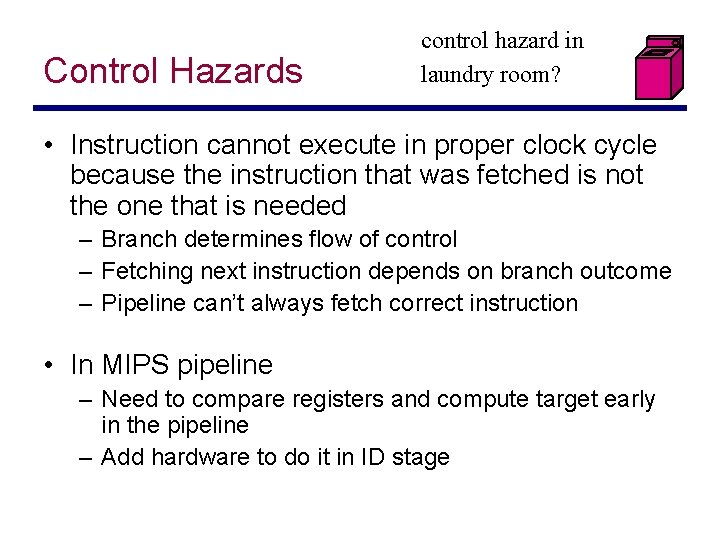
Control Hazards control hazard in laundry room? • Instruction cannot execute in proper clock cycle because the instruction that was fetched is not the one that is needed – Branch determines flow of control – Fetching next instruction depends on branch outcome – Pipeline can’t always fetch correct instruction • In MIPS pipeline – Need to compare registers and compute target early in the pipeline – Add hardware to do it in ID stage
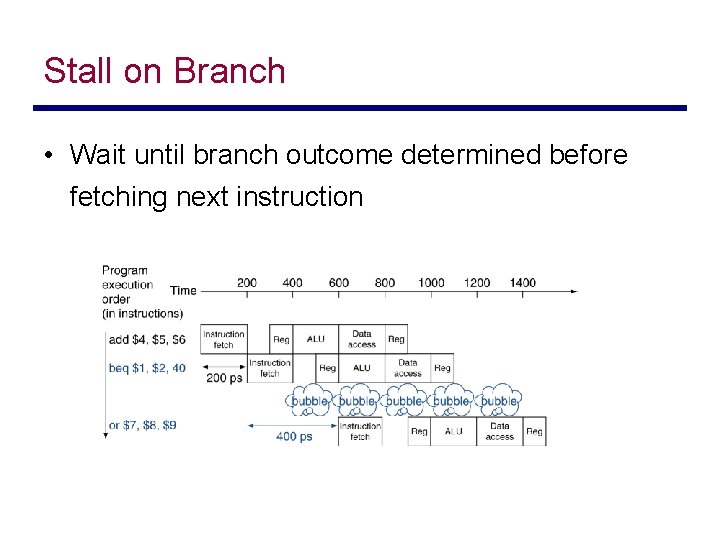
Stall on Branch • Wait until branch outcome determined before fetching next instruction
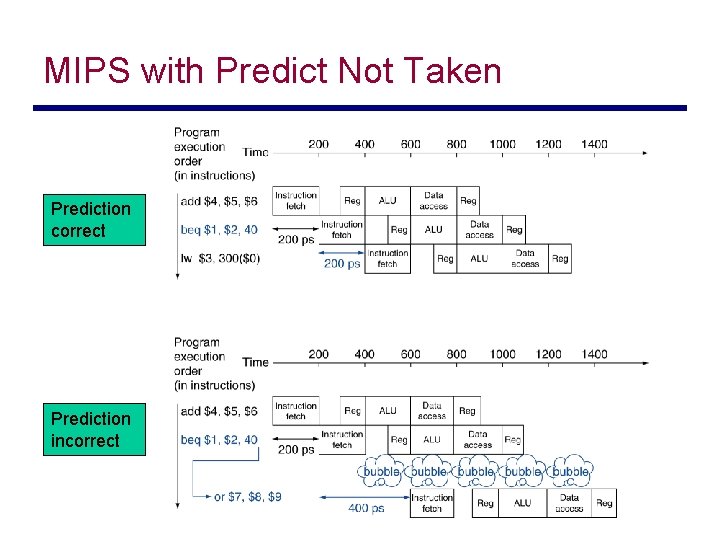
Branch Prediction • Longer pipelines can’t readily determine branch outcome early – Stall penalty becomes unacceptable • Predict outcome of branch – Only stall if prediction is wrong • In MIPS pipeline – Can predict branches not taken – Fetch instruction after branch, with no delay
MIPS with Predict Not Taken Prediction correct Prediction incorrect
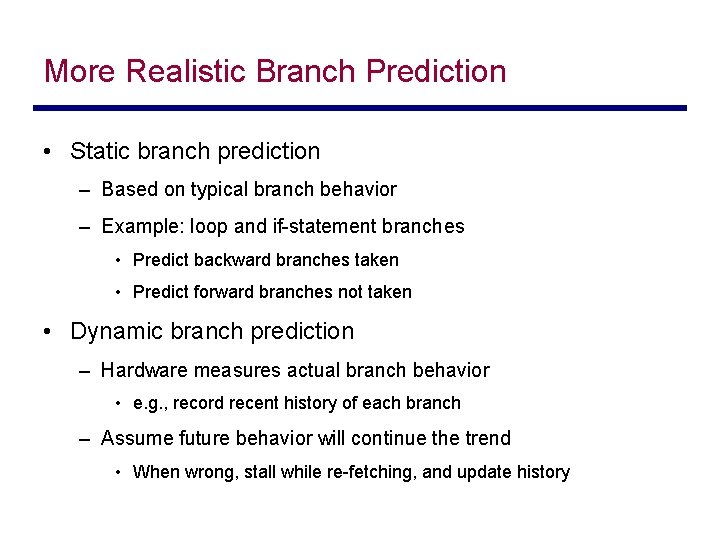
More Realistic Branch Prediction • Static branch prediction – Based on typical branch behavior – Example: loop and if-statement branches • Predict backward branches taken • Predict forward branches not taken • Dynamic branch prediction – Hardware measures actual branch behavior • e. g. , record recent history of each branch – Assume future behavior will continue the trend • When wrong, stall while re-fetching, and update history
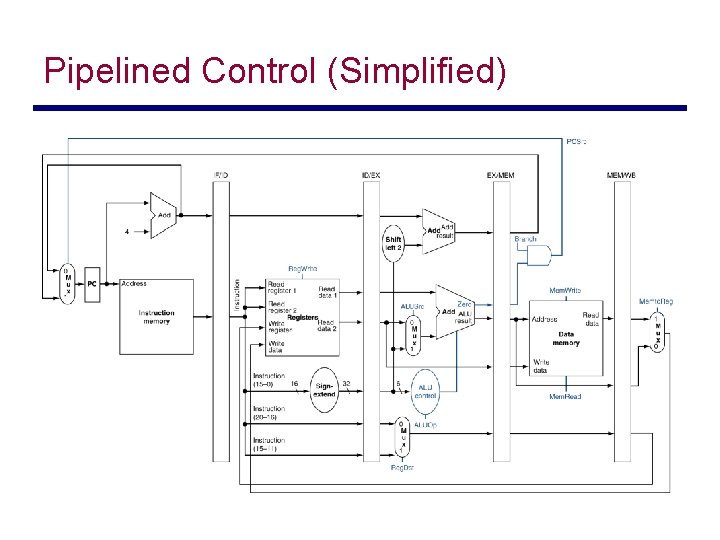
Pipelined Control (Simplified)
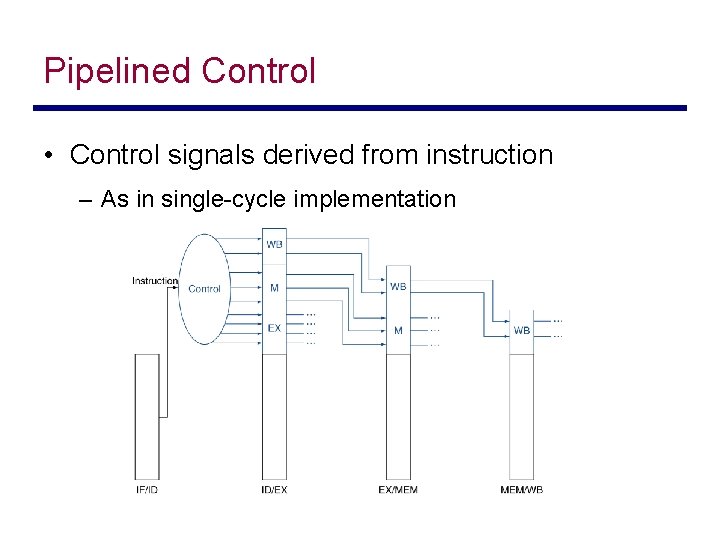
Pipelined Control • Control signals derived from instruction – As in single-cycle implementation
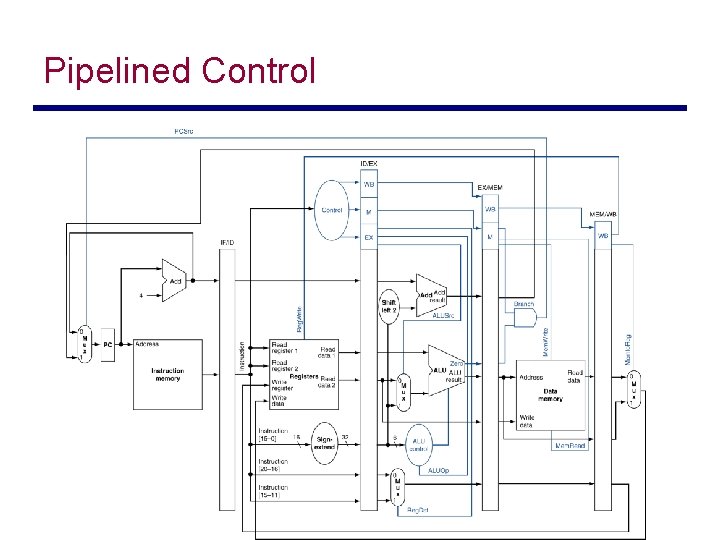
Pipelined Control