
CSCI 360 Software Architecture and Design Instructor Xenia



- Slides: 34
CSCI 360: Software Architecture and Design Instructor: Xenia Mountrouidou
Who am I? • Dr. X – Computer Scientist • Ph. D at North Carolina State University – Computer networks performance • Worked at IBM – Software Performance Engineer • Post doc at College of William and Mary – research on performance and power savings for hard disk drives • Assistant professor at Jacksonville University, Wofford College • Assistant professor at Cof. C • Scuba diver, manga comics collector, science fiction reader, hacker 2
Who am I? 3
Outline • Class organization • How to survive this class • Project kickoff • Intro to architecture & design • Choco plane activity
Class Organization Objectives Lectures Grading Honor Code
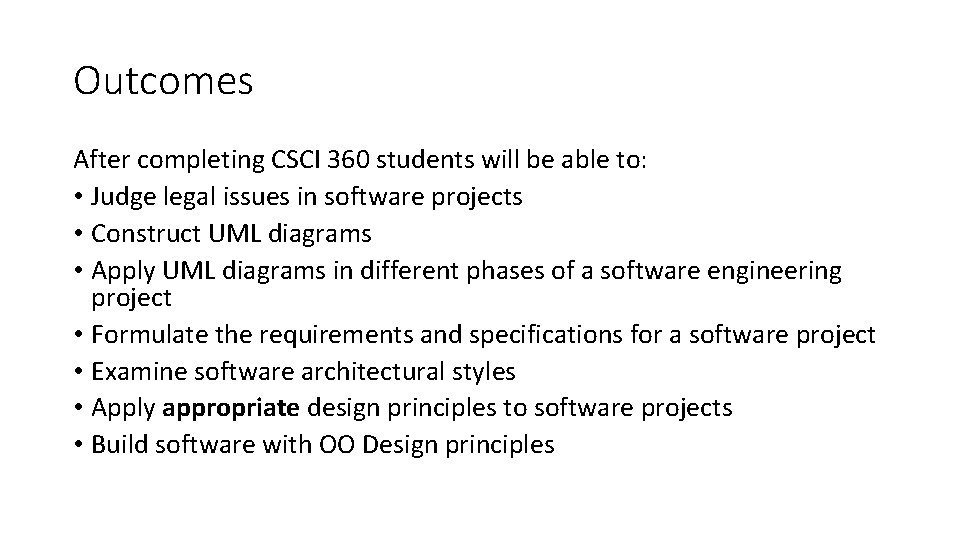
Outcomes After completing CSCI 360 students will be able to: • Judge legal issues in software projects • Construct UML diagrams • Apply UML diagrams in different phases of a software engineering project • Formulate the requirements and specifications for a software project • Examine software architectural styles • Apply appropriate design principles to software projects • Build software with OO Design principles
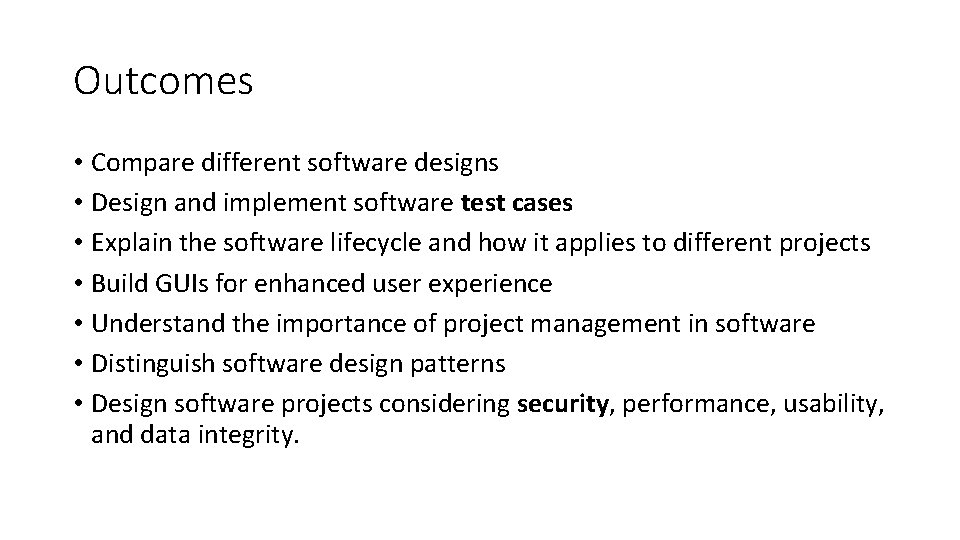
Outcomes • Compare different software designs • Design and implement software test cases • Explain the software lifecycle and how it applies to different projects • Build GUIs for enhanced user experience • Understand the importance of project management in software • Distinguish software design patterns • Design software projects considering security, performance, usability, and data integrity.
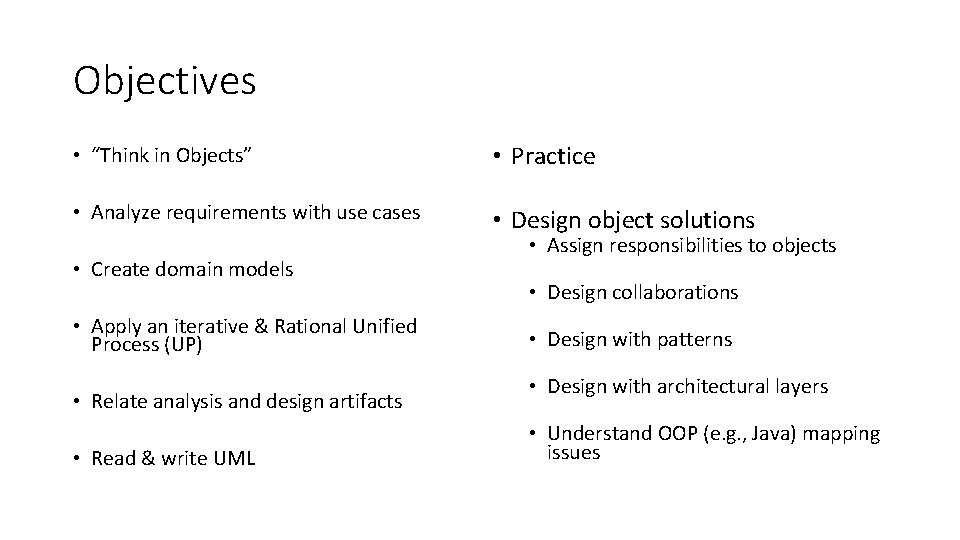
Objectives • “Think in Objects” • Practice • Analyze requirements with use cases • Design object solutions • Create domain models • Apply an iterative & Rational Unified Process (UP) • Relate analysis and design artifacts • Read & write UML • Assign responsibilities to objects • Design collaborations • Design with patterns • Design with architectural layers • Understand OOP (e. g. , Java) mapping issues
Priority • Assign responsibilities to objects • The GRASP patterns are the key learning aid • After that. . . ?
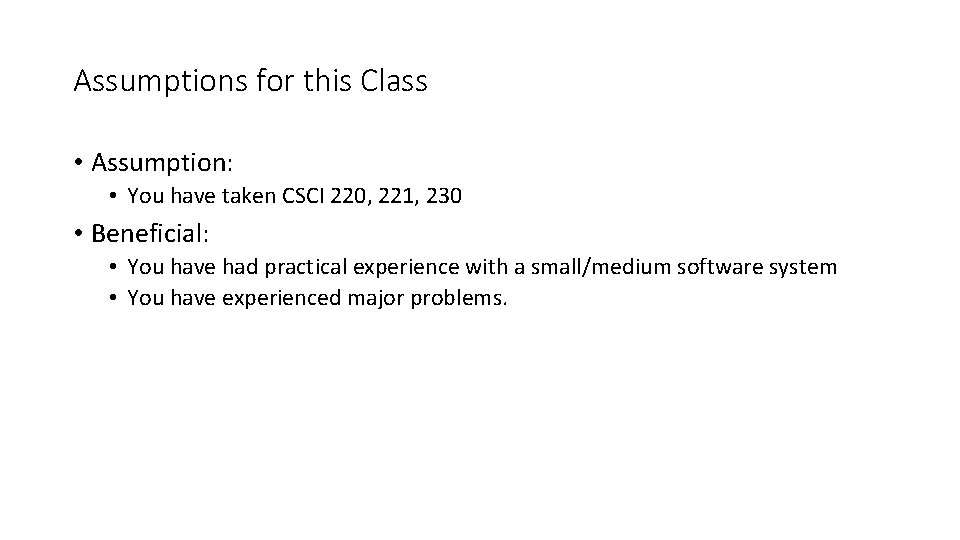
Assumptions for this Class • Assumption: • You have taken CSCI 220, 221, 230 • Beneficial: • You have had practical experience with a small/medium software system • You have experienced major problems.
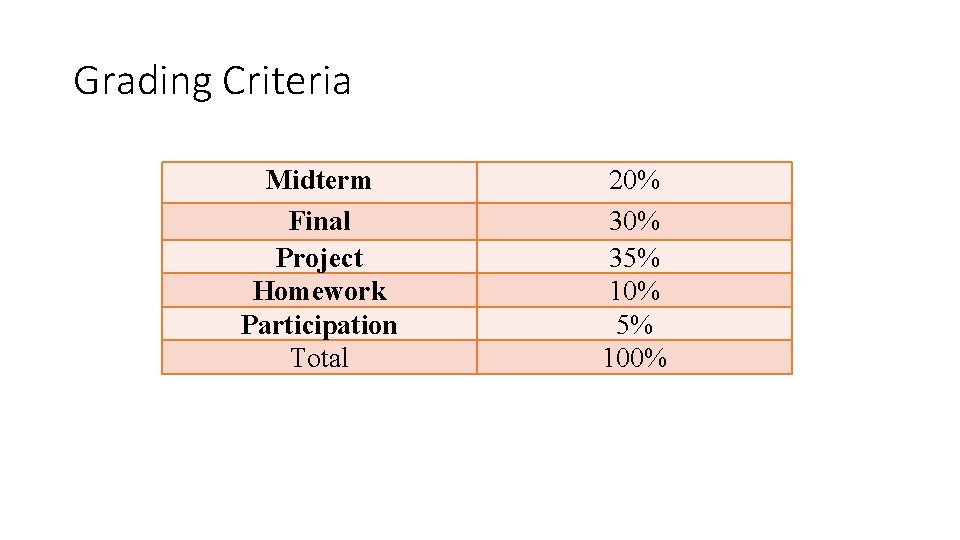
Grading Criteria Midterm Final Project Homework Participation Total 20% 35% 10% 5% 100%
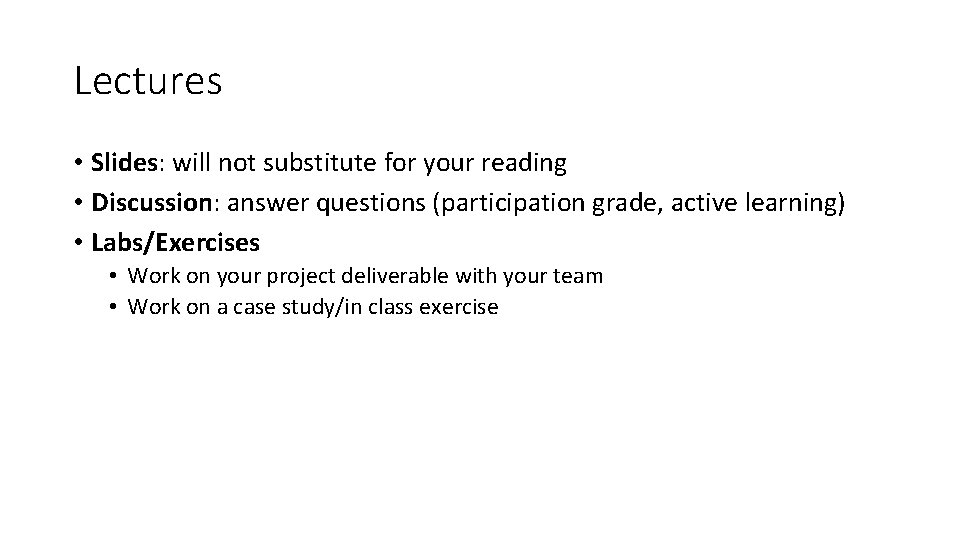
Lectures • Slides: will not substitute for your reading • Discussion: answer questions (participation grade, active learning) • Labs/Exercises • Work on your project deliverable with your team • Work on a case study/in class exercise
Learning
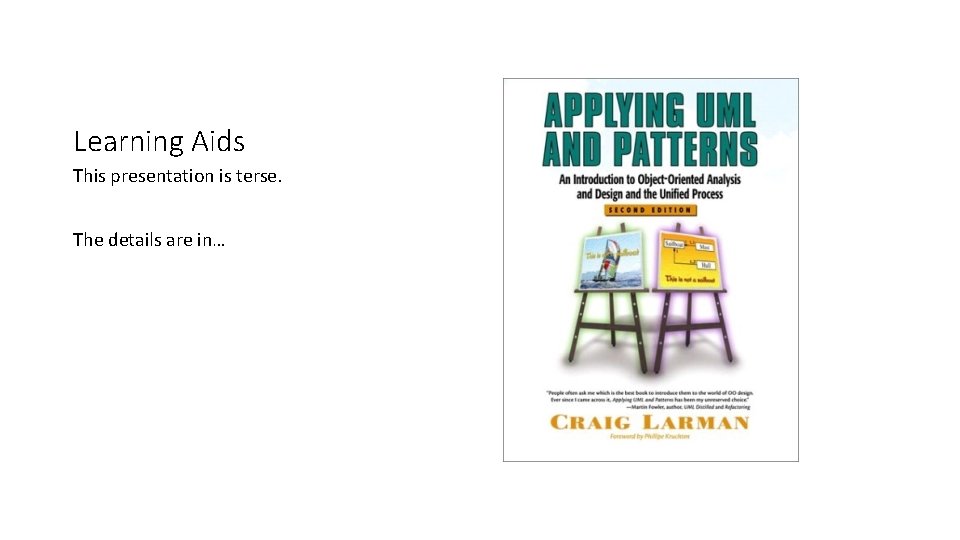
Learning Aids This presentation is terse. The details are in…
Content • Public website – class content • Oaks – some overlapping content, submissions • Required textbook – required reading • Additional resources – links, interactive exercises
Syllabus • Mandatory reading • Ignorance of the rules does not exempt you from them
Honor code • Syllabus • Additional considerations for Computer Science courses: • Code • Collaboration
How to survive the class • Keep up with readings • Actively participate in lecture during class • Do not miss more than necessary classes • Work hard on the project • Ask questions • Visit me during office hours (or setup an appointment)
Project kickoff • Find teammates • Read project description • Familiarize with Github
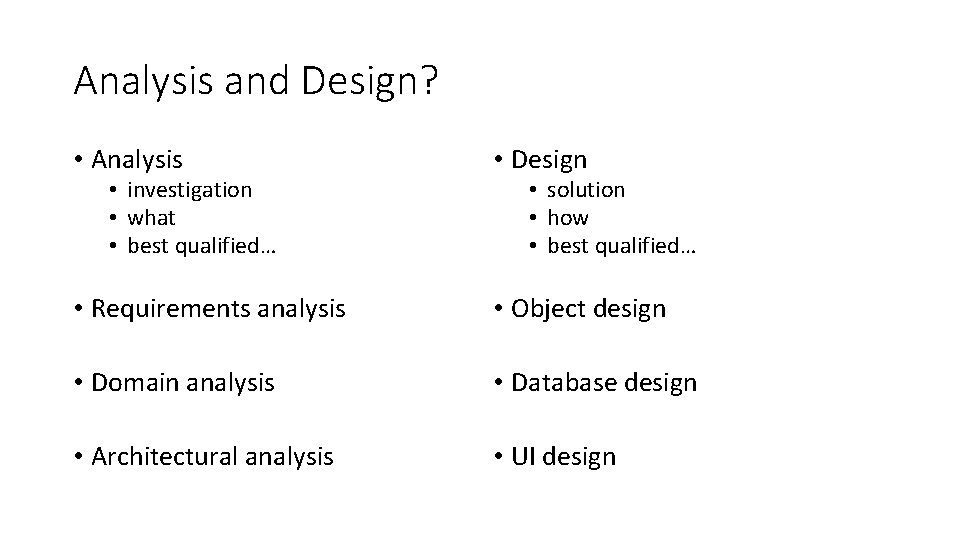
Analysis and Design? • Analysis • Design • Requirements analysis • Object design • Domain analysis • Database design • Architectural analysis • UI design • investigation • what • best qualified… • solution • how • best qualified…
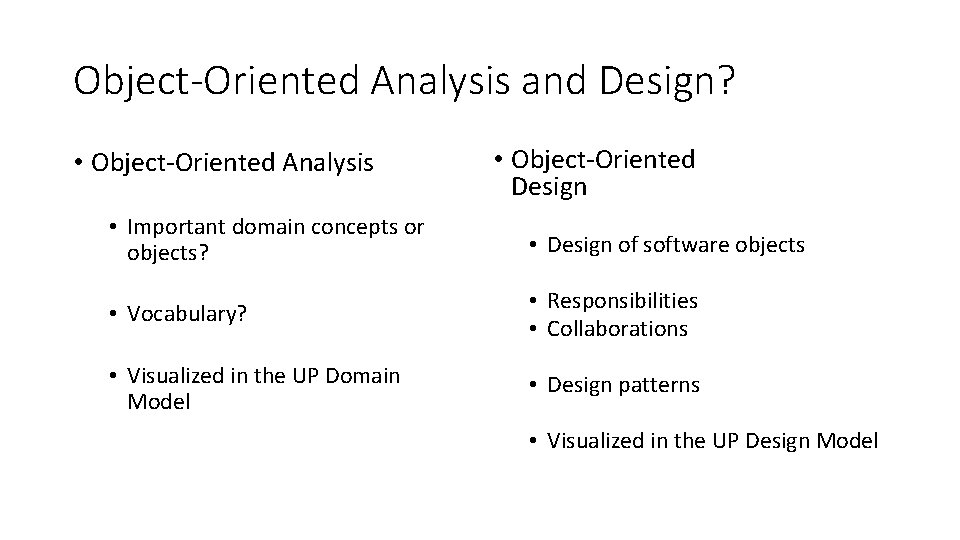
Object-Oriented Analysis and Design? • Object-Oriented Analysis • Object-Oriented Design • Important domain concepts or objects? • Design of software objects • Vocabulary? • Responsibilities • Collaborations • Visualized in the UP Domain Model • Design patterns • Visualized in the UP Design Model
Development Method • OOA/D needs explanation in a method context. • Thus, an agile UP • Common, popular • Just a sample • Our focus is method-independent core skills, not UP • Responsibility assignment, design patterns, …
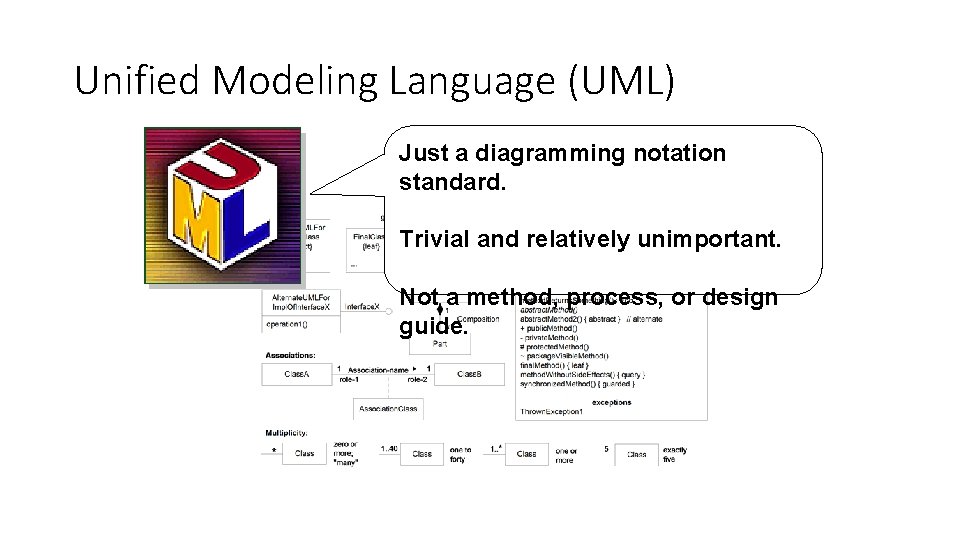
Unified Modeling Language (UML) Just a diagramming notation standard. Trivial and relatively unimportant. Not a method, process, or design guide.
UML: What’s Important? 24
UML: What’s Important? Harmful is knowing how to read and draw UML diagrams, but not being an expert in design and patterns. Important is object and architectural design skills, not UML diagrams, drawing, or CASE tools.
What to do next? • Reading • Homework 1 (related to reading) • Visit Oaks and course website • Read syllabus • Read project description
Kahoot Quiz Take out your phones!
Choco plane activity
Problem Statement Goal: Construct an Airplane that carries a Hershey’s kiss as far as possible without harming it.
Chocoplane Requirements • Functional Requirements: • The airplane has to fly • The airplane carries a Hershey’s kiss • Nonfunctional Requirements: • Takeoff is the porch area outside the classrooms. • The Hershey’s kiss is not damaged at take-off
Chocoplane Project Organization • 4 teams with 6 participants each • Each team builds its own solution
Acceptance Criteria • The plane must prominently display the name of the subsystem team • The plane must actually demonstrate flying behavior (throwing is not allowed) • The Hershey’s kiss must be undamaged after landing • The client inspects the Hershey’s kiss after the plane has come to complete standstill and determines its healthiness.
The Crew of Choco-Airlines wishes you a good flight Have fun!
Sources • Craig Larman’s Lecture 1 slides • “Applying UML and Patterns”, Craig Larman, 3 rd edition • “Object-Oriented Software Engineering: Using UML, Patterns and Java”, Bernd Bruegge, Allen H. Dutoit, 3 rd Edition