
CSCI 150 Database Applications Chapter 1 Getting Started

CSCI 150 Database Applications Chapter 1 – Getting Started
CSCI 150 – Database Apps l l Database processing is the heart of all applications today The knowledge gained in this course will be valuable at job-hunting time Internet technology has tremendously amplified the need for database knowledge Technology can be used inside organizations as well as outside for e-commerce applications 2
Chapter 1 Objectives Know the potential problems with lists Understand the reasons for using a database Understand how related tables avoid the problems of lists Learn the components of database system Learn the elements of a database Learn the purpose of the database management system (DBMS) Understand the functions of a database application 3
Purpose of a Database The purpose of a database is to keep track of things l Unlike a list or spreadsheet, a database may store information that is more complicated than a simple list l 4
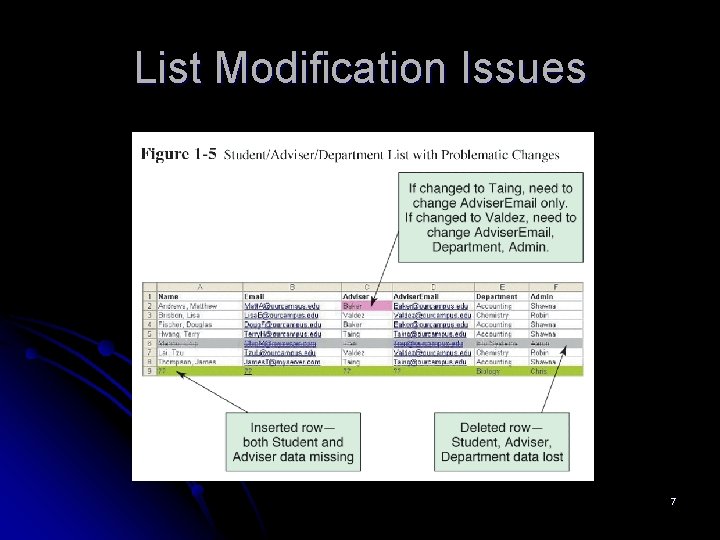
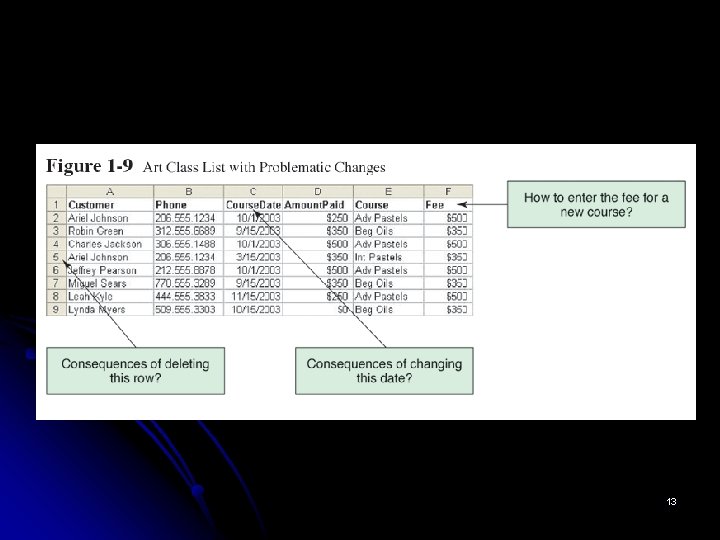
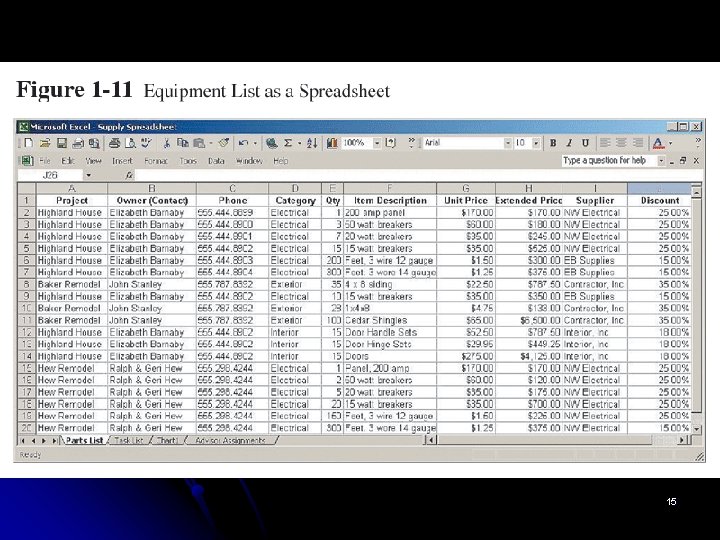
Problems with Lists: Redundancy l In a list, each row is intended to stand on its own. As a result, the same information may be entered several times l For Example: A list of Projects may include the Project Manager’s Name, ID, and Phone Extension. If a particular person is managing 10 projects, his/her information would have to be entered 10 times 5
List Modification Issues l Redundancy and multiple themes create modification problems l Deletion problems l Update problems l Insertion problems 6
List Modification Issues 7

Addressing the Information Complexities l Relational databases are designed to address many of the information complexity issues 8
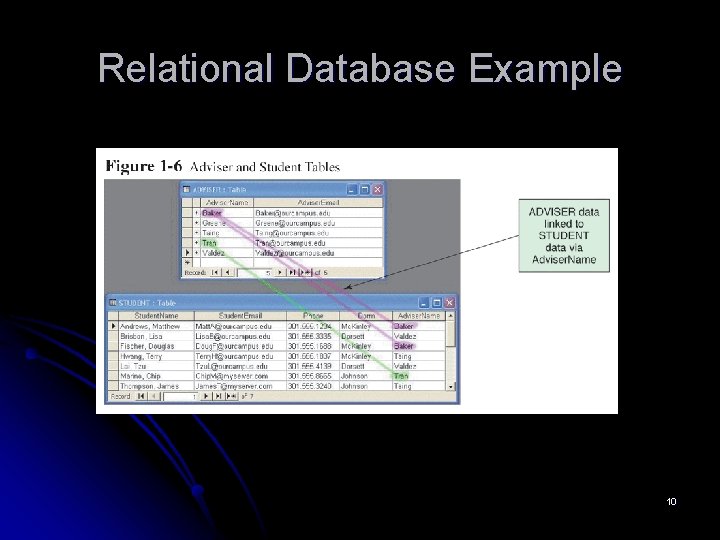
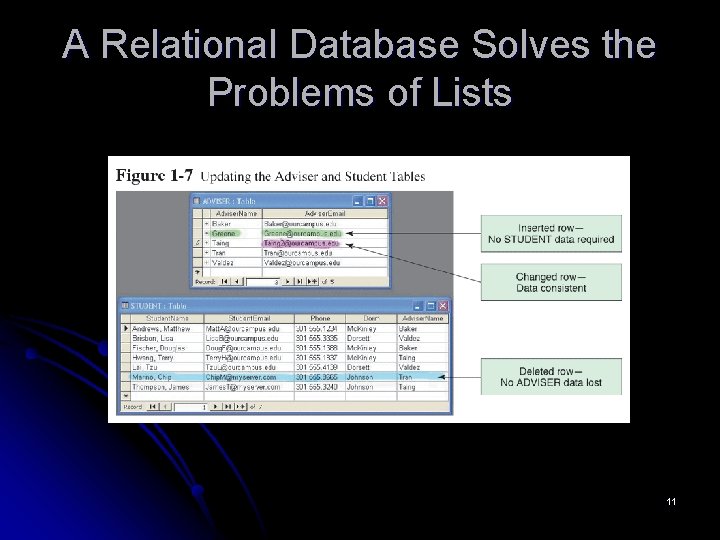
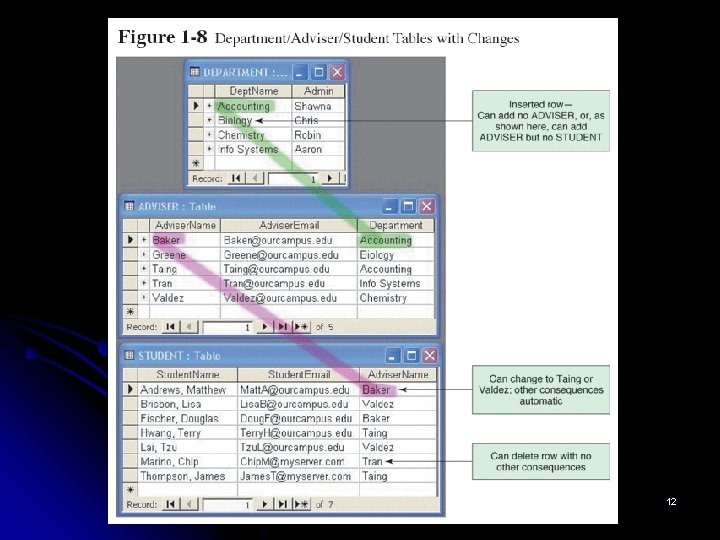
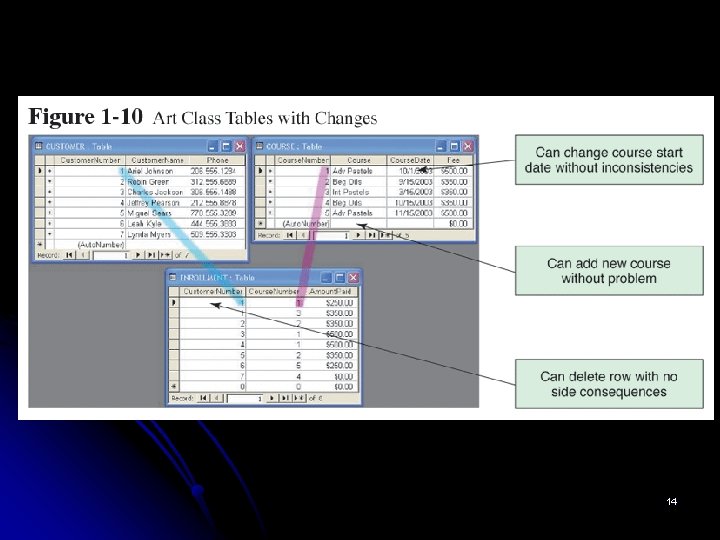
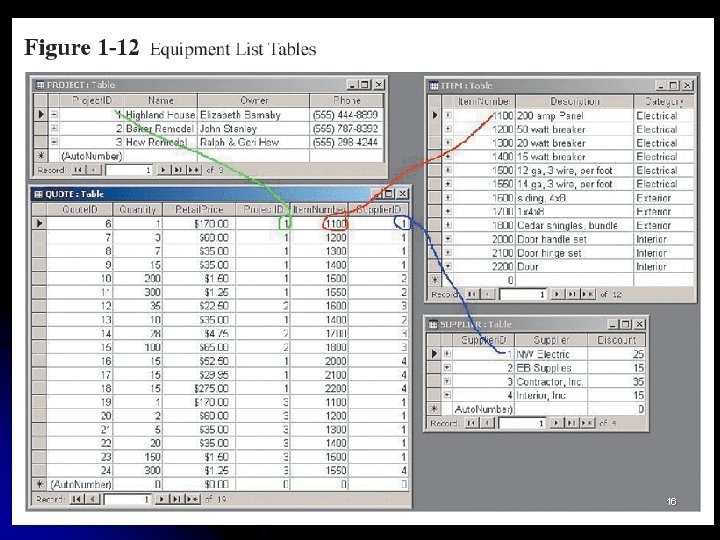
Relational Databases l l l A relational database stores information in tables. Each informational topic is stored in its own table In essence, a relational database will break-up a list into several parts. One part for each theme in the list A Project List would be divided into a CUSTOMER Table, a PROJECT Table, and a PROJECT_MANAGER Table 9
Relational Database Example 10
A Relational Database Solves the Problems of Lists 11
12
13
14
15
16
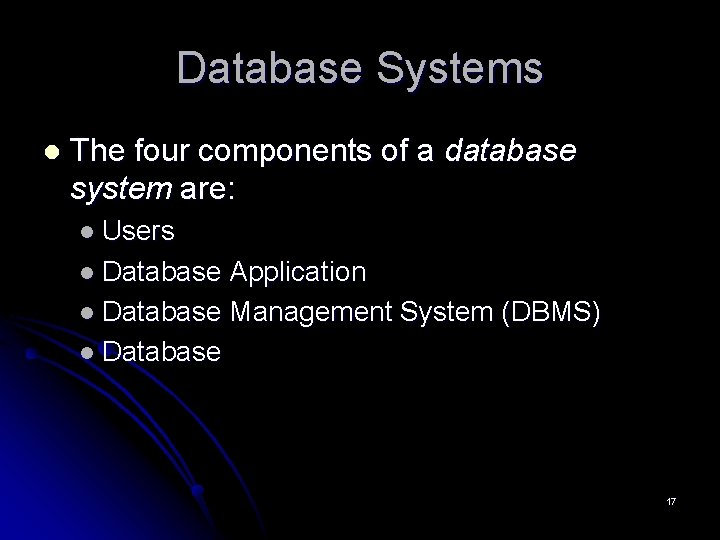
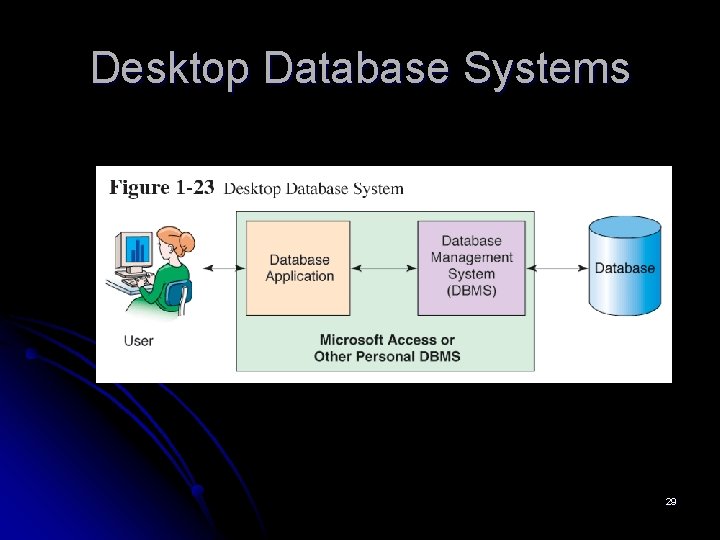
Database Systems l The four components of a database system are: l Users l Database Application l Database Management System (DBMS) l Database 17
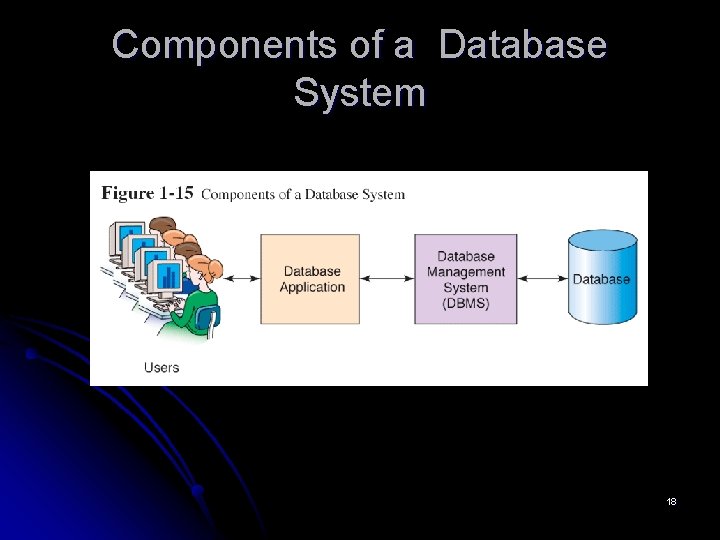
Components of a Database System 18
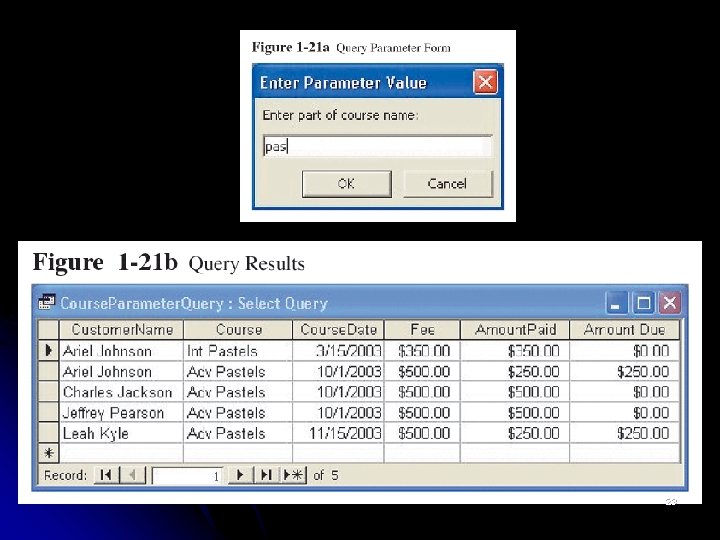
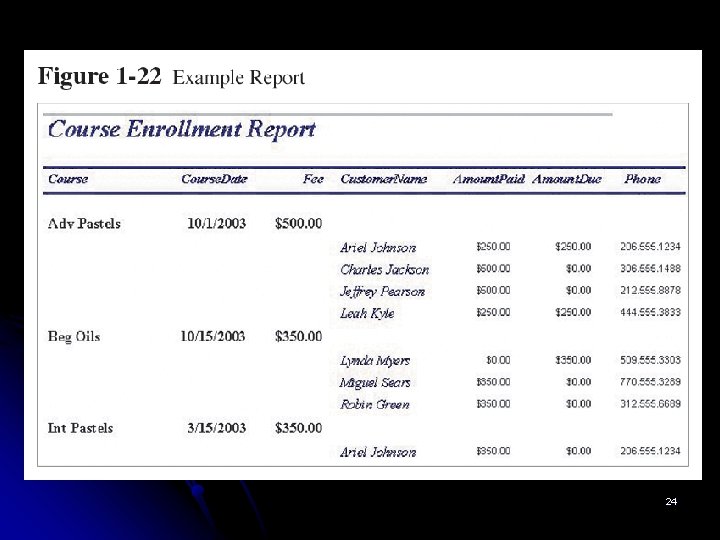
Users l A user of a database system will l Use a database application to track things l Use forms to enter, read, delete and query data l Produce reports 19
Database Applications l A database application is a set of one or more computer programs that serves as an intermediary between the user and the DBMS 20
Functions of Database Applications Create and process forms l Process user queries l Create and process reports l Execute application logic l Control database applications l 21
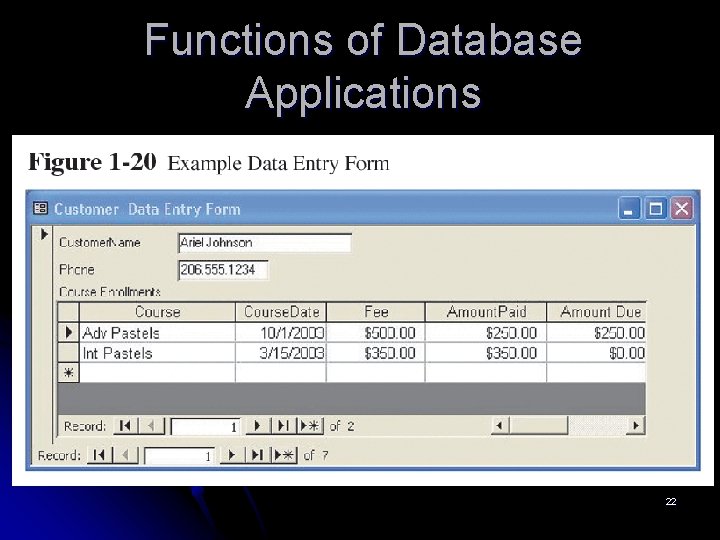
Functions of Database Applications 22
23
24
Database Management System (DBMS) A database management system (DBMS) serves as an intermediary between database applications and the database l The DBMS manages and controls database activities l The DBMS creates, processes and administers the databases it controls l 25
Functions of a DBMS l l l l l Create databases Create tables Create supporting structures Read database data Modify database data (insert, update, delete) Maintain database structures Enforce rules Control concurrency Provide security Perform backup and recovery 26
The Database l l l A database is a self-describing collection of related records Self-describing l The database itself contains the definition of its structure l Metadata is data describing the structure of the database data Tables within a relational database are related to each other 27
Desktop Database Systems l Desktop database systems typically: l Have one application l Have only a few tables l Are simple in design l Involve only one computer l Support one user at a time 28
Desktop Database Systems 29
Organizational Database Systems l Organizational database systems typically: l Support several users simultaneously l Include more than one application l Involve multiple computers l Are complex in design l Have many tables l Have many databases 30
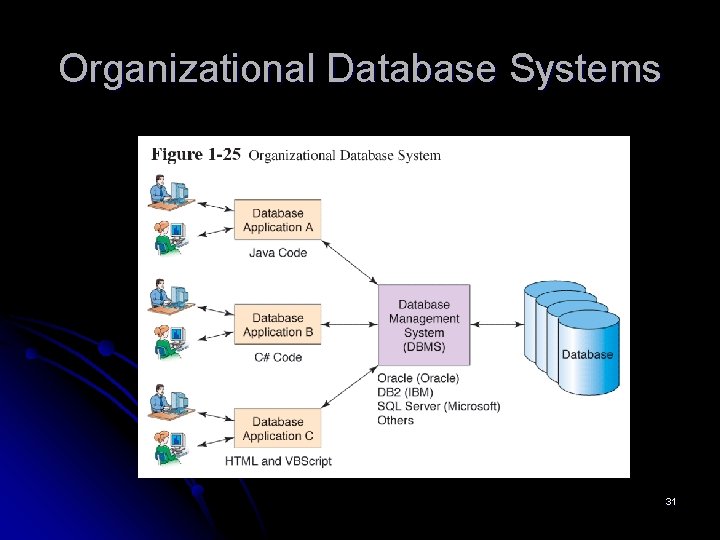
Organizational Database Systems 31
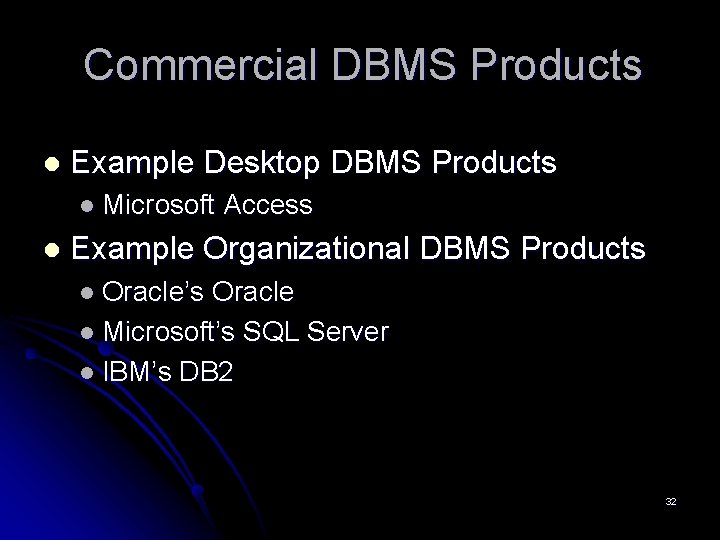
Commercial DBMS Products l Example Desktop DBMS Products l Microsoft l Access Example Organizational DBMS Products l Oracle’s Oracle l Microsoft’s SQL Server l IBM’s DB 2 32
- Slides: 32