
CSc 352 Testing and Code Coverage Saumya Debray
CSc 352: Testing and Code Coverage Saumya Debray Dept. of Computer Science The University of Arizona, Tucson debray@cs. arizona. edu
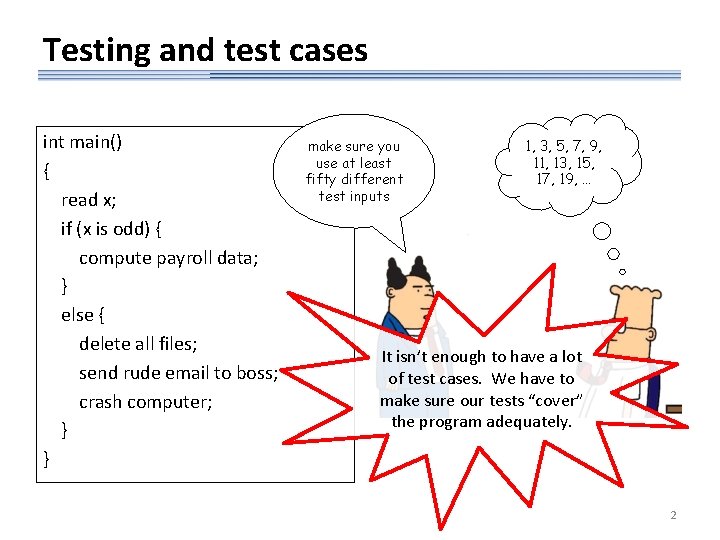
Testing and test cases int main() { read x; if (x is odd) { compute payroll data; } else { delete all files; send rude email to boss; crash computer; } } make sure you use at least fifty different test inputs 1, 3, 5, 7, 9, 11, 13, 15, 17, 19, … It isn’t enough to have a lot of test cases. We have to make sure our tests “cover” the program adequately. 2
gcov: a code coverage analyzer • test coverage program – indicates how many times each line was executed – marks code that did not get executed – cumulative over a set of tests • helps you understand – how effectively your current test cases “cover” the code – what additional test inputs you need in order to get better coverage • needs the program to be compiled with additional gcc options

An example additional compiler flags input input testing didn’t execute all of the code 4
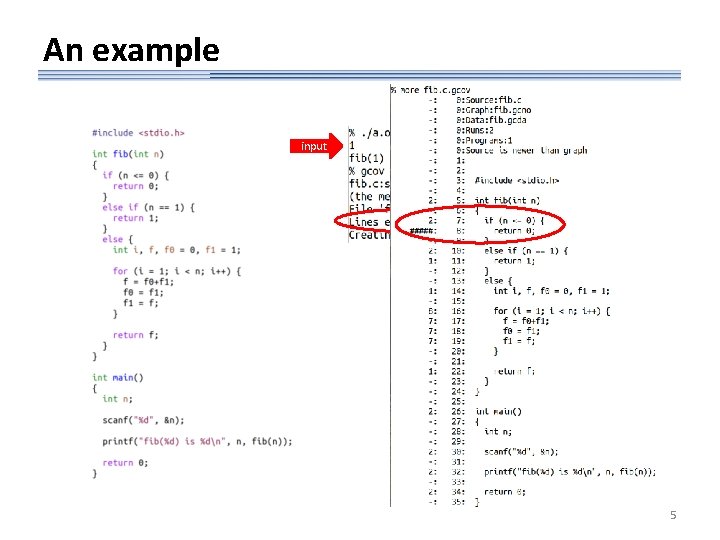
An example input 5

An example input 6
Code coverage and testing • Just because every line has been executed does not mean the program has been tested thoroughly – we may want to test the same line of code under different conditions • e. g. : a loop should be tested with values that cause 0, 1, and “many” iterations • However, if some lines are not executed the program is definitely not thoroughly tested – gcov helps us identify and fix this • exception: “system errors” that may be difficult to create

gcov: summary • code coverage testing tool – works with gcc; needs additional compiler flags • gcc –fprofile-arcs –ftest-coverage … • shows execution frequency of each line of code – reports % of lines covered by tests • coverage values are cumulative • delete *. gcda, *. gcno files to start afresh – how many times each line was executed – highlights lines not executed
- Slides: 8