
CSC 2100 B Tutorial 7 Heap Jianye Hao
CSC 2100 B Tutorial 7 Heap Jianye Hao 1
Heap n Definition in Data Structure n n n Heap: A special form of complete binary tree that key value of each node is no smaller (larger) than the key value of its children (if any). Max-Heap: root node has the largest key. n A max tree is a tree in which the key value in each node is no smaller than the key values in its children. A max heap is a complete binary tree that is also a max tree. Min-Heap: root node has the smallest key. n A min tree is a tree in which the key value in each node is no larger than the key values in its children. A min heap is a complete binary tree that is also a min tree. 2
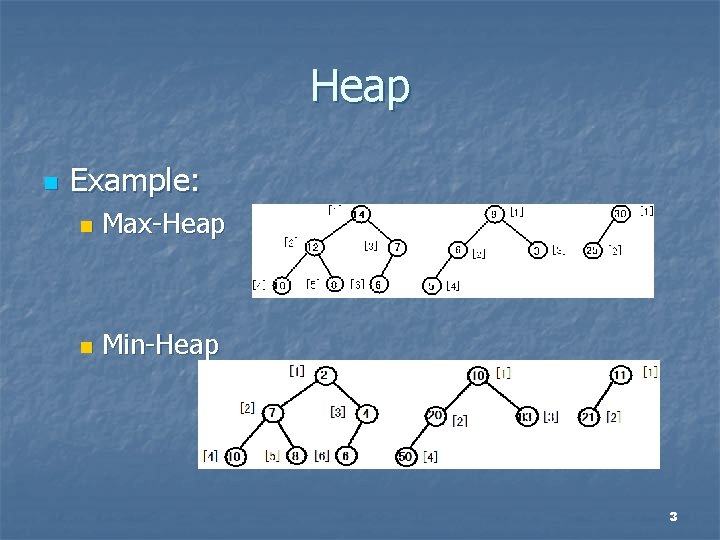
Heap n Example: n Max-Heap n Min-Heap 3
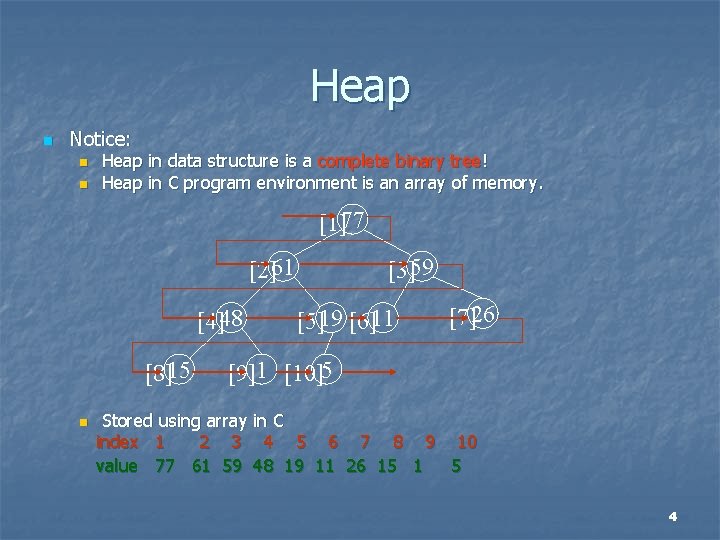
Heap n Notice: n n Heap in data structure is a complete binary tree! Heap in C program environment is an array of memory. [1]77 [2]61 [4]48 [8]15 n [3]59 [5]19 [6]11 [7]26 [9]1 [10]5 Stored using array in C index 1 2 3 4 5 6 7 8 9 10 value 77 61 59 48 19 11 26 15 1 5 4
Heap n Operations n n Creation of an empty heap Insertion of a new element into the heap Deletion of the largest(smallest) element from the heap Heap is complete binary tree, can be represented by array. So the complexity of inserting any node or deleting the root node from Heap is O(height) = O( ). 5
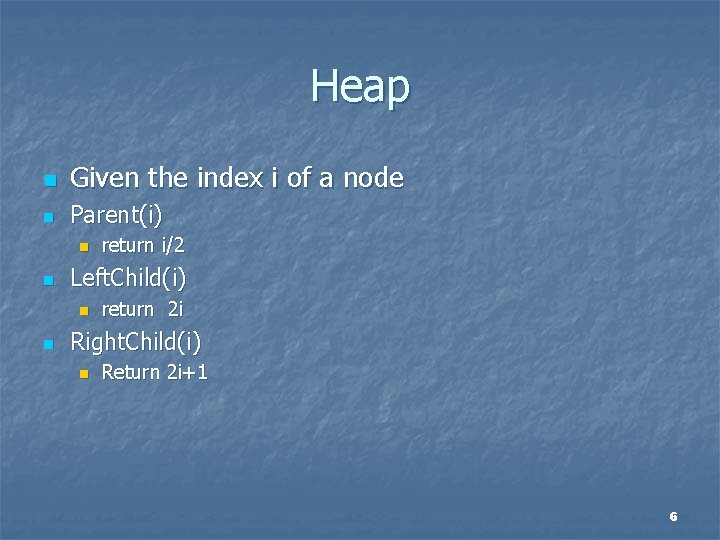
Heap n Given the index i of a node n Parent(i) n n Left. Child(i) n n return i/2 return 2 i Right. Child(i) n Return 2 i+1 6
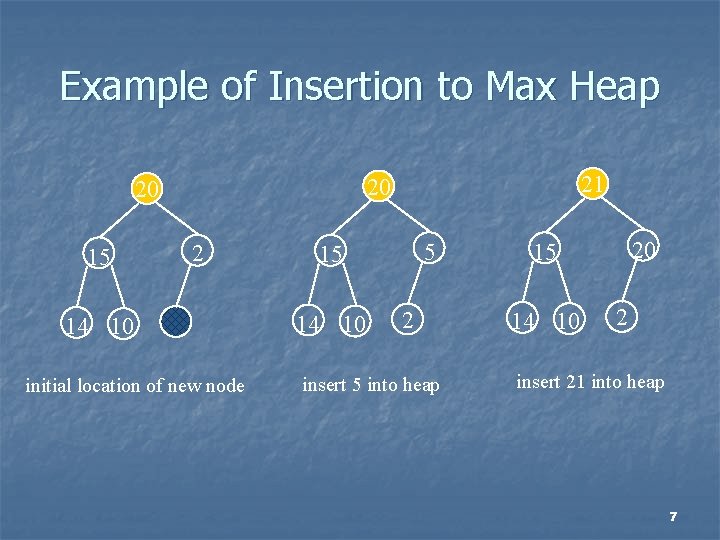
Example of Insertion to Max Heap 15 21 20 20 2 14 10 initial location of new node 5 15 14 10 2 insert 5 into heap 20 15 14 10 2 insert 21 into heap 7
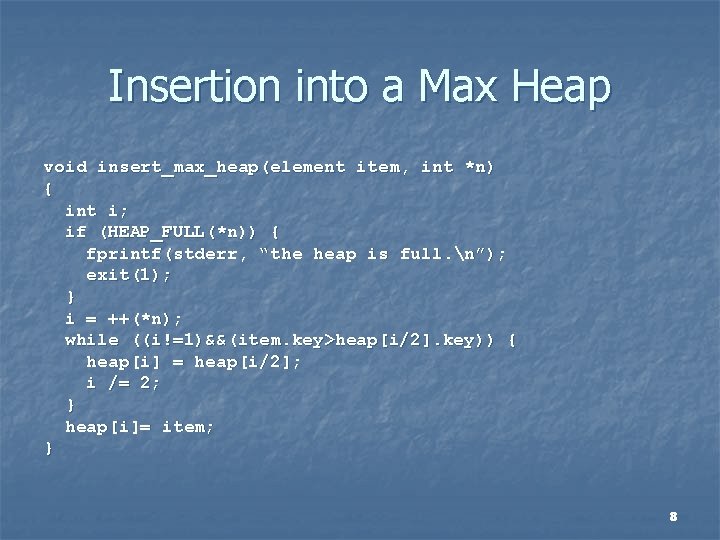
Insertion into a Max Heap void insert_max_heap(element item, int *n) { int i; if (HEAP_FULL(*n)) { fprintf(stderr, “the heap is full. n”); exit(1); } i = ++(*n); while ((i!=1)&&(item. key>heap[i/2]. key)) { heap[i] = heap[i/2]; i /= 2; } heap[i]= item; } 8
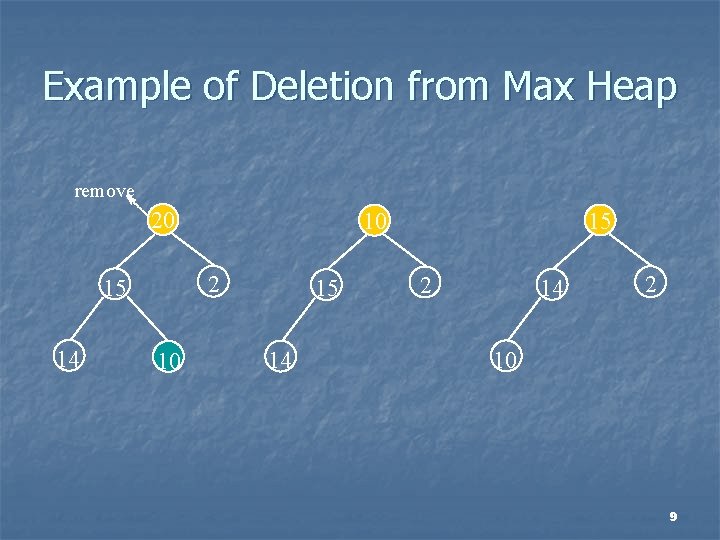
Example of Deletion from Max Heap remove 20 2 15 14 10 15 14 2 10 9
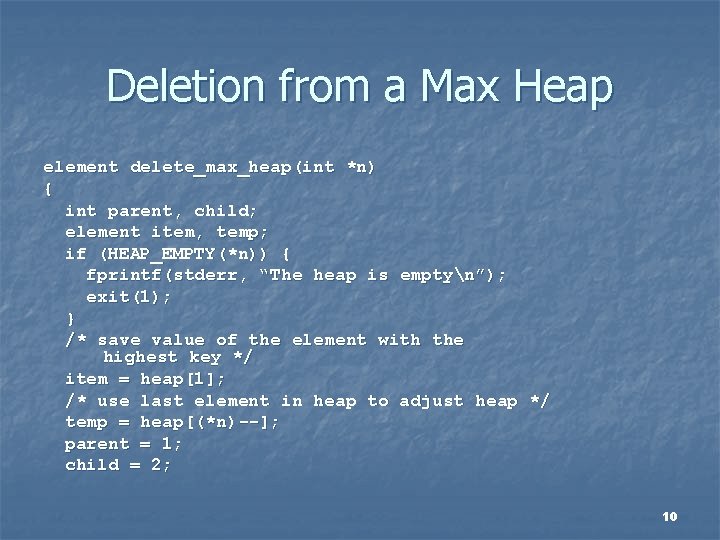
Deletion from a Max Heap element delete_max_heap(int *n) { int parent, child; element item, temp; if (HEAP_EMPTY(*n)) { fprintf(stderr, “The heap is emptyn”); exit(1); } /* save value of the element with the highest key */ item = heap[1]; /* use last element in heap to adjust heap */ temp = heap[(*n)--]; parent = 1; child = 2; 10
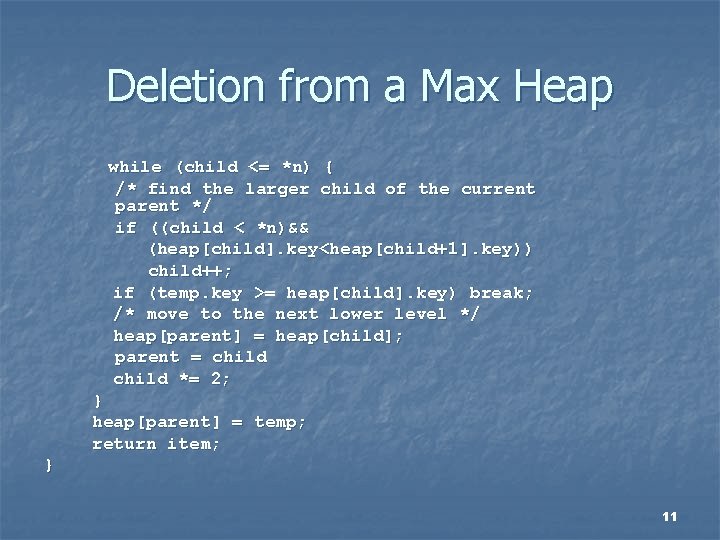
Deletion from a Max Heap while (child <= *n) { /* find the larger child of the current parent */ if ((child < *n)&& (heap[child]. key<heap[child+1]. key)) child++; if (temp. key >= heap[child]. key) break; /* move to the next lower level */ heap[parent] = heap[child]; parent = child *= 2; } heap[parent] = temp; return item; } 11
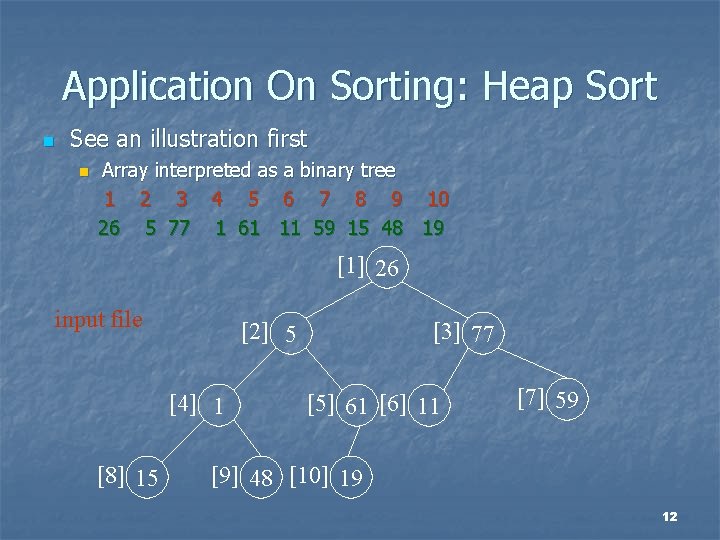
Application On Sorting: Heap Sort n See an illustration first n Array interpreted as a binary tree 1 2 3 4 5 6 7 8 9 10 26 5 77 1 61 11 59 15 48 19 [1] 26 input file [2] 5 [4] 1 [8] 15 [3] 77 [5] 61 [6] 11 [7] 59 [9] 48 [10] 19 12
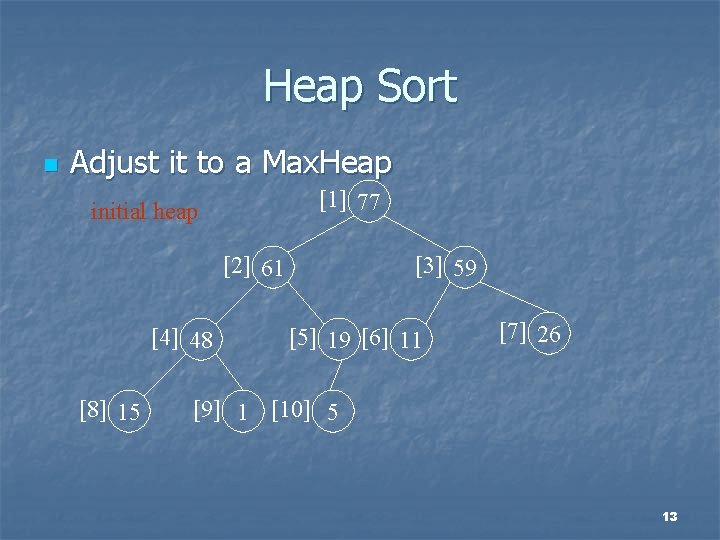
Heap Sort n Adjust it to a Max. Heap [1] 77 initial heap [2] 61 [4] 48 [8] 15 [3] 59 [5] 19 [6] 11 [7] 26 [9] 1 [10] 5 13
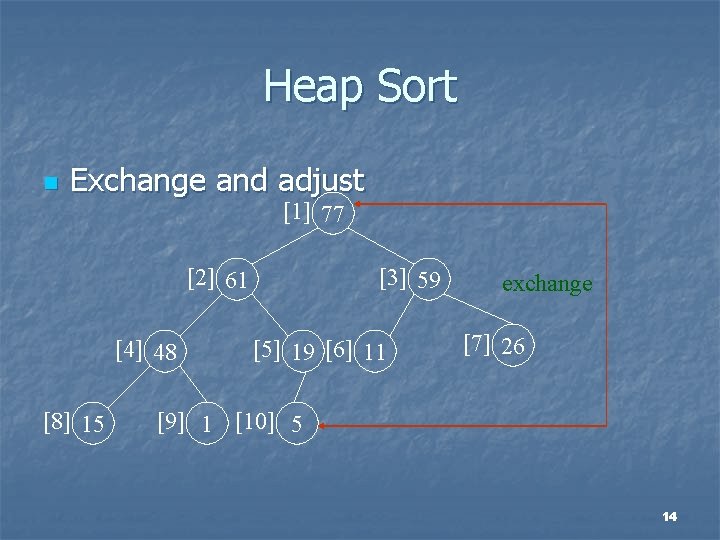
Heap Sort n Exchange and adjust [1] 77 [2] 61 [4] 48 [8] 15 [3] 59 [5] 19 [6] 11 exchange [7] 26 [9] 1 [10] 5 14
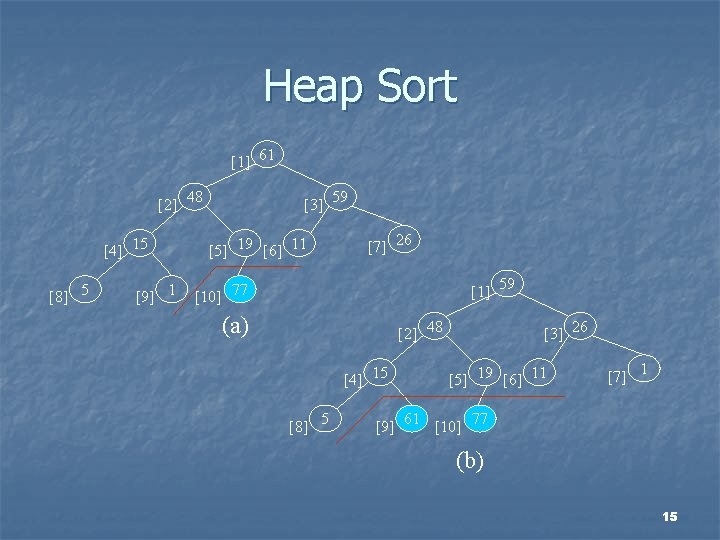
Heap Sort [1] 61 [2] 48 [4] 15 [8] 5 [9] 1 [3] 59 [5] 19 [6] 11 [7] 26 [1] 59 [10] 77 (a) [2] 48 [4] 15 [8] 5 [3] 26 [5] 19 [6] 11 [7] 1 [9] 61 [10] 77 (b) 15
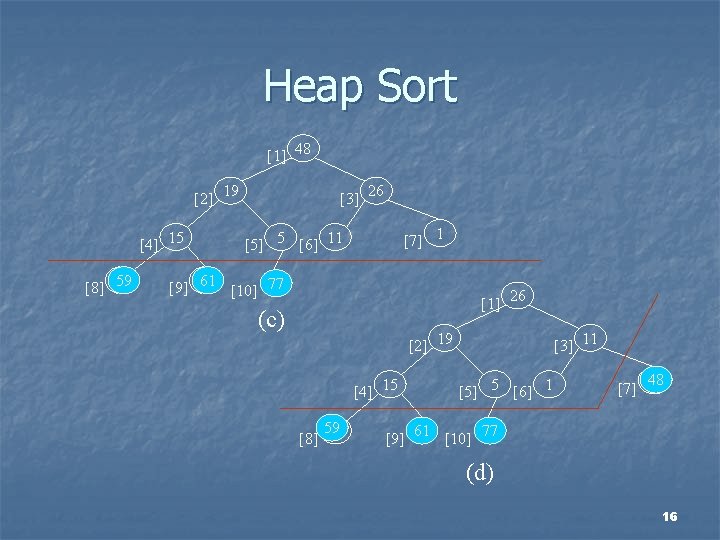
Heap Sort [1] 48 [2] 19 [4] 15 59 [8] 59 [3] 26 [7] 1 [5] 5 [6] 11 61 [9] 61 [10] 77 [1] 26 (c) [2] 19 [4] 15 59 [8] 59 [3] 11 [5] 5 [6] 1 48 [7] 48 [9] 61 [10] 77 (d) 16
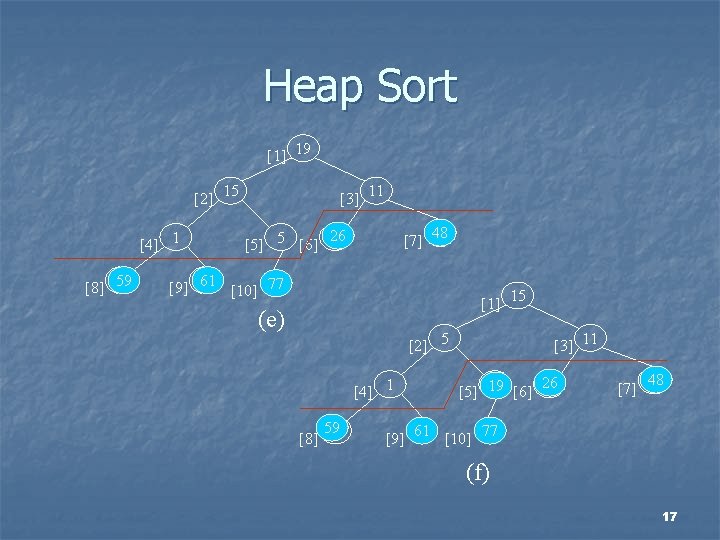
Heap Sort [1] 19 [2] 15 [4] 1 59 [8] 59 [3] 11 1 [7] 48 26 [5] 5 [6] 26 61 [9] 61 [10] 77 [1] 15 (e) [2] 5 [4] 1 59 [8] 59 [3] 11 5 [6] 26 1 [5] 19 48 [7] 48 [9] 61 [10] 77 (f) 17
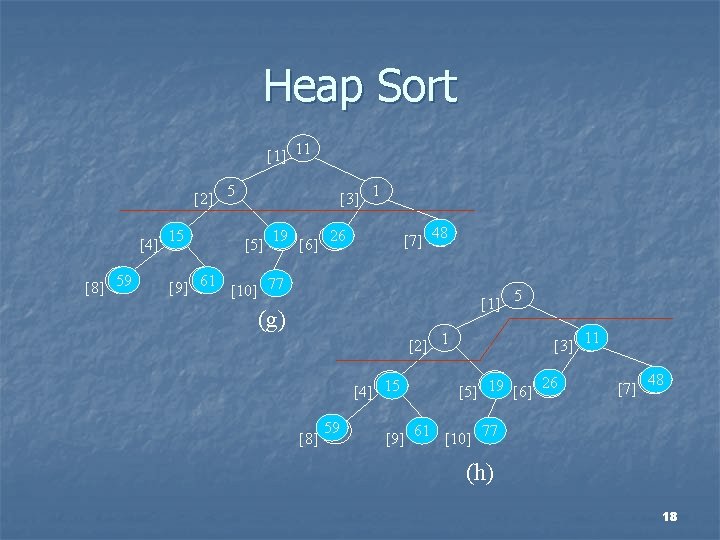
Heap Sort [1] 11 [2] 5 15 [4] 1 59 [8] 59 [3] 1 1 [7] 48 19 26 [5] 5 [6] 26 61 [9] 61 [10] 77 [1] 5 (g) 1 [3] 11 [2] 1 1 [4] 15 59 [8] 59 5 [6] 26 1 [5] 19 48 [7] 48 [9] 61 [10] 77 (h) 18
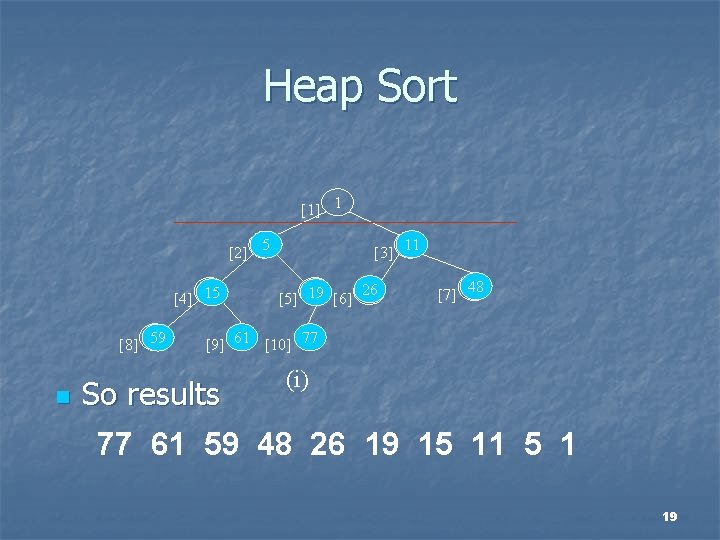
Heap Sort [1] 1 1 [3] 11 [2] 15 1 [4] 15 59 [8] 59 n 5 [6] 26 1 [5] 19 48 [7] 48 [9] 61 [10] 77 So results (i) 77 61 59 48 26 19 15 11 5 1 19

Questions ? 20
- Slides: 20