
CS 709 Chapter 4 Use Case Modeling From

![Finding Actors and Use Cases Fig. 4. 2 [Arlow & Neustadt 2005] 4](https://slidetodoc.com/presentation_image_h/341eeb0df119727a7de401890eb761d2/image-4.jpg "Finding Actors and Use Cases Fig. 4. 2 [Arlow & Neustadt 2005] 4")
![Finding Actors and Use Cases Fig. 4. 7 [Arlow & Neustadt 2005] 11](https://slidetodoc.com/presentation_image_h/341eeb0df119727a7de401890eb761d2/image-11.jpg "Finding Actors and Use Cases Fig. 4. 7 [Arlow & Neustadt 2005] 11")
- Slides: 35
CS 709 Chapter 4: Use Case Modeling From [Jim Arlow and Ila Neustadt, UML 2 and the Unified Process, Addison-Wesley 2005] University of Nevada, Reno Department of Computer Science & Engineering
Outline Use case modeling • Overview • Finding actors and use cases • Use case specification • Requirements tracing Use Case Modeling 2
Use Case Modeling: Overview The Use Case Model consists of the following: • Actors • Use cases • Relationships • System boundary Steps of use case modeling: • Find the system boundary • Find the actors • Find the use cases Use Case Modeling 3
Finding Actors and Use Cases Fig. 4. 2 [Arlow & Neustadt 2005] 4
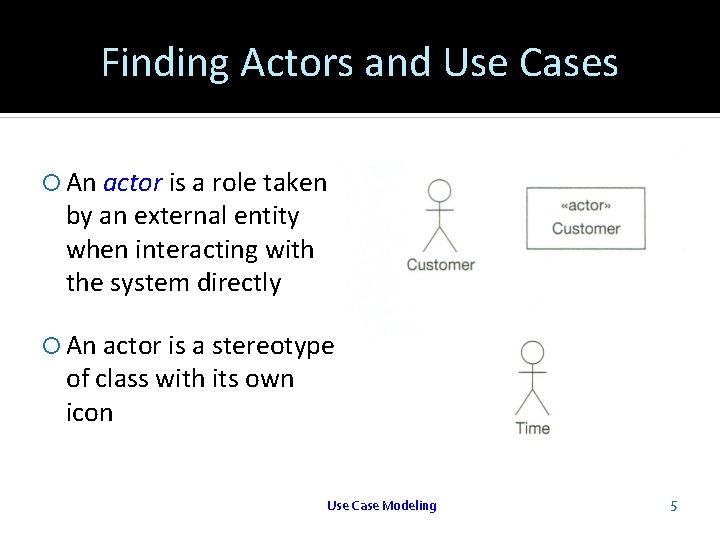
Finding Actors and Use Cases An actor is a role taken by an external entity when interacting with the system directly An actor is a stereotype of class with its own icon Use Case Modeling 5
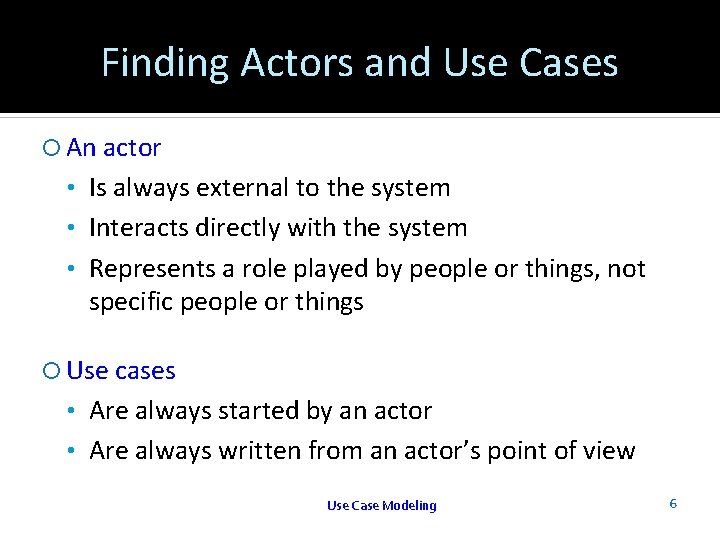
Finding Actors and Use Cases An actor • Is always external to the system • Interacts directly with the system • Represents a role played by people or things, not specific people or things Use cases • Are always started by an actor • Are always written from an actor’s point of view Use Case Modeling 6
Finding Actors and Use Cases According to Rumbaugh, a use case is a specification of sequences of actions, including variant sequences and error sequences, that a system, subsystem, or class can perform by interacting with outside actors Use Case Modeling 7
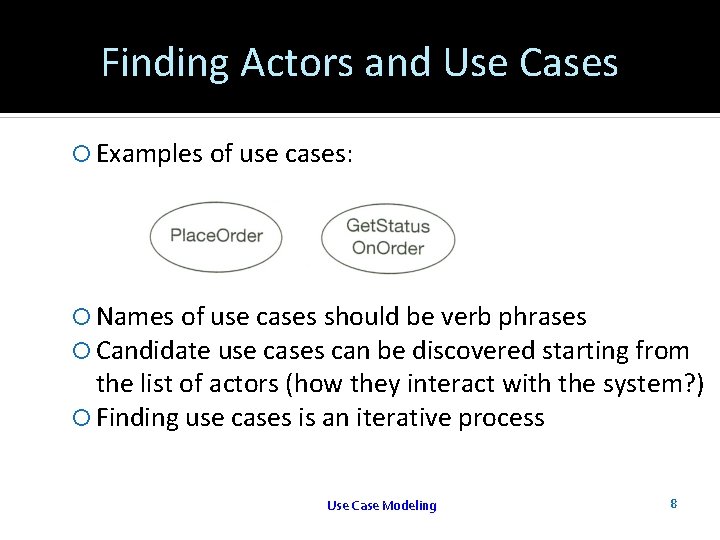
Finding Actors and Use Cases Examples of use cases: Names of use cases should be verb phrases Candidate use cases can be discovered starting from the list of actors (how they interact with the system? ) Finding use cases is an iterative process Use Case Modeling 8
Finding Actors and Use Cases Questions you can ask to identify use cases: • What functions a specific actor wants from the system? • Does the system store and retrieve information? If yes, which actors are involved? • Are any actors notified when the system changes state? • Are any external events that affect the system? What notifies the system about these events? Use Case Modeling 9
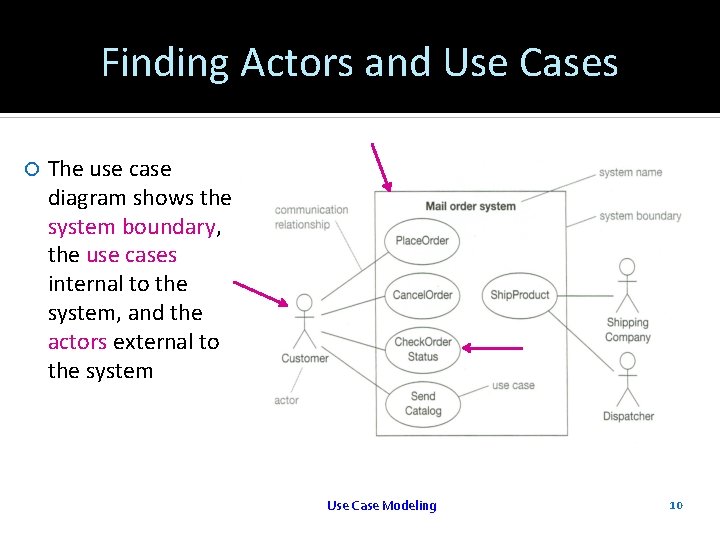
Finding Actors and Use Cases The use case diagram shows the system boundary, the use cases internal to the system, and the actors external to the system Use Case Modeling 10
Finding Actors and Use Cases Fig. 4. 7 [Arlow & Neustadt 2005] 11
Finding Actors and Use Cases The project glossary • Important project artifact • Provides a dictionary of key business terms • Captures business language and jargon • Should resolve synonyms and homonyms • Should be understandable by all stakeholders • UML does not set a standard for the project glossary Use Case Modeling 12
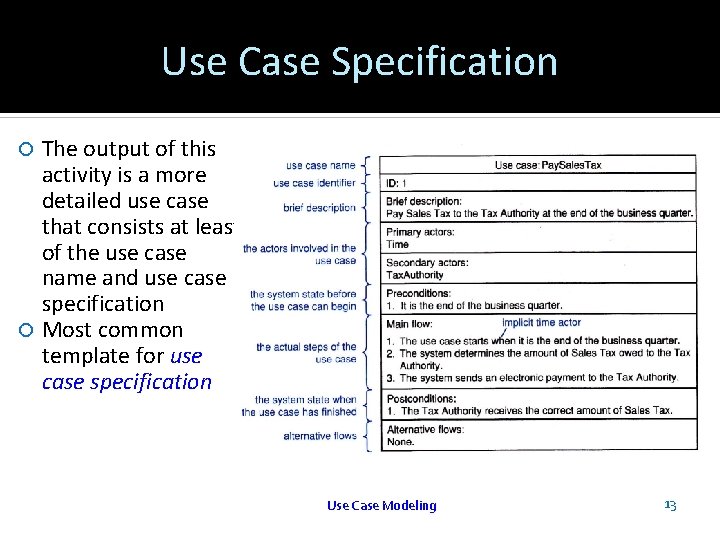
Use Case Specification The output of this activity is a more detailed use case that consists at least of the use case name and use case specification Most common template for use case specification Use Case Modeling 13
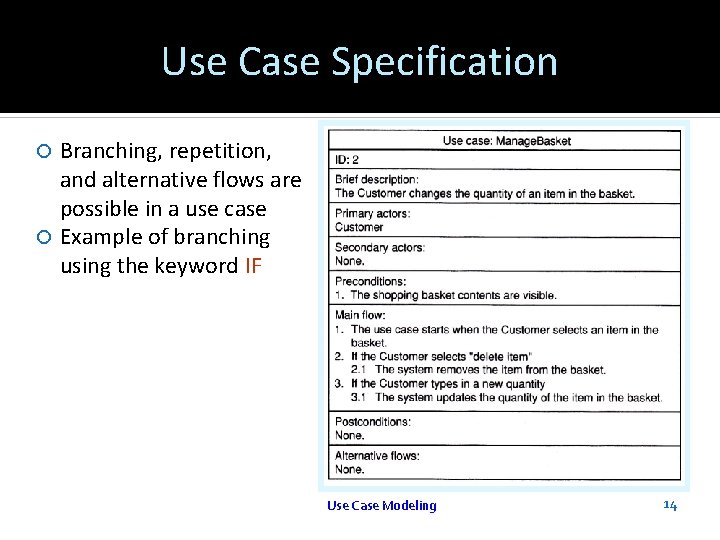
Use Case Specification Branching, repetition, and alternative flows are possible in a use case Example of branching using the keyword IF Use Case Modeling 14
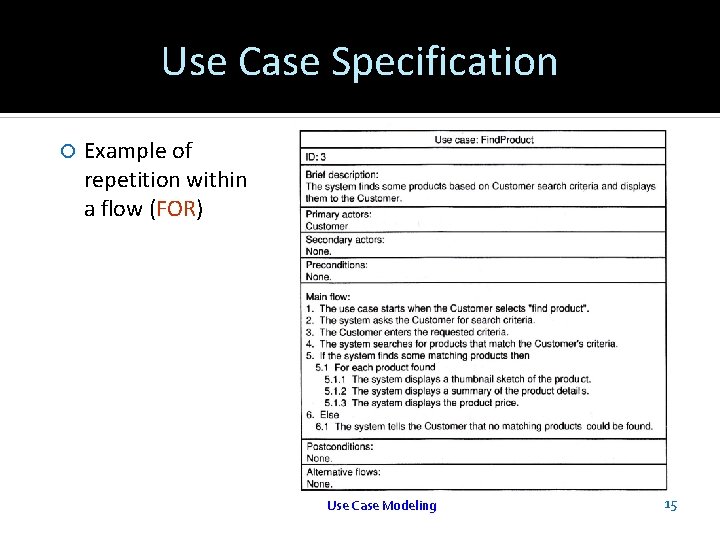
Use Case Specification Example of repetition within a flow (FOR) Use Case Modeling 15
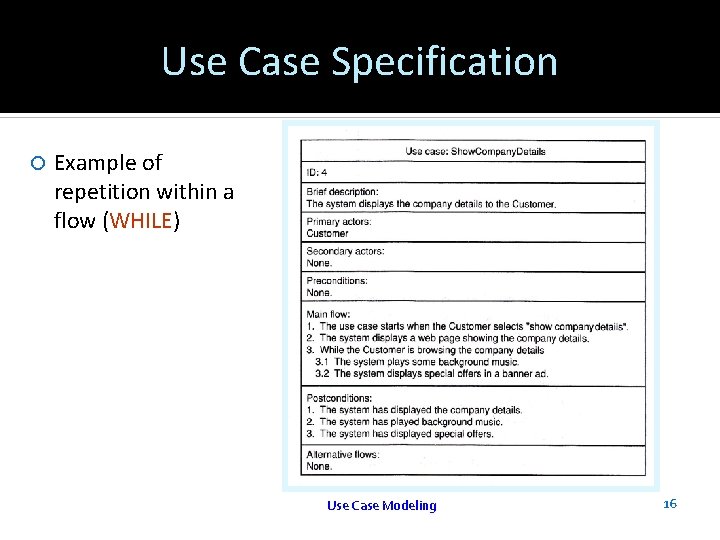
Use Case Specification Example of repetition within a flow (WHILE) Use Case Modeling 16
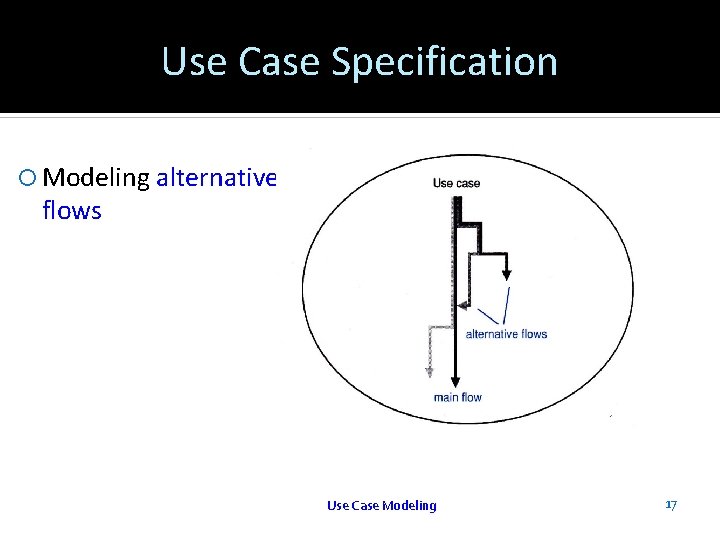
Use Case Specification Modeling alternative flows Use Case Modeling 17
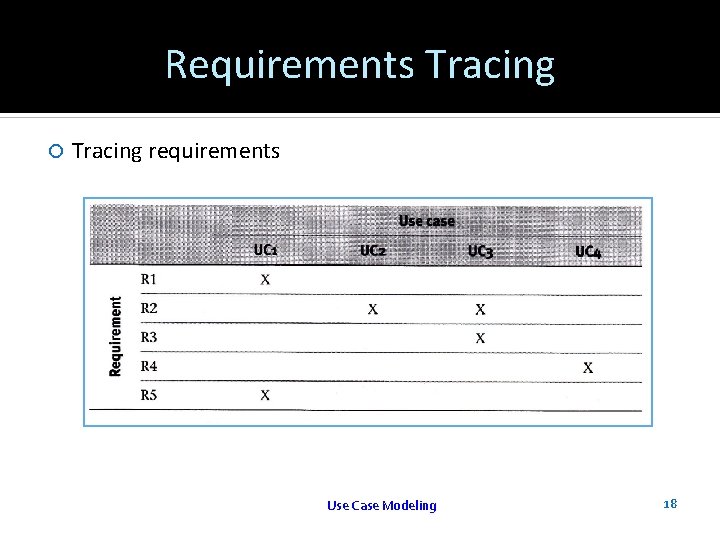
Requirements Tracing requirements Use Case Modeling 18
CS 709 Chapter 5: Advanced Use Case Modeling From [Jim Arlow and Ila Neustadt, UML 2 and the Unified Process, Addison-Wesley 2005] University of Nevada, Reno Department of Computer Science & Engineering
Outline Advanced use case modeling • Actor generalization • Use case generalization • Inclusion • Extension Advanced Use Case Modeling 20
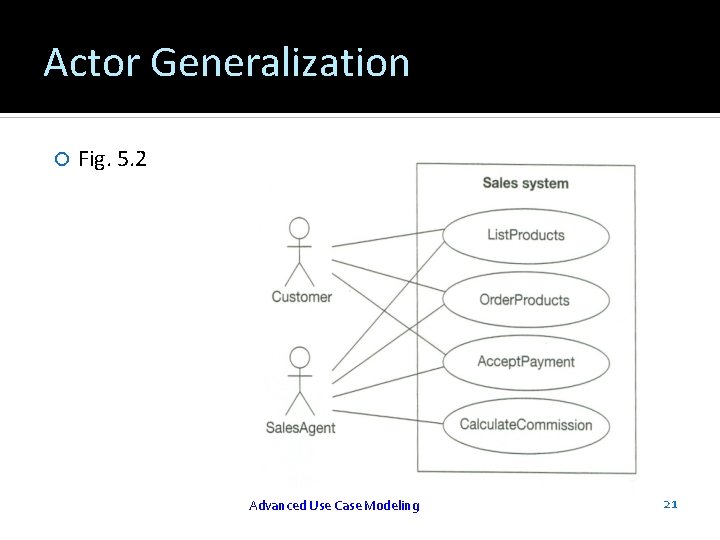
Actor Generalization Fig. 5. 2 Advanced Use Case Modeling 21
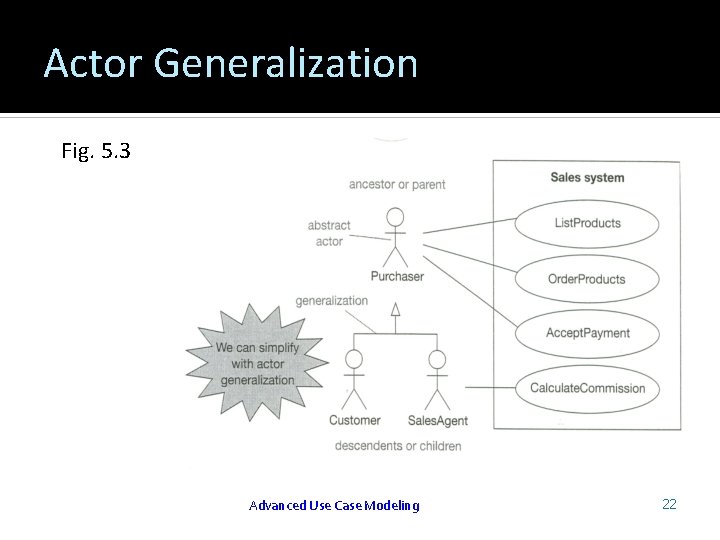
Actor Generalization Fig. 5. 3 Advanced Use Case Modeling 22
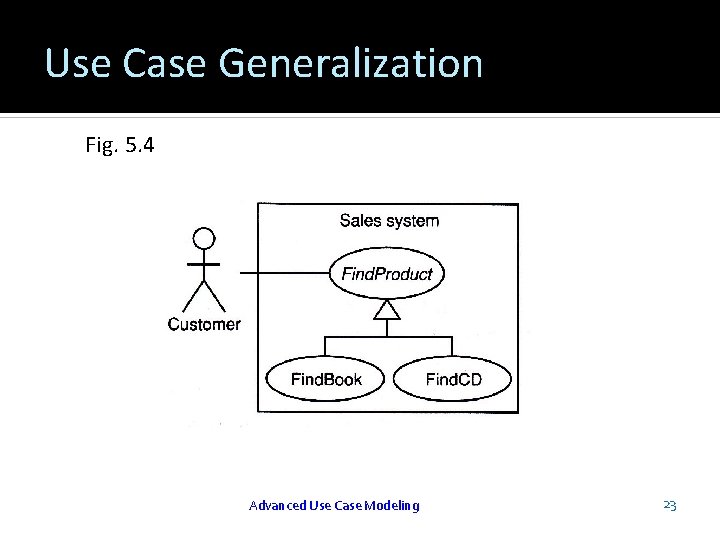
Use Case Generalization Fig. 5. 4 Advanced Use Case Modeling 23
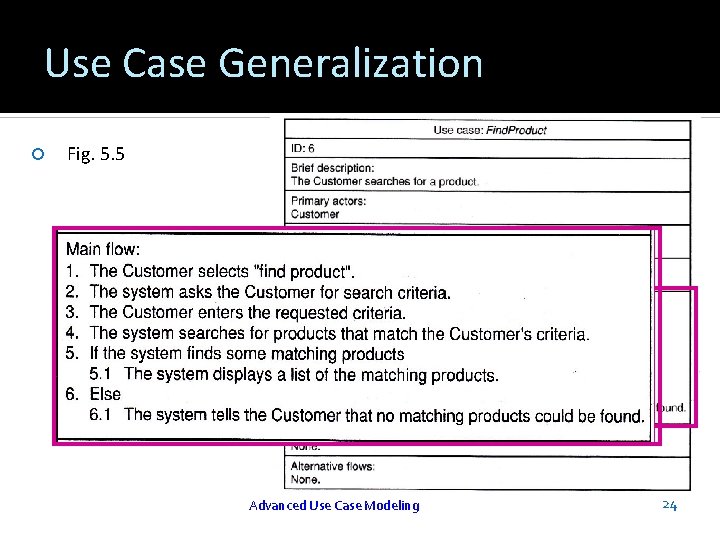
Use Case Generalization Fig. 5. 5 Advanced Use Case Modeling 24
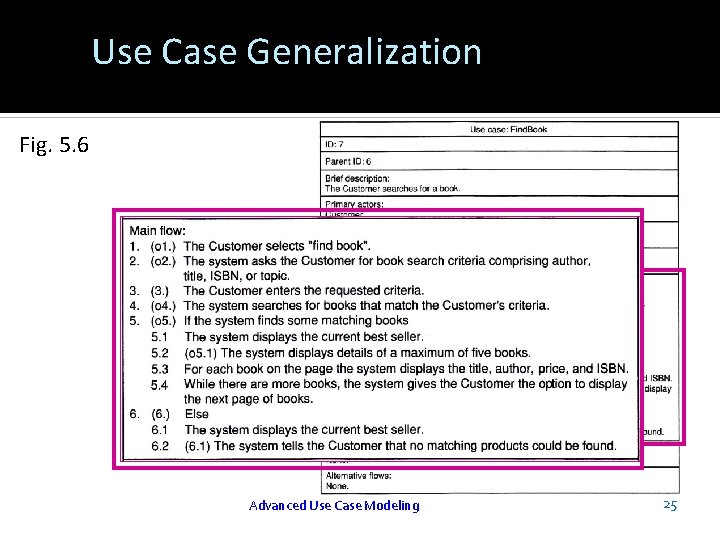
Use Case Generalization Fig. 5. 6 Advanced Use Case Modeling 25
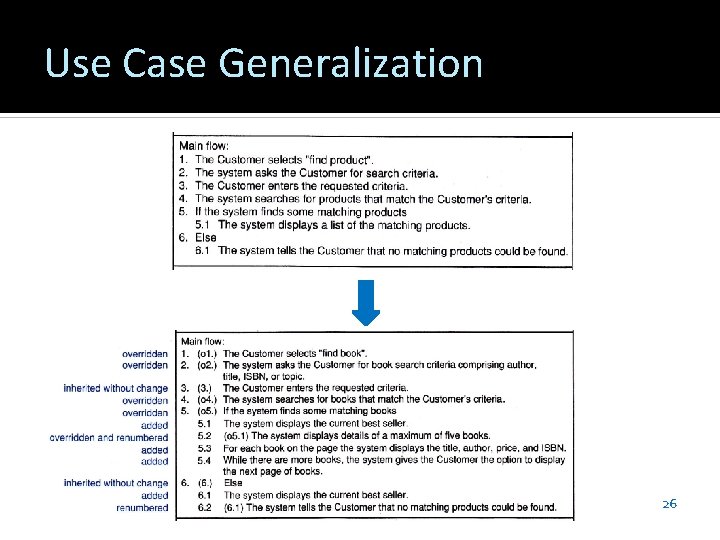
Use Case Generalization 26
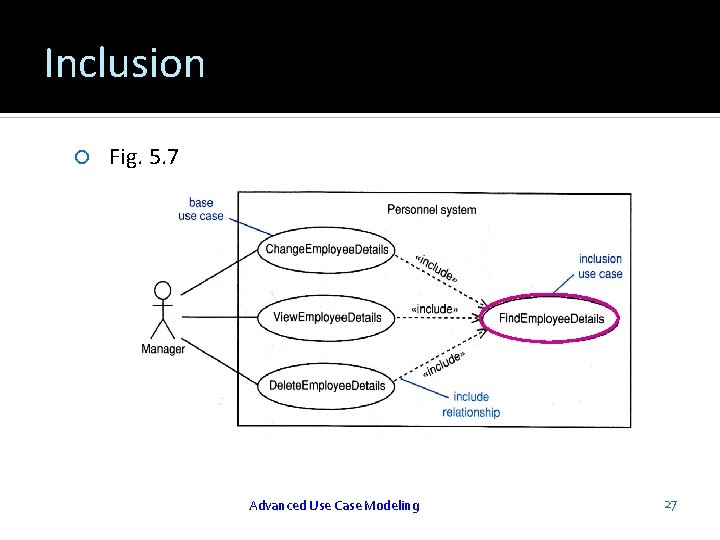
Inclusion Fig. 5. 7 Advanced Use Case Modeling 27
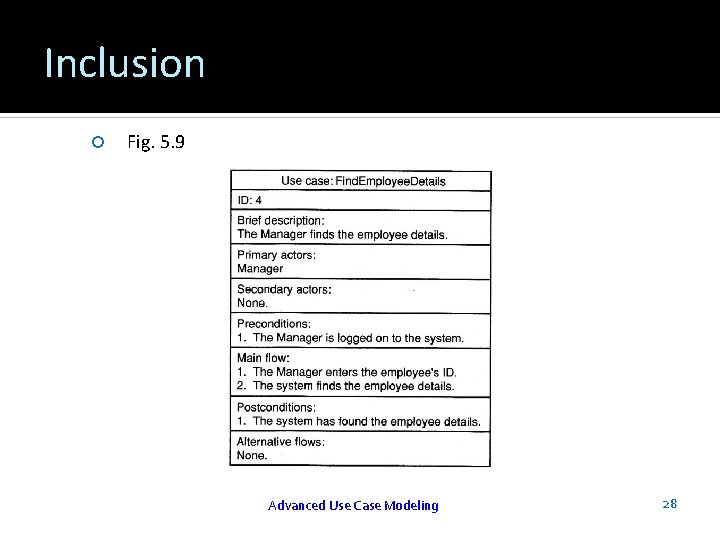
Inclusion Fig. 5. 9 Advanced Use Case Modeling 28
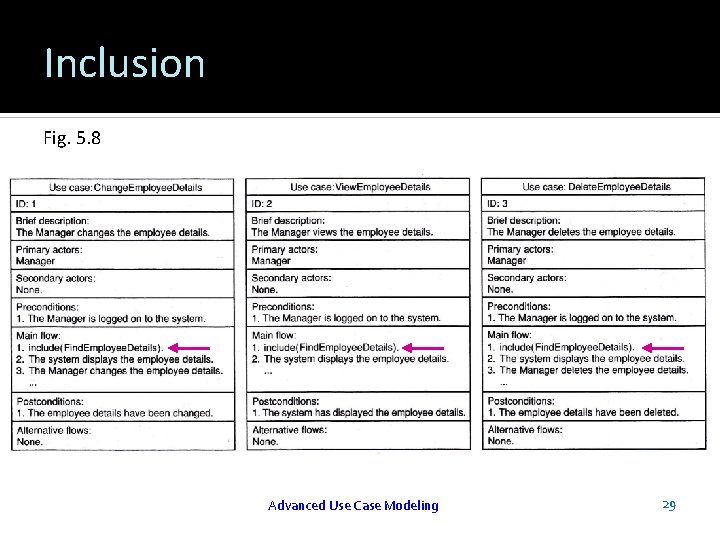
Inclusion Fig. 5. 8 Advanced Use Case Modeling 29
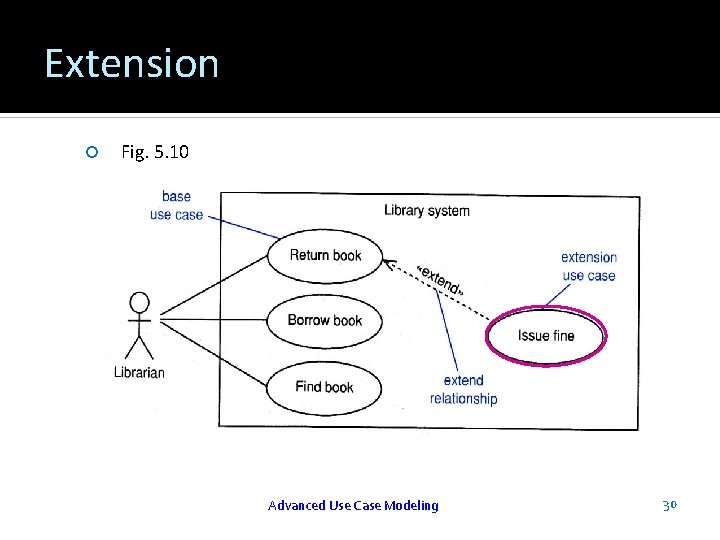
Extension Fig. 5. 10 Advanced Use Case Modeling 30
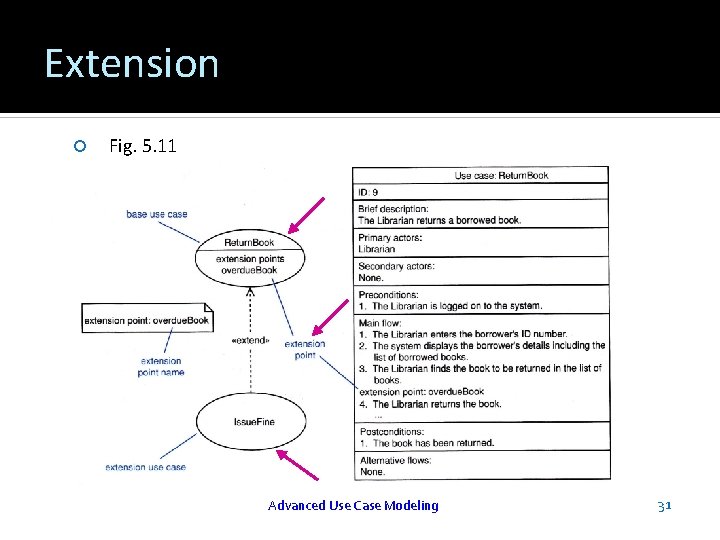
Extension Fig. 5. 11 Advanced Use Case Modeling 31
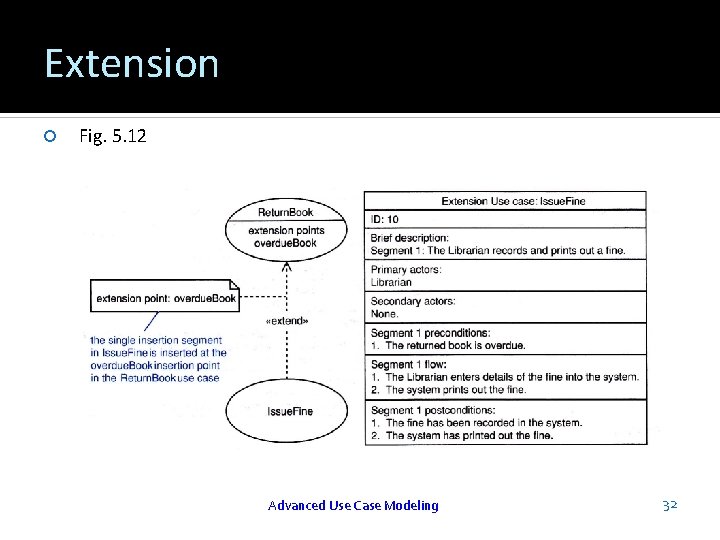
Extension Fig. 5. 12 Advanced Use Case Modeling 32
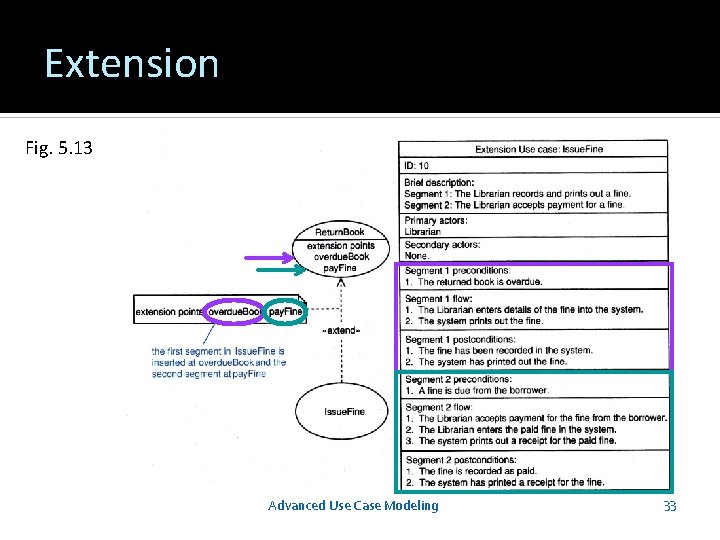
Extension Fig. 5. 13 Advanced Use Case Modeling 33
When to use advanced features? Use advanced features when they simplify the model Heavy use of <<include>> should be avoided Many stakeholders, including object modelers misunderstand <<extend>> Avoid use case generalization unless abstract parent use cases are used Advanced Use Case Modeling 34
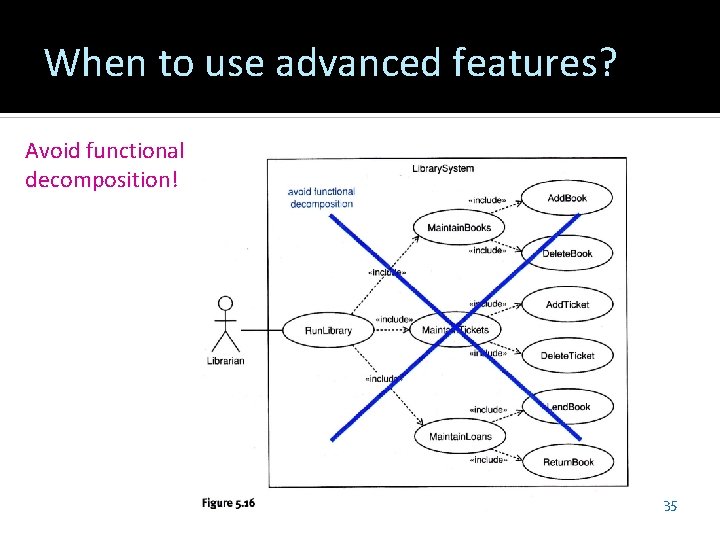
When to use advanced features? Avoid functional decomposition! Advanced Use Case Modeling 35