
CS 6283 Topics in Computer Science IV Computational

- Slides: 37
CS 6283 Topics in Computer Science IV: Computational Social Choice Instructor: Yair Zick 2017
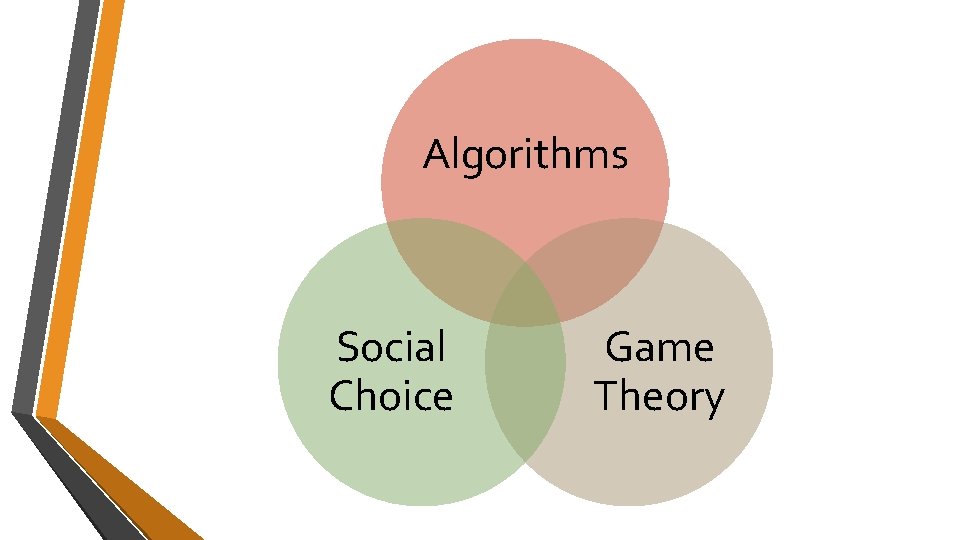
Algorithms Social Choice Game Theory
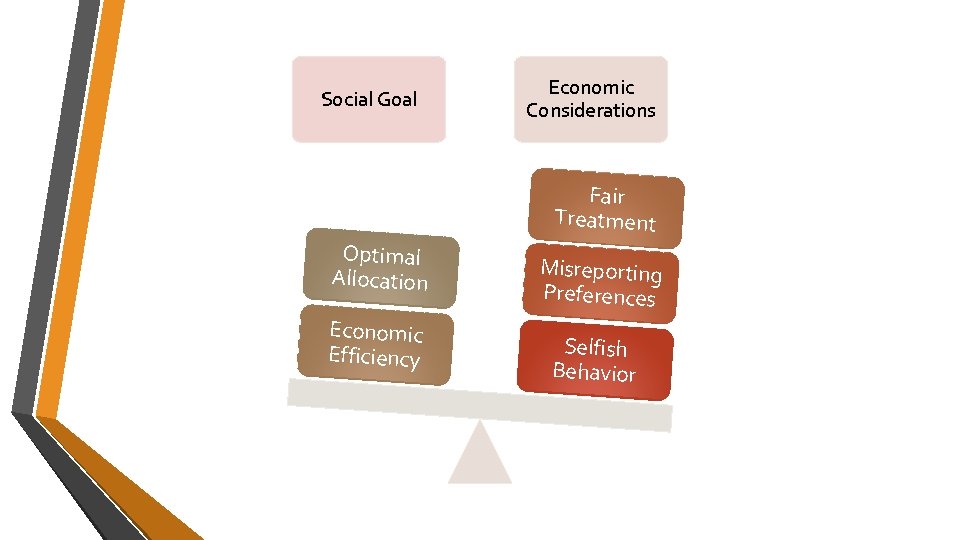
Social Goal Economic Considerations Fair Treatment Optimal Allocation Economic Efficiency Misreporting Preferences Selfish Behavior
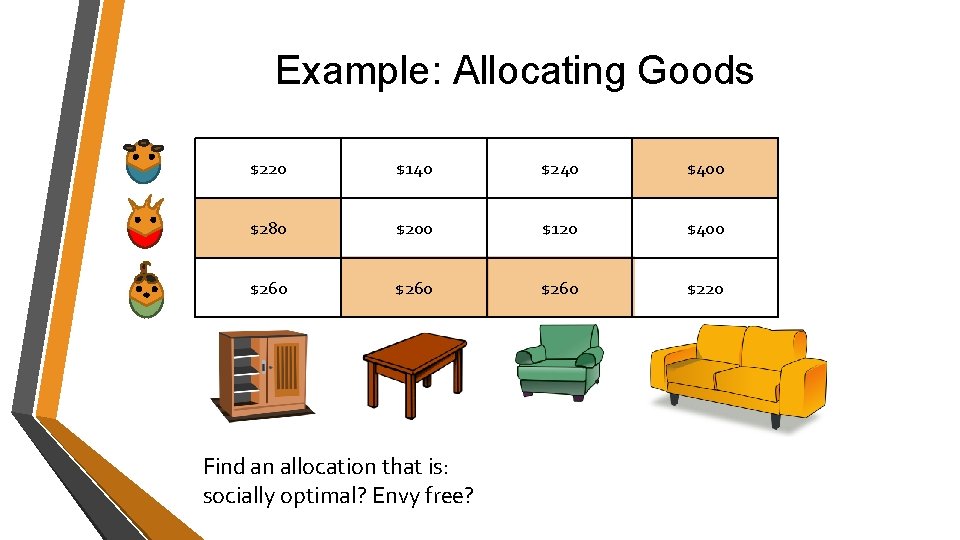
Example: Allocating Goods $220 $140 $240 $400 $280 $200 $120 $400 $260 $220 Find an allocation that is: socially optimal? Envy free?
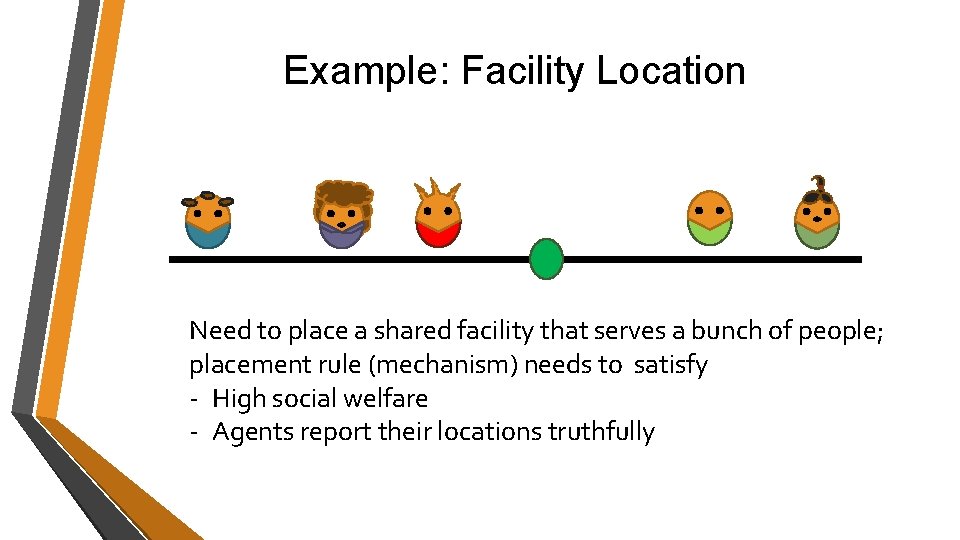
Example: Facility Location Need to place a shared facility that serves a bunch of people; placement rule (mechanism) needs to satisfy - High social welfare - Agents report their locations truthfully
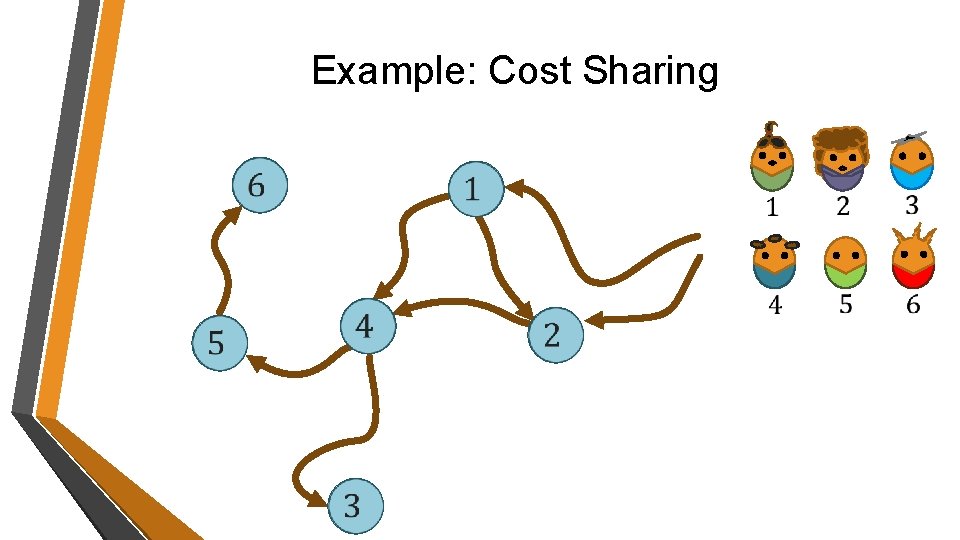
Example: Cost Sharing
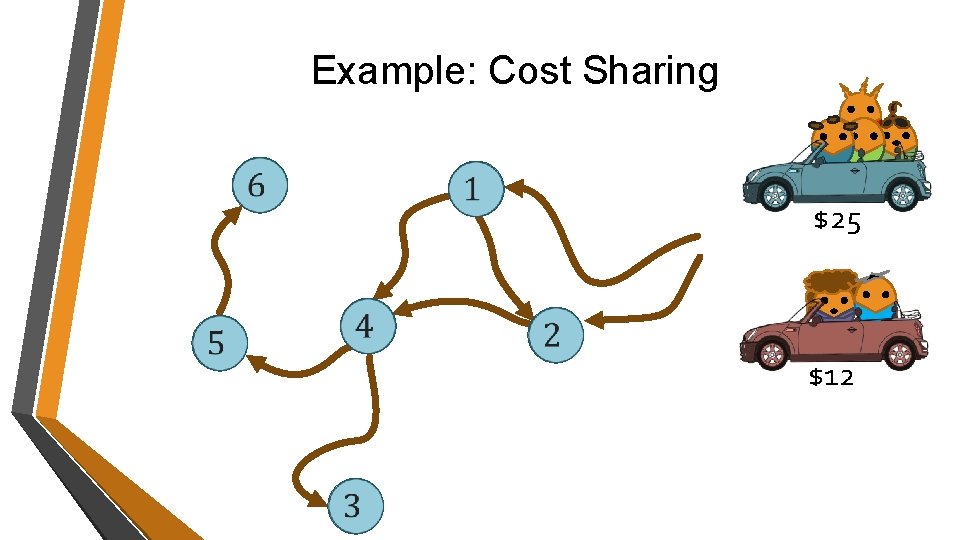
Example: Cost Sharing $25 $12
This Course Game Theory Fair Division Mechanism Design • Nash equilibria • Cooperative Games • Rent Division • Market Equilibria • Allocation without money • Auctions • Facility Location
This Course • One lecture (2 hours SR@LT 19) • Grade Breakdown: • 10% class participation (scribing, presentation) • 20% written assignments • 30% midterm (written test) • 40% final project
Final Project A research based project, that is related to any of the topics covered in the course. • Empirical: run experiments on data; implement an algorithm seen in class and analyze it • Theoretical: prove theorems/analyze algorithms • Preferably a bit of both Ultimate goal – a research paper based on project! • Topics from this course lend themselves well to interdisciplinary work – incorporate them into your own research!
Final Project Work individually or in pairs Progress Report by Week 7 Final submission Present your work • Try to find a partner ASAP • Partners finalized by week 3 • Main thesis • Methodology • Preliminary results • A lot of emphasis on quality academic writing • academic paper format, 4 -5 pages long (appendix allowed). • 10 minute presentation with slides at the end of the semester • Academic presentation format
Textbooks Algorithmic Game Theory (Nisan et al. eds. ) Handbook of Computational Social Choice (Brandt et al. eds. ) Computational Aspects of Cooperative Game Theory (Chalkiadakis et al. eds. ) Free online (password is cam 1 CSC) Free online
How to get an A in this class? • Class participation – attend, ask questions! • Prepare for class – review, readings, etc. … • Start thinking about your project early!
Other administrative Matters • Office hours – anytime, just email me! zick@comp. nus. edu. sg • Wednesdays 14: 00 -16: 00 SR@LT 19 • I will not be in on week 5 (Feb 8 th) • We will schedule a makeup lesson on week 6, same time – need to agree on a day!
Assignments and Exams • You may work on assignments alone or in pairs, write who your partner was on the sheet. • Submit assignments by hardcopy AND email • Plagiarism on any task will be strictly dealt with…
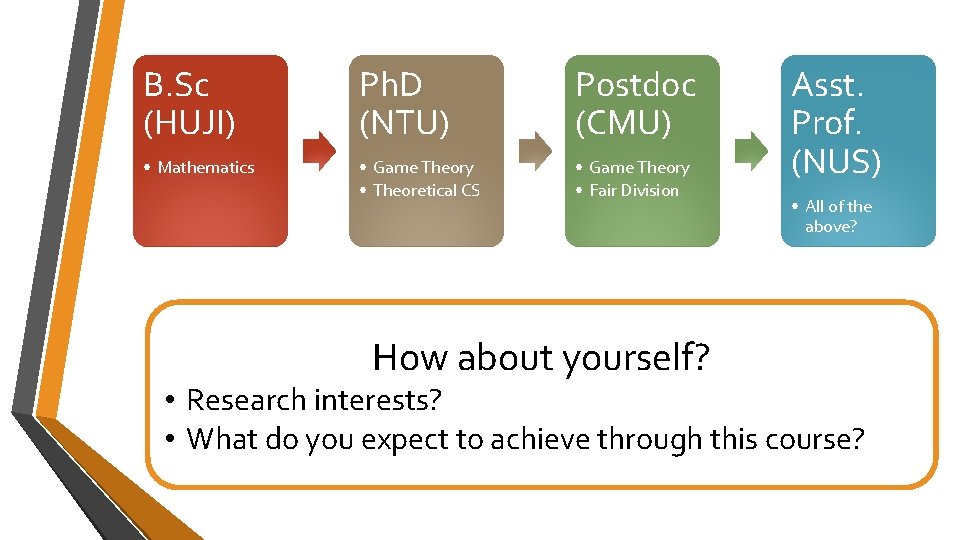
B. Sc (HUJI) Ph. D (NTU) Postdoc (CMU) • Mathematics • Game Theory • Theoretical CS • Game Theory • Fair Division How about yourself? Asst. Prof. (NUS) • All of the above? • Research interests? • What do you expect to achieve through this course?
Non-Cooperative Games Nash equilibria and Game Theory Basics
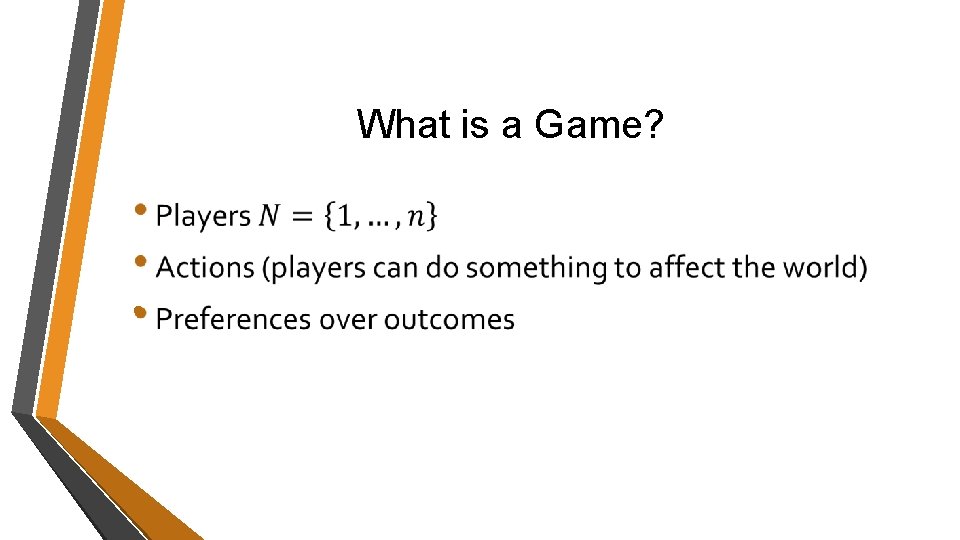
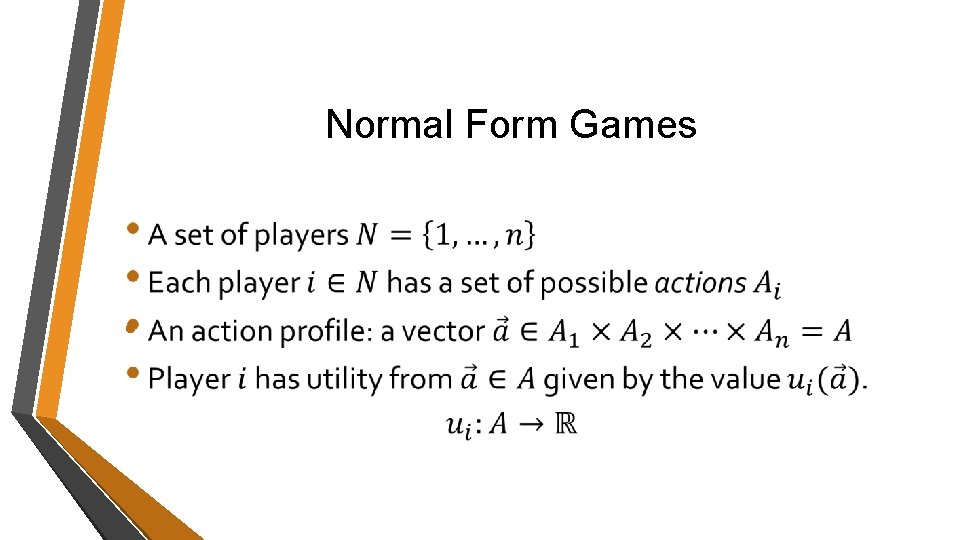
What is a Game? •
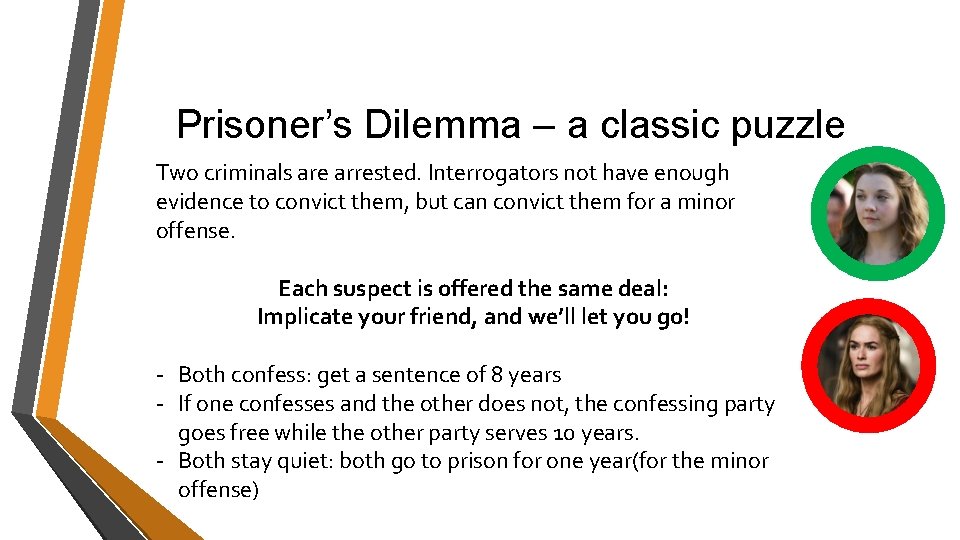
Prisoner’s Dilemma – a classic puzzle Two criminals are arrested. Interrogators not have enough evidence to convict them, but can convict them for a minor offense. Each suspect is offered the same deal: Implicate your friend, and we’ll let you go! - Both confess: get a sentence of 8 years - If one confesses and the other does not, the confessing party goes free while the other party serves 10 years. - Both stay quiet: both go to prison for one year(for the minor offense)
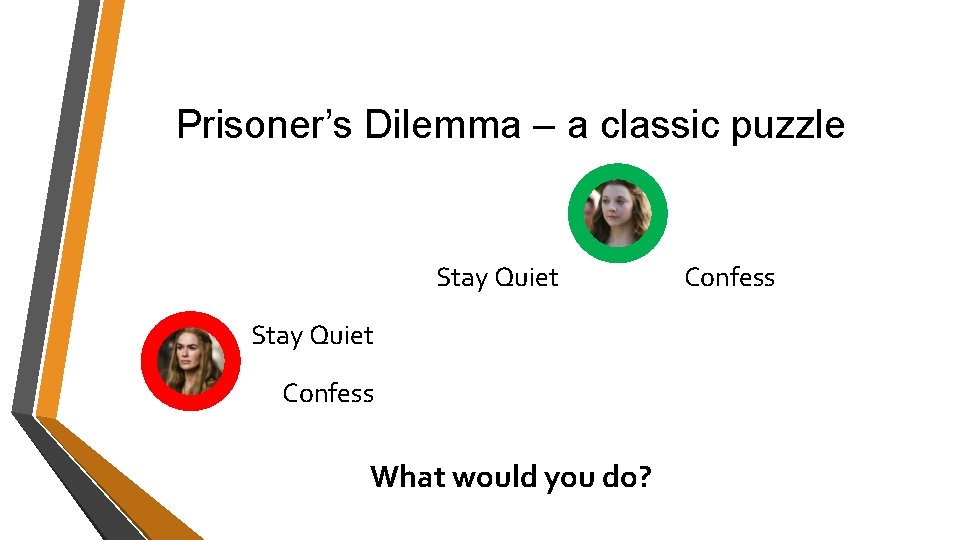
Prisoner’s Dilemma – a classic puzzle Stay Quiet Confess What would you do? Confess
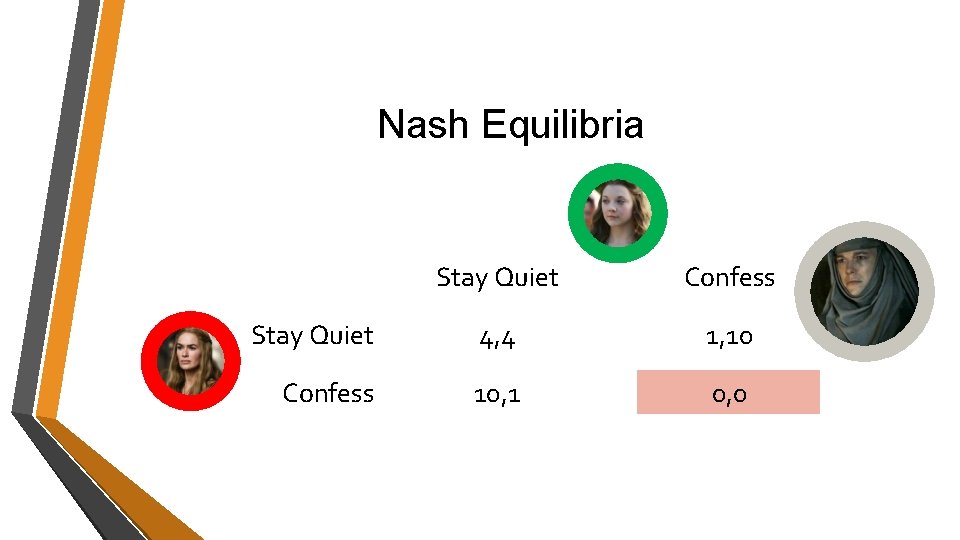
Nash Equilibria Stay Quiet Confess Stay Quiet 4, 4 1, 10 Confess 10, 1 0, 0
Normal Form Games •
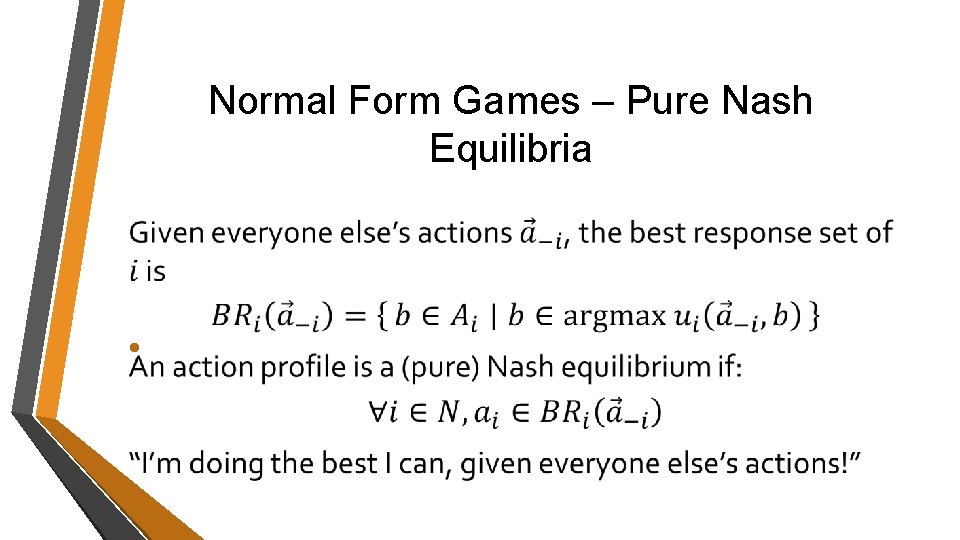
Normal Form Games – Pure Nash Equilibria •
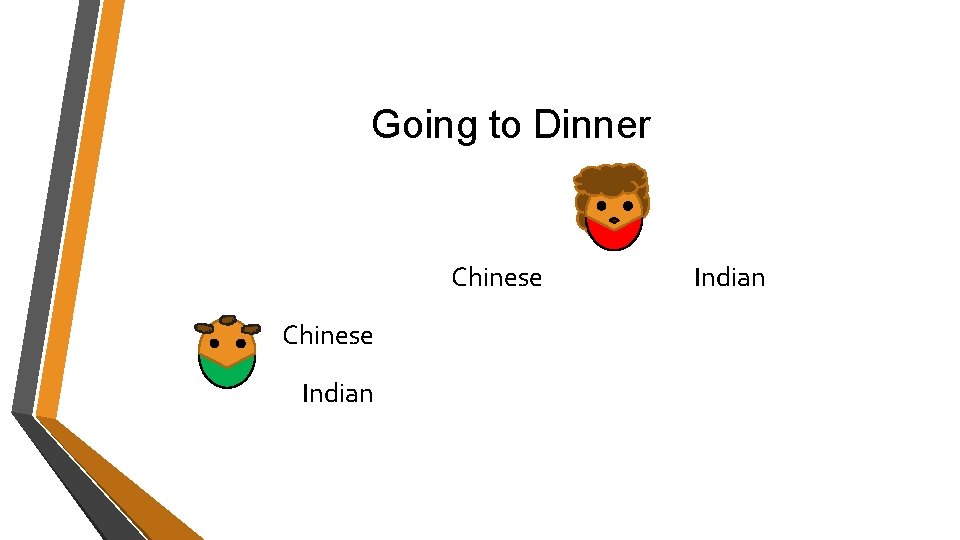
Going to Dinner Chinese Indian
A Pure Nash Equilibrium… 1. Always exists? 2. Is poly-time computable? ? ? ? ? ? ? ?
Example: ultimatum game • Proposer offers an (integer) split of $10 • Second player chooses to accept or reject 1. What are the strategies? Nash equilibria? 2. What do you think happens in practice? 3. Which player has the advantage?
Mixed Nash Equilibrium • Playing a single strategy may be foolish – an opponent who knows you well can always beat you with a best response! • It is often better to be unpredictable
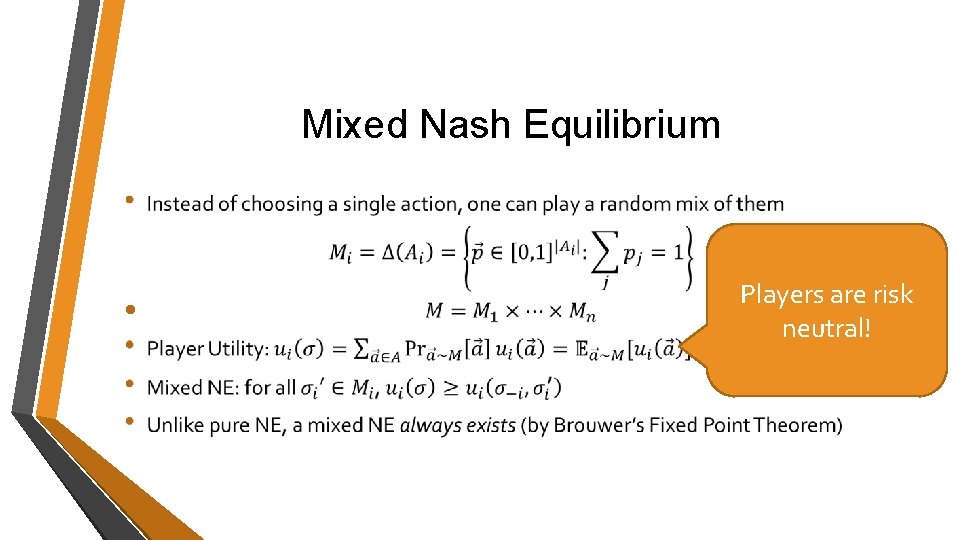
Mixed Nash Equilibrium • Players are risk neutral!
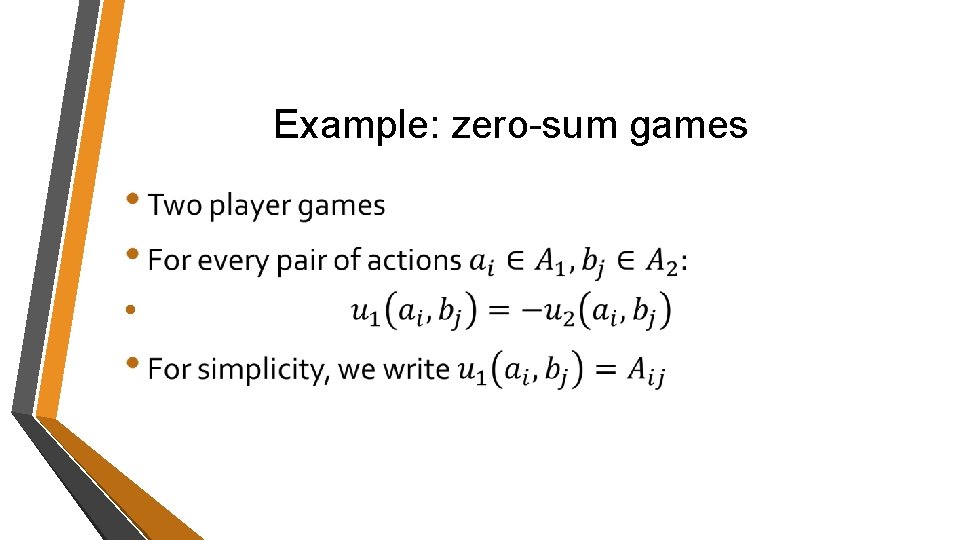
Example: zero-sum games •
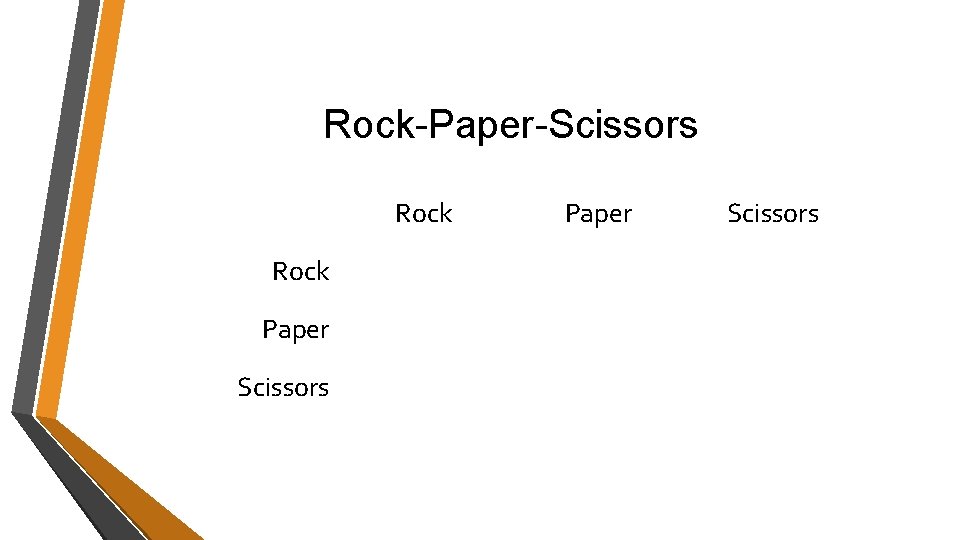
Rock-Paper-Scissors Rock Paper Scissors
In zero sum games: a Mixed Nash Equilibrium is poly-time computable? ? ? ? ? ? ? ?
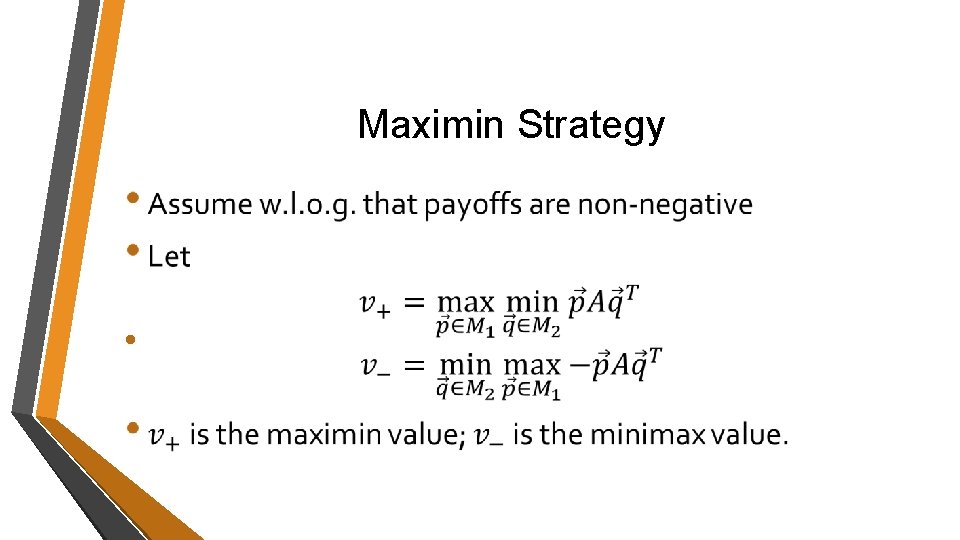
Maximin Strategy •
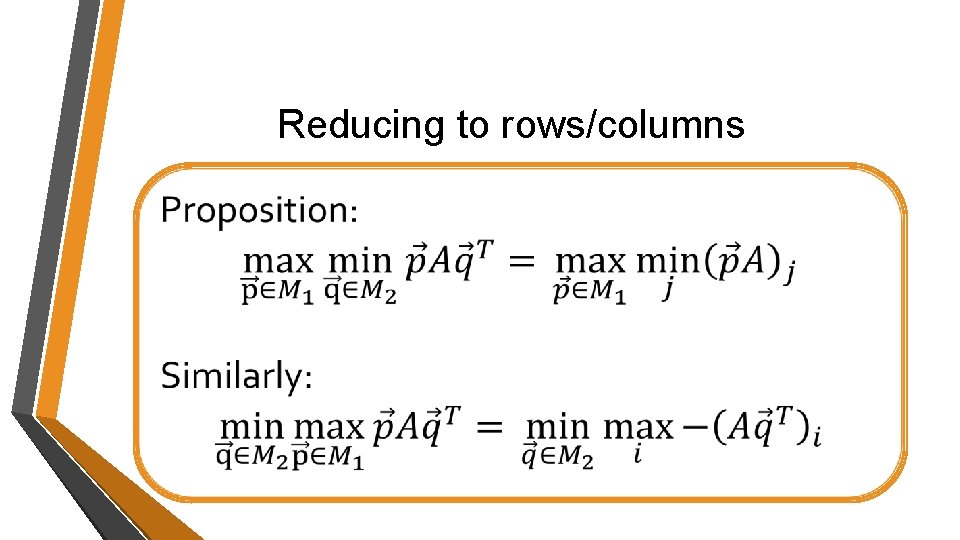
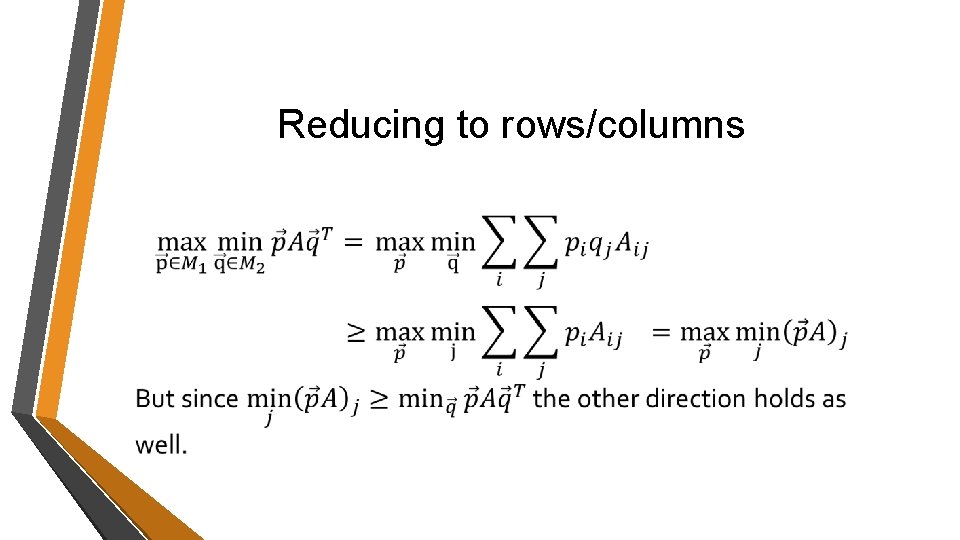
The Minimax Theorem Von Neumann’s Minimax Theorem: maximin equals minimax.
Reducing to rows/columns
Reducing to rows/columns
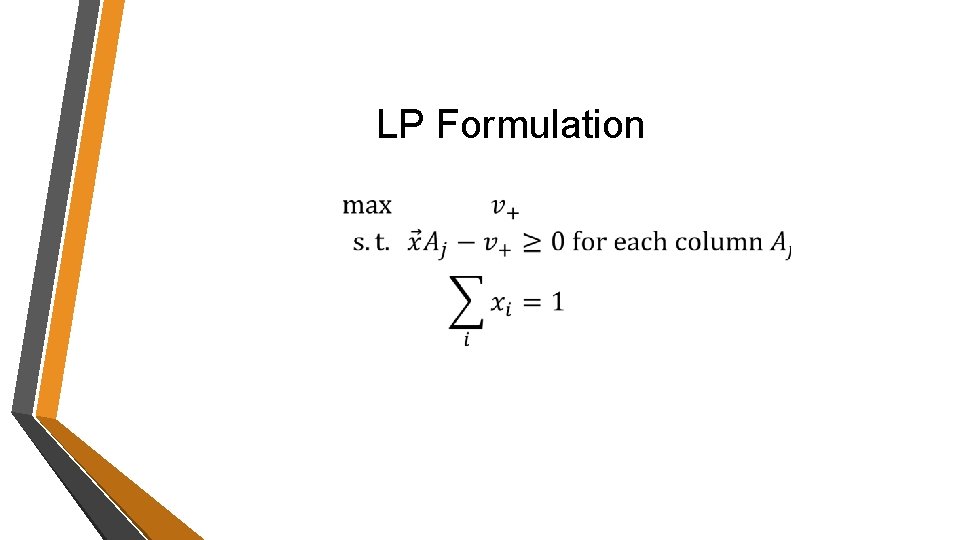
LP Formulation
Discussion • Original proof by Von-Neumann was much more complicated (and also applied to cases where there are infinitely many players); proven before the discovery of LP duality! • Game theory is a metaphor for real behavior – makes many implicit assumptions, tread lightly when applying it!