
CS 5670 Computer Vision Lecture 2 Edge detection




![Image derivatives • How can we differentiate a digital image F[x, y]? – Option](https://slidetodoc.com/presentation_image_h/ca5e120ec6200fcc2207ed50a31fb553/image-10.jpg "Image derivatives • How can we differentiate a digital image F[x, y]? – Option")
![Scale space [Witkin 83] first derivative peaks larger Gaussian filtered signal • Properties of](https://slidetodoc.com/presentation_image_h/ca5e120ec6200fcc2207ed50a31fb553/image-34.jpg "Scale space [Witkin 83] first derivative peaks larger Gaussian filtered signal • Properties of")

- Slides: 35
CS 5670: Computer Vision Lecture 2: Edge detection From Sandlot Science
Announcements • Office hours available on course webpage
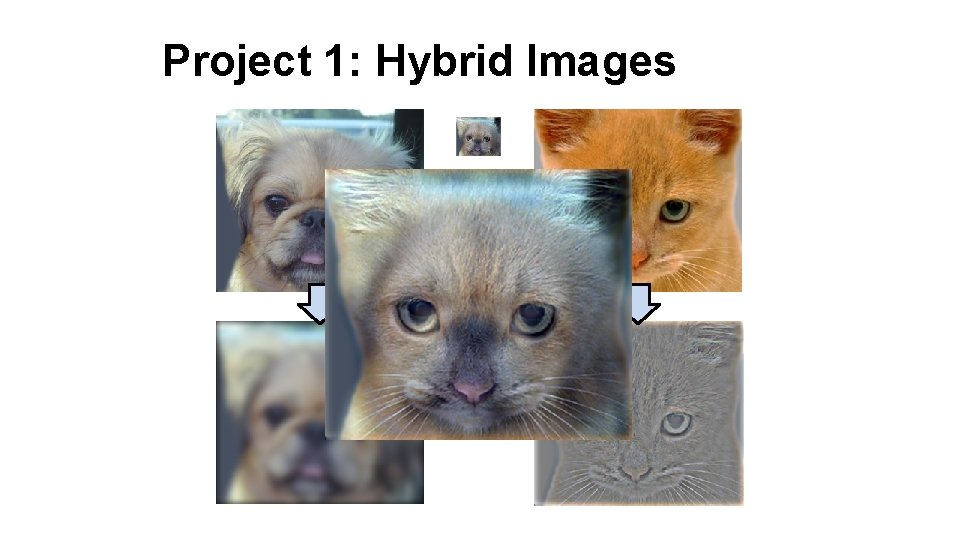
Announcements • Project 1 (Hybrid Images) is now on the course webpage (see Projects link) – Due Monday, Feb 10, by 11: 59 pm on CMS – Artifact due Wednesday, Feb 12, by 11: 59 pm – Project to be done individually – Voting system for favorite artifacts (with small amount of extra credit) – We provide a Python environment (or course VM) for you to develop & run the assignments
Project 1: Hybrid Images
Project 1 Demo
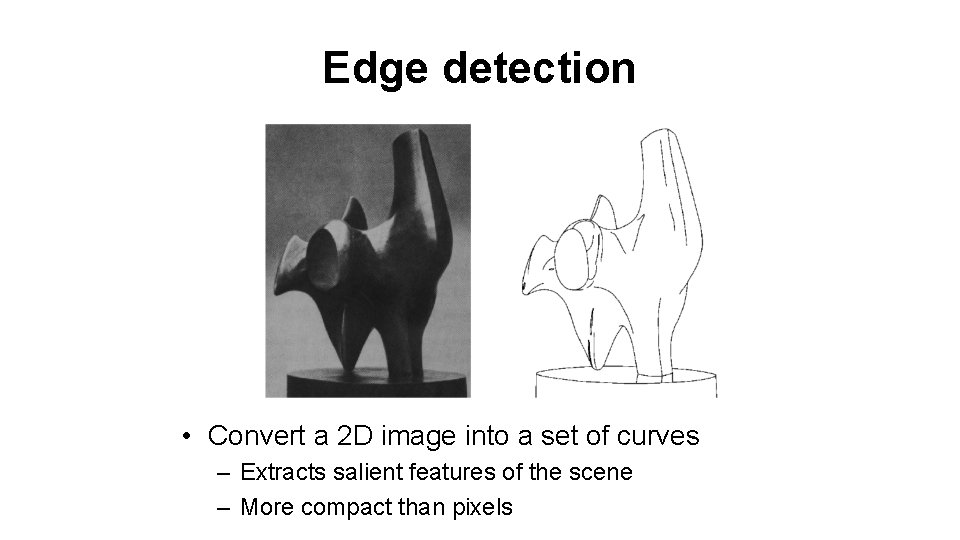
Edge detection • Convert a 2 D image into a set of curves – Extracts salient features of the scene – More compact than pixels
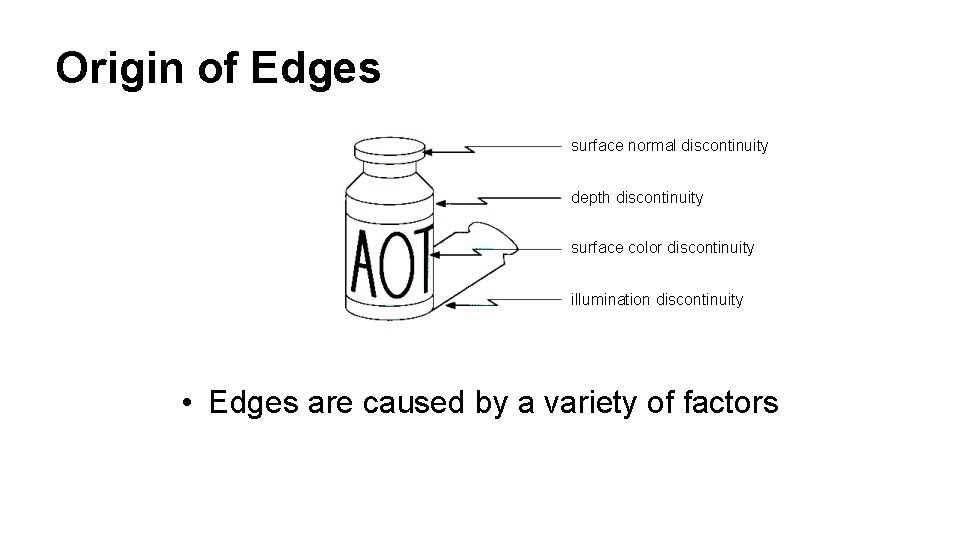
Origin of Edges surface normal discontinuity depth discontinuity surface color discontinuity illumination discontinuity • Edges are caused by a variety of factors
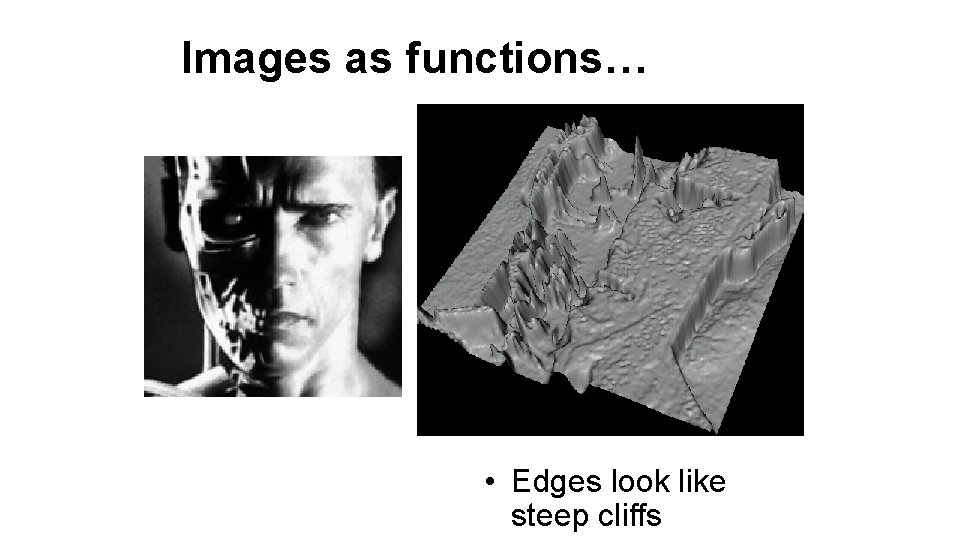
Images as functions… • Edges look like steep cliffs
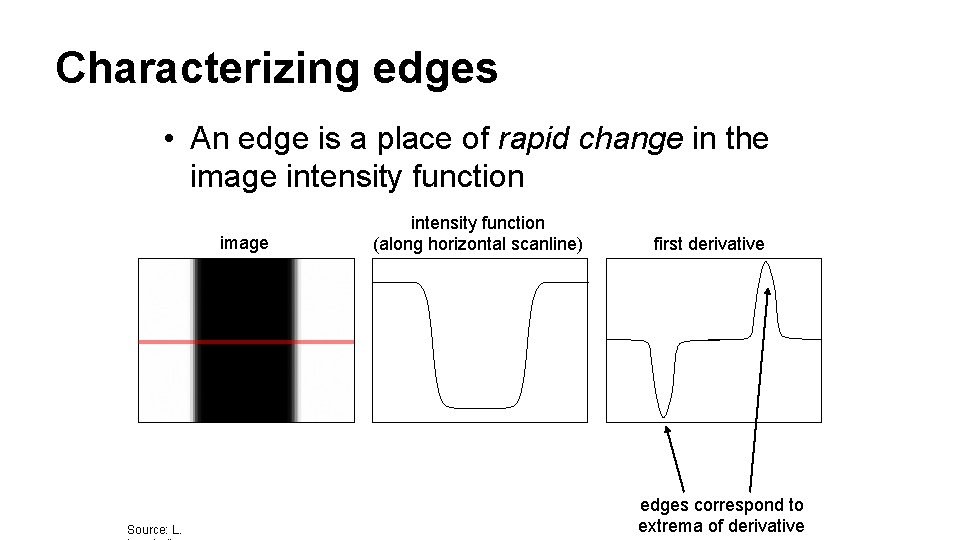
Characterizing edges • An edge is a place of rapid change in the image intensity function image Source: L. intensity function (along horizontal scanline) first derivative edges correspond to extrema of derivative
Image derivatives • How can we differentiate a digital image F[x, y]? – Option 1: reconstruct a continuous image, f, then compute the derivative – Option 2: take discrete derivative (finite difference) How would you implement this as a linear filter? : 1 -1 : -1 1 Source: S.
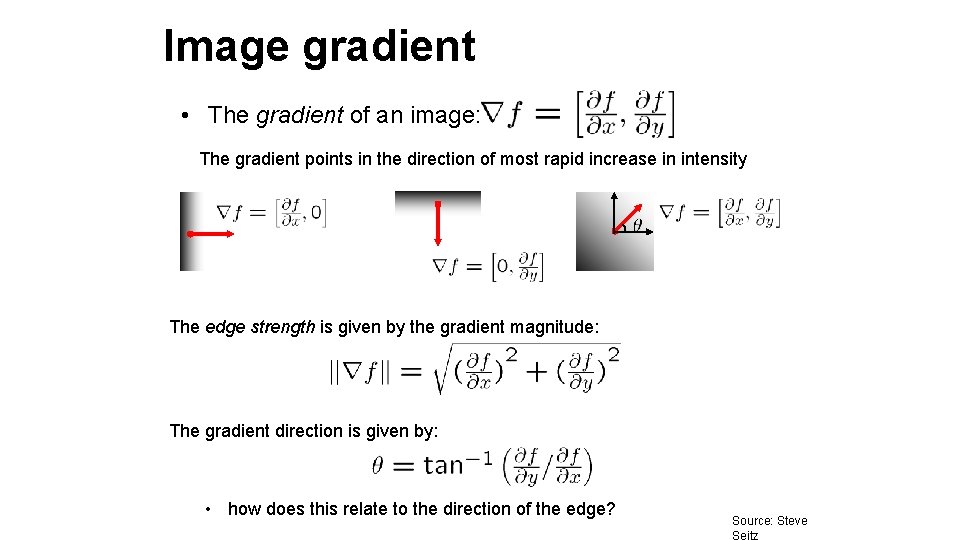
Image gradient • The gradient of an image: The gradient points in the direction of most rapid increase in intensity The edge strength is given by the gradient magnitude: The gradient direction is given by: • how does this relate to the direction of the edge? Source: Steve Seitz
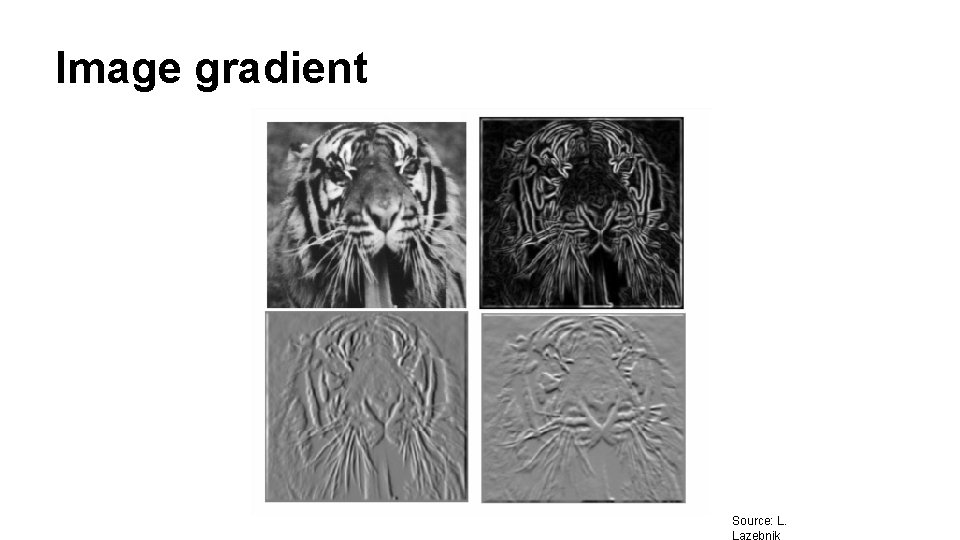
Image gradient Source: L. Lazebnik
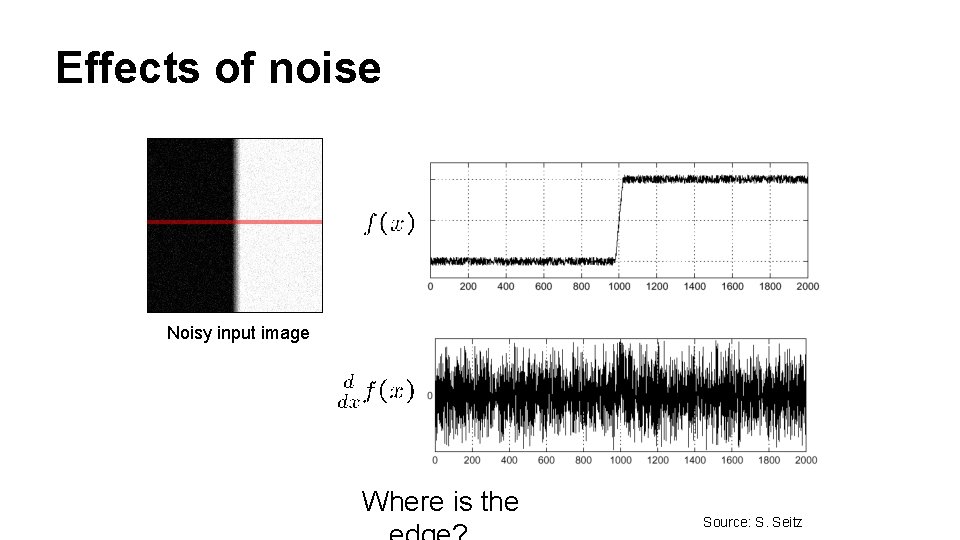
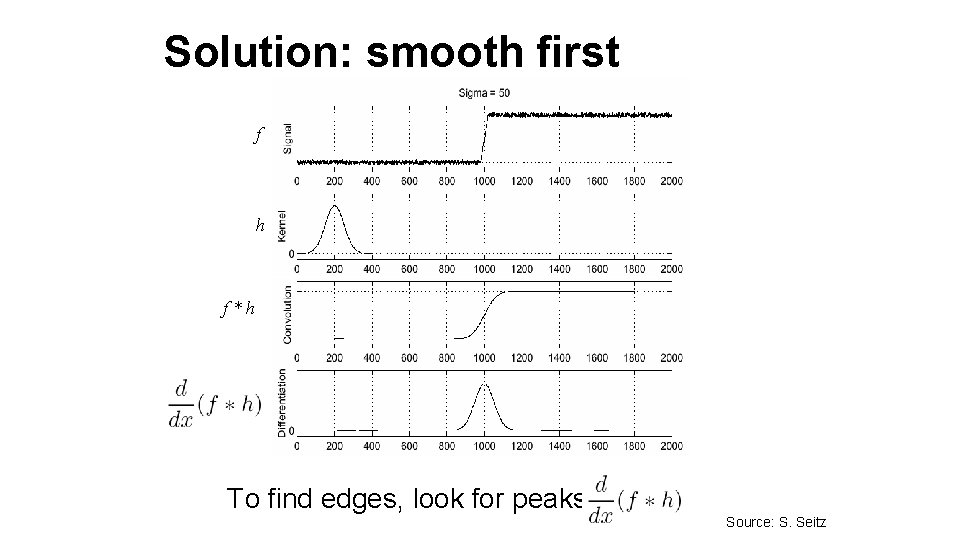
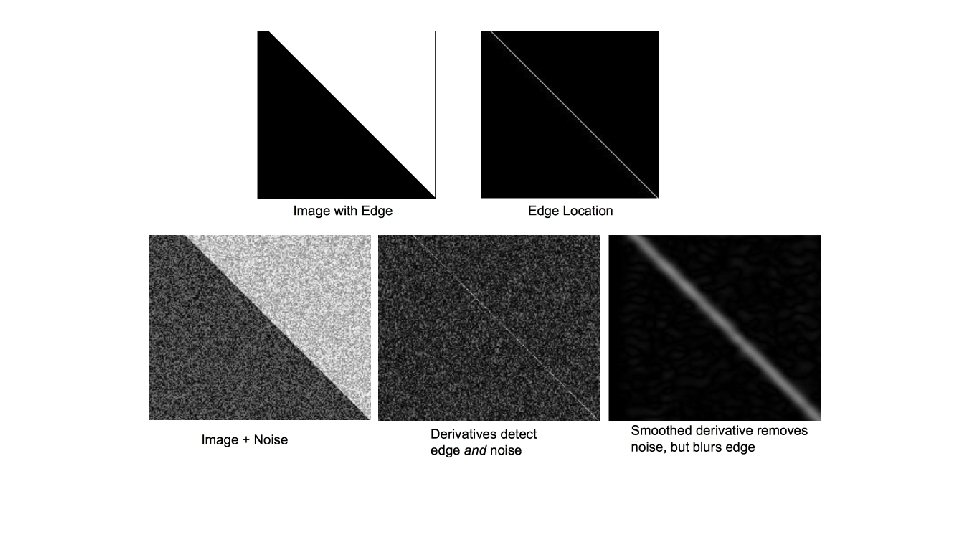
Effects of noise Noisy input image Where is the Source: S. Seitz
Solution: smooth first f h f*h To find edges, look for peaks in Source: S. Seitz
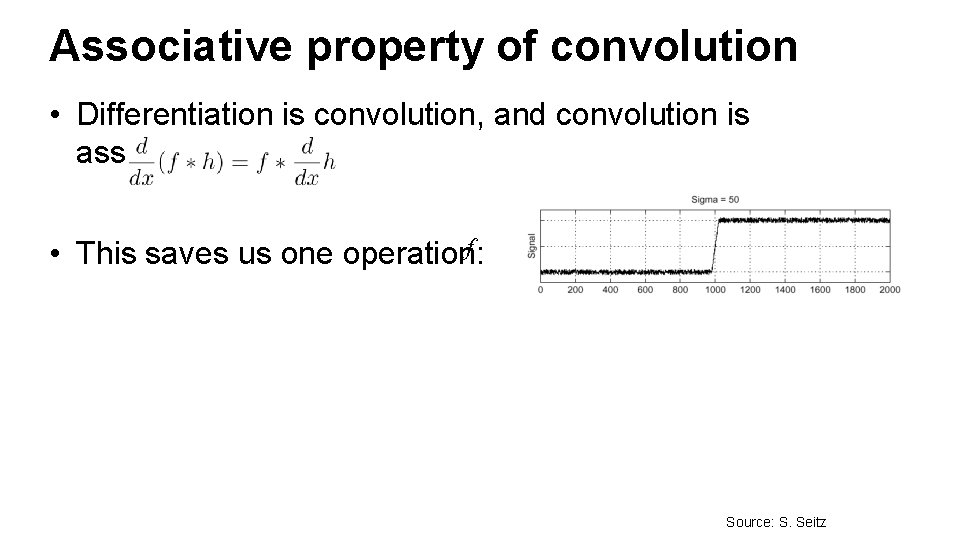
Associative property of convolution • Differentiation is convolution, and convolution is associative: f • This saves us one operation: Source: S. Seitz
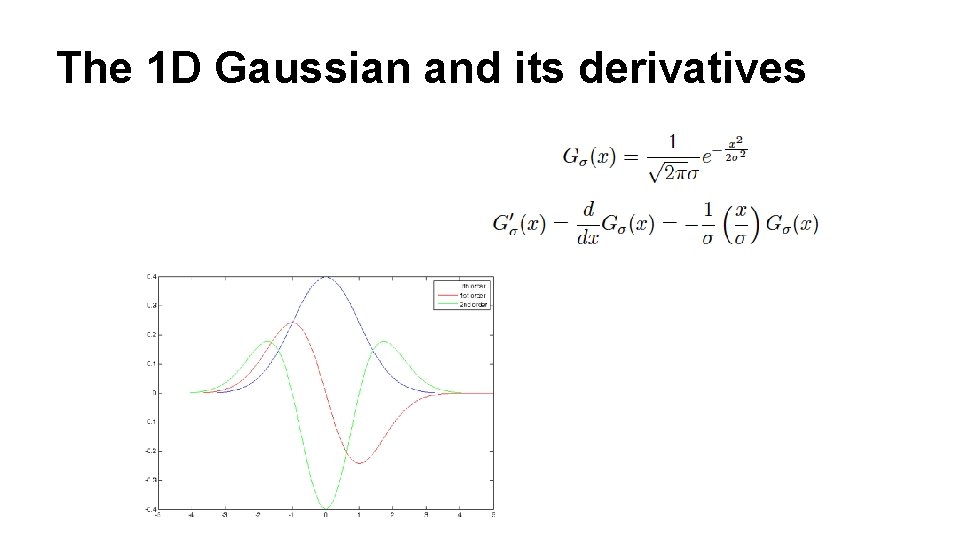
The 1 D Gaussian and its derivatives
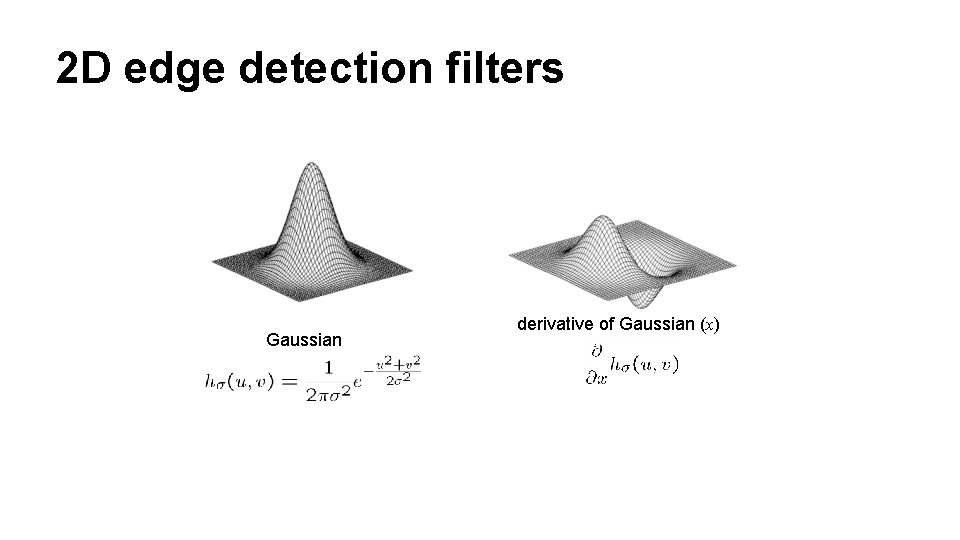
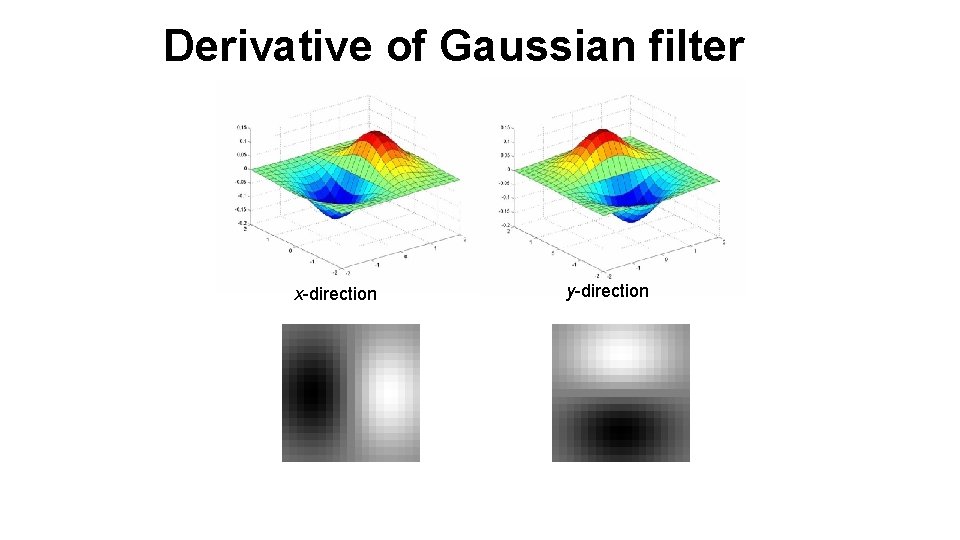
2 D edge detection filters Gaussian derivative of Gaussian (x)
Derivative of Gaussian filter x-direction y-direction
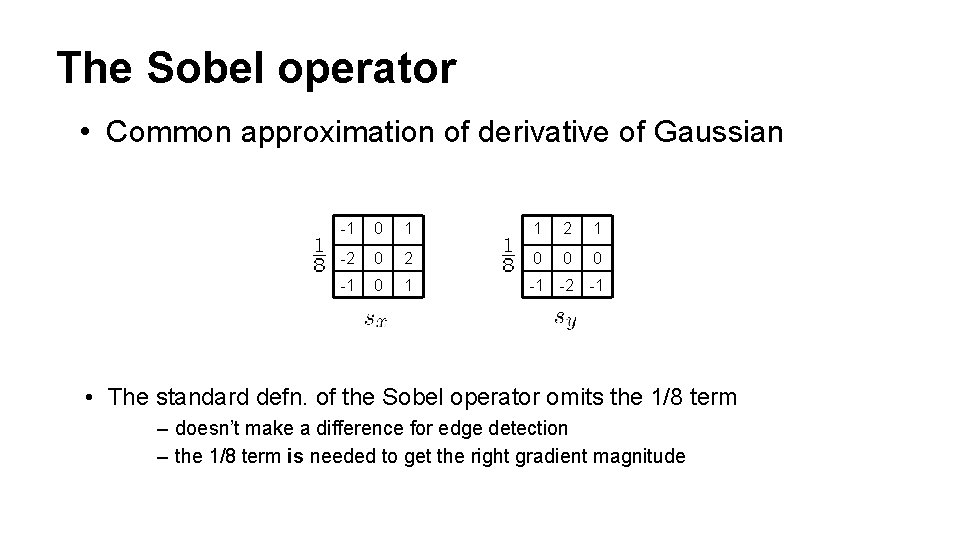
The Sobel operator • Common approximation of derivative of Gaussian -1 0 1 1 2 1 -2 0 0 0 -1 0 1 -1 -2 -1 • The standard defn. of the Sobel operator omits the 1/8 term – doesn’t make a difference for edge detection – the 1/8 term is needed to get the right gradient magnitude
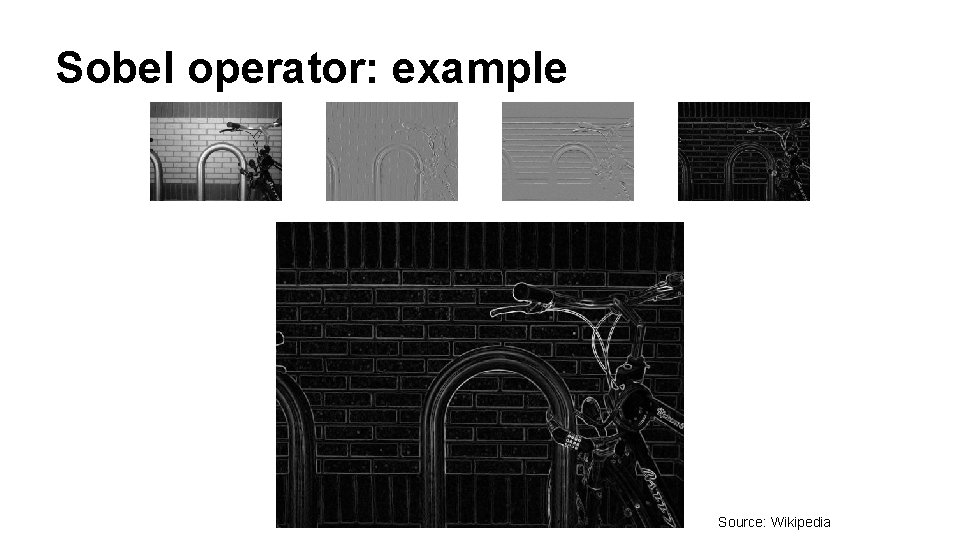
Sobel operator: example Source: Wikipedia
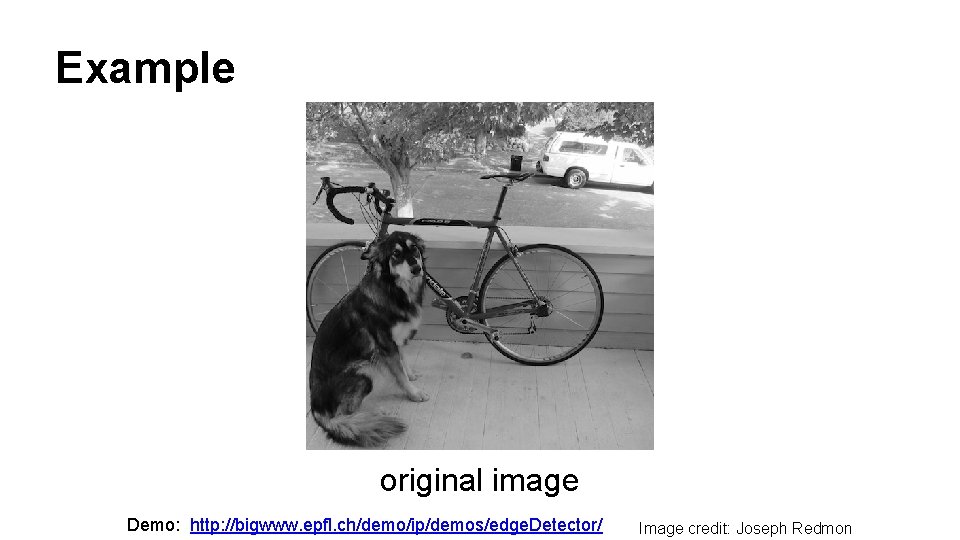
Example original image Demo: http: //bigwww. epfl. ch/demo/ip/demos/edge. Detector/ Image credit: Joseph Redmon
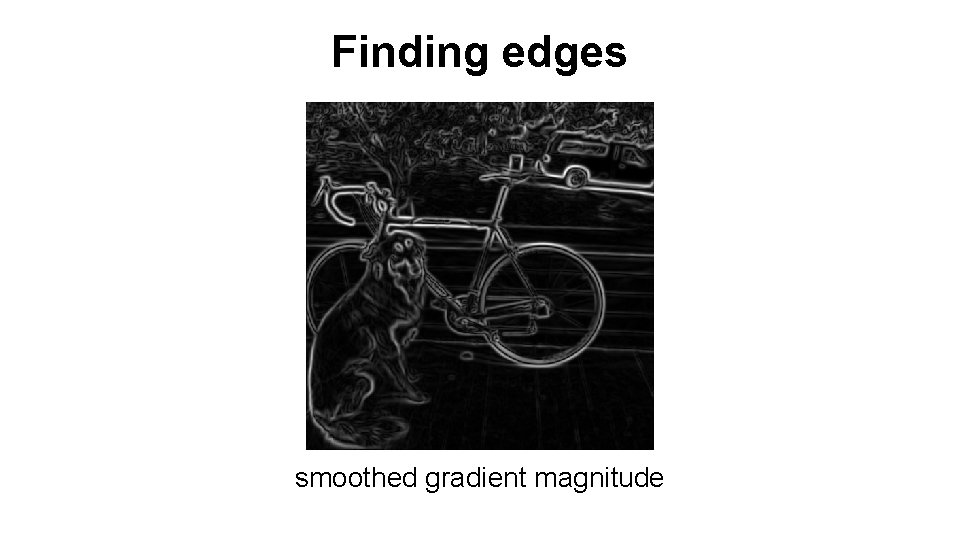
Finding edges smoothed gradient magnitude
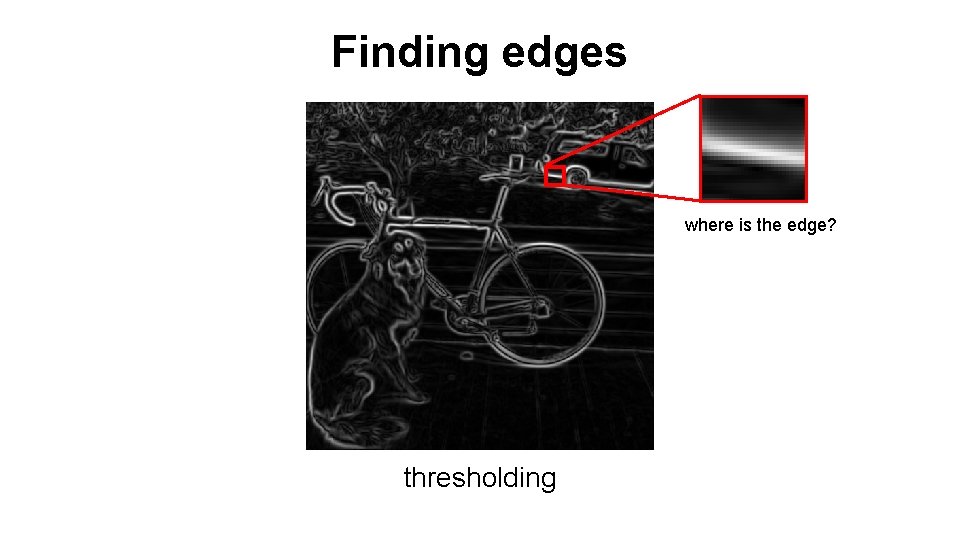
Finding edges where is the edge? thresholding
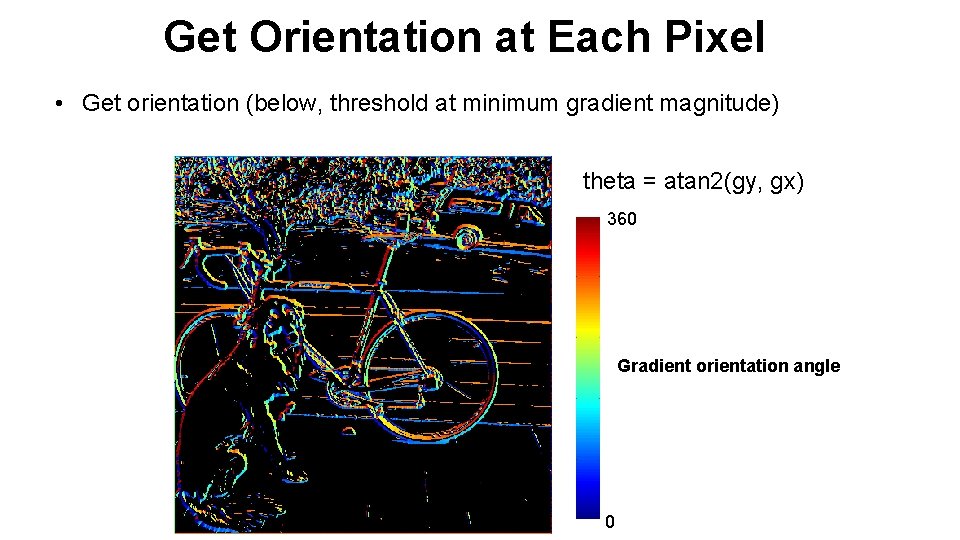
Get Orientation at Each Pixel • Get orientation (below, threshold at minimum gradient magnitude) theta = atan 2(gy, gx) 360 Gradient orientation angle 0
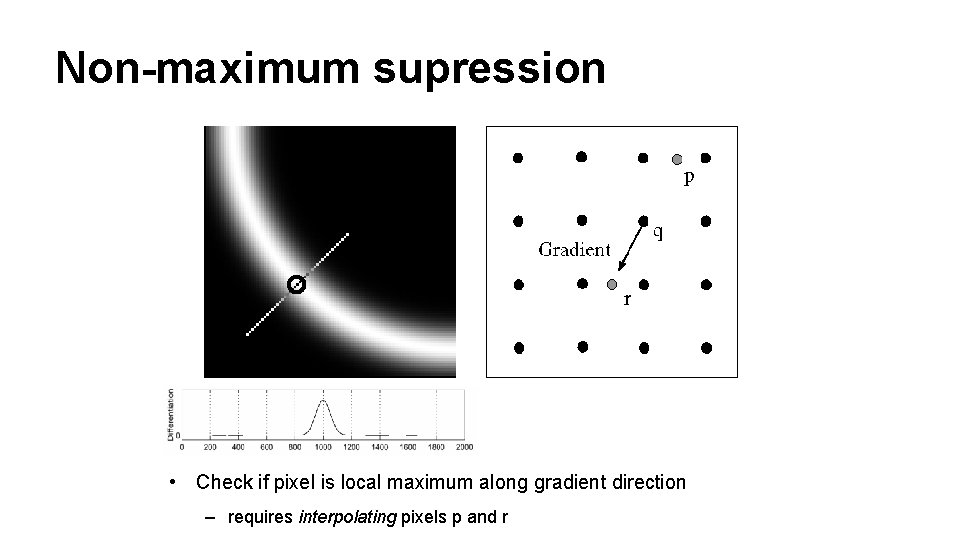
Non-maximum supression • Check if pixel is local maximum along gradient direction – requires interpolating pixels p and r
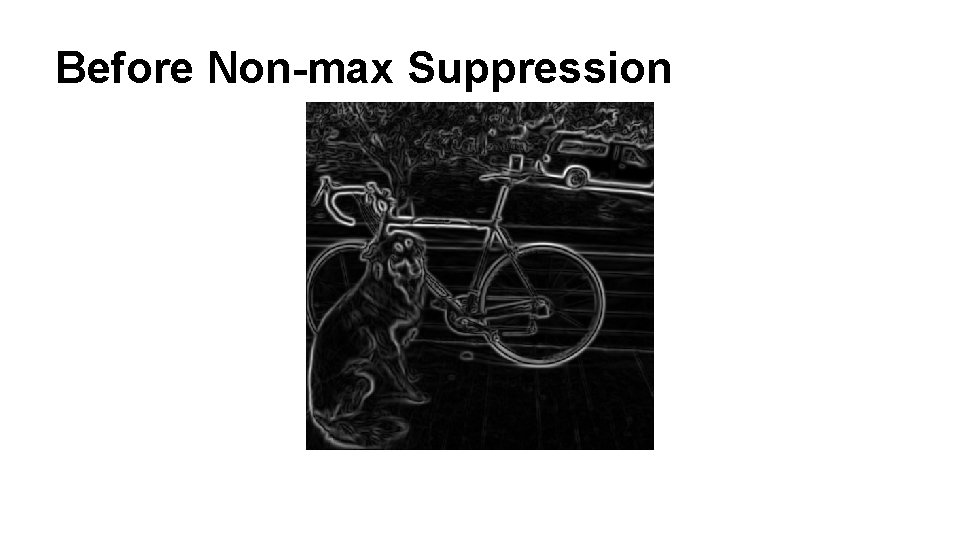
Before Non-max Suppression
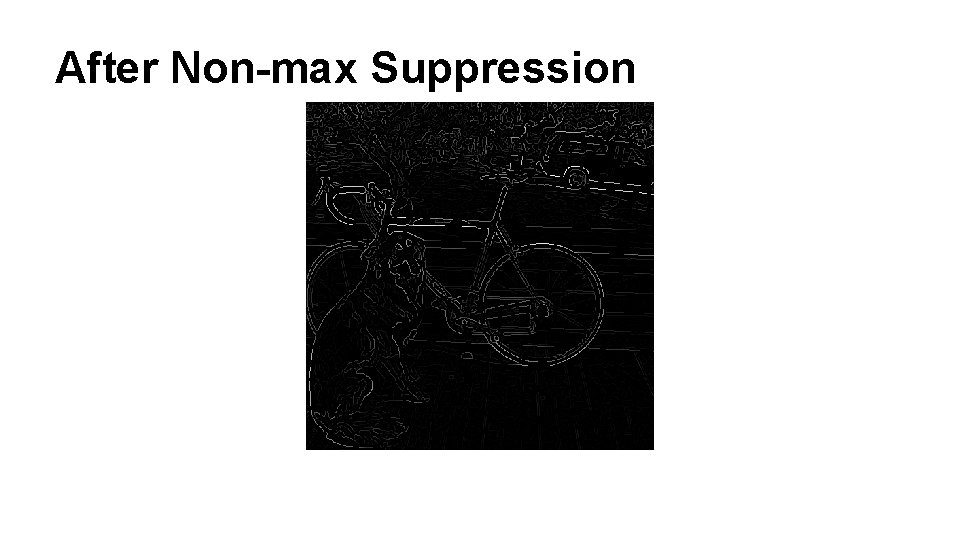
After Non-max Suppression
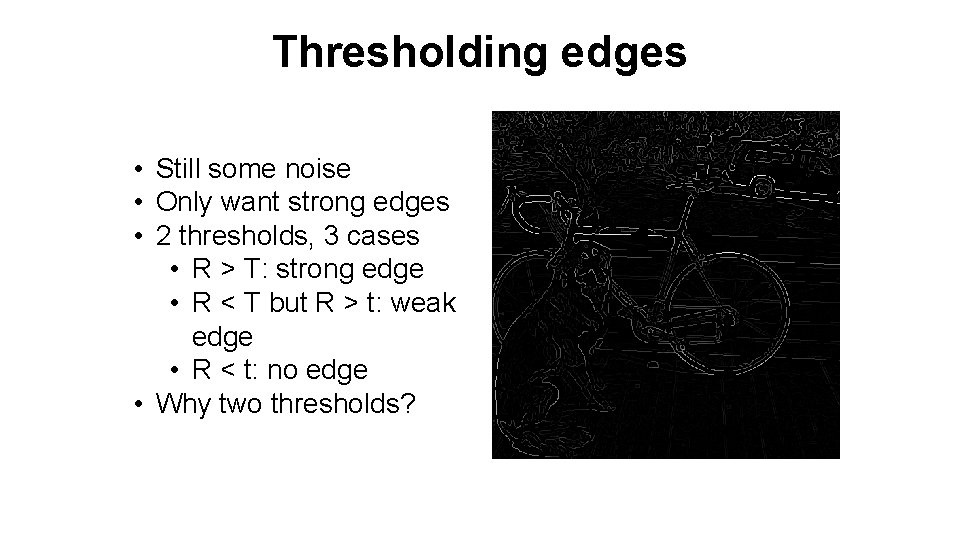
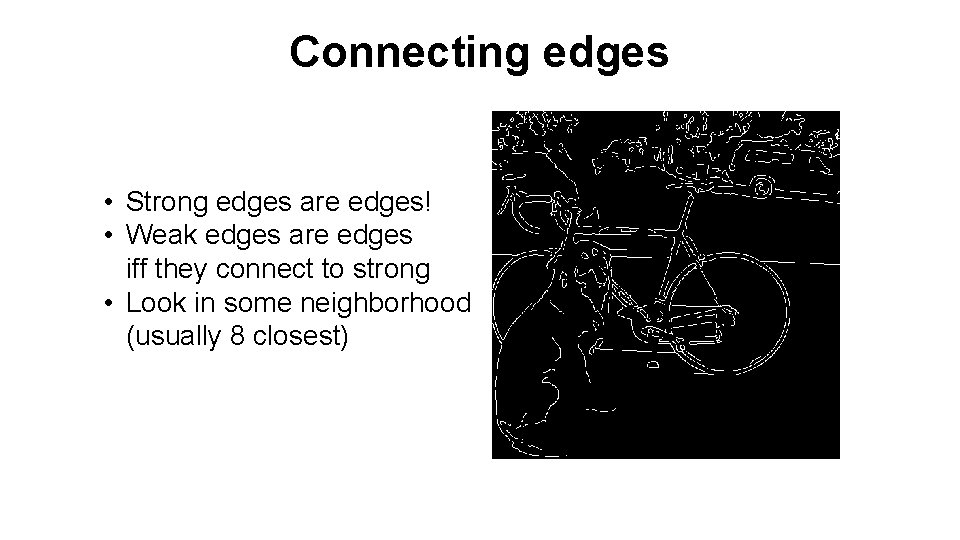
Thresholding edges • Still some noise • Only want strong edges • 2 thresholds, 3 cases • R > T: strong edge • R < T but R > t: weak edge • R < t: no edge • Why two thresholds?
Connecting edges • Strong edges are edges! • Weak edges are edges iff they connect to strong • Look in some neighborhood (usually 8 closest)
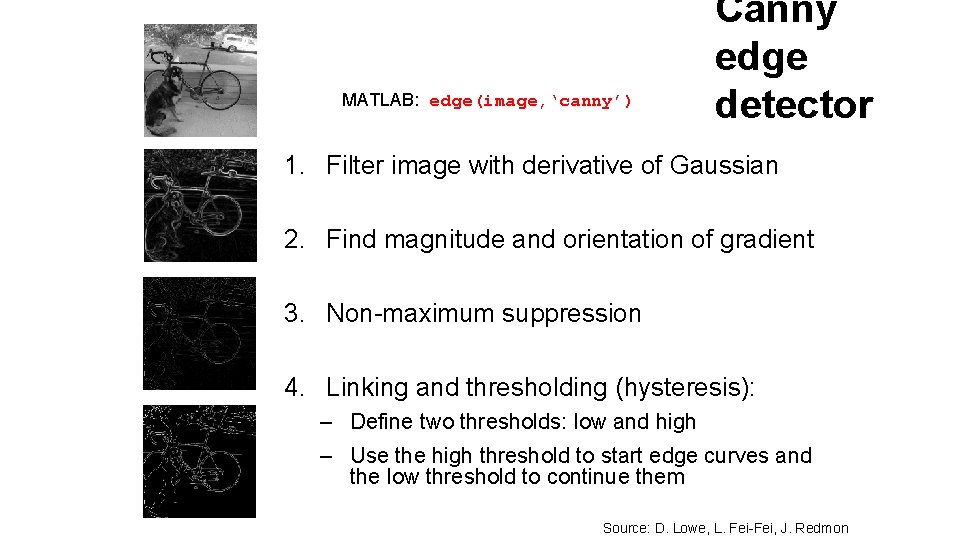
MATLAB: edge(image, ‘canny’) Canny edge detector 1. Filter image with derivative of Gaussian 2. Find magnitude and orientation of gradient 3. Non-maximum suppression 4. Linking and thresholding (hysteresis): – Define two thresholds: low and high – Use the high threshold to start edge curves and the low threshold to continue them Source: D. Lowe, L. Fei-Fei, J. Redmon
Canny edge detector • Our first computer vision pipeline! • Still a widely used edge detector in computer vision J. Canny, A Computational Approach To Edge Detection, IEEE Trans. Pattern Analysis and Machine Intelligence, 8: 679 -714, 1986. • Depends on several parameters: high threshold low threshold : width of the Gaussian blur
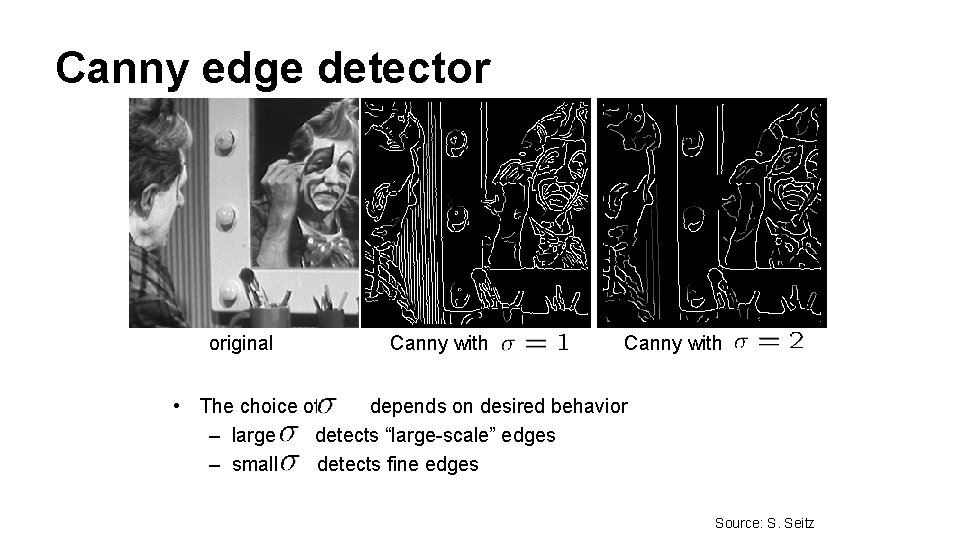
Canny edge detector original Canny with • The choice of depends on desired behavior – large detects “large-scale” edges – small detects fine edges Source: S. Seitz
Scale space [Witkin 83] first derivative peaks larger Gaussian filtered signal • Properties of scale space (w/ Gaussian smoothing) – edge position may shift with increasing scale ( ) – two edges may merge with increasing scale – an edge may not split into two with increasing scale
Questions?