
CS 520 Web Programming Spring Inversion of Control
CS 520 Web Programming Spring – Inversion of Control Chengyu Sun California State University, Los Angeles
Background Originally developed by Rod Johnson Addresses many problems of EJB One of the most popular Java web development frameworks Books n n n Expert One-on-One: J 2 EE Design and Development (2002) Expert One-on-One: J 2 EE Development without EJB (2004) Professional Java Development with the Spring Framework (2005)
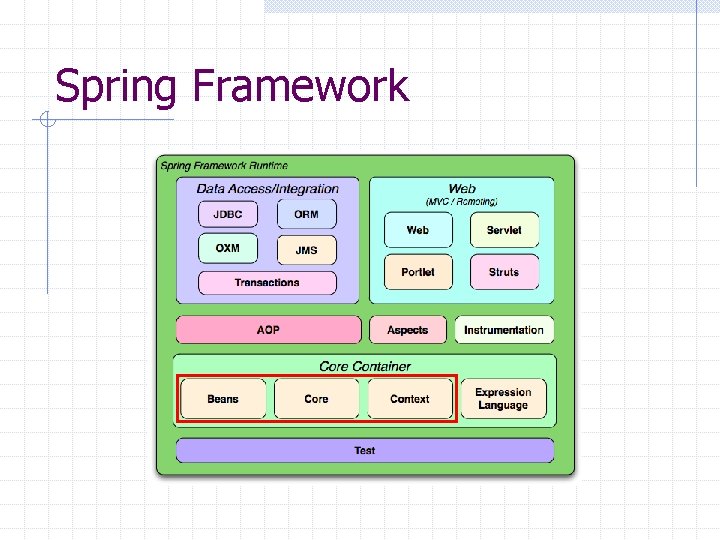
Spring Framework
The Need for Io. C The DAO Example n n The Data Access Object (DAO) pattern DAO in CSNS w Interface w Implementation w Usage in application code
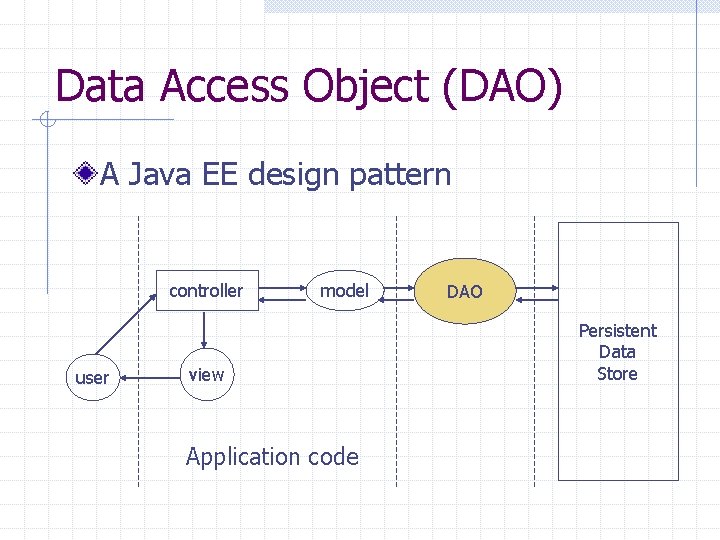
Data Access Object (DAO) A Java EE design pattern controller user model view Application code DAO Persistent Data Store
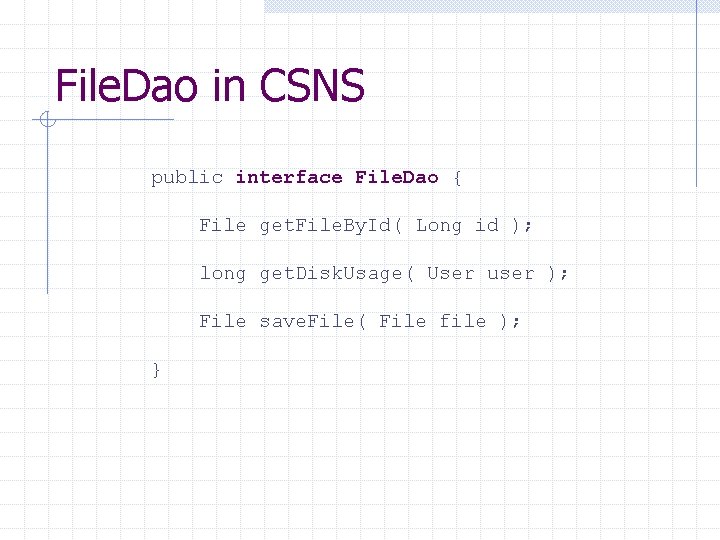
File. Dao in CSNS public interface File. Dao { File get. File. By. Id( Long id ); long get. Disk. Usage( User user ); File save. File( File file ); }
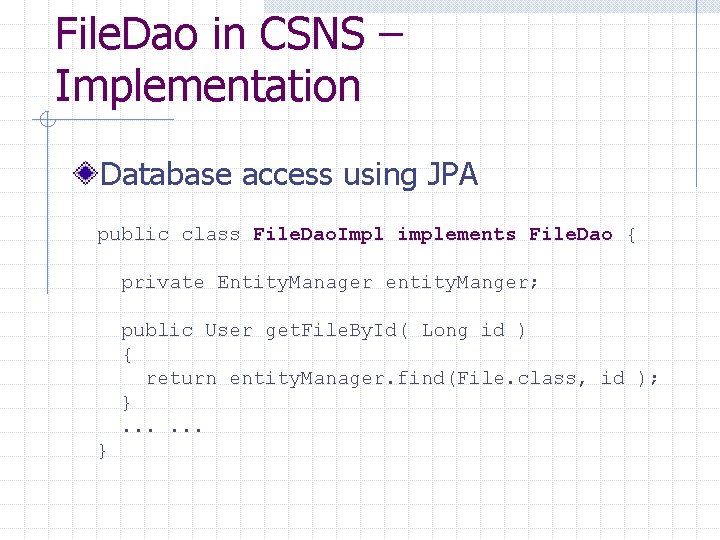
File. Dao in CSNS – Implementation Database access using JPA public class File. Dao. Impl implements File. Dao { private Entity. Manager entity. Manger; public User get. File. By. Id( Long id ) { return entity. Manager. find(File. class, id ); }. . . }
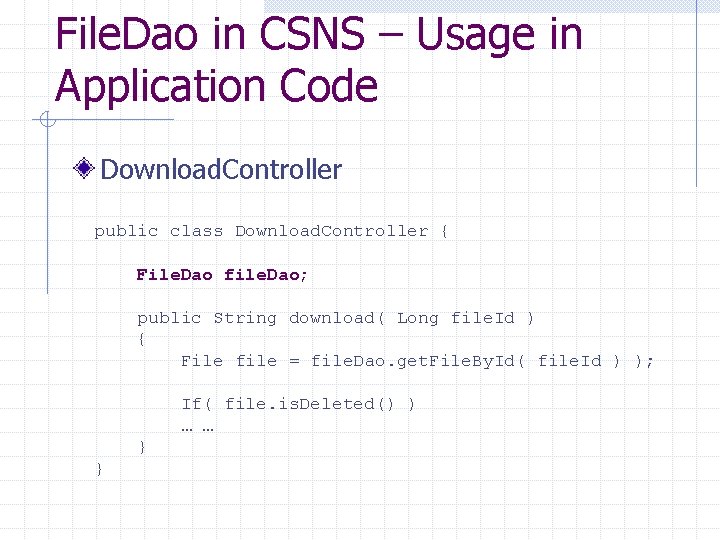
File. Dao in CSNS – Usage in Application Code Download. Controller public class Download. Controller { File. Dao file. Dao; public String download( Long file. Id ) { File file = file. Dao. get. File. By. Id( file. Id ) ); If( file. is. Deleted() ) … … } }
Advantages of DAO Provide a data access API that is n n n Independent of persistent storage types, e. g. relational DB, OODB, XML flat files etc. Independent of persistent storage implementations, e. g. My. SQL, Postgre. SQL, Oracle etc. Independent of data access implementations, e. g. JDBC, Hibernate, etc.
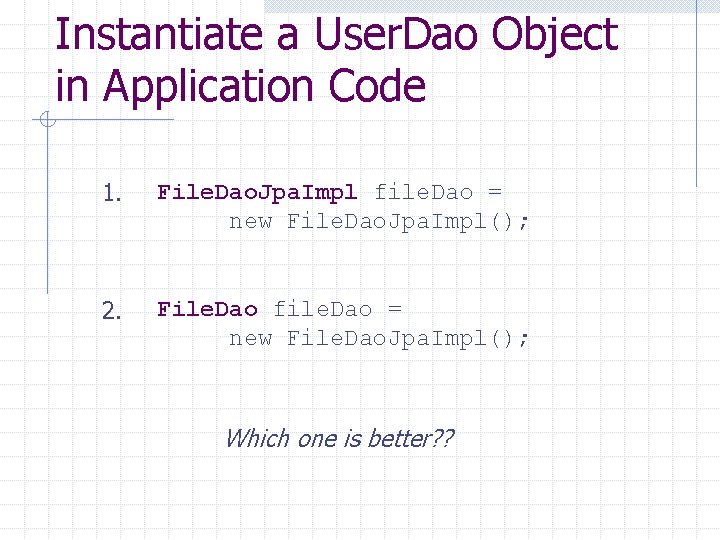
Instantiate a User. Dao Object in Application Code 1. File. Dao. Jpa. Impl file. Dao = new File. Dao. Jpa. Impl(); 2. File. Dao file. Dao = new File. Dao. Jpa. Impl(); Which one is better? ?
Problem Caused by Object Instantiation What if we decide to use JDBC instead of Hibernate/JPA, i. e. replace File. Dao. Jpa. Impl with File. Dao. Jdbc. Impl n n The application is not really independent of the data access method Switching to a different File. Dao implementation affects all the code that uses File. Dao
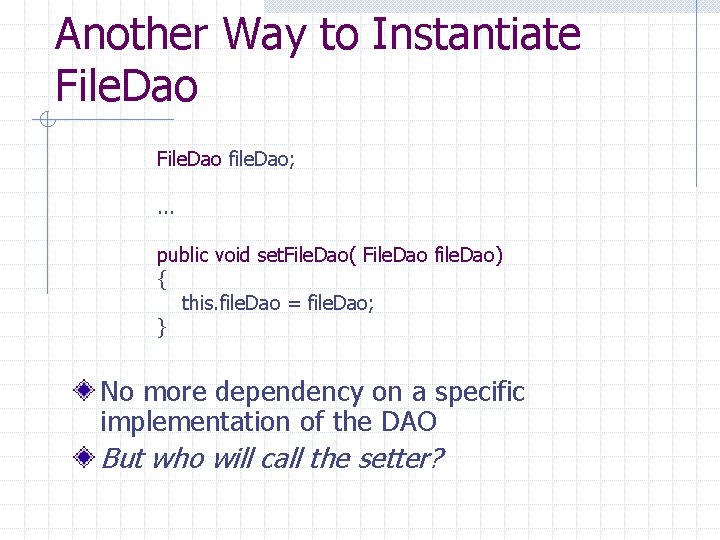
Another Way to Instantiate File. Dao file. Dao; . . . public void set. File. Dao( File. Dao file. Dao) { this. file. Dao = file. Dao; } No more dependency on a specific implementation of the DAO But who will call the setter?
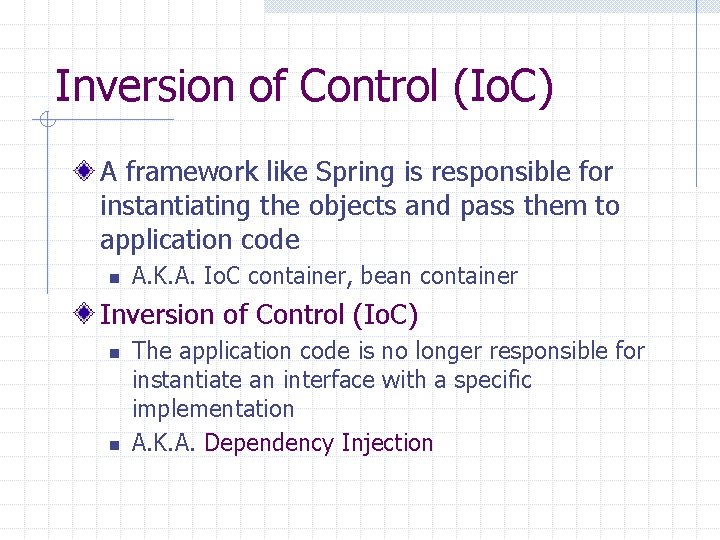
Inversion of Control (Io. C) A framework like Spring is responsible for instantiating the objects and pass them to application code n A. K. A. Io. C container, bean container Inversion of Control (Io. C) n n The application code is no longer responsible for instantiate an interface with a specific implementation A. K. A. Dependency Injection
Example: Hello World Message is a Java object (or bean) managed by the Spring container n n Created by the container Property is set by the container
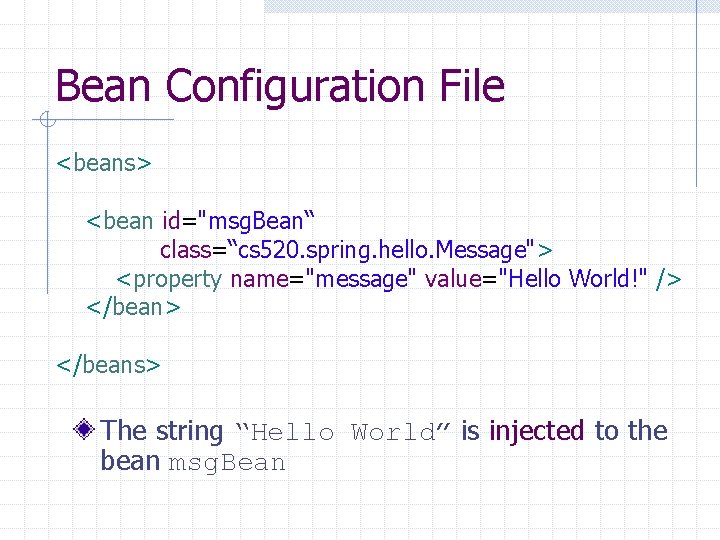
Bean Configuration File <beans> <bean id="msg. Bean“ class=“cs 520. spring. hello. Message"> <property name="message" value="Hello World!" /> </beans> The string “Hello World” is injected to the bean msg. Bean
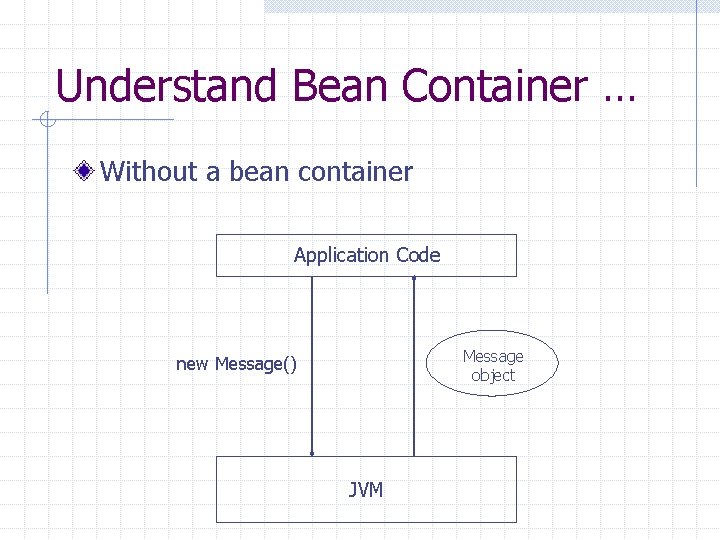
Understand Bean Container … Without a bean container Application Code Message object new Message() JVM
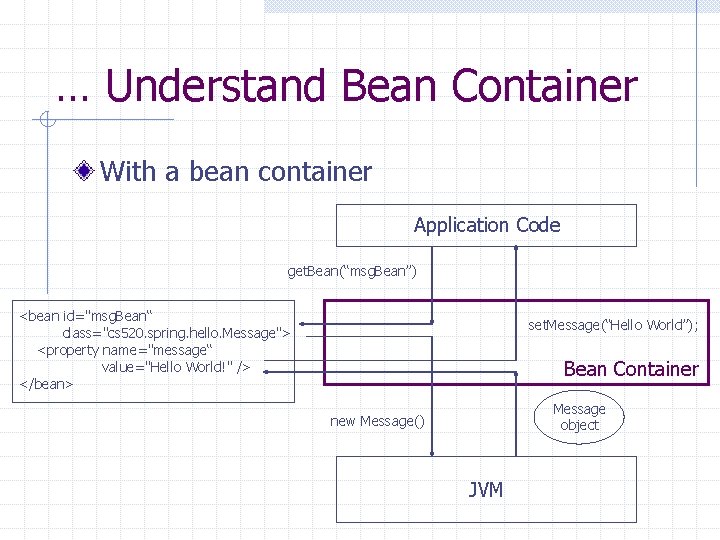
… Understand Bean Container With a bean container Application Code get. Bean(“msg. Bean”) <bean id="msg. Bean“ class="cs 520. spring. hello. Message"> <property name="message“ value="Hello World!" /> </bean> set. Message(“Hello World”); Bean Container Message object new Message() JVM
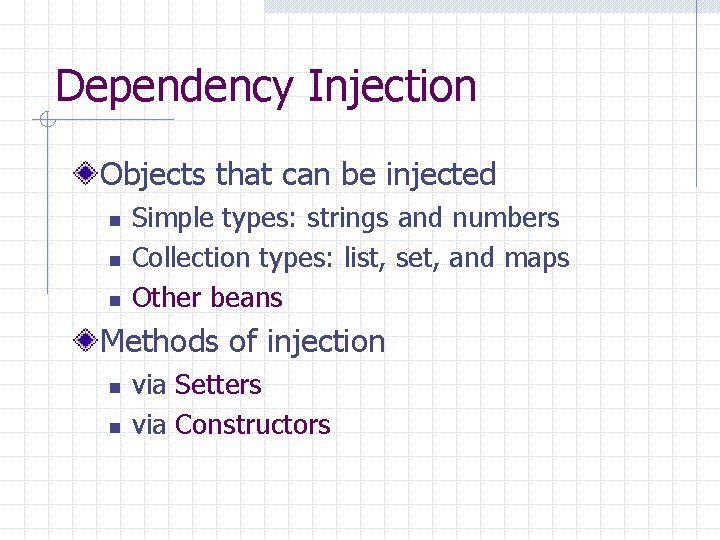
Dependency Injection Objects that can be injected n n n Simple types: strings and numbers Collection types: list, set, and maps Other beans Methods of injection n n via Setters via Constructors
Dependency Injection Example Dj. Bean n Fields of simple types Fields of collection types Fields of class types
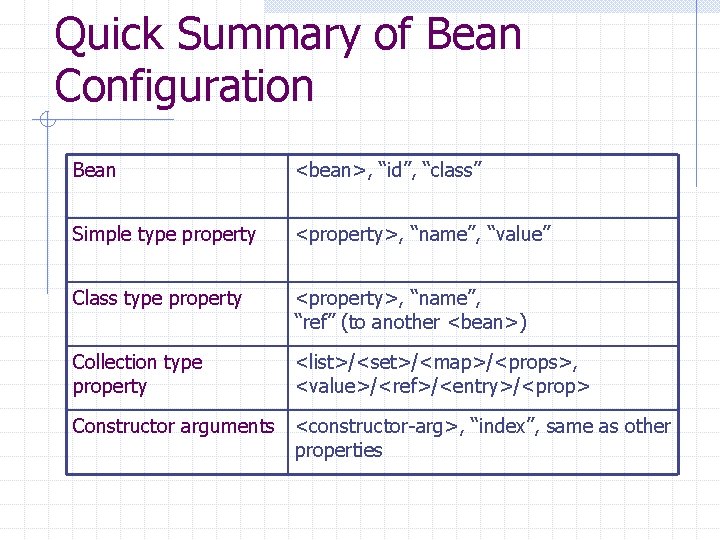
Quick Summary of Bean Configuration Bean <bean>, “id”, “class” Simple type property <property>, “name”, “value” Class type property <property>, “name”, “ref” (to another <bean>) Collection type property <list>/<set>/<map>/<props>, <value>/<ref>/<entry>/<prop> Constructor arguments <constructor-arg>, “index”, same as other properties
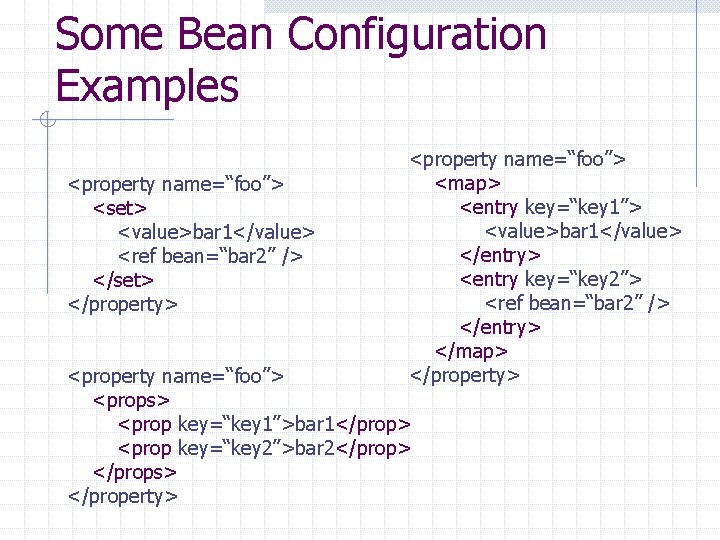
Some Bean Configuration Examples <property name=“foo”> <set> <value>bar 1</value> <ref bean=“bar 2” /> </set> </property> <property name=“foo”> <map> <entry key=“key 1”> <value>bar 1</value> </entry> <entry key=“key 2”> <ref bean=“bar 2” /> </entry> </map> </property> <property name=“foo”> <props> <prop key=“key 1”>bar 1</prop> <prop key=“key 2”>bar 2</prop> </props> </property>
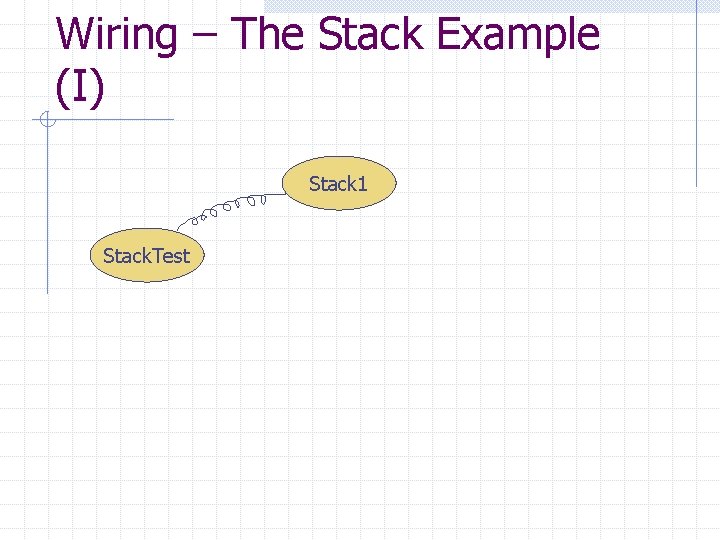
Wiring – The Stack Example (I) Stack 1 Stack. Test
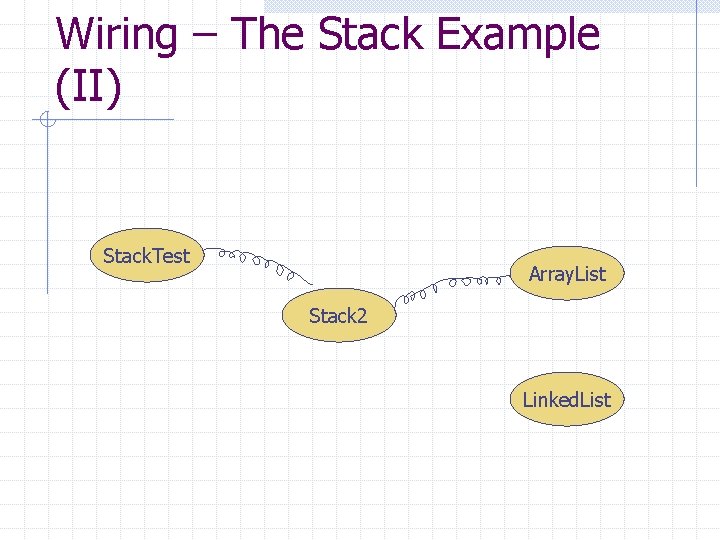
Wiring – The Stack Example (II) Stack. Test Array. List Stack 2 Linked. List
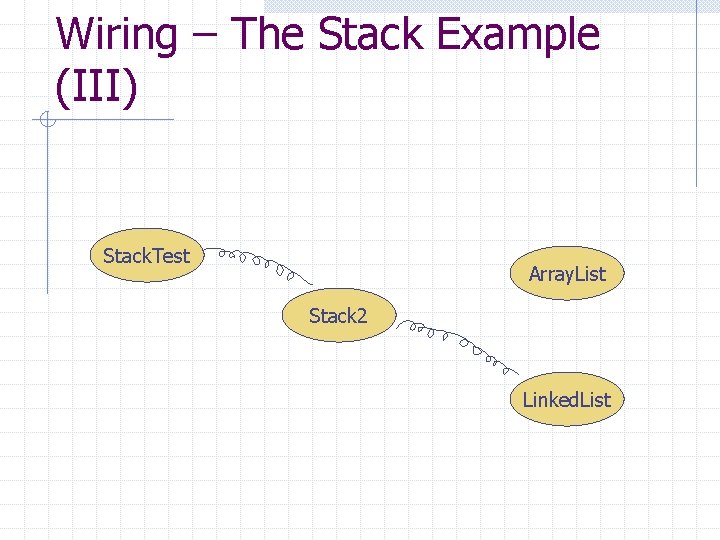
Wiring – The Stack Example (III) Stack. Test Array. List Stack 2 Linked. List
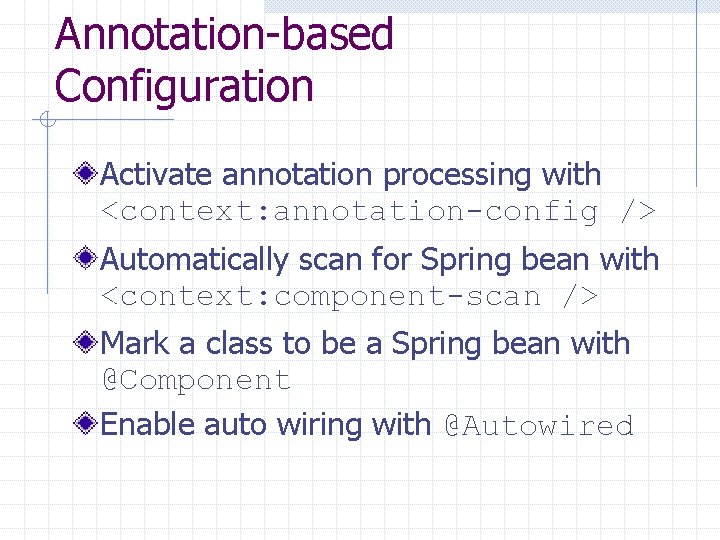
Annotation-based Configuration Activate annotation processing with <context: annotation-config /> Automatically scan for Spring bean with <context: component-scan /> Mark a class to be a Spring bean with @Component Enable auto wiring with @Autowired
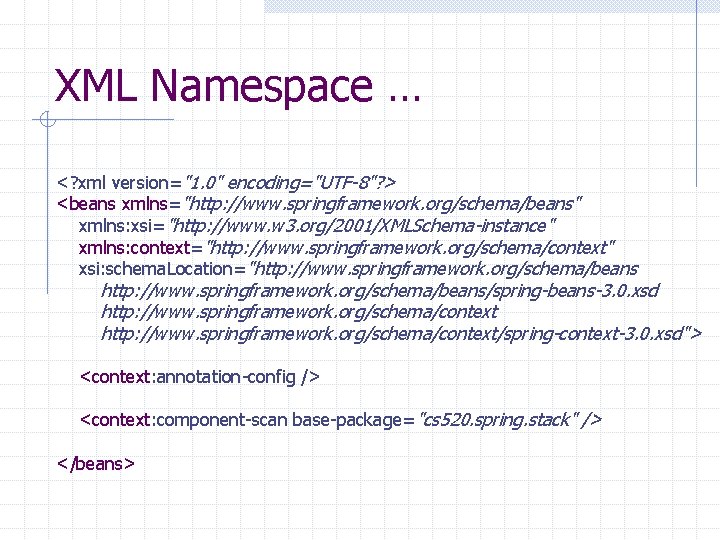
XML Namespace … <? xml version="1. 0" encoding="UTF-8"? > <beans xmlns="http: //www. springframework. org/schema/beans" xmlns: xsi="http: //www. w 3. org/2001/XMLSchema-instance" xmlns: context="http: //www. springframework. org/schema/context" xsi: schema. Location="http: //www. springframework. org/schema/beans/spring-beans-3. 0. xsd http: //www. springframework. org/schema/context/spring-context-3. 0. xsd"> <context: annotation-config /> <context: component-scan base-package="cs 520. spring. stack" /> </beans>
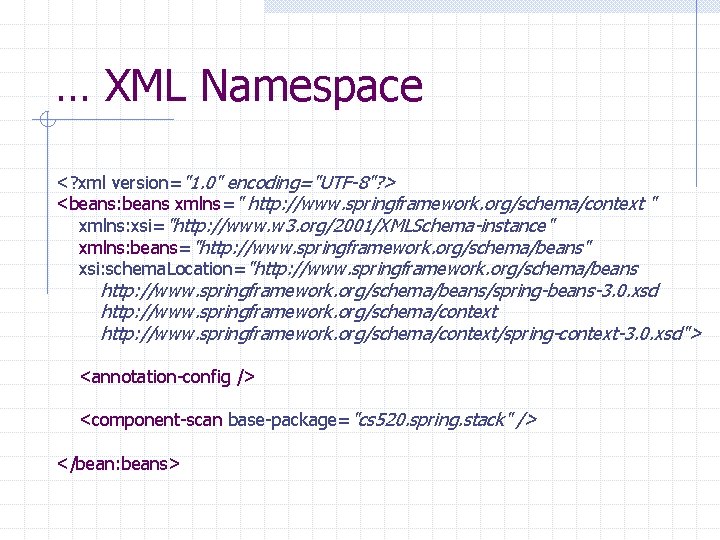
… XML Namespace <? xml version="1. 0" encoding="UTF-8"? > <beans: beans xmlns=" http: //www. springframework. org/schema/context " xmlns: xsi="http: //www. w 3. org/2001/XMLSchema-instance" xmlns: beans="http: //www. springframework. org/schema/beans" xsi: schema. Location="http: //www. springframework. org/schema/beans/spring-beans-3. 0. xsd http: //www. springframework. org/schema/context/spring-context-3. 0. xsd"> <annotation-config /> <component-scan base-package="cs 520. spring. stack" /> </bean: beans>
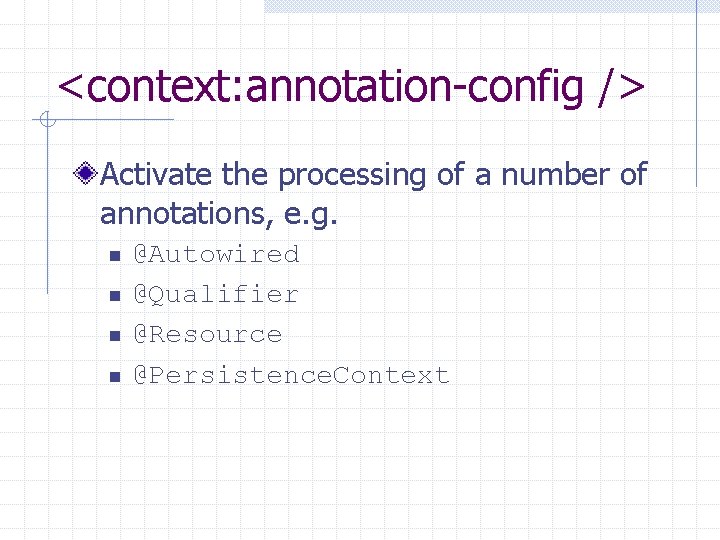
<context: annotation-config /> Activate the processing of a number of annotations, e. g. n n @Autowired @Qualifier @Resource @Persistence. Context
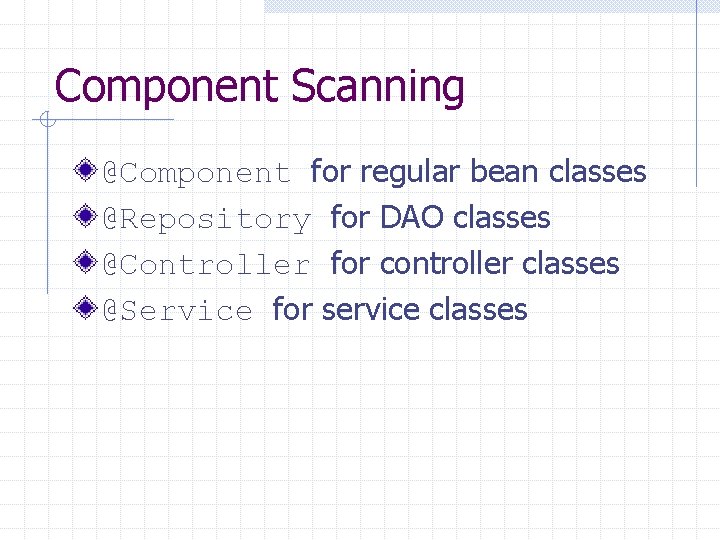
Component Scanning @Component for regular bean classes @Repository for DAO classes @Controller for controller classes @Service for service classes
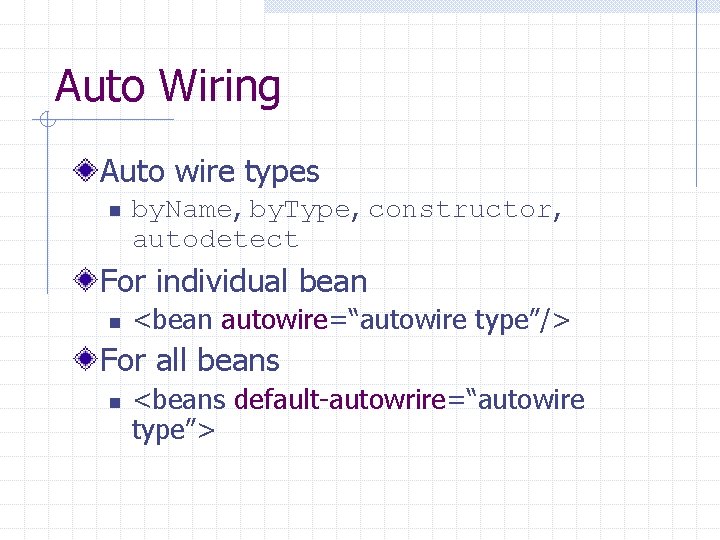
Auto Wiring Auto wire types n by. Name, by. Type, constructor, autodetect For individual bean n <bean autowire=“autowire type”/> For all beans n <beans default-autowrire=“autowire type”>
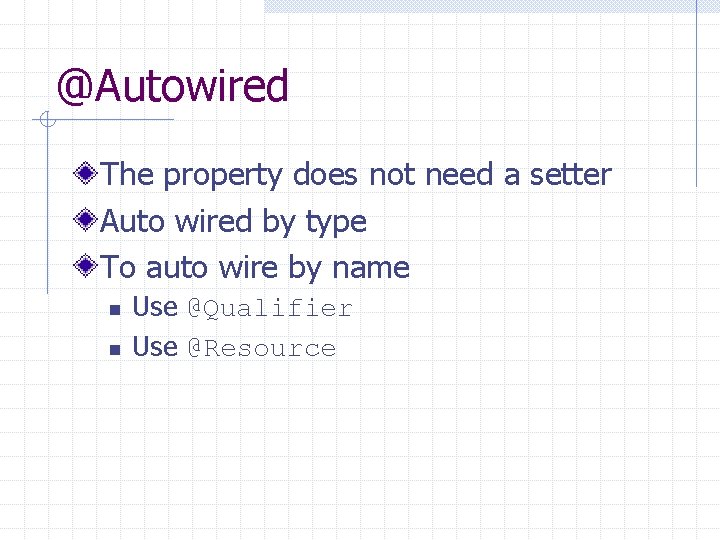
@Autowired The property does not need a setter Auto wired by type To auto wire by name n n Use @Qualifier Use @Resource
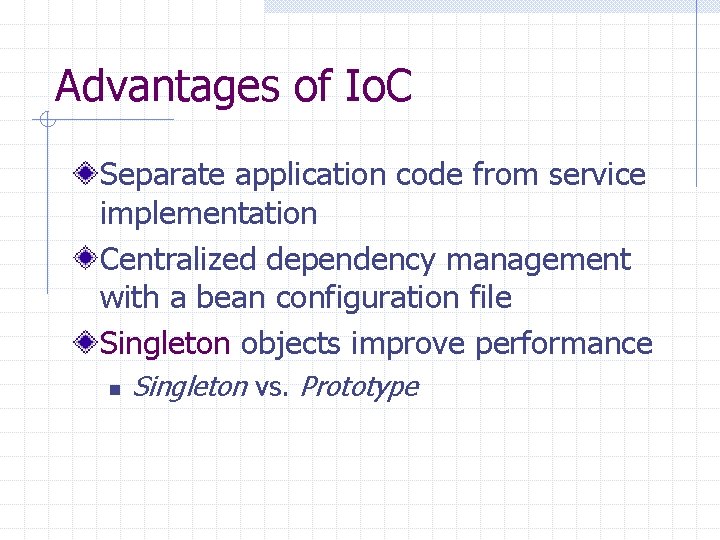
Advantages of Io. C Separate application code from service implementation Centralized dependency management with a bean configuration file Singleton objects improve performance n Singleton vs. Prototype
Further Readings Spring in Action (3 rd Ed) n Chapter 1 -3 Spring Framework Reference Documentation http: //static. springsource. org/spring/docs/cur rent/spring-framework-reference/html/ n Chapter 3 The Io. C Container
- Slides: 33