
CS 476 Programming Language Design William Mansky Subtyping
CS 476 – Programming Language Design William Mansky
Subtyping and Type Checking • Up until now, our rule systems have been syntax-directed: the syntax of a term tells us which rule to apply • A syntax-directed rule system is also an algorithm! 1
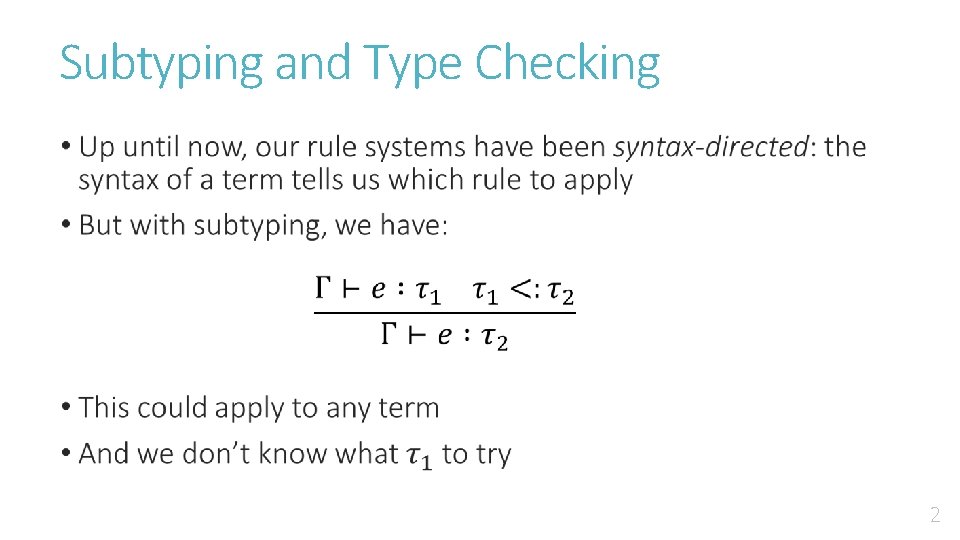
Subtyping and Type Checking • 2
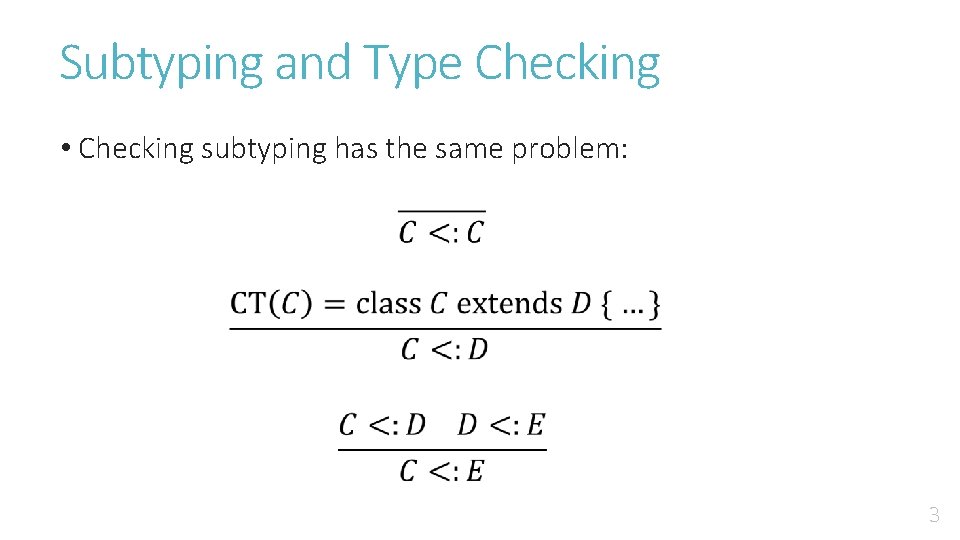
Subtyping and Type Checking • Checking subtyping has the same problem: 3
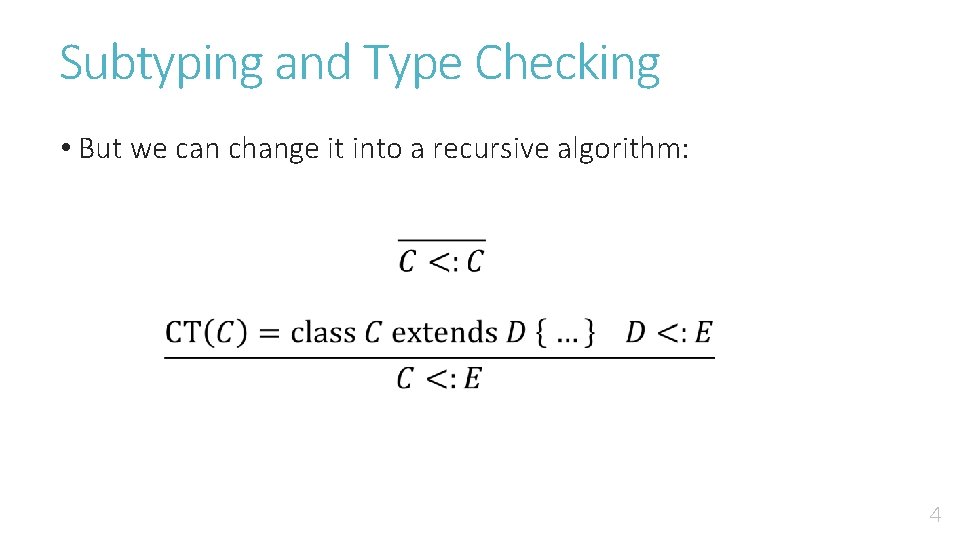
Subtyping and Type Checking • But we can change it into a recursive algorithm: 4
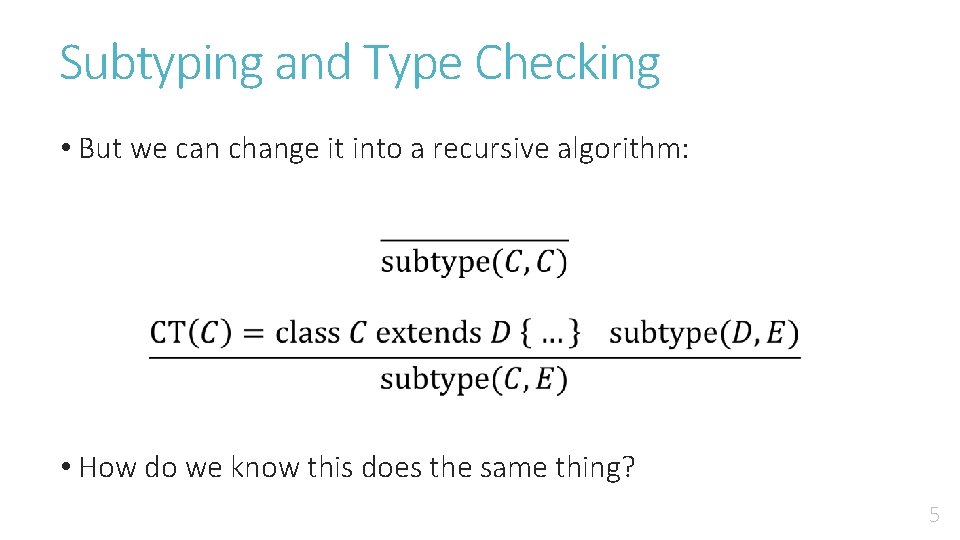
Subtyping and Type Checking • But we can change it into a recursive algorithm: • How do we know this does the same thing? 5
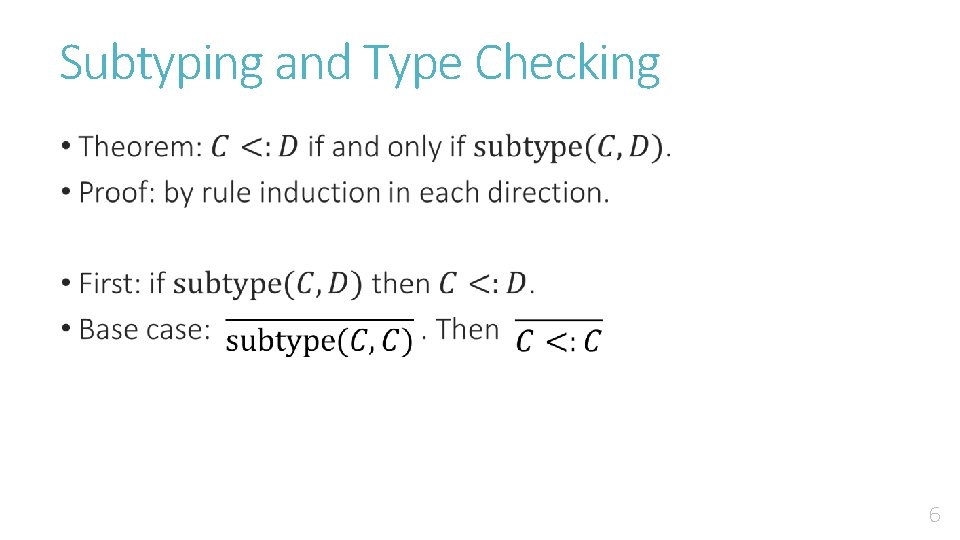
Subtyping and Type Checking • 6
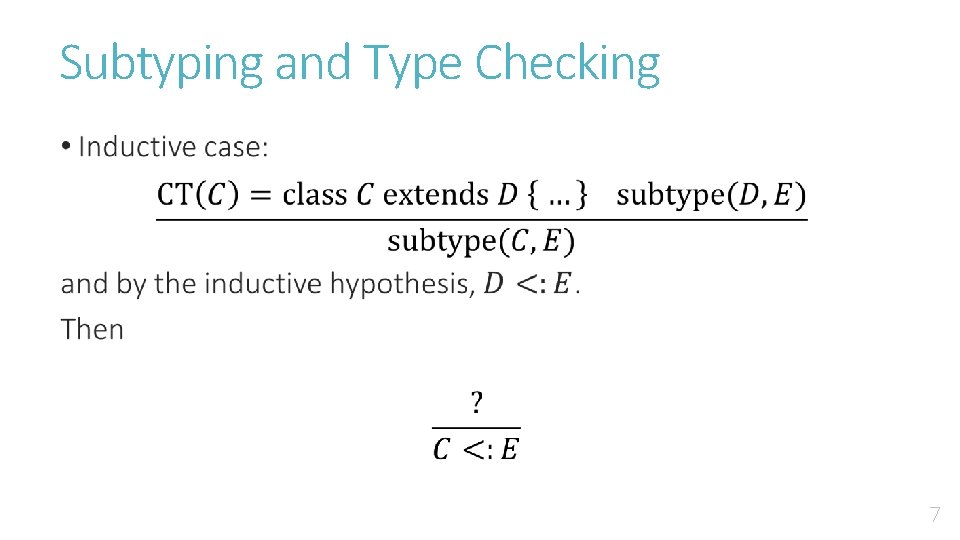
Subtyping and Type Checking • 7
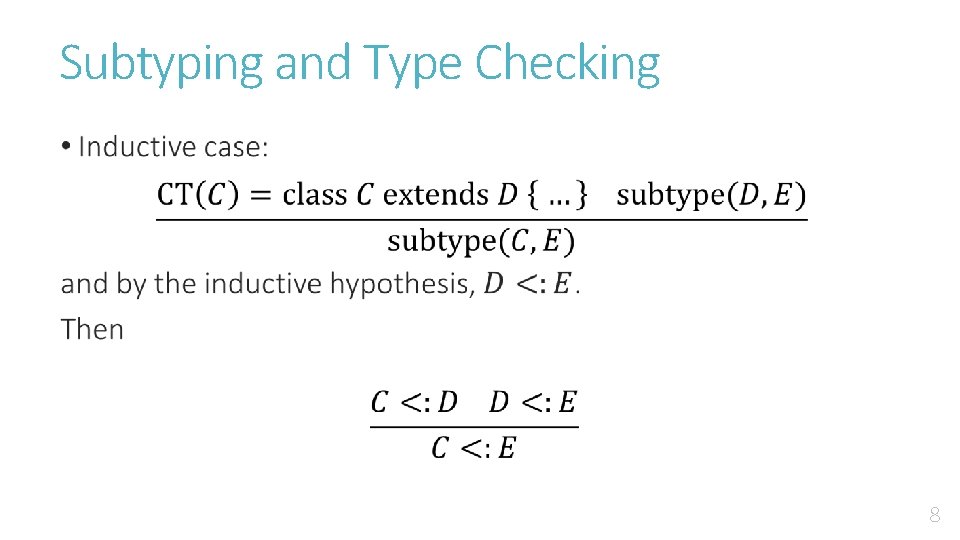
Subtyping and Type Checking • 8
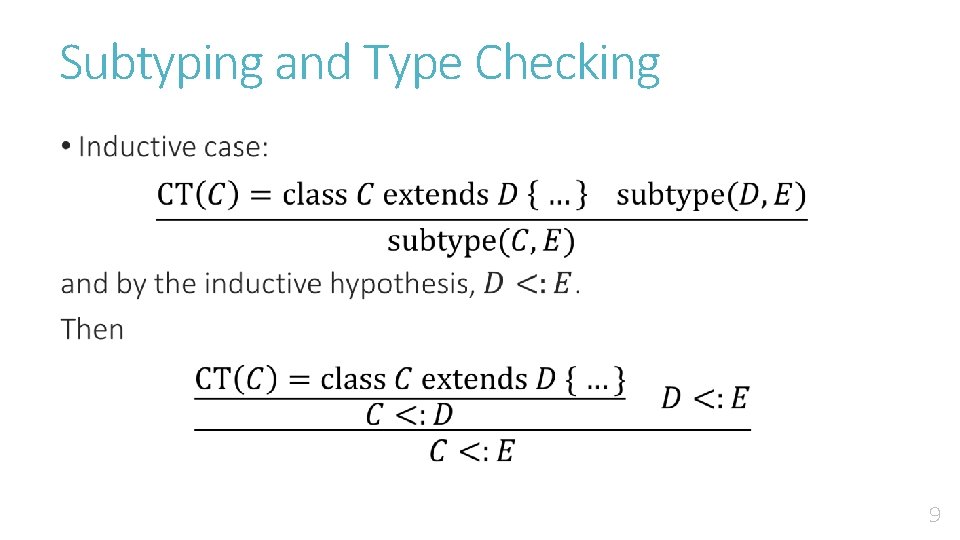
Subtyping and Type Checking • 9
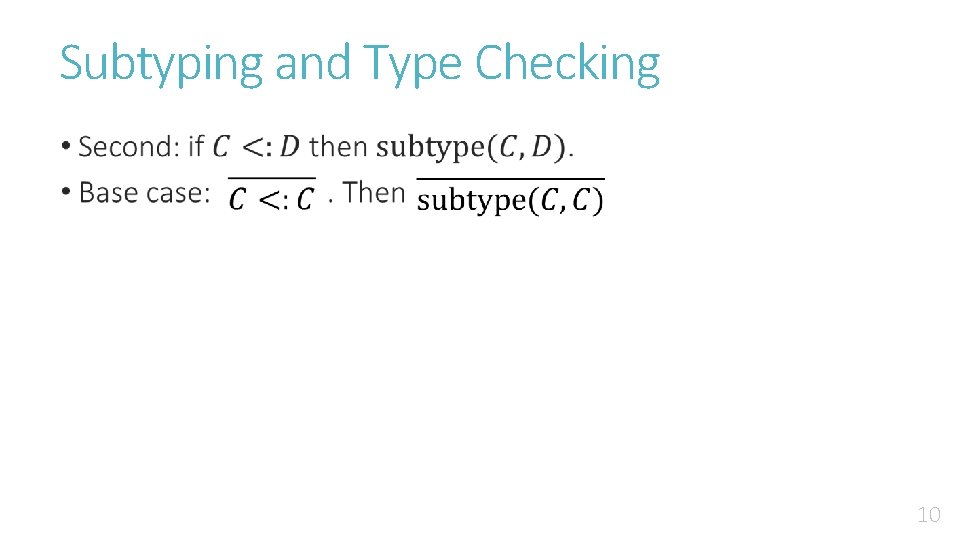
Subtyping and Type Checking • 10
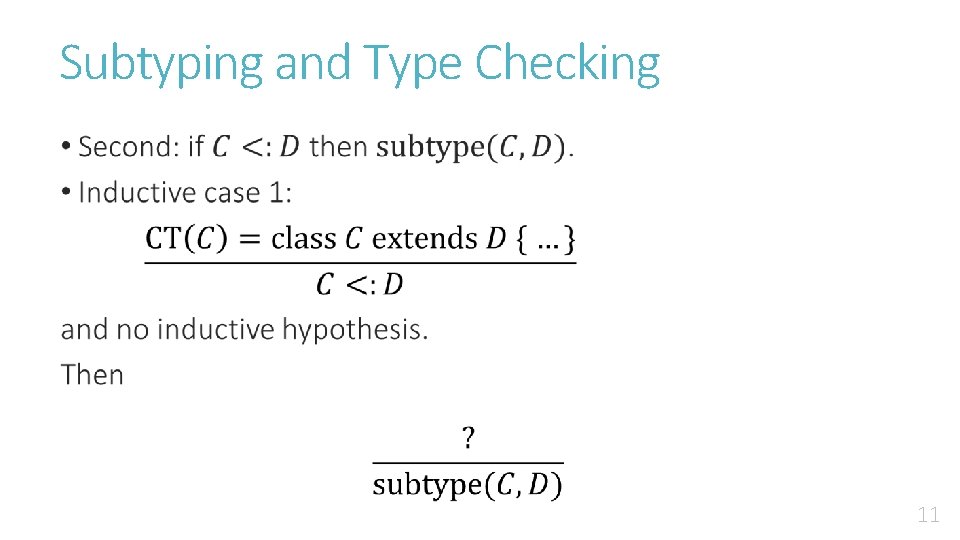
Subtyping and Type Checking • 11
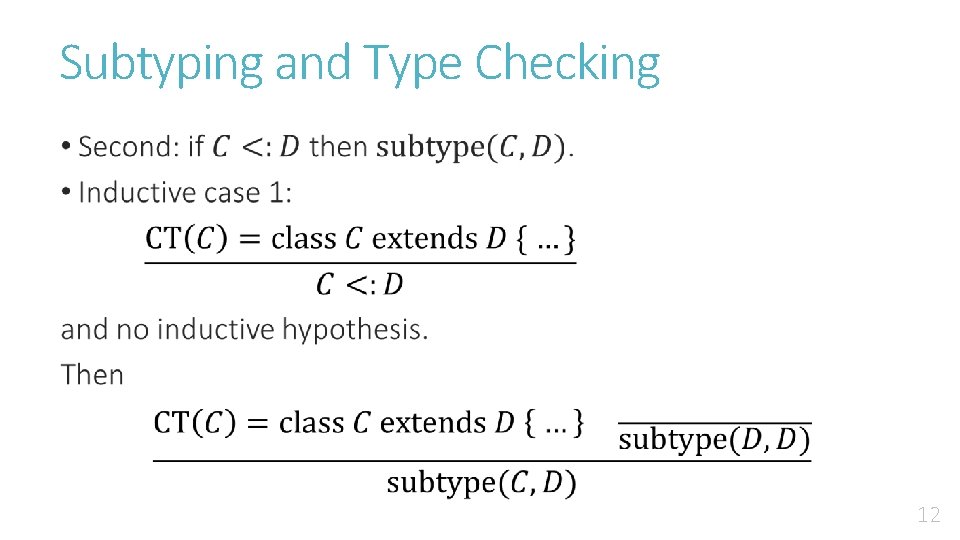
Subtyping and Type Checking • 12
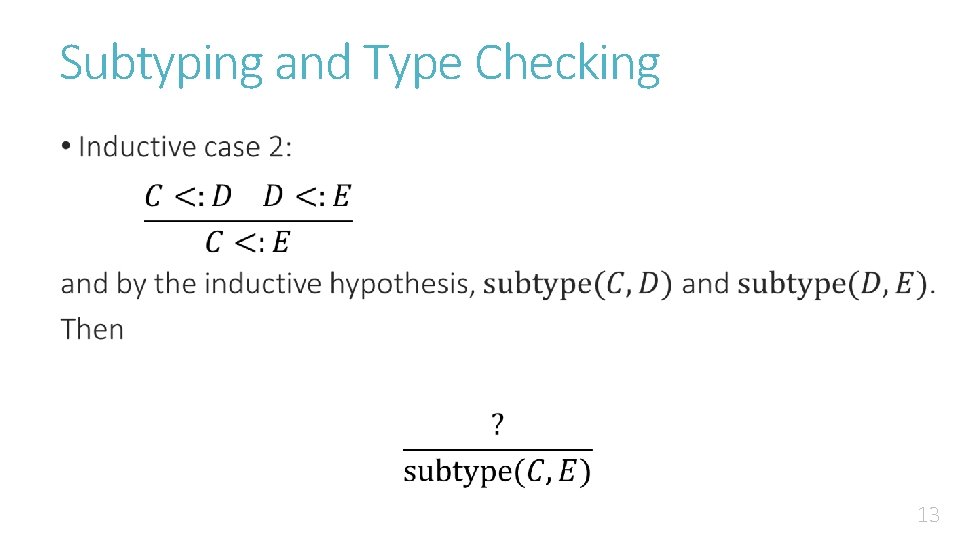
Subtyping and Type Checking • 13
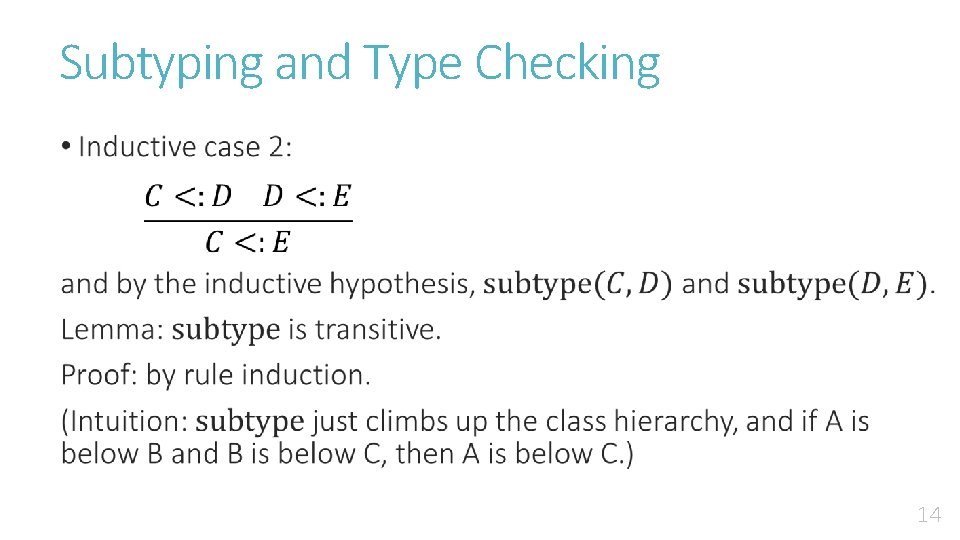
Subtyping and Type Checking • 14
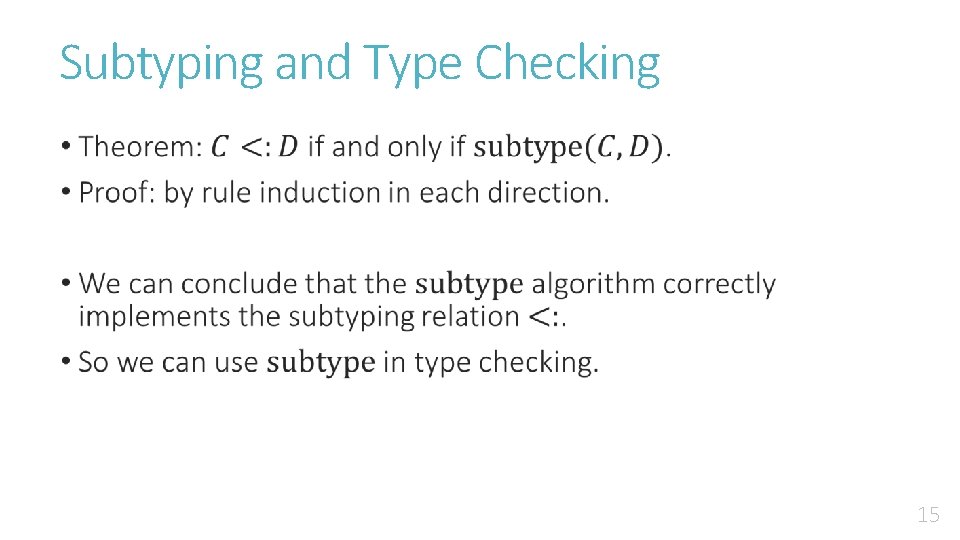
Subtyping and Type Checking • 15
Syntax-Directed Rule Systems • The type systems we’ve worked with have been syntaxdirected • A syntax-directed type system leads directly to an algorithm for applying that system • What is that algorithm? 16
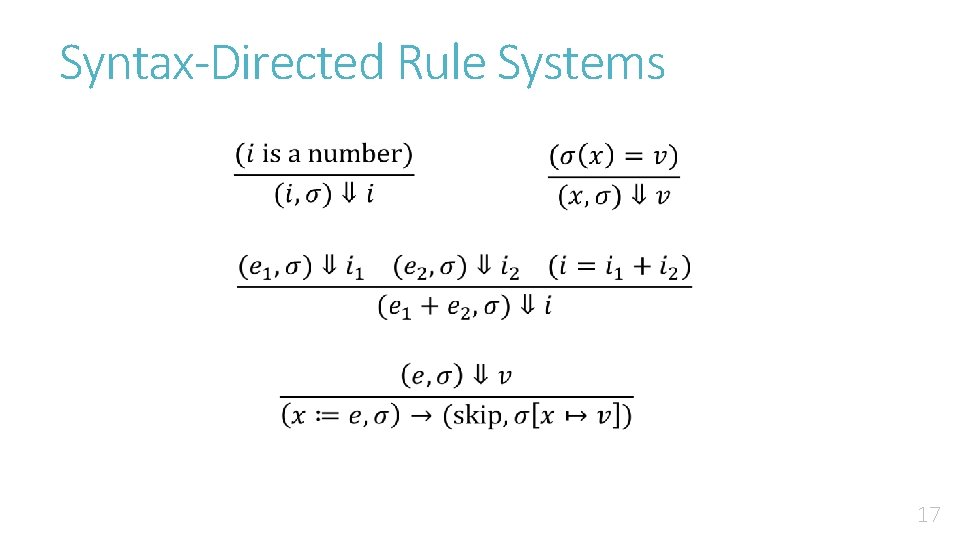
Syntax-Directed Rule Systems 17
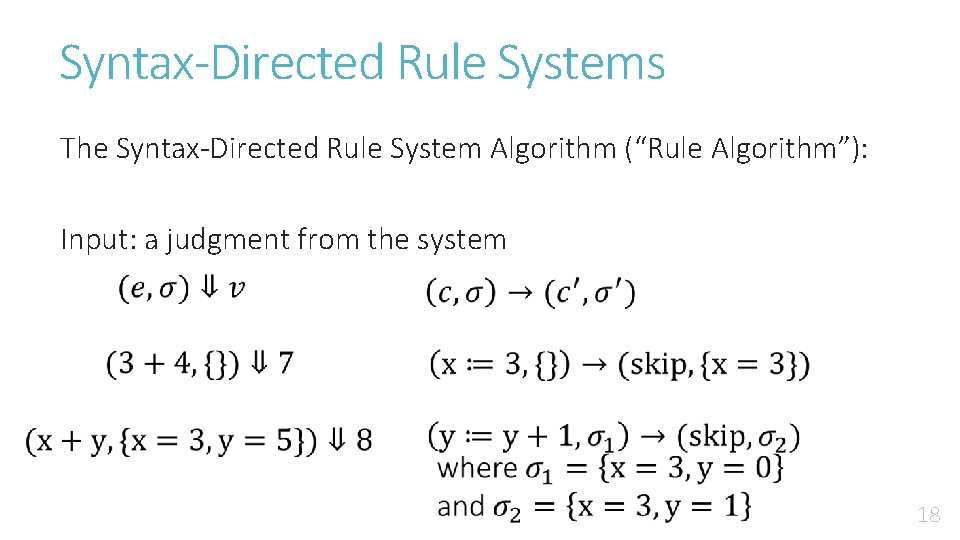
Syntax-Directed Rule Systems The Syntax-Directed Rule System Algorithm (“Rule Algorithm”): Input: a judgment from the system 18
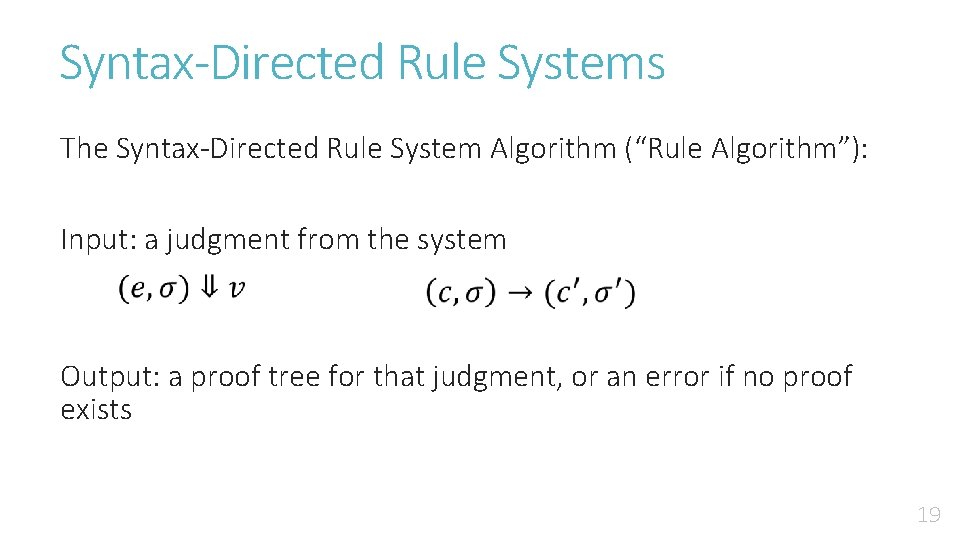
Syntax-Directed Rule Systems The Syntax-Directed Rule System Algorithm (“Rule Algorithm”): Input: a judgment from the system Output: a proof tree for that judgment, or an error if no proof exists 19
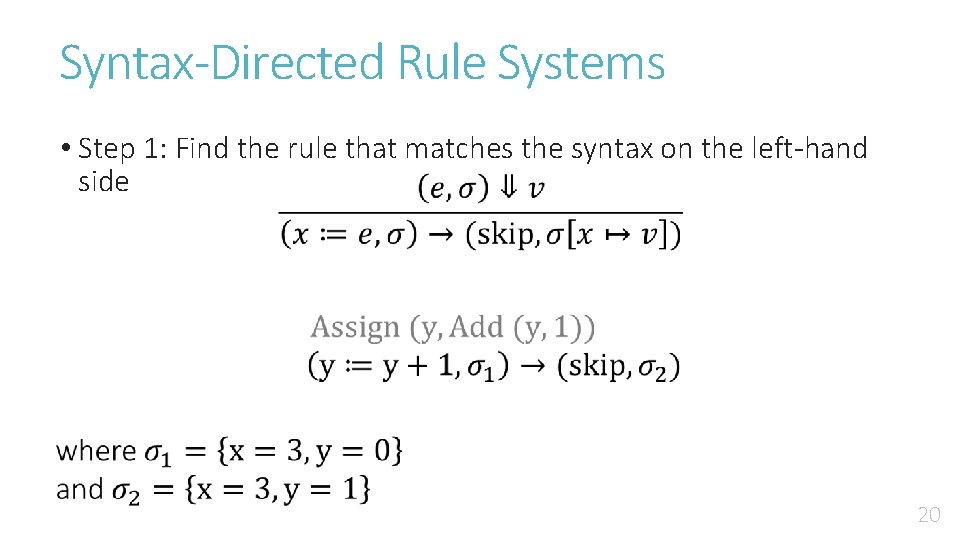
Syntax-Directed Rule Systems • Step 1: Find the rule that matches the syntax on the left-hand side 20
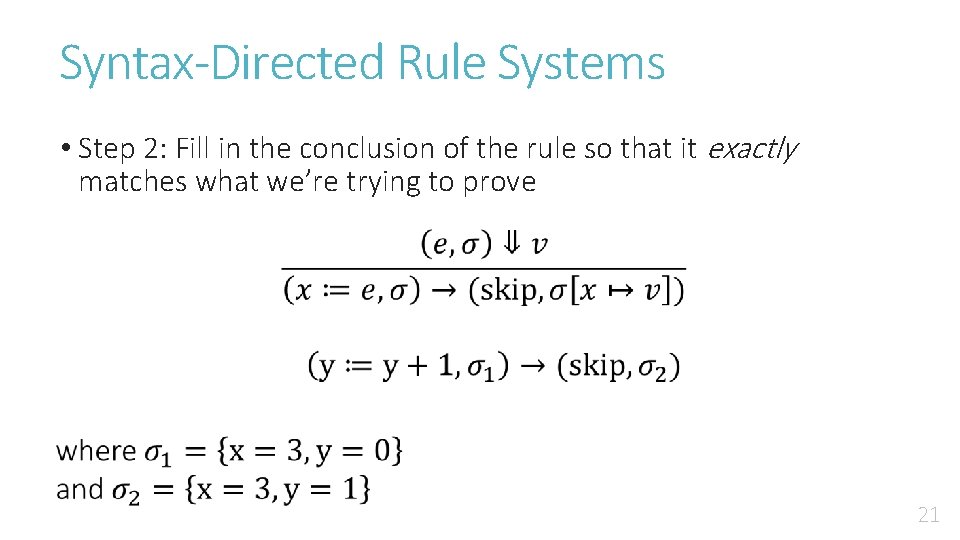
Syntax-Directed Rule Systems • Step 2: Fill in the conclusion of the rule so that it exactly matches what we’re trying to prove 21
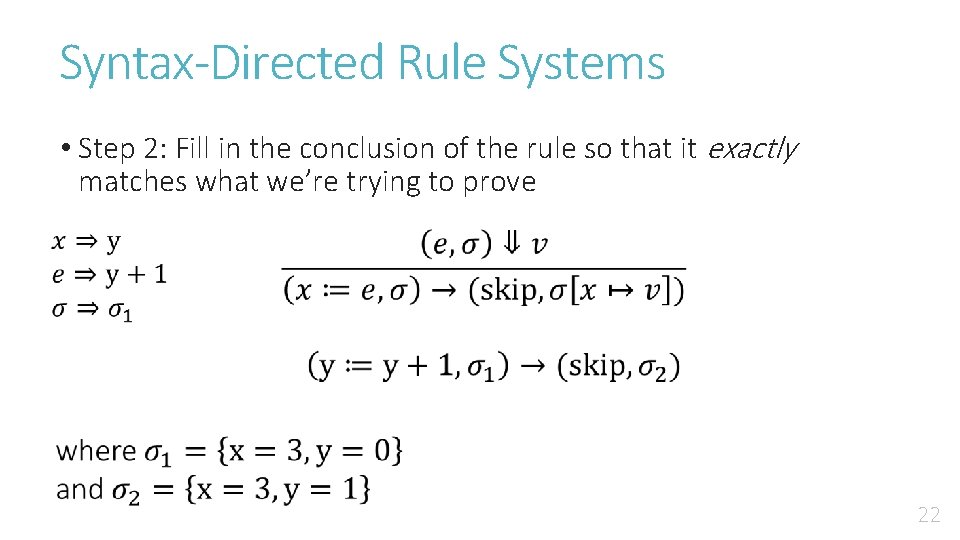
Syntax-Directed Rule Systems • Step 2: Fill in the conclusion of the rule so that it exactly matches what we’re trying to prove 22
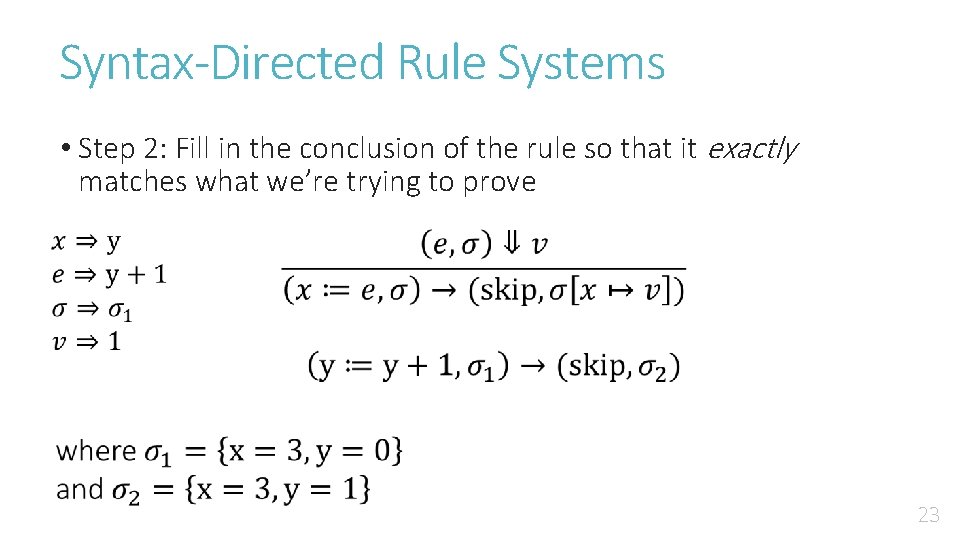
Syntax-Directed Rule Systems • Step 2: Fill in the conclusion of the rule so that it exactly matches what we’re trying to prove 23
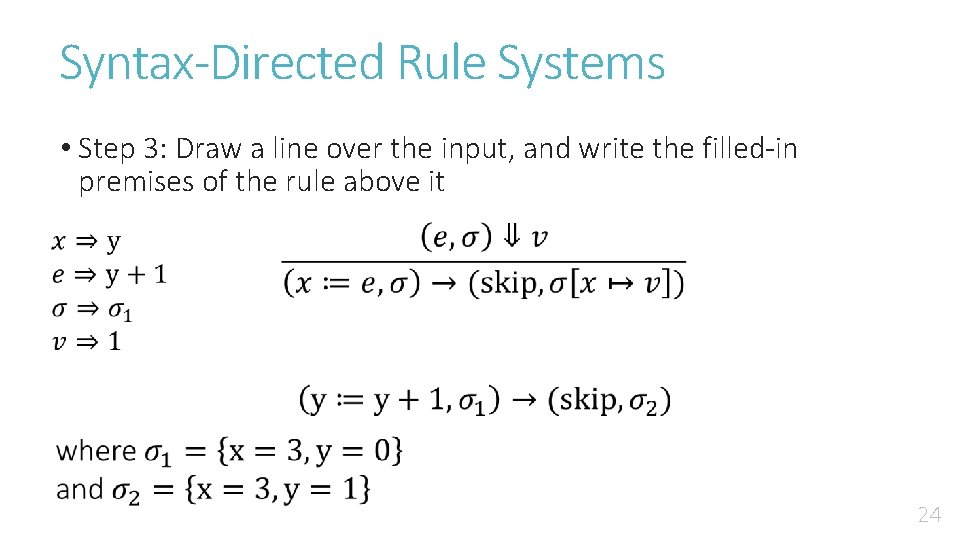
Syntax-Directed Rule Systems • Step 3: Draw a line over the input, and write the filled-in premises of the rule above it 24
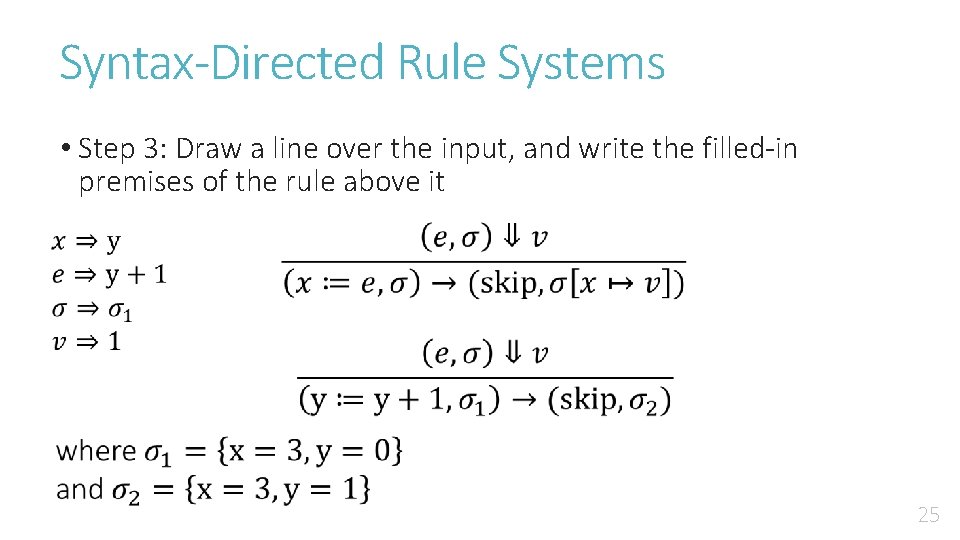
Syntax-Directed Rule Systems • Step 3: Draw a line over the input, and write the filled-in premises of the rule above it 25
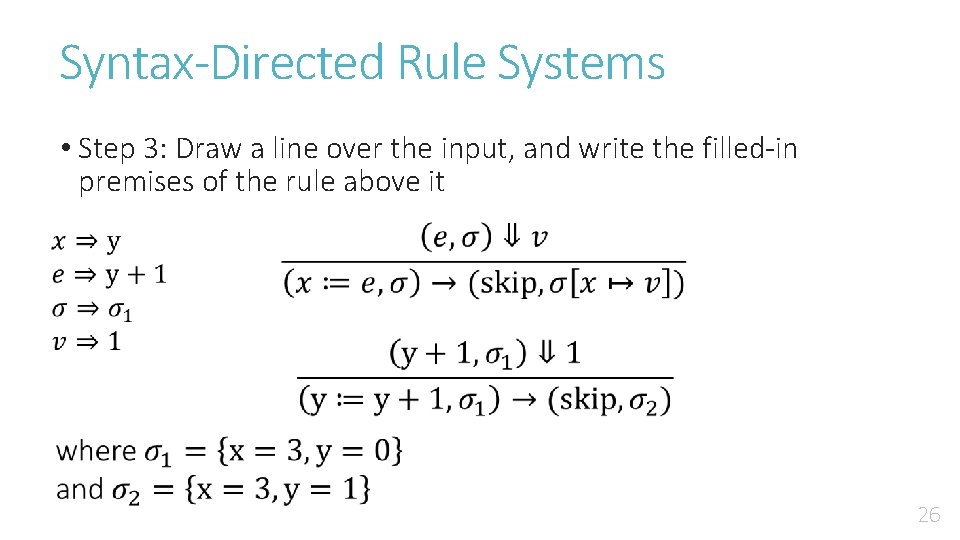
Syntax-Directed Rule Systems • Step 3: Draw a line over the input, and write the filled-in premises of the rule above it 26
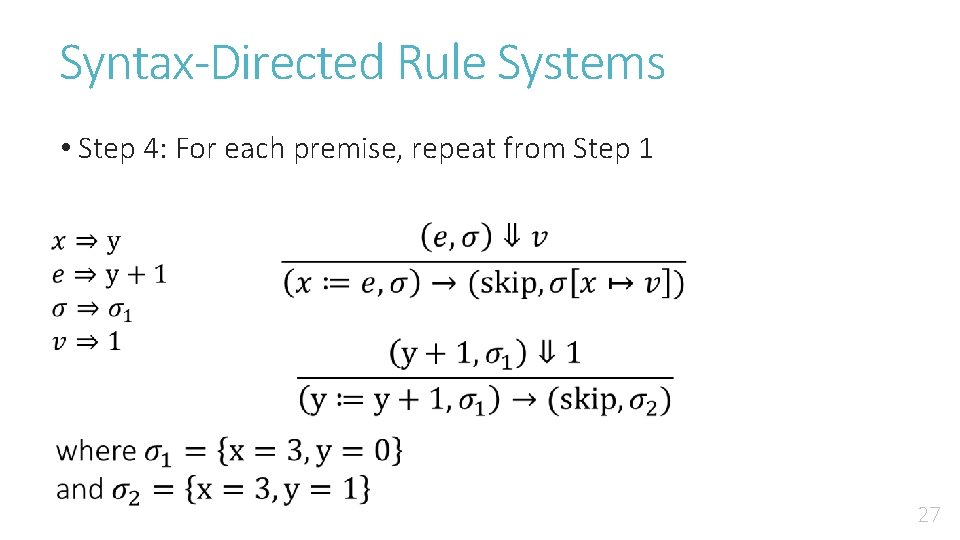
Syntax-Directed Rule Systems • Step 4: For each premise, repeat from Step 1 27
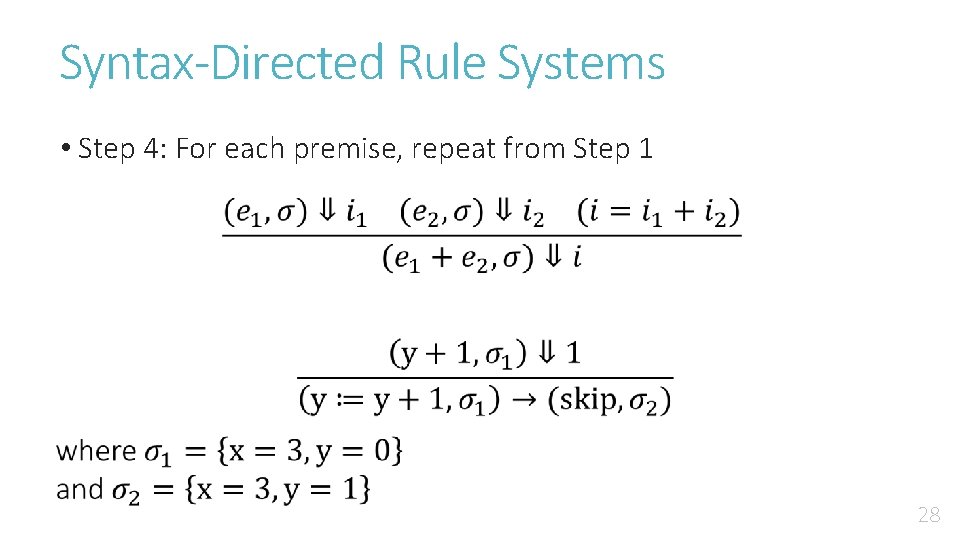
Syntax-Directed Rule Systems • Step 4: For each premise, repeat from Step 1 28
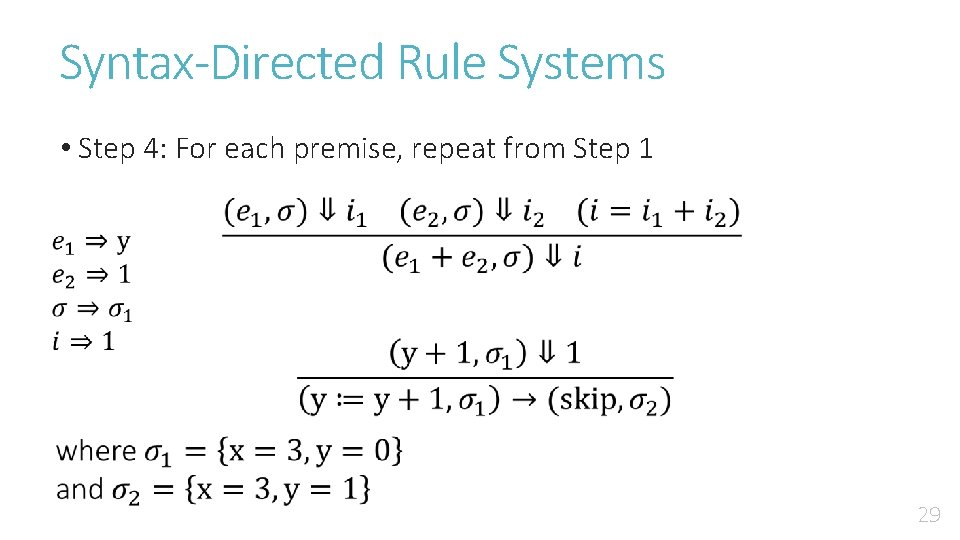
Syntax-Directed Rule Systems • Step 4: For each premise, repeat from Step 1 29
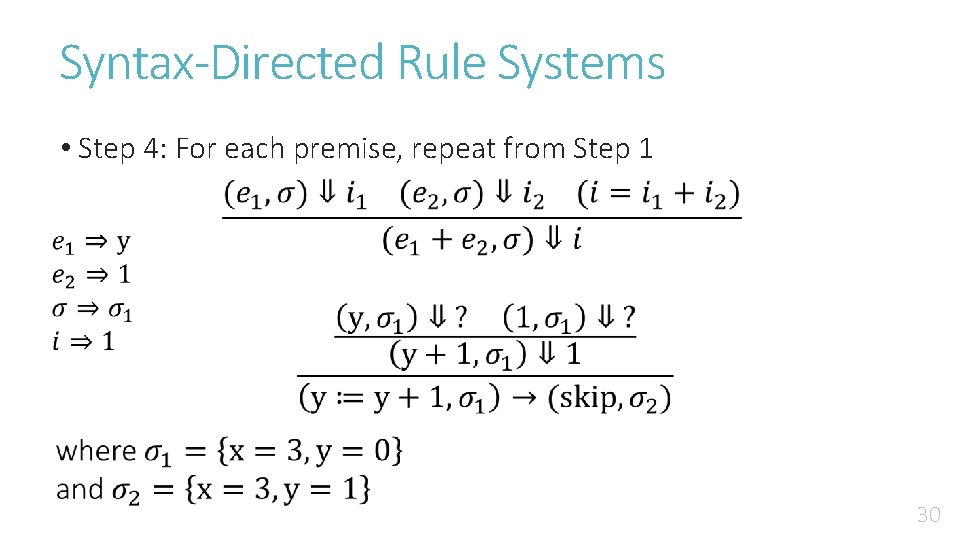
Syntax-Directed Rule Systems • Step 4: For each premise, repeat from Step 1 30
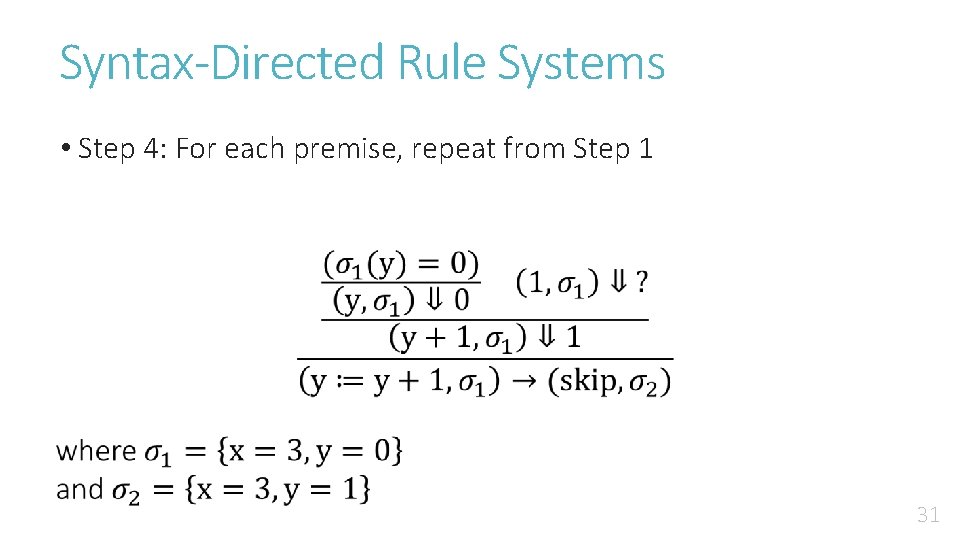
Syntax-Directed Rule Systems • Step 4: For each premise, repeat from Step 1 31
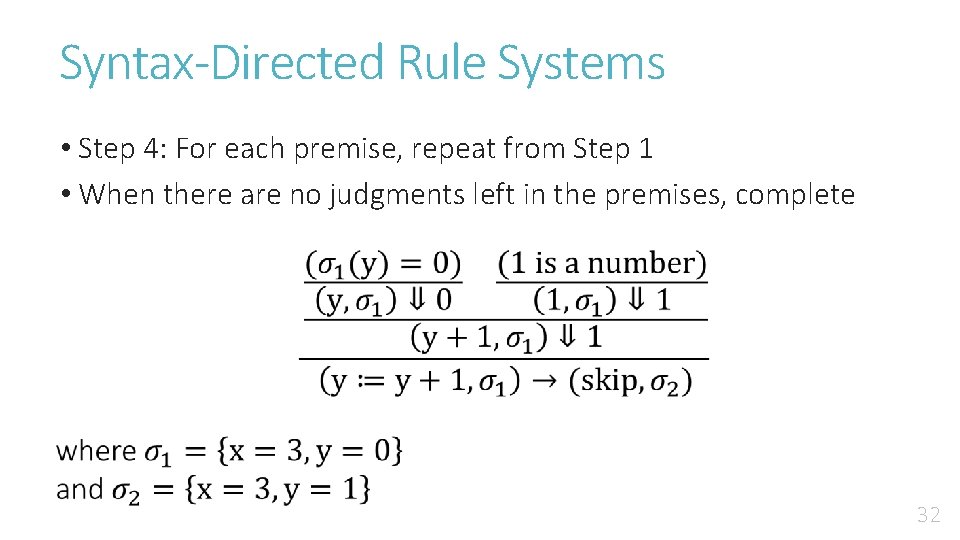
Syntax-Directed Rule Systems • Step 4: For each premise, repeat from Step 1 • When there are no judgments left in the premises, complete 32
Syntax-Directed Rule Systems The Syntax-Directed Rule System Algorithm (“Rule Algorithm”): Step 1: Find the rule that matches the syntax on the left-hand side of the input Step 2: Fill in the conclusion of the rule so that it exactly matches what we’re trying to prove Step 3: Draw a line over the input, and write the filled-in premises of the rule above it Step 4: For each premise, repeat from Step 1 33
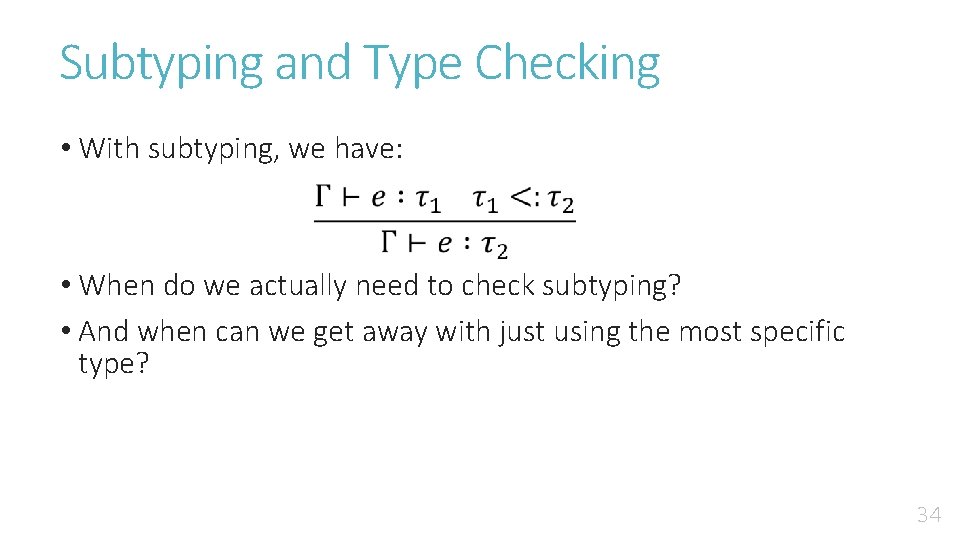
Subtyping and Type Checking • With subtyping, we have: • When do we actually need to check subtyping? • And when can we get away with just using the most specific type? 34
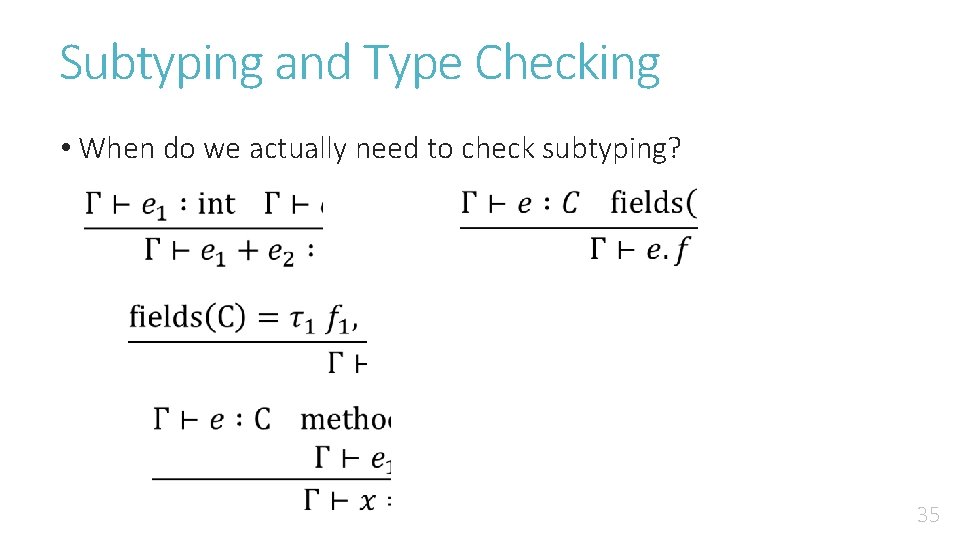
Subtyping and Type Checking • When do we actually need to check subtyping? 35
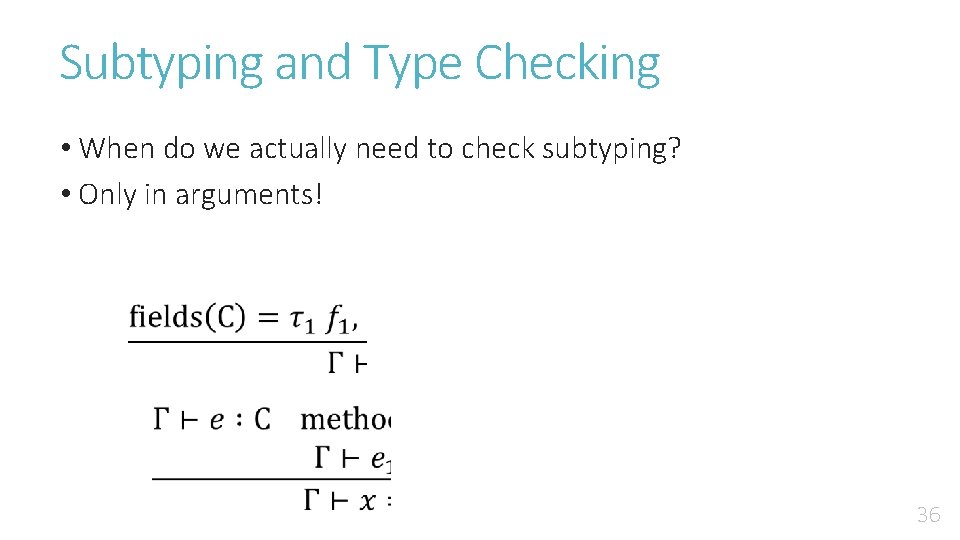
Subtyping and Type Checking • When do we actually need to check subtyping? • Only in arguments! 36
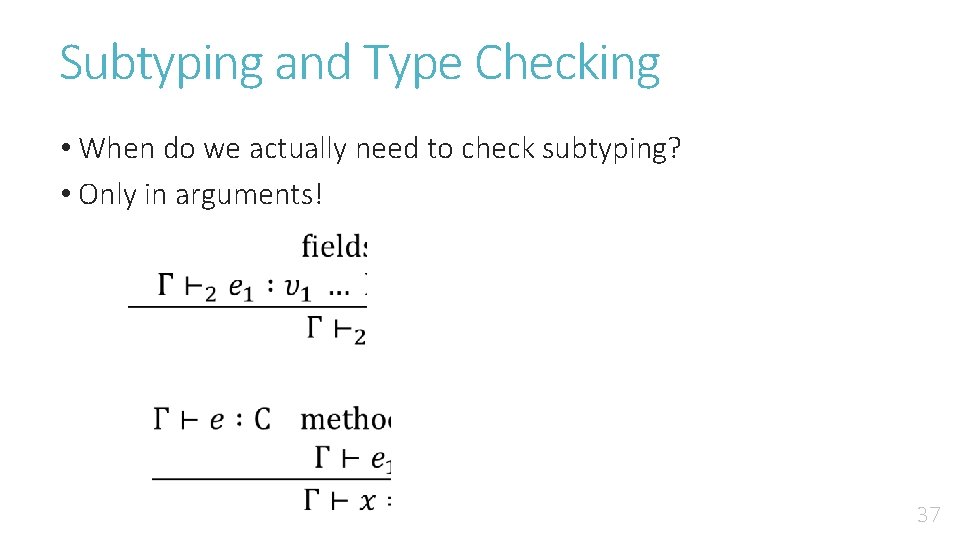
Subtyping and Type Checking • When do we actually need to check subtyping? • Only in arguments! 37
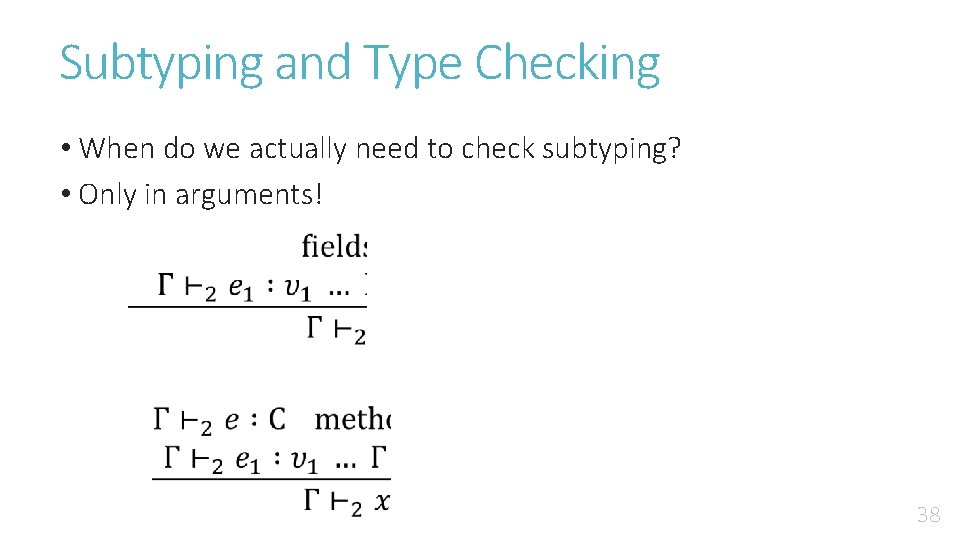
Subtyping and Type Checking • When do we actually need to check subtyping? • Only in arguments! 38
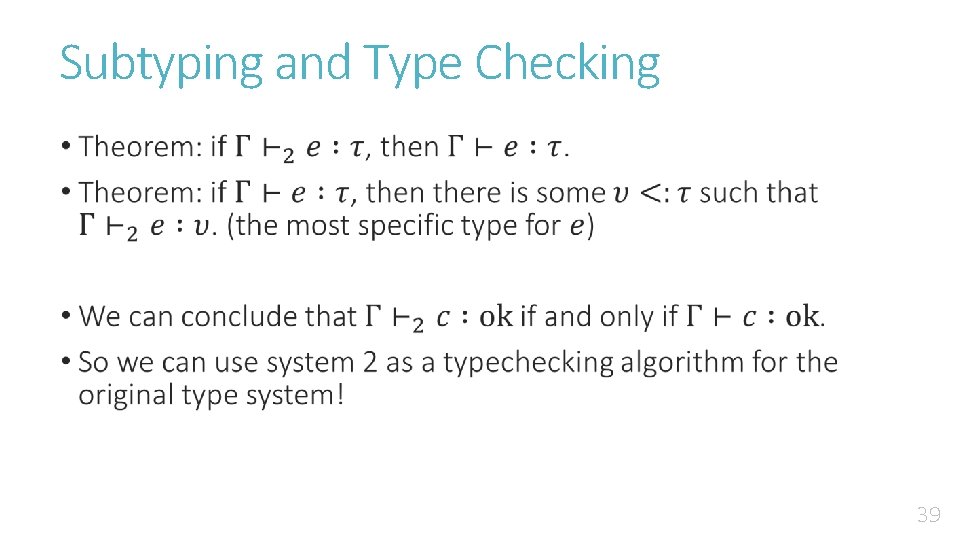
Subtyping and Type Checking • 39
- Slides: 40