
CS 4670 Computer Vision Noah Snavely Computational photography
![Light field camera [Ng et al. , 2005]](https://slidetodoc.com/presentation_image_h2/c74af003e4277d8260f666d0585e9dcf/image-24.jpg "Light field camera [Ng et al. , 2005]")
- Slides: 36
CS 4670: Computer Vision Noah Snavely Computational photography
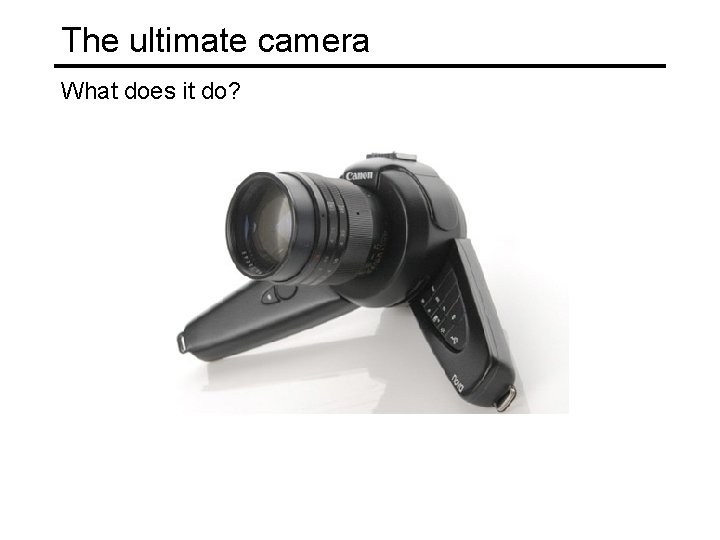
The ultimate camera What does it do?
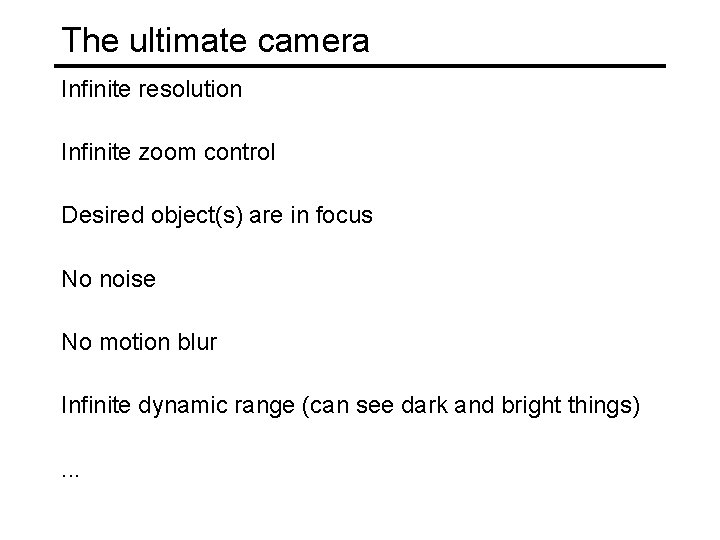
The ultimate camera Infinite resolution Infinite zoom control Desired object(s) are in focus No noise No motion blur Infinite dynamic range (can see dark and bright things). . .
Creating the ultimate camera The “analog” camera has changed very little in >100 yrs • we’re unlikely to get there following this path More promising is to combine “analog” optics with computational techniques • “Computational cameras” or “Computational photography” This lecture will survey techniques for producing higher quality images by combining optics and computation Common themes: • take multiple photos • modify the camera
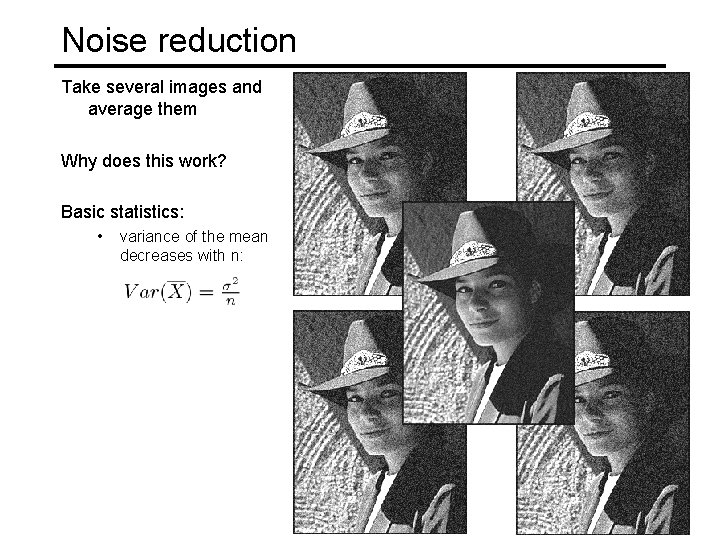
Noise reduction Take several images and average them Why does this work? Basic statistics: • variance of the mean decreases with n:
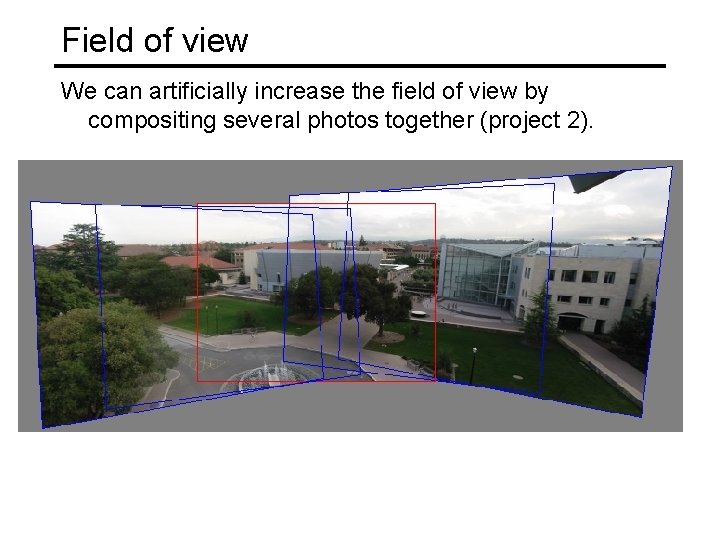
Field of view We can artificially increase the field of view by compositing several photos together (project 2).
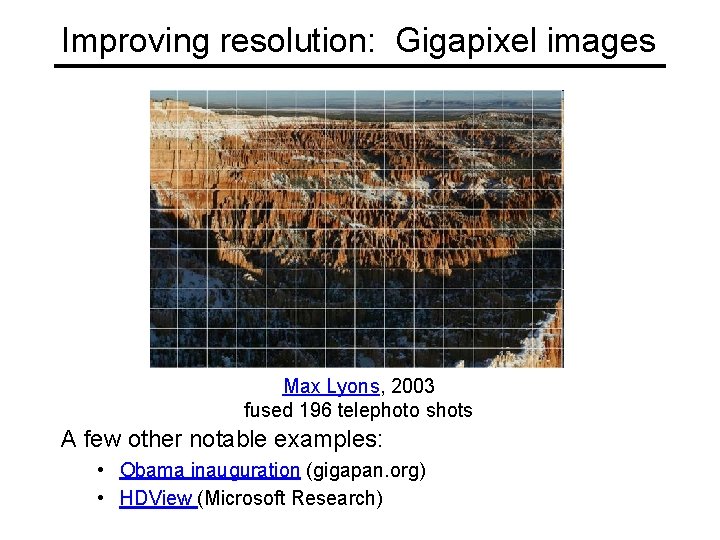
Improving resolution: Gigapixel images Max Lyons, 2003 fused 196 telephoto shots A few other notable examples: • Obama inauguration (gigapan. org) • HDView (Microsoft Research)
Improving resolution: super resolution What if you don’t have a zoom lens?
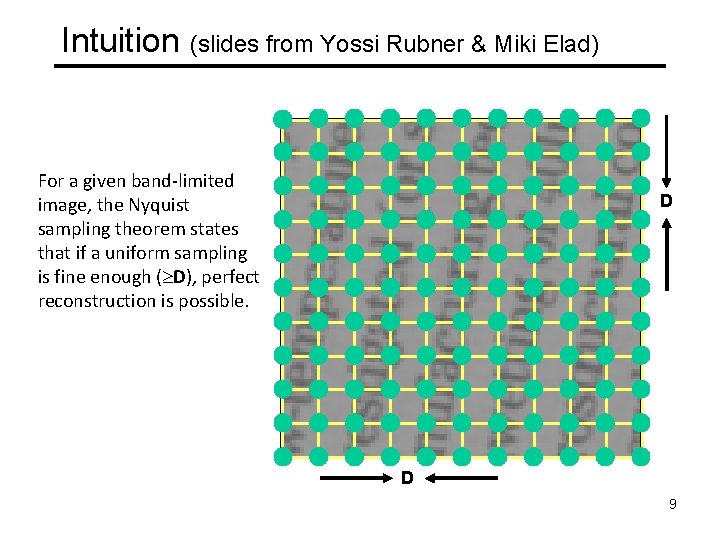
Intuition (slides from Yossi Rubner & Miki Elad) For a given band-limited image, the Nyquist sampling theorem states that if a uniform sampling is fine enough ( D), perfect reconstruction is possible. D D 9
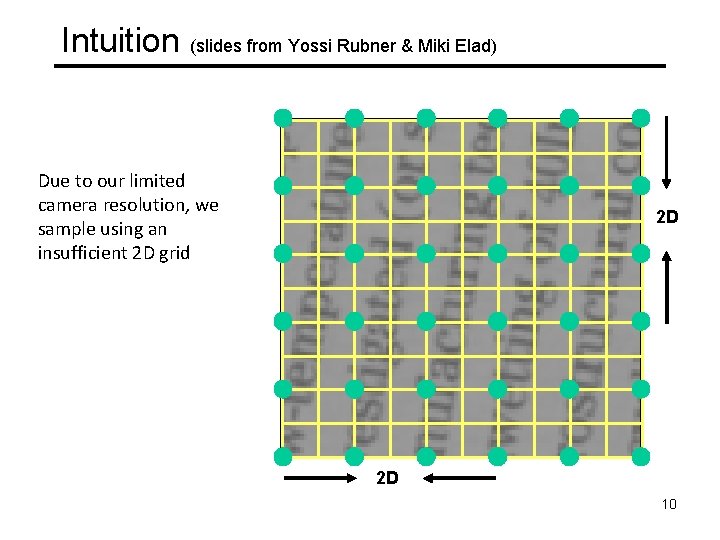
Intuition (slides from Yossi Rubner & Miki Elad) Due to our limited camera resolution, we sample using an insufficient 2 D grid 2 D 2 D 10
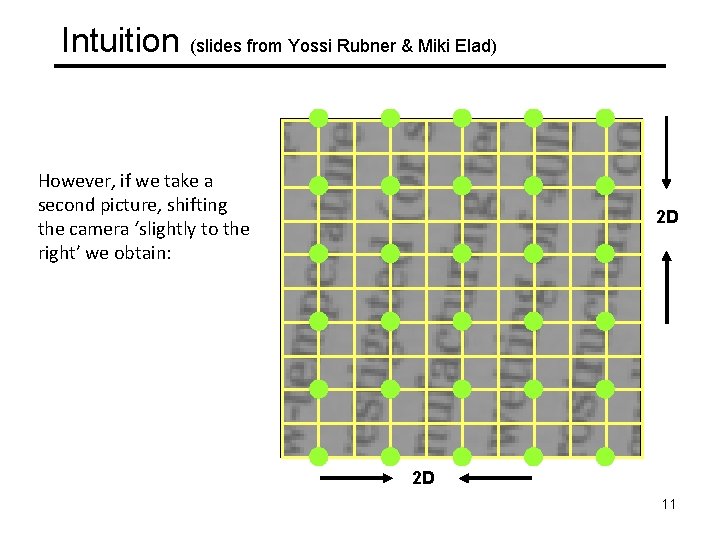
Intuition (slides from Yossi Rubner & Miki Elad) However, if we take a second picture, shifting the camera ‘slightly to the right’ we obtain: 2 D 2 D 11
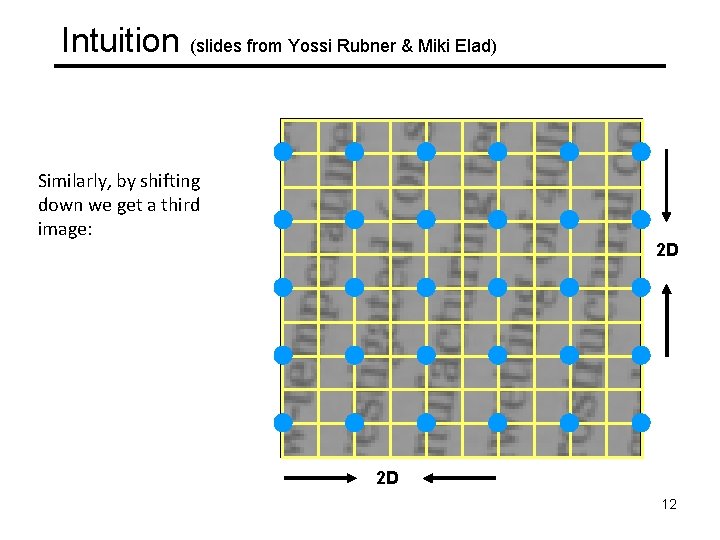
Intuition (slides from Yossi Rubner & Miki Elad) Similarly, by shifting down we get a third image: 2 D 2 D 12
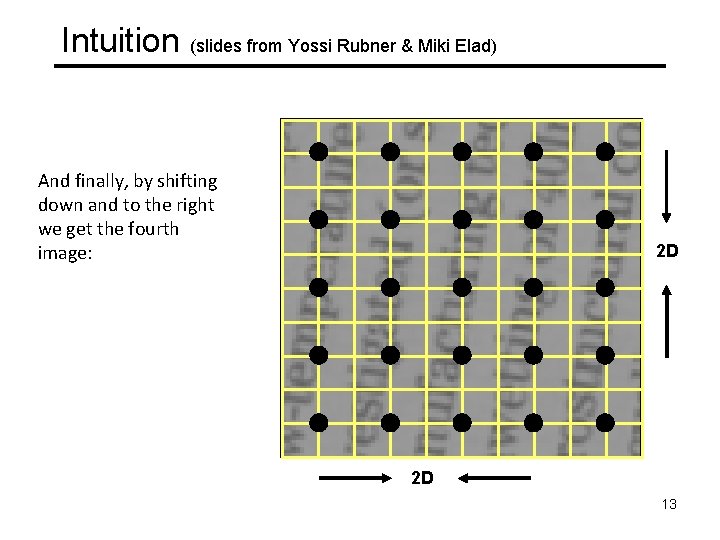
Intuition (slides from Yossi Rubner & Miki Elad) And finally, by shifting down and to the right we get the fourth image: 2 D 2 D 13
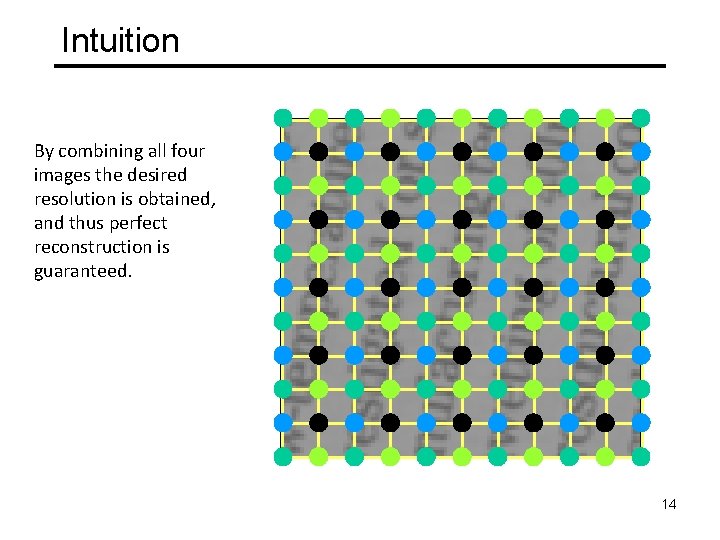
Intuition By combining all four images the desired resolution is obtained, and thus perfect reconstruction is guaranteed. 14
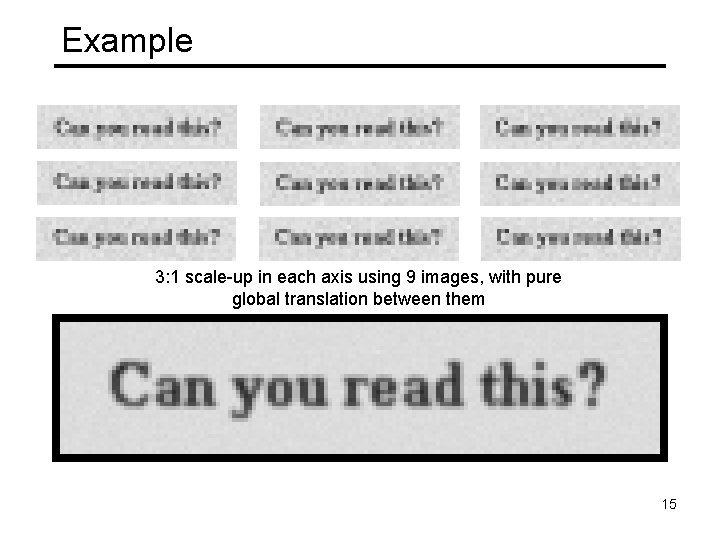
Example 3: 1 scale-up in each axis using 9 images, with pure global translation between them 15
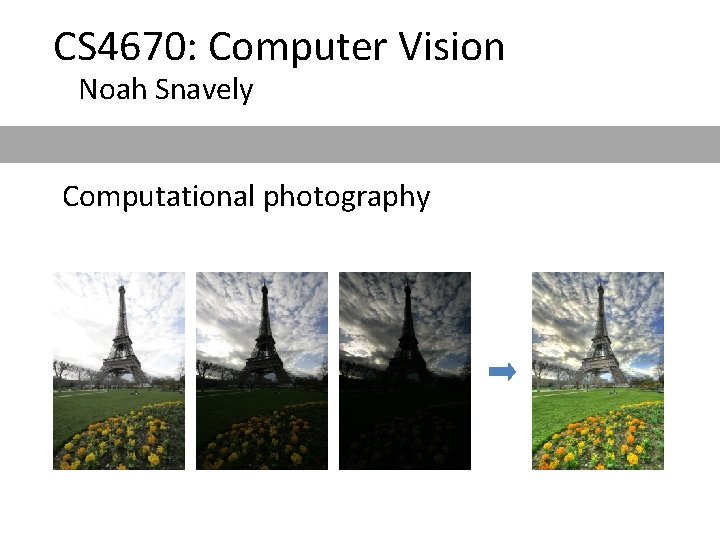
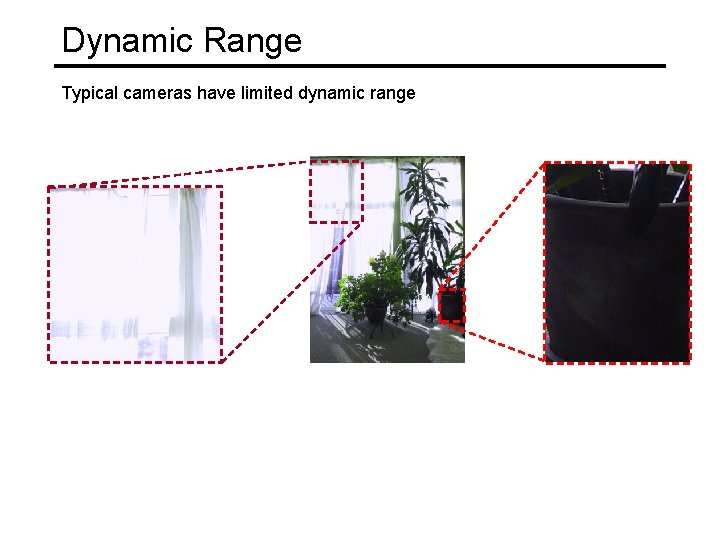
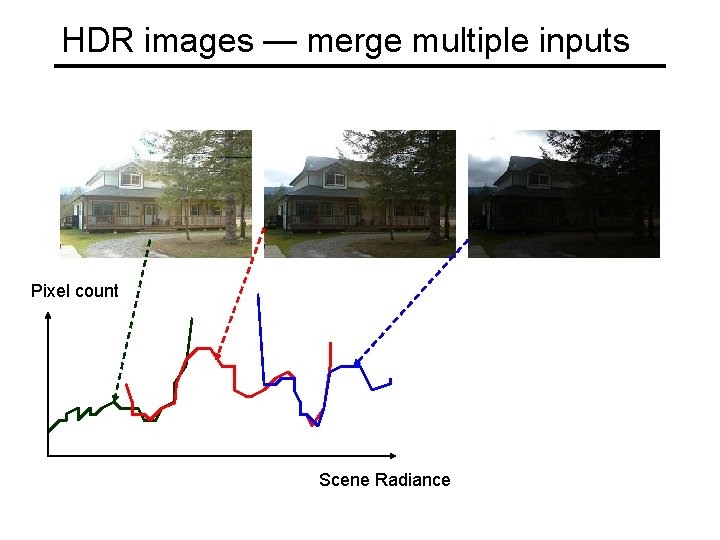
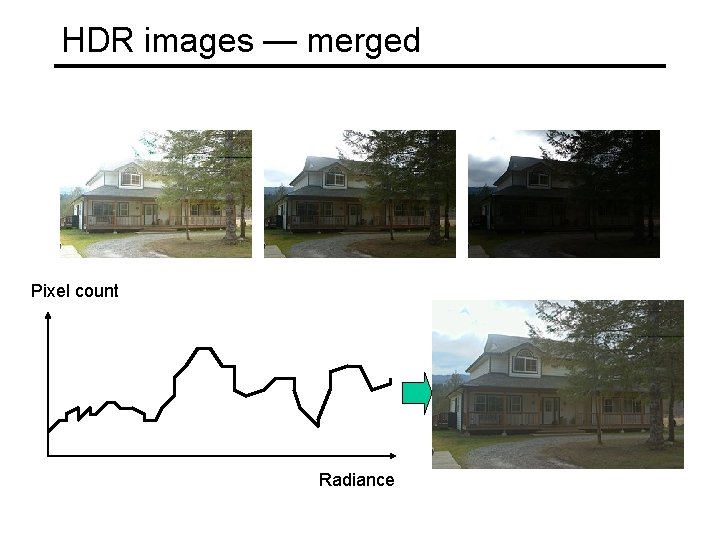
Dynamic Range Typical cameras have limited dynamic range
HDR images — merge multiple inputs Pixel count Scene Radiance
HDR images — merged Pixel count Radiance
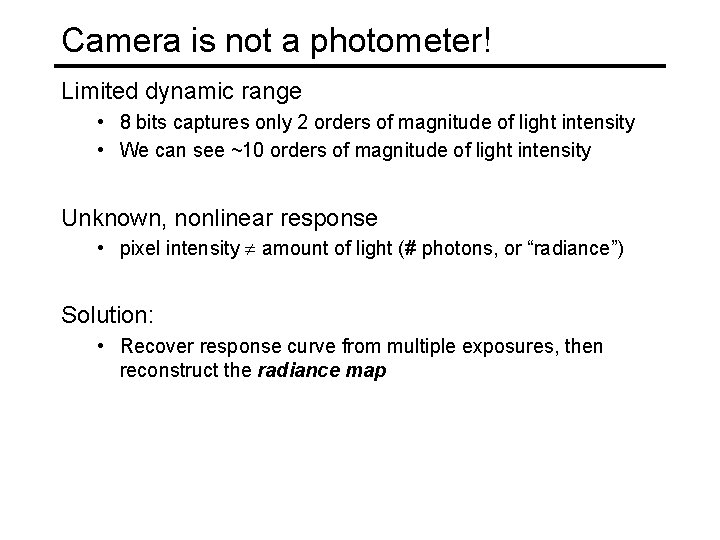
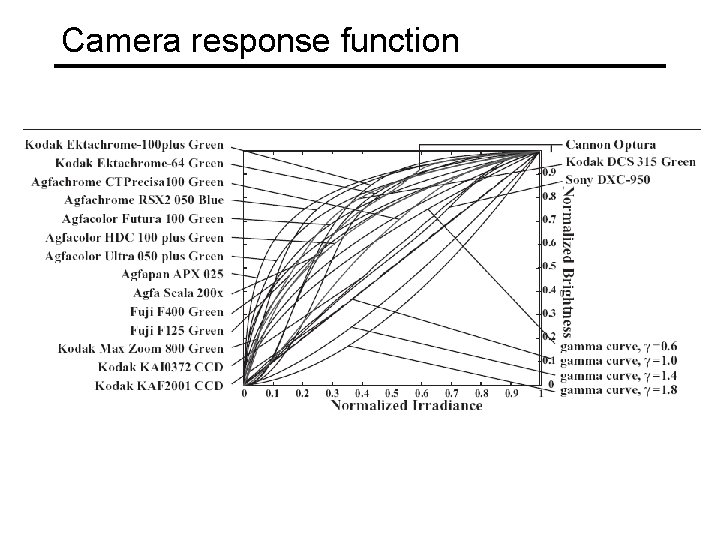
Camera is not a photometer! Limited dynamic range • 8 bits captures only 2 orders of magnitude of light intensity • We can see ~10 orders of magnitude of light intensity Unknown, nonlinear response • pixel intensity amount of light (# photons, or “radiance”) Solution: • Recover response curve from multiple exposures, then reconstruct the radiance map
Camera response function
Capture and composite several photos Works for • • field of view resolution signal to noise dynamic range But sometimes you can do better by modifying the camera…
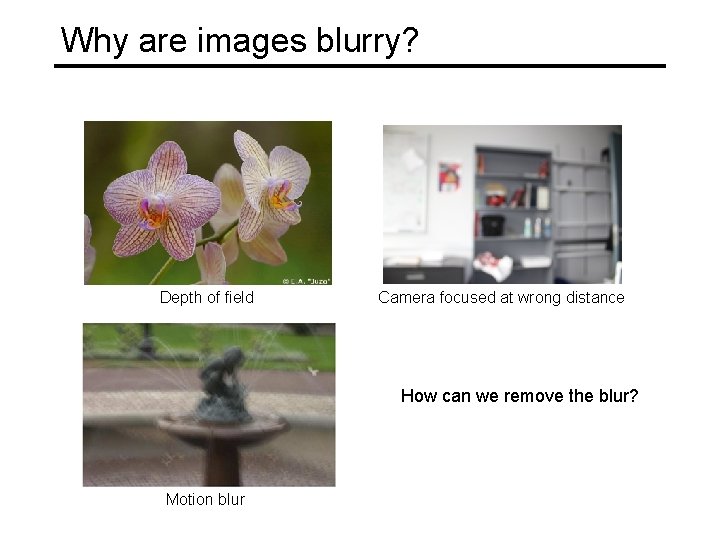
Why are images blurry? Depth of field Camera focused at wrong distance How can we remove the blur? Motion blur
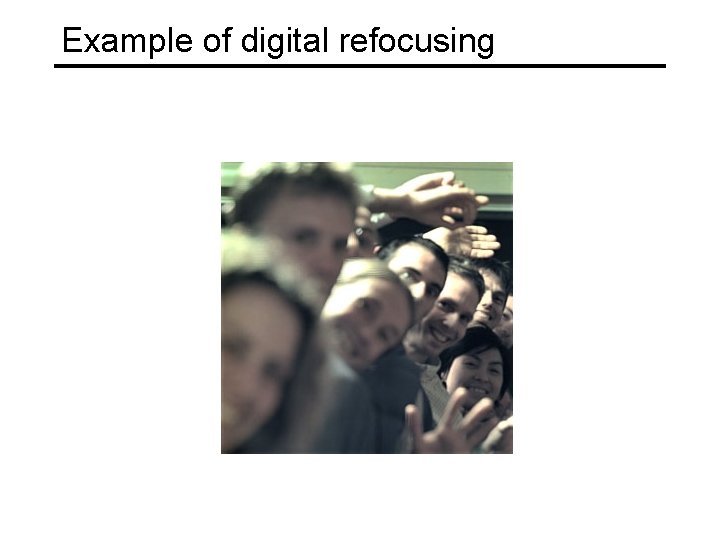
Focus Suppose we want to produce images where we can change the focus after the fact? Or suppose we want everything to be in focus?
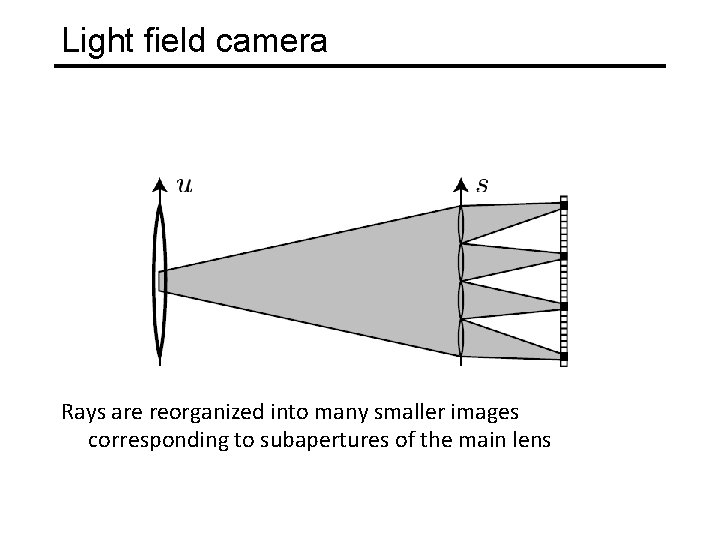
Light field camera [Ng et al. , 2005]
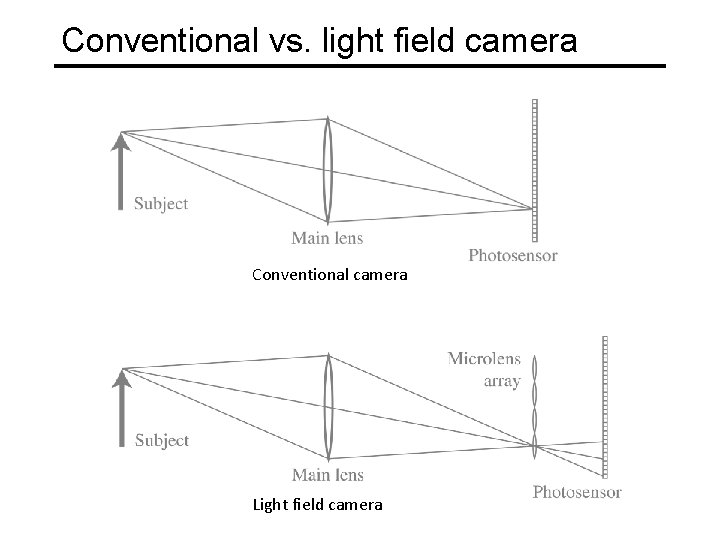
Conventional vs. light field camera Conventional camera Light field camera
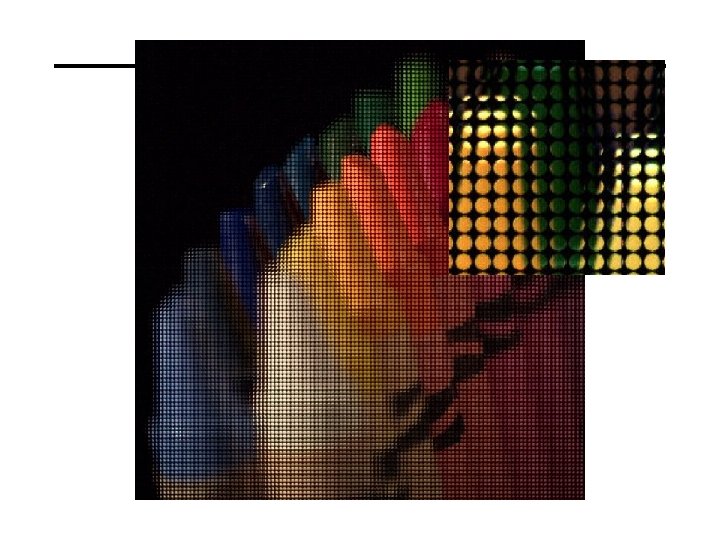
Light field camera Rays are reorganized into many smaller images corresponding to subapertures of the main lens
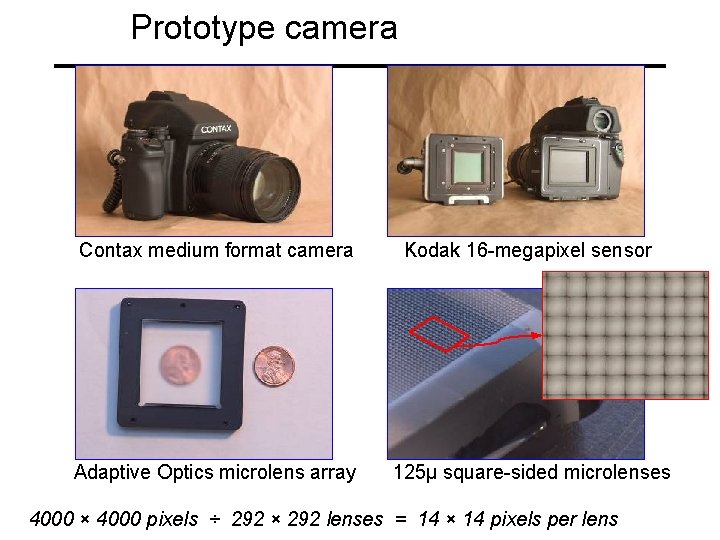
Prototype camera Contax medium format camera Kodak 16 -megapixel sensor Adaptive Optics microlens array 125μ square-sided microlenses 4000 × 4000 pixels ÷ 292 × 292 lenses = 14 × 14 pixels per lens
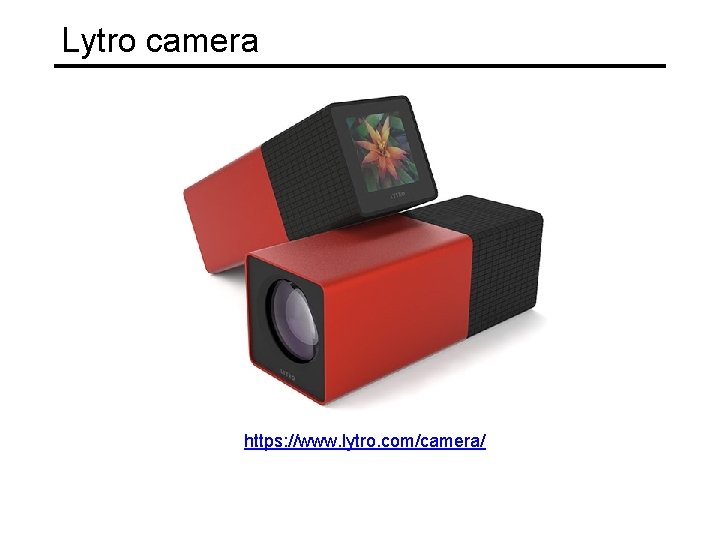
Lytro camera https: //www. lytro. com/camera/
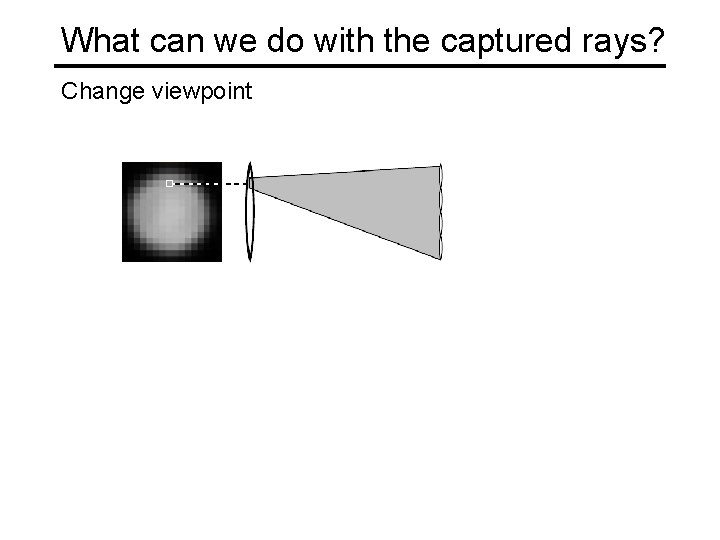
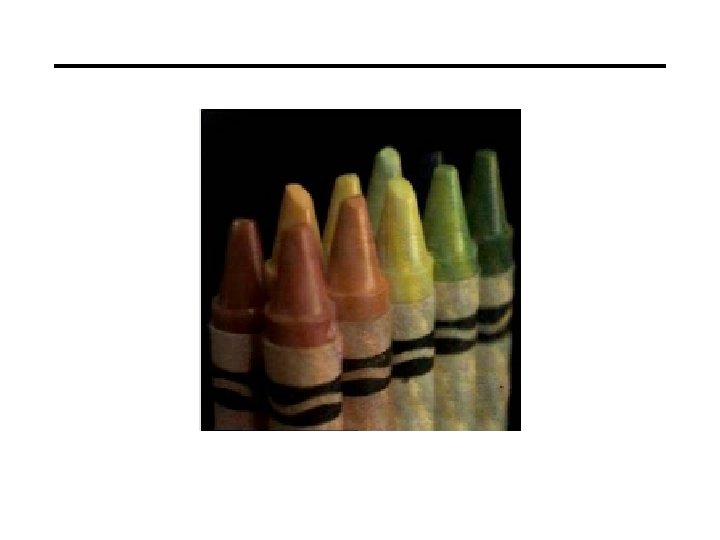
What can we do with the captured rays? Change viewpoint
Example of digital refocusing
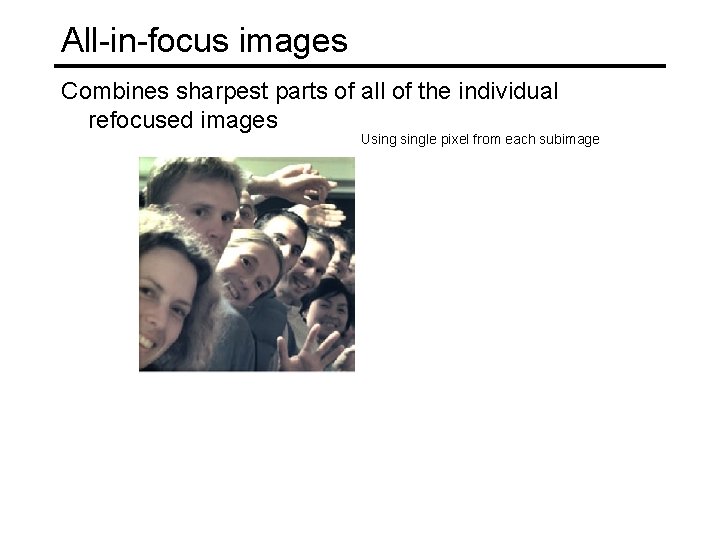
All-in-focus images Combines sharpest parts of all of the individual refocused images Usingle pixel from each subimage
All-in-focus If you only want to produce an all-focus image, there are simpler alternatives E. g. , • Wavefront coding [Dowsky 1995] • Coded aperture [Levin SIGGRAPH 2007], [Raskar SIGGRAPH 2007] – can also produce change in focus (ala Ng’s light field camera)
Many more possibilities Seeing through/behind objects • Using a camera array (“synthetic aperture”) • Levoy et al. , SIGGRAPH 2004 Removing interreflections • Nayar et al. , SIGGRAPH 2006 Family portraits where everyone’s smiling • Photomontage (Agarwala at al. , SIGGRAPH 2004) …
More on computational photography SIGGRAPH course notes and video Other courses • • MIT course CMU course Stanford course Columbia course Wikipedia page Symposium on Computational Photography ICCP 2009 (conference)