
CS 422 Principles of Database Systems Introduction to
CS 422 Principles of Database Systems Introduction to Query Processing Chengyu Sun California State University, Los Angeles
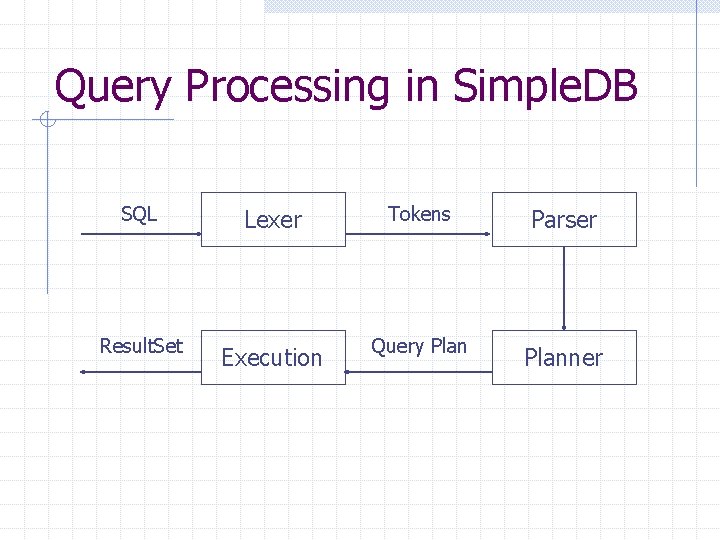
Query Processing in Simple. DB SQL Lexer Tokens Parser Result. Set Execution Query Planner
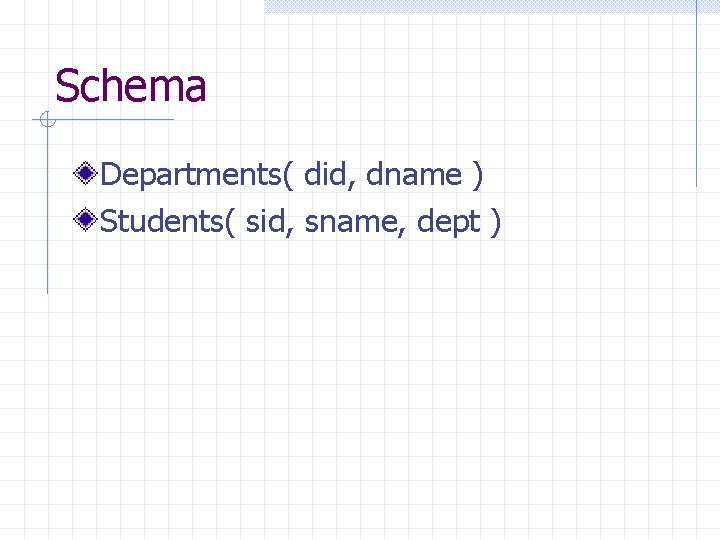
Schema Departments( did, dname ) Students( sid, sname, dept )
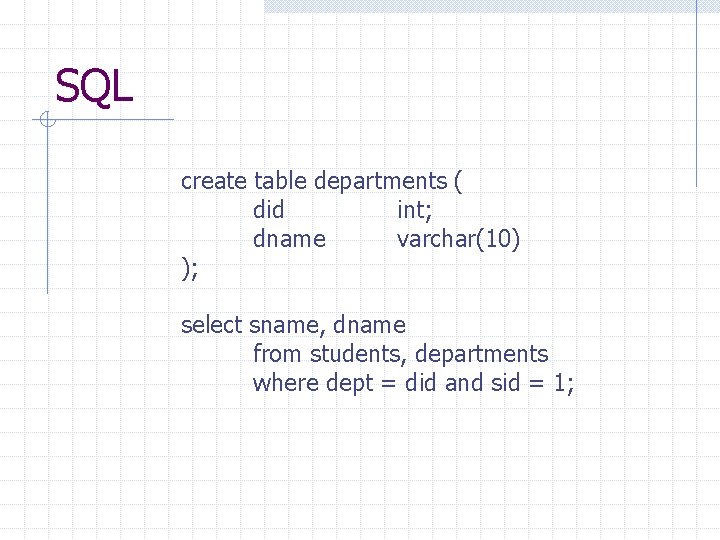
SQL create table departments ( did int; dname varchar(10) ); select sname, dname from students, departments where dept = did and sid = 1;

Lexical Analysis Split the input string into a series of tokens select sname from students where sid = 1 keyword identifier delimiter constant
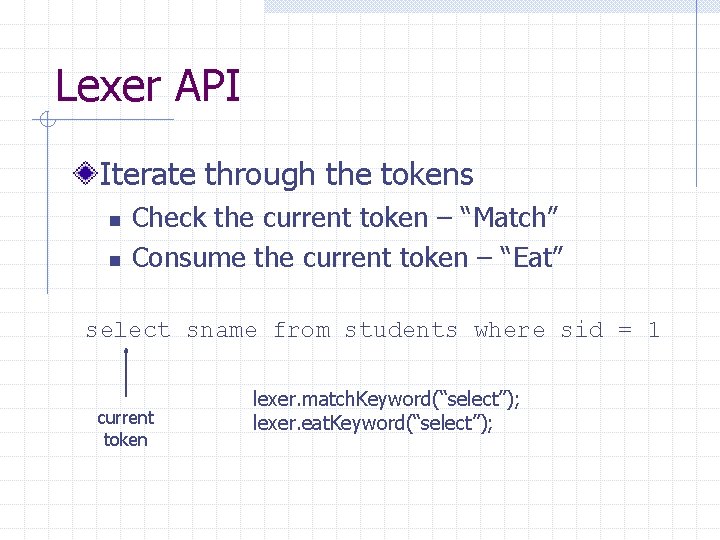
Lexer API Iterate through the tokens n n Check the current token – “Match” Consume the current token – “Eat” select sname from students where sid = 1 current token lexer. match. Keyword(“select”); lexer. eat. Keyword(“select”);
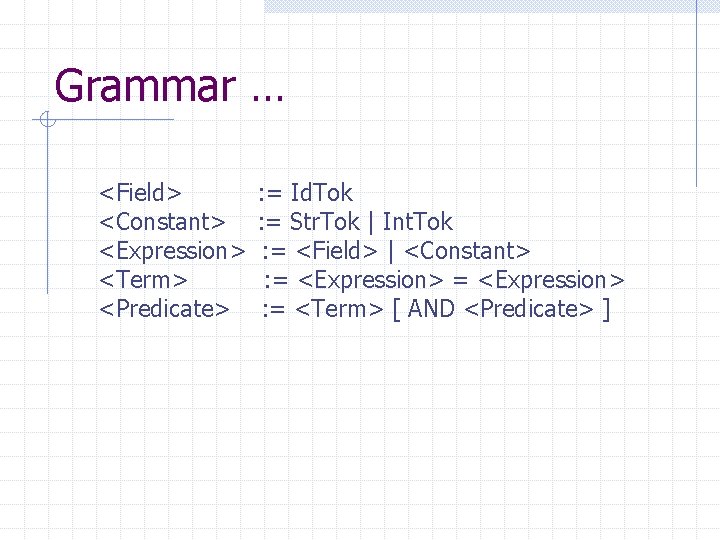
Grammar … <Field> <Constant> <Expression> <Term> <Predicate> : = Id. Tok : = Str. Tok | Int. Tok : = <Field> | <Constant> : = <Expression> : = <Term> [ AND <Predicate> ]
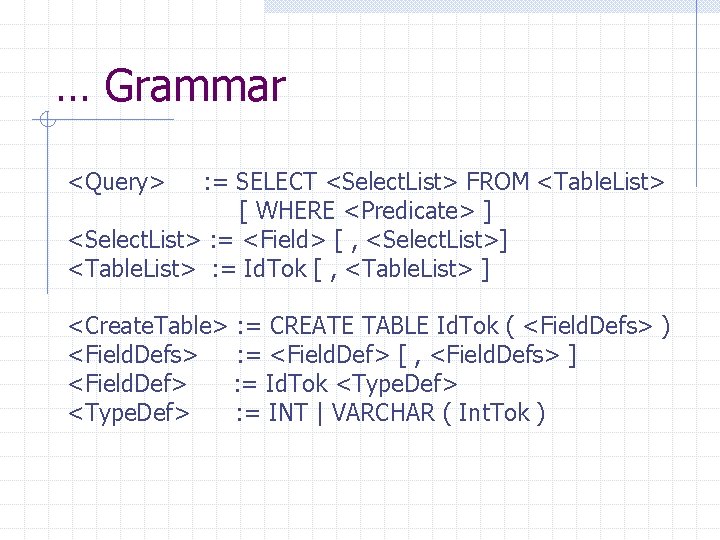
… Grammar <Query> : = SELECT <Select. List> FROM <Table. List> [ WHERE <Predicate> ] <Select. List> : = <Field> [ , <Select. List>] <Table. List> : = Id. Tok [ , <Table. List> ] <Create. Table> : = CREATE TABLE Id. Tok ( <Field. Defs> ) <Field. Defs> : = <Field. Def> [ , <Field. Defs> ] <Field. Def> : = Id. Tok <Type. Def> : = INT | VARCHAR ( Int. Tok )
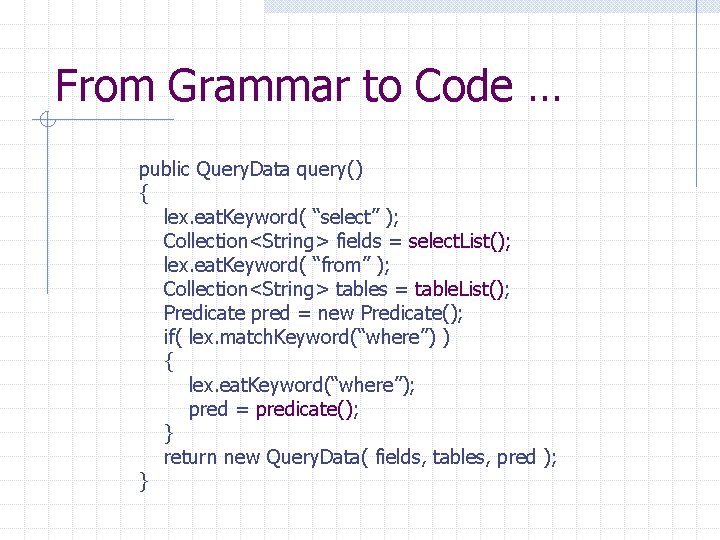
From Grammar to Code … public Query. Data query() { lex. eat. Keyword( “select” ); Collection<String> fields = select. List(); lex. eat. Keyword( “from” ); Collection<String> tables = table. List(); Predicate pred = new Predicate(); if( lex. match. Keyword(“where”) ) { lex. eat. Keyword(“where”); pred = predicate(); } return new Query. Data( fields, tables, pred ); }
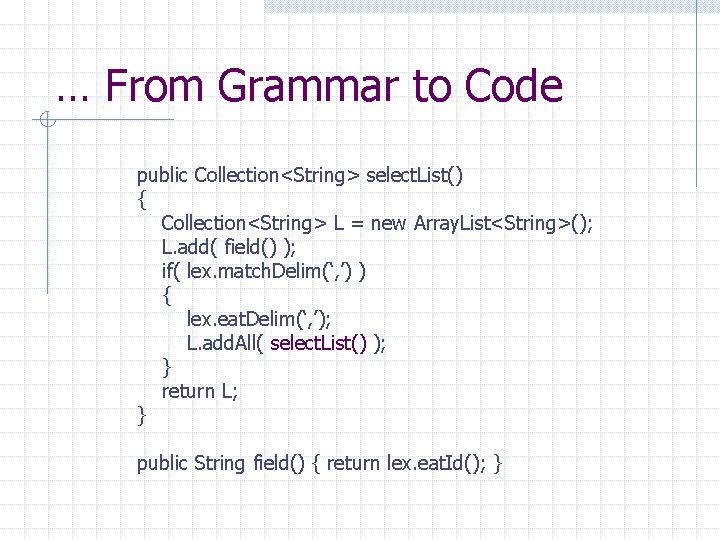
… From Grammar to Code public Collection<String> select. List() { Collection<String> L = new Array. List<String>(); L. add( field() ); if( lex. match. Delim(‘, ’) ) { lex. eat. Delim(‘, ’); L. add. All( select. List() ); } return L; } public String field() { return lex. eat. Id(); }
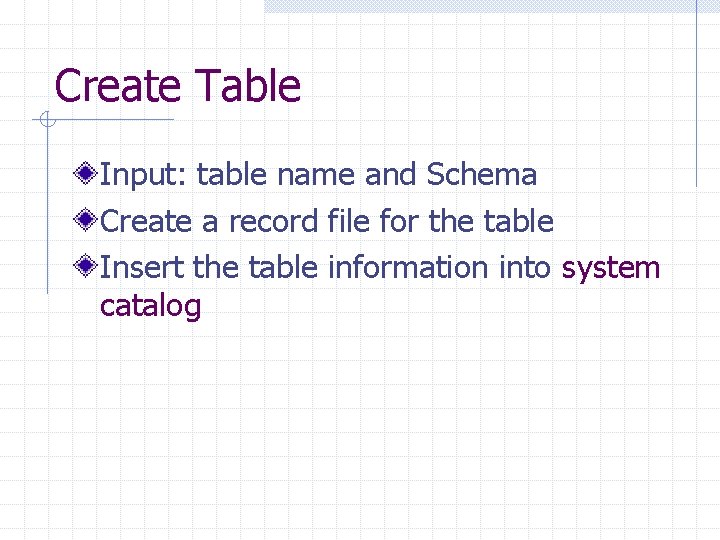
Create Table Input: table name and Schema Create a record file for the table Insert the table information into system catalog
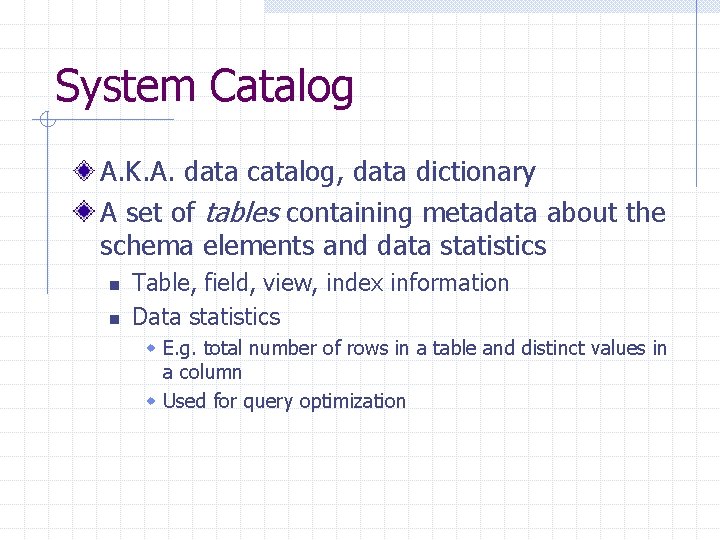
System Catalog A. K. A. data catalog, data dictionary A set of tables containing metadata about the schema elements and data statistics n n Table, field, view, index information Data statistics w E. g. total number of rows in a table and distinct values in a column w Used for query optimization
System Catalog Example tblcat and fldcat in Simple. DB
Query Planning Break a query into individual operations, and organize them into certain order (i. e. a query plan).
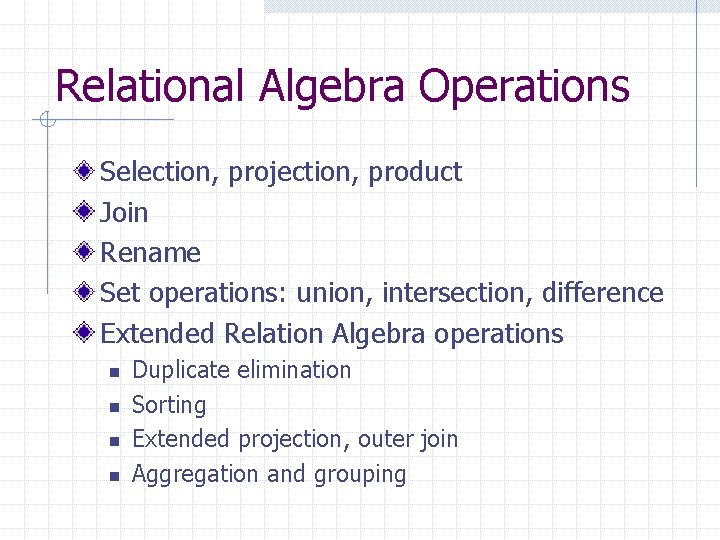
Relational Algebra Operations Selection, projection, product Join Rename Set operations: union, intersection, difference Extended Relation Algebra operations n n Duplicate elimination Sorting Extended projection, outer join Aggregation and grouping
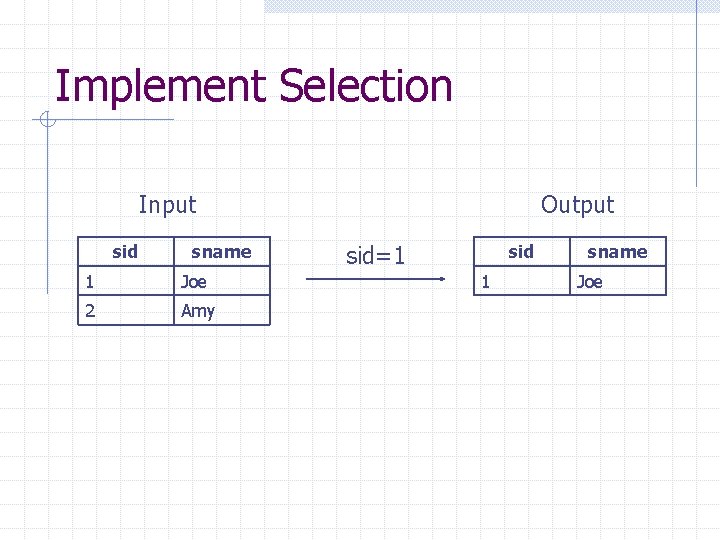
Implement Selection Input sid sname 1 Joe 2 Amy Output sid=1 sid 1 sname Joe
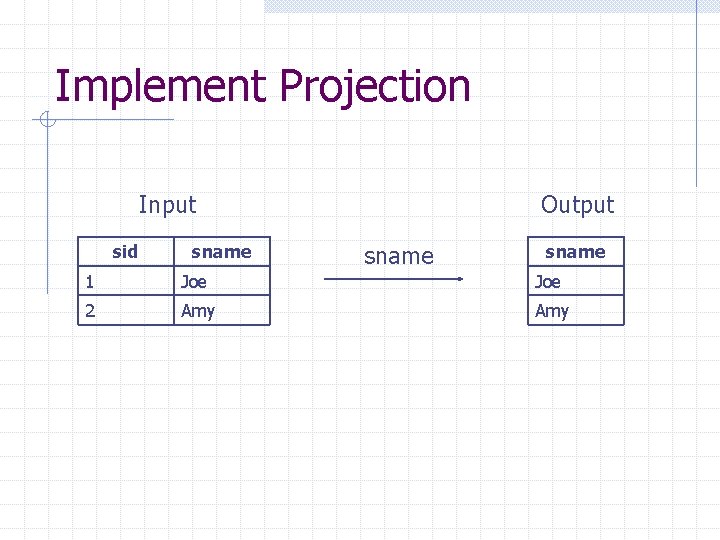
Implement Projection Input sid sname Output sname 1 Joe 2 Amy
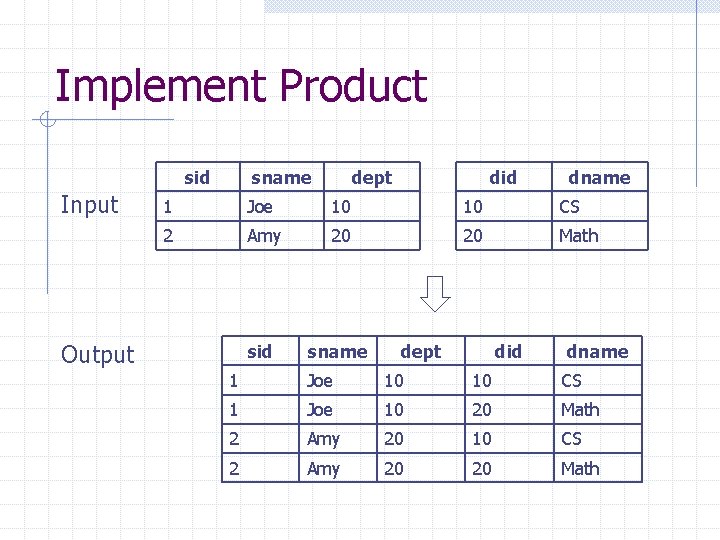
Implement Product sid Input sname dept did dname 1 Joe 10 10 CS 2 Amy 20 20 Math sid sname Output dept did dname 1 Joe 10 10 CS 1 Joe 10 20 Math 2 Amy 20 10 CS 2 Amy 20 20 Math
About Implementations of RA Operations Each RA operation can be implemented and optimized independently from others A RA operation may have multiple implementations n E. g. table scan vs. index scan for selection The efficiency of an implementation depends on the characteristics of the data n E. g. nested loop join vs. hash join
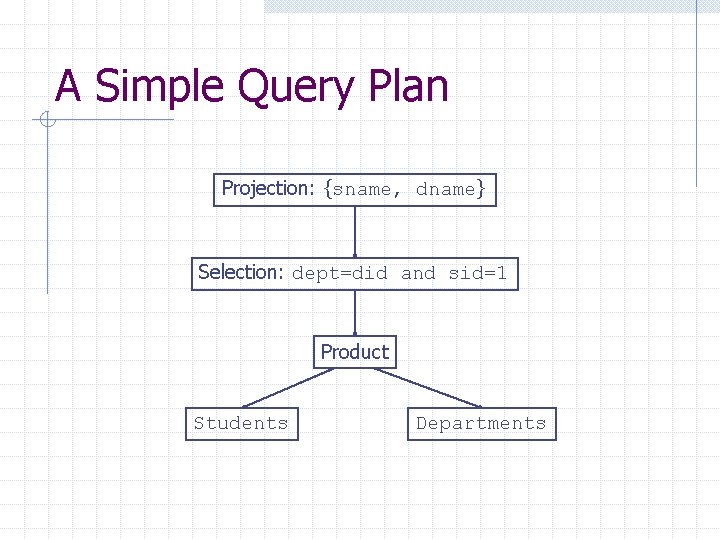
A Simple Query Plan Projection: {sname, dname} Selection: dept=did and sid=1 Product Students Departments
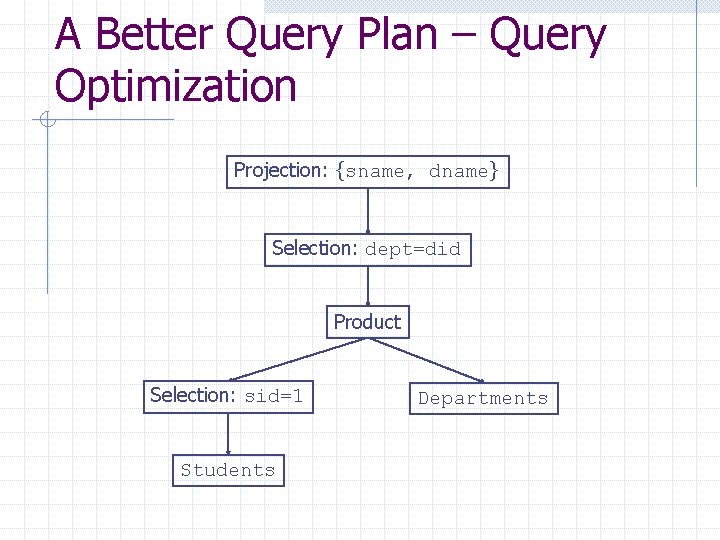
A Better Query Plan – Query Optimization Projection: {sname, dname} Selection: dept=did Product Selection: sid=1 Students Departments
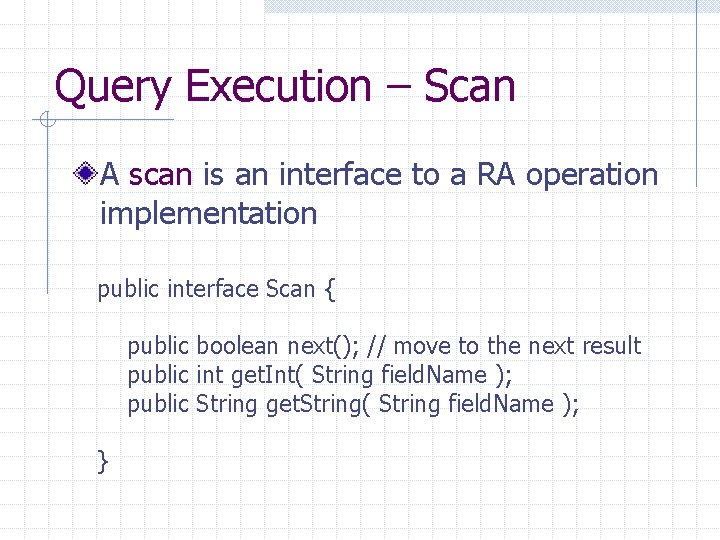
Query Execution – Scan A scan is an interface to a RA operation implementation public interface Scan { public boolean next(); // move to the next result public int get. Int( String field. Name ); public String get. String( String field. Name ); }
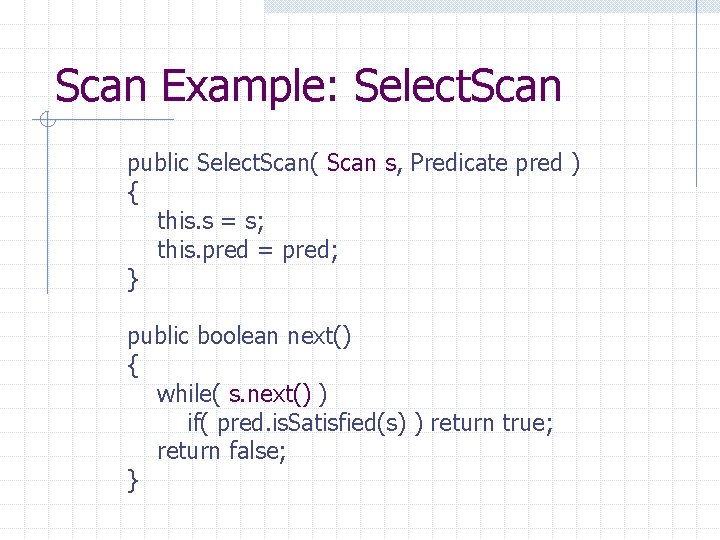
Scan Example: Select. Scan public Select. Scan( Scan s, Predicate pred ) { this. s = s; this. pred = pred; } public boolean next() { while( s. next() ) if( pred. is. Satisfied(s) ) return true; return false; }
Readings Textbook Chapter 16, 17, 18, 19
- Slides: 24