
CS 422 Principles of Database Systems Concurrency Control
CS 422 Principles of Database Systems Concurrency Control Chengyu Sun California State University, Los Angeles
ACID Properties of DB Transaction Atomicity Consistency Isolation Durability
Need for Concurrent Execution Fully utilize system resources to maximize performance Enhance user experience by improving responsiveness
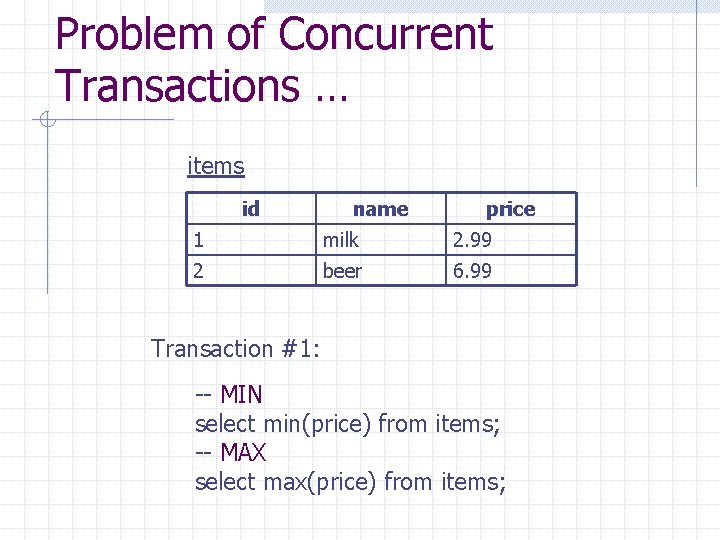
Problem of Concurrent Transactions … items id name price 1 milk 2. 99 2 beer 6. 99 Transaction #1: -- MIN select min(price) from items; -- MAX select max(price) from items;

… Problem of Concurrent Transactions Transaction #2: -- DELETE delete from items; -- INSERT insert into items values (3, ‘water’, 0. 99); Consider the interleaving of T 1 and T 2: MIN, DELETE, INSERT, MAX
Concurrency Control Ensure the correct execution of concurrent transactions
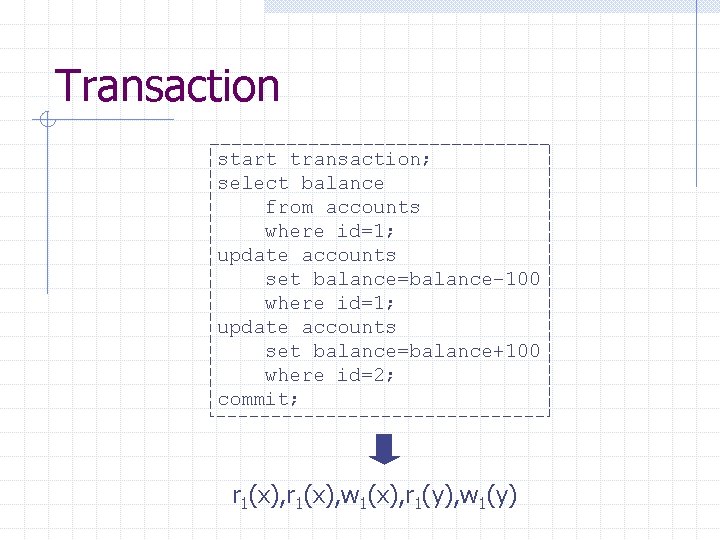
Transaction start transaction; select balance from accounts where id=1; update accounts set balance=balance– 100 where id=1; update accounts set balance=balance+100 where id=2; commit; r 1(x), w 1(x), r 1(y), w 1(y)
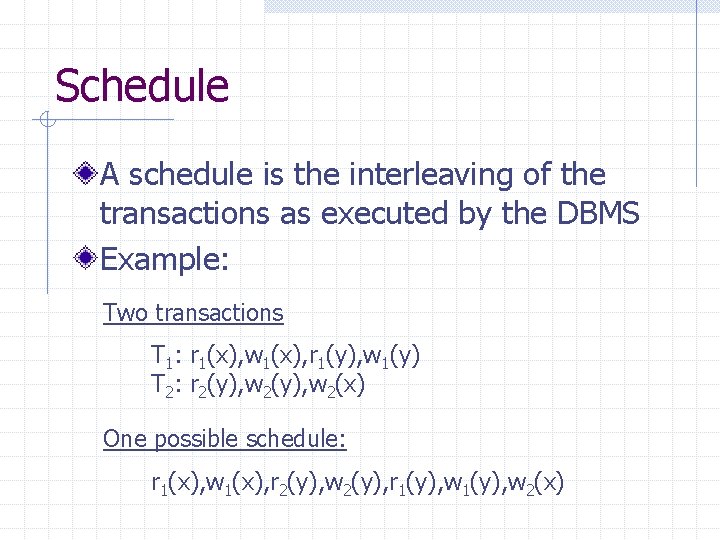
Schedule A schedule is the interleaving of the transactions as executed by the DBMS Example: Two transactions T 1: r 1(x), w 1(x), r 1(y), w 1(y) T 2: r 2(y), w 2(x) One possible schedule: r 1(x), w 1(x), r 2(y), w 2(y), r 1(y), w 2(x)
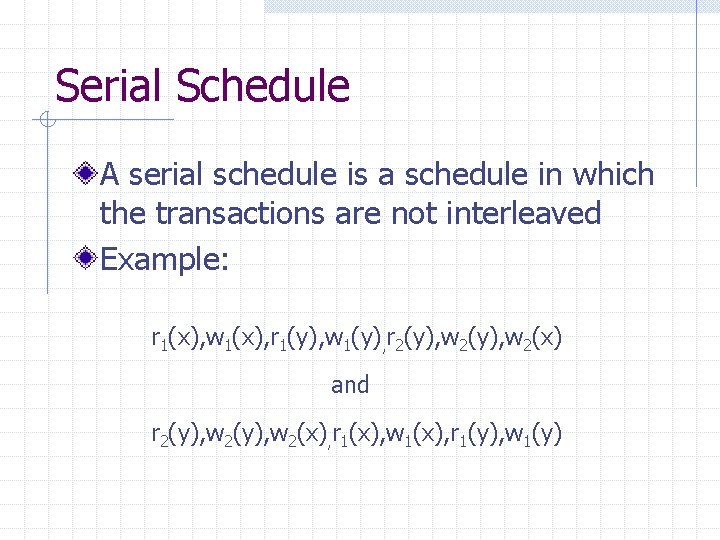
Serial Schedule A serial schedule is a schedule in which the transactions are not interleaved Example: r 1(x), w 1(x), r 1(y), w 1(y), r 2(y), w 2(x) and r 2(y), w 2(x), r 1(x), w 1(x), r 1(y), w 1(y)
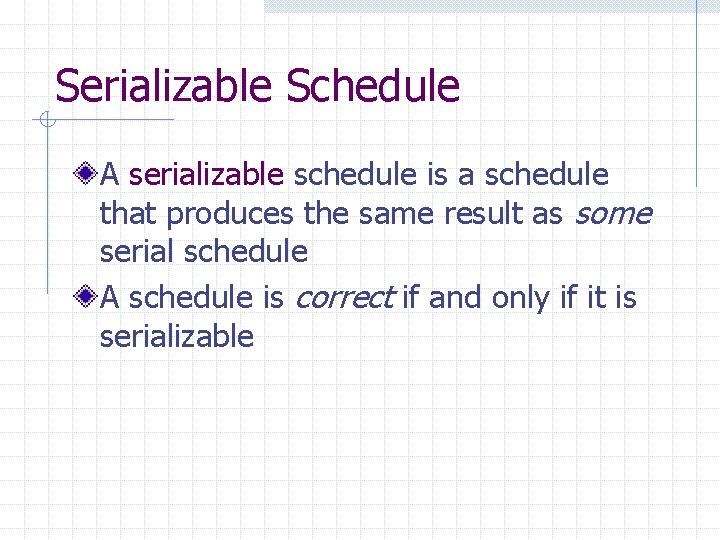
Serializable Schedule A serializable schedule is a schedule that produces the same result as some serial schedule A schedule is correct if and only if it is serializable
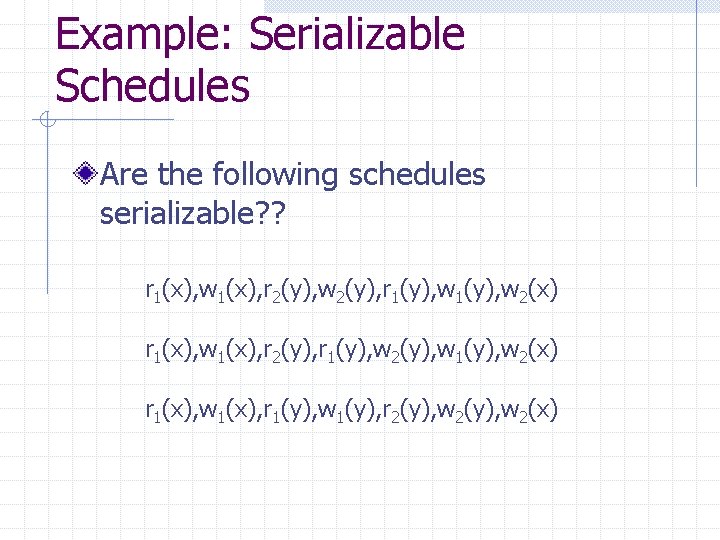
Example: Serializable Schedules Are the following schedules serializable? ? r 1(x), w 1(x), r 2(y), w 2(y), r 1(y), w 2(x) r 1(x), w 1(x), r 2(y), r 1(y), w 2(y), w 1(y), w 2(x) r 1(x), w 1(x), r 1(y), w 1(y), r 2(y), w 2(x)
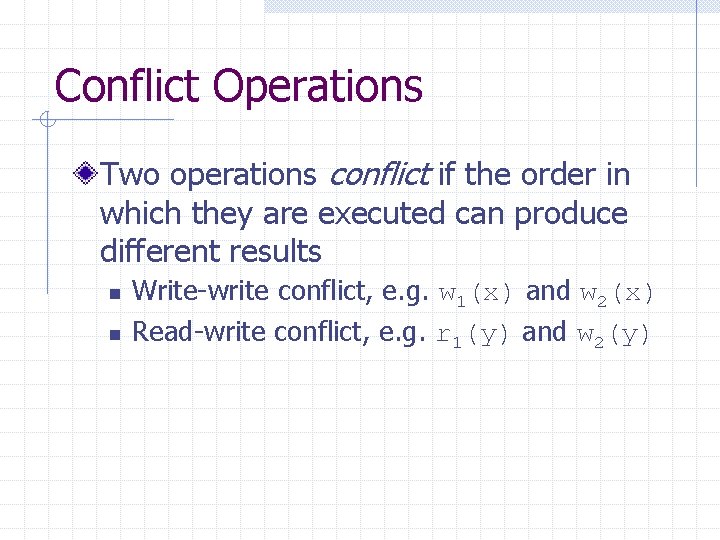
Conflict Operations Two operations conflict if the order in which they are executed can produce different results n n Write-write conflict, e. g. w 1(x) and w 2(x) Read-write conflict, e. g. r 1(y) and w 2(y)
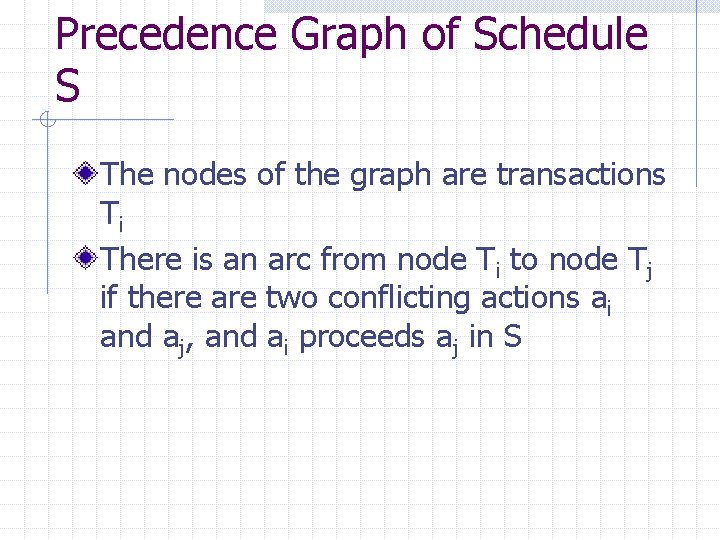
Precedence Graph of Schedule S The nodes of the graph are transactions Ti There is an arc from node Ti to node Tj if there are two conflicting actions ai and aj, and ai proceeds aj in S
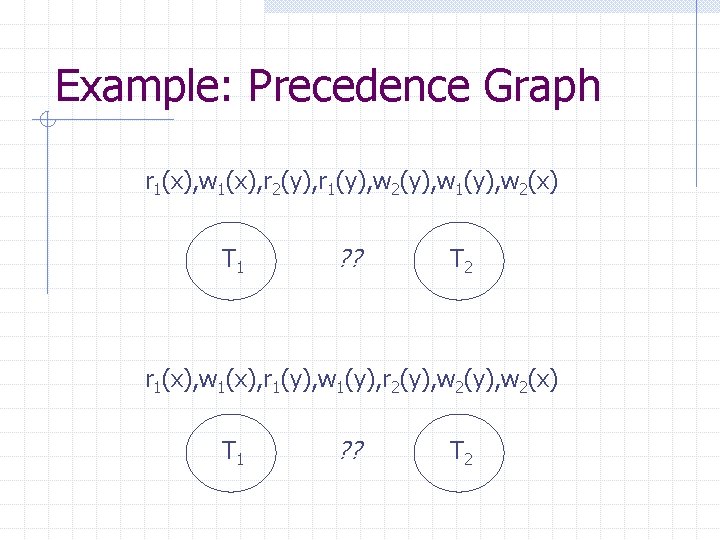
Example: Precedence Graph r 1(x), w 1(x), r 2(y), r 1(y), w 2(y), w 1(y), w 2(x) T 1 ? ? T 2 r 1(x), w 1(x), r 1(y), w 1(y), r 2(y), w 2(x) T 1 ? ? T 2
Determine Serializablility A schedule is serializable if its precedence graph is acyclic
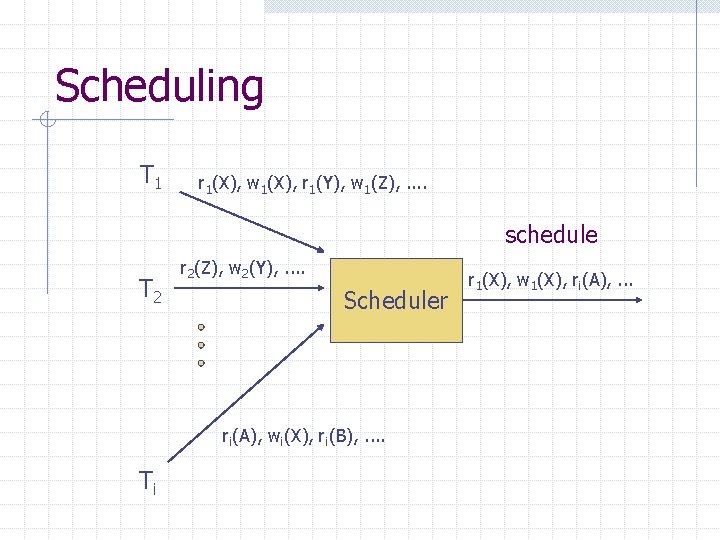
Scheduling T 1 r 1(X), w 1(X), r 1(Y), w 1(Z), . . schedule T 2 r 2(Z), w 2(Y), . . Scheduler ri(A), wi(X), ri(B), . . Ti r 1(X), w 1(X), ri(A), . . .
Locking Produce serializable schedules using locks Lock n n lock() – returns immediately if the lock is available or is already owned by the current thread/process; otherwise wait unlock() – release the lock, i. e. make the lock available again
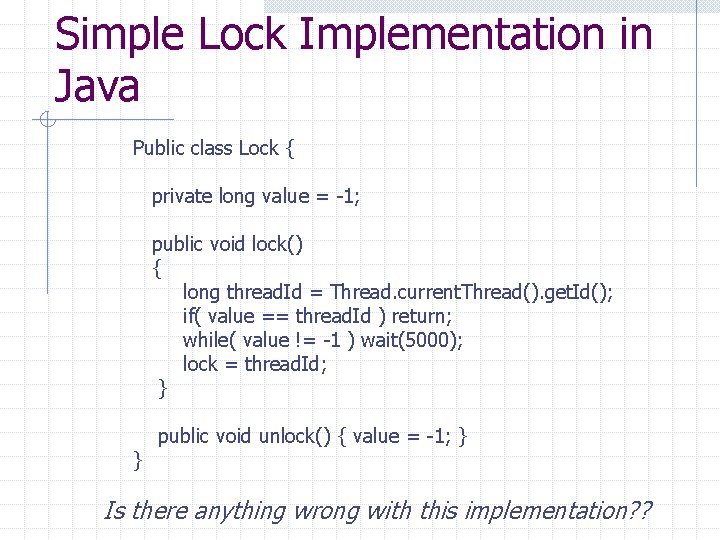
Simple Lock Implementation in Java Public class Lock { private long value = -1; public void lock() { long thread. Id = Thread. current. Thread(). get. Id(); if( value == thread. Id ) return; while( value != -1 ) wait(5000); lock = thread. Id; } } public void unlock() { value = -1; } Is there anything wrong with this implementation? ?
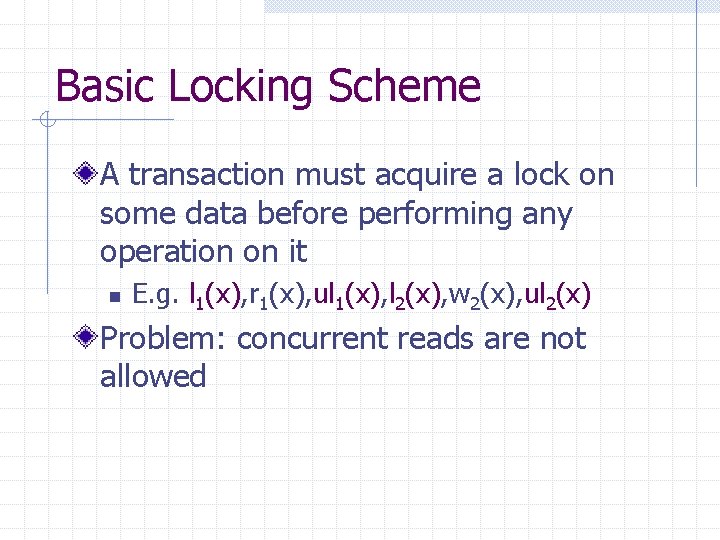
Basic Locking Scheme A transaction must acquire a lock on some data before performing any operation on it n E. g. l 1(x), r 1(x), ul 1(x), l 2(x), w 2(x), ul 2(x) Problem: concurrent reads are not allowed
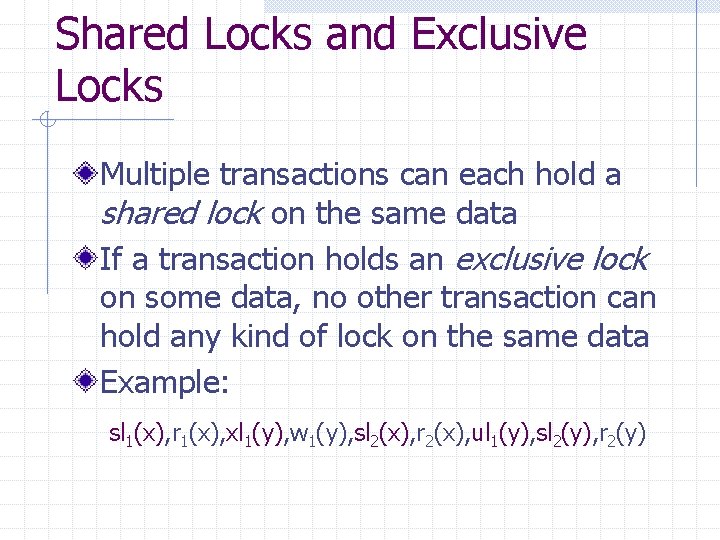
Shared Locks and Exclusive Locks Multiple transactions can each hold a shared lock on the same data If a transaction holds an exclusive lock on some data, no other transaction can hold any kind of lock on the same data Example: sl 1(x), r 1(x), xl 1(y), w 1(y), sl 2(x), r 2(x), ul 1(y), sl 2(y), r 2(y)
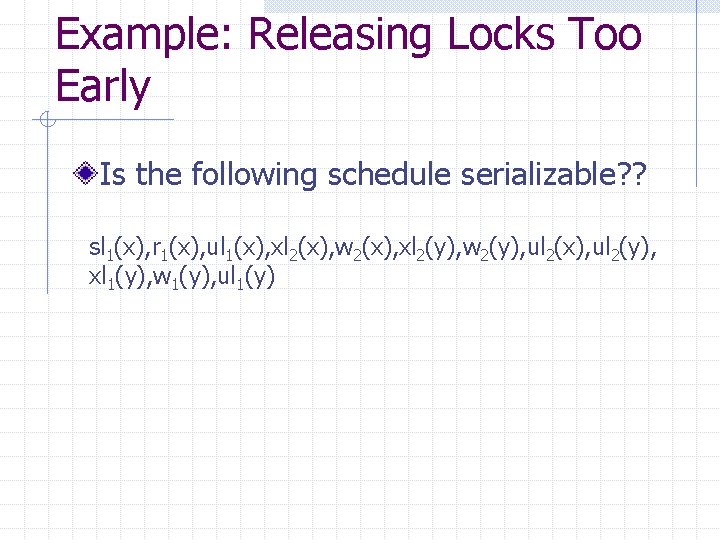
Example: Releasing Locks Too Early Is the following schedule serializable? ? sl 1(x), r 1(x), ul 1(x), xl 2(x), w 2(x), xl 2(y), w 2(y), ul 2(x), ul 2(y), xl 1(y), w 1(y), ul 1(y)
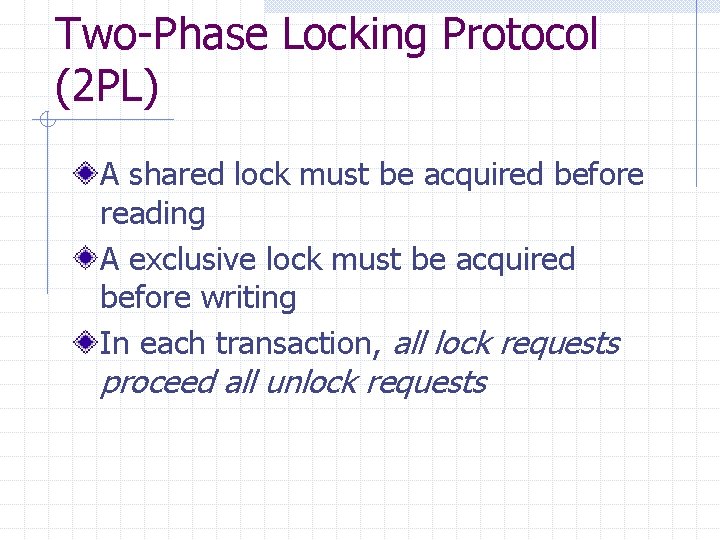
Two-Phase Locking Protocol (2 PL) A shared lock must be acquired before reading A exclusive lock must be acquired before writing In each transaction, all lock requests proceed all unlock requests
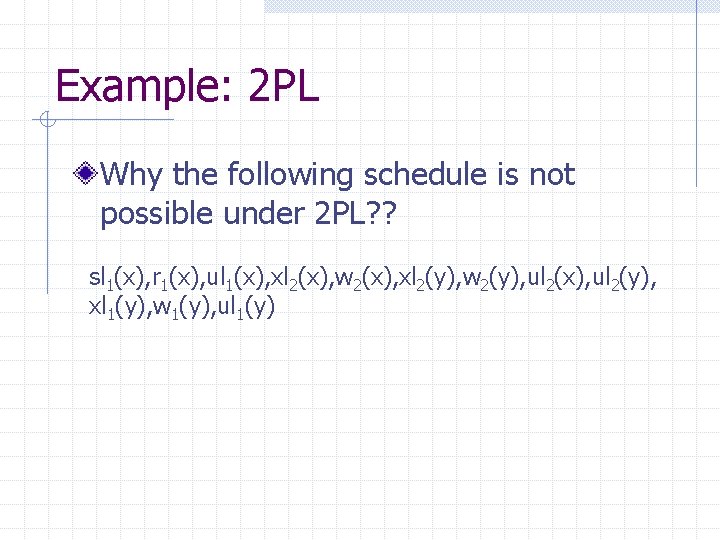
Example: 2 PL Why the following schedule is not possible under 2 PL? ? sl 1(x), r 1(x), ul 1(x), xl 2(x), w 2(x), xl 2(y), w 2(y), ul 2(x), ul 2(y), xl 1(y), w 1(y), ul 1(y)
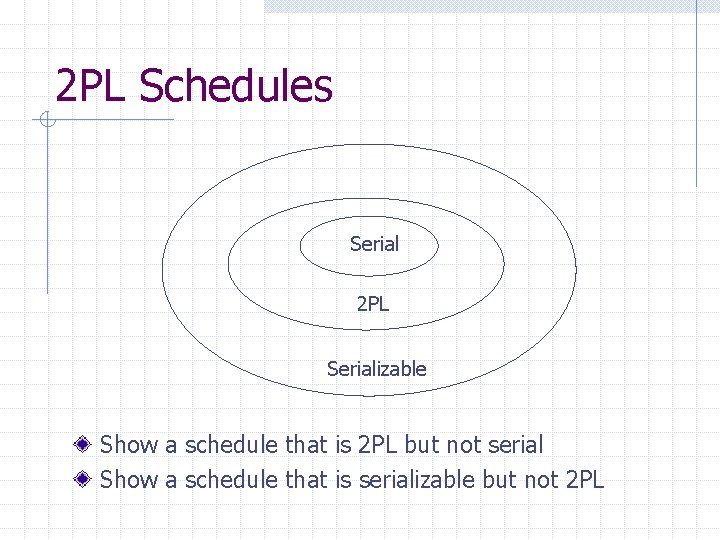
2 PL Schedules Serial 2 PL Serializable Show a schedule that is 2 PL but not serial Show a schedule that is serializable but not 2 PL
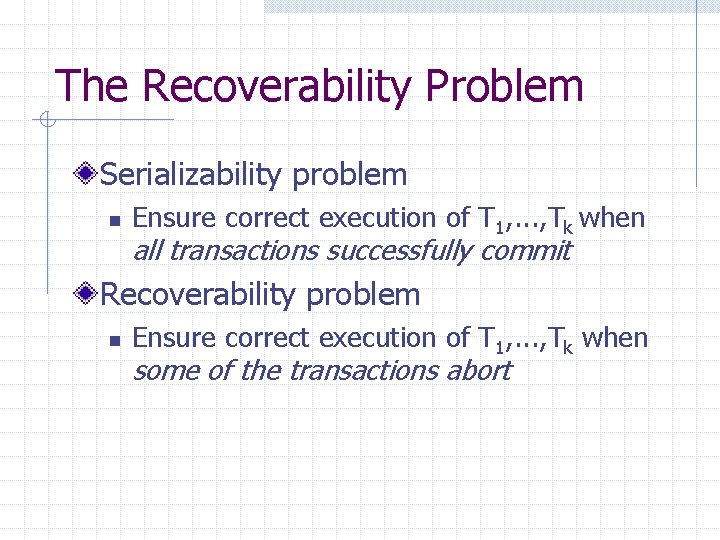
The Recoverability Problem Serializability problem n Ensure correct execution of T 1, . . . , Tk when all transactions successfully commit Recoverability problem n Ensure correct execution of T 1, . . . , Tk when some of the transactions abort
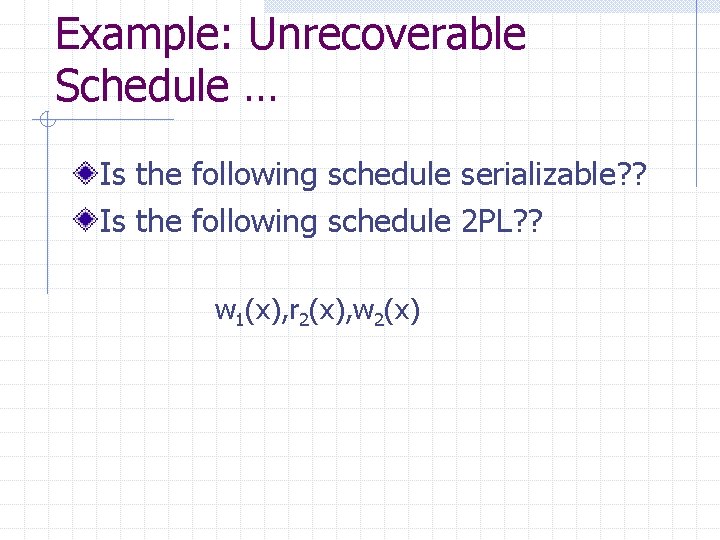
Example: Unrecoverable Schedule … Is the following schedule serializable? ? Is the following schedule 2 PL? ? w 1(x), r 2(x), w 2(x)
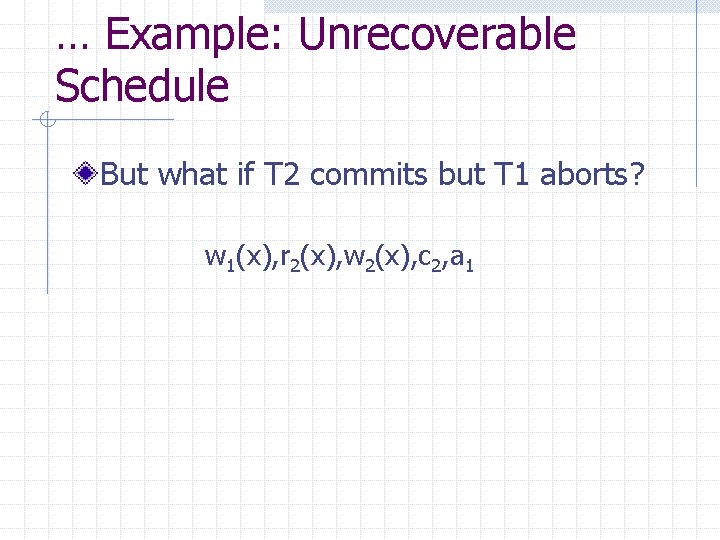
… Example: Unrecoverable Schedule But what if T 2 commits but T 1 aborts? w 1(x), r 2(x), w 2(x), c 2, a 1
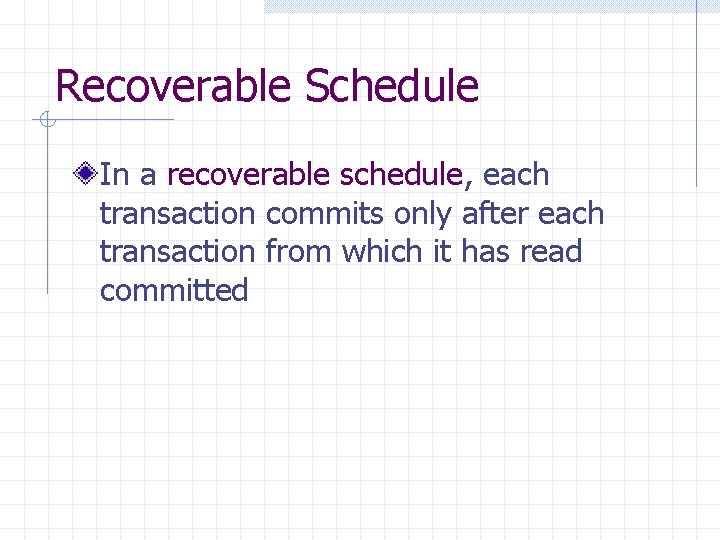
Recoverable Schedule In a recoverable schedule, each transaction commits only after each transaction from which it has read committed
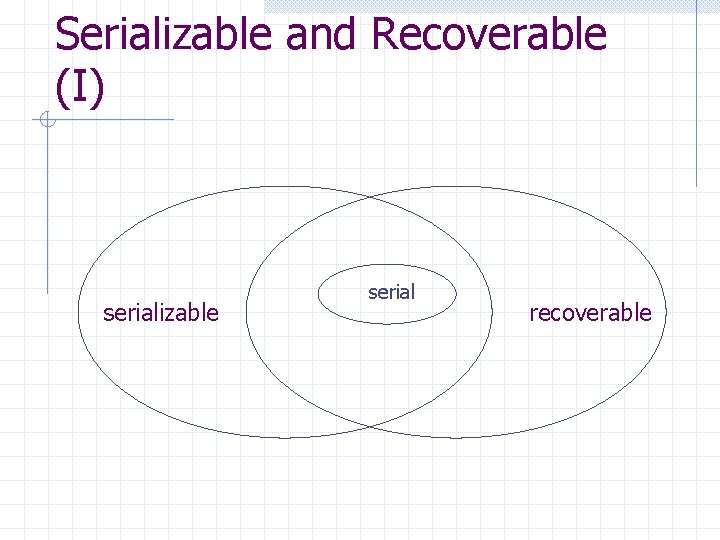
Serializable and Recoverable (I) serializable serial recoverable
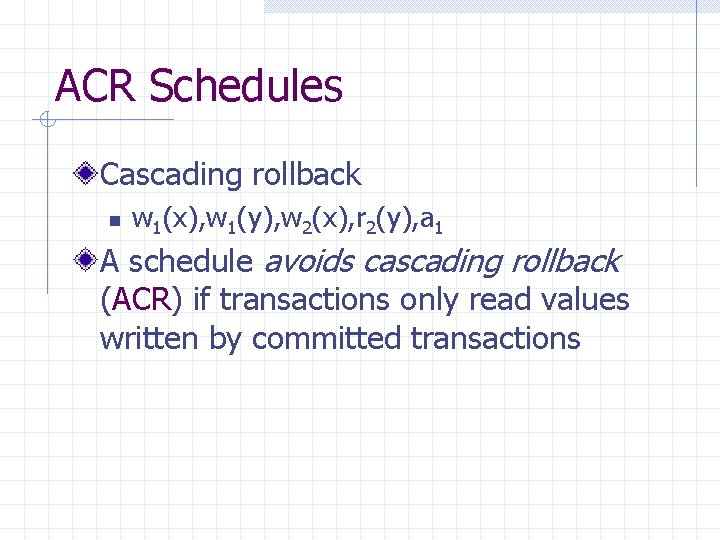
ACR Schedules Cascading rollback n w 1(x), w 1(y), w 2(x), r 2(y), a 1 A schedule avoids cascading rollback (ACR) if transactions only read values written by committed transactions
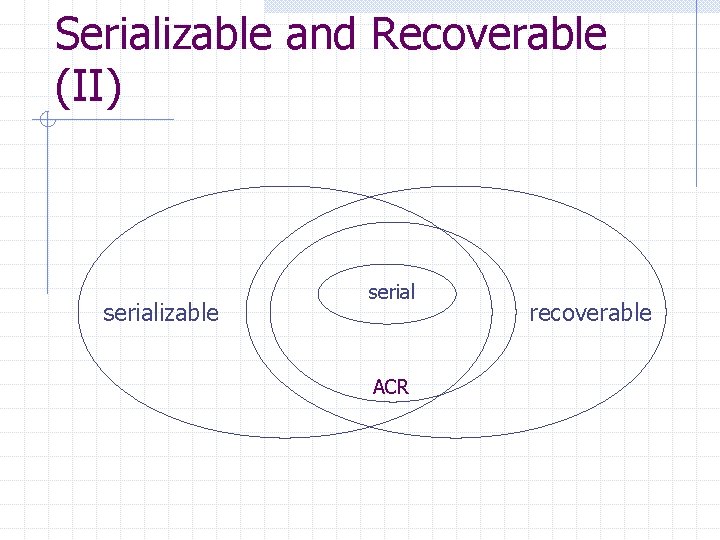
Serializable and Recoverable (II) serializable serial ACR recoverable
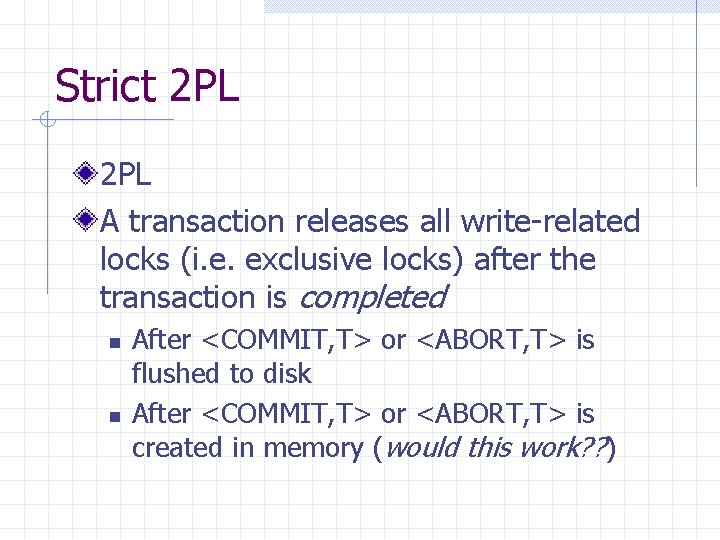
Strict 2 PL A transaction releases all write-related locks (i. e. exclusive locks) after the transaction is completed n n After <COMMIT, T> or <ABORT, T> is flushed to disk After <COMMIT, T> or <ABORT, T> is created in memory (would this work? ? )
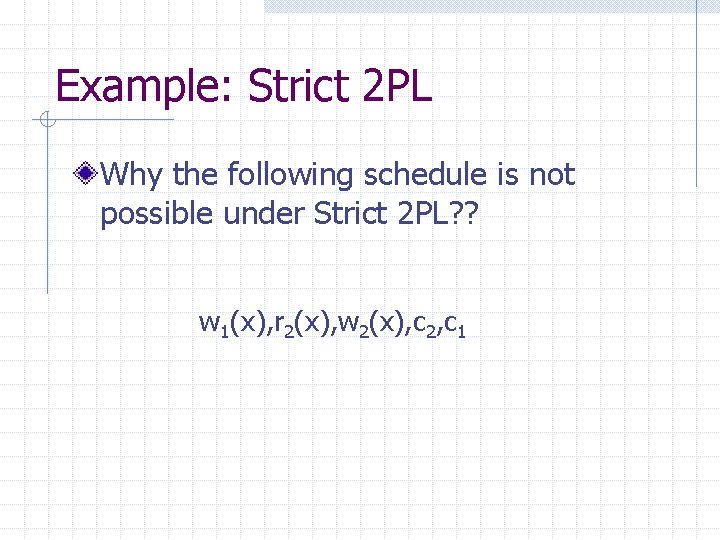
Example: Strict 2 PL Why the following schedule is not possible under Strict 2 PL? ? w 1(x), r 2(x), w 2(x), c 2, c 1
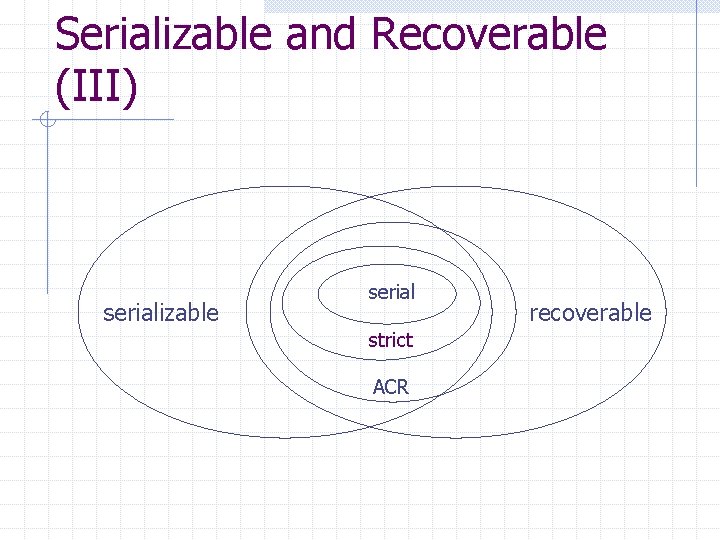
Serializable and Recoverable (III) serializable serial strict ACR recoverable
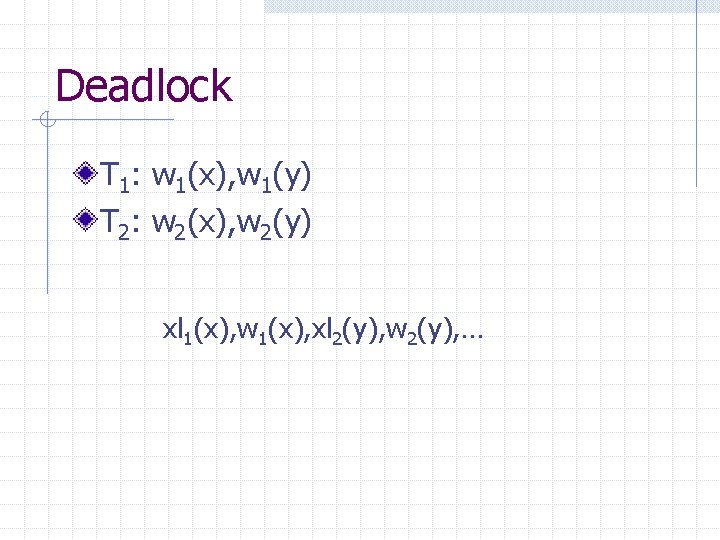
Deadlock T 1: w 1(x), w 1(y) T 2: w 2(x), w 2(y) xl 1(x), w 1(x), xl 2(y), w 2(y), …
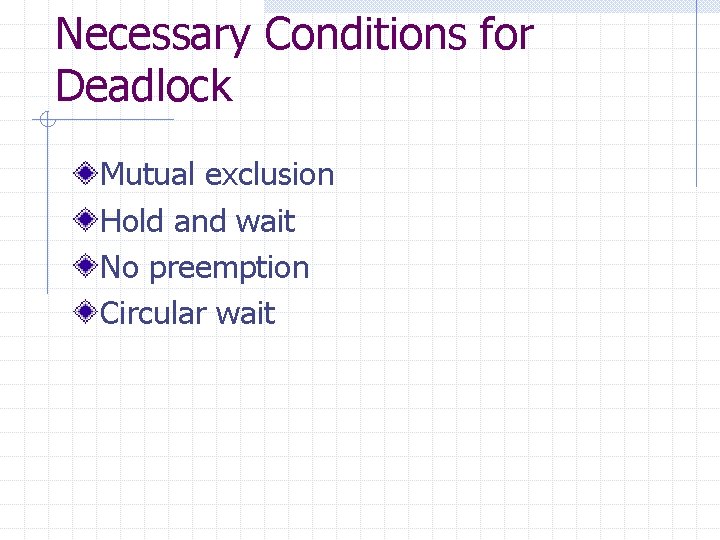
Necessary Conditions for Deadlock Mutual exclusion Hold and wait No preemption Circular wait
Handling Deadlocks Deadlock prevention Deadlock avoidance Deadlock detection
Resource Numbering Impose a total ordering of all shared resources A process can only request locks in increasing order Why the deadlock example shown before can no longer happen? ?
About Resource Numbering A deadlock prevention strategy Not suitable for databases
Wait-Die Suppose T 1 requests a lock that conflicts with a lock held by T 2 n n If T 1 is older than T 2, then T 1 waits for the lock If T 1 is newer than T 2, T 1 aborts (i. e. “dies”) Why does this strategy work? ?
About Wait-Die A deadlock avoidance strategy (not deadlock detection as the textbook says) Transactions may be aborted to avoid deadlocks
Wait-For Graph Each transaction is a node in the graph An edge from T 1 to T 2 if T 1 is waiting for a lock that T 2 holds A cycle in the graph indicates a deadlock situation
About Wait-for Graph A deadlock detection strategy Transactions can be aborted to break a cycle in the graph Difficult to implement in databases because transaction also wait for buffers n For example, assume there are only two buffer pages w T 1: xl 1(x), pin(b 1) w T 2: pin(b 2), pin(b 3), xl 2(x)
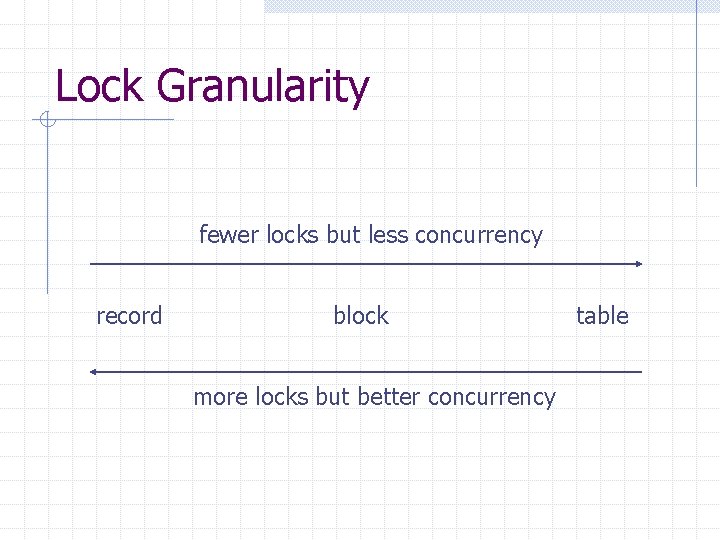
Other Lock Related Issues Phantoms Lock granularity Multiversion locking Lock and SQL Isolations Levels
Problem of Phantoms We can regulate the access of existing resources with locks, but how about new resources (e. g. created by appending new file blocks or inserting new records)? ?
Handle Phantoms Lock “end of file/table”
Lock Granularity fewer locks but less concurrency record block more locks but better concurrency table
Multiversion Locking Each version of a block is time-stamped with the commit time of the transaction that wrote it When a read-only transaction requests a value from a block, it reads from the block that was most recently committed at the time when this transaction began
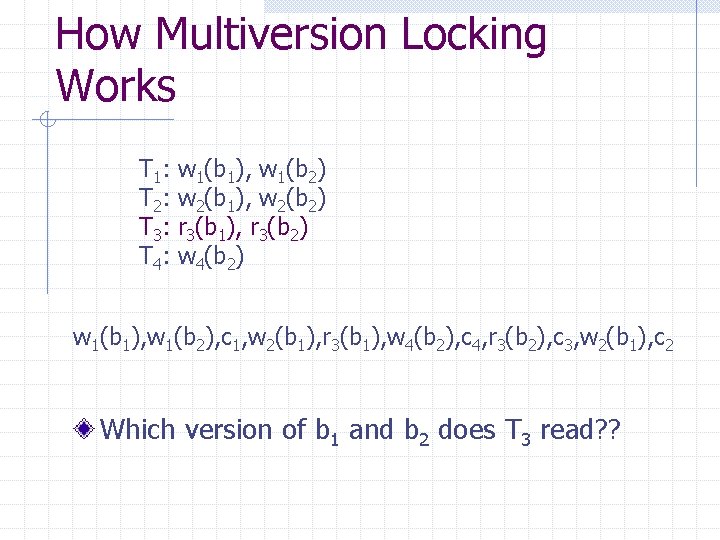
How Multiversion Locking Works T 1: T 2: T 3: T 4: w 1(b 1), w 1(b 2) w 2(b 1), w 2(b 2) r 3(b 1), r 3(b 2) w 4(b 2) w 1(b 1), w 1(b 2), c 1, w 2(b 1), r 3(b 1), w 4(b 2), c 4, r 3(b 2), c 3, w 2(b 1), c 2 Which version of b 1 and b 2 does T 3 read? ?
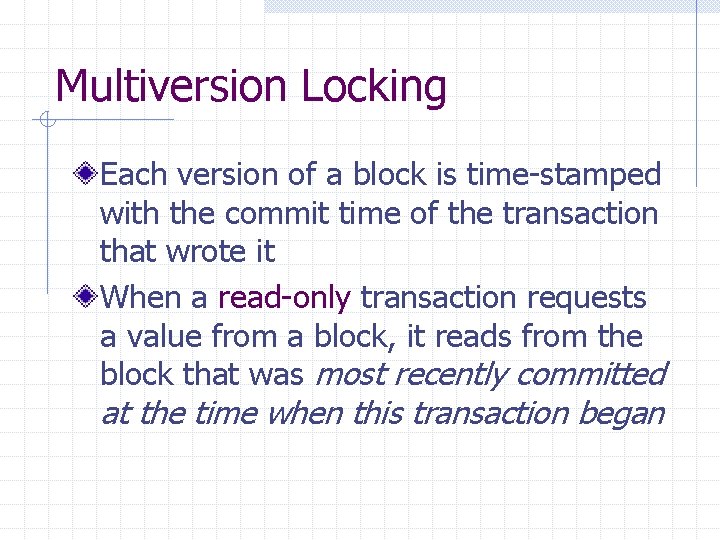
About Multiversion Locking Read-only transactions do not need to obtain any lock, i. e. never wait Implementation: use log to revert the current version of a block to a previous version
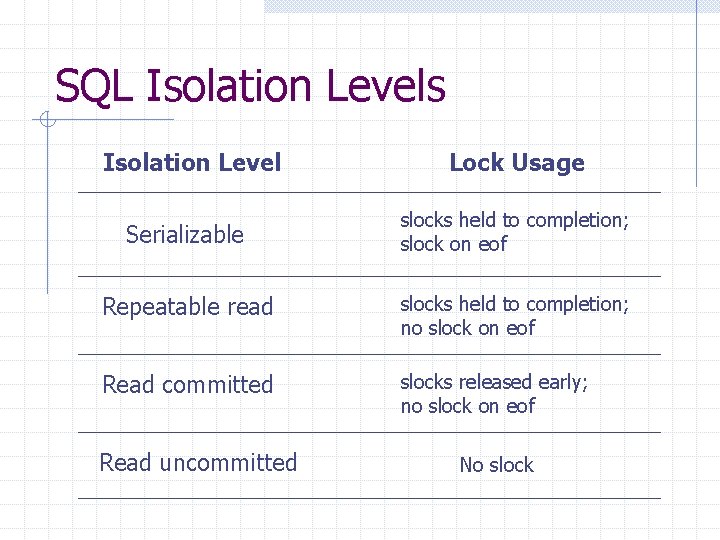
SQL Isolation Levels Isolation Level Lock Usage Serializable slocks held to completion; slock on eof Repeatable read slocks held to completion; no slock on eof Read committed slocks released early; no slock on eof Read uncommitted No slock
Concurrency Control in Simple. DB Transactions n simpledb. tx Concurrency Manager n simpledb. tx. concurrency
Simple. DB Transaction Keep track of the buffers it uses in Buffer. List Block-level locking n n n Acquire slock before reading Acquire xlock before writing Dummy block for EOF
Transaction Commit Flush buffers and log records Release all locks Unpin all buffers
Concurrency Manager Each transaction has its own concurrency manager Concurrency manager keeps tracks of the locks held by the transaction A lock table is shared by all concurrency managers
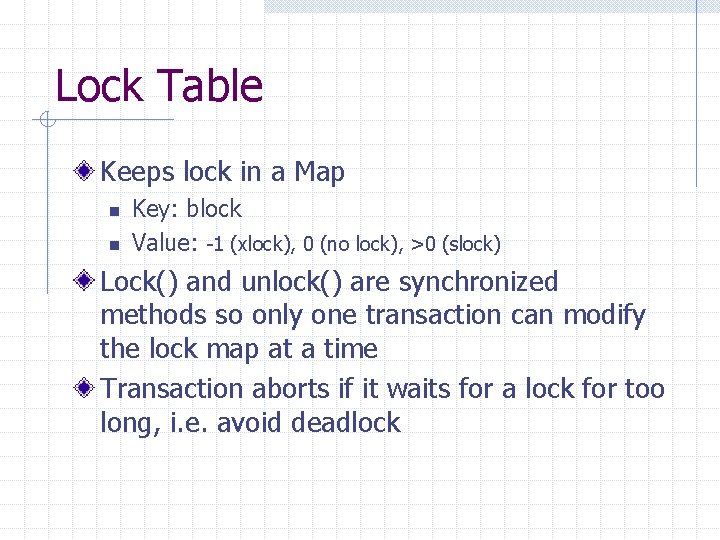
Lock Table Keeps lock in a Map n n Key: block Value: -1 (xlock), 0 (no lock), >0 (slock) Lock() and unlock() are synchronized methods so only one transaction can modify the lock map at a time Transaction aborts if it waits for a lock for too long, i. e. avoid deadlock
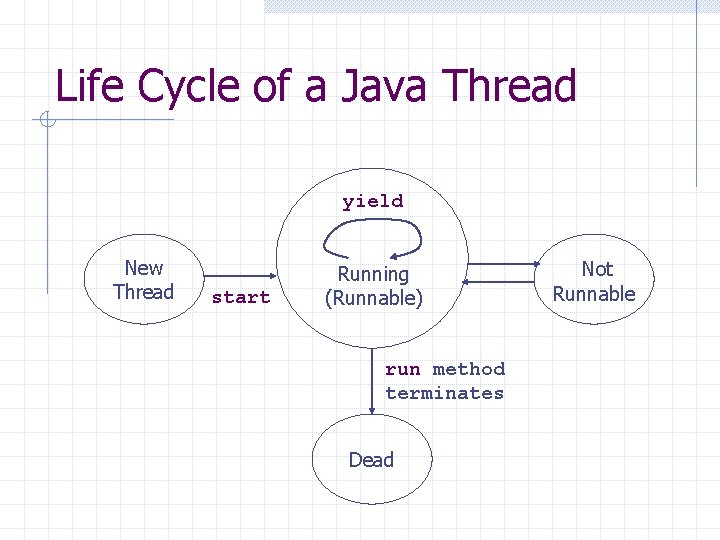
Life Cycle of a Java Thread yield New Thread start Running (Runnable) run method terminates Dead Not Runnable
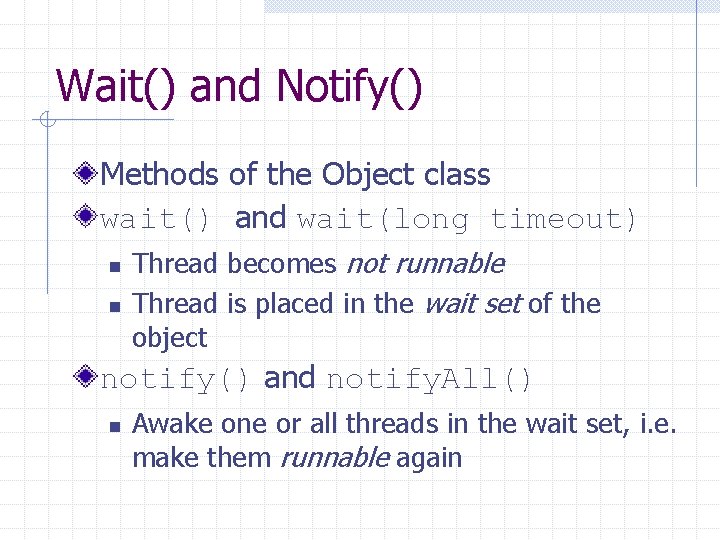
Wait() and Notify() Methods of the Object class wait() and wait(long timeout) n n Thread becomes not runnable Thread is placed in the wait set of the object notify() and notify. All() n Awake one or all threads in the wait set, i. e. make them runnable again
Readings Textbook Chapter 14. 4 -14. 6 Simple. DB source code n n simpledb. tx. concurrency
- Slides: 59