
CS 412 Introduction to Computer Networking Telecommunication DSL

- Slides: 33
CS 412 Introduction to Computer Networking & Telecommunication DSL, Cable, and Mobile Telephone System Chi-Cheng Lin, Winona State University
Topics l Digital Subscriber Line l Cable l Mobile Telephone System 2
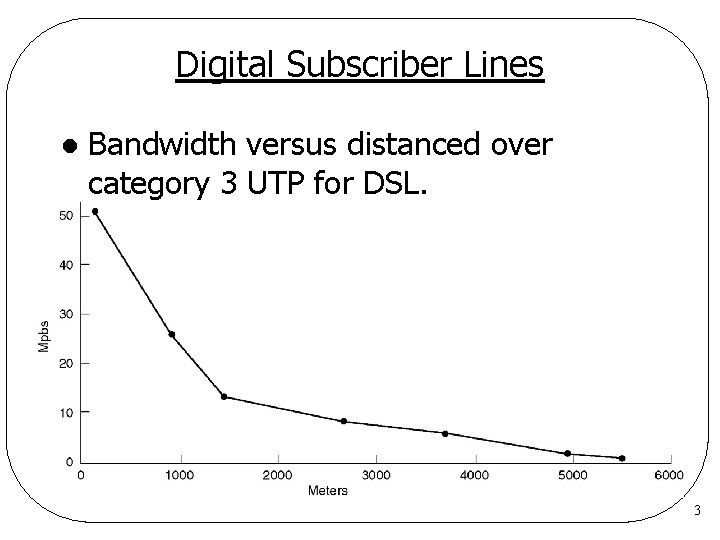
Digital Subscriber Lines l Bandwidth versus distanced over category 3 UTP for DSL. 3
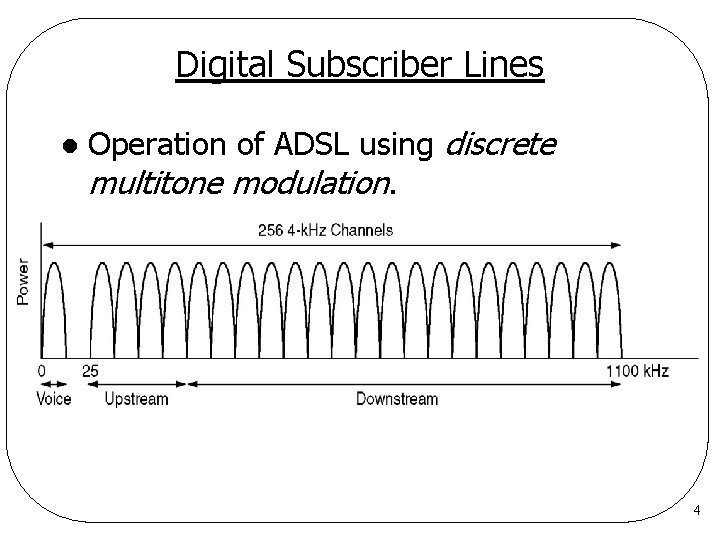
Digital Subscriber Lines l Operation of ADSL using discrete multitone modulation. 4
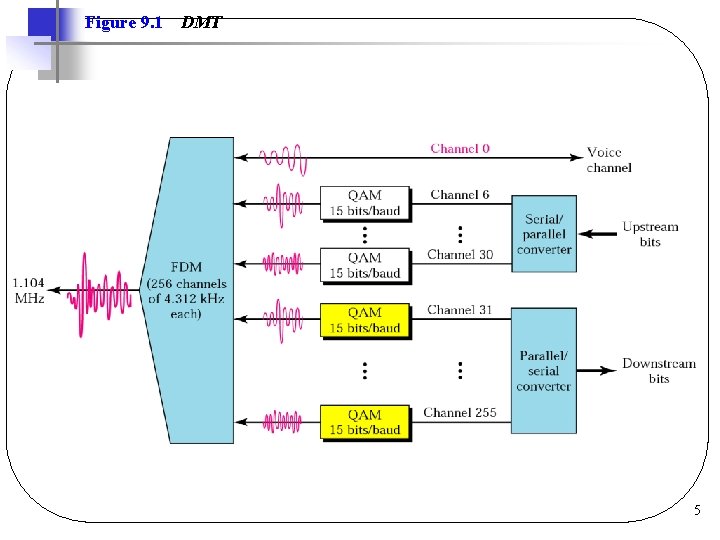
Figure 9. 1 DMT 5
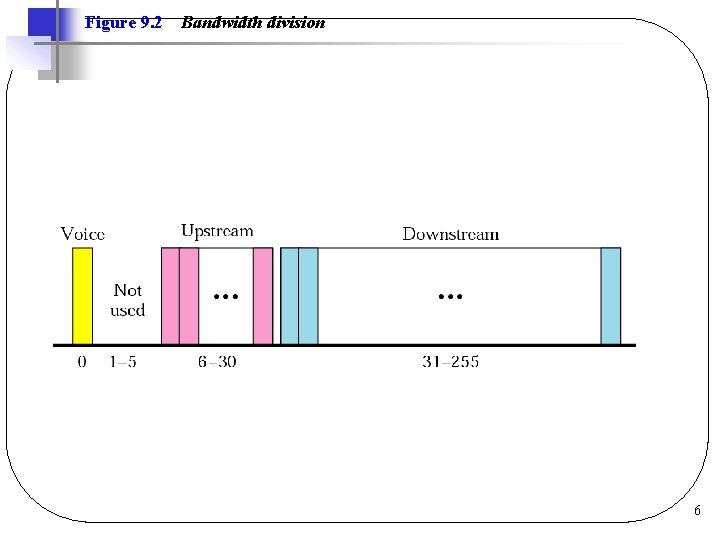
Figure 9. 2 Bandwidth division 6
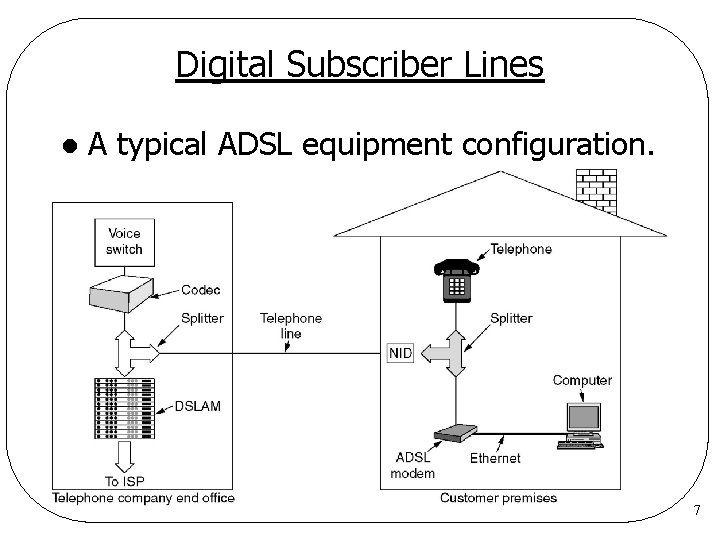
Digital Subscriber Lines l A typical ADSL equipment configuration. 7
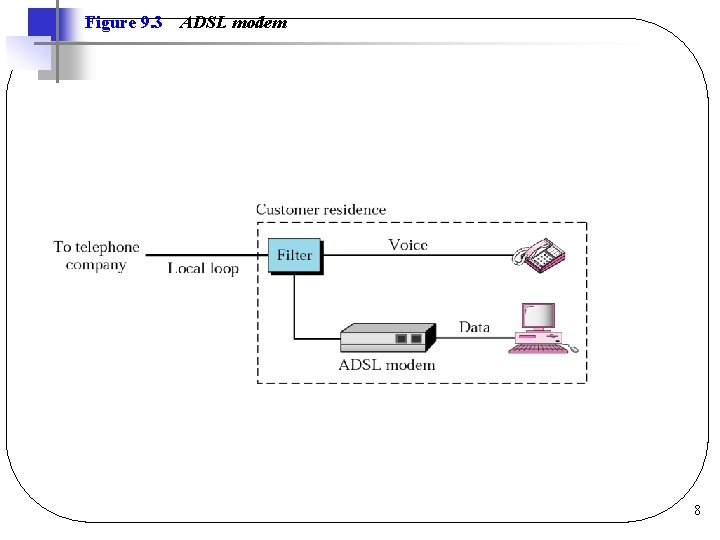
Figure 9. 3 ADSL modem 8
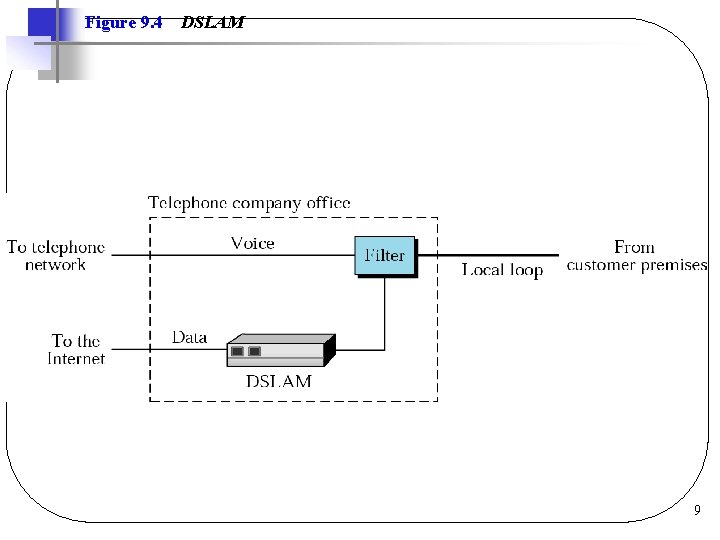
Figure 9. 4 DSLAM 9
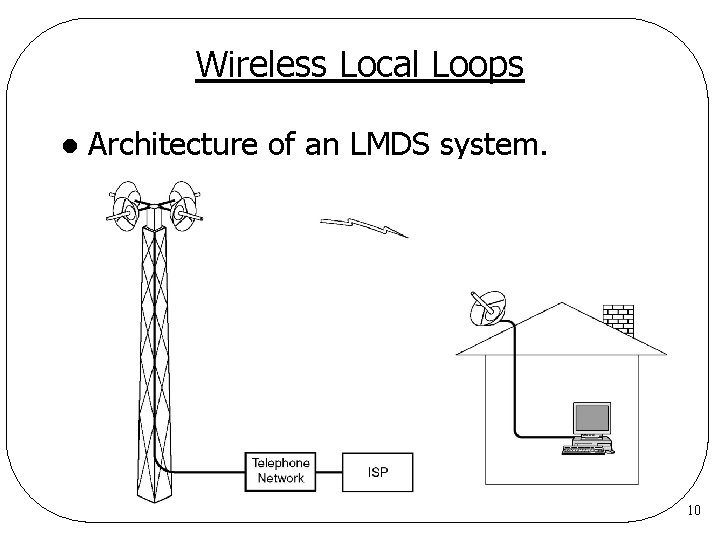
Wireless Local Loops l Architecture of an LMDS system. 10
Cable Television Community Antenna Television l Internet over Cable l Spectrum Allocation l Cable Modems l ADSL versus Cable l 11
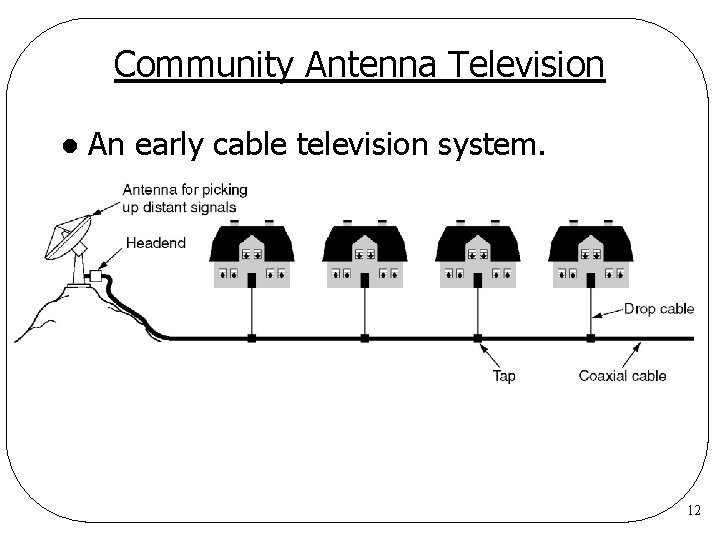
Community Antenna Television l An early cable television system. 12
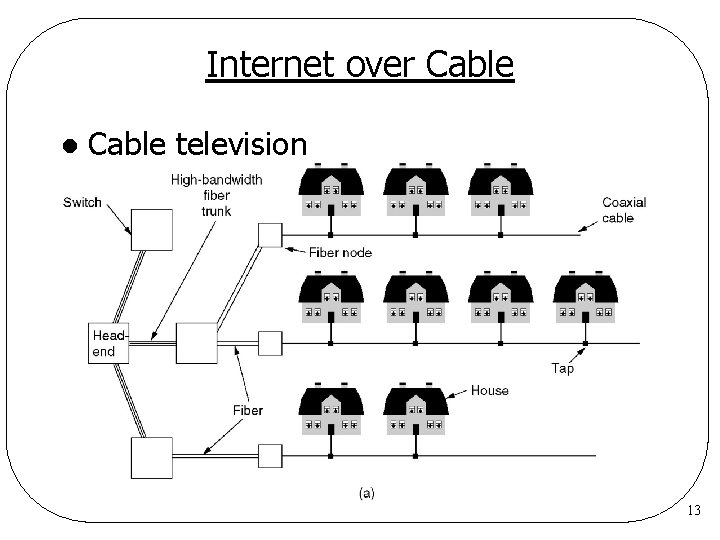
Internet over Cable l Cable television 13
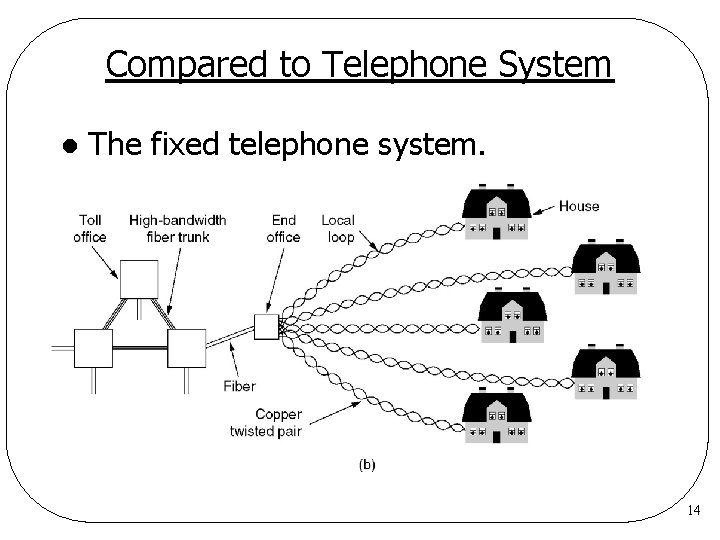
Compared to Telephone System l The fixed telephone system. 14
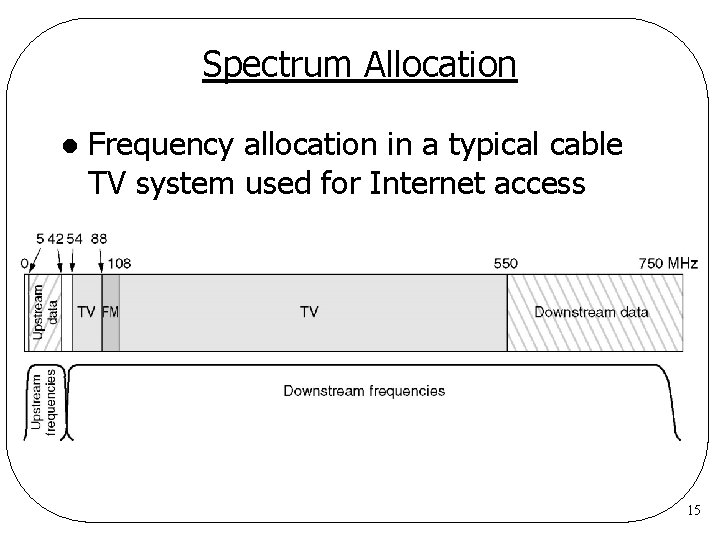
Spectrum Allocation l Frequency allocation in a typical cable TV system used for Internet access 15
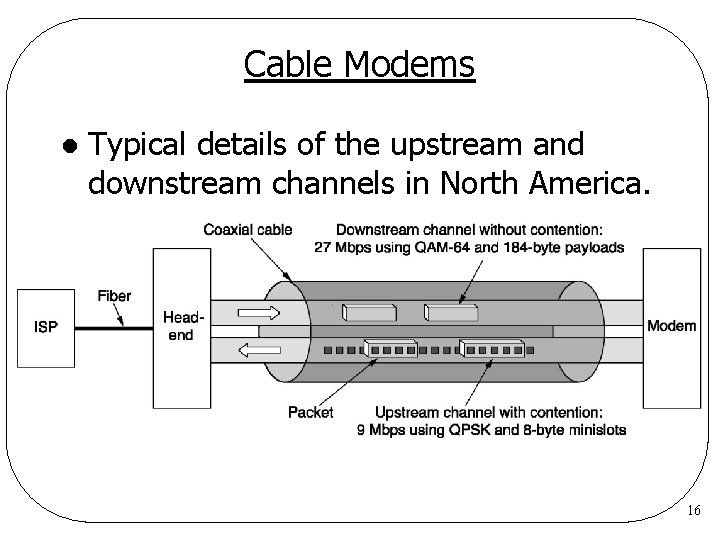
Cable Modems l Typical details of the upstream and downstream channels in North America. 16
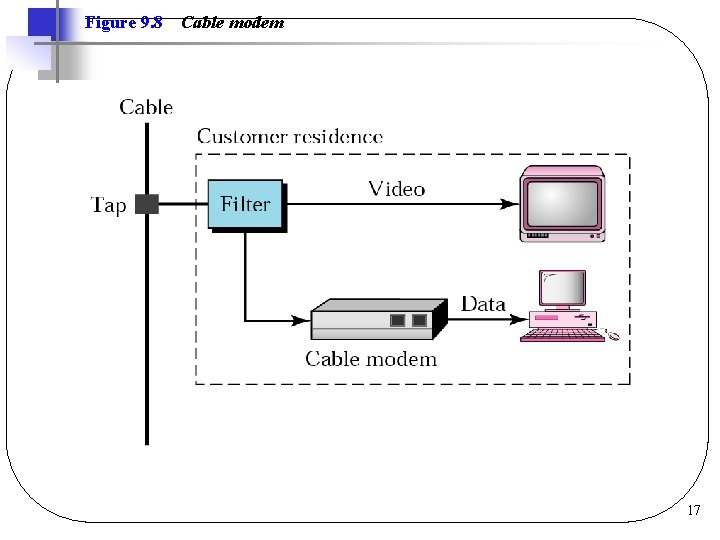
Figure 9. 8 Cable modem 17
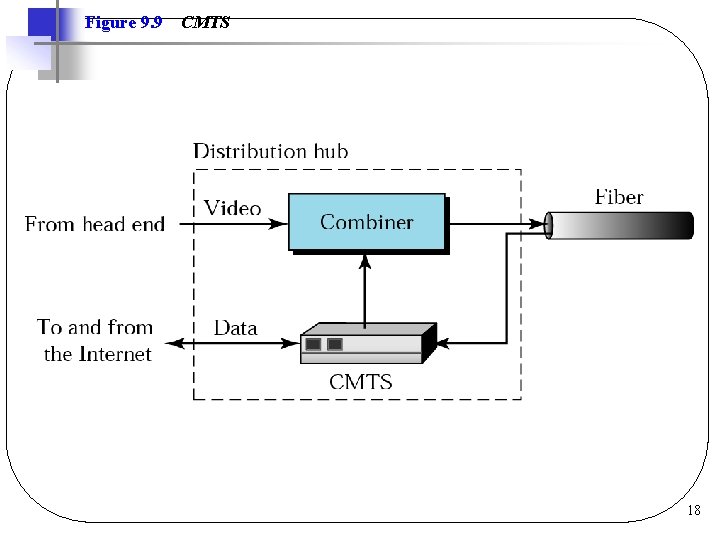
Figure 9. 9 CMTS 18
ADSL versus Cable l Discussions … 19
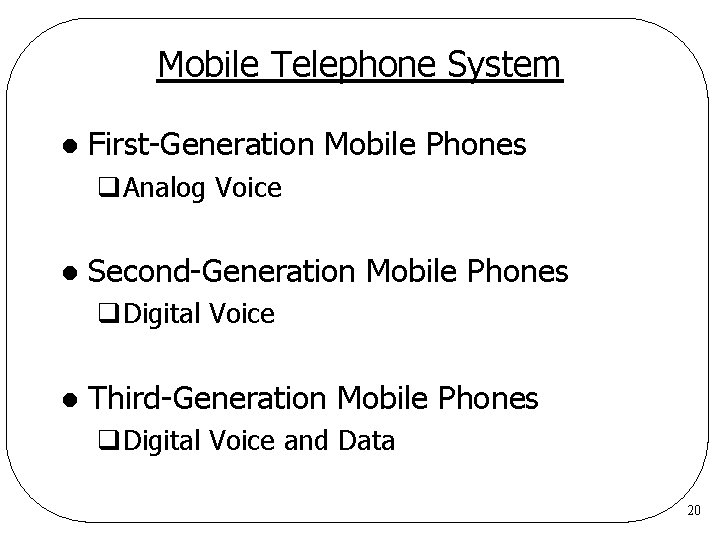
Mobile Telephone System l First-Generation Mobile Phones q. Analog Voice l Second-Generation Mobile Phones q. Digital Voice l Third-Generation Mobile Phones q. Digital Voice and Data 20
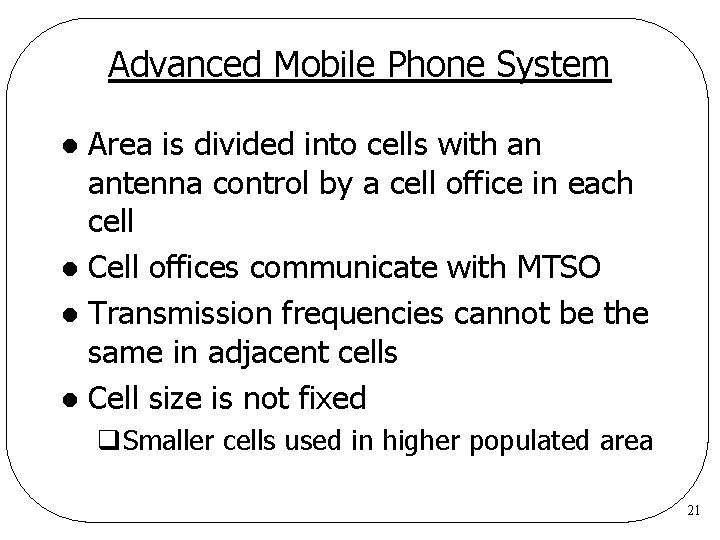
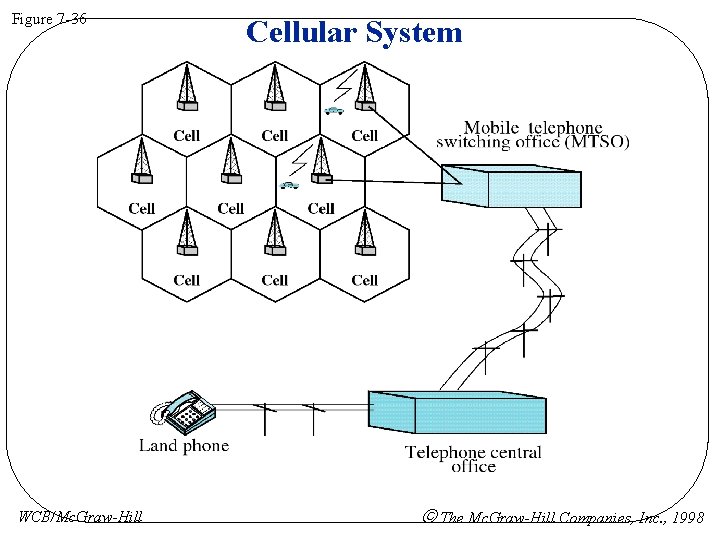
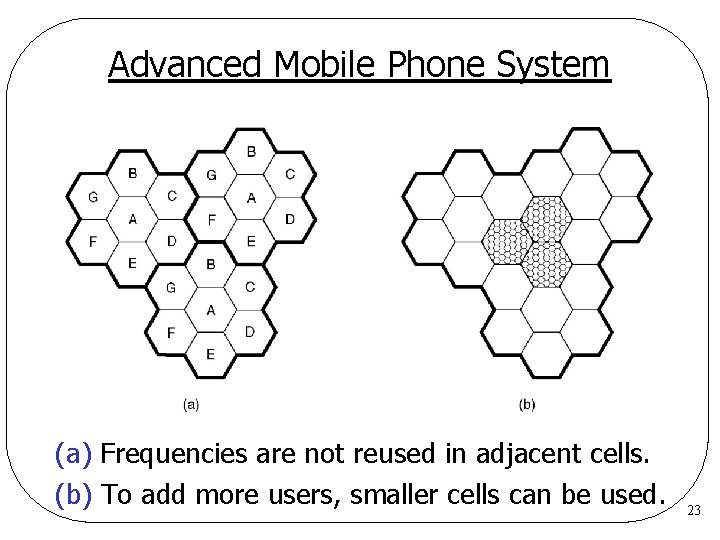
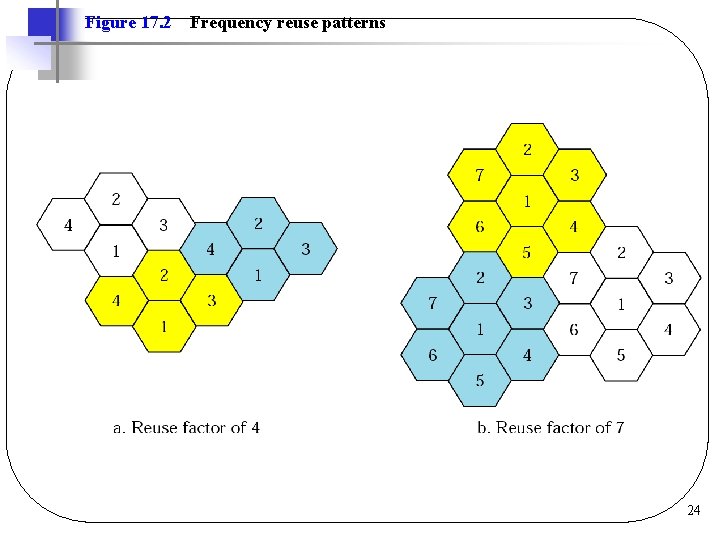
Advanced Mobile Phone System Area is divided into cells with an antenna control by a cell office in each cell l Cell offices communicate with MTSO l Transmission frequencies cannot be the same in adjacent cells l Cell size is not fixed l q. Smaller cells used in higher populated area 21
Figure 7 -36 WCB/Mc. Graw-Hill Cellular System The Mc. Graw-Hill Companies, Inc. , 1998
Advanced Mobile Phone System (a) Frequencies are not reused in adjacent cells. (b) To add more users, smaller cells can be used. 23
Figure 17. 2 Frequency reuse patterns 24
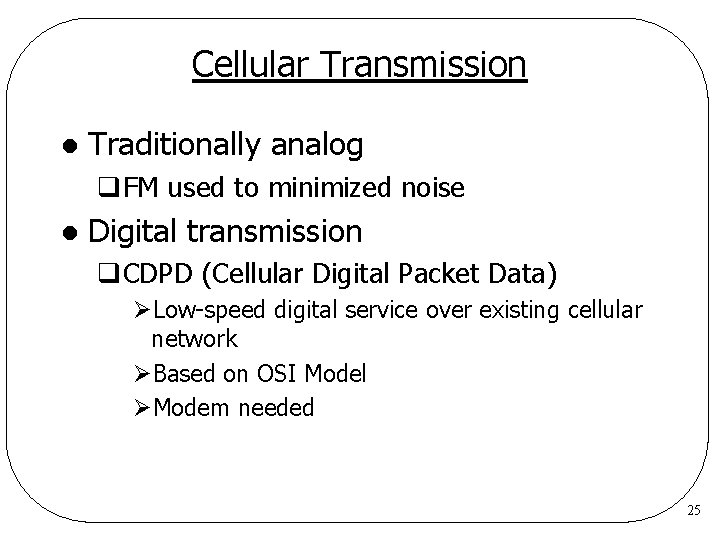
Cellular Transmission l Traditionally analog q. FM used to minimized noise l Digital transmission q. CDPD (Cellular Digital Packet Data) ØLow-speed digital service over existing cellular network ØBased on OSI Model ØModem needed 25
Cellular System l Handoff q. When a mobile telephone leaves a cell 1. Its base station notices the signal fading out 2. The base station asks all the surrounding base stations how much power they are getting from it 3. Ownership is transferred to the neighbor base station that receives strongest power 4. The telephone is informed of its new boss 5. If a call is in progress, it will be asked to switch to a new channel 26
Channels l 832 full-duplex channels q. Each channel consists of 2 simplex channels q. Transmission channels Ø(849 -824)MHz/30 KHz 832 q. Receiving channels Ø(894 -869)MHz/30 KHz 832 l Typically, actual number of voice channel per cell 45 27
Channel Categories l The 832 channels are divided into four categories q. Control (base to mobile) to manage the system q. Paging (base to mobile) to alert users to calls for them q. Access (bidirectional) for call setup and channel assignment q. Data (bidirectional) for voice, fax, or data 28
Second-Generation Mobile Phones l D-AMP l GSM l CDMA 29
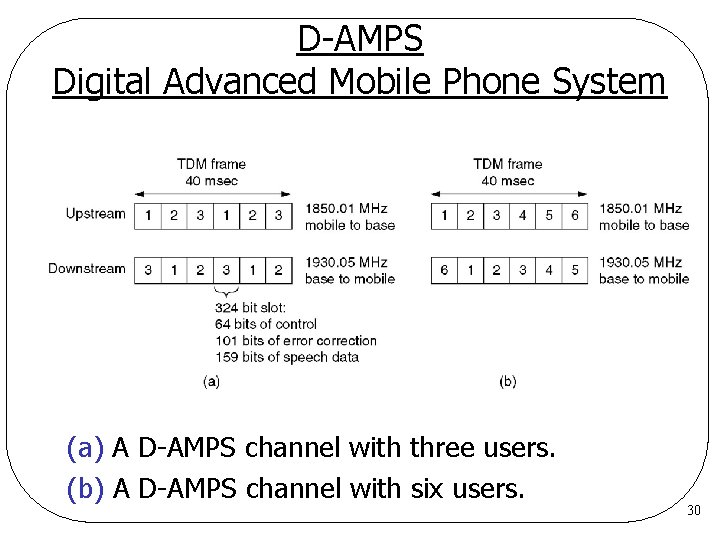
D-AMPS Digital Advanced Mobile Phone System (a) A D-AMPS channel with three users. (b) A D-AMPS channel with six users. 30
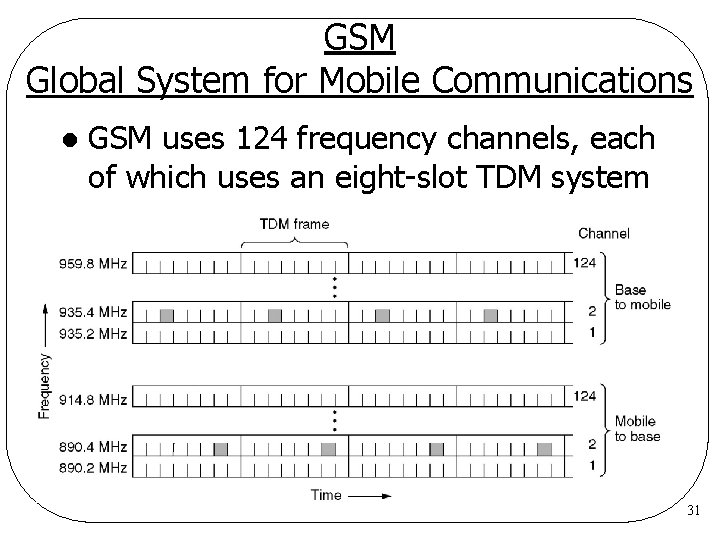
GSM Global System for Mobile Communications l GSM uses 124 frequency channels, each of which uses an eight-slot TDM system 31
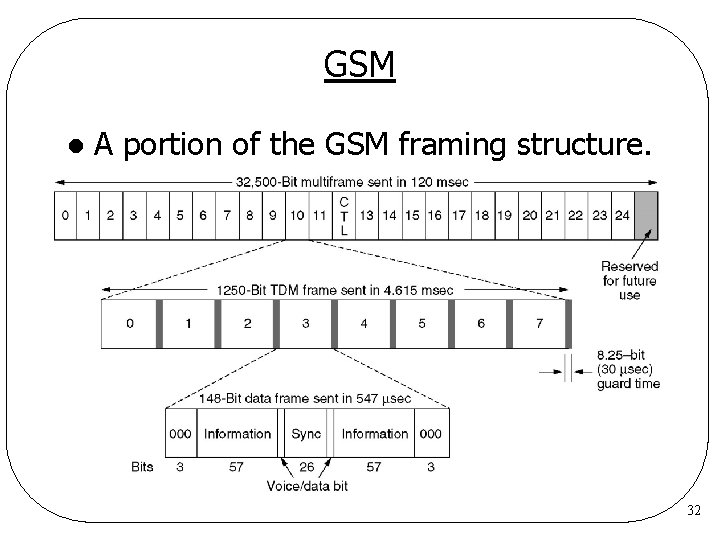
GSM l A portion of the GSM framing structure. 32
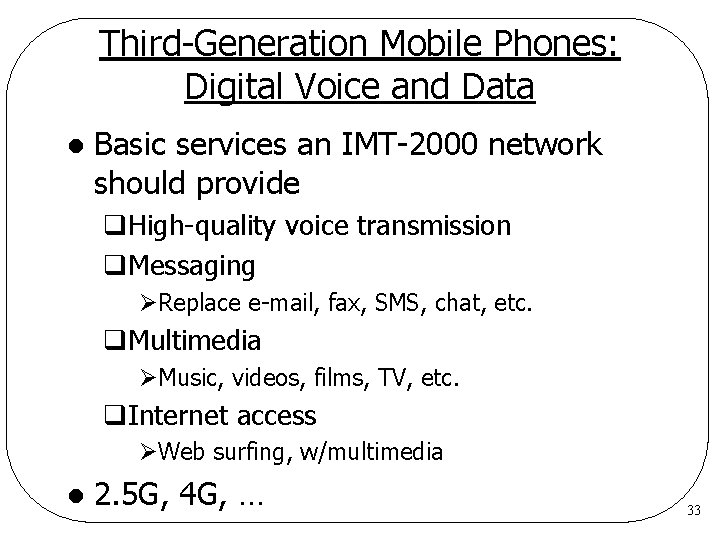
Third-Generation Mobile Phones: Digital Voice and Data l Basic services an IMT-2000 network should provide q. High-quality voice transmission q. Messaging ØReplace e-mail, fax, SMS, chat, etc. q. Multimedia ØMusic, videos, films, TV, etc. q. Internet access ØWeb surfing, w/multimedia l 2. 5 G, 4 G, … 33