
CS 3724 Introduction to Human Computer Interaction What
- Slides: 42
CS 3724 Introduction to Human Computer Interaction
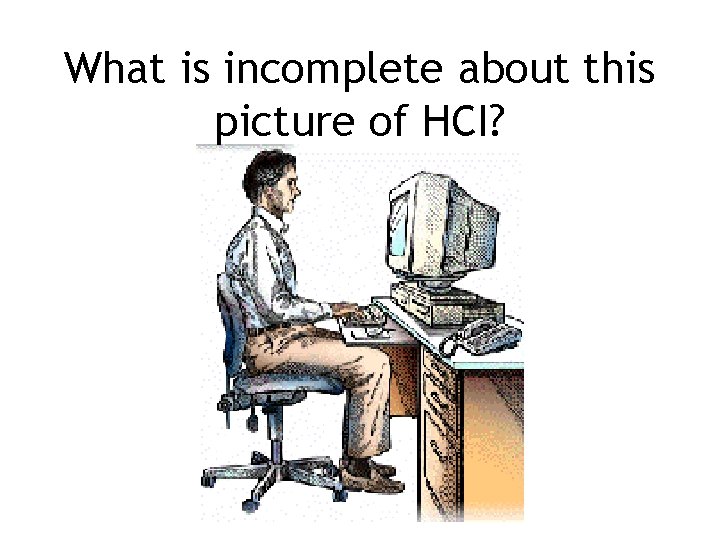
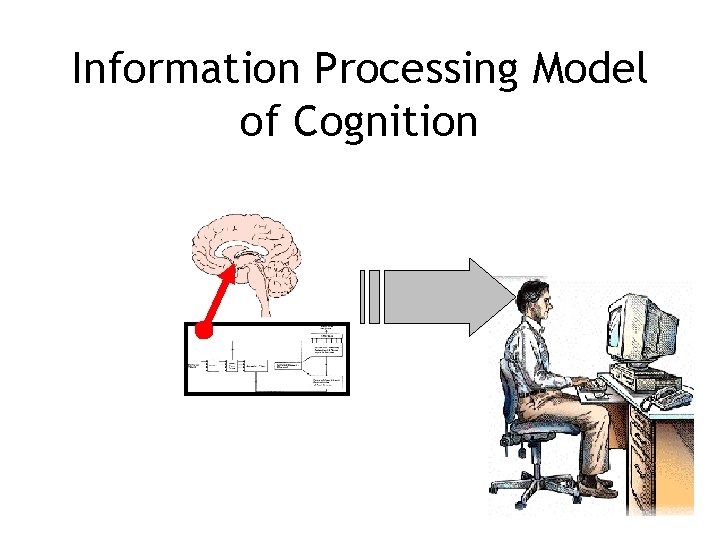
What is incomplete about this picture of HCI?
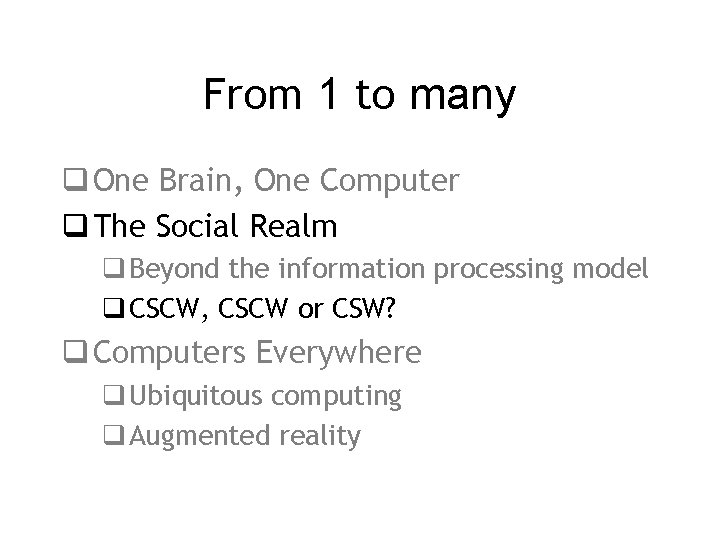
From 1 to many q One Brain, One Computer q The Social Realm q Beyond the information processing model q CSCW, CSCW or CSW? q Computers Everywhere q Ubiquitous computing q Augmented reality
From 1 to many q One Brain, One Computer q The Social Realm q Beyond the information processing model q CSCW, CSCW or CSW? q Computers Everywhere q Ubiquitous computing q Augmented reality
Information Processing Model of Cognition
What does this imply? Personal computing: empowering the individual --> interface designed and optimized for the individual. But we live and work with other people. Our computers are connected to other computers.
From 1 to many q One Brain, One Computer q The Social Realm q Beyond the information processing model q CSCW, CSCW or CSW? q Computers Everywhere q Ubiquitous computing q Augmented reality
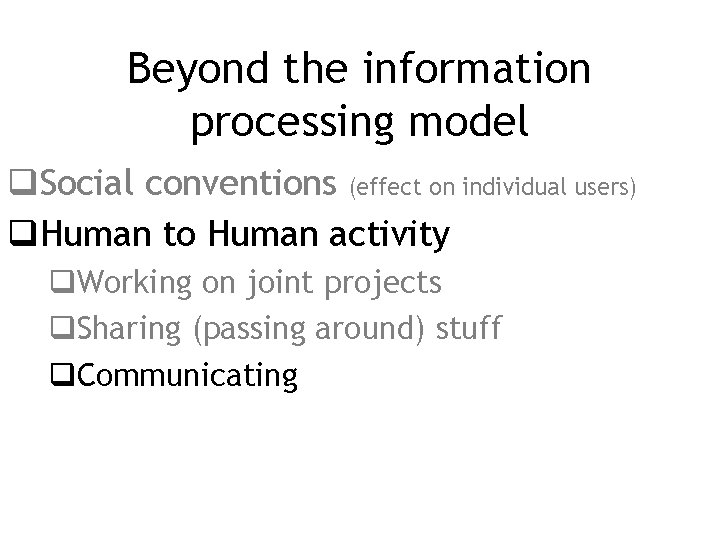
Beyond the information processing model q. Social conventions (effect on individual users) q. Human to Human activity q. Working on joint projects q. Sharing (passing around) stuff q. Communicating
Beyond the information processing model q. Social conventions (effect on individual users) q. Human to Human activity q. Working on joint projects q. Sharing (passing around) stuff q. Communicating
Where do you look for traffic signals? q In the US?
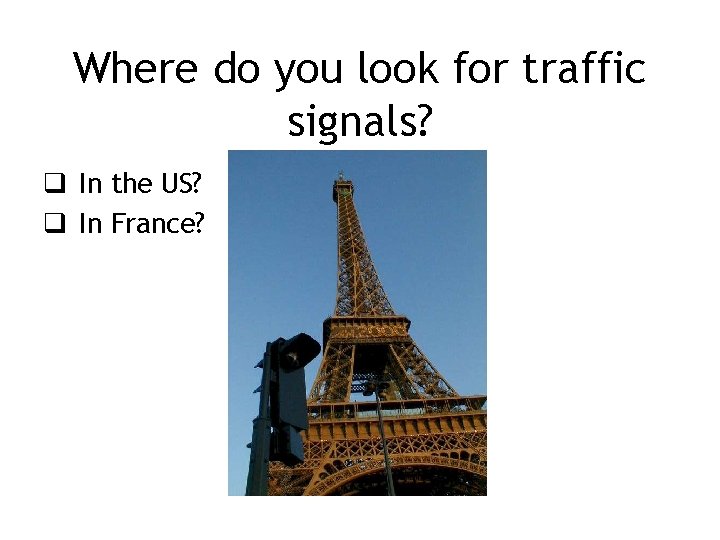
Where do you look for traffic signals? q In the US? q In France?
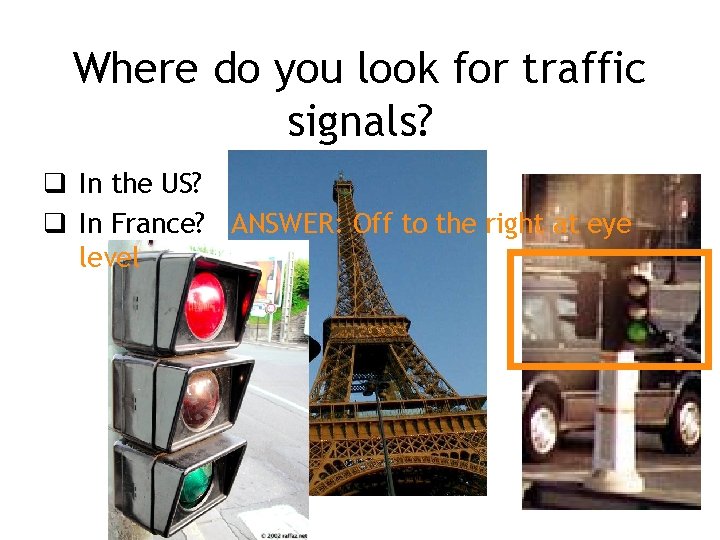
Where do you look for traffic signals? q In the US? q In France? ANSWER: Off to the right at eye level
What are some other concepts that are driven by social convention?
What are some other concepts that are driven by social convention? q. Language q. Politeness q. Privacy q. Gestures q. Money
Beyond the information processing model q. Social conventions (effect on individual users) q. Human to Human activity q. Working on joint projects q. Sharing (passing around) stuff q. Communicating
Beyond the information processing model q. Social conventions (effect on individual users) q. Human to Human activity q. Working on joint projects q. Sharing (passing around) stuff q. Communicating
Beyond the information processing model q. Social conventions (effect on individual users) q. Human to Human activity q. Working on joint projects q. Sharing (passing around) stuff q. Communicating
From 1 to many q One Brain, One Computer q The Social Realm q Beyond the information processing model q CSCW, CSCW or CSW? q Computers Everywhere q Ubiquitous computing q Augmented reality
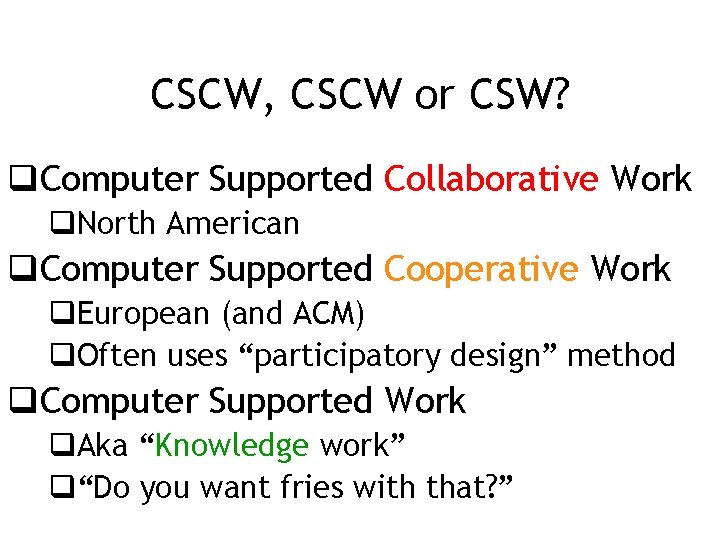
CSCW, CSCW or CSW? q. Computer Supported Collaborative Work q. North American q. Computer Supported Cooperative Work q. European (and ACM) q. Often uses “participatory design” method q. Computer Supported Work q. Aka “Knowledge work” q“Do you want fries with that? ”
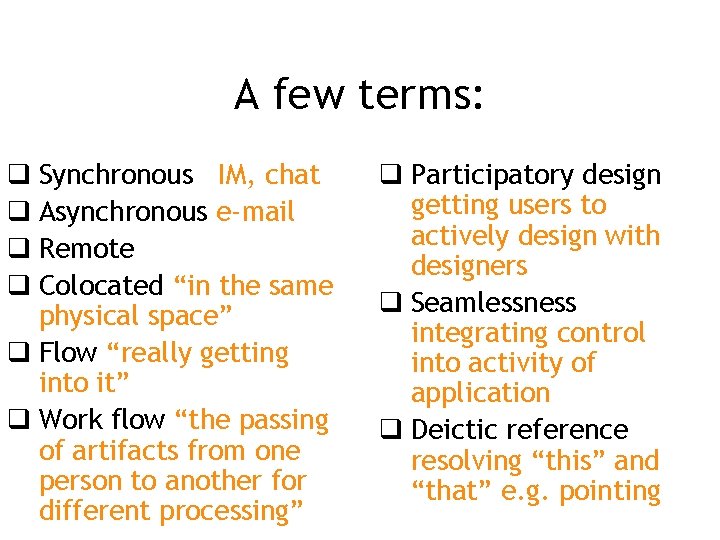
A few terms: q Synchronous IM, chat q Asynchronous e-mail q Remote q Colocated “in the same physical space” q Flow “really getting into it” q Work flow “the passing of artifacts from one person to another for different processing” q Participatory design getting users to actively design with designers q Seamlessness integrating control into activity of application q Deictic reference resolving “this” and “that” e. g. pointing
From 1 to many q One Brain, One Computer q The Social Realm q Beyond the information processing model q CSCW, CSCW or CSW? q Computers Everywhere q Ubiquitous computing q Augmented reality
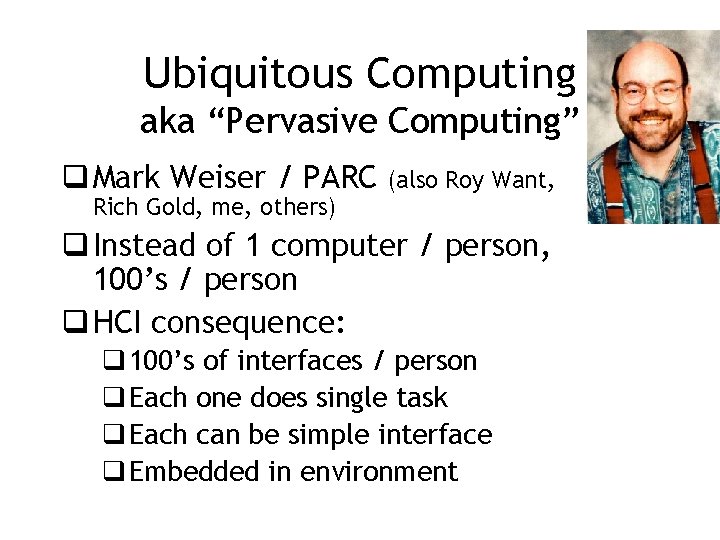
Ubiquitous Computing aka “Pervasive Computing” q Mark Weiser / PARC (also Roy Want, Rich Gold, me, others) q Instead of 1 computer / person, 100’s / person q HCI consequence: q 100’s of interfaces / person q Each one does single task q Each can be simple interface q Embedded in environment
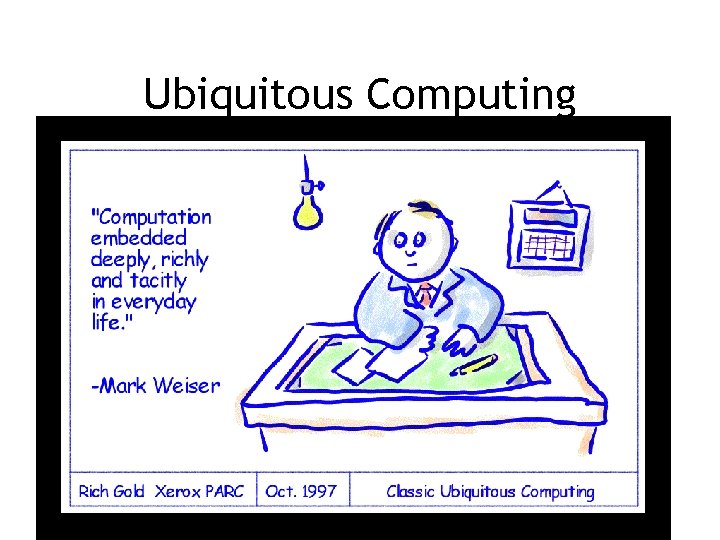
Ubiquitous Computing
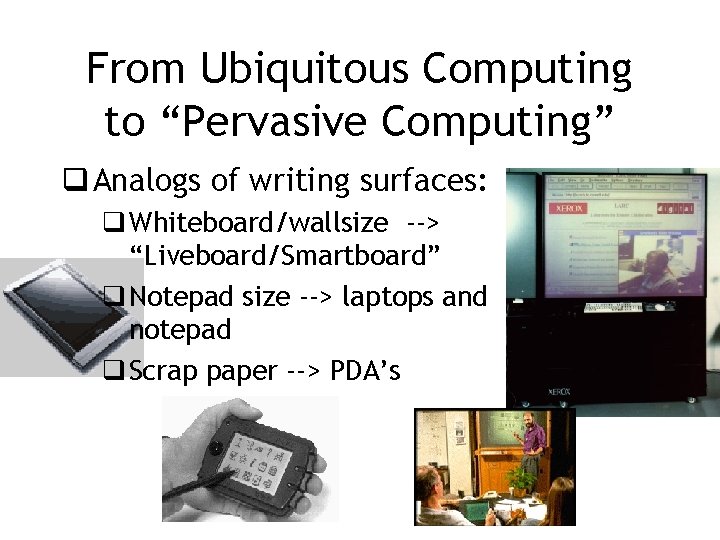
From Ubiquitous Computing to “Pervasive Computing” q Analogs of writing surfaces: q Whiteboard/wallsize --> “Liveboard/Smartboard” q Notepad size --> laptops and notepad q Scrap paper --> PDA’s
From Ubiquitous Computing to “Pervasive Computing” q Video: i. Land (Dr. N. Strietz)
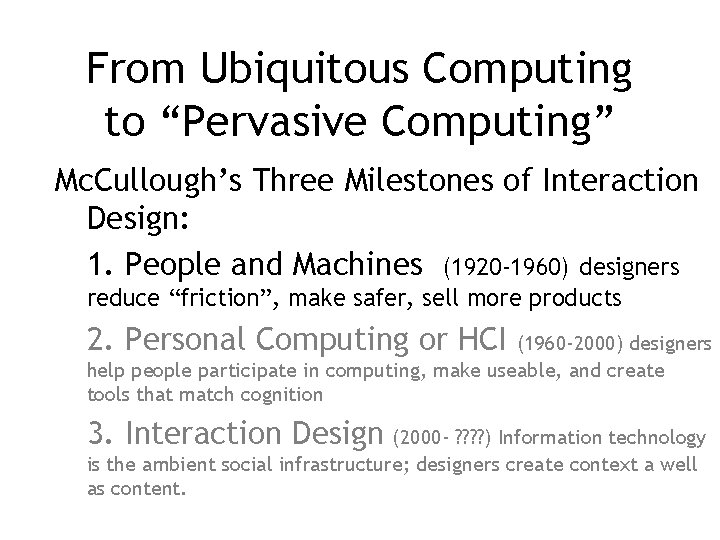
From Ubiquitous Computing to “Pervasive Computing” Mc. Cullough’s Three Milestones of Interaction Design: 1. People and Machines (1920 -1960) designers reduce “friction”, make safer, sell more products 2. Personal Computing or HCI (1960 -2000) designers help people participate in computing, make useable, and create tools that match cognition 3. Interaction Design (2000 - ? ? ) Information technology is the ambient social infrastructure; designers create context a well as content.
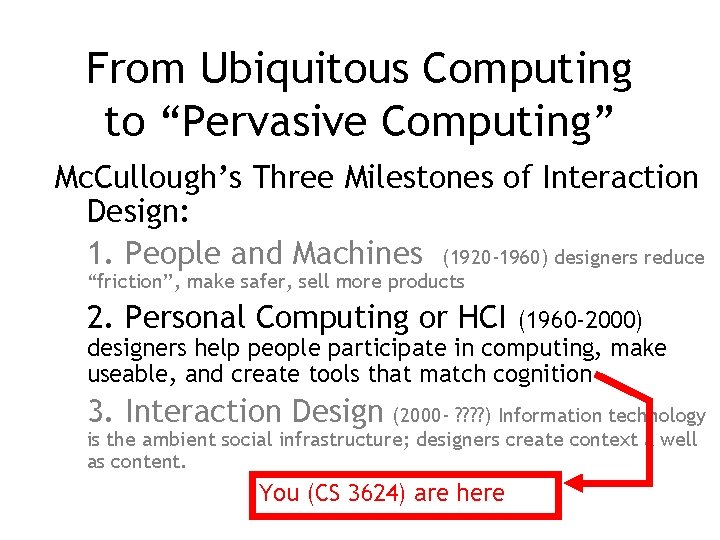
From Ubiquitous Computing to “Pervasive Computing” Mc. Cullough’s Three Milestones of Interaction Design: 1. People and Machines (1920 -1960) designers reduce “friction”, make safer, sell more products 2. Personal Computing or HCI (1960 -2000) designers help people participate in computing, make useable, and create tools that match cognition 3. Interaction Design (2000 - ? ? ) Information technology is the ambient social infrastructure; designers create context a well as content. You (CS 3624) are here
From Ubiquitous Computing to “Pervasive Computing” Mc. Cullough’s Three Milestones of Interaction Design: 1. People and Machines (1920 -1960) designers reduce “friction”, make safer, sell more products 2. Personal Computing or HCI (1960 -2000) designers help people participate in computing, make useable, and create tools that match cognition 3. Interaction Design (2000 - ? ? ) Information technology is the ambient social infrastructure; designers create context a well as content.
From 1 to many q One Brain, One Computer q The Social Realm q Beyond the information processing model q CSCW, CSCW or CSW? q Computers Everywhere q Ubiquitous computing q Augmented reality
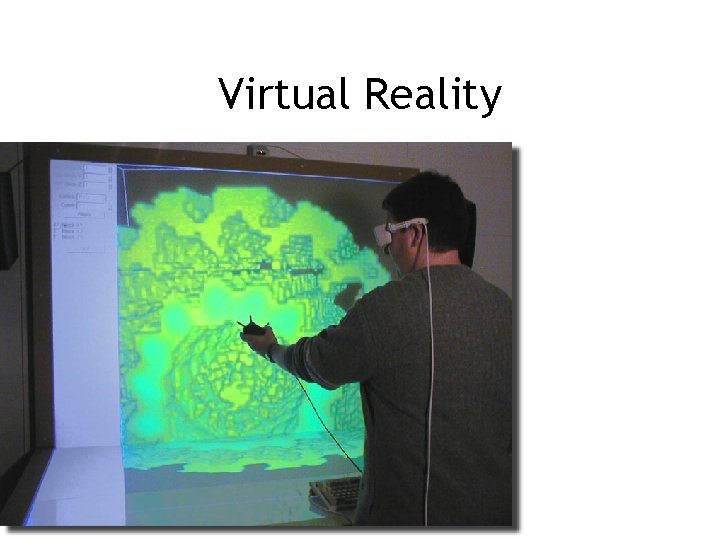
Virtual and Augmented Reality q Embedded computing and “smart” environments q Communicative surfaces q Virtual Reality q Wearable computing
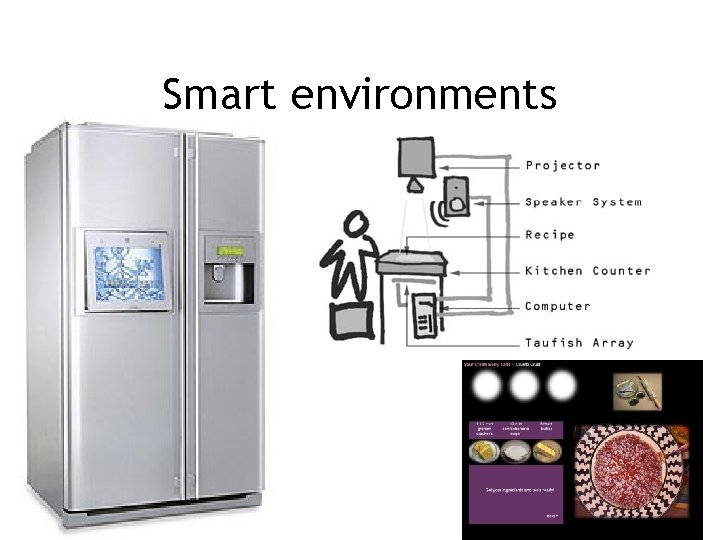
Smart environments
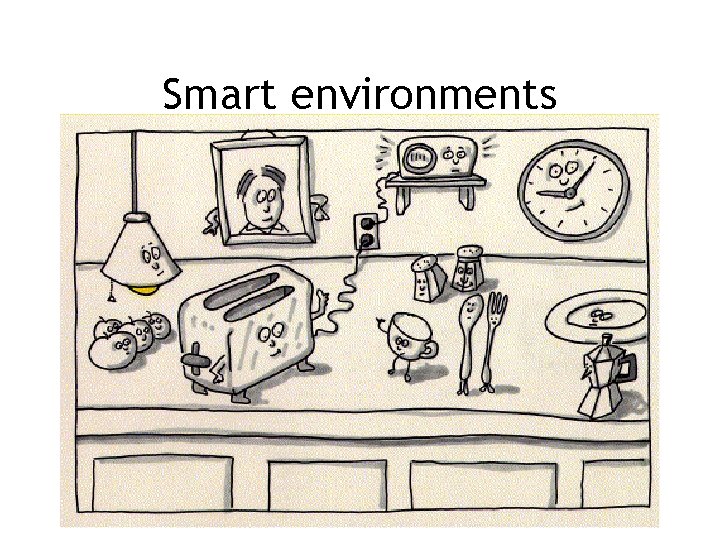
Smart environments
Smart environments q Video: Digital. Desk (P. Wellner)
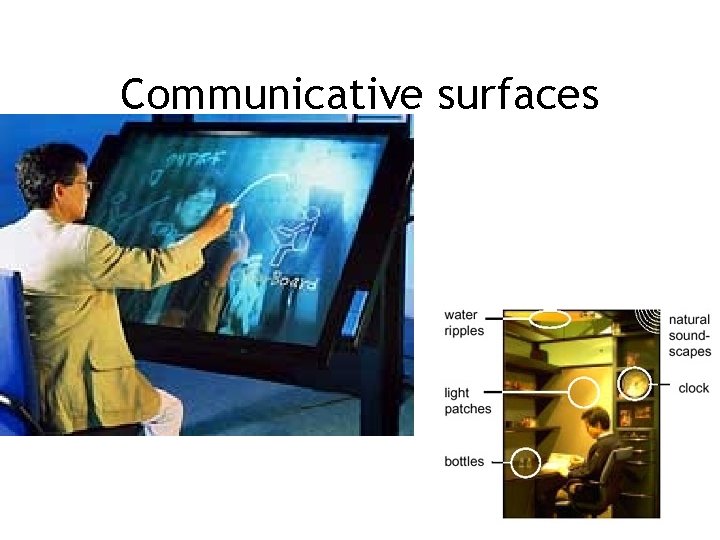
Communicative surfaces
Communicative surfaces q Media. Space q Video: Team. Workstation (H. Ishii)
Virtual Reality
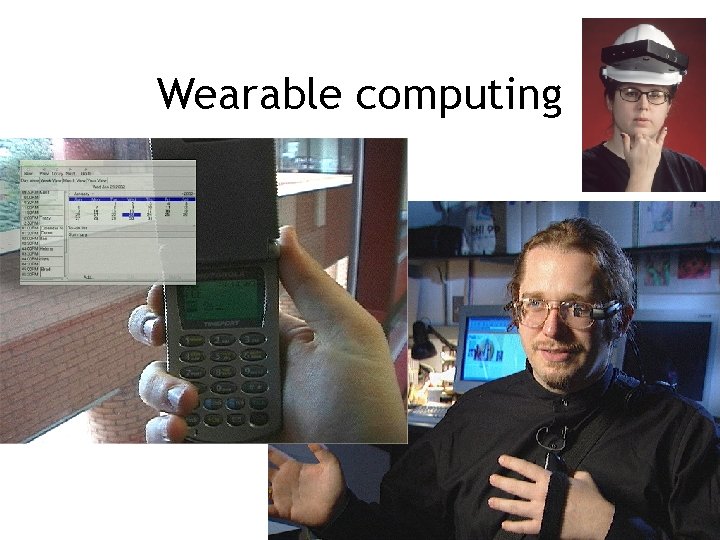
Wearable computing
Design Consequences q Design everything -- hardware, software, use, social setting q Highly contextual -- in fact, context is part of the design q Requires added design skills and experience
From 1 to many q One Brain, One Computer q The Social Realm q Beyond the information processing model q CSCW, CSCW or CSW? q Computers Everywhere q Ubiquitous computing q Augmented reality
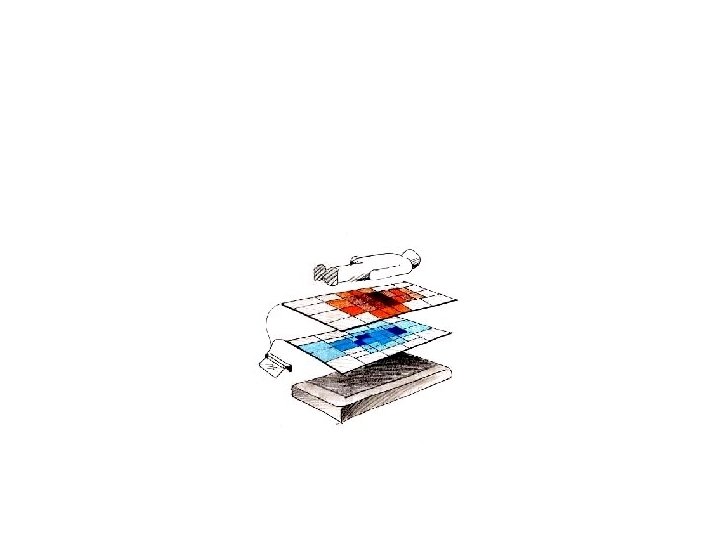
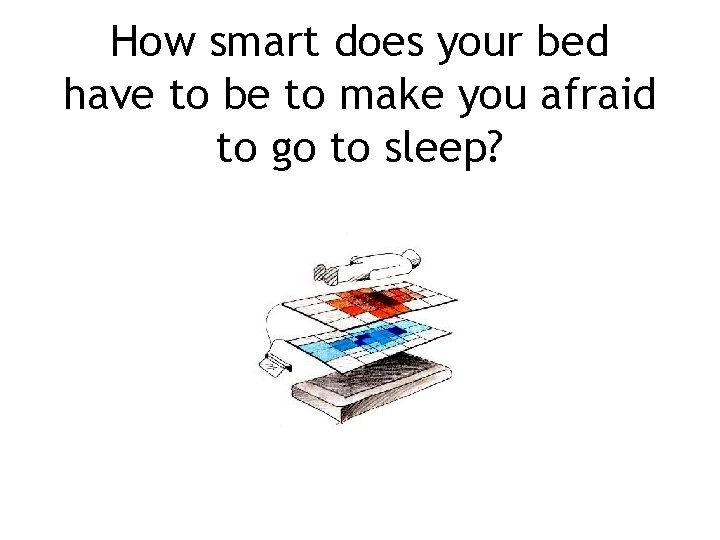
How smart does your bed have to be to make you afraid to go to sleep?
For next time… q. Read Chapter 9 (9. 1 - 9. 4) q. Homework, due next class: q. Kid+ q. Team Project, due next week: q. User testing FIND USERS NOW q. Next lecture: universal design