
CS 369 Computational Biology University of Auckland Course
CS 369 Computational Biology University of Auckland Course coordinator: Alexei Drummond CS 369 2007
CS 369 Computational Biology • This course provides an overview of algorithms and scientific computing techniques in computational biology and bioinformatics. • A hands-on introduction to topics including – – – CS 369 2007 Dynamic programming and string algorithms, Markov models, Hidden Markov models, Heuristic search algorithms, Pairwise and multiple sequence alignment, Phylogenetic Reconstruction Gene finding and secondary structure prediction 2
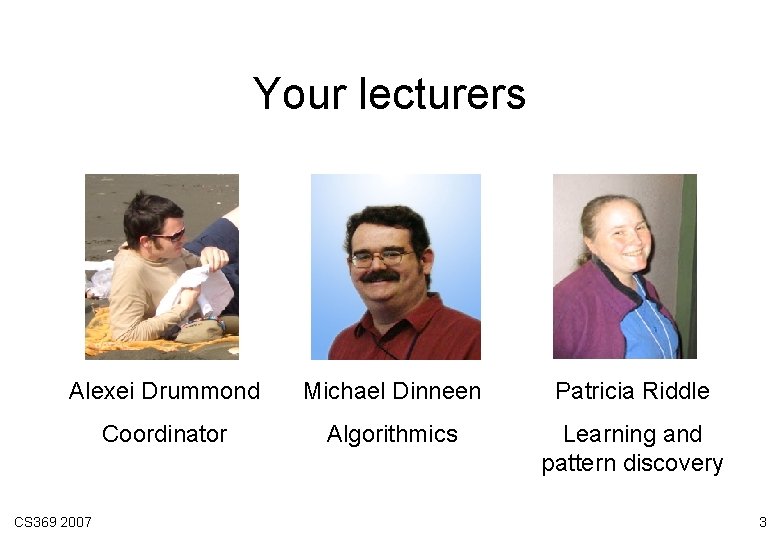
Your lecturers Alexei Drummond Michael Dinneen Patricia Riddle Coordinator Algorithmics Learning and pattern discovery CS 369 2007 3
Recommended Texts • Bioinformatics: Sequence and Genome analysis, 1 st & 2 nd Editions – by David W Mount (2001; 2004) – 1 st Edition is available as an E-book in the library – 2 nd edition is available on short term loan • Biological sequence analysis – by Durbin, Eddy, Krogh and Mitchinson (1998) – Available on short term loan • Algorithm Design – by Kleinberg J. and Tardos E (2006) CS 369 2007 4
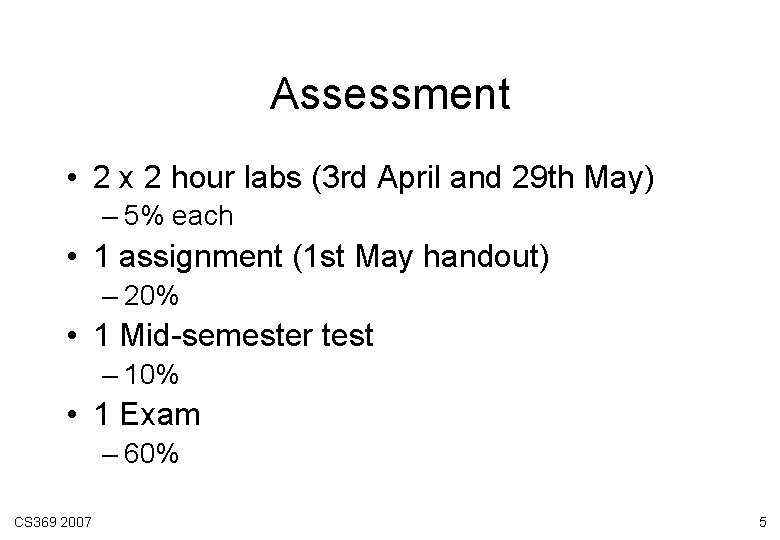
Assessment • 2 x 2 hour labs (3 rd April and 29 th May) – 5% each • 1 assignment (1 st May handout) – 20% • 1 Mid-semester test – 10% • 1 Exam – 60% CS 369 2007 5
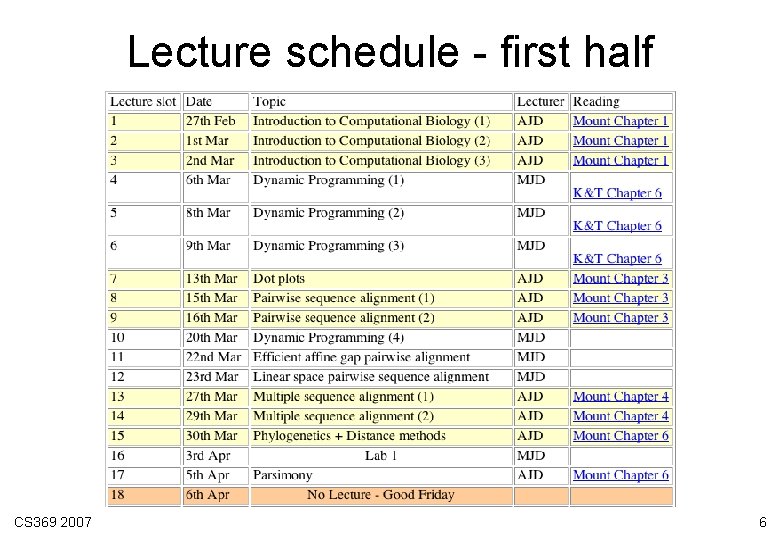
Lecture schedule - first half CS 369 2007 6
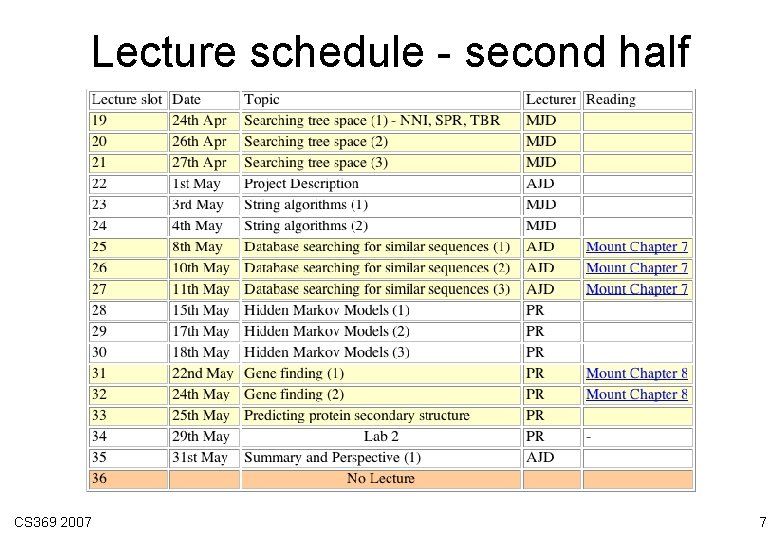
Lecture schedule - second half CS 369 2007 7
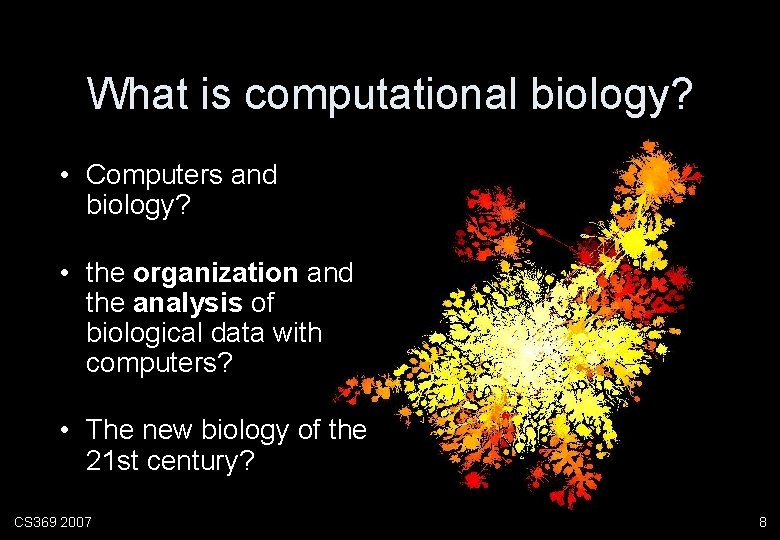
What is computational biology? • Computers and biology? • the organization and the analysis of biological data with computers? • The new biology of the 21 st century? CS 369 2007 8
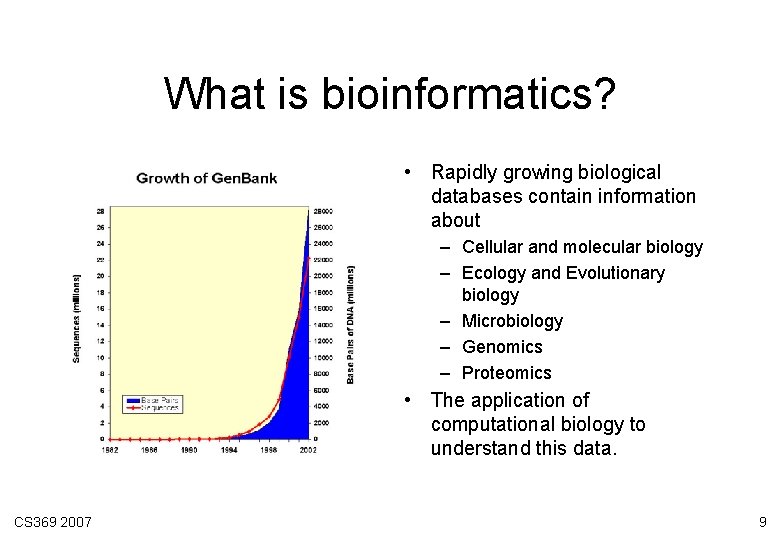
What is bioinformatics? • Rapidly growing biological databases contain information about – Cellular and molecular biology – Ecology and Evolutionary biology – Microbiology – Genomics – Proteomics • The application of computational biology to understand this data. CS 369 2007 9
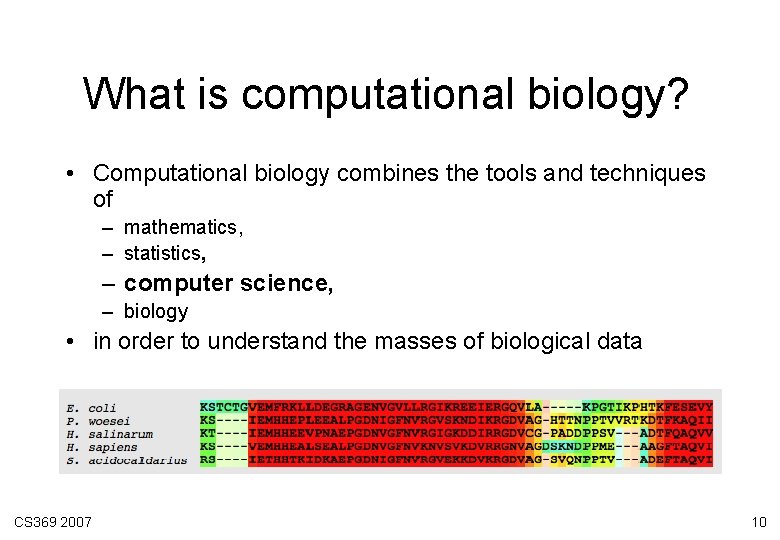
What is computational biology? • Computational biology combines the tools and techniques of – mathematics, – statistics, – computer science, – biology • in order to understand the masses of biological data CS 369 2007 10
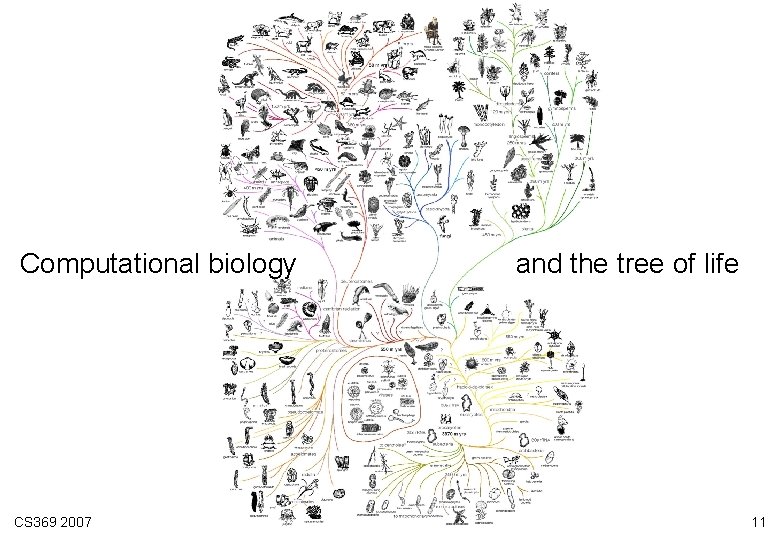
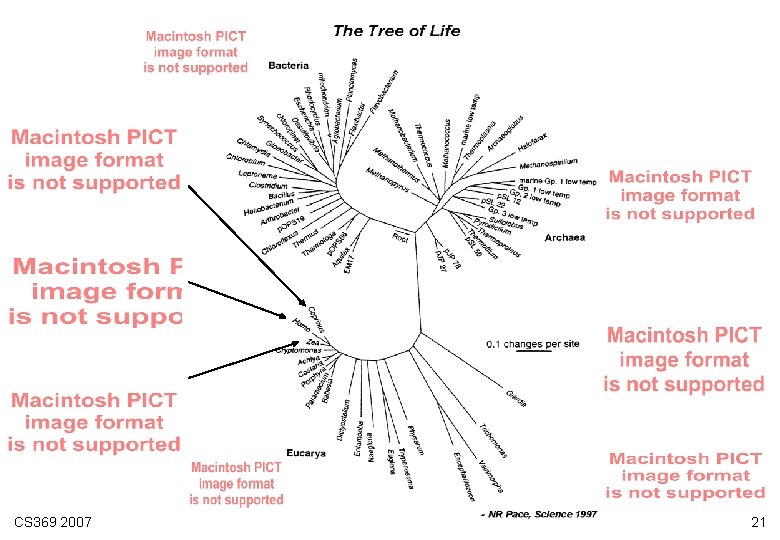
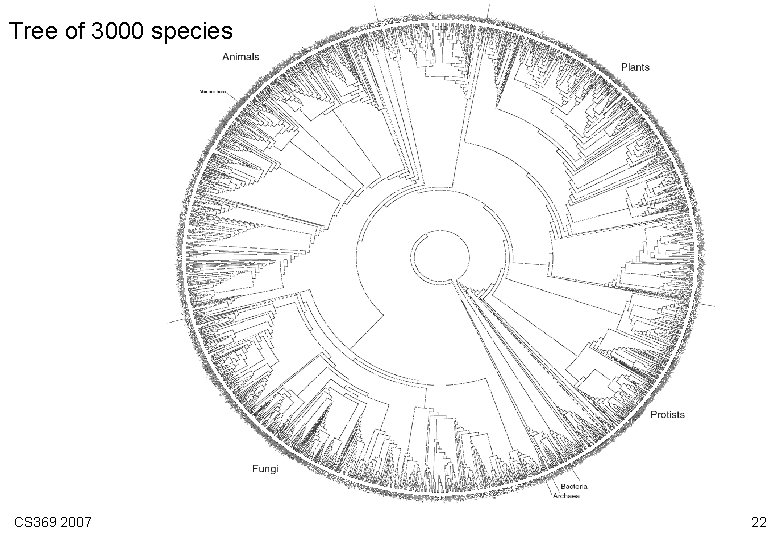
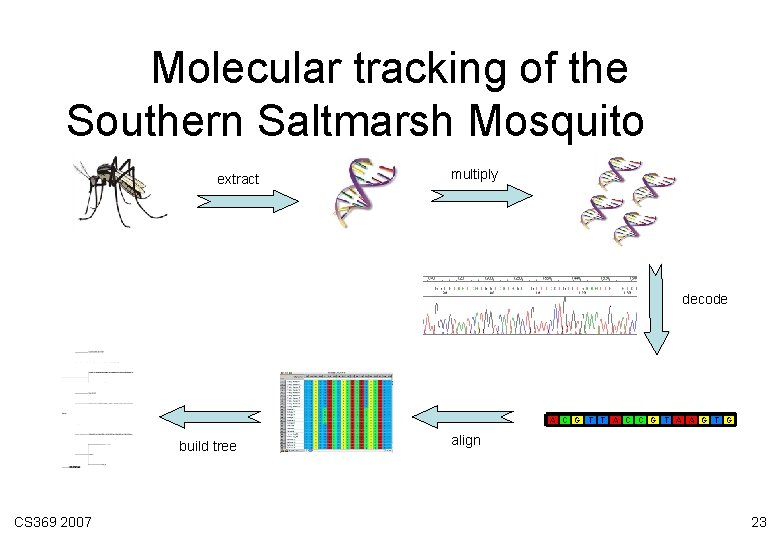
Computational biology CS 369 2007 and the tree of life 11
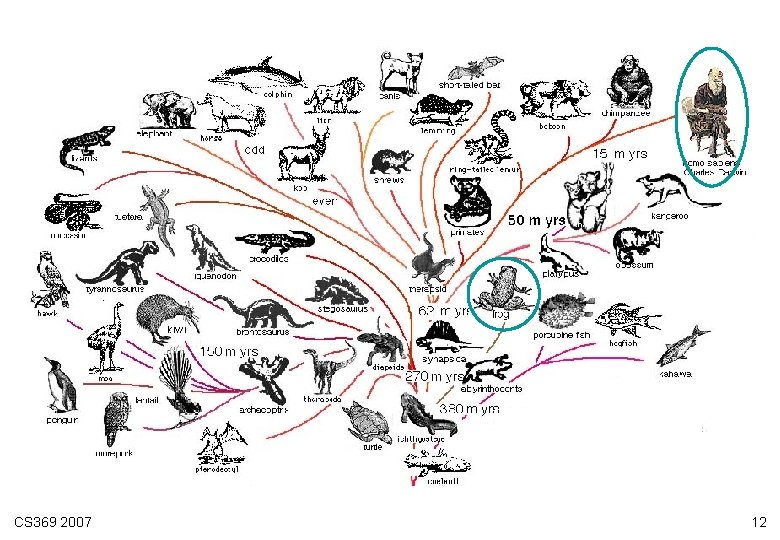
CS 369 2007 12
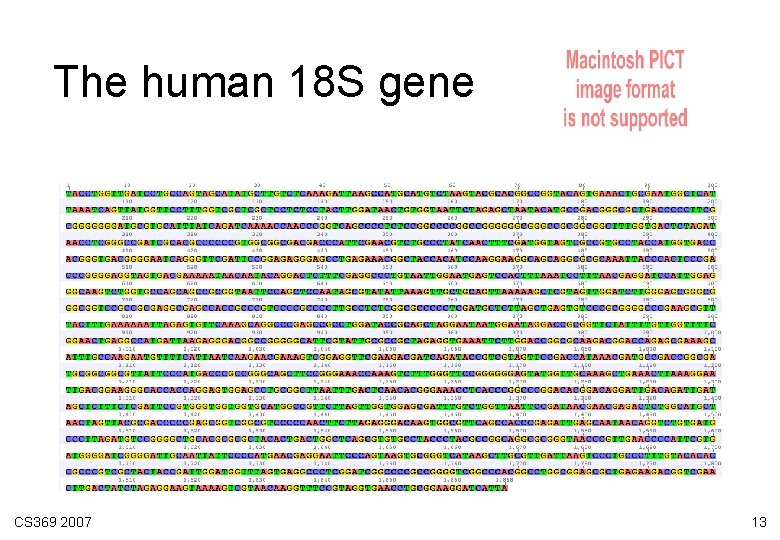
The human 18 S gene CS 369 2007 13
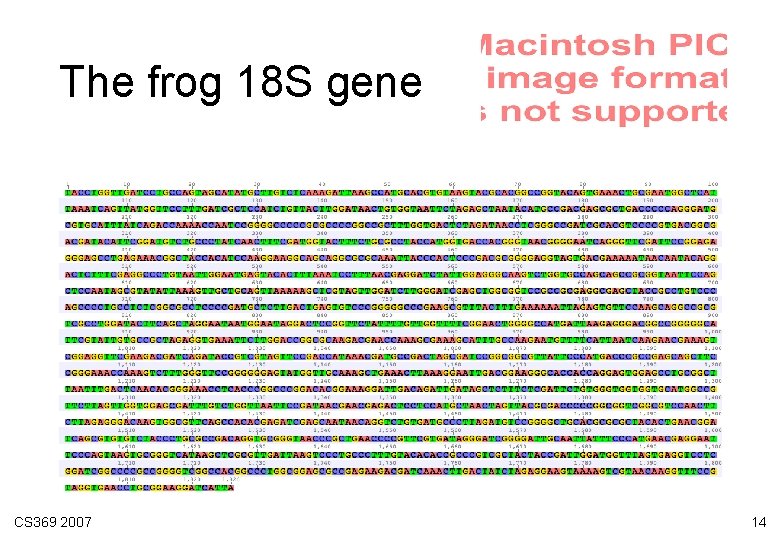
The frog 18 S gene CS 369 2007 14
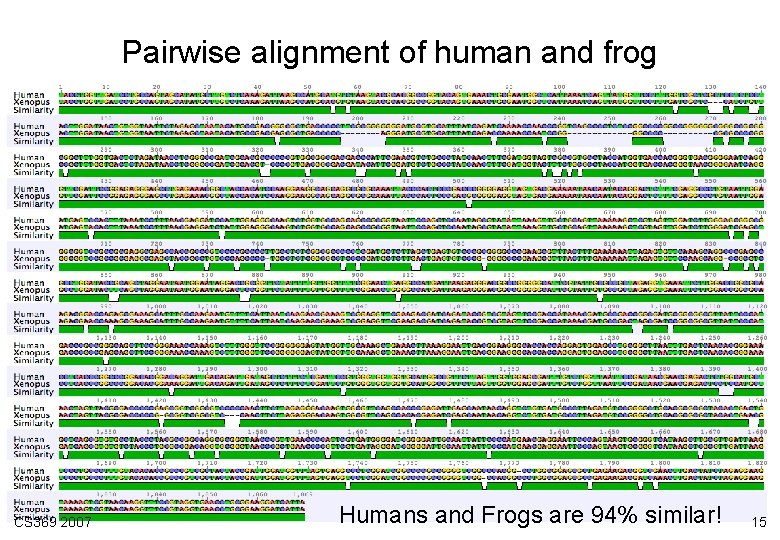
Pairwise alignment of human and frog CS 369 2007 Humans and Frogs are 94% similar! 15
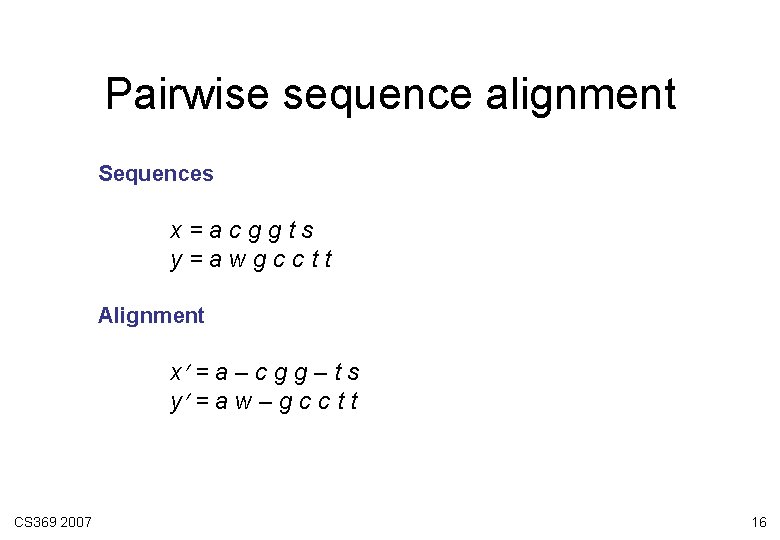
Pairwise sequence alignment Sequences x=acggts y=awgcctt Alignment x¢ = a – c g g – t s y¢ = a w – g c c t t CS 369 2007 16
Dynamic programming algorithm • computation is carried out bottom-up • store solutions to subproblems in a table • all possible subproblems solved once each, beginning with smallest subproblems • work up to original problem instance • only optimal solutions to subproblems are used to compute solution to problem at next level • DO NOT carry out computation in recursive, top-down manner – same subproblems would be solved many times CS 369 2007 17
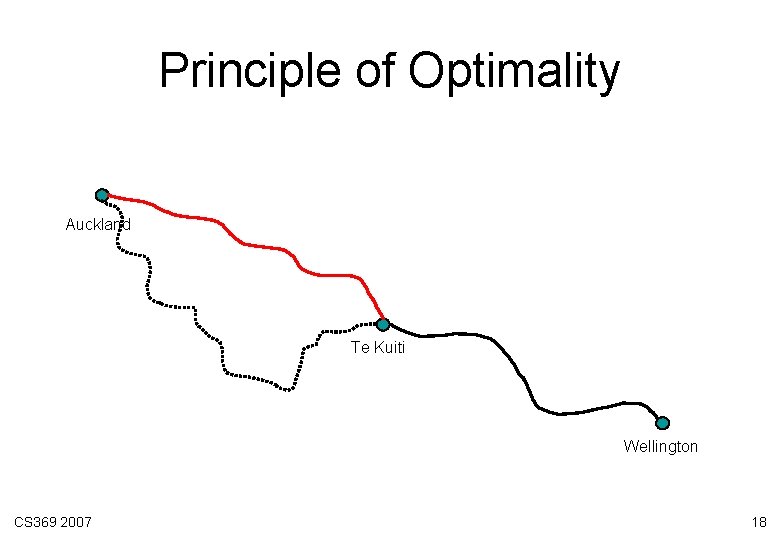
Principle of Optimality Auckland Te Kuiti Wellington CS 369 2007 18
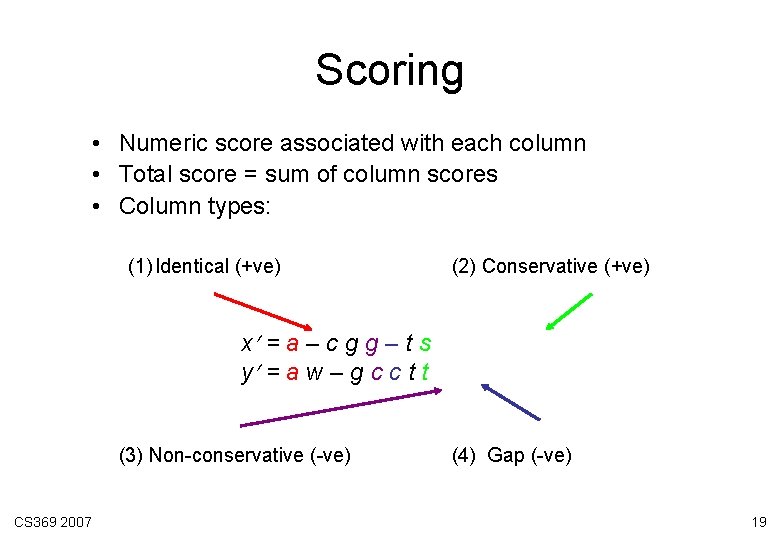
Scoring • Numeric score associated with each column • Total score = sum of column scores • Column types: (1) Identical (+ve) (2) Conservative (+ve) x¢ = a – c g g – t s y¢ = a w – g c c t t (3) Non-conservative (-ve) CS 369 2007 (4) Gap (-ve) 19
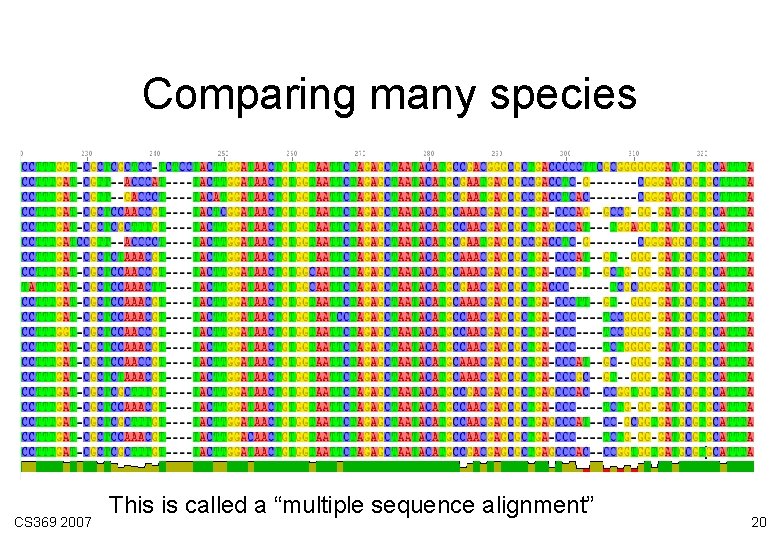
Comparing many species CS 369 2007 This is called a “multiple sequence alignment” 20
CS 369 2007 21
Tree of 3000 species CS 369 2007 22
Molecular tracking of the Southern Saltmarsh Mosquito extract multiply decode A C G T T A C C G T A A G T G build tree CS 369 2007 align 23
Bioinformatics and genome evolution CS 369 2007 24
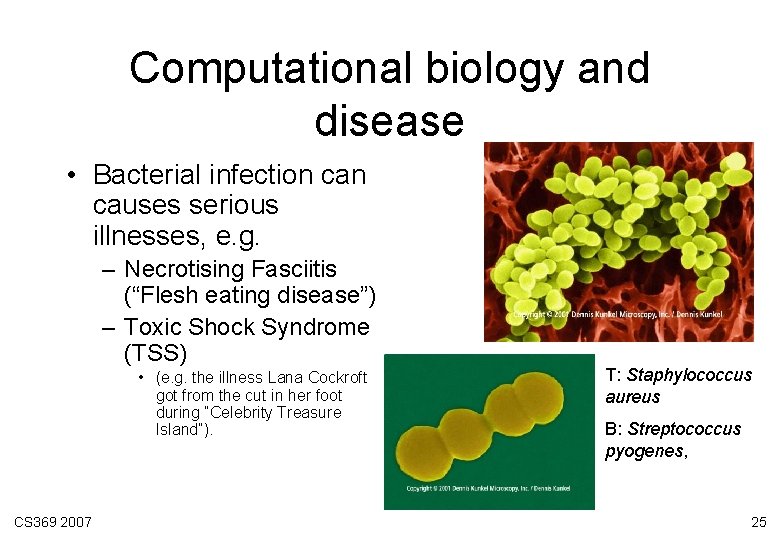
Computational biology and disease • Bacterial infection causes serious illnesses, e. g. – Necrotising Fasciitis (“Flesh eating disease”) – Toxic Shock Syndrome (TSS) • (e. g. the illness Lana Cockroft got from the cut in her foot during “Celebrity Treasure Island”). CS 369 2007 T: Staphylococcus aureus B: Streptococcus pyogenes, 25
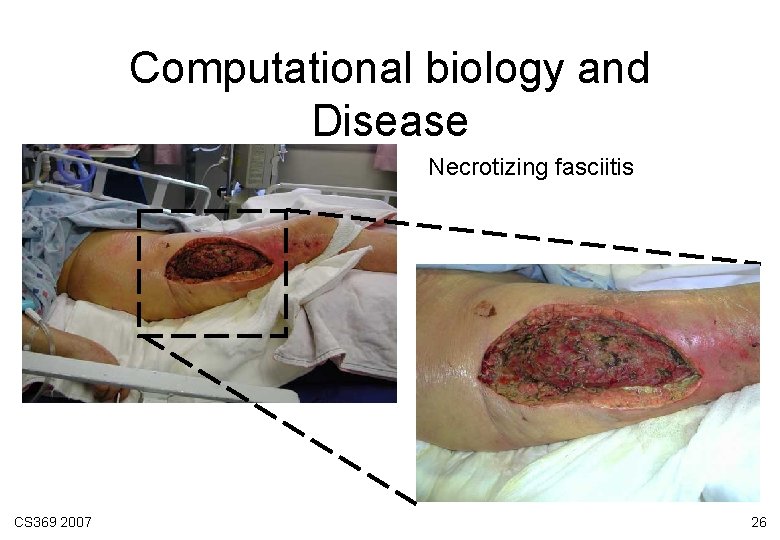
Computational biology and Disease Necrotizing fasciitis CS 369 2007 26
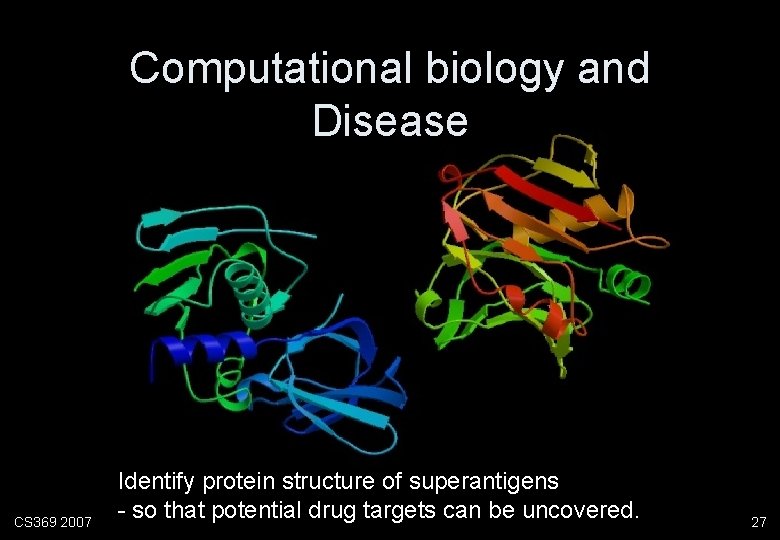
Computational biology and Disease CS 369 2007 Identify protein structure of superantigens - so that potential drug targets can be uncovered. 27
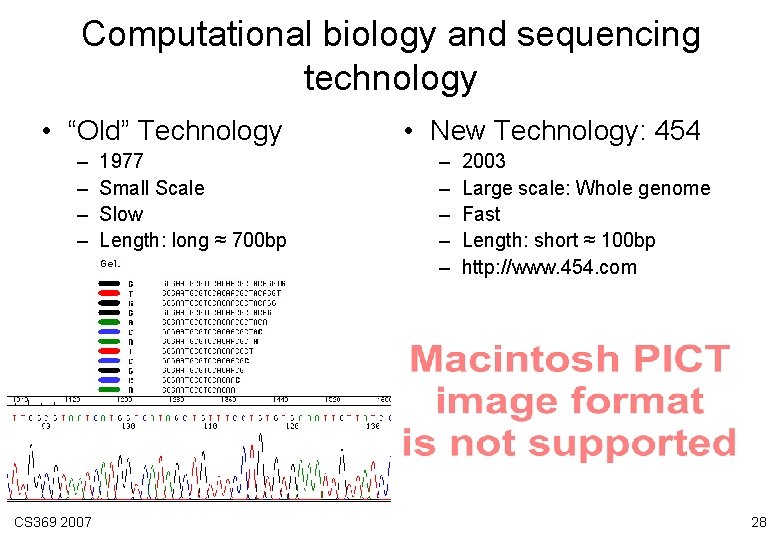
Computational biology and sequencing technology • “Old” Technology – – CS 369 2007 1977 Small Scale Slow Length: long ≈ 700 bp • New Technology: 454 – – – 2003 Large scale: Whole genome Fast Length: short ≈ 100 bp http: //www. 454. com 28
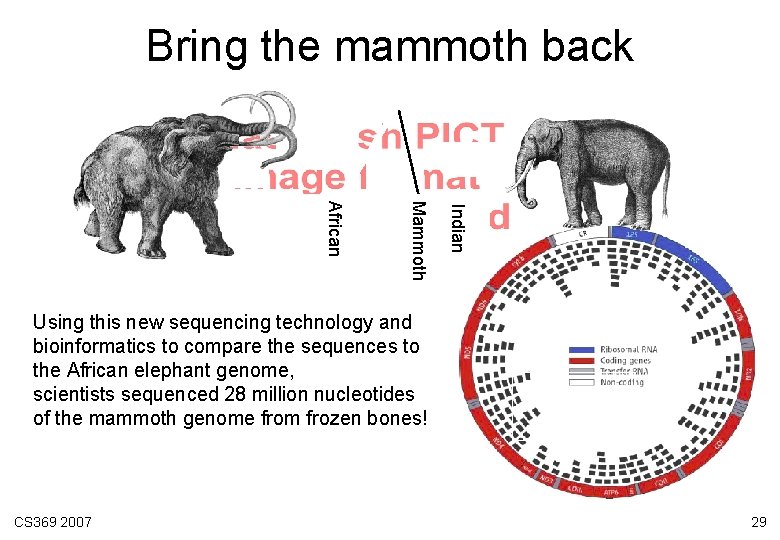
Bring the mammoth back Indian Mammoth African Using this new sequencing technology and bioinformatics to compare the sequences to the African elephant genome, scientists sequenced 28 million nucleotides of the mammoth genome from frozen bones! CS 369 2007 29
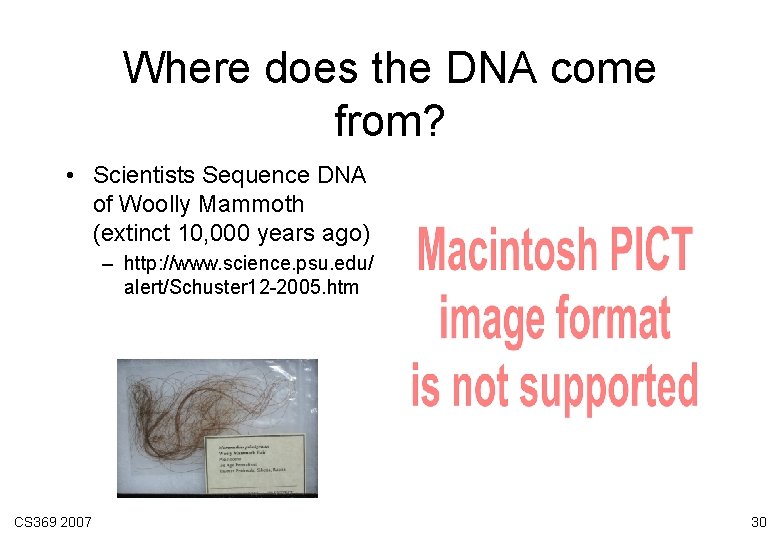
Where does the DNA come from? • Scientists Sequence DNA of Woolly Mammoth (extinct 10, 000 years ago) – http: //www. science. psu. edu/ alert/Schuster 12 -2005. htm CS 369 2007 30
Conclusion • Computational biology and bioinformatics are fast becoming central to the biological sciences – – – Ecology Evolutionary biology (tree of life) Health and disease (flesh-eating bacteria) Molecular biology and cell biology Personalized medicine • Computational biology is heavily algorithmic and often statistical, drawing from the ‘hard-as-in-rock’ sciences like mathematics, computer science and statistics - this type of knowledge is becoming increasingly important in biology. CS 369 2007 31
Reading • Chapter 1 “Biological Sequence Analysis”, Durbin et al • Chapter 1 of Mount – Don’t worry about any biological terms that you don’t immediately understand! This chapter is more to give you a sense of where we are going to go. The pertinent details will be explained along the way. CS 369 2007 32
Biomolecules and the Central Dogma of Molecular Biology CS 369 2007

The central dogma of molecular biology Replication DNA CS 369 2007 Transcription RNA Translation Protein 34
What is a macromolecule? • A chain molecule made up of a large number of repeating units. – Homo-polymers are made up of the same units – Hetero-polymers are made up of a number of different units • Nylon, Polyester, DNA (poly-nucleotide) and Protein (poly-amino acid) are examples • Macromolecular 3 D structure is a question conformational change rather than breaking and forming strong bonds. CS 369 2007 35
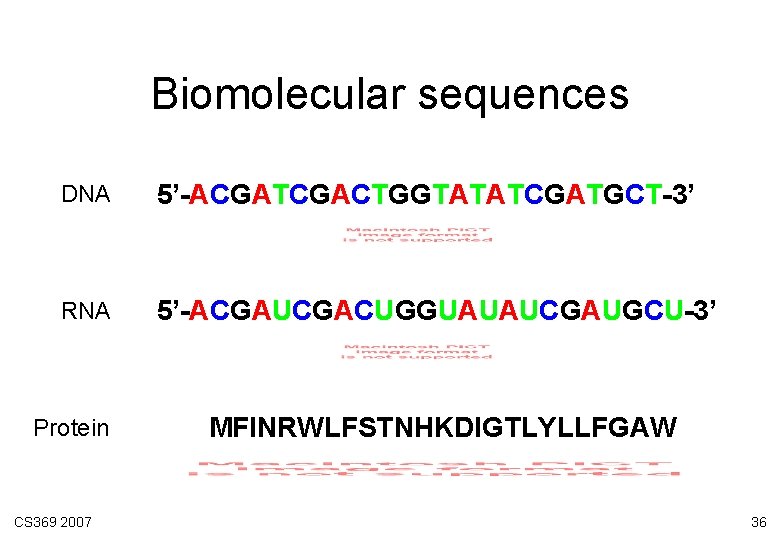
Biomolecular sequences DNA 5’-ACGATCGACTGGTATATCGATGCT-3’ RNA 5’-ACGAUCGACUGGUAUAUCGAUGCU-3’ Protein CS 369 2007 MFINRWLFSTNHKDIGTLYLLFGAW 36
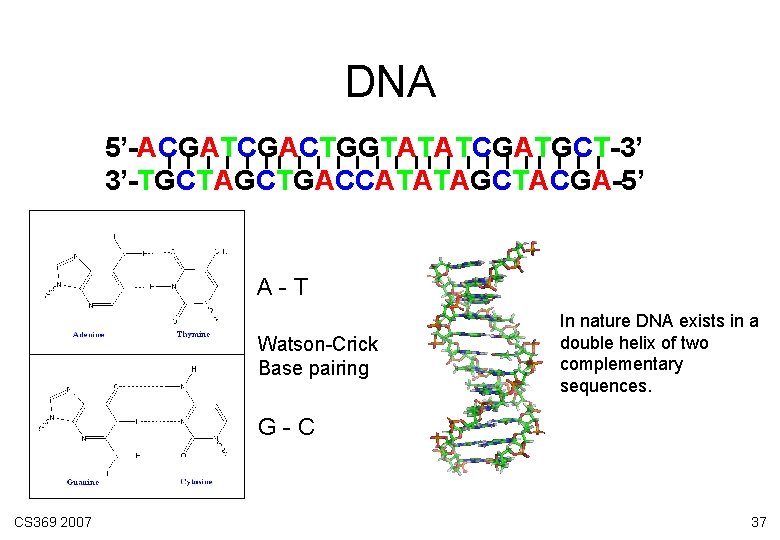
DNA 5’-ACGATCGACTGGTATATCGATGCT-3’ 3’-TGCTAGCTGACCATATAGCTACGA-5’ A-T Watson-Crick Base pairing In nature DNA exists in a double helix of two complementary sequences. G-C CS 369 2007 37
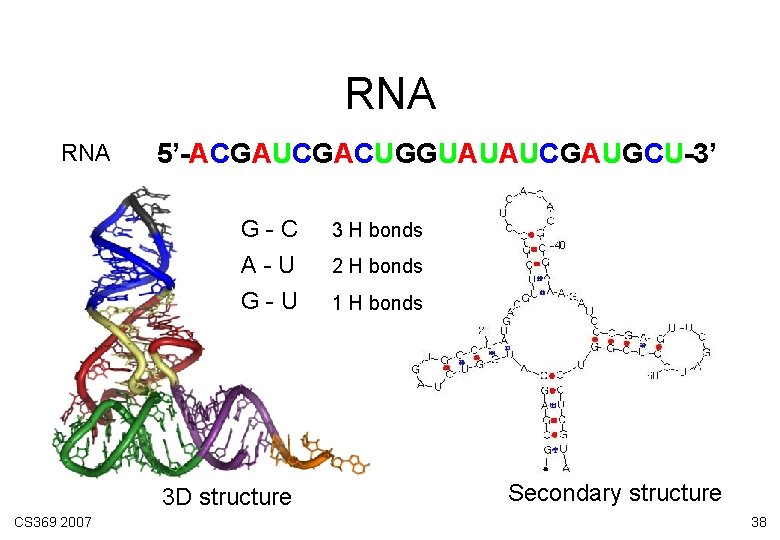
RNA 5’-ACGAUCGACUGGUAUAUCGAUGCU-3’ G-C A-U G-U 3 D structure CS 369 2007 3 H bonds 2 H bonds 1 H bonds Secondary structure 38
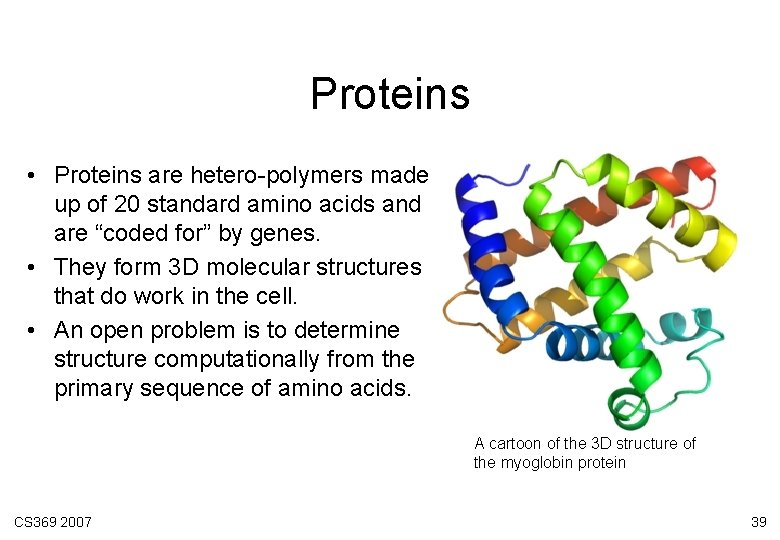
Proteins • Proteins are hetero-polymers made up of 20 standard amino acids and are “coded for” by genes. • They form 3 D molecular structures that do work in the cell. • An open problem is to determine structure computationally from the primary sequence of amino acids. A cartoon of the 3 D structure of the myoglobin protein CS 369 2007 39
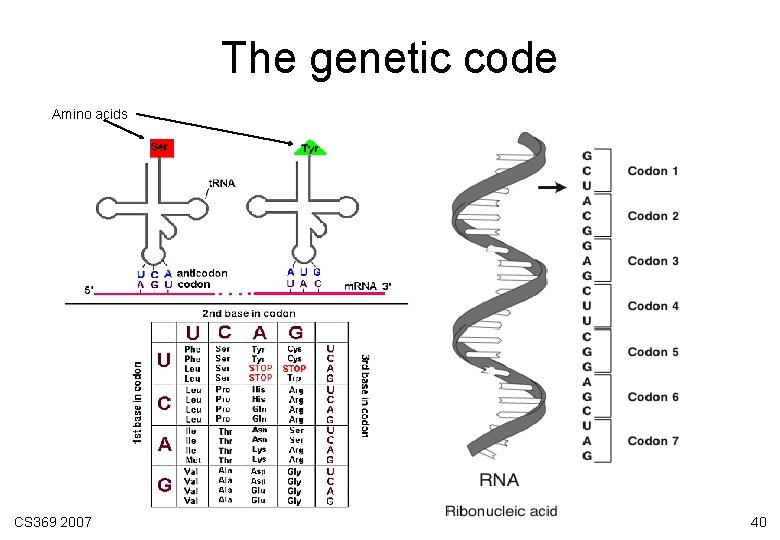
The genetic code Amino acids CS 369 2007 40
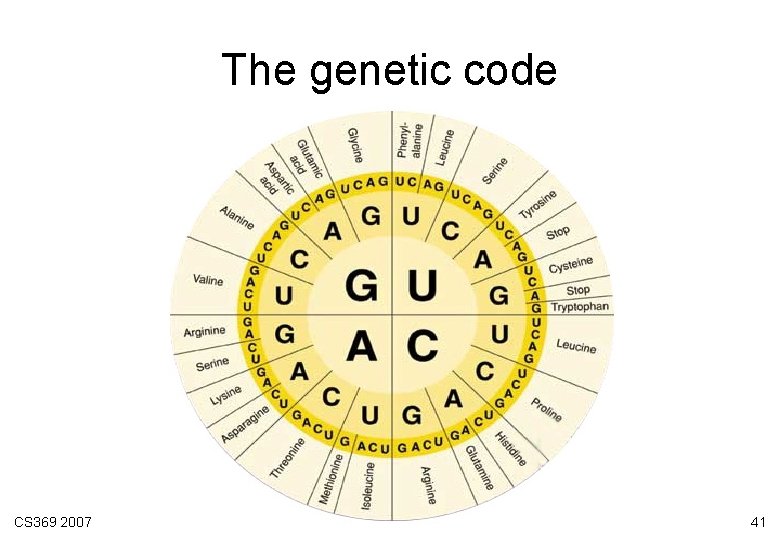
The genetic code CS 369 2007 41

CS 369 2007 42

CS 369 2007 43
- Slides: 43