
CS 186 Introduction to Database Systems Spring Semester
CS 186 - Introduction to Database Systems Spring Semester 2006 Prof. Michael Franklin “Knowledge is of two kinds: we know a subject ourselves, or we know where we can find information upon it. ” -- Samuel Johnson (1709 -1784)
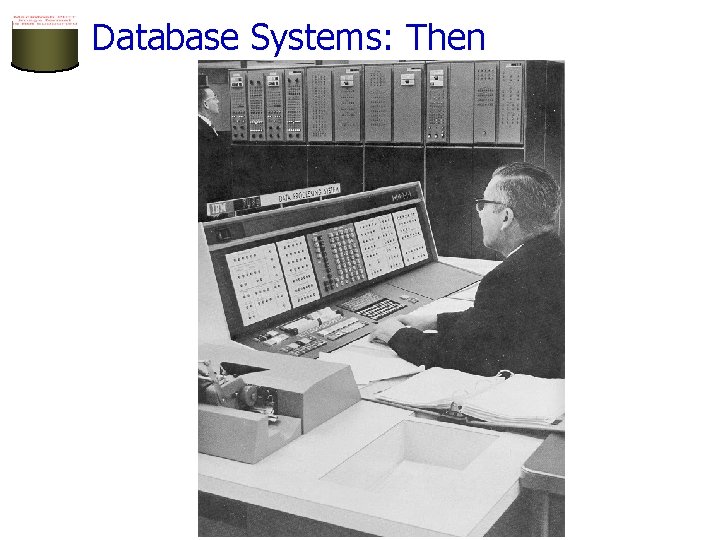
Database Systems: Then
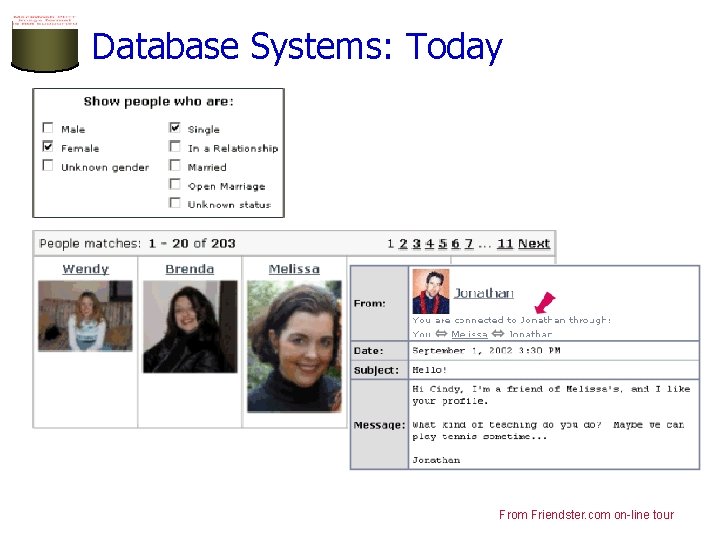
Database Systems: Today From Friendster. com on-line tour
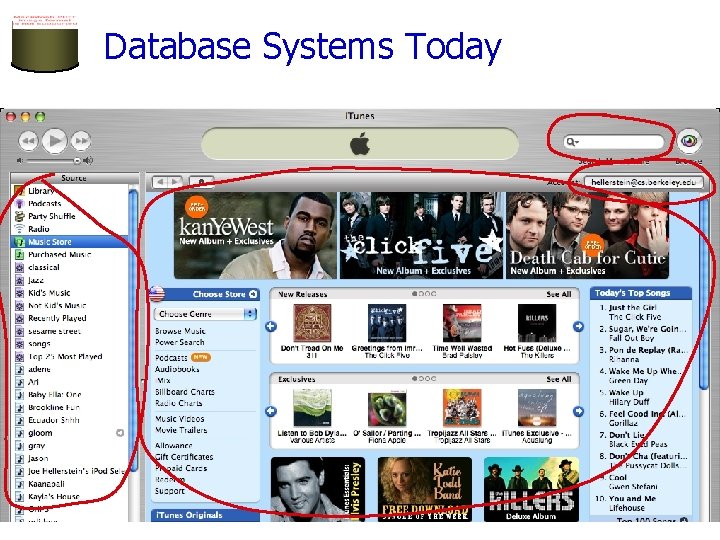
Database Systems Today
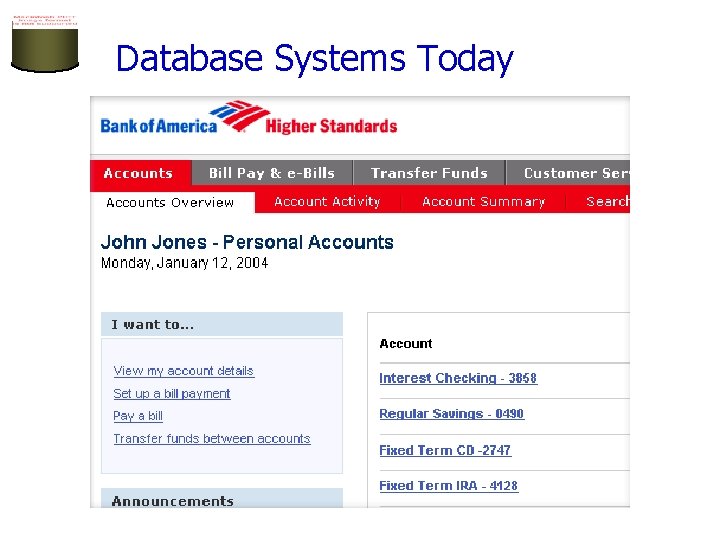
Database Systems Today
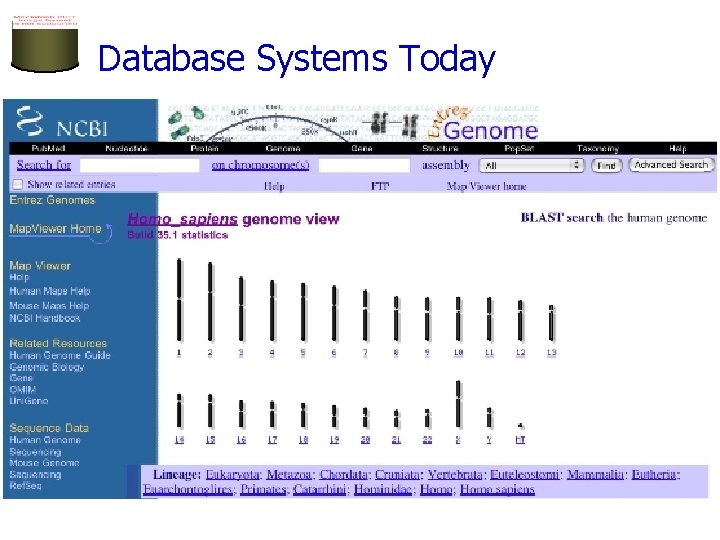
Database Systems Today
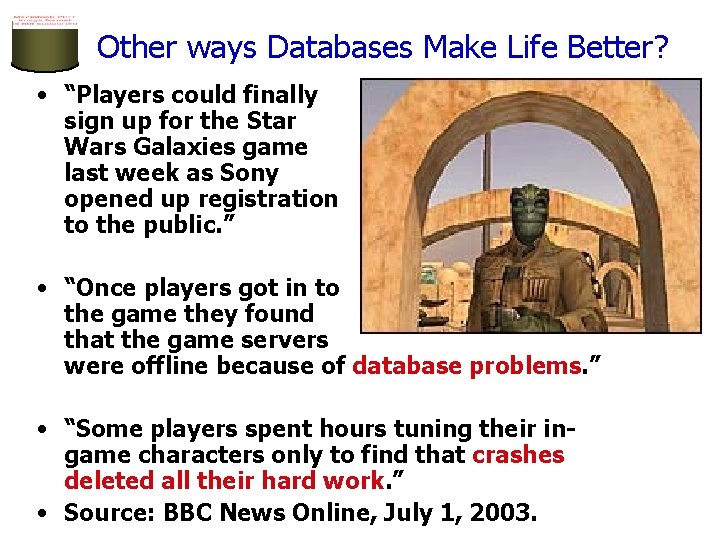
Other ways Databases Make Life Better? • “Players could finally sign up for the Star Wars Galaxies game last week as Sony opened up registration to the public. ” • “Once players got in to the game they found that the game servers were offline because of database problems. ” • “Some players spent hours tuning their ingame characters only to find that crashes deleted all their hard work. ” • Source: BBC News Online, July 1, 2003.
Other databases you may use
So…What Is a Database System? • Database: a very large, integrated collection of data. • Models a real-world enterprise – Entities (e. g. , teams, games) – Relationships (e. g. , Cal is playing against Stanford) – More recently, also includes active components , often called “business logic”. (e. g. , the BCS ranking system) • A Database Management System (DBMS) is a software system designed to store, manage, and facilitate access to databases. • More expansive definitions are possible (and more interesting…)
= • • Is the WWW a DBMS? Fairly sophisticated search available – crawler indexes pages on the web – Keyword-based search for pages But, currently – data is mostly unstructured and untyped – search only: • can’t modify the data • can’t get summaries, complex combinations of data • – few guarantees provided for freshness of data, consistency across data items, fault tolerance, … – Web sites typically have a DBMS in the background to provide these functions. The picture is changing – New standards e. g. , XML, Semantic Web can help data modeling – Research groups (e. g. , at Berkeley) are working on providing some of this functionality across multiple web sites.
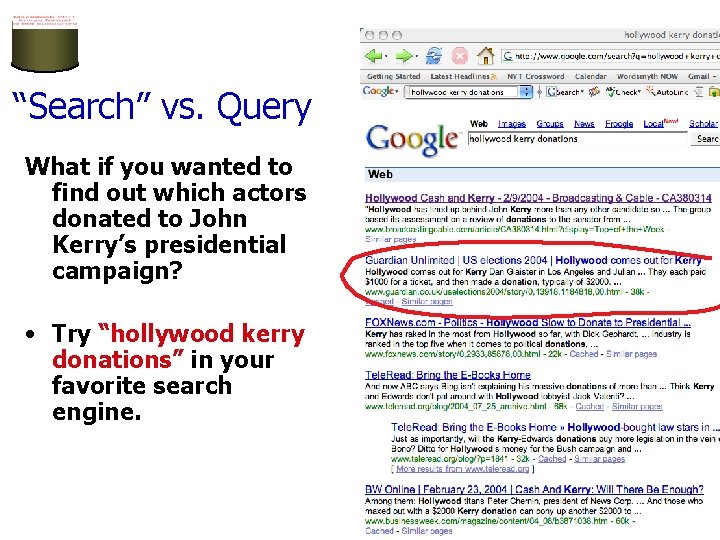
“Search” vs. Query What if you wanted to find out which actors donated to John Kerry’s presidential campaign? • Try “hollywood kerry donations” in your favorite search engine.

“Search” vs. Query
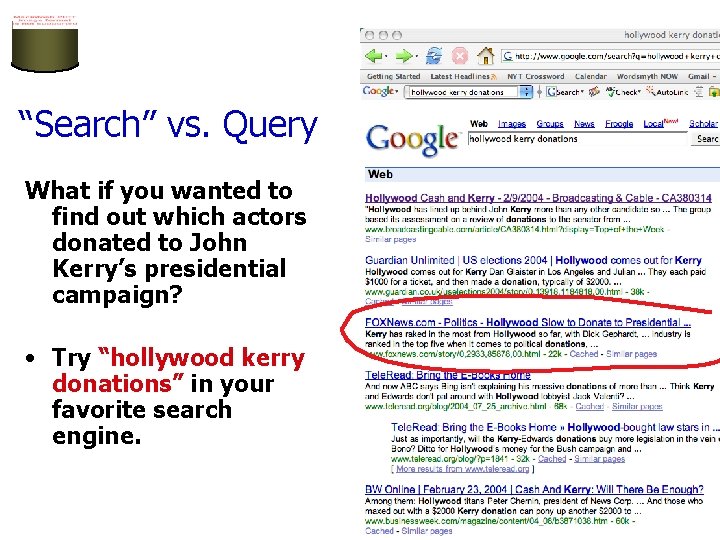
“Search” vs. Query What if you wanted to find out which actors donated to John Kerry’s presidential campaign? • Try “hollywood kerry donations” in your favorite search engine.
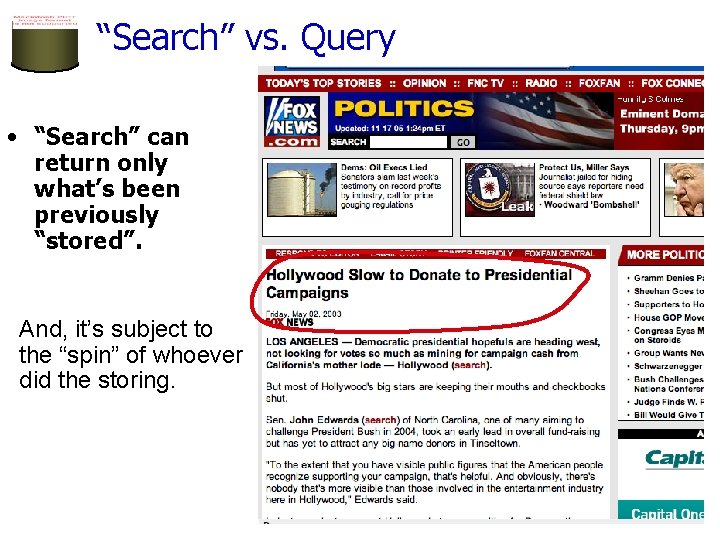
“Search” vs. Query • “Search” can return only what’s been previously “stored”. And, it’s subject to the “spin” of whoever did the storing.
Also… • What if I wanted to find out the average donation of actors to each candidate? • What if I wanted to compare actor donations this campaign to the last one? • What if I wanted to find out who gave the most to each candidate? • What if I wanted to know where the data came from, and how old it was?
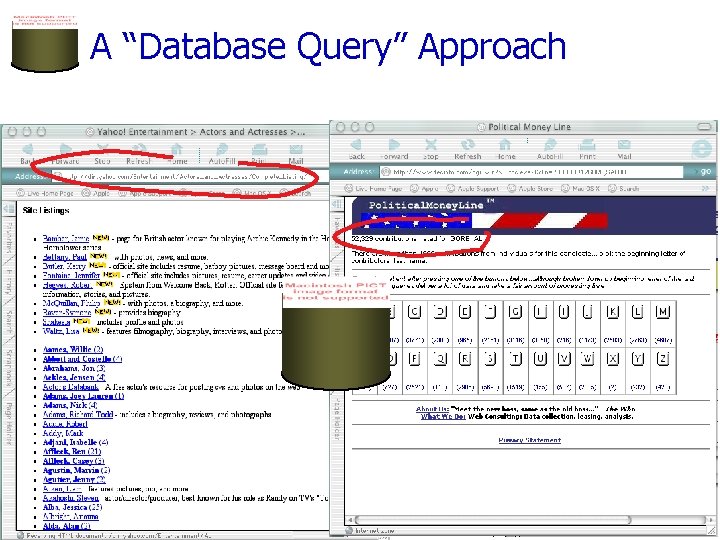
A “Database Query” Approach
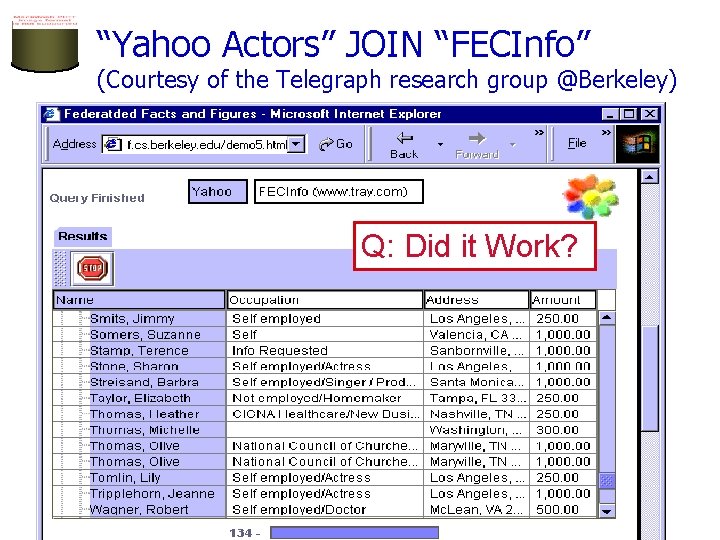
“Yahoo Actors” JOIN “FECInfo” (Courtesy of the Telegraph research group @Berkeley) Q: Did it Work?
What’s going on here? • Unstructured Data – Text-based search is based mostly on statistical models of similarity. • no real “understanding” of the data – Google’s big step forward was to exploit some of the structure in web documents. – Still, web search places a large burden on people to do the last stage of filtering and interpretation. • Structure gives computers the ability to manipulate and maintain the data. • Traditional (relational) Database systems are aimed at structured data.
Other Unstructured Data - Images Similarity search by “features” Picture From Univ. of Konstanz
What about structured data? • A data model is a collection of concepts for describing data. • A schema is a description of a particular collection of data, using a given data model. • The relational model of data is the most widely used model today. • Main concept: relation, basically a table with rows and columns. • Every relation has a schema, which describes the columns, or fields.
Example: University Database • Conceptual schema: – Students(sid: string, name: string, age: integer, gpa: real) – Courses(cid: string, cname: string, credits: integer) – Enrolled(sid: string, cid: string, grade: string) FOREIGN KEY sid REFERENCES Students FOREIGN KEY cid REFERENCES Courses • External Schema (View): – Course_info(cid: string, enrollment: integer) Create View Course_info AS SELECT cid, Count (*) as enrollment FROM Courses GROUP BY cid
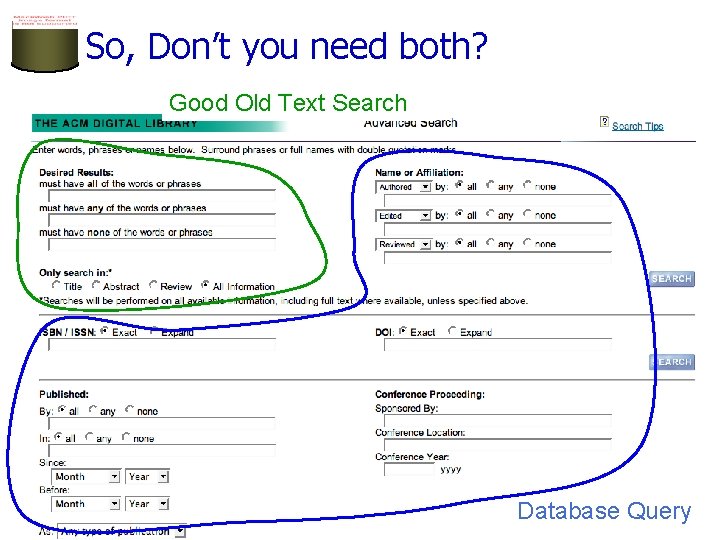
So, Don’t you need both? Good Old Text Search Database Query
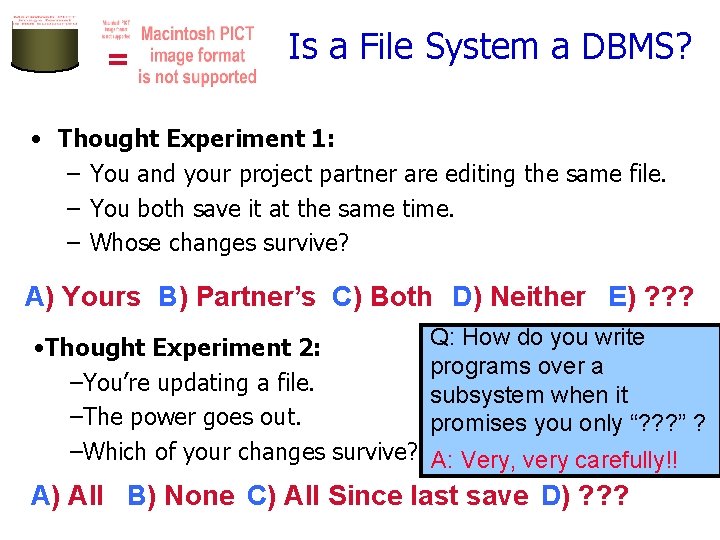
= Is a File System a DBMS? • Thought Experiment 1: – You and your project partner are editing the same file. – You both save it at the same time. – Whose changes survive? A) Yours B) Partner’s C) Both D) Neither E) ? ? ? Q: How do you write • Thought Experiment 2: programs over a –You’re updating a file. subsystem when it –The power goes out. promises you only “? ? ? ” ? –Which of your changes survive? A: Very, very carefully!! A) All B) None C) All Since last save D) ? ? ?
OS Support for Data Management • Data can be stored in RAM – this is what every programming language offers! – RAM is fast, and random access – Isn’t this heaven? • Every OS includes a File System – manages files on a magnetic disk – allows open, read, seek, close on a file – allows protections to be set on a file – drawbacks relative to RAM?
Database Management Systems • What more could we want than a file system? – Simple, efficient ad hoc 1 queries – concurrency control – recovery – benefits of good data modeling • S. M. O. P. 2? Not really… – as we’ll see this semester – in fact, the OS often gets in the way! 1 ad hoc: formed or used for specific or immediate problems or needs 2 SMOP: Small Matter Of Programming
Why take this class? A. Database systems are the core of CS • Shift from computation to information – True in corporate computing for years – Web, p 2 p made this clear for personal computing – Increasingly true of scientific computing • Need for DB technology has exploded in the last years – Corporate: retail swipe/clickstreams, “customer relationship mgmt”, “supply chain mgmt”, “data warehouses”, etc. – Web: not just “documents”. Search engines, e-commerce, blogs, wikis, other “web services”. – Scientific: digital libraries, genomics, satellite imagery, physical sensors, simulation data – Personal: Music, photo, & video libraries. Email archives. File contents (“desktop search”).
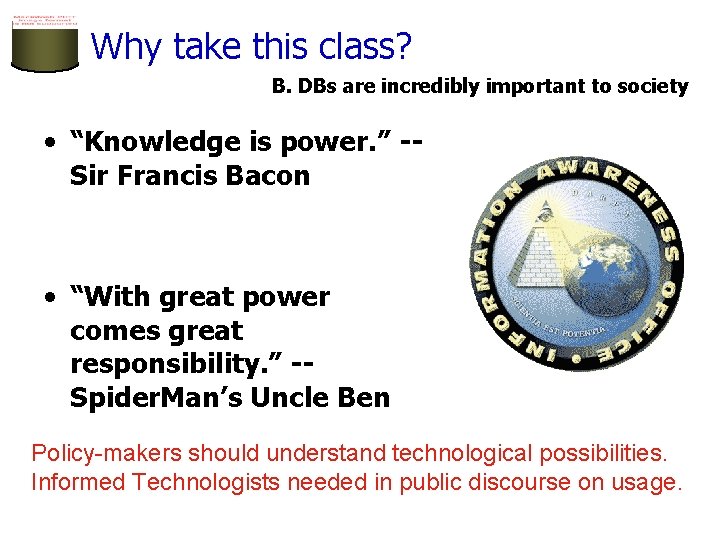
Why take this class? B. DBs are incredibly important to society • “Knowledge is power. ” -Sir Francis Bacon • “With great power comes great responsibility. ” -Spider. Man’s Uncle Ben Policy-makers should understand technological possibilities. Informed Technologists needed in public discourse on usage.
Why take this class? C. The topic is intellectually rich. • representing information – data modeling • languages and systems for querying data – complex queries & query semantics* – over massive data sets • concurrency control for data manipulation – controlling concurrent access – ensuring transactional semantics • reliable data storage – maintain data semantics even if you pull the plug * semantics: the meaning or relationship of meanings of a sign or set of signs
Why take this class? D. The course is a capstone. • We will see – Algorithms and cost analyses – System architecture and implementation – Resource management and scheduling – Computer language design, semantics and optimization – Applications of AI topics including logic and planning – Statistical modeling of data
Why take this class? E. It isn’t that much work. • Bad news: It is a lot of work. • Good news: the course is front loaded – Much of the hard work is in the first half of the semester – Load balanced with most other classes
Why take this class? F. Looks good on my resume. • Yes, but why? This is not a course for: – Oracle administrators – IBM DB 2 engine developers • Though it’s useful for both! • It is a course for well-educated computer scientists – Database system concepts and techniques increasingly used “outside the box” • Ask your friends at Microsoft, Google, Apple, etc. • Actually, they may or may not realize it! – A rich understanding of these issues is a basic and (un? )fortunately unusual skill.
Administrivia Break: Workload • Projects with a “real world” focus: – Modify the internals of a “real” open-source database system: Postgre. SQL • Serious C system hacking • Measure the benefits of our changes • • • – Build a web-based e-commerce application w/Postgre. SQL, Apache, and PHP (almost “LAMP”) – Other homework assignments and/or quizes Exams – 2 Midterms & 1 Final – We reserve the right to adjust final course grades for extreme (good or bad) exam performance relative to (group) project grades. Programming Projects to be done in groups of 2 – Pick your partners ASAP The course is “front-loaded” – hardest project work is in the first two thirds…
Administrivia Break - Contacts • http: //inst. eecs. berkeley. edu/~cs 186 • Prof. Office Hours: – 687 Soda Hall, M 11 -12; Th 1 -2 – or by arrangement: franklin@cs. berkeley. edu • TAs (Office Hours, locations TBD – see web page): – �Eirinaios Michelakis – Daisy Wang – and, if we’re lucky… Eugene Wu • NO Discussion Sections This Week! • Cancelling Tues Section (starting with 3) • More details on Thursday
More Administrivia • Textbook – Ramakrishnan and Gehrke, 3 rd Edition – Today’s lecture covers Chapter 1 in R&G – Read Ch 3 (The Relational Model) for next class. • Grading, hand-in policies, etc. will be on Web Page • Cheating policy: zero tolerance – We have the technology… • Team Projects (subset of projects) – Teams of 2 • Class bulletin board - ucb. class. cs 186 and blog – read it regularly and post questions/comments. – mail broadcast to all TAs will not be answered – mail to the cs 186 course account will not be answered
- Slides: 34