
CS 121 Lecture 20 CookLevin Theorem Madhu Sudan




- Slides: 25
CS 121: Lecture 20 Cook-Levin Theorem Madhu Sudan https: //madhu. seas. Harvard. edu/courses/Fall 2020 Book: https: //introtcs. org How to contact us { The whole staff (faster response): CS 121 Piazza Only the course heads (slower): cs 121. fall 2020. course. heads@gmail. com
Announcements: • Advanced section Thursday: Nicole Immorlica on Econ. CS • Midterm 2 in 1 week. • • Open book (Barak only). 2 pages cheat sheet (no collaboration). 90 minutes long. (70 if handwritten. ) • Homework 5 due Thursday.
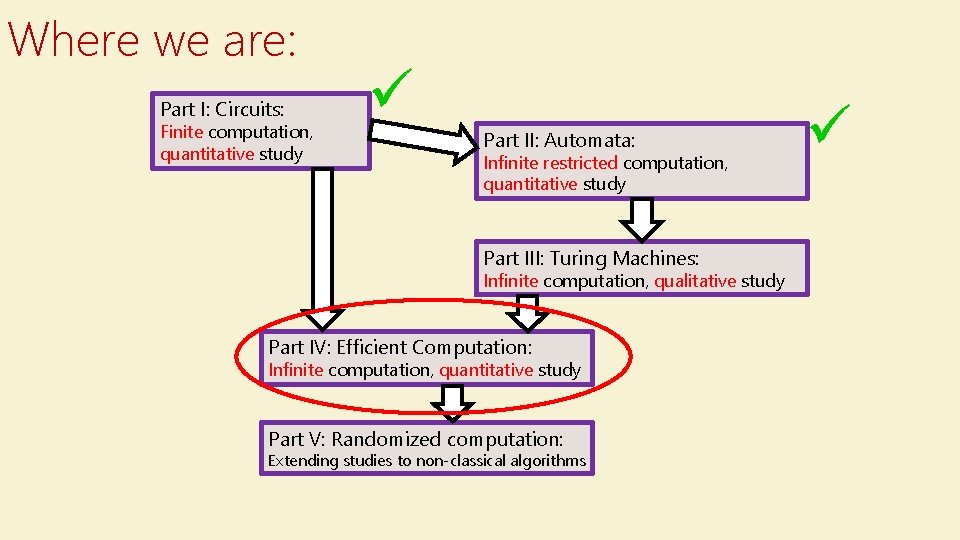
Where we are: Part I: Circuits: Finite computation, quantitative study Part II: Automata: Infinite restricted computation, quantitative study Part III: Turing Machines: Infinite computation, qualitative study Part IV: Efficient Computation: Infinite computation, quantitative study Part V: Randomized computation: Extending studies to non-classical algorithms
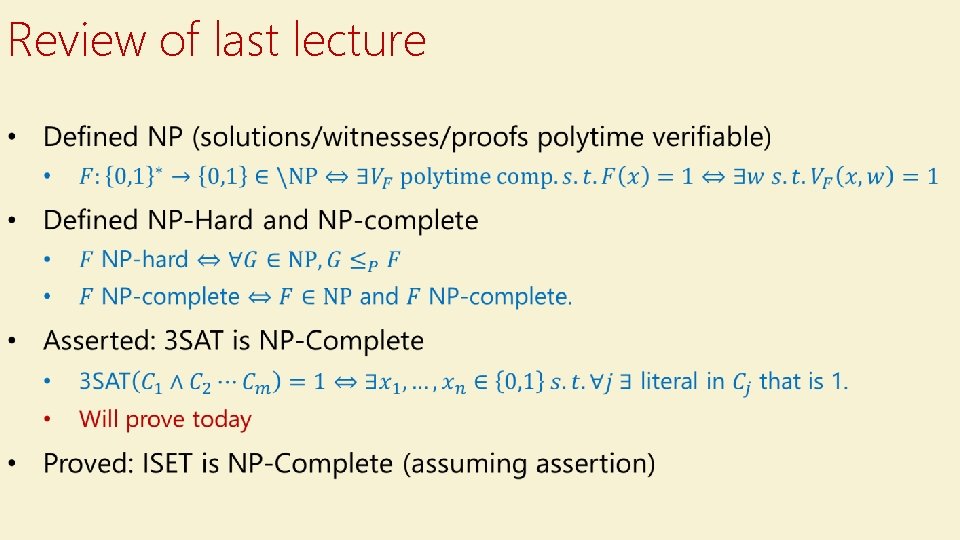
Review of last lecture
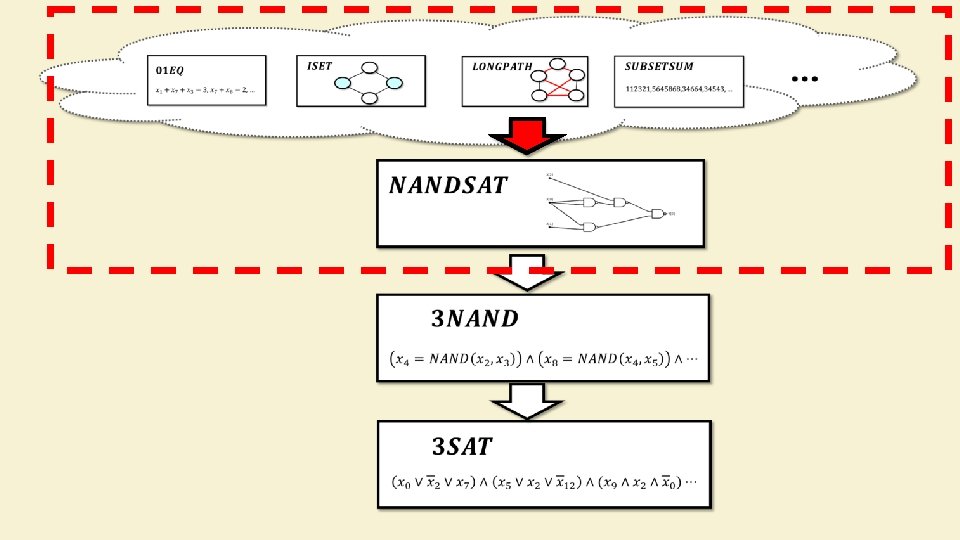
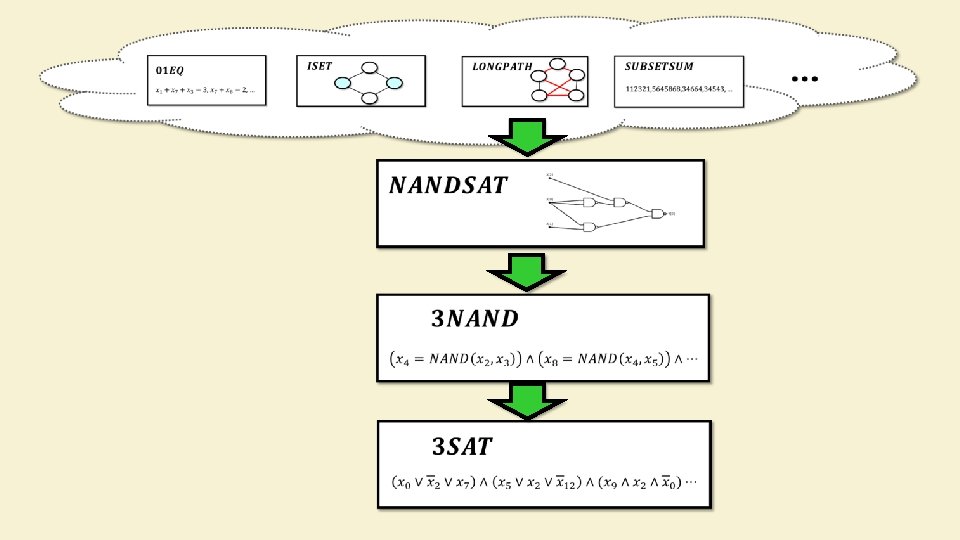
Today • Cook-Levin Theorem: 3 SAT is NP-Complete
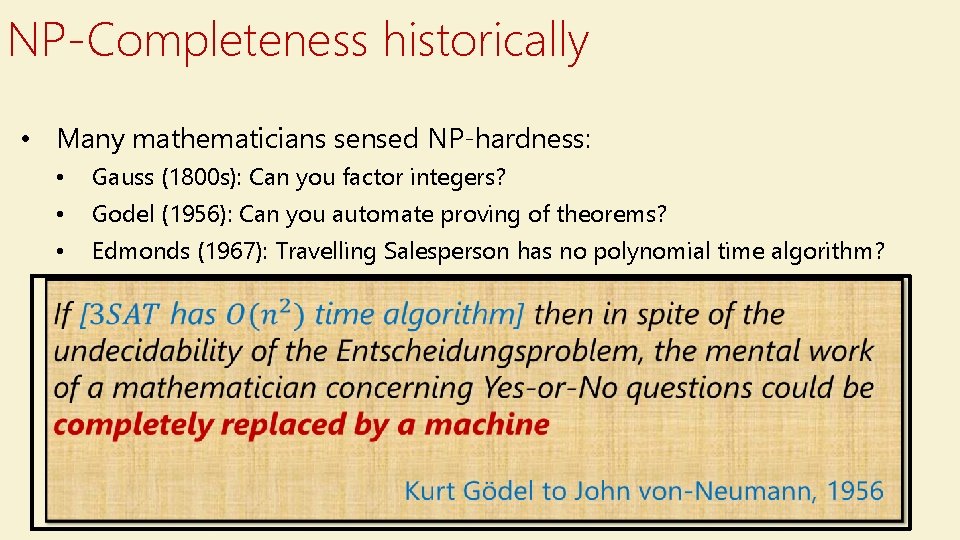
NP-Completeness historically • Many mathematicians sensed NP-hardness: • • • Gauss (1800 s): Can you factor integers? Godel (1956): Can you automate proving of theorems? Edmonds (1967): Travelling Salesperson has no polynomial time algorithm?
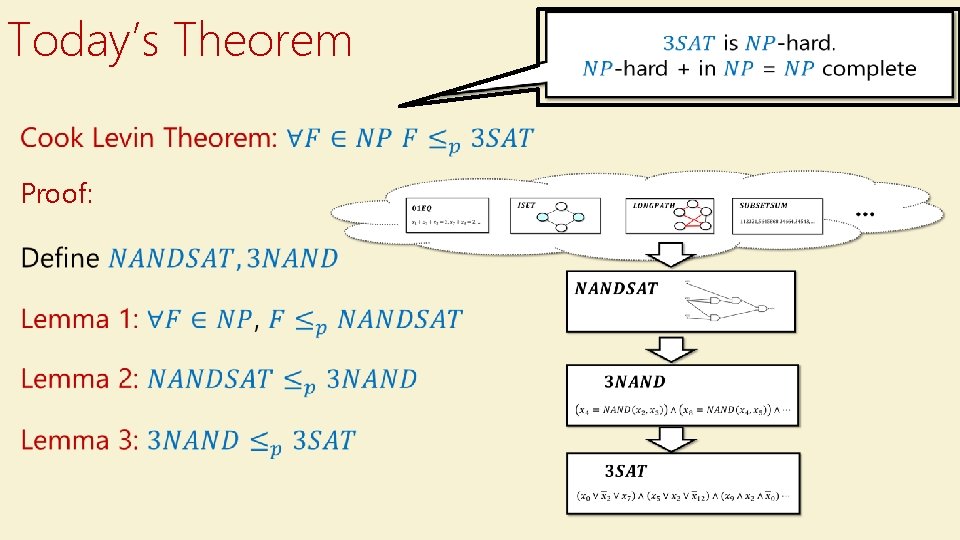
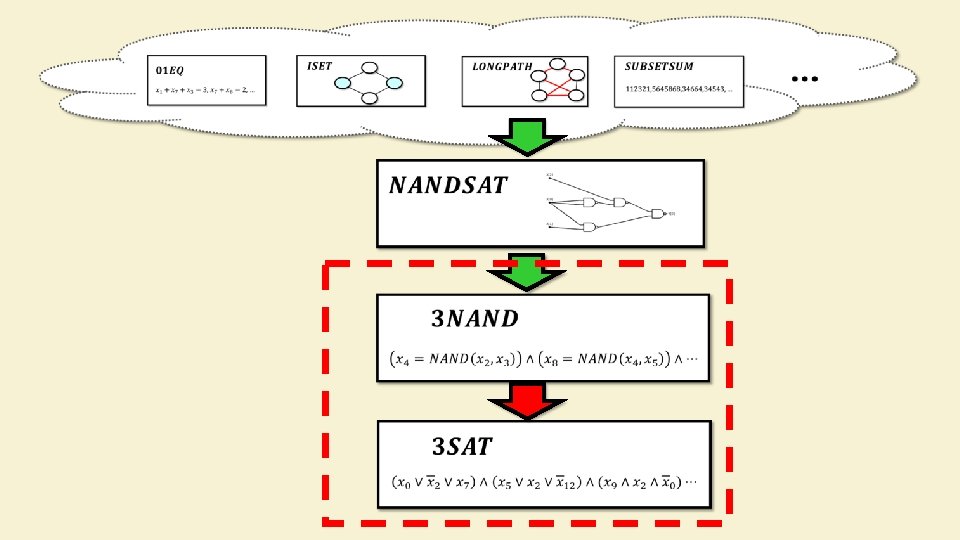
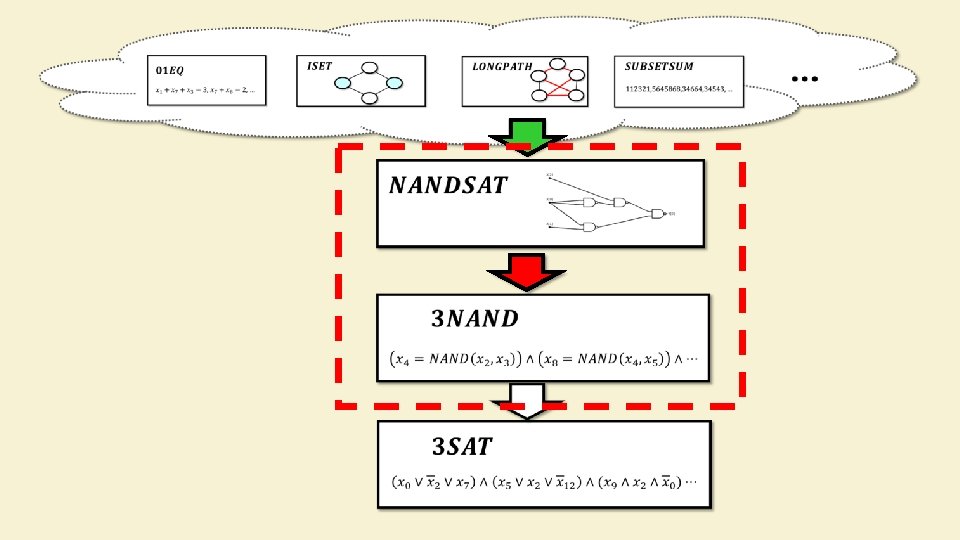
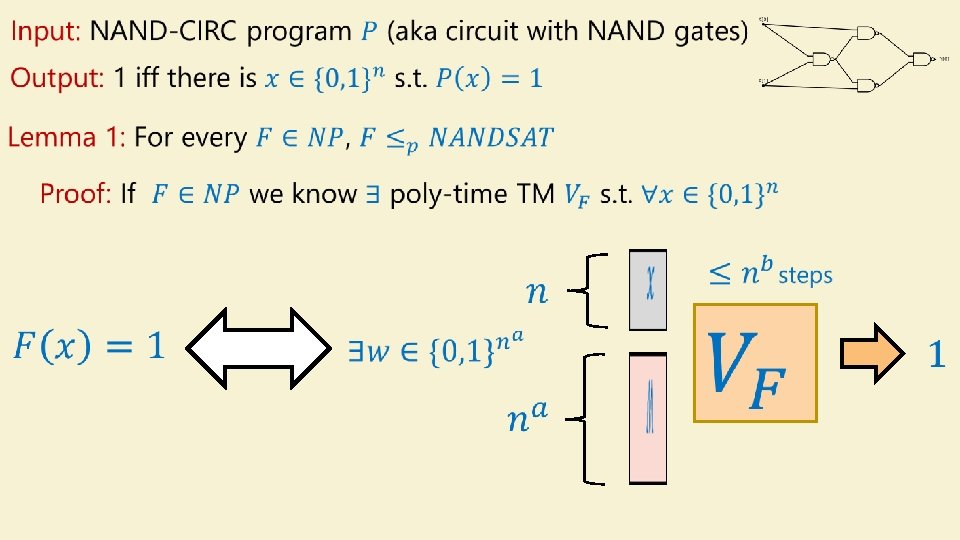
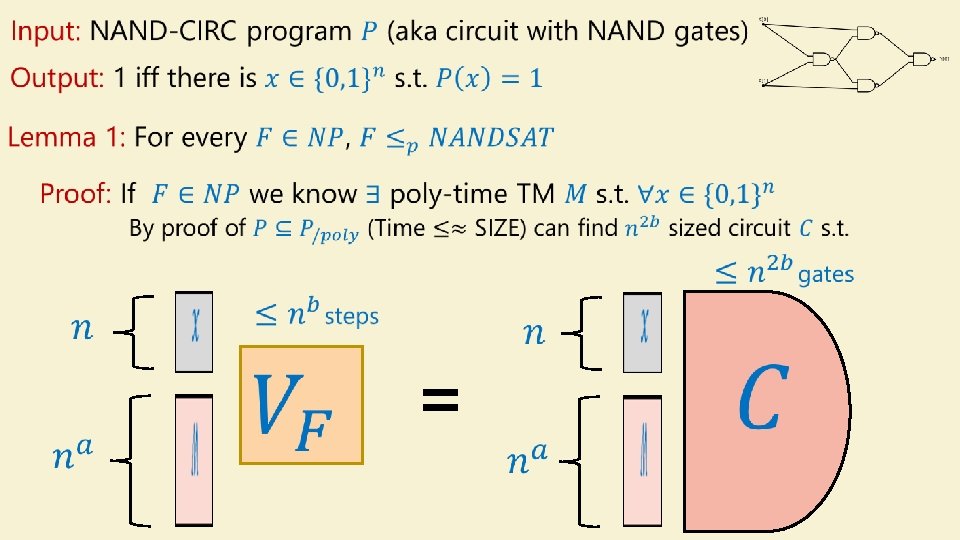
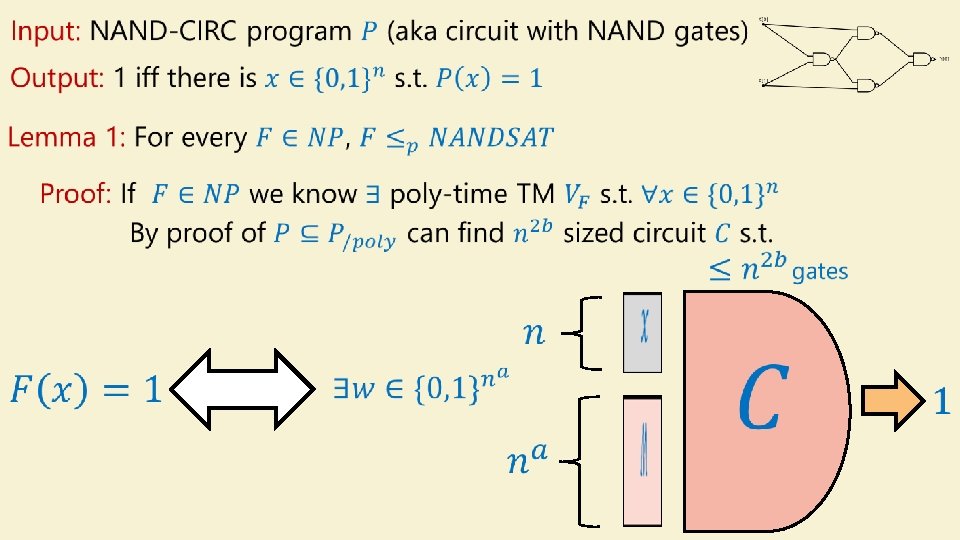
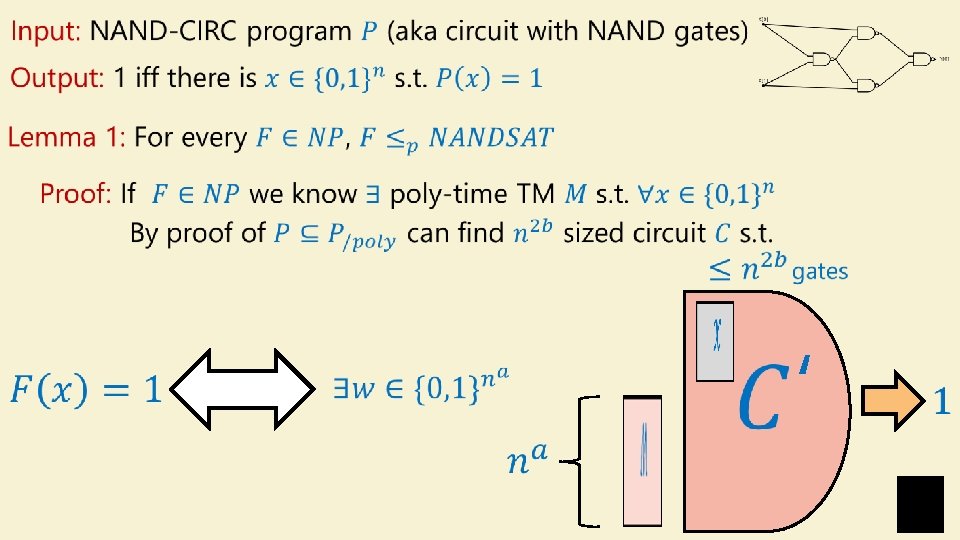
Today’s Theorem Proof:
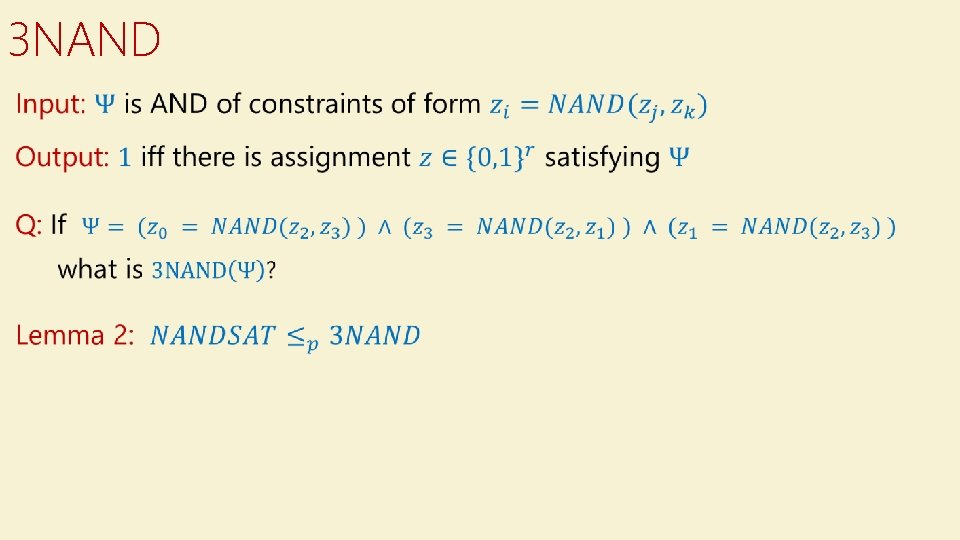
3 NAND
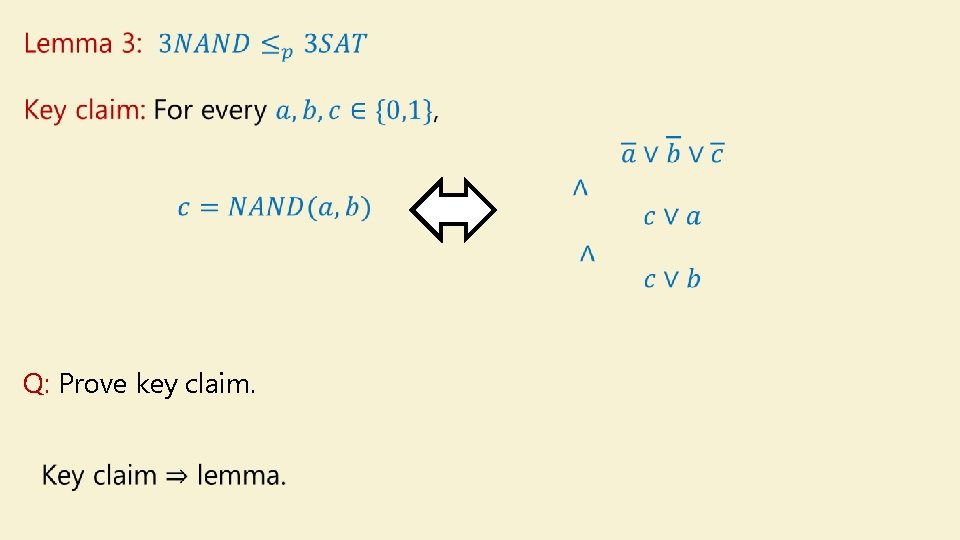
Q: Prove key claim.
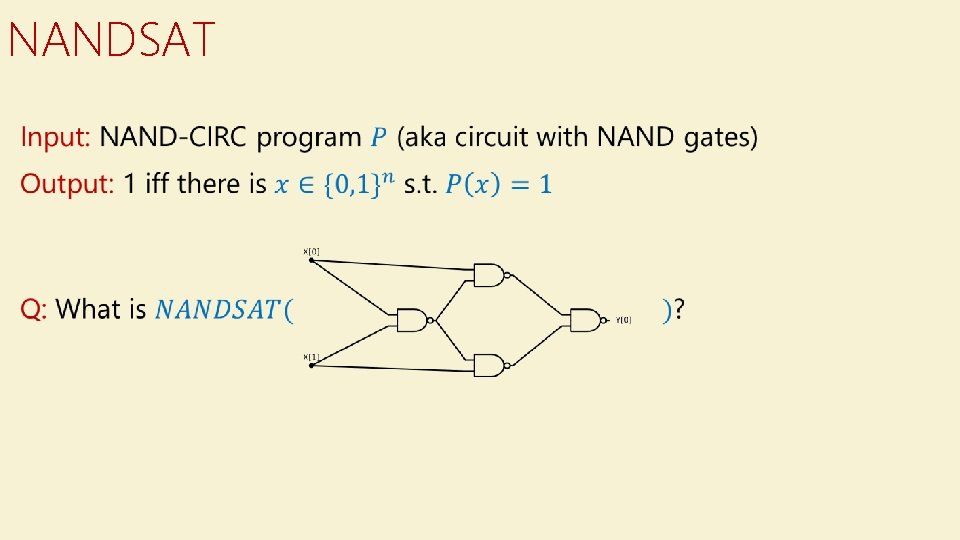
NANDSAT
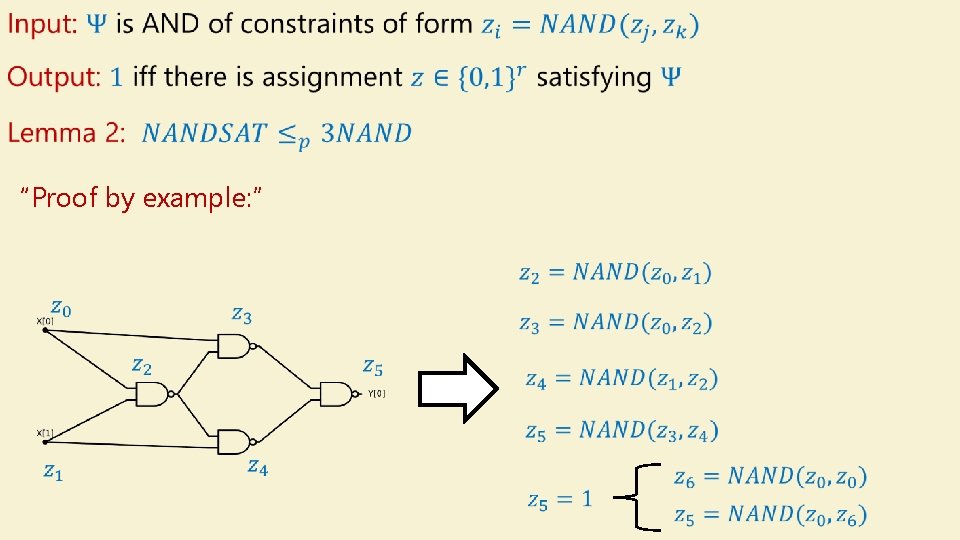
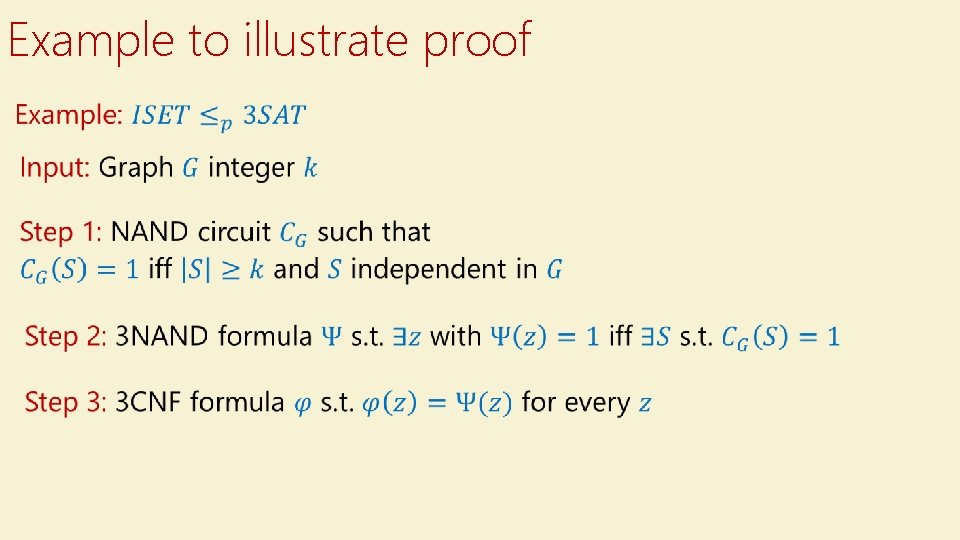
“Proof by example: ”
Example to illustrate proof
Next lecture • More reductions. See more diverse NP-complete problems.