
CS 106 B Lecture 25 Graphs II Wednesday
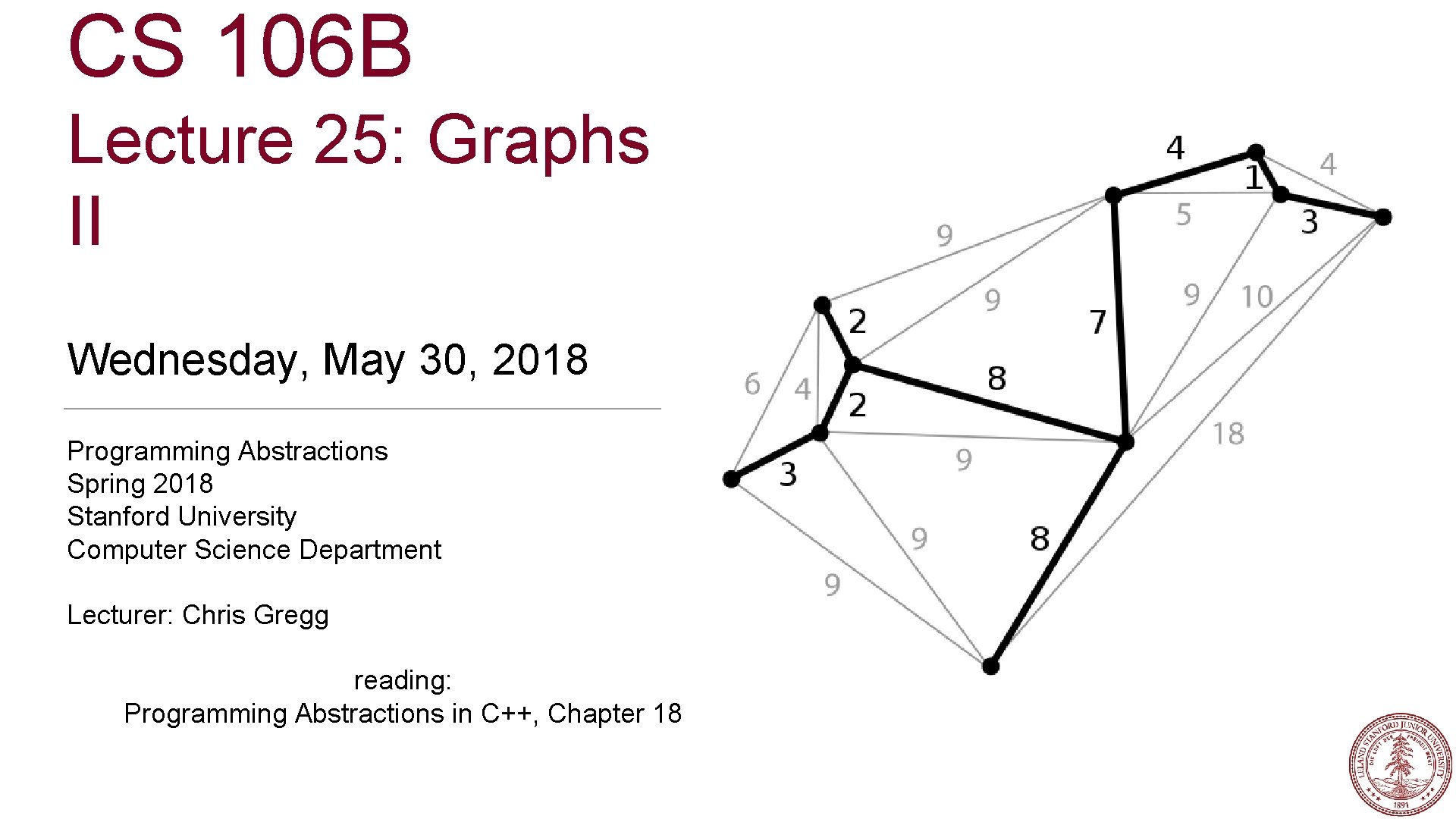
CS 106 B Lecture 25: Graphs II Wednesday, May 30, 2018 Programming Abstractions Spring 2018 Stanford University Computer Science Department Lecturer: Chris Gregg reading: Programming Abstractions in C++, Chapter 18
Today's Topics • Logistics: • Final review session will be early next week. • If you need accommodations for the final exam, let Chris and Nick know now. • The Final will be using Blue. Book — you'll need 3 hours of battery life, or find an outlet (we will try to provide enough outlets for those who need it) • Real Graphs: • Internet routers and traceroute • Topological Sort • Minimum Spanning Trees • Kruskal's algorithm
Real Graphs! I received some feedback from last quarter that said, ❝I would give more examples of how graphs are used, or, in general, give a wider variety of examples of applications to the methods being used. I think it would be interesting to give examples of how certain topics can be used in cross-sections of CS and other majors/departments. ❞ Let's dig a bit deeper into how the Internet is a real graph by analyzing internet routers, or: How does a message get sent from your computer to another computer on the Internet, say in Australia?
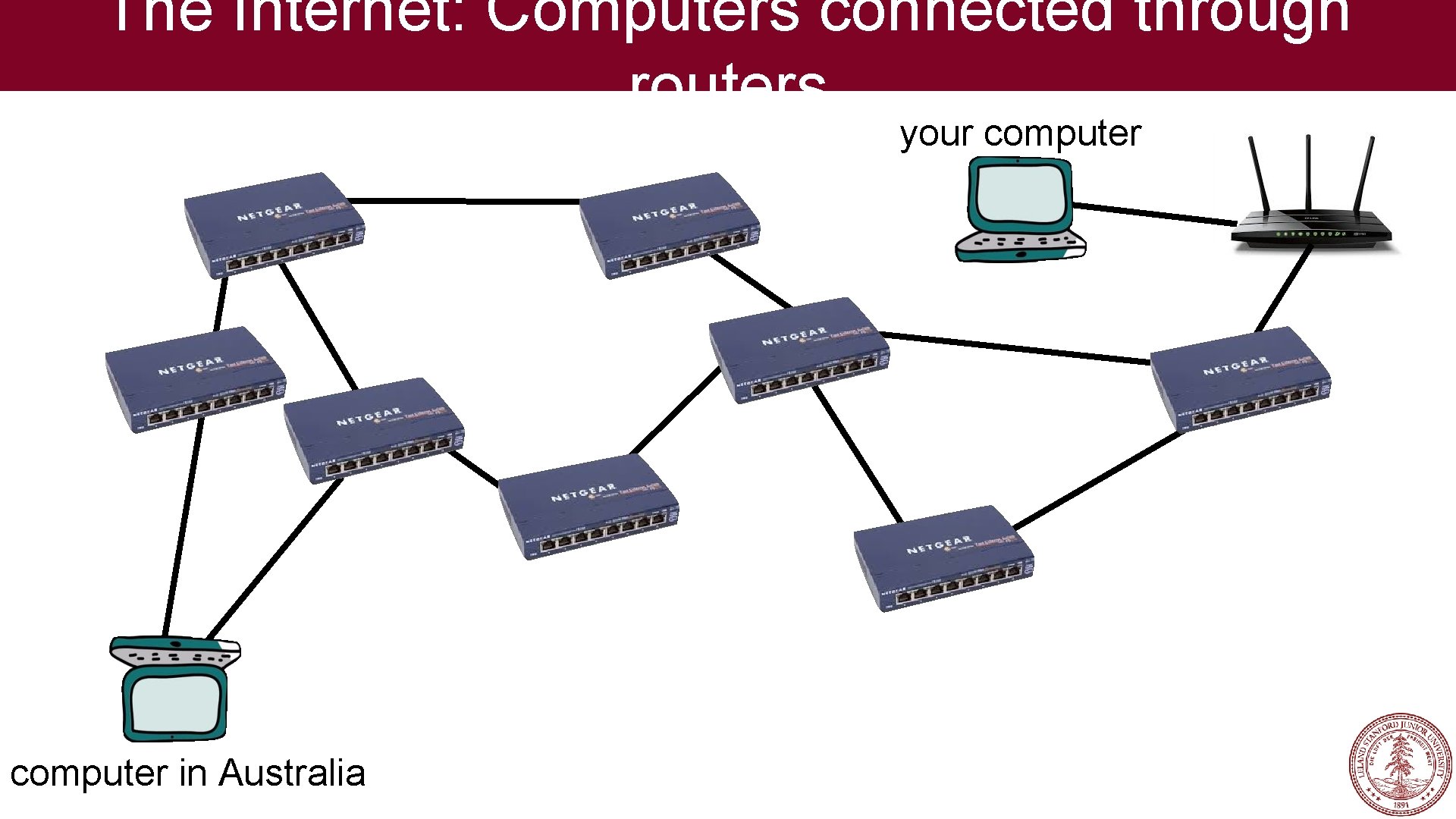
The Internet: Computers connected through routers your computer in Australia

The Internet: Computers connected through routers your computer in Australia
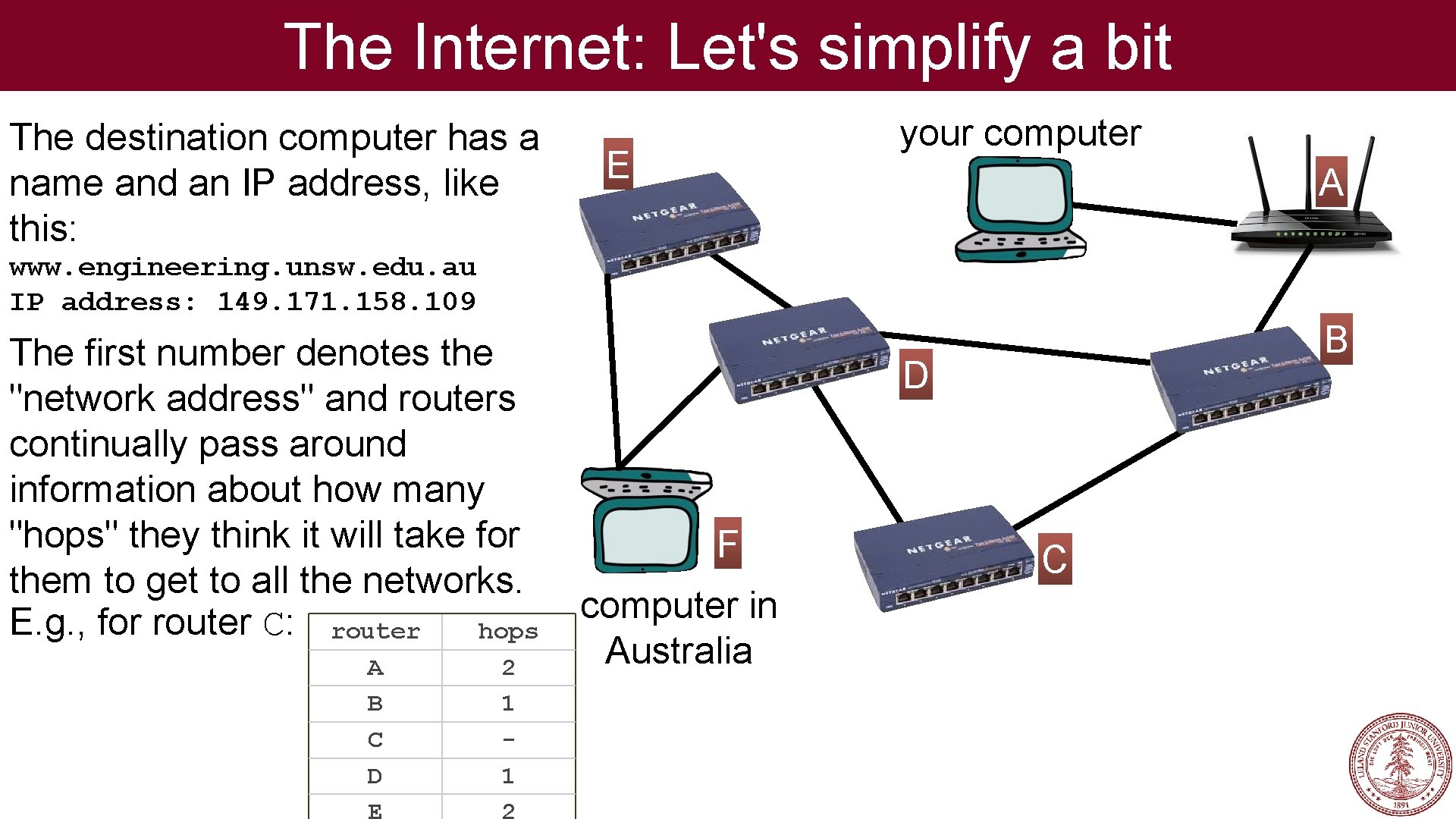
The Internet: Let's simplify a bit The destination computer has a name and an IP address, like this: your computer E A www. engineering. unsw. edu. au IP address: 149. 171. 158. 109 The first number denotes the "network address" and routers continually pass around information about how many "hops" they think it will take for them to get to all the networks. E. g. , for router C: router hops A B C D 2 1 1 B D F computer in Australia C
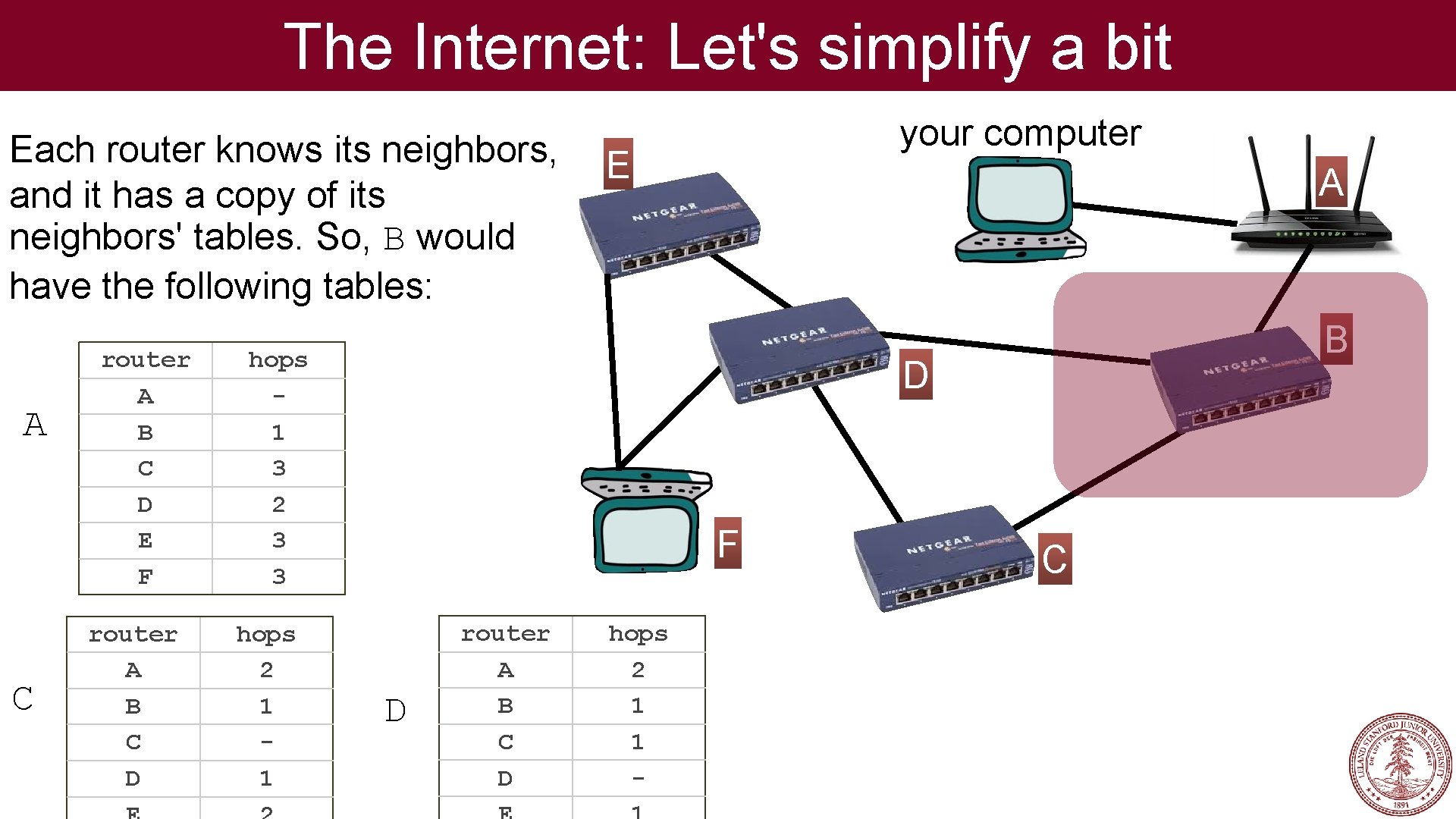
The Internet: Let's simplify a bit Each router knows its neighbors, and it has a copy of its neighbors' tables. So, B would have the following tables: A C router A B C D E F router A B C D E hops 1 3 2 3 3 hops 2 1 1 your computer A B D F D router A B C D hops 2 1 1 - C
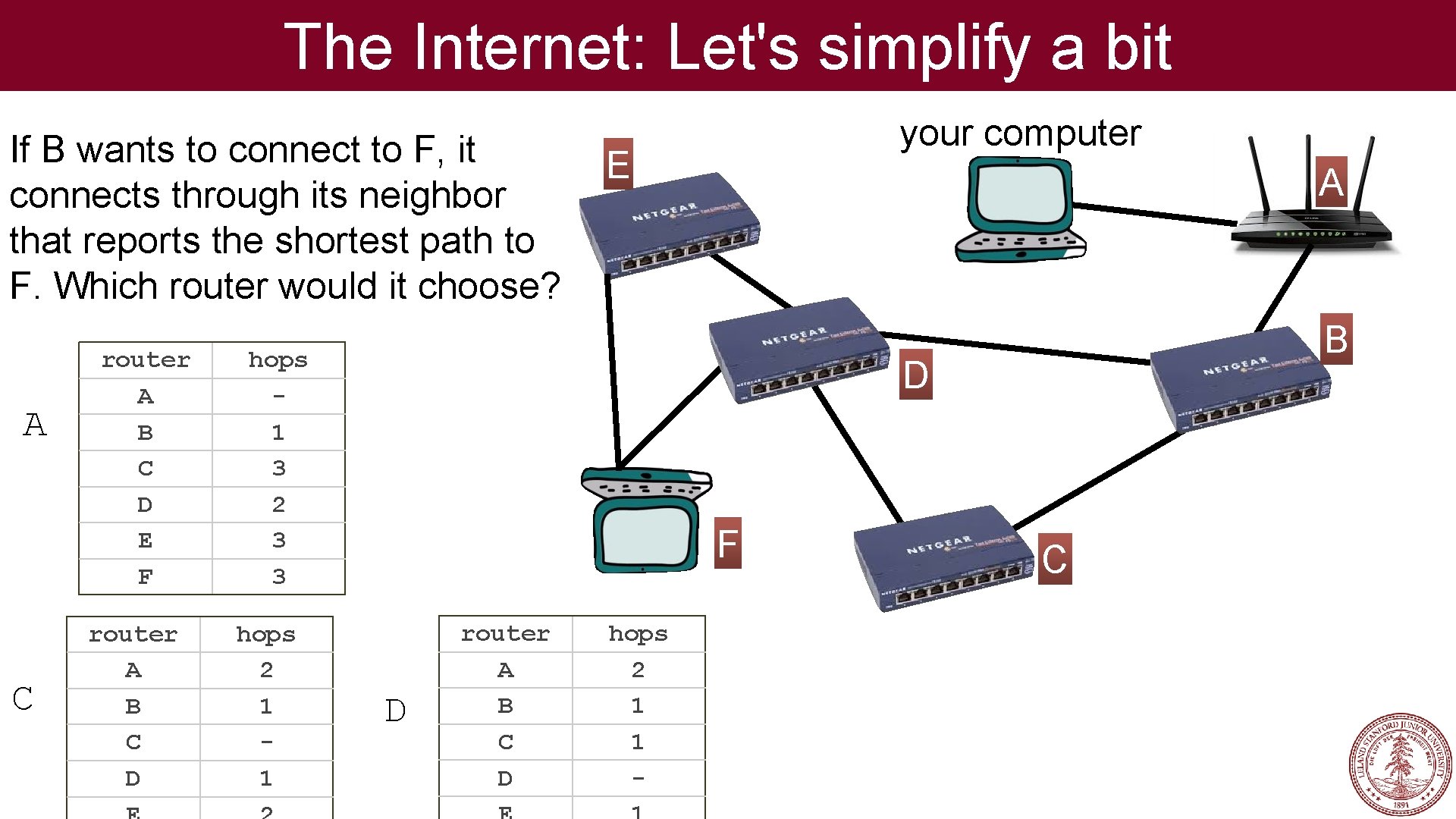
The Internet: Let's simplify a bit If B wants to connect to F, it connects through its neighbor that reports the shortest path to F. Which router would it choose? A C router A B C D E F router A B C D E hops 1 3 2 3 3 hops 2 1 1 your computer A B D F D router A B C D hops 2 1 1 - C
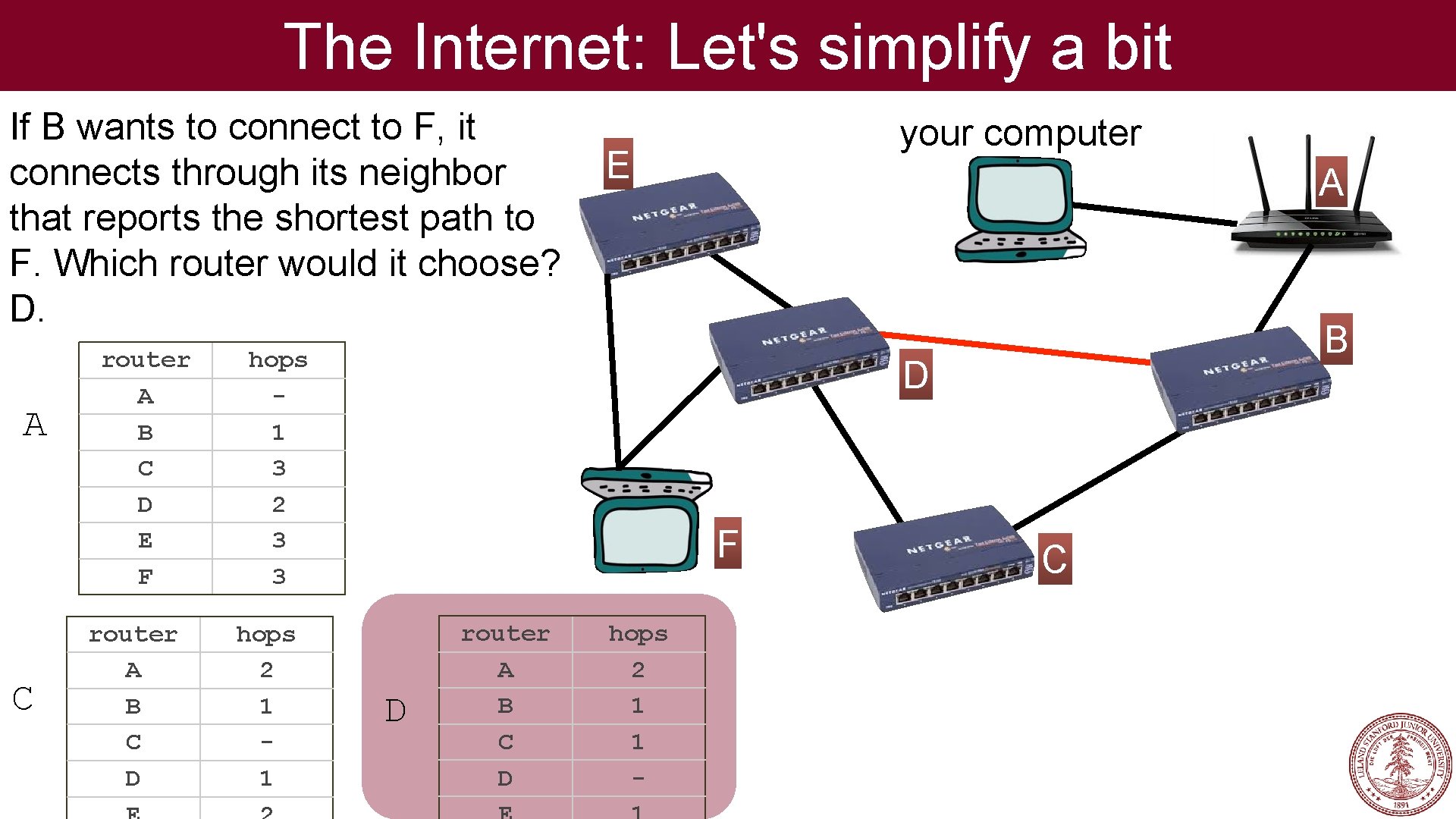
The Internet: Let's simplify a bit If B wants to connect to F, it connects through its neighbor that reports the shortest path to F. Which router would it choose? D. A C router A B C D E F router A B C D E hops 1 3 2 3 3 hops 2 1 1 your computer A B D F D router A B C D hops 2 1 1 - C
Traceroute We can use a program called "traceroute" to tell us the path between our computer and a different computer: traceroute -I -e www. engineering. unsw. edu. au
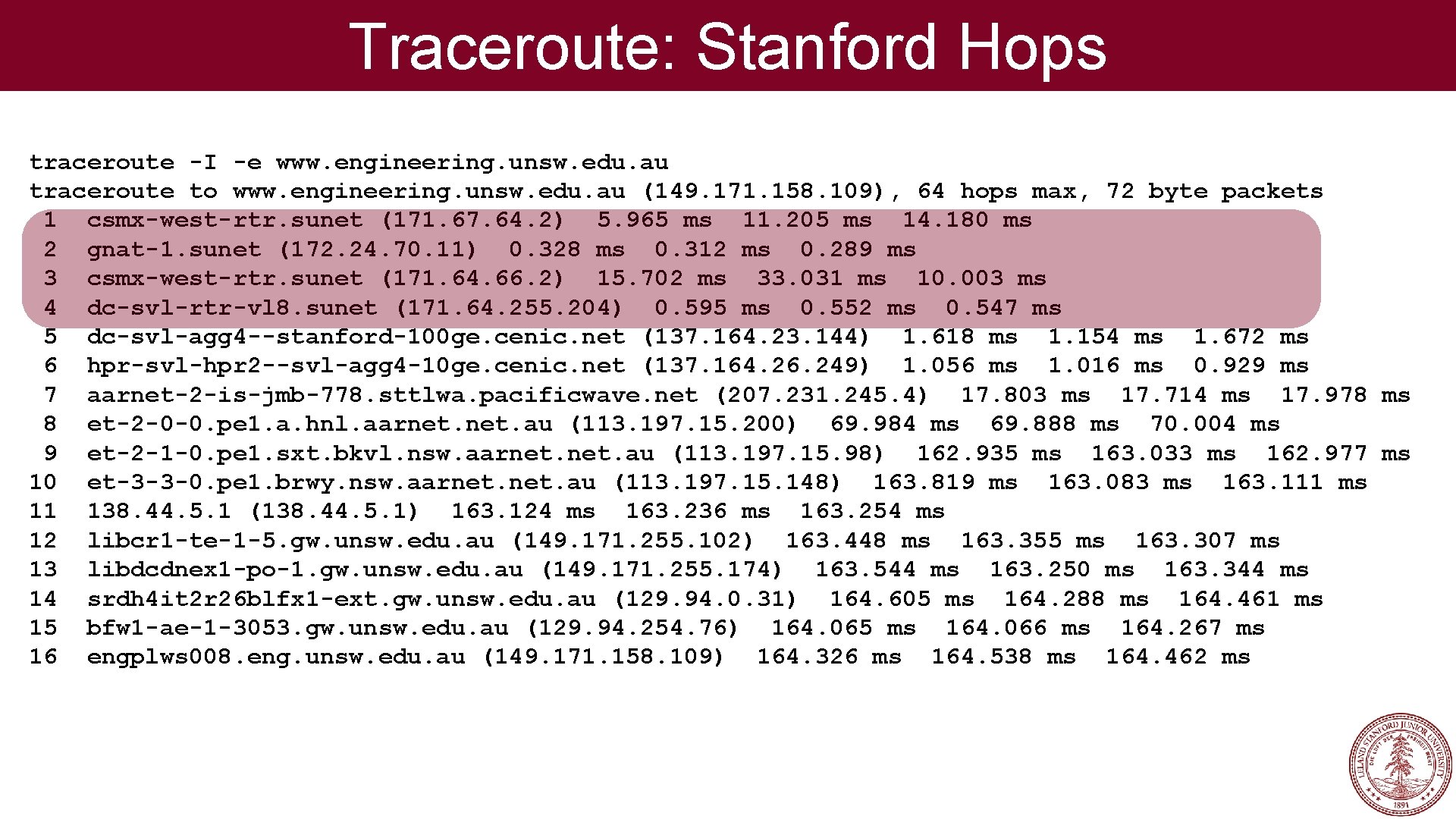
Traceroute: Stanford Hops traceroute -I -e www. engineering. unsw. edu. au traceroute to www. engineering. unsw. edu. au (149. 171. 158. 109), 64 hops max, 72 byte packets 1 csmx-west-rtr. sunet (171. 67. 64. 2) 5. 965 ms 11. 205 ms 14. 180 ms 2 gnat-1. sunet (172. 24. 70. 11) 0. 328 ms 0. 312 ms 0. 289 ms 3 csmx-west-rtr. sunet (171. 64. 66. 2) 15. 702 ms 33. 031 ms 10. 003 ms 4 dc-svl-rtr-vl 8. sunet (171. 64. 255. 204) 0. 595 ms 0. 552 ms 0. 547 ms 5 dc-svl-agg 4 --stanford-100 ge. cenic. net (137. 164. 23. 144) 1. 618 ms 1. 154 ms 1. 672 ms 6 hpr-svl-hpr 2 --svl-agg 4 -10 ge. cenic. net (137. 164. 26. 249) 1. 056 ms 1. 016 ms 0. 929 ms 7 aarnet-2 -is-jmb-778. sttlwa. pacificwave. net (207. 231. 245. 4) 17. 803 ms 17. 714 ms 17. 978 ms 8 et-2 -0 -0. pe 1. a. hnl. aarnet. au (113. 197. 15. 200) 69. 984 ms 69. 888 ms 70. 004 ms 9 et-2 -1 -0. pe 1. sxt. bkvl. nsw. aarnet. au (113. 197. 15. 98) 162. 935 ms 163. 033 ms 162. 977 ms 10 et-3 -3 -0. pe 1. brwy. nsw. aarnet. au (113. 197. 15. 148) 163. 819 ms 163. 083 ms 163. 111 ms 11 138. 44. 5. 1 (138. 44. 5. 1) 163. 124 ms 163. 236 ms 163. 254 ms 12 libcr 1 -te-1 -5. gw. unsw. edu. au (149. 171. 255. 102) 163. 448 ms 163. 355 ms 163. 307 ms 13 libdcdnex 1 -po-1. gw. unsw. edu. au (149. 171. 255. 174) 163. 544 ms 163. 250 ms 163. 344 ms 14 srdh 4 it 2 r 26 blfx 1 -ext. gw. unsw. edu. au (129. 94. 0. 31) 164. 605 ms 164. 288 ms 164. 461 ms 15 bfw 1 -ae-1 -3053. gw. unsw. edu. au (129. 94. 254. 76) 164. 065 ms 164. 066 ms 164. 267 ms 16 engplws 008. eng. unsw. edu. au (149. 171. 158. 109) 164. 326 ms 164. 538 ms 164. 462 ms
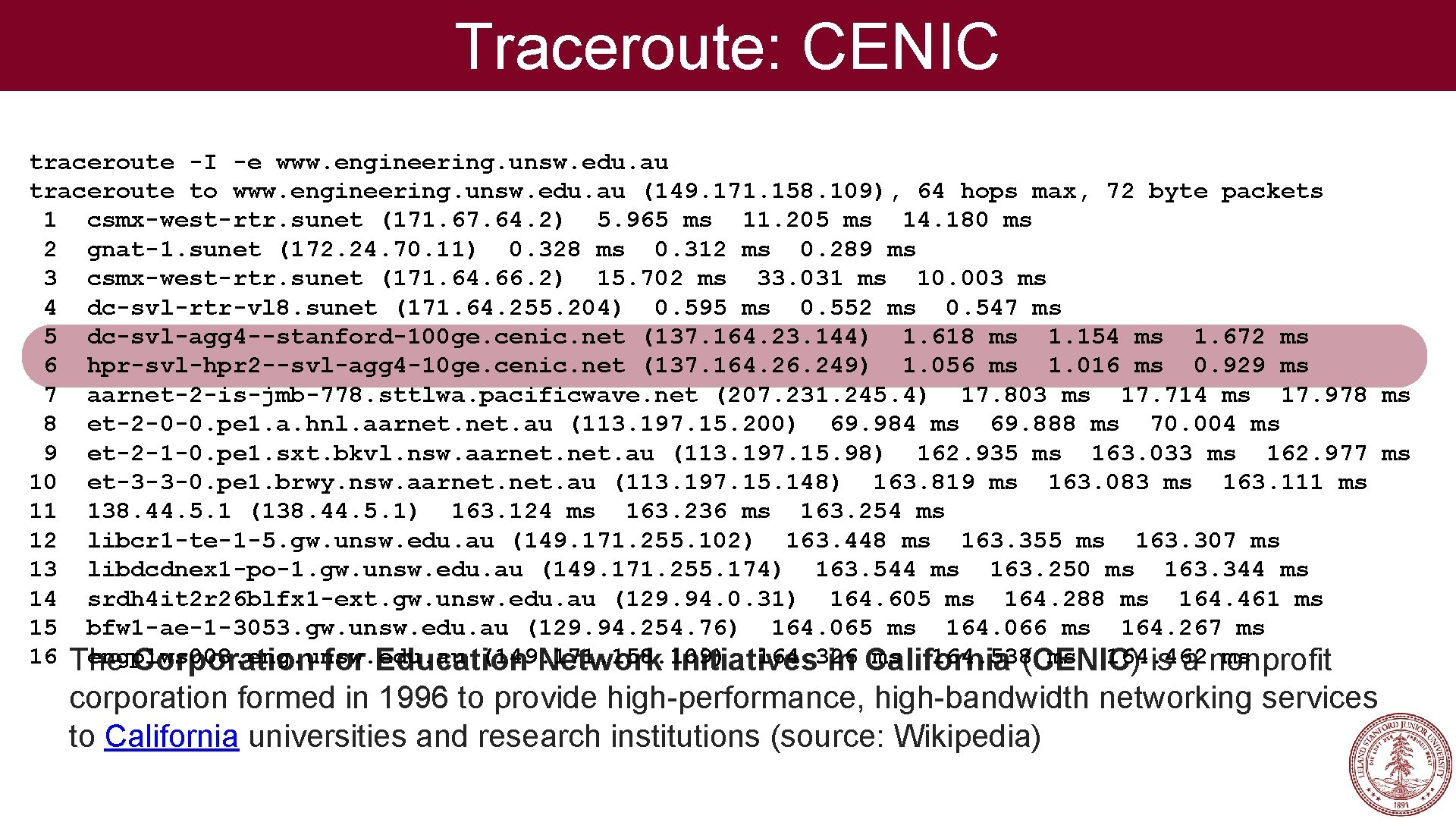
Traceroute: CENIC traceroute -I -e www. engineering. unsw. edu. au traceroute to www. engineering. unsw. edu. au (149. 171. 158. 109), 64 hops max, 72 byte packets 1 csmx-west-rtr. sunet (171. 67. 64. 2) 5. 965 ms 11. 205 ms 14. 180 ms 2 gnat-1. sunet (172. 24. 70. 11) 0. 328 ms 0. 312 ms 0. 289 ms 3 csmx-west-rtr. sunet (171. 64. 66. 2) 15. 702 ms 33. 031 ms 10. 003 ms 4 dc-svl-rtr-vl 8. sunet (171. 64. 255. 204) 0. 595 ms 0. 552 ms 0. 547 ms 5 dc-svl-agg 4 --stanford-100 ge. cenic. net (137. 164. 23. 144) 1. 618 ms 1. 154 ms 1. 672 ms 6 hpr-svl-hpr 2 --svl-agg 4 -10 ge. cenic. net (137. 164. 26. 249) 1. 056 ms 1. 016 ms 0. 929 ms 7 aarnet-2 -is-jmb-778. sttlwa. pacificwave. net (207. 231. 245. 4) 17. 803 ms 17. 714 ms 17. 978 ms 8 et-2 -0 -0. pe 1. a. hnl. aarnet. au (113. 197. 15. 200) 69. 984 ms 69. 888 ms 70. 004 ms 9 et-2 -1 -0. pe 1. sxt. bkvl. nsw. aarnet. au (113. 197. 15. 98) 162. 935 ms 163. 033 ms 162. 977 ms 10 et-3 -3 -0. pe 1. brwy. nsw. aarnet. au (113. 197. 15. 148) 163. 819 ms 163. 083 ms 163. 111 ms 11 138. 44. 5. 1 (138. 44. 5. 1) 163. 124 ms 163. 236 ms 163. 254 ms 12 libcr 1 -te-1 -5. gw. unsw. edu. au (149. 171. 255. 102) 163. 448 ms 163. 355 ms 163. 307 ms 13 libdcdnex 1 -po-1. gw. unsw. edu. au (149. 171. 255. 174) 163. 544 ms 163. 250 ms 163. 344 ms 14 srdh 4 it 2 r 26 blfx 1 -ext. gw. unsw. edu. au (129. 94. 0. 31) 164. 605 ms 164. 288 ms 164. 461 ms 15 bfw 1 -ae-1 -3053. gw. unsw. edu. au (129. 94. 254. 76) 164. 065 ms 164. 066 ms 164. 267 ms 16 The engplws 008. eng. unsw. edu. au (149. 171. 158. 109) 164. 326 ms 164. 538 ms 164. 462 ms Corporation for Education Network Initiatives in California (CENIC) is a nonprofit corporation formed in 1996 to provide high-performance, high-bandwidth networking services to California universities and research institutions (source: Wikipedia)
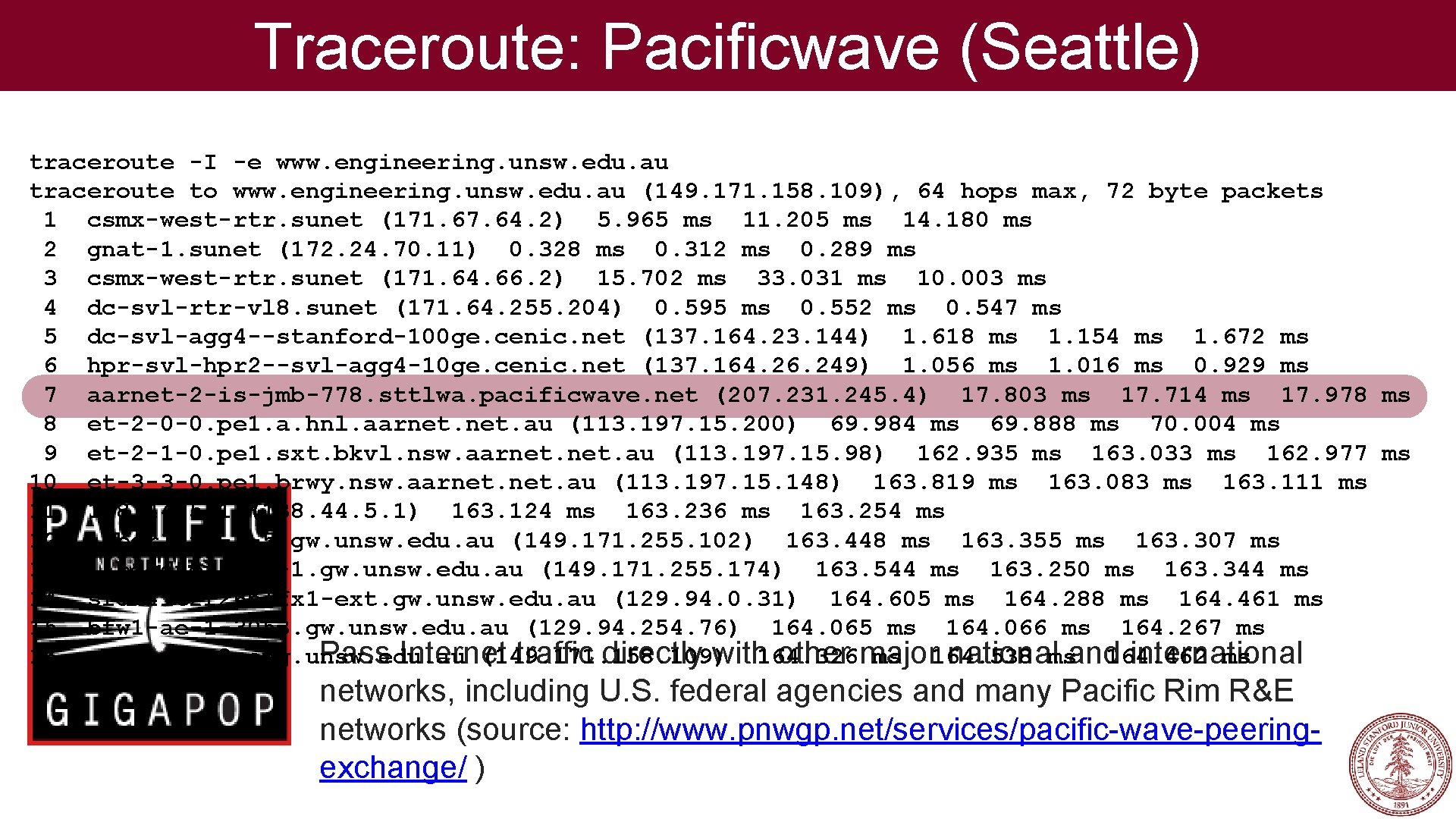
Traceroute: Pacificwave (Seattle) traceroute -I -e www. engineering. unsw. edu. au traceroute to www. engineering. unsw. edu. au (149. 171. 158. 109), 64 hops max, 72 byte packets 1 csmx-west-rtr. sunet (171. 67. 64. 2) 5. 965 ms 11. 205 ms 14. 180 ms 2 gnat-1. sunet (172. 24. 70. 11) 0. 328 ms 0. 312 ms 0. 289 ms 3 csmx-west-rtr. sunet (171. 64. 66. 2) 15. 702 ms 33. 031 ms 10. 003 ms 4 dc-svl-rtr-vl 8. sunet (171. 64. 255. 204) 0. 595 ms 0. 552 ms 0. 547 ms 5 dc-svl-agg 4 --stanford-100 ge. cenic. net (137. 164. 23. 144) 1. 618 ms 1. 154 ms 1. 672 ms 6 hpr-svl-hpr 2 --svl-agg 4 -10 ge. cenic. net (137. 164. 26. 249) 1. 056 ms 1. 016 ms 0. 929 ms 7 aarnet-2 -is-jmb-778. sttlwa. pacificwave. net (207. 231. 245. 4) 17. 803 ms 17. 714 ms 17. 978 ms 8 et-2 -0 -0. pe 1. a. hnl. aarnet. au (113. 197. 15. 200) 69. 984 ms 69. 888 ms 70. 004 ms 9 et-2 -1 -0. pe 1. sxt. bkvl. nsw. aarnet. au (113. 197. 15. 98) 162. 935 ms 163. 033 ms 162. 977 ms 10 et-3 -3 -0. pe 1. brwy. nsw. aarnet. au (113. 197. 15. 148) 163. 819 ms 163. 083 ms 163. 111 ms 11 138. 44. 5. 1 (138. 44. 5. 1) 163. 124 ms 163. 236 ms 163. 254 ms 12 libcr 1 -te-1 -5. gw. unsw. edu. au (149. 171. 255. 102) 163. 448 ms 163. 355 ms 163. 307 ms 13 libdcdnex 1 -po-1. gw. unsw. edu. au (149. 171. 255. 174) 163. 544 ms 163. 250 ms 163. 344 ms 14 srdh 4 it 2 r 26 blfx 1 -ext. gw. unsw. edu. au (129. 94. 0. 31) 164. 605 ms 164. 288 ms 164. 461 ms 15 bfw 1 -ae-1 -3053. gw. unsw. edu. au (129. 94. 254. 76) 164. 065 ms 164. 066 ms 164. 267 ms Pass Internet traffic directly with 164. 326 other major nationalmsand 164. 462 international 16 engplws 008. eng. unsw. edu. au (149. 171. 158. 109) ms 164. 538 ms networks, including U. S. federal agencies and many Pacific Rim R&E networks (source: http: //www. pnwgp. net/services/pacific-wave-peeringexchange/ )
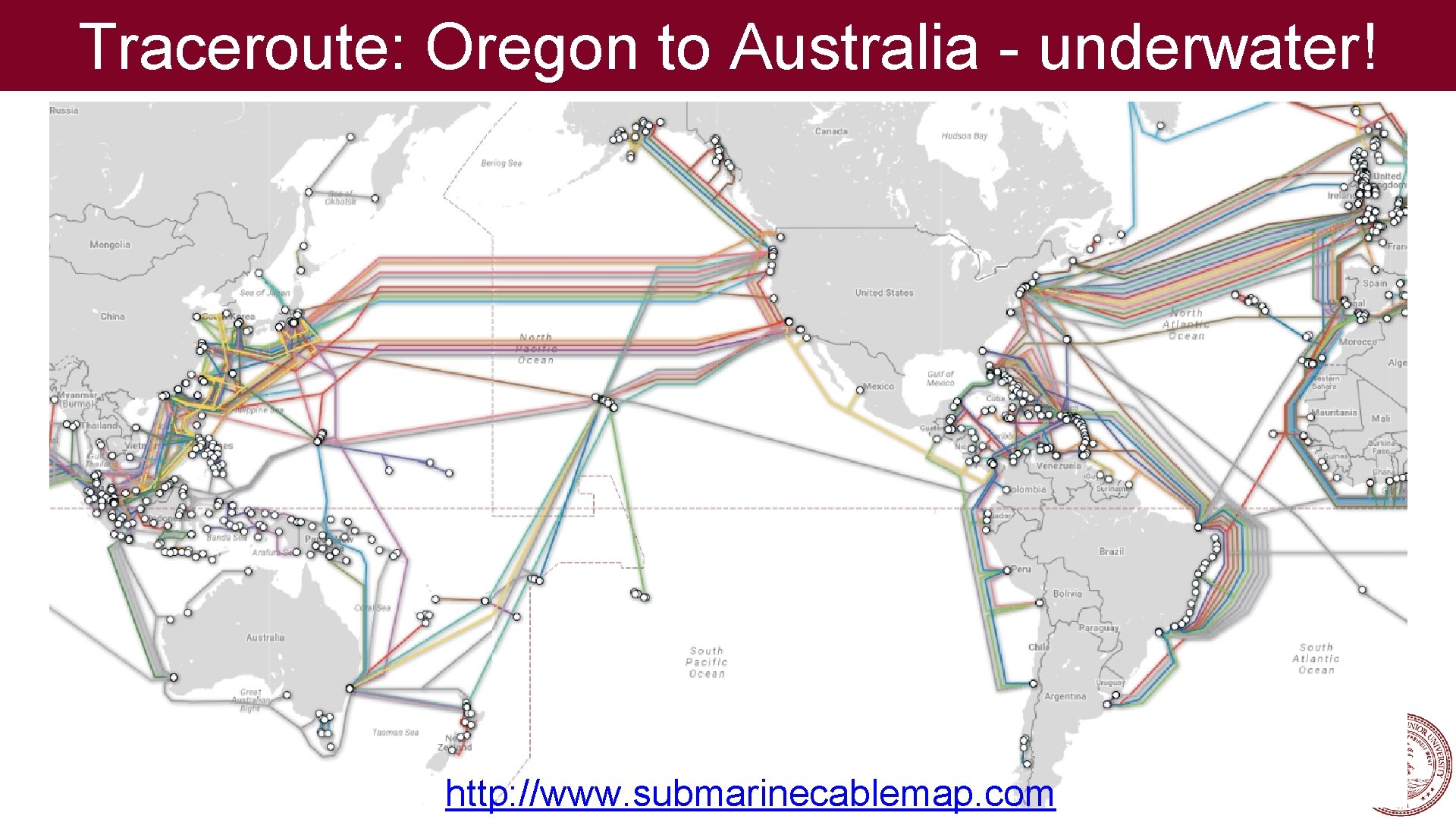
Traceroute: Oregon to Australia - underwater! http: //www. submarinecablemap. com
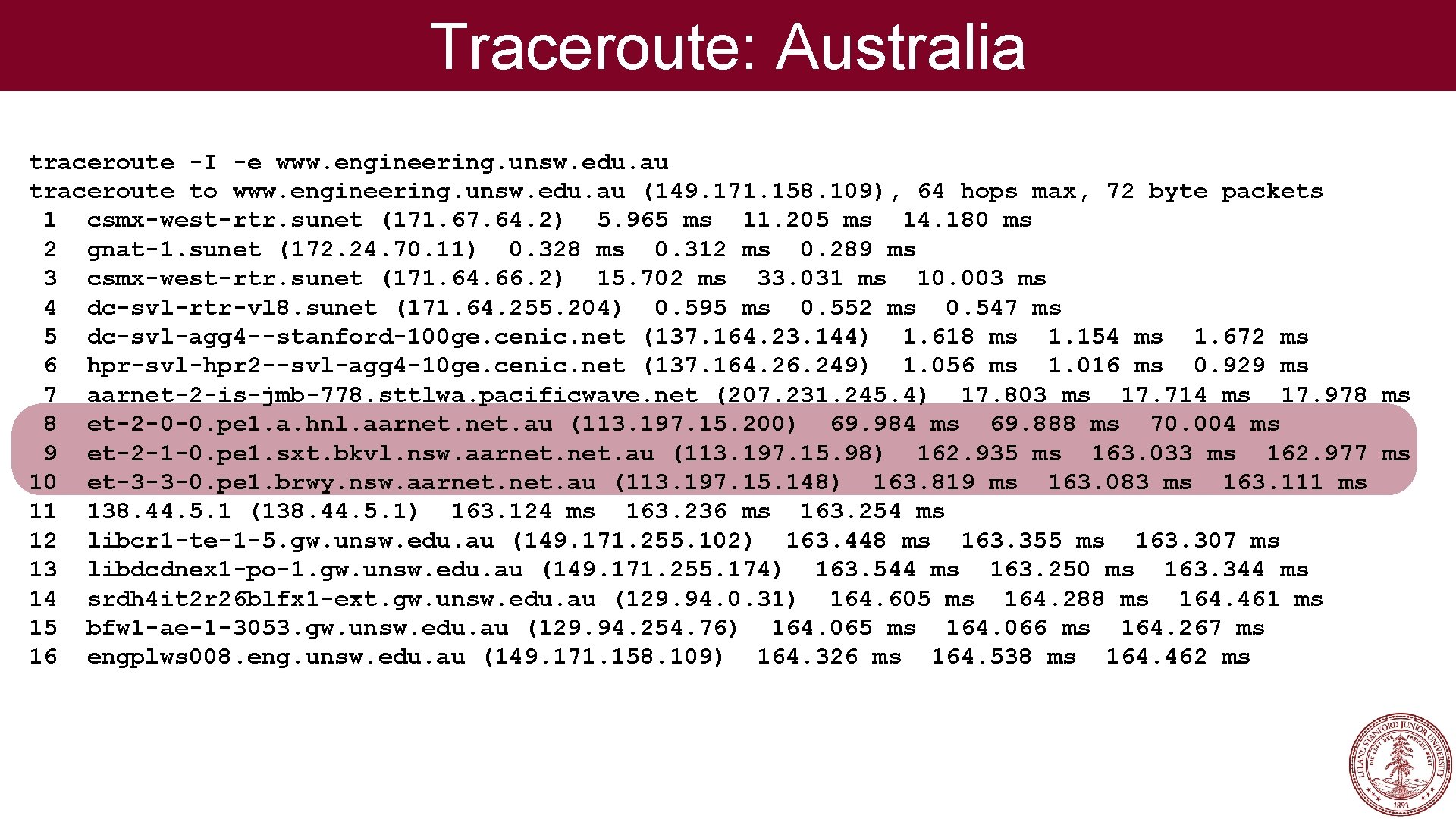
Traceroute: Australia traceroute -I -e www. engineering. unsw. edu. au traceroute to www. engineering. unsw. edu. au (149. 171. 158. 109), 64 hops max, 72 byte packets 1 csmx-west-rtr. sunet (171. 67. 64. 2) 5. 965 ms 11. 205 ms 14. 180 ms 2 gnat-1. sunet (172. 24. 70. 11) 0. 328 ms 0. 312 ms 0. 289 ms 3 csmx-west-rtr. sunet (171. 64. 66. 2) 15. 702 ms 33. 031 ms 10. 003 ms 4 dc-svl-rtr-vl 8. sunet (171. 64. 255. 204) 0. 595 ms 0. 552 ms 0. 547 ms 5 dc-svl-agg 4 --stanford-100 ge. cenic. net (137. 164. 23. 144) 1. 618 ms 1. 154 ms 1. 672 ms 6 hpr-svl-hpr 2 --svl-agg 4 -10 ge. cenic. net (137. 164. 26. 249) 1. 056 ms 1. 016 ms 0. 929 ms 7 aarnet-2 -is-jmb-778. sttlwa. pacificwave. net (207. 231. 245. 4) 17. 803 ms 17. 714 ms 17. 978 ms 8 et-2 -0 -0. pe 1. a. hnl. aarnet. au (113. 197. 15. 200) 69. 984 ms 69. 888 ms 70. 004 ms 9 et-2 -1 -0. pe 1. sxt. bkvl. nsw. aarnet. au (113. 197. 15. 98) 162. 935 ms 163. 033 ms 162. 977 ms 10 et-3 -3 -0. pe 1. brwy. nsw. aarnet. au (113. 197. 15. 148) 163. 819 ms 163. 083 ms 163. 111 ms 11 138. 44. 5. 1 (138. 44. 5. 1) 163. 124 ms 163. 236 ms 163. 254 ms 12 libcr 1 -te-1 -5. gw. unsw. edu. au (149. 171. 255. 102) 163. 448 ms 163. 355 ms 163. 307 ms 13 libdcdnex 1 -po-1. gw. unsw. edu. au (149. 171. 255. 174) 163. 544 ms 163. 250 ms 163. 344 ms 14 srdh 4 it 2 r 26 blfx 1 -ext. gw. unsw. edu. au (129. 94. 0. 31) 164. 605 ms 164. 288 ms 164. 461 ms 15 bfw 1 -ae-1 -3053. gw. unsw. edu. au (129. 94. 254. 76) 164. 065 ms 164. 066 ms 164. 267 ms 16 engplws 008. eng. unsw. edu. au (149. 171. 158. 109) 164. 326 ms 164. 538 ms 164. 462 ms
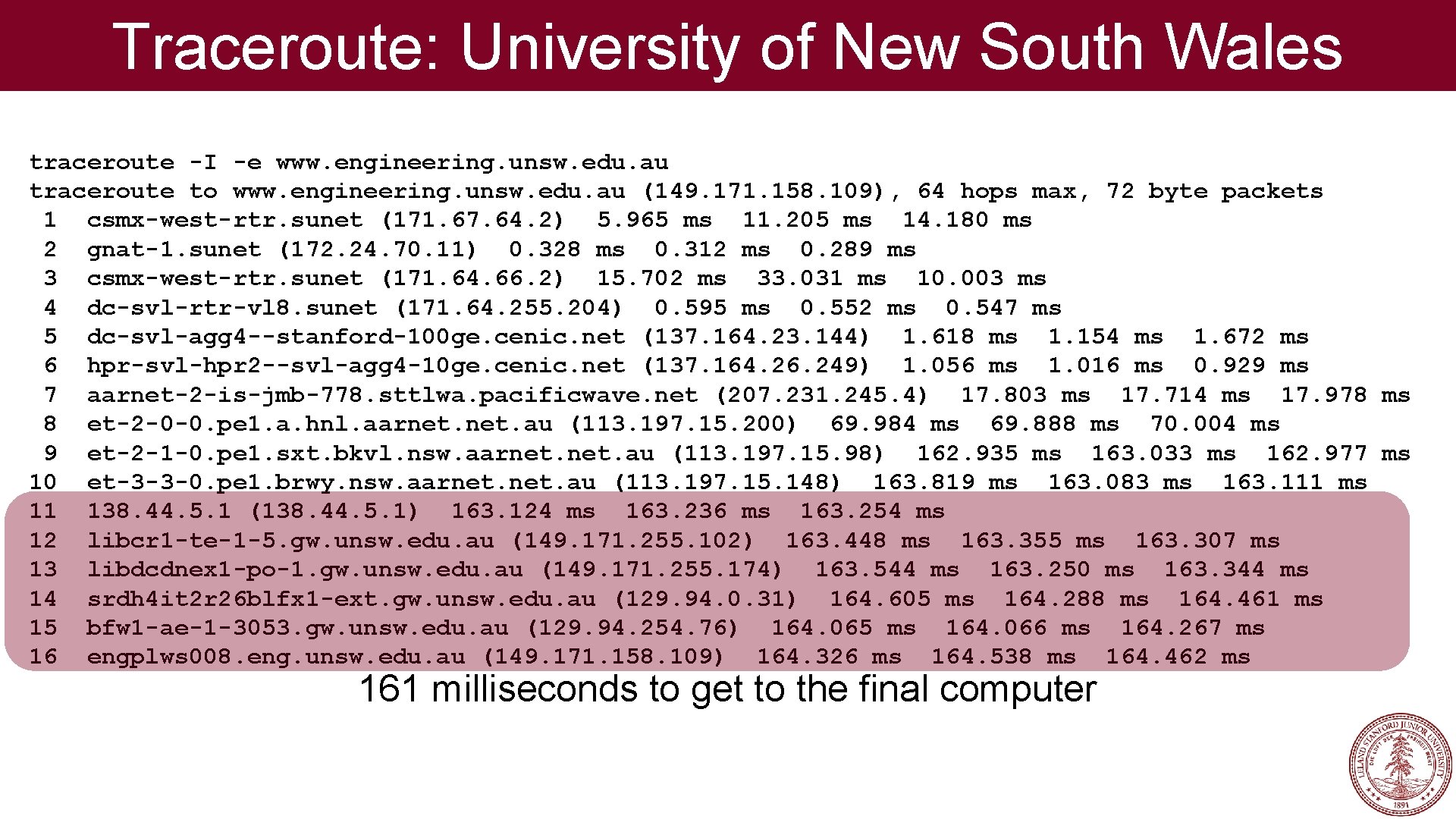
Traceroute: University of New South Wales traceroute -I -e www. engineering. unsw. edu. au traceroute to www. engineering. unsw. edu. au (149. 171. 158. 109), 64 hops max, 72 byte packets 1 csmx-west-rtr. sunet (171. 67. 64. 2) 5. 965 ms 11. 205 ms 14. 180 ms 2 gnat-1. sunet (172. 24. 70. 11) 0. 328 ms 0. 312 ms 0. 289 ms 3 csmx-west-rtr. sunet (171. 64. 66. 2) 15. 702 ms 33. 031 ms 10. 003 ms 4 dc-svl-rtr-vl 8. sunet (171. 64. 255. 204) 0. 595 ms 0. 552 ms 0. 547 ms 5 dc-svl-agg 4 --stanford-100 ge. cenic. net (137. 164. 23. 144) 1. 618 ms 1. 154 ms 1. 672 ms 6 hpr-svl-hpr 2 --svl-agg 4 -10 ge. cenic. net (137. 164. 26. 249) 1. 056 ms 1. 016 ms 0. 929 ms 7 aarnet-2 -is-jmb-778. sttlwa. pacificwave. net (207. 231. 245. 4) 17. 803 ms 17. 714 ms 17. 978 ms 8 et-2 -0 -0. pe 1. a. hnl. aarnet. au (113. 197. 15. 200) 69. 984 ms 69. 888 ms 70. 004 ms 9 et-2 -1 -0. pe 1. sxt. bkvl. nsw. aarnet. au (113. 197. 15. 98) 162. 935 ms 163. 033 ms 162. 977 ms 10 et-3 -3 -0. pe 1. brwy. nsw. aarnet. au (113. 197. 15. 148) 163. 819 ms 163. 083 ms 163. 111 ms 11 138. 44. 5. 1 (138. 44. 5. 1) 163. 124 ms 163. 236 ms 163. 254 ms 12 libcr 1 -te-1 -5. gw. unsw. edu. au (149. 171. 255. 102) 163. 448 ms 163. 355 ms 163. 307 ms 13 libdcdnex 1 -po-1. gw. unsw. edu. au (149. 171. 255. 174) 163. 544 ms 163. 250 ms 163. 344 ms 14 srdh 4 it 2 r 26 blfx 1 -ext. gw. unsw. edu. au (129. 94. 0. 31) 164. 605 ms 164. 288 ms 164. 461 ms 15 bfw 1 -ae-1 -3053. gw. unsw. edu. au (129. 94. 254. 76) 164. 065 ms 164. 066 ms 164. 267 ms 16 engplws 008. eng. unsw. edu. au (149. 171. 158. 109) 164. 326 ms 164. 538 ms 164. 462 ms 161 milliseconds to get to the final computer

Other Real Life Uses for Graphs Amazon. com -- Product relationships are graph-based • • What product might this be related to?

Other Real Life Uses for Graphs

Other Real Life Uses for Graphs • • Web page searching (discussed last week -- Wikipedia path to Philosophy) Google Maps (Trailblazer!)
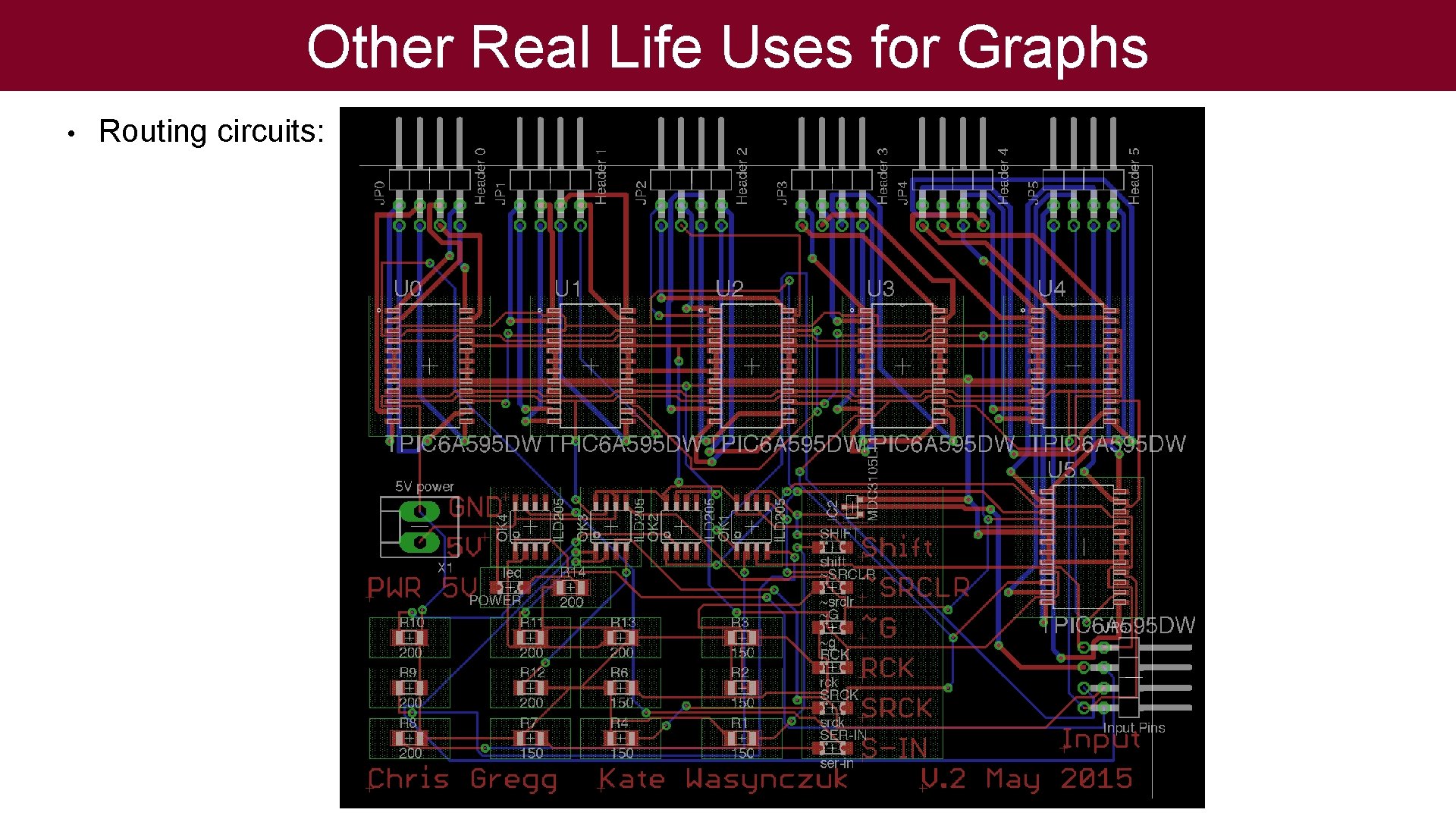
Other Real Life Uses for Graphs • Routing circuits:
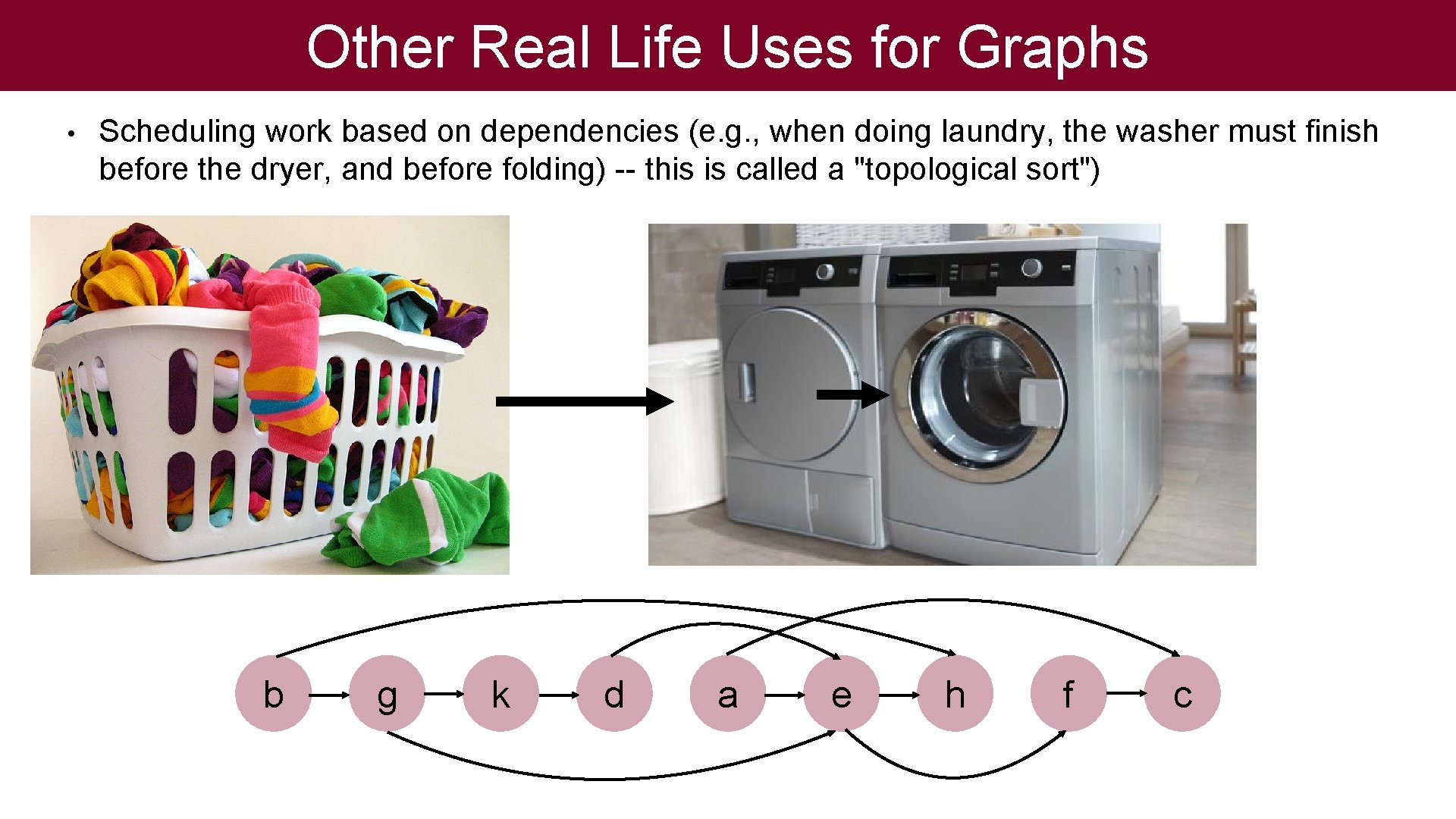
Other Real Life Uses for Graphs • Scheduling work based on dependencies (e. g. , when doing laundry, the washer must finish before the dryer, and before folding) -- this is called a "topological sort") b g k d a e h f c
Other Real Life Uses for Graphs • The "Oracle of Bacon": https: //oracleofbacon. org (just graph searching!)
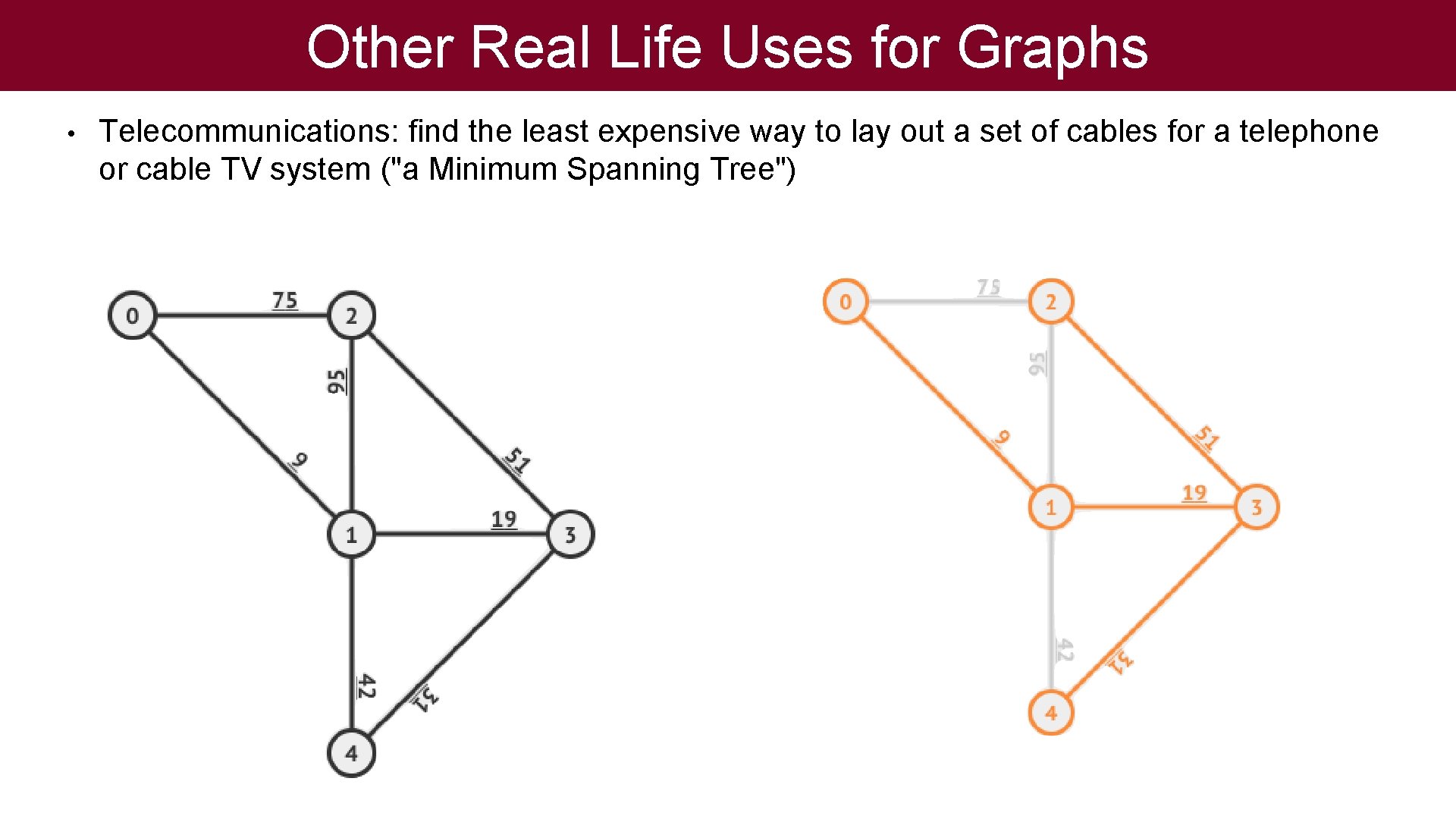
Other Real Life Uses for Graphs • Telecommunications: find the least expensive way to lay out a set of cables for a telephone or cable TV system ("a Minimum Spanning Tree")
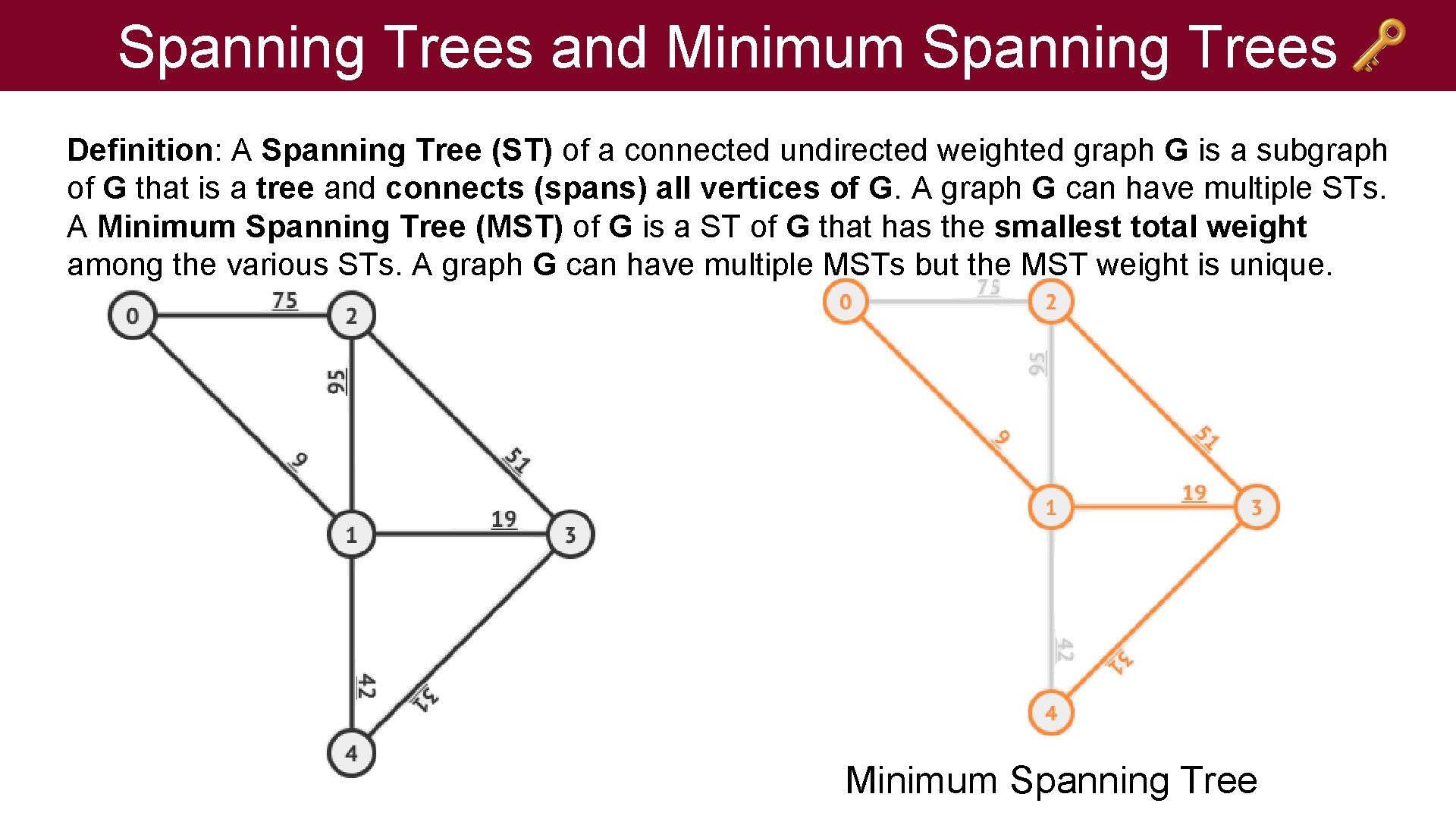
Spanning Trees and Minimum Spanning Trees Definition: A Spanning Tree (ST) of a connected undirected weighted graph G is a subgraph of G that is a tree and connects (spans) all vertices of G. A graph G can have multiple STs. A Minimum Spanning Tree (MST) of G is a ST of G that has the smallest total weight among the various STs. A graph G can have multiple MSTs but the MST weight is unique. Minimum Spanning Tree
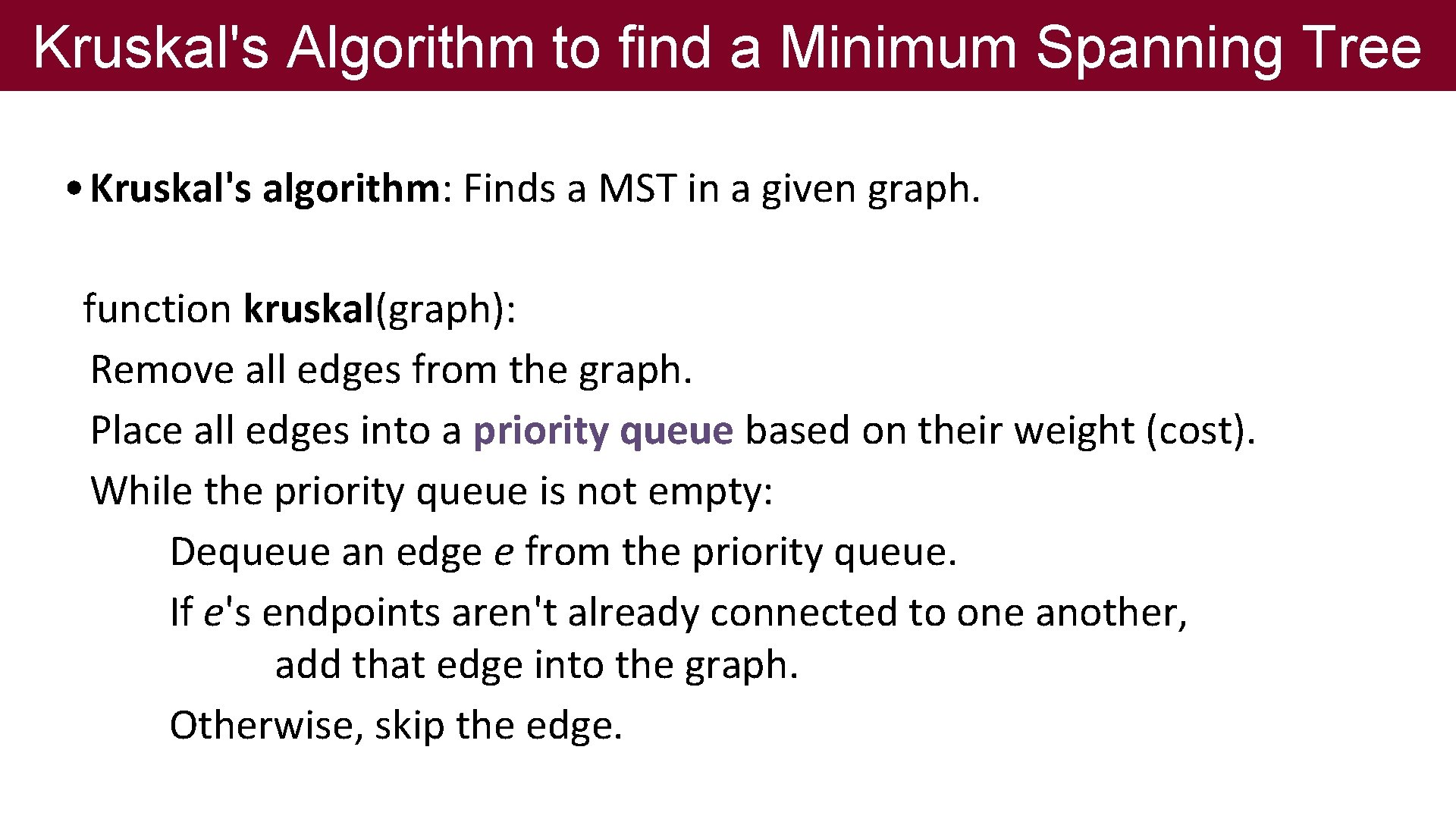
Kruskal's Algorithm to find a Minimum Spanning Tree • Kruskal's algorithm: Finds a MST in a given graph. function kruskal(graph): Remove all edges from the graph. Place all edges into a priority queue based on their weight (cost). While the priority queue is not empty: Dequeue an edge e from the priority queue. If e's endpoints aren't already connected to one another, add that edge into the graph. Otherwise, skip the edge.
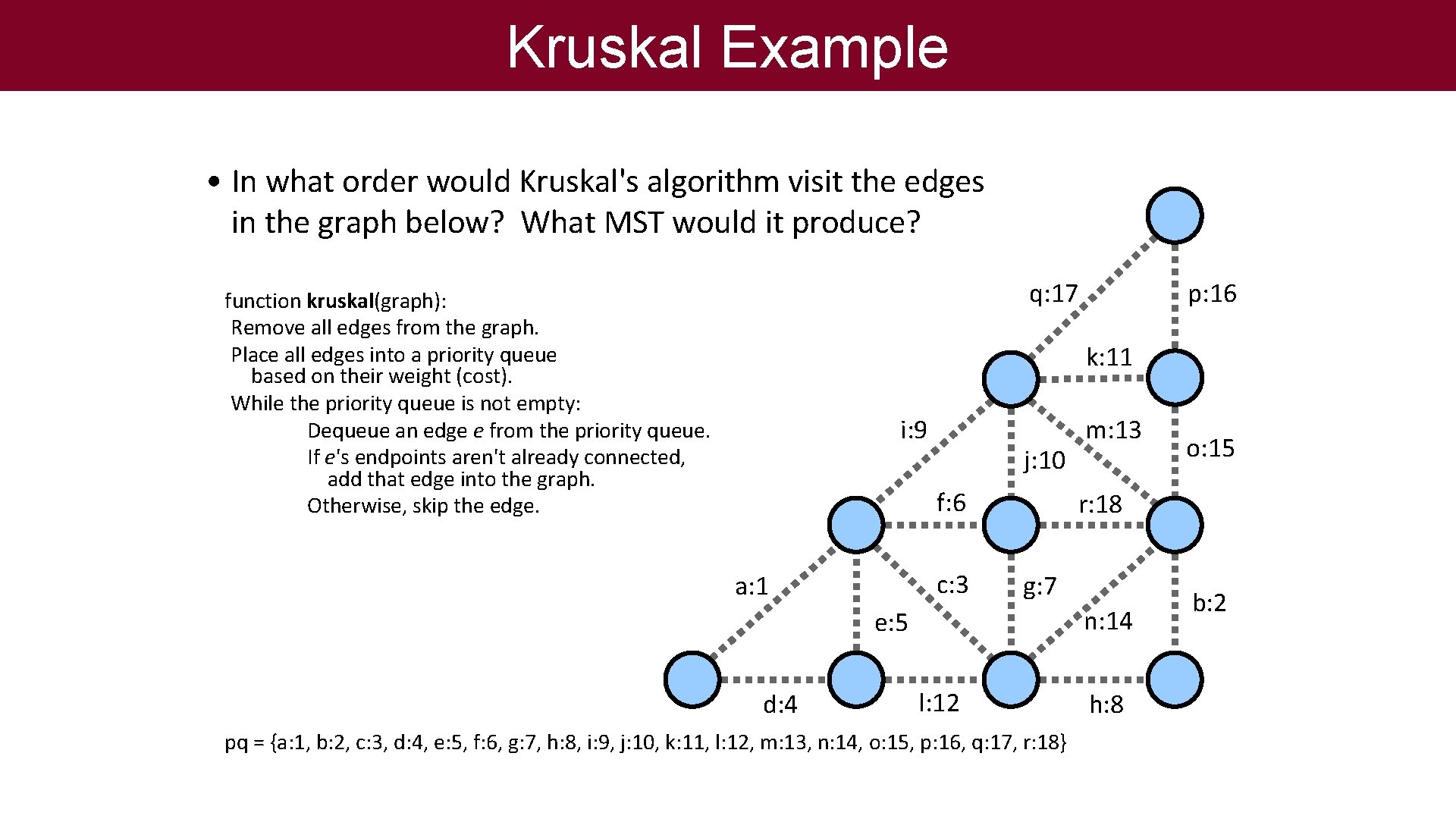
Kruskal Example • In what order would Kruskal's algorithm visit the edges in the graph below? What MST would it produce? q: 17 function kruskal(graph): Remove all edges from the graph. Place all edges into a priority queue based on their weight (cost). While the priority queue is not empty: Dequeue an edge e from the priority queue. If e's endpoints aren't already connected, add that edge into the graph. Otherwise, skip the edge. p: 16 k: 11 i: 9 j: 10 f: 6 c: 3 a: 1 o: 15 r: 18 g: 7 n: 14 e: 5 d: 4 m: 13 l: 12 pq = {a: 1, b: 2, c: 3, d: 4, e: 5, f: 6, g: 7, h: 8, i: 9, j: 10, k: 11, l: 12, m: 13, n: 14, o: 15, p: 16, q: 17, r: 18} h: 8 b: 2
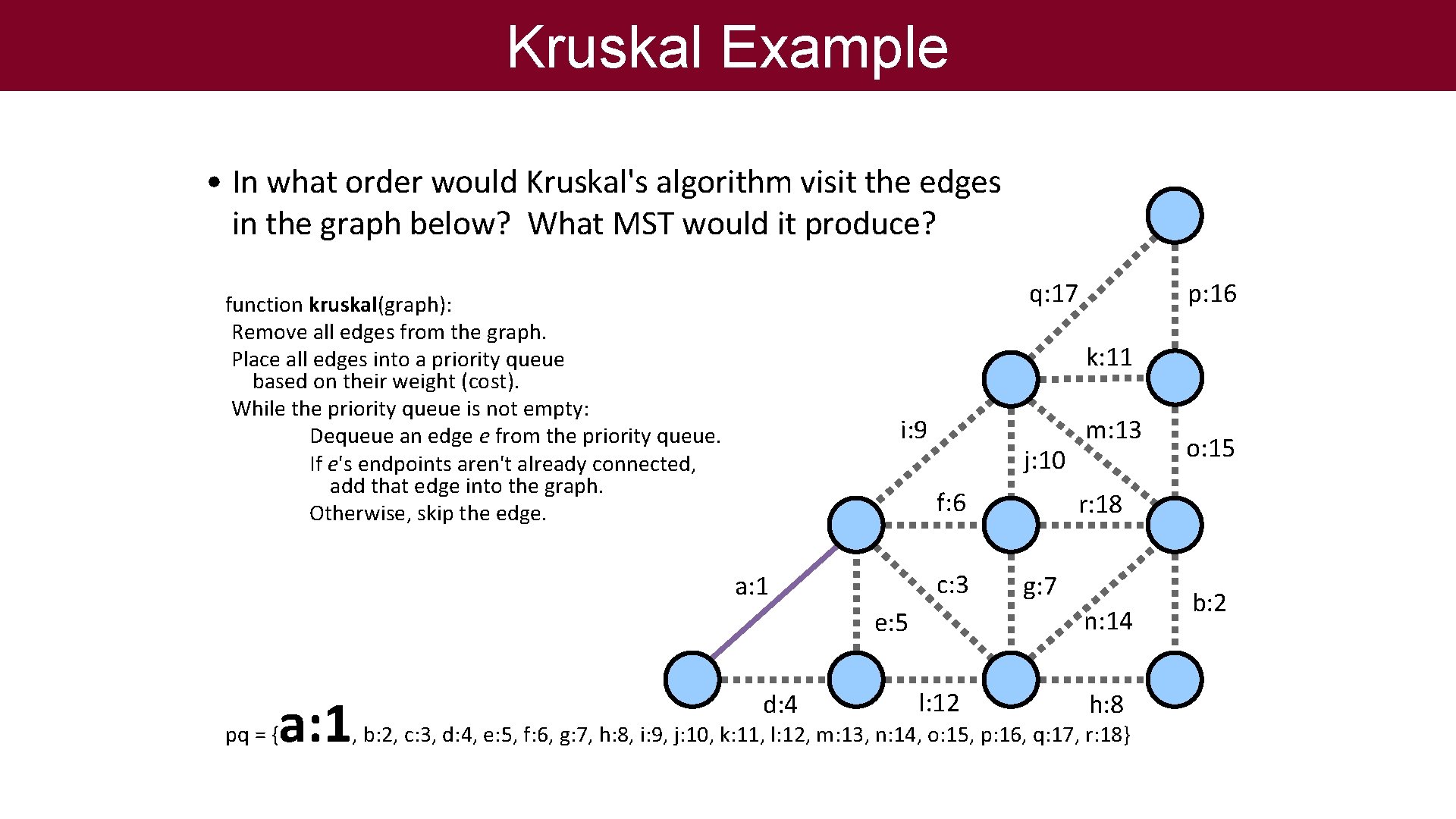
Kruskal Example • In what order would Kruskal's algorithm visit the edges in the graph below? What MST would it produce? q: 17 function kruskal(graph): Remove all edges from the graph. Place all edges into a priority queue based on their weight (cost). While the priority queue is not empty: Dequeue an edge e from the priority queue. If e's endpoints aren't already connected, add that edge into the graph. Otherwise, skip the edge. k: 11 i: 9 j: 10 f: 6 c: 3 a: 1 d: 4 m: 13 l: 12 o: 15 r: 18 g: 7 n: 14 e: 5 pq = { p: 16 h: 8 , b: 2, c: 3, d: 4, e: 5, f: 6, g: 7, h: 8, i: 9, j: 10, k: 11, l: 12, m: 13, n: 14, o: 15, p: 16, q: 17, r: 18} b: 2
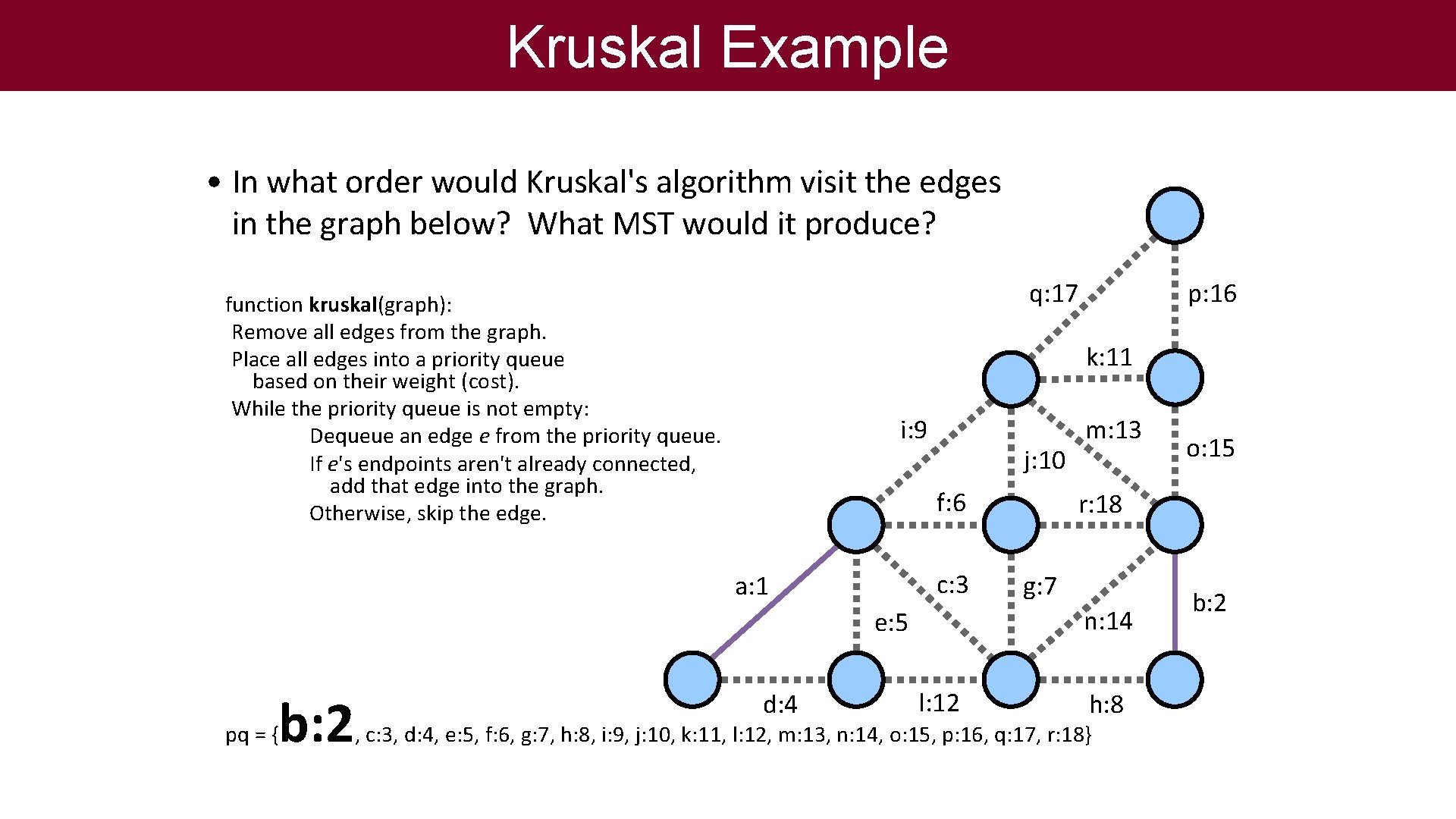
Kruskal Example • In what order would Kruskal's algorithm visit the edges in the graph below? What MST would it produce? q: 17 function kruskal(graph): Remove all edges from the graph. Place all edges into a priority queue based on their weight (cost). While the priority queue is not empty: Dequeue an edge e from the priority queue. If e's endpoints aren't already connected, add that edge into the graph. Otherwise, skip the edge. k: 11 i: 9 j: 10 f: 6 c: 3 a: 1 b: 2 d: 4 m: 13 l: 12 o: 15 r: 18 g: 7 n: 14 e: 5 pq = { p: 16 h: 8 , c: 3, d: 4, e: 5, f: 6, g: 7, h: 8, i: 9, j: 10, k: 11, l: 12, m: 13, n: 14, o: 15, p: 16, q: 17, r: 18} b: 2
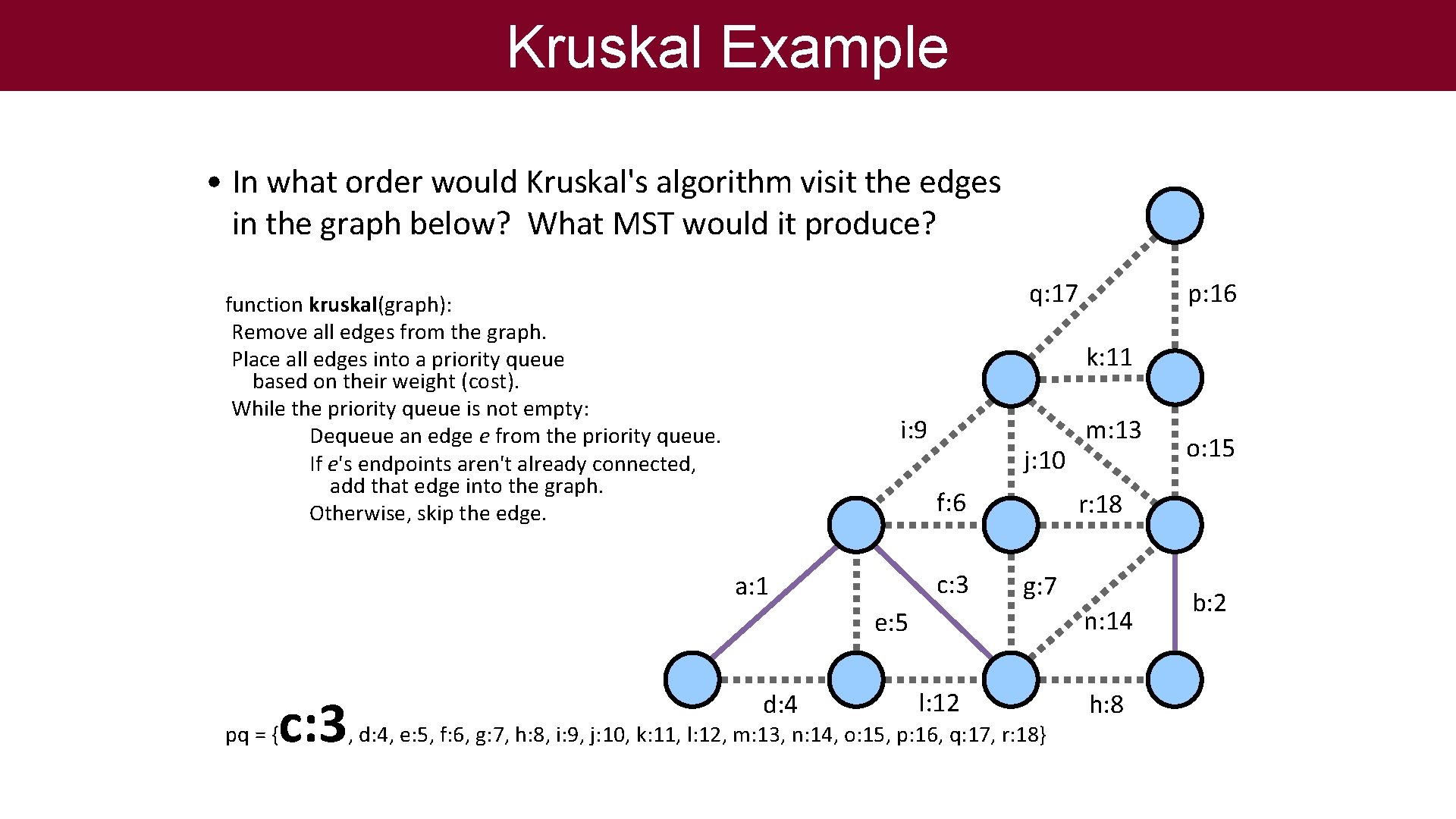
Kruskal Example • In what order would Kruskal's algorithm visit the edges in the graph below? What MST would it produce? q: 17 function kruskal(graph): Remove all edges from the graph. Place all edges into a priority queue based on their weight (cost). While the priority queue is not empty: Dequeue an edge e from the priority queue. If e's endpoints aren't already connected, add that edge into the graph. Otherwise, skip the edge. k: 11 i: 9 j: 10 f: 6 c: 3 a: 1 c: 3 d: 4 m: 13 o: 15 r: 18 g: 7 n: 14 e: 5 pq = { p: 16 l: 12 , d: 4, e: 5, f: 6, g: 7, h: 8, i: 9, j: 10, k: 11, l: 12, m: 13, n: 14, o: 15, p: 16, q: 17, r: 18} h: 8 b: 2
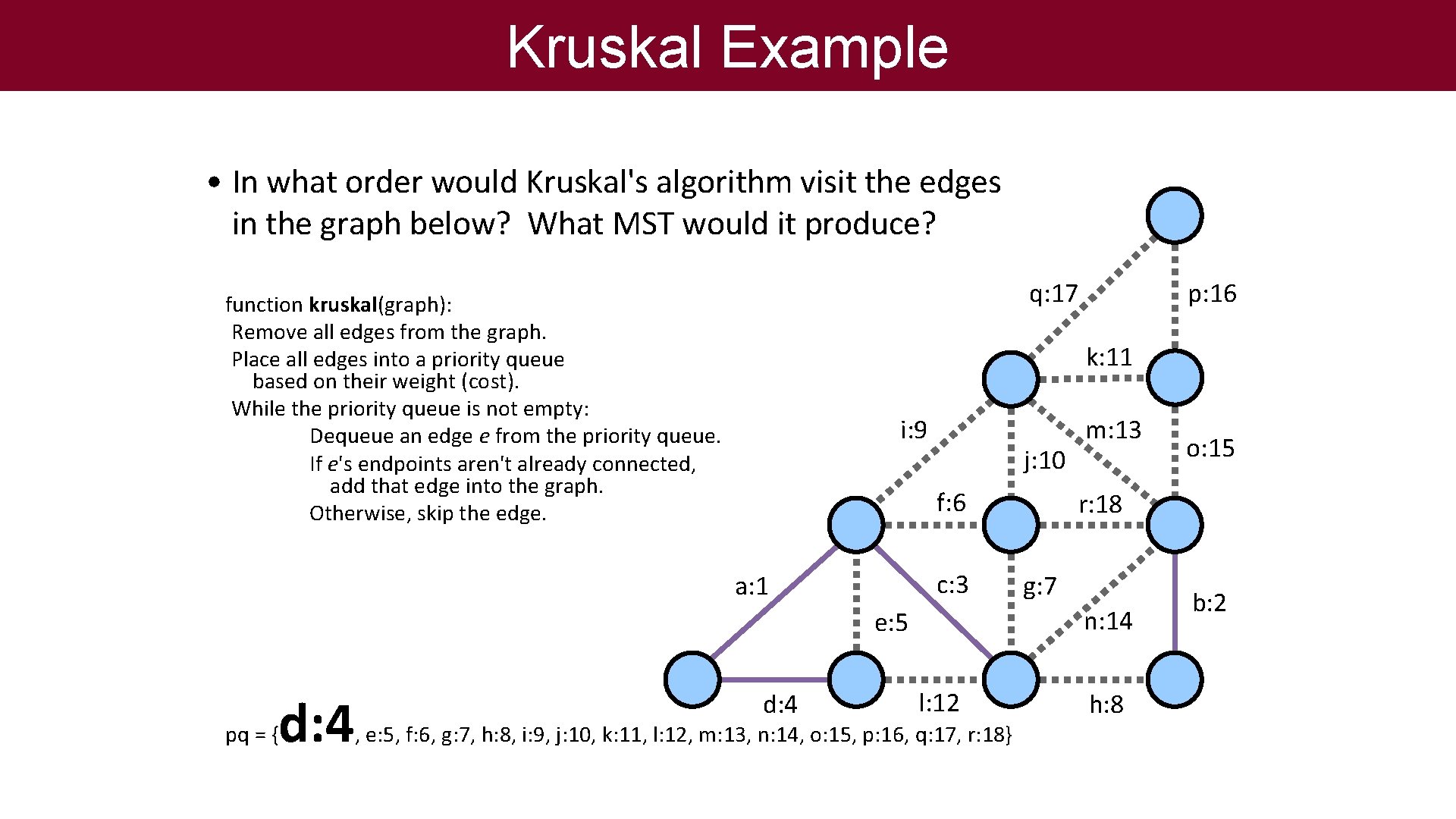
Kruskal Example • In what order would Kruskal's algorithm visit the edges in the graph below? What MST would it produce? q: 17 function kruskal(graph): Remove all edges from the graph. Place all edges into a priority queue based on their weight (cost). While the priority queue is not empty: Dequeue an edge e from the priority queue. If e's endpoints aren't already connected, add that edge into the graph. Otherwise, skip the edge. k: 11 i: 9 j: 10 f: 6 c: 3 a: 1 d: 4 m: 13 l: 12 , e: 5, f: 6, g: 7, h: 8, i: 9, j: 10, k: 11, l: 12, m: 13, n: 14, o: 15, p: 16, q: 17, r: 18} o: 15 r: 18 g: 7 n: 14 e: 5 pq = { p: 16 h: 8 b: 2
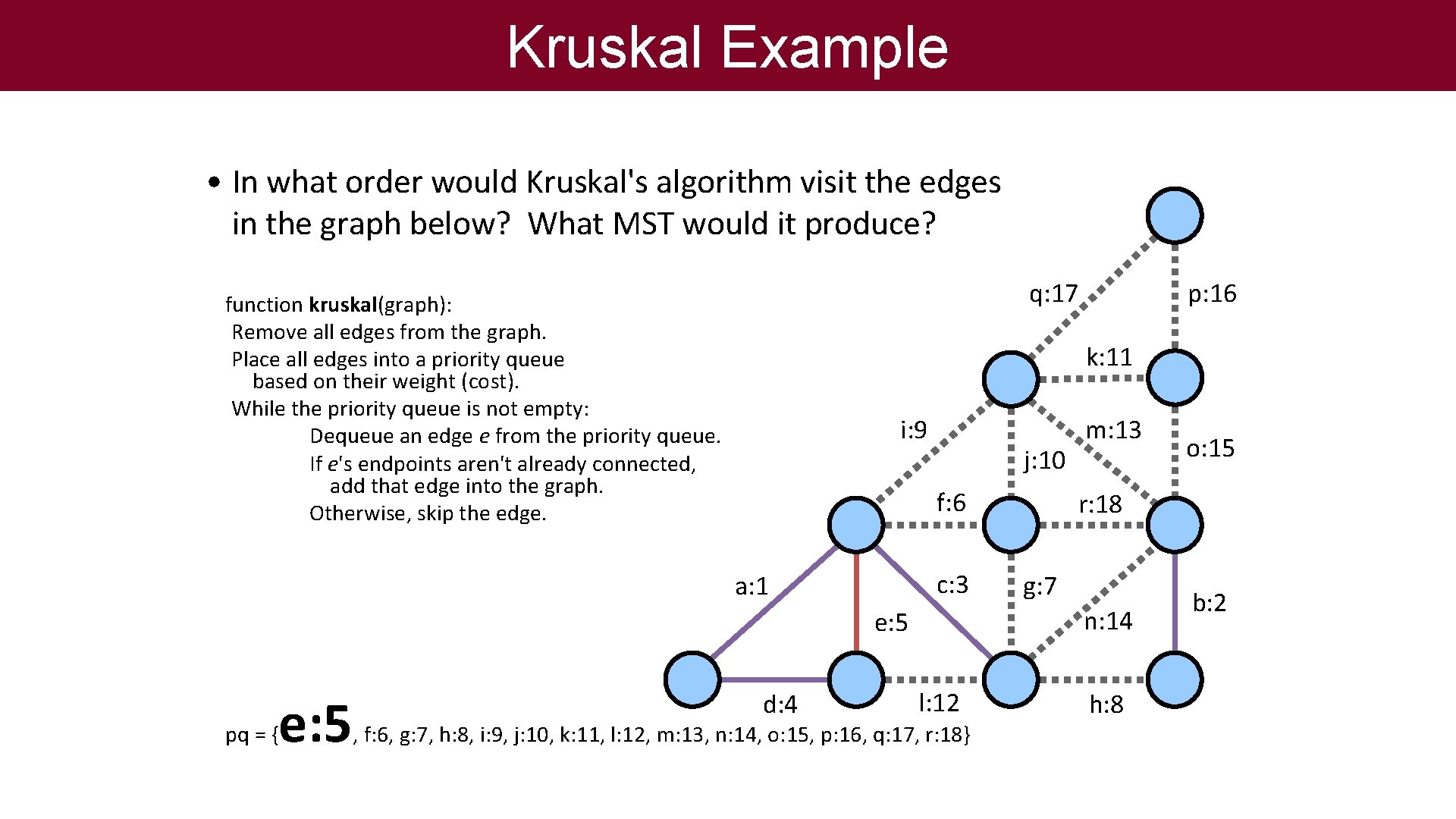
Kruskal Example • In what order would Kruskal's algorithm visit the edges in the graph below? What MST would it produce? q: 17 function kruskal(graph): Remove all edges from the graph. Place all edges into a priority queue based on their weight (cost). While the priority queue is not empty: Dequeue an edge e from the priority queue. If e's endpoints aren't already connected, add that edge into the graph. Otherwise, skip the edge. k: 11 i: 9 j: 10 f: 6 c: 3 a: 1 e: 5 d: 4 m: 13 l: 12 , f: 6, g: 7, h: 8, i: 9, j: 10, k: 11, l: 12, m: 13, n: 14, o: 15, p: 16, q: 17, r: 18} o: 15 r: 18 g: 7 n: 14 e: 5 pq = { p: 16 h: 8 b: 2
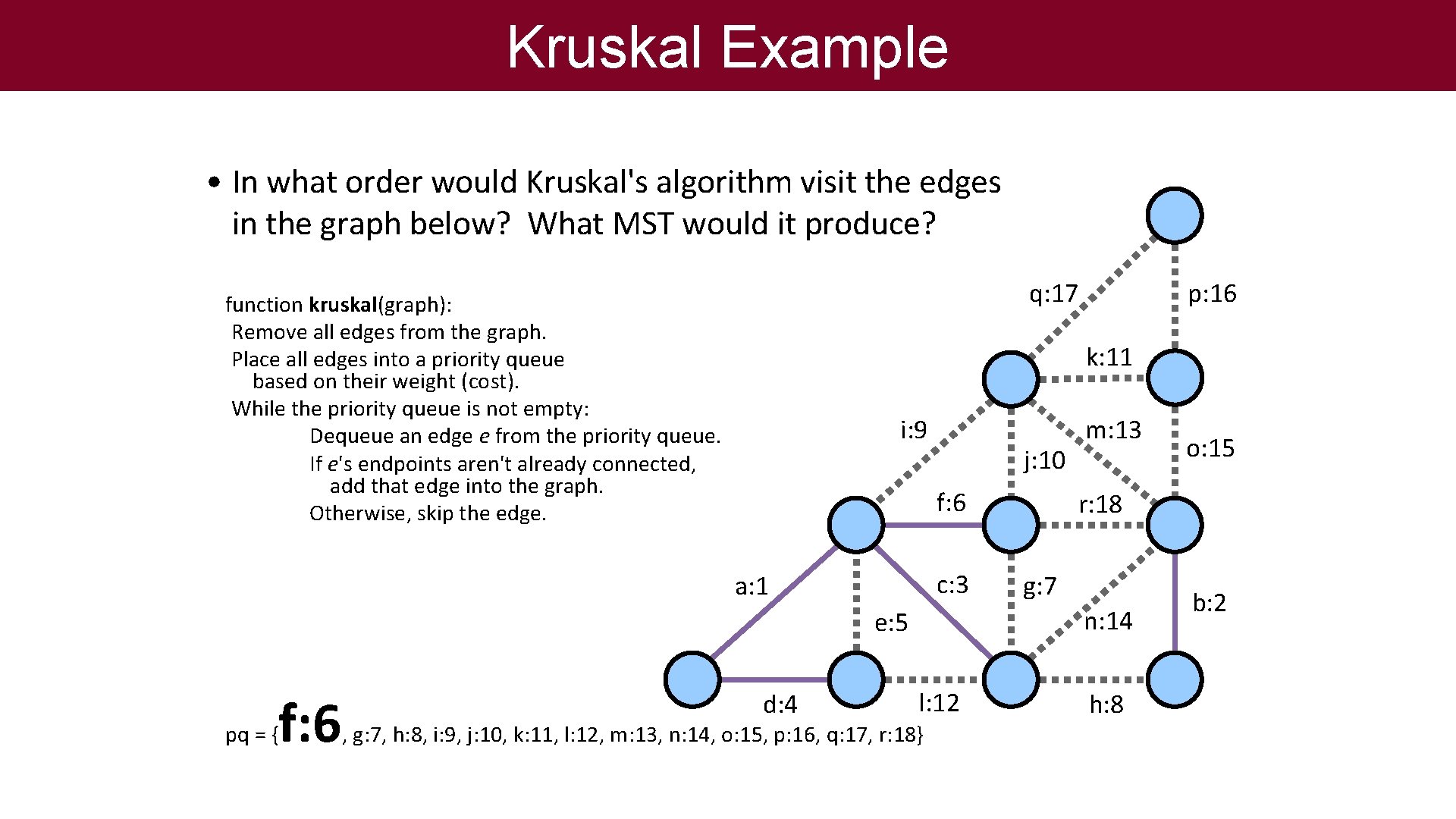
Kruskal Example • In what order would Kruskal's algorithm visit the edges in the graph below? What MST would it produce? q: 17 function kruskal(graph): Remove all edges from the graph. Place all edges into a priority queue based on their weight (cost). While the priority queue is not empty: Dequeue an edge e from the priority queue. If e's endpoints aren't already connected, add that edge into the graph. Otherwise, skip the edge. k: 11 i: 9 j: 10 f: 6 c: 3 a: 1 f: 6 d: 4 m: 13 l: 12 , g: 7, h: 8, i: 9, j: 10, k: 11, l: 12, m: 13, n: 14, o: 15, p: 16, q: 17, r: 18} o: 15 r: 18 g: 7 n: 14 e: 5 pq = { p: 16 h: 8 b: 2
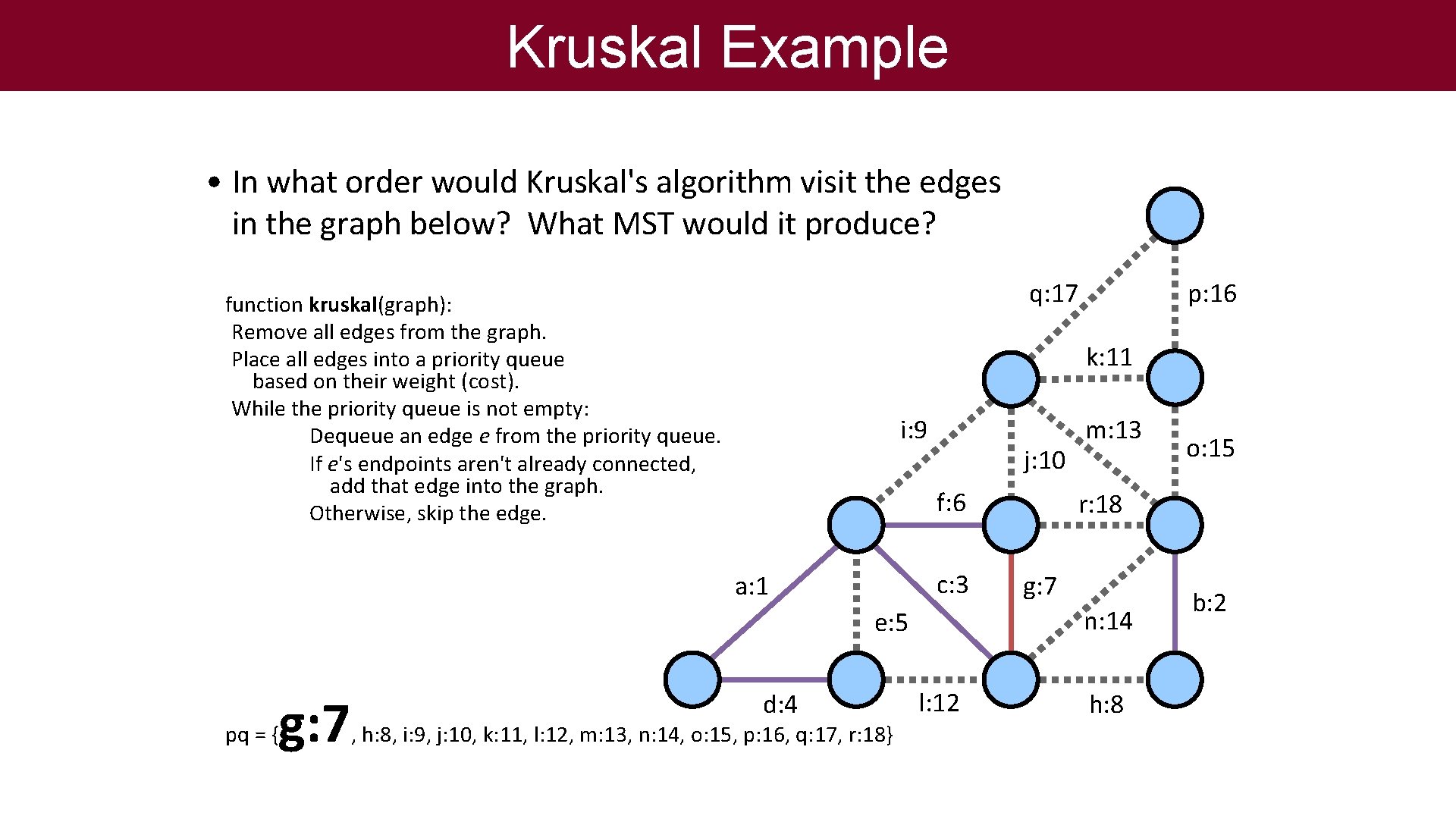
Kruskal Example • In what order would Kruskal's algorithm visit the edges in the graph below? What MST would it produce? q: 17 function kruskal(graph): Remove all edges from the graph. Place all edges into a priority queue based on their weight (cost). While the priority queue is not empty: Dequeue an edge e from the priority queue. If e's endpoints aren't already connected, add that edge into the graph. Otherwise, skip the edge. k: 11 i: 9 j: 10 f: 6 c: 3 a: 1 g: 7 d: 4 , h: 8, i: 9, j: 10, k: 11, l: 12, m: 13, n: 14, o: 15, p: 16, q: 17, r: 18} m: 13 l: 12 o: 15 r: 18 g: 7 n: 14 e: 5 pq = { p: 16 h: 8 b: 2
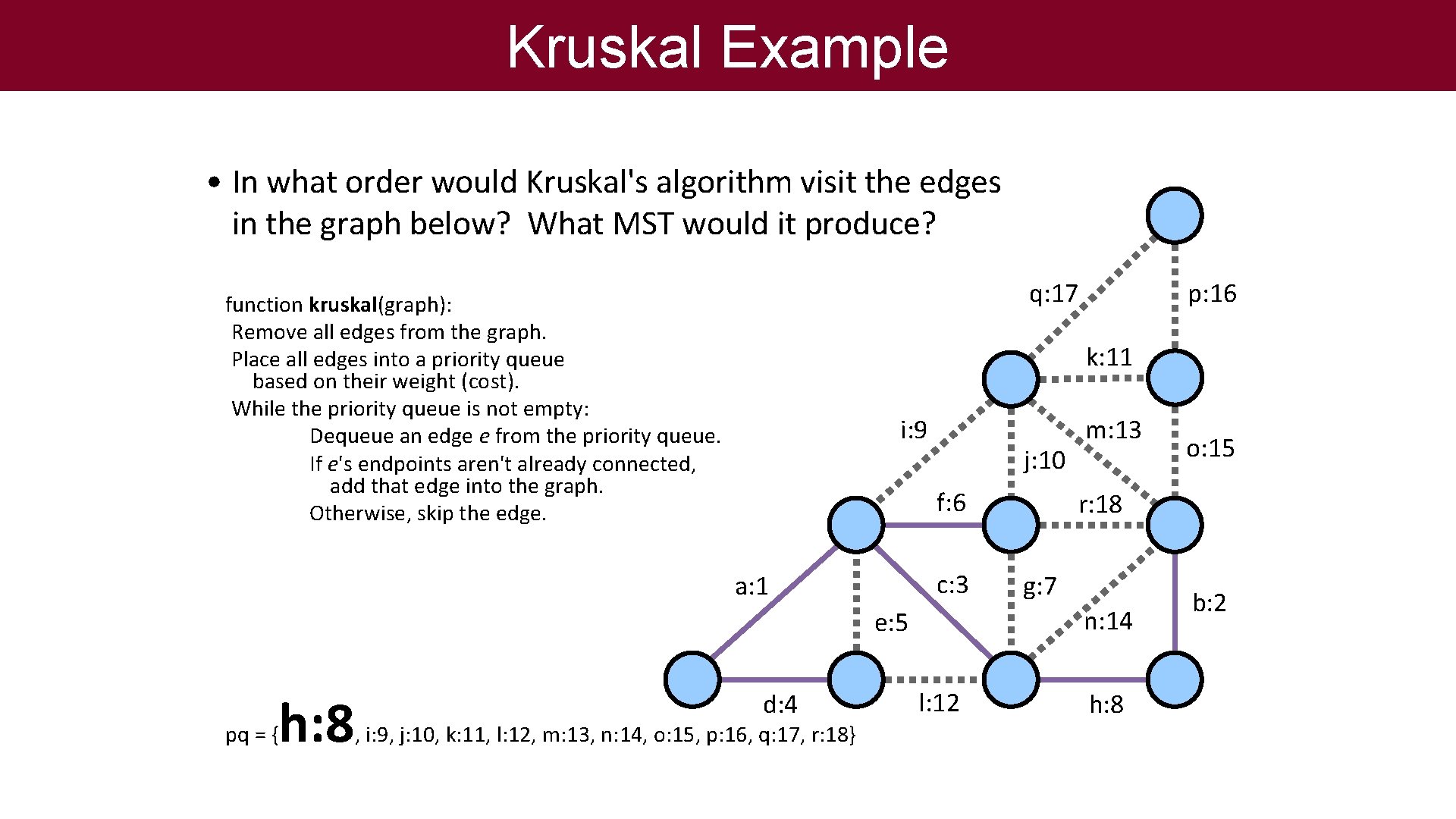
Kruskal Example • In what order would Kruskal's algorithm visit the edges in the graph below? What MST would it produce? q: 17 function kruskal(graph): Remove all edges from the graph. Place all edges into a priority queue based on their weight (cost). While the priority queue is not empty: Dequeue an edge e from the priority queue. If e's endpoints aren't already connected, add that edge into the graph. Otherwise, skip the edge. k: 11 i: 9 j: 10 f: 6 c: 3 a: 1 h: 8 d: 4 , i: 9, j: 10, k: 11, l: 12, m: 13, n: 14, o: 15, p: 16, q: 17, r: 18} m: 13 l: 12 o: 15 r: 18 g: 7 n: 14 e: 5 pq = { p: 16 h: 8 b: 2
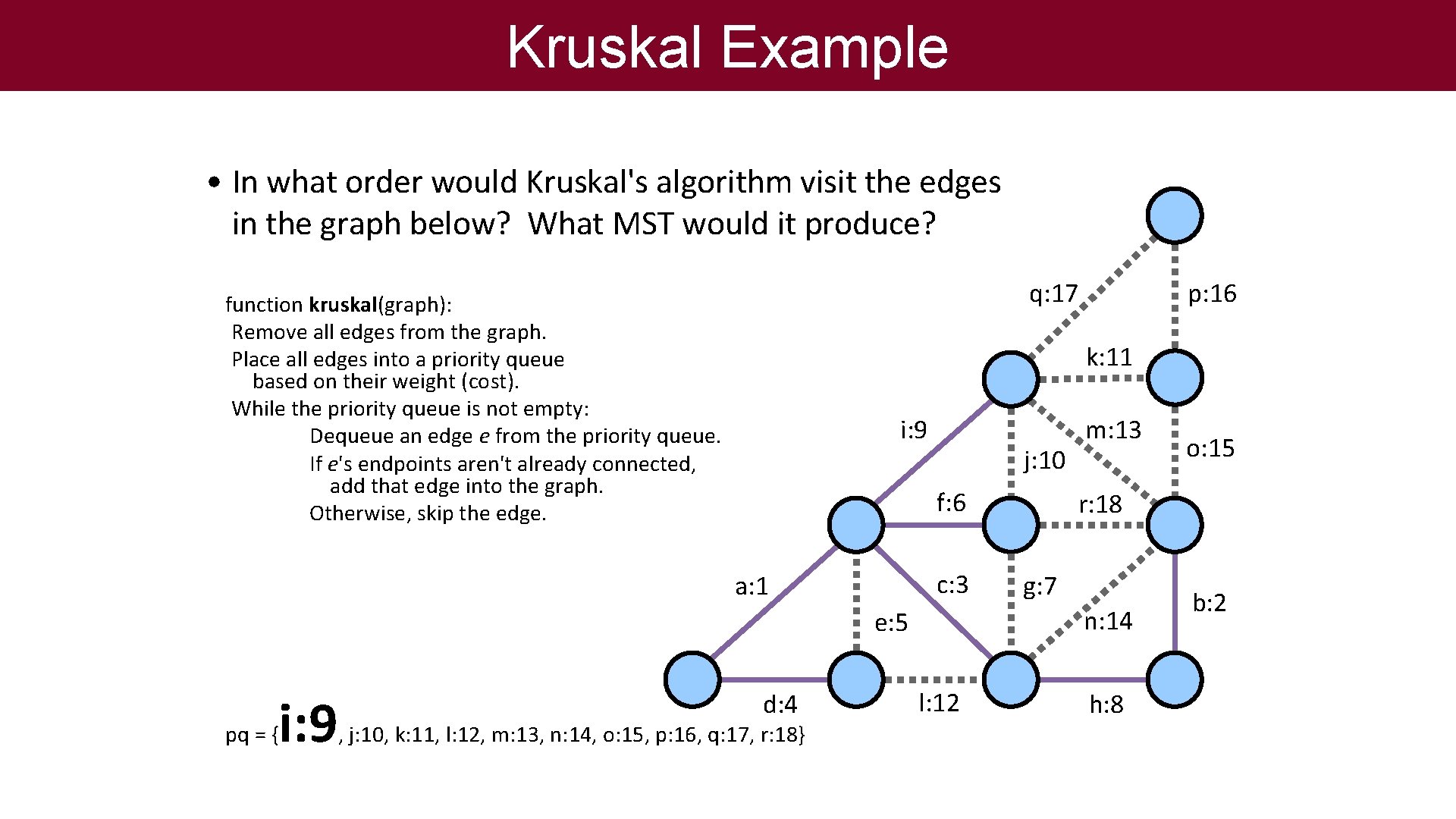
Kruskal Example • In what order would Kruskal's algorithm visit the edges in the graph below? What MST would it produce? q: 17 function kruskal(graph): Remove all edges from the graph. Place all edges into a priority queue based on their weight (cost). While the priority queue is not empty: Dequeue an edge e from the priority queue. If e's endpoints aren't already connected, add that edge into the graph. Otherwise, skip the edge. k: 11 i: 9 j: 10 f: 6 c: 3 a: 1 i: 9 d: 4 , j: 10, k: 11, l: 12, m: 13, n: 14, o: 15, p: 16, q: 17, r: 18} m: 13 l: 12 o: 15 r: 18 g: 7 n: 14 e: 5 pq = { p: 16 h: 8 b: 2
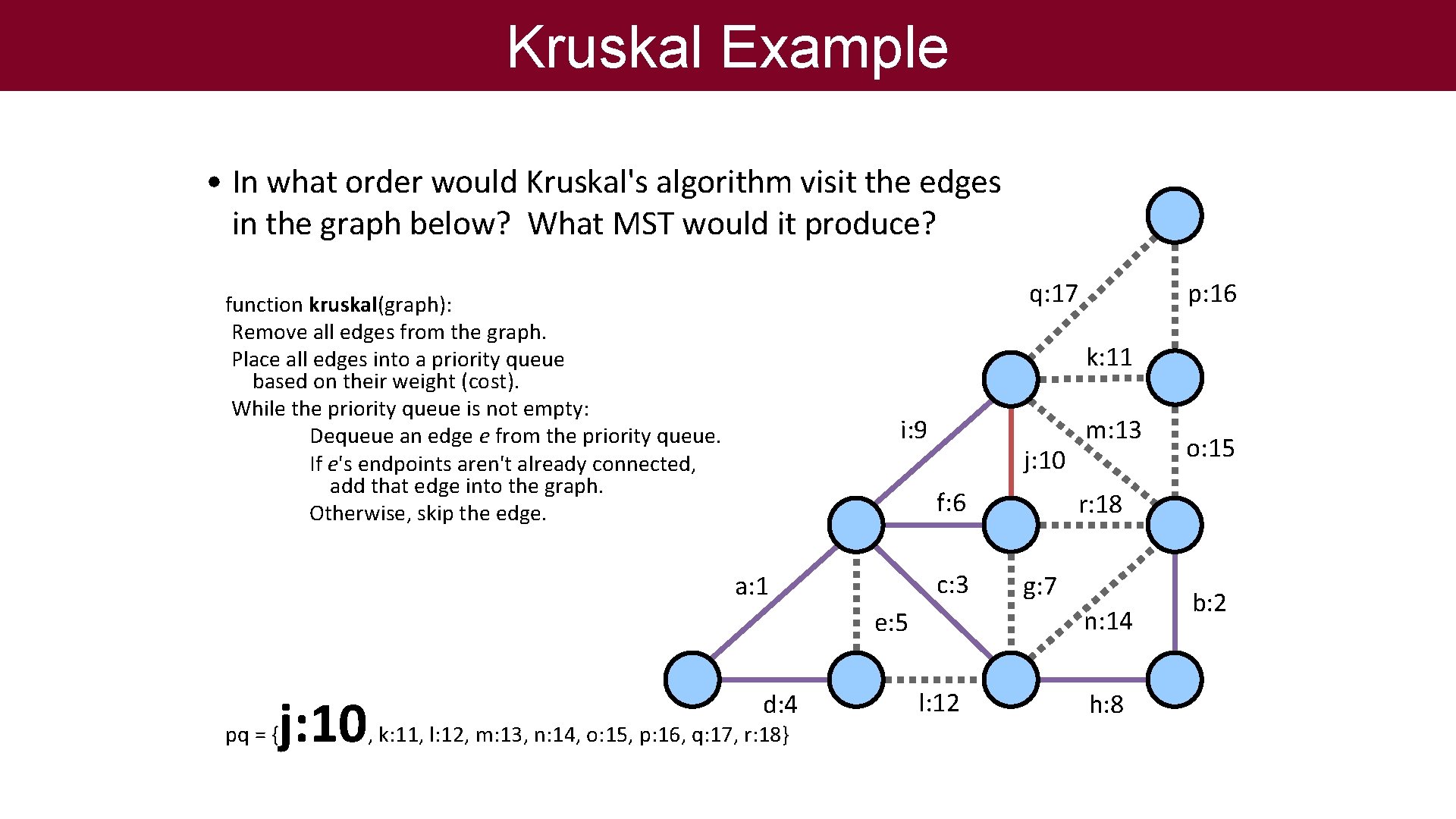
Kruskal Example • In what order would Kruskal's algorithm visit the edges in the graph below? What MST would it produce? q: 17 function kruskal(graph): Remove all edges from the graph. Place all edges into a priority queue based on their weight (cost). While the priority queue is not empty: Dequeue an edge e from the priority queue. If e's endpoints aren't already connected, add that edge into the graph. Otherwise, skip the edge. k: 11 i: 9 j: 10 f: 6 c: 3 a: 1 j: 10 d: 4 , k: 11, l: 12, m: 13, n: 14, o: 15, p: 16, q: 17, r: 18} m: 13 l: 12 o: 15 r: 18 g: 7 n: 14 e: 5 pq = { p: 16 h: 8 b: 2
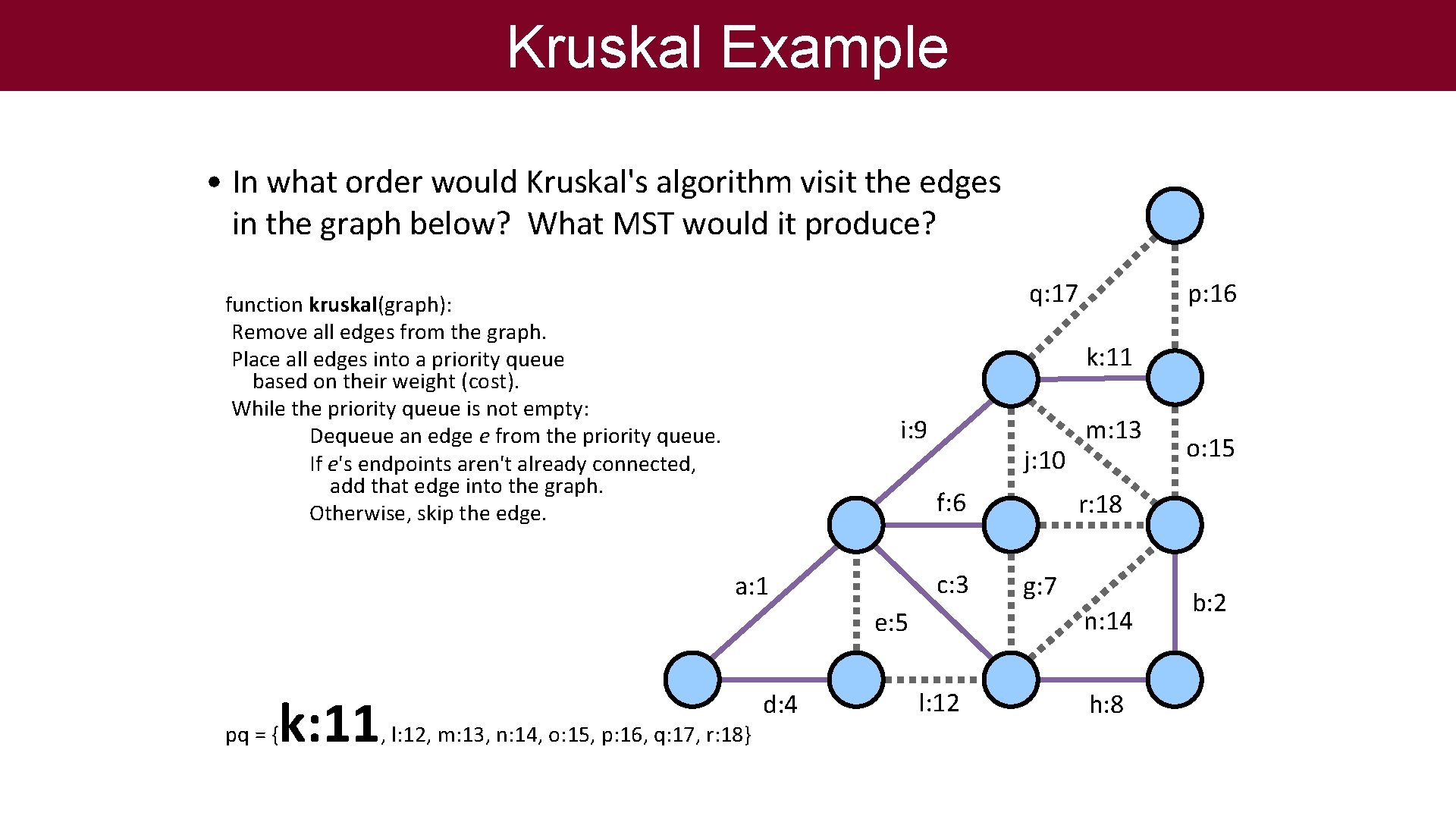
Kruskal Example • In what order would Kruskal's algorithm visit the edges in the graph below? What MST would it produce? q: 17 function kruskal(graph): Remove all edges from the graph. Place all edges into a priority queue based on their weight (cost). While the priority queue is not empty: Dequeue an edge e from the priority queue. If e's endpoints aren't already connected, add that edge into the graph. Otherwise, skip the edge. k: 11 i: 9 j: 10 f: 6 c: 3 a: 1 k: 11 , l: 12, m: 13, n: 14, o: 15, p: 16, q: 17, r: 18} d: 4 m: 13 l: 12 o: 15 r: 18 g: 7 n: 14 e: 5 pq = { p: 16 h: 8 b: 2
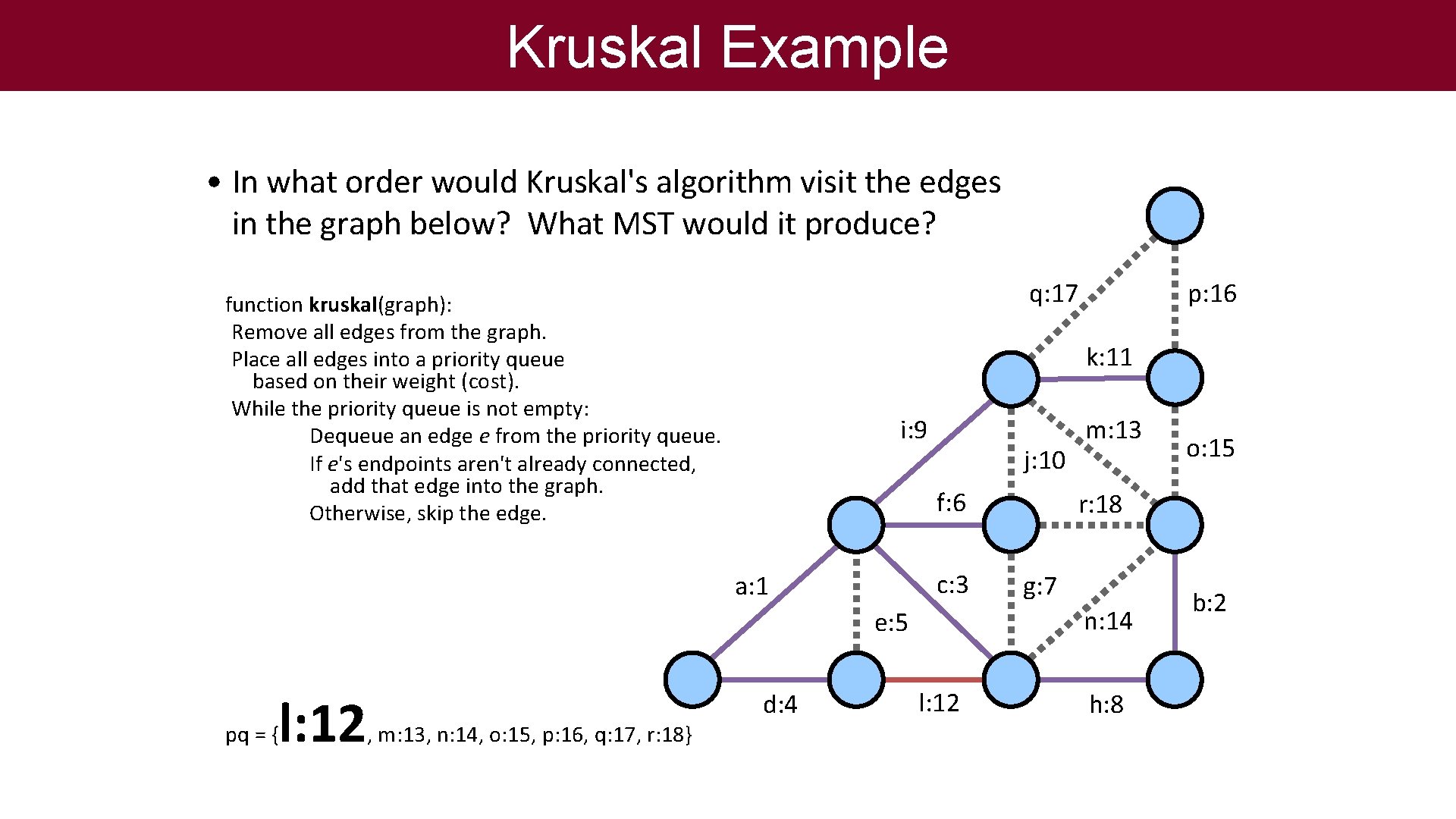
Kruskal Example • In what order would Kruskal's algorithm visit the edges in the graph below? What MST would it produce? q: 17 function kruskal(graph): Remove all edges from the graph. Place all edges into a priority queue based on their weight (cost). While the priority queue is not empty: Dequeue an edge e from the priority queue. If e's endpoints aren't already connected, add that edge into the graph. Otherwise, skip the edge. k: 11 i: 9 j: 10 f: 6 c: 3 a: 1 l: 12 , m: 13, n: 14, o: 15, p: 16, q: 17, r: 18} d: 4 m: 13 l: 12 o: 15 r: 18 g: 7 n: 14 e: 5 pq = { p: 16 h: 8 b: 2
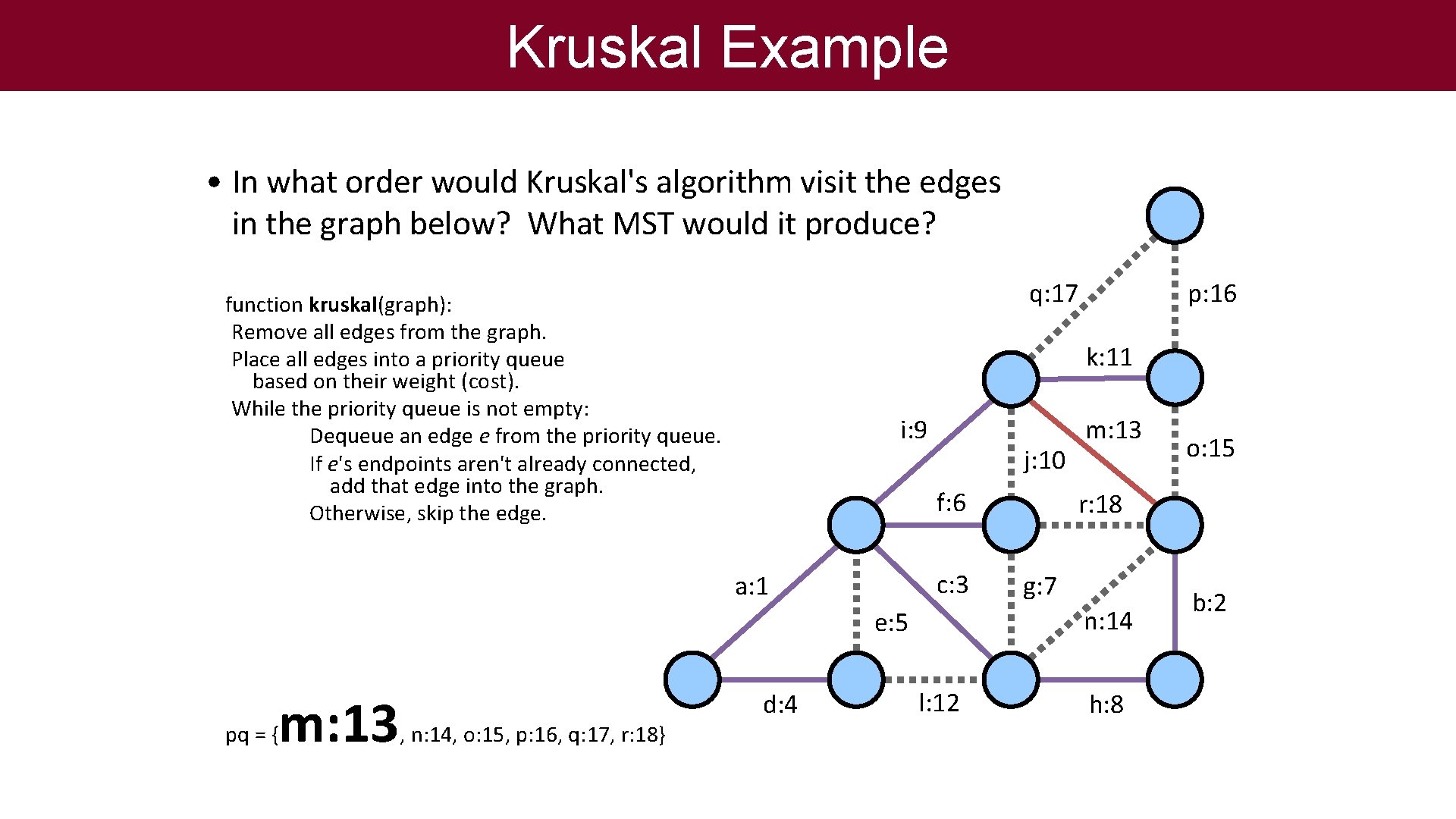
Kruskal Example • In what order would Kruskal's algorithm visit the edges in the graph below? What MST would it produce? q: 17 function kruskal(graph): Remove all edges from the graph. Place all edges into a priority queue based on their weight (cost). While the priority queue is not empty: Dequeue an edge e from the priority queue. If e's endpoints aren't already connected, add that edge into the graph. Otherwise, skip the edge. k: 11 i: 9 j: 10 f: 6 c: 3 a: 1 m: 13 , n: 14, o: 15, p: 16, q: 17, r: 18} d: 4 m: 13 l: 12 o: 15 r: 18 g: 7 n: 14 e: 5 pq = { p: 16 h: 8 b: 2
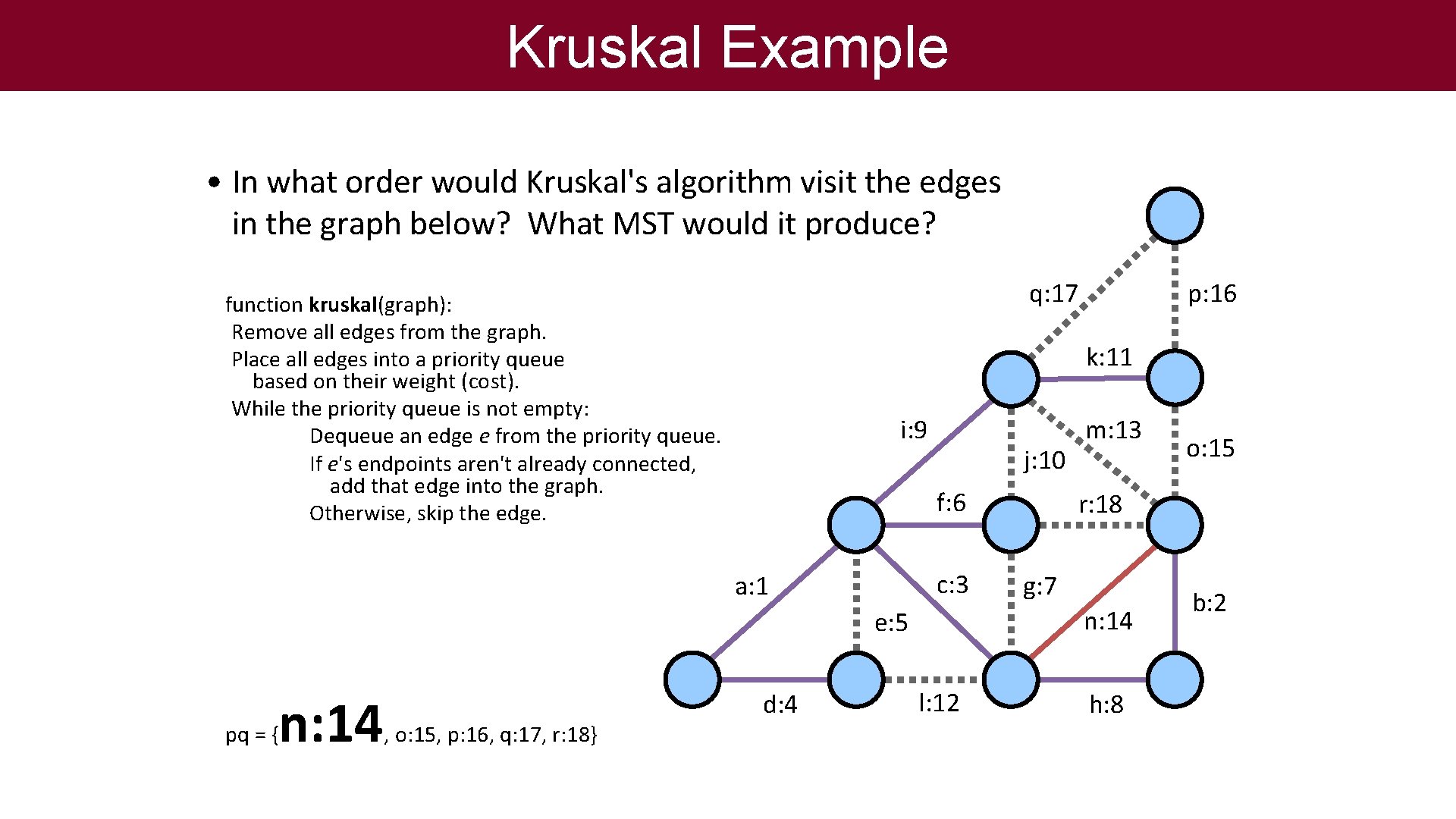
Kruskal Example • In what order would Kruskal's algorithm visit the edges in the graph below? What MST would it produce? q: 17 function kruskal(graph): Remove all edges from the graph. Place all edges into a priority queue based on their weight (cost). While the priority queue is not empty: Dequeue an edge e from the priority queue. If e's endpoints aren't already connected, add that edge into the graph. Otherwise, skip the edge. k: 11 i: 9 j: 10 f: 6 c: 3 a: 1 n: 14 , o: 15, p: 16, q: 17, r: 18} d: 4 m: 13 l: 12 o: 15 r: 18 g: 7 n: 14 e: 5 pq = { p: 16 h: 8 b: 2
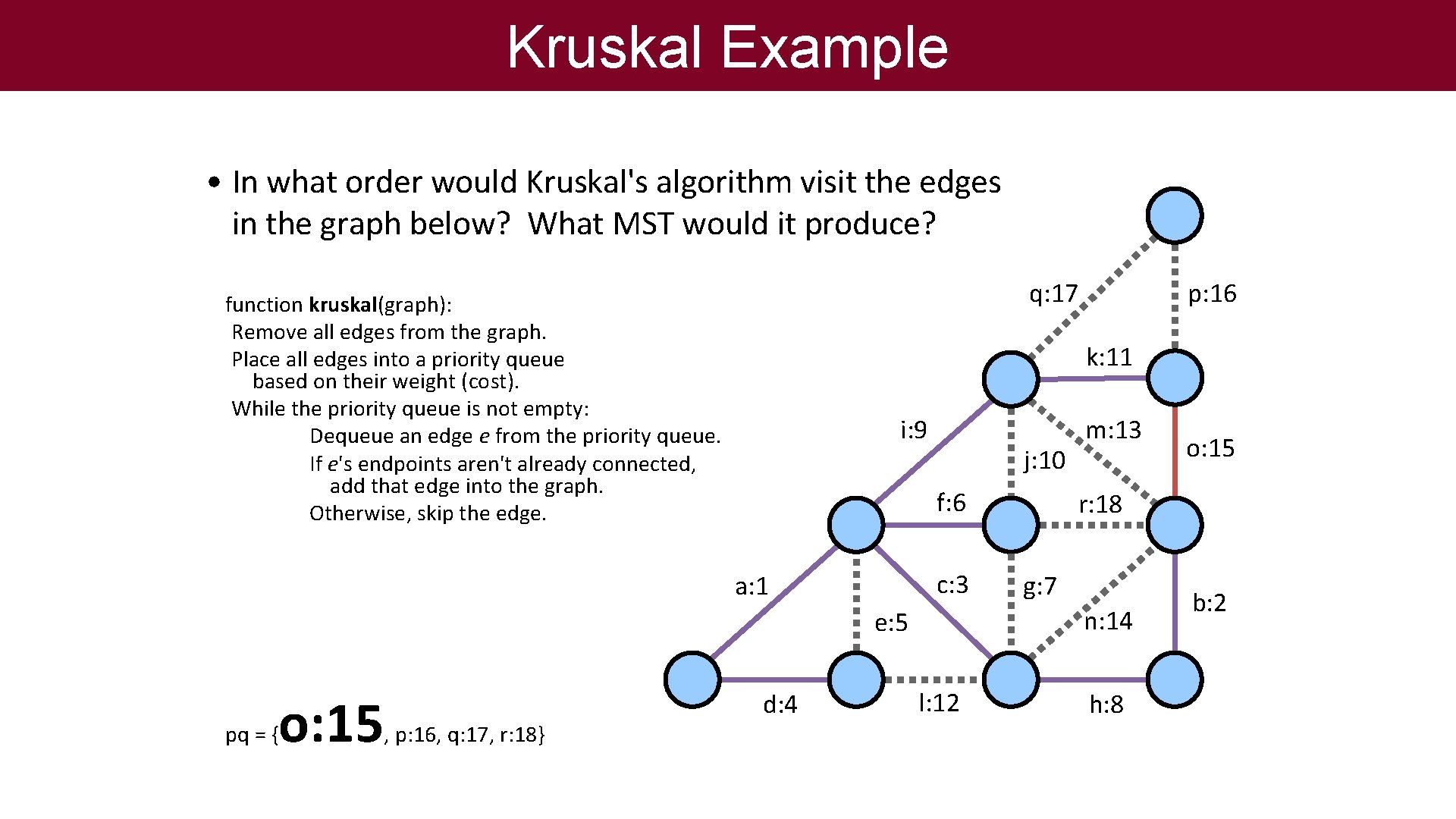
Kruskal Example • In what order would Kruskal's algorithm visit the edges in the graph below? What MST would it produce? q: 17 function kruskal(graph): Remove all edges from the graph. Place all edges into a priority queue based on their weight (cost). While the priority queue is not empty: Dequeue an edge e from the priority queue. If e's endpoints aren't already connected, add that edge into the graph. Otherwise, skip the edge. k: 11 i: 9 j: 10 f: 6 c: 3 a: 1 o: 15 , p: 16, q: 17, r: 18} d: 4 m: 13 l: 12 o: 15 r: 18 g: 7 n: 14 e: 5 pq = { p: 16 h: 8 b: 2
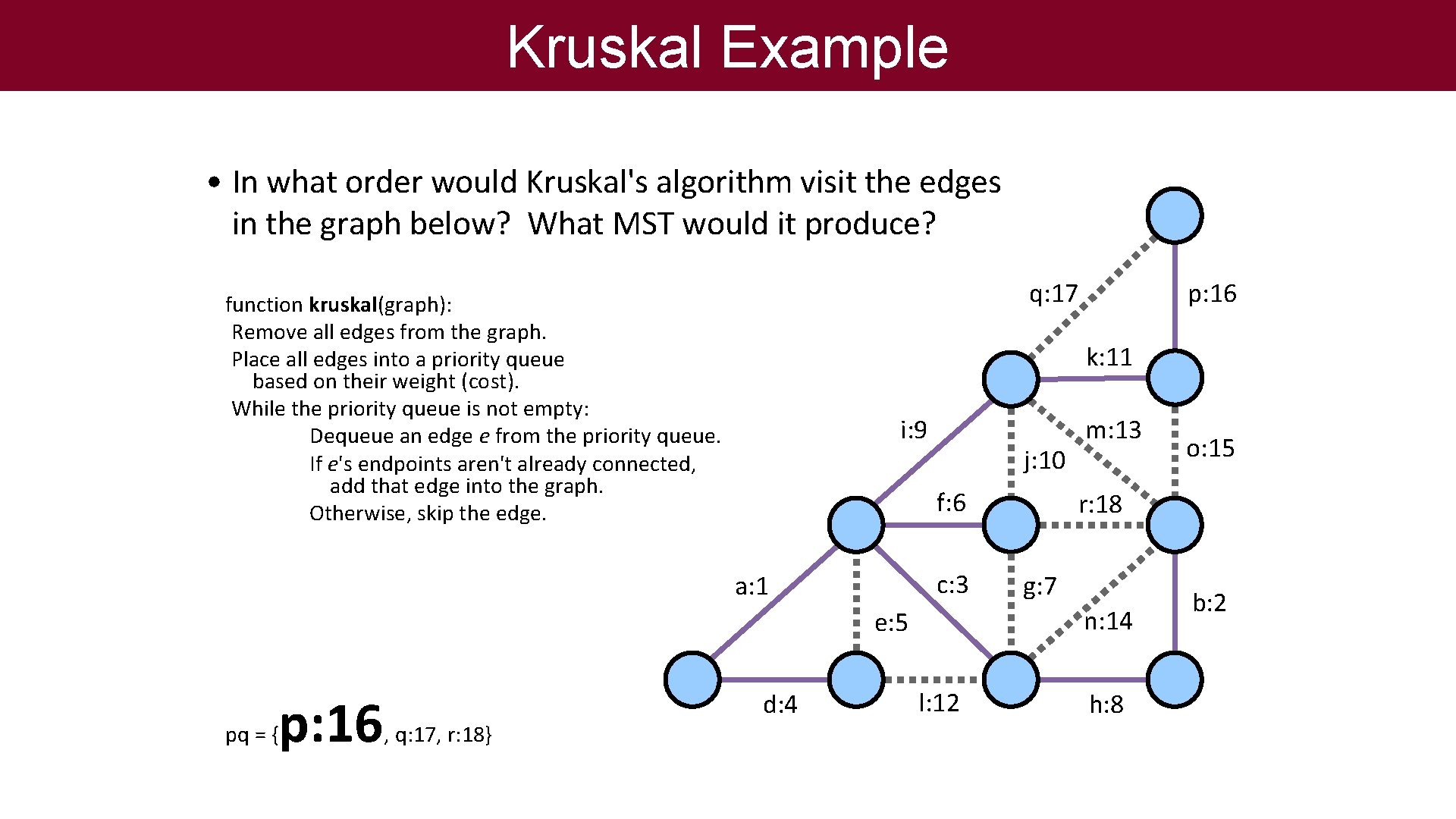
Kruskal Example • In what order would Kruskal's algorithm visit the edges in the graph below? What MST would it produce? q: 17 function kruskal(graph): Remove all edges from the graph. Place all edges into a priority queue based on their weight (cost). While the priority queue is not empty: Dequeue an edge e from the priority queue. If e's endpoints aren't already connected, add that edge into the graph. Otherwise, skip the edge. k: 11 i: 9 j: 10 f: 6 c: 3 a: 1 p: 16 , q: 17, r: 18} d: 4 m: 13 l: 12 o: 15 r: 18 g: 7 n: 14 e: 5 pq = { p: 16 h: 8 b: 2
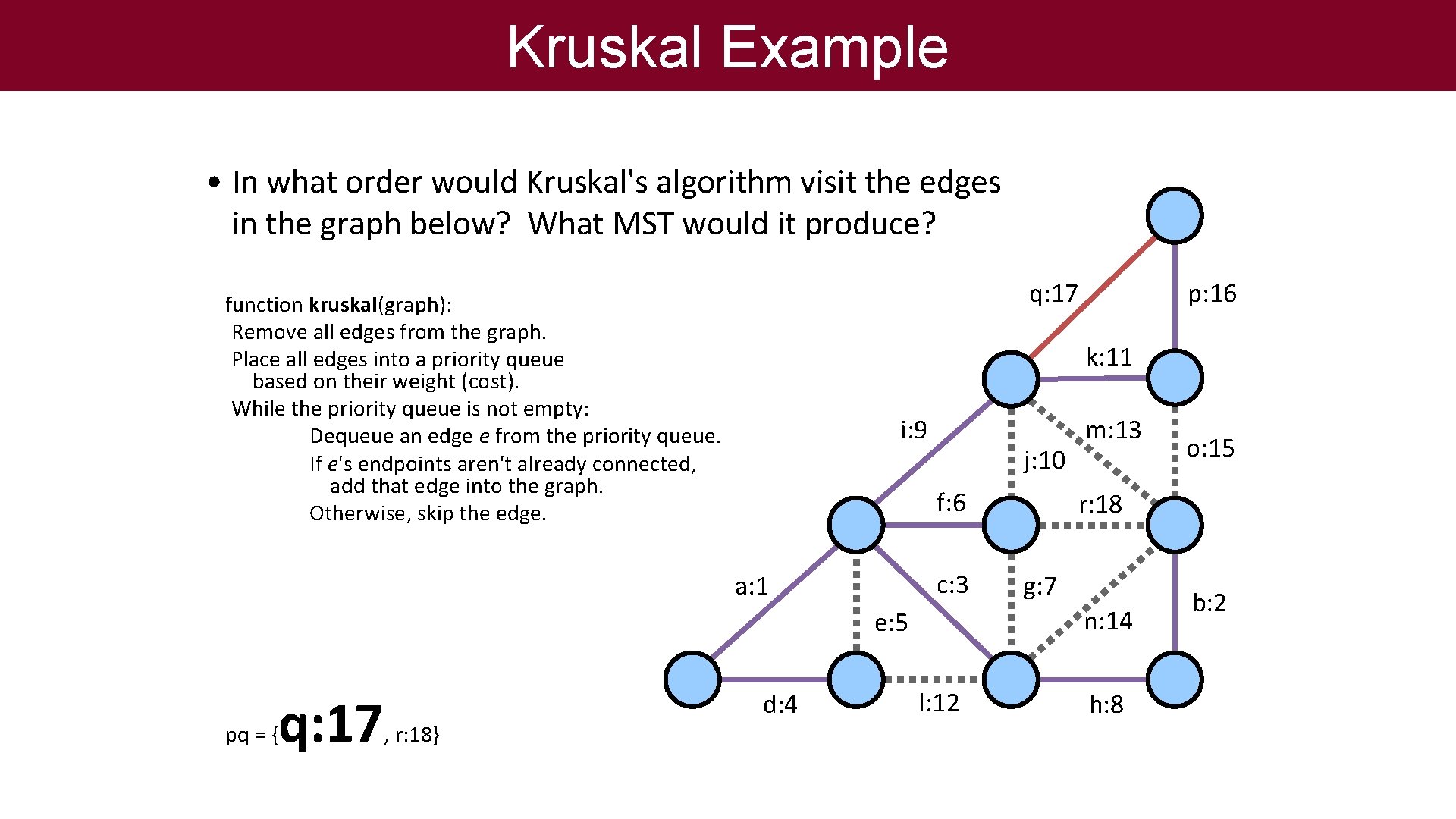
Kruskal Example • In what order would Kruskal's algorithm visit the edges in the graph below? What MST would it produce? q: 17 function kruskal(graph): Remove all edges from the graph. Place all edges into a priority queue based on their weight (cost). While the priority queue is not empty: Dequeue an edge e from the priority queue. If e's endpoints aren't already connected, add that edge into the graph. Otherwise, skip the edge. k: 11 i: 9 j: 10 f: 6 c: 3 a: 1 q: 17 , r: 18} d: 4 m: 13 l: 12 o: 15 r: 18 g: 7 n: 14 e: 5 pq = { p: 16 h: 8 b: 2
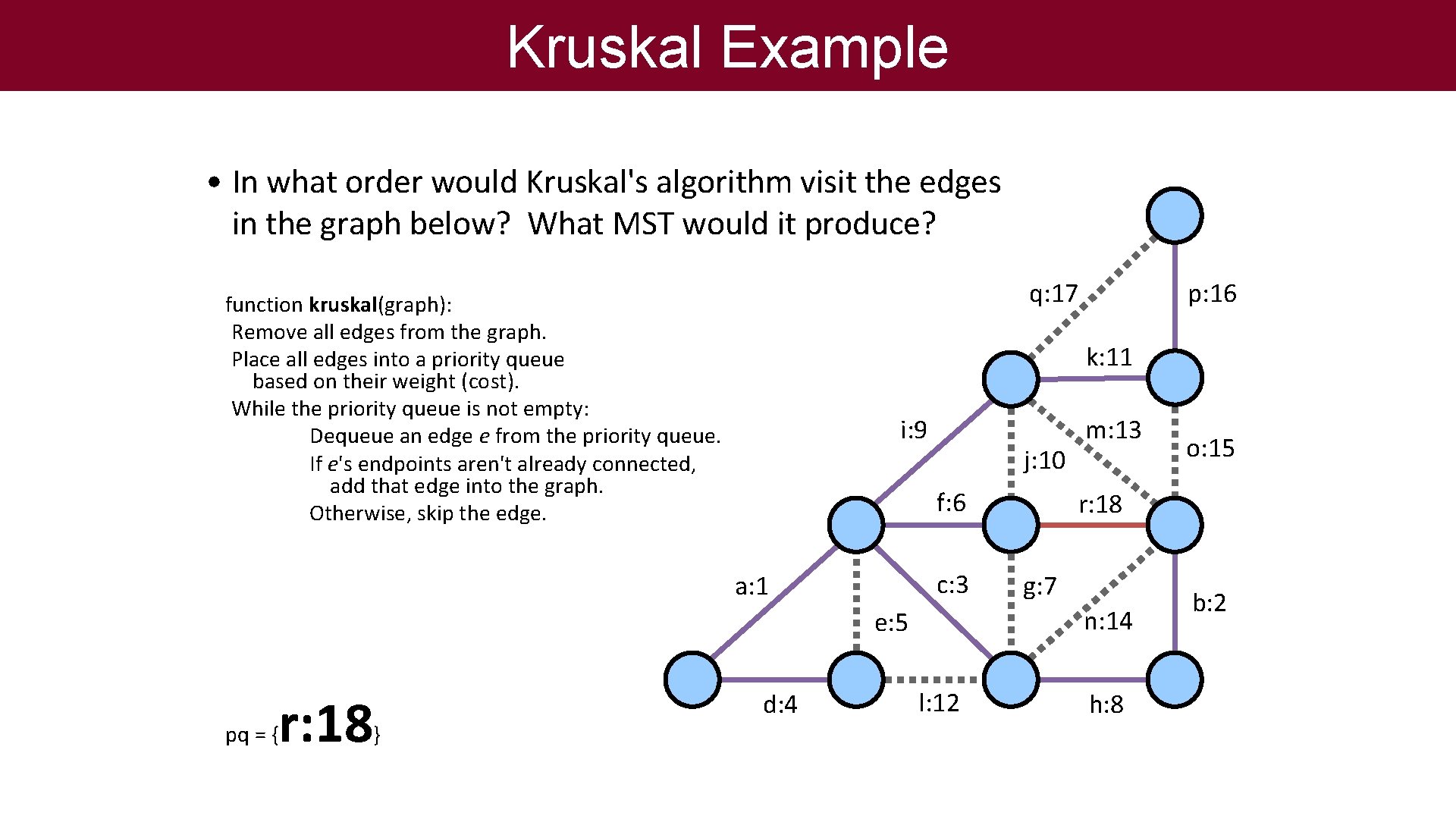
Kruskal Example • In what order would Kruskal's algorithm visit the edges in the graph below? What MST would it produce? q: 17 function kruskal(graph): Remove all edges from the graph. Place all edges into a priority queue based on their weight (cost). While the priority queue is not empty: Dequeue an edge e from the priority queue. If e's endpoints aren't already connected, add that edge into the graph. Otherwise, skip the edge. k: 11 i: 9 j: 10 f: 6 c: 3 a: 1 r: 18 } d: 4 m: 13 l: 12 o: 15 r: 18 g: 7 n: 14 e: 5 pq = { p: 16 h: 8 b: 2
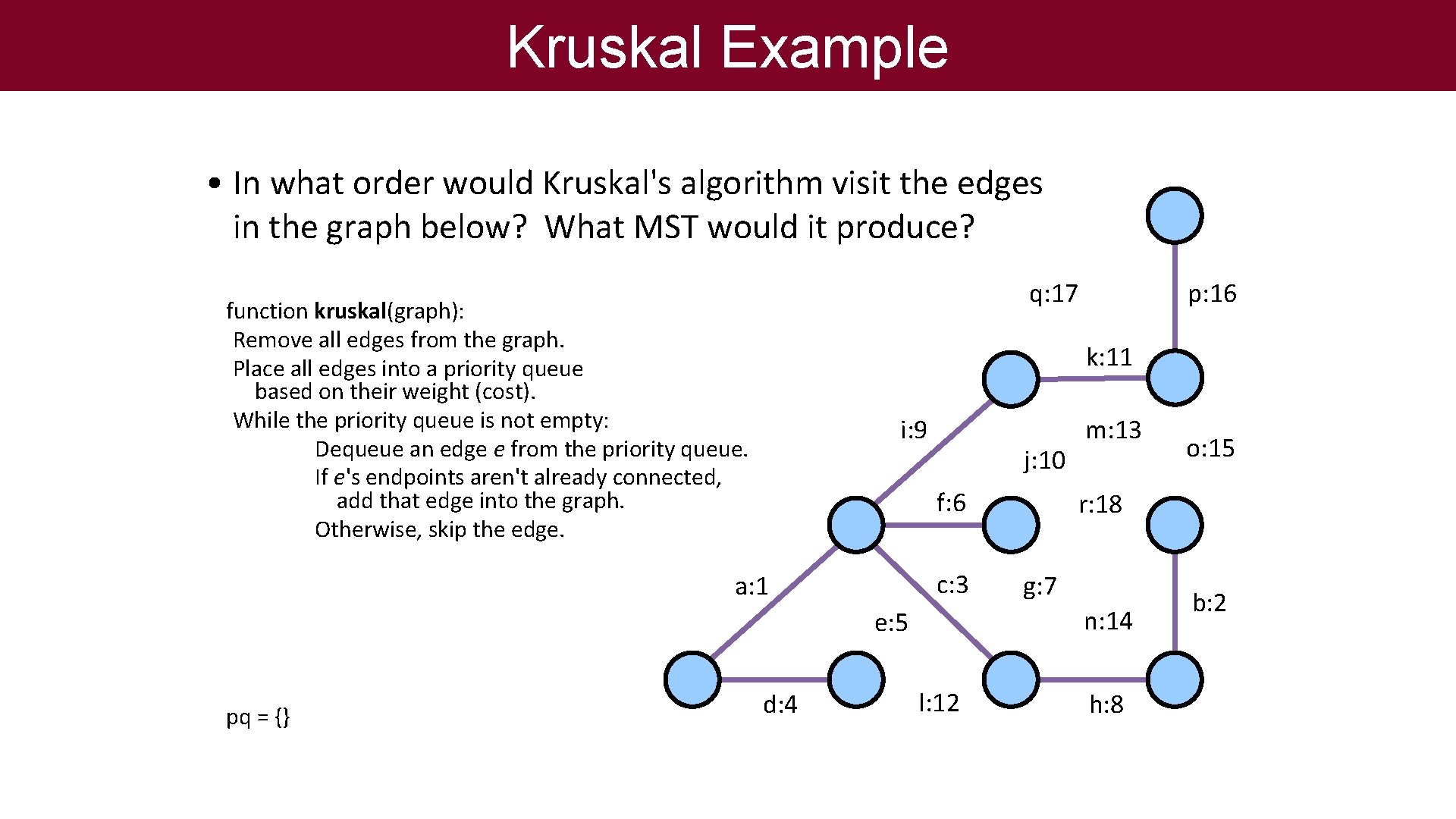
Kruskal Example • In what order would Kruskal's algorithm visit the edges in the graph below? What MST would it produce? q: 17 function kruskal(graph): Remove all edges from the graph. Place all edges into a priority queue based on their weight (cost). While the priority queue is not empty: Dequeue an edge e from the priority queue. If e's endpoints aren't already connected, add that edge into the graph. Otherwise, skip the edge. k: 11 i: 9 j: 10 f: 6 c: 3 a: 1 d: 4 m: 13 l: 12 o: 15 r: 18 g: 7 n: 14 e: 5 pq = {} p: 16 h: 8 b: 2
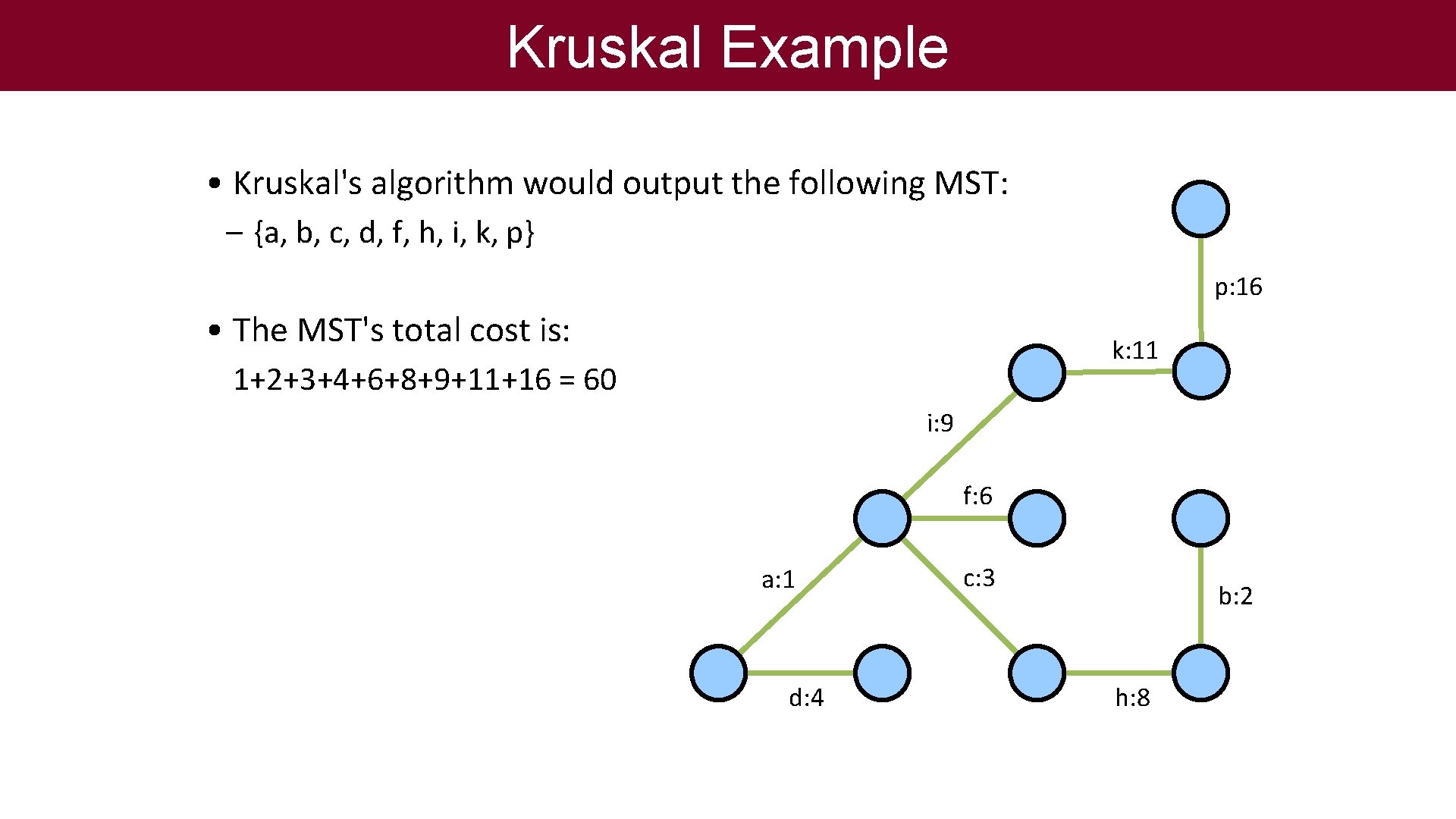
Kruskal Example • Kruskal's algorithm would output the following MST: – {a, b, c, d, f, h, i, k, p} p: 16 • The MST's total cost is: k: 11 1+2+3+4+6+8+9+11+16 = 60 i: 9 f: 6 a: 1 d: 4 c: 3 b: 2 h: 8
• What data structures should we use to implement this algorithm? function kruskal(graph): Remove all edges from the graph. Place all edges into a priority queue based on their weight (cost). While the priority queue is not empty: Dequeue an edge e from the priority queue. If e's endpoints aren't already connected, add that edge into the graph. Otherwise, skip the edge.
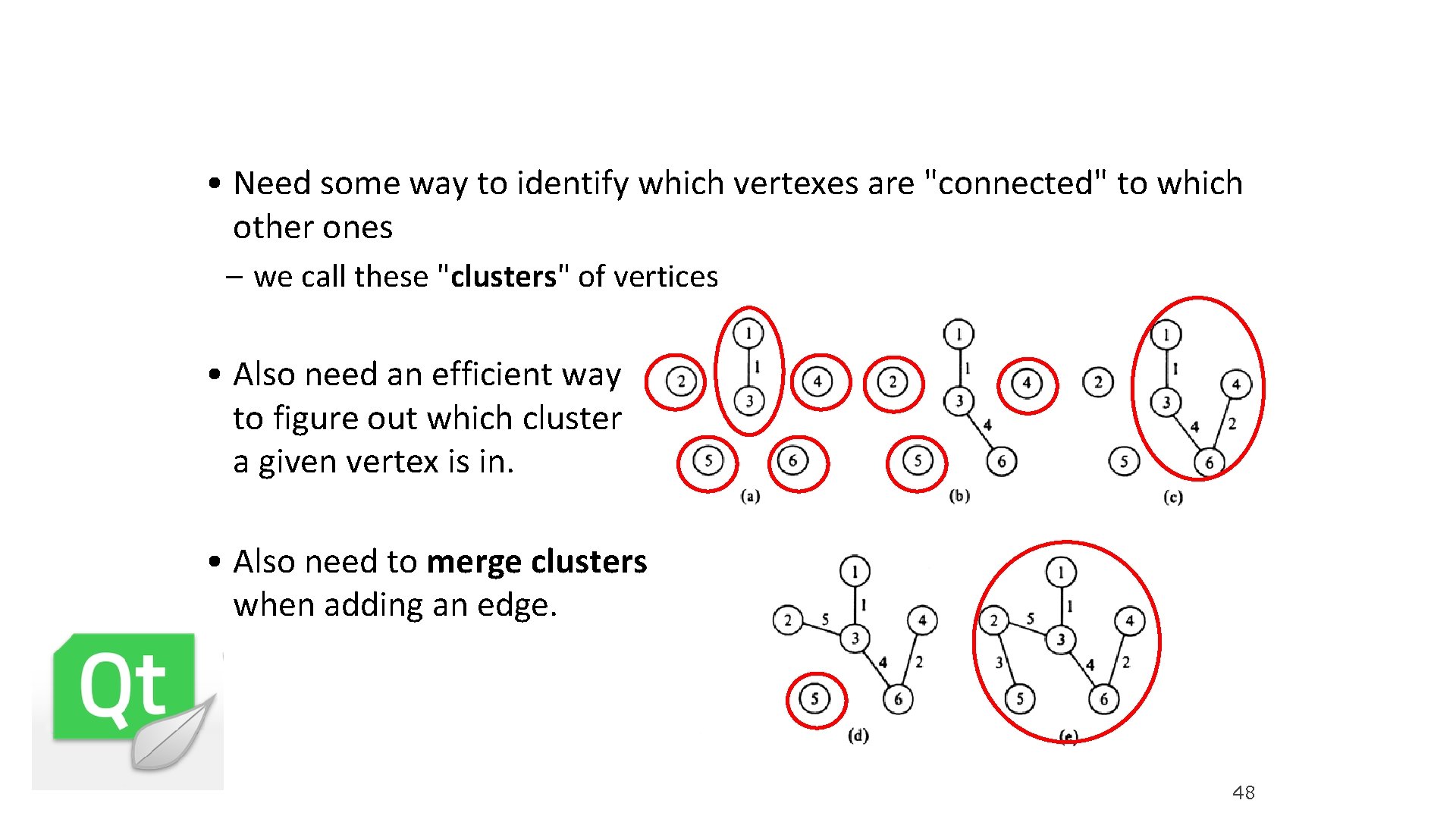
• Need some way to identify which vertexes are "connected" to which other ones – we call these "clusters" of vertices • Also need an efficient way to figure out which cluster a given vertex is in. • Also need to merge clusters when adding an edge. 48
References and Advanced Reading • References: • Minimum Spanning Tree visualization: https: //visualgo. net/mst • Kruskal's Algorithm: https: //en. wikipedia. org/wiki/Kruskal's_algorithm • Advanced Reading: • How Internet Routing works: https: //web. stanford. edu/class/msande 91 si/wwwspr 04/readings/week 1/Internet. Whitepaper. htm • http: //www. explainthatstuff. com/internet. html
- Slides: 49