
Crystals Shape is everything Also known as cubic
Crystals! Shape is everything!
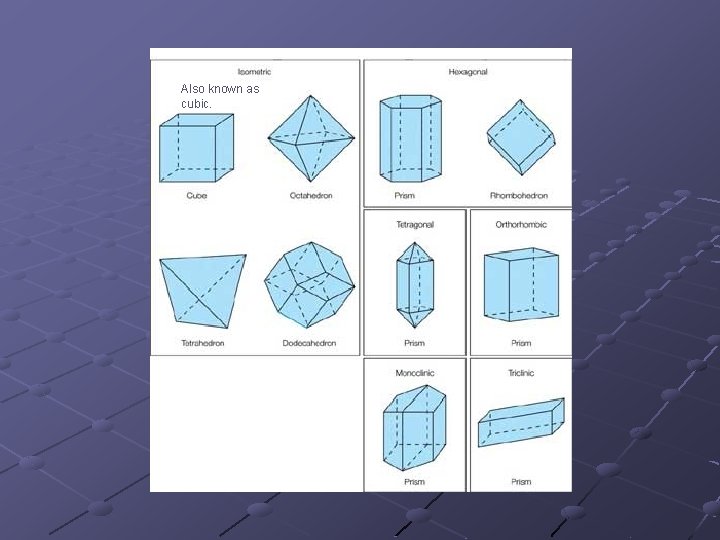
Also known as cubic.
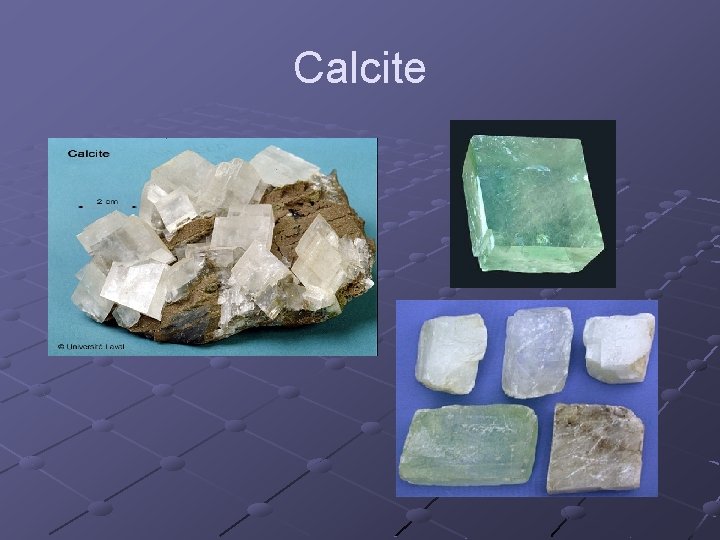
Calcite
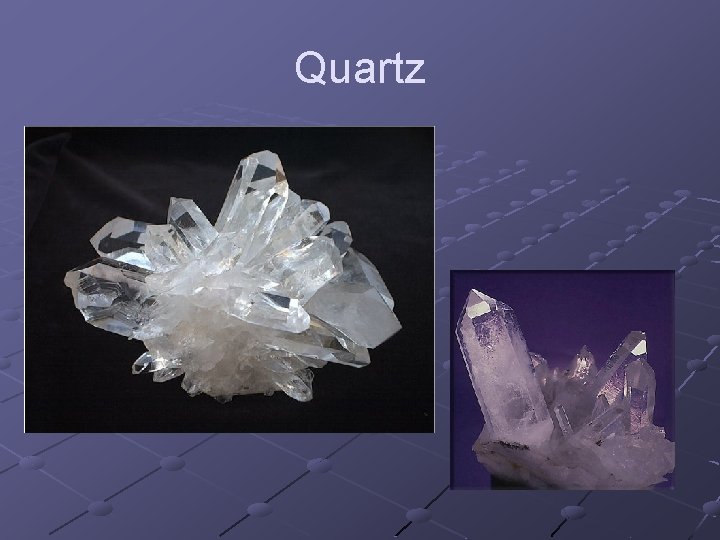
Quartz
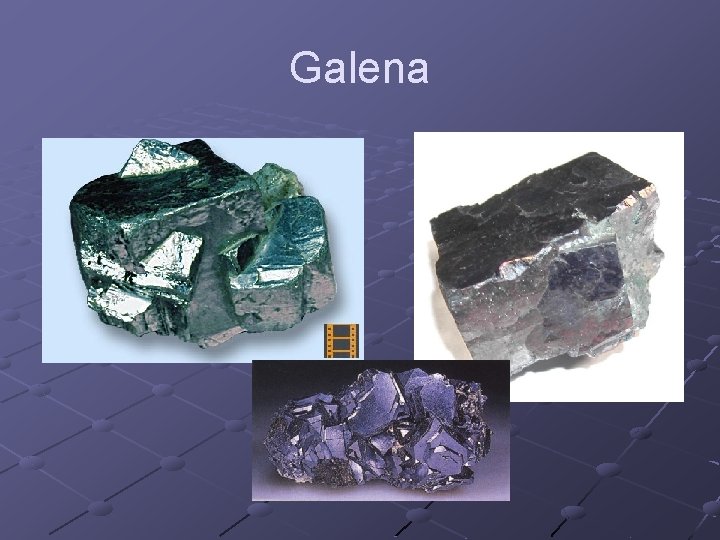
Galena
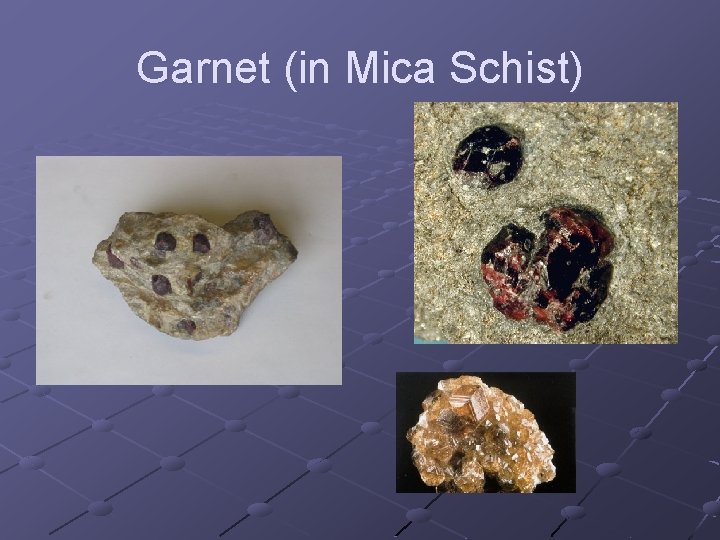
Garnet (in Mica Schist)
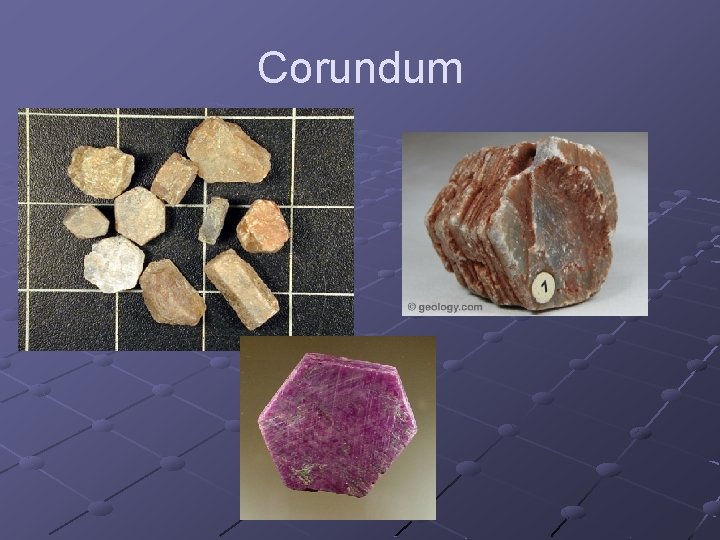
Corundum
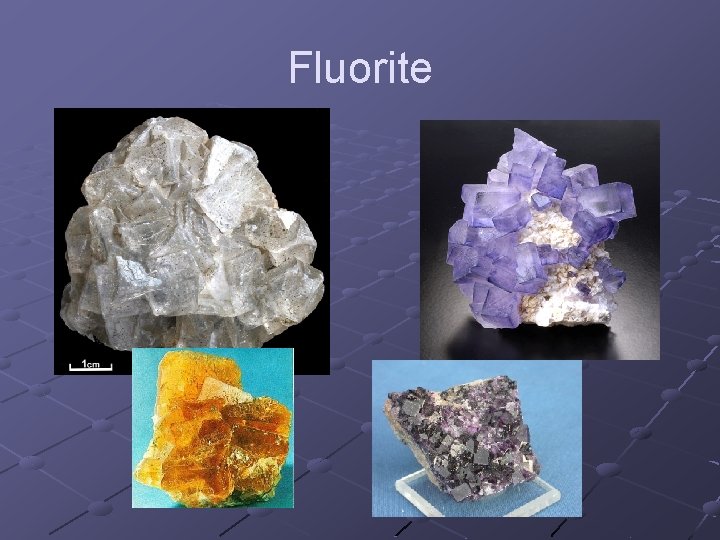
Fluorite
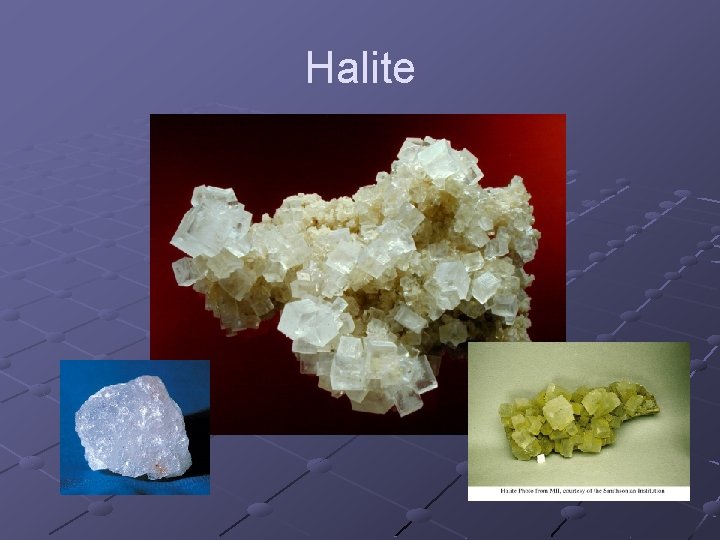
Halite
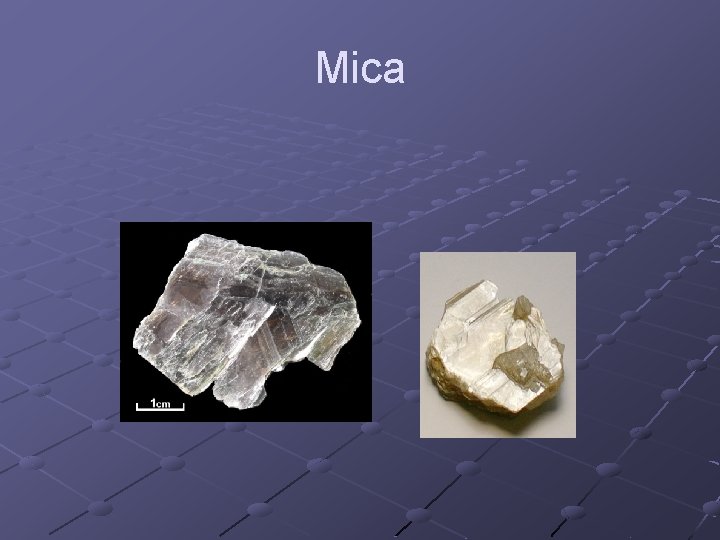
Mica
Question #15 Your tray has n n n n Calcite Quartz (2 samples) Galena Corundum (in small vial) Fluorite Garnet (in mica schist for most) Halite Muscovite or Biotite Mica Four are isometric-- two in cubic form, one in dodecahedral form Three are hexagonal-One of these is rhombohedral. One is technically monoclinic…but is in laminar (sheet) form. One of the quartz samples is in massive form so you can’t see the crystals Can you tell which is which?
Crystal System Models Take out a piece of paper. Put you name, date, period, and title: Crystal Systems Locate the brown paper bag on your tray. Label it for your group, and include your period. Put your group name on the two white sheets labeled “face” and “body” centered. Before you begin to make the models you will do a book assignment from the chemistry text.
Crystal Structure and Unit Cells Chemistry Text, pg. 280 -282 Answer the following questions on a separate sheet of paper before you build the crystal models. (Complete Sentences) n n n Write the definition of crystal found on pg. 280 How do the seven crystal systems differ? What is a unit cell? Observe three different unit cells for the cubic system. Describe how they differ. Now build the 6 body centered and 6 face centered models. Make sure to put an identifying label on the outward facing side. Blue = body-centered. Afterwards, write a description for each system of what you can see in common between the body centered models and the face centered models for that system, and what is different between the two.
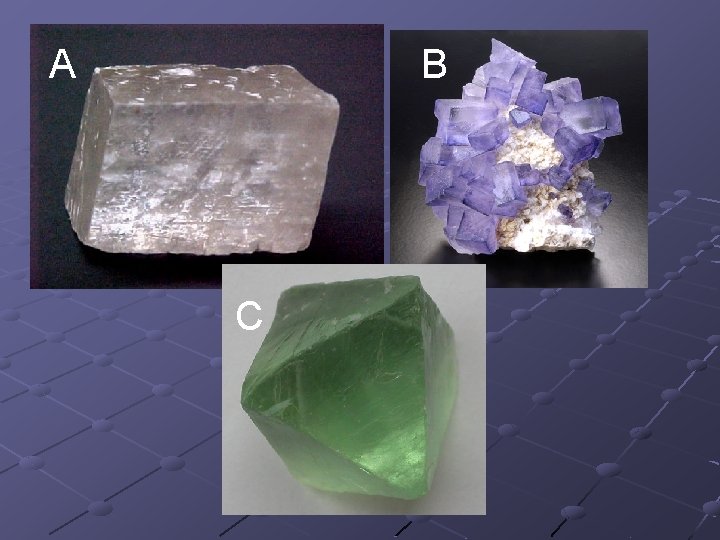
A B C
- Slides: 14