
Crystallization Dr Salih KARASU Crystallization is the process
- Slides: 21
Crystallization Dr. Salih KARASU
Crystallization is the process by which solid crystals, of a solute, are formed from a solution
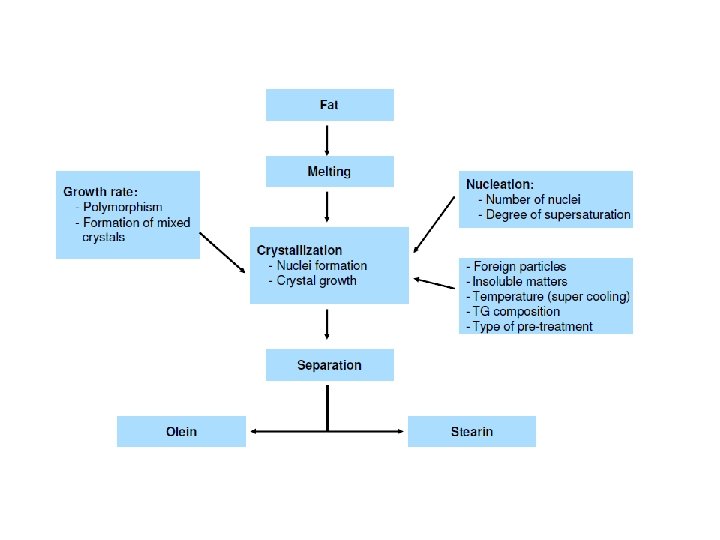
In the food industry, products such as sugar, lactose, glucose, and salt are obtained by this process. It may also be used to remove undesirable products. For example, edible oils may be cooled to crystallize high melting-point components by a process called winterizing.
Crystallization generally involves four distinctive steps: (1) the generation of a supersaturated state, (2) nucleation, (3) crystal growth, and (4) recrystallization
A supersaturated solution is generated when a solution has reached the solute’s maximum concentration and is then further concentrated, usually by evaporation, or cooled down slowly, This first step is the driving force for crystallization by which the system lowers its energy state
Then nucleation takes place as solutes aggregate to form orderly “clusters” or nuclei. There are two kinds of nucleation: (1) homogeneous and , (2) heterogeneous.
The first occurs without the presence of foreign particles and the second, more common, is aided by the presence of foreign particles in the solution.
The subsequent binding of solute molecules to existing nuclei, thus increasing crystal size, is called crystal growth.
This reaction stops as an equilibrium state is reached, if the solution is not kept in a supersaturated state by the constant removal of solvent, usually through constant solvent evaporation.
Finally, the recrystallization step naturally takes place by the reorganization of the crystalline structure to a low-energy state.
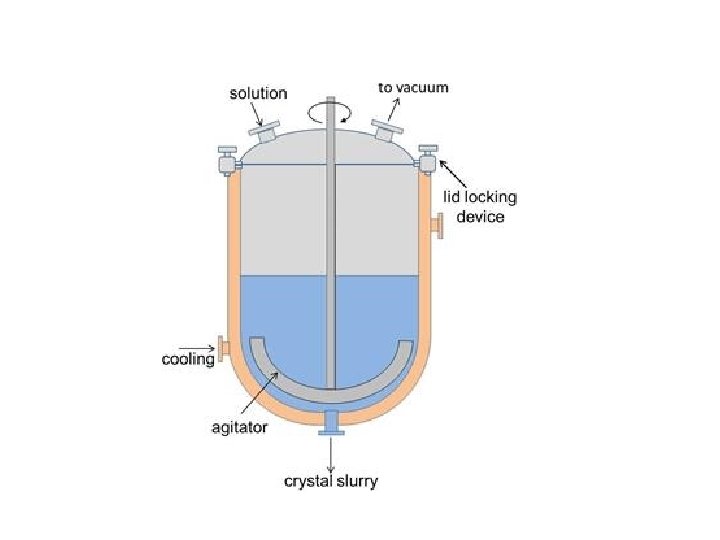
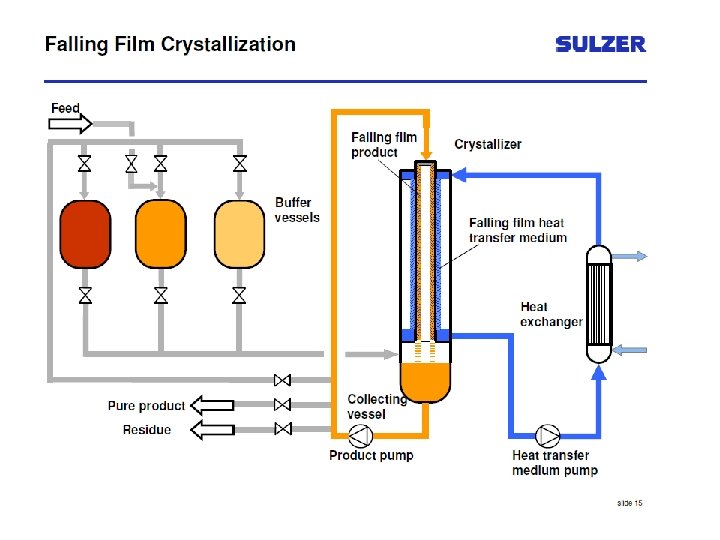
Equipment The equipment used for crystallisation is called a crystallizer or pan. Pans can crystallize in batch or continuous mode. They can be equipped with a vacuum or be vented, and generally include a heat exchanger as well as an agitation device.
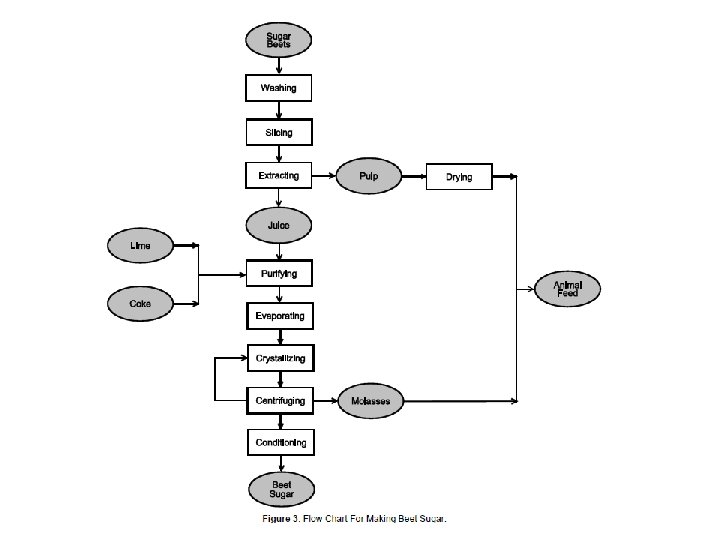
Sucrose Production To obtain sucrose, sugar must be removed from sugar canes or sugar beets to produce a diluted liquid which is then clarified to remove impurities (i. e. minerals and organicmatters) before further concentration, commonly by evaporation
The sucrose syrup obtainedis thensubjectedto a controlled crystallization process using a vacuum evaporator pan, allowing for the sucrose to separate
Since sucrose solubility in water is high, multiple steps are necessary to remove as much of the sucrose in the solution as possible. Last, sucrose crystals are removed from the mother liquor using centrifugation. This liquor contains a low amount of sucrose and a high concentration of impurities and is further evaporated to obtain molasses.