
Crystalline state Symmetry in nature Symmetry in arts
- Slides: 28
Crystalline state • Symmetry in nature • Symmetry in arts and industry • Description of symmetry – basic concepts • Crystallography of two dimensions • Crystallography of three dimensions
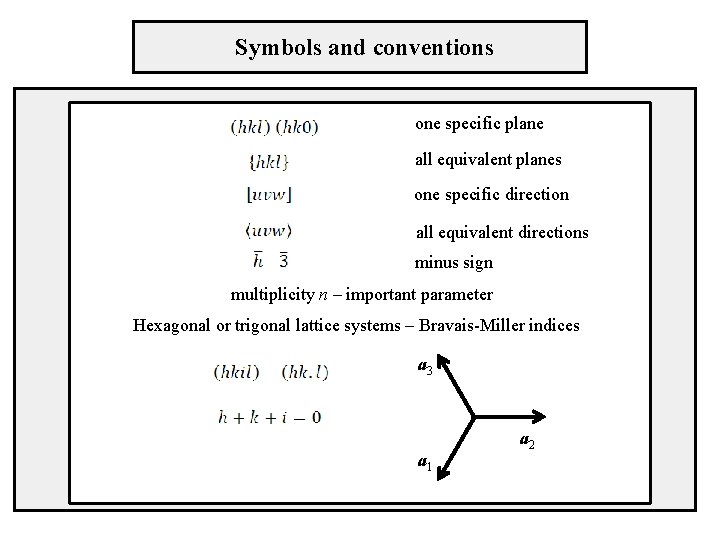
Symbols and conventions one specific plane all equivalent planes one specific direction all equivalent directions minus sign multiplicity n – important parameter Hexagonal or trigonal lattice systems – Bravais-Miller indices a 3 a 1 a 2
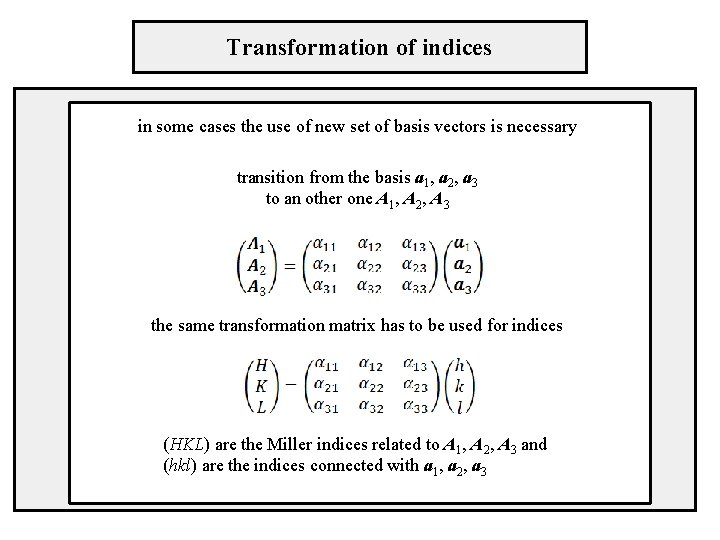
Transformation of indices in some cases the use of new set of basis vectors is necessary transition from the basis a 1, a 2, a 3 to an other one A 1, A 2, A 3 the same transformation matrix has to be used for indices (HKL) are the Miller indices related to A 1, A 2, A 3 and (hkl) are the indices connected with a 1, a 2, a 3
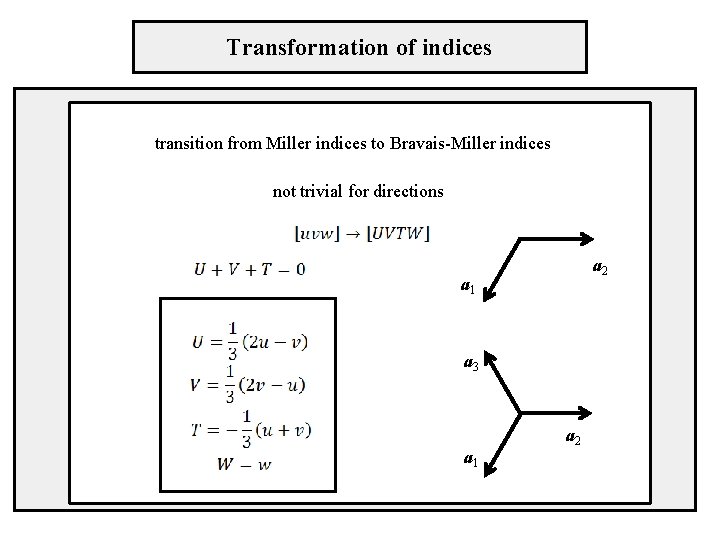
Transformation of indices transition from Miller indices to Bravais-Miller indices not trivial for directions a 2 a 1 a 3 a 1 a 2
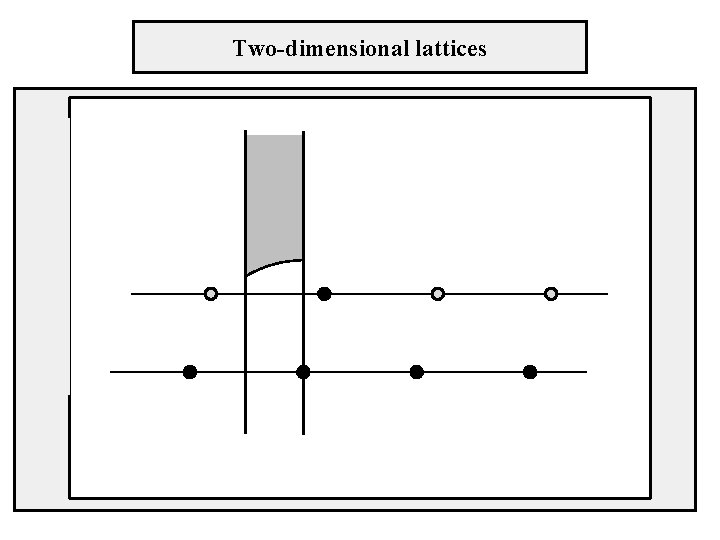
Two-dimensional lattices
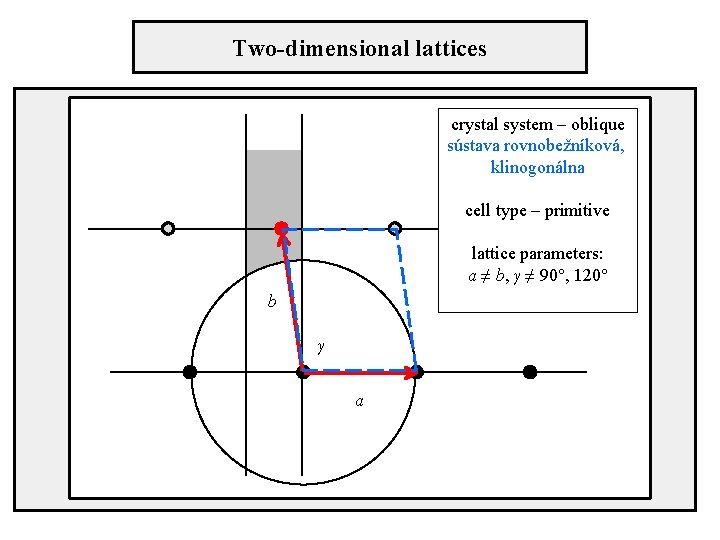
Two-dimensional lattices crystal system – oblique sústava rovnobežníková, klinogonálna cell type – primitive lattice parameters: a ≠ b, γ ≠ 90°, 120° b γ a
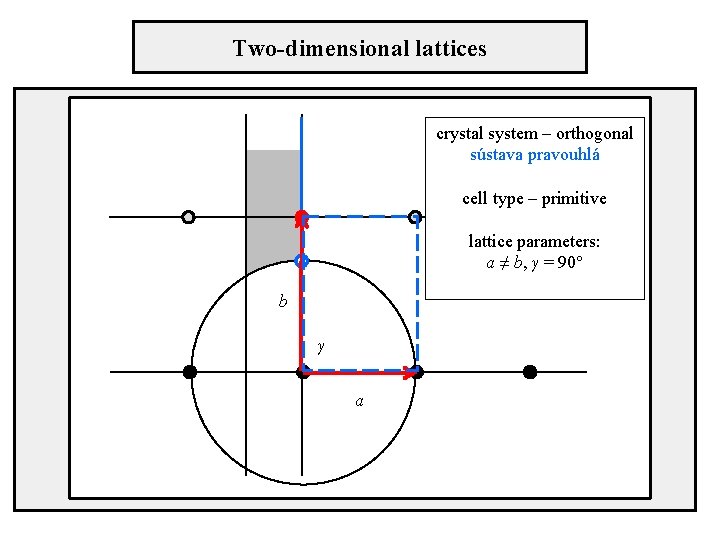
Two-dimensional lattices crystal system – orthogonal sústava pravouhlá cell type – primitive lattice parameters: a ≠ b, γ = 90° b γ a
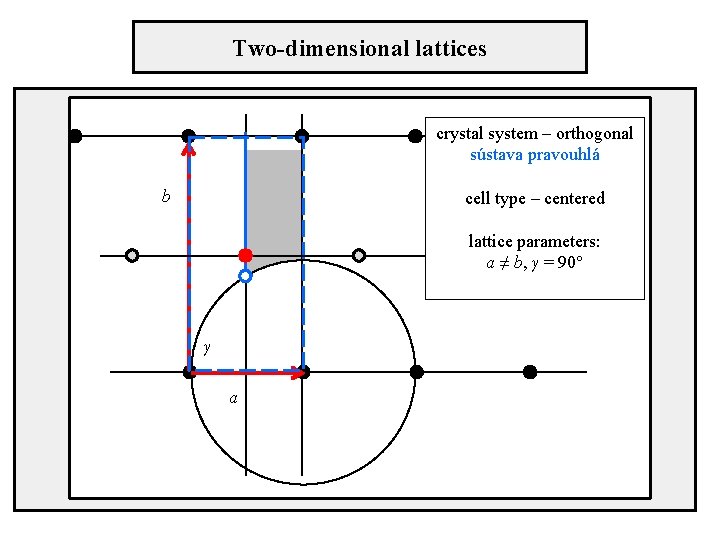
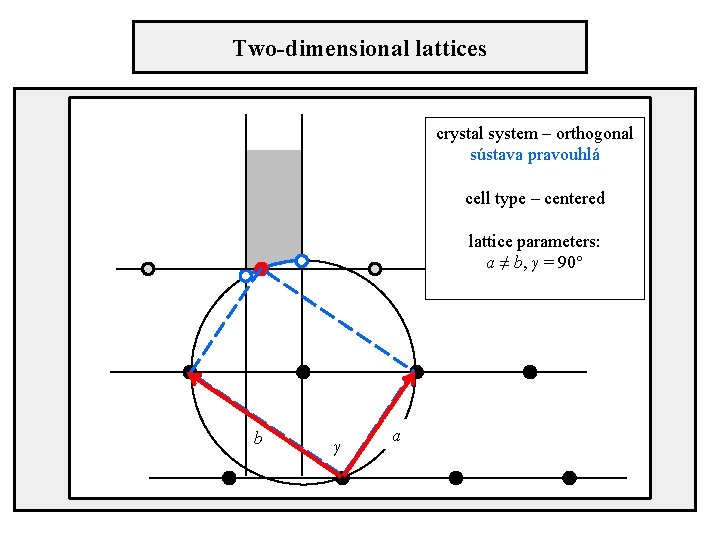
Two-dimensional lattices crystal system – orthogonal sústava pravouhlá cell type – centered b lattice parameters: a ≠ b, γ = 90° γ a
Two-dimensional lattices crystal system – orthogonal sústava pravouhlá cell type – centered lattice parameters: a ≠ b, γ = 90° b γ a
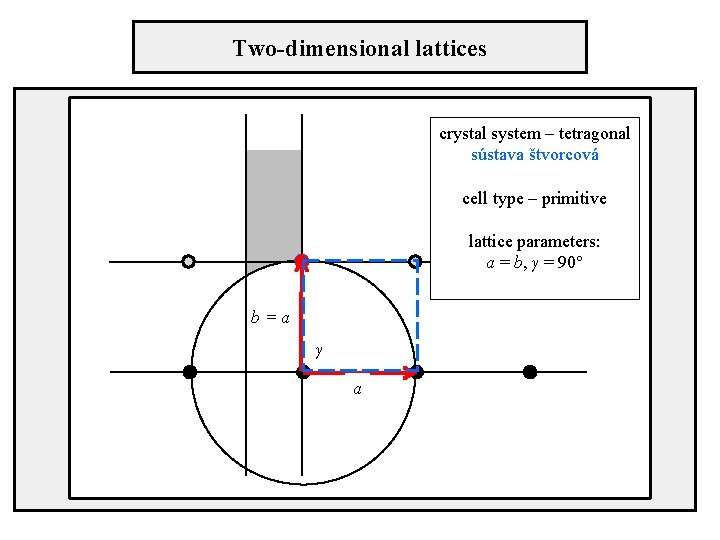
Two-dimensional lattices crystal system – tetragonal sústava štvorcová cell type – primitive lattice parameters: a = b, γ = 90° b=a γ a
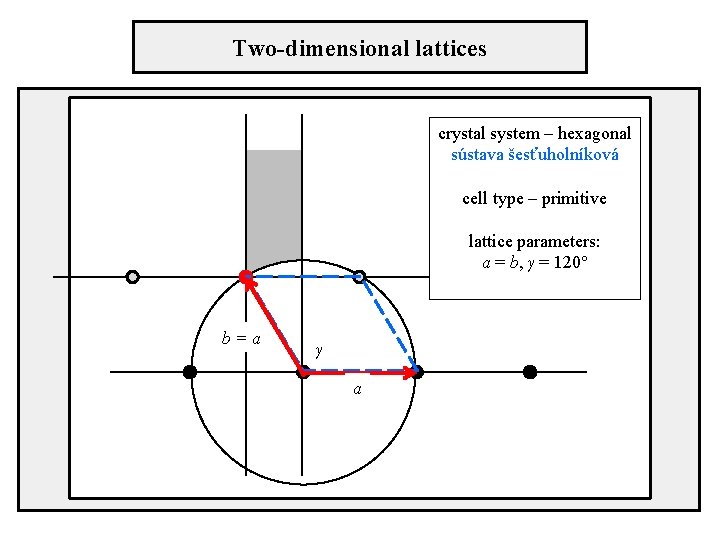
Two-dimensional lattices crystal system – hexagonal sústava šesťuholníková cell type – primitive lattice parameters: a = b, γ = 120° b=a γ a
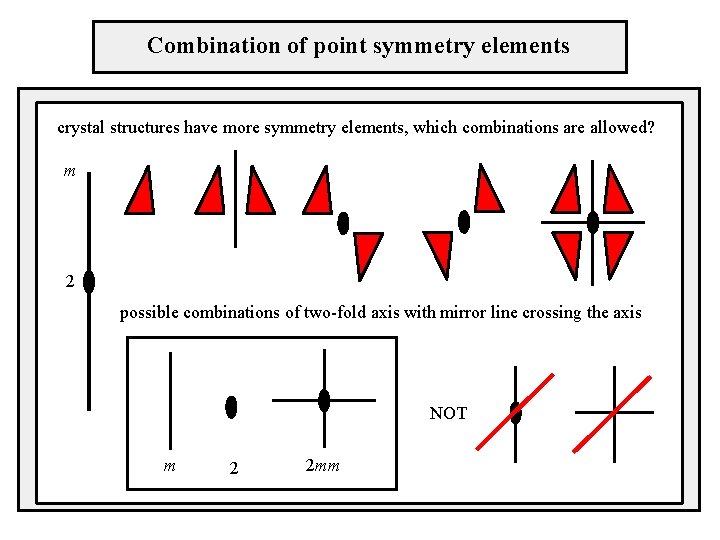
Combination of point symmetry elements crystal structures have more symmetry elements, which combinations are allowed? m 2 possible combinations of two-fold axis with mirror line crossing the axis NOT m 2 2 mm
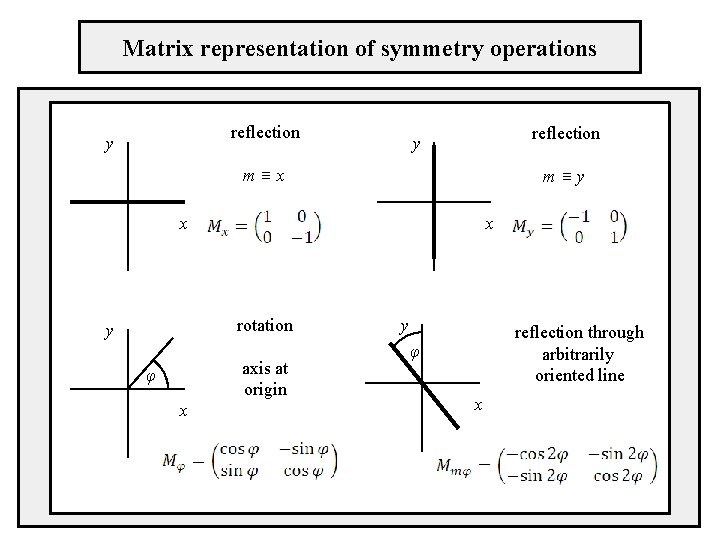
Matrix representation of symmetry operations reflection y m≡x m≡y x x rotation y axis at origin φ x y reflection through arbitrarily oriented line φ x
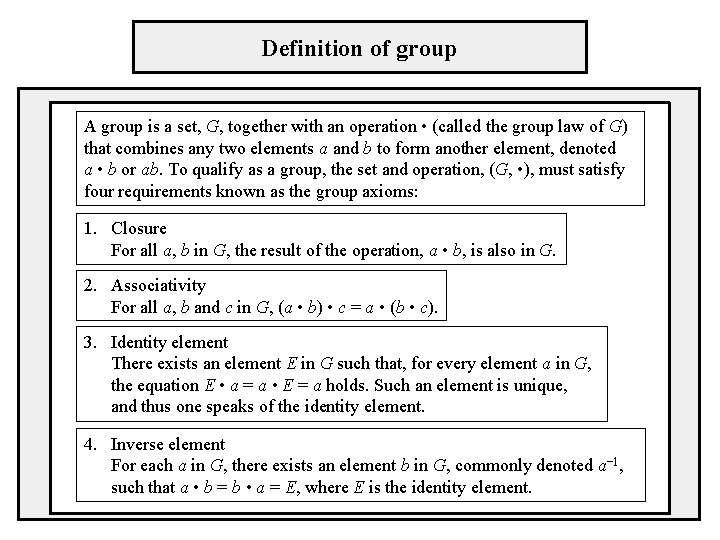
Definition of group A group is a set, G, together with an operation • (called the group law of G) that combines any two elements a and b to form another element, denoted a • b or ab. To qualify as a group, the set and operation, (G, • ), must satisfy four requirements known as the group axioms: 1. Closure For all a, b in G, the result of the operation, a • b, is also in G. 2. Associativity For all a, b and c in G, (a • b) • c = a • (b • c). 3. Identity element There exists an element E in G such that, for every element a in G, the equation E • a = a • E = a holds. Such an element is unique, and thus one speaks of the identity element. 4. Inverse element For each a in G, there exists an element b in G, commonly denoted a− 1, such that a • b = b • a = E, where E is the identity element.
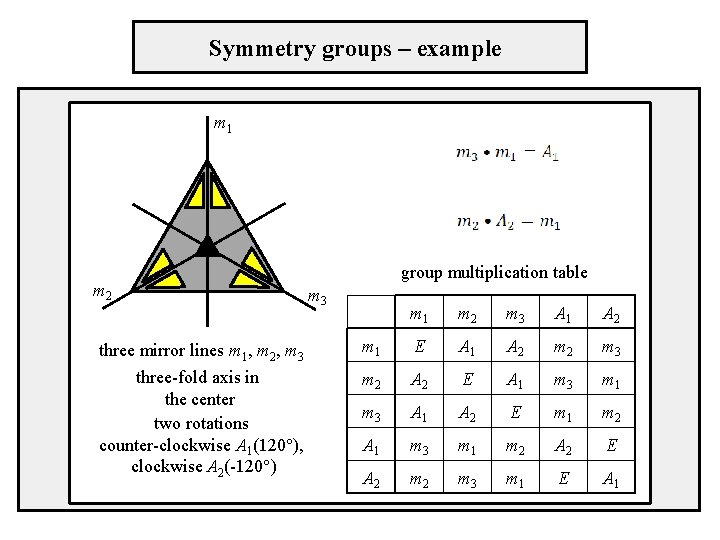
Symmetry groups – example m 1 m 2 group multiplication table m 3 three mirror lines m 1, m 2, m 3 three-fold axis in the center two rotations counter-clockwise A 1(120°), clockwise A 2(-120°) m 1 m 2 m 3 A 1 A 2 m 1 E A 1 A 2 m 3 m 2 A 2 E A 1 m 3 m 1 m 3 A 1 A 2 E m 1 m 2 A 1 m 3 m 1 m 2 A 2 E A 2 m 3 m 1 E A 1
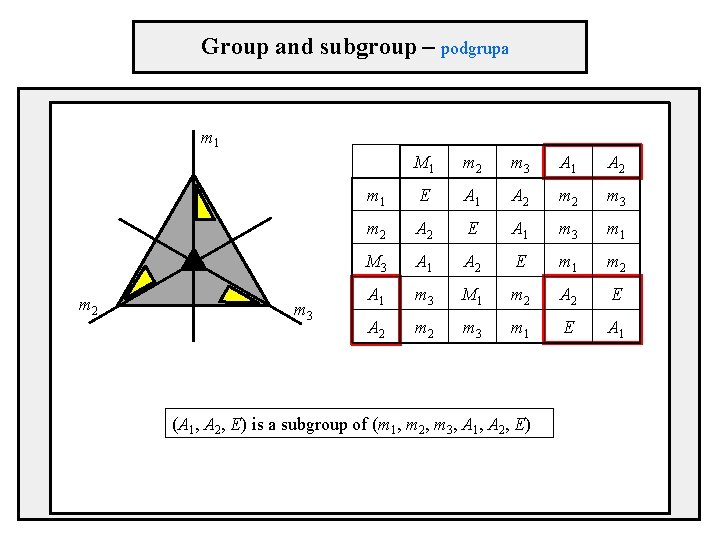
Group and subgroup – podgrupa m 1 m 2 m 3 M 1 m 2 m 3 A 1 A 2 m 1 E A 1 A 2 m 3 m 2 A 2 E A 1 m 3 m 1 M 3 A 1 A 2 E m 1 m 2 A 1 m 3 M 1 m 2 A 2 E A 2 m 3 m 1 E A 1 (A 1, A 2, E) is a subgroup of (m 1, m 2, m 3, A 1, A 2, E)
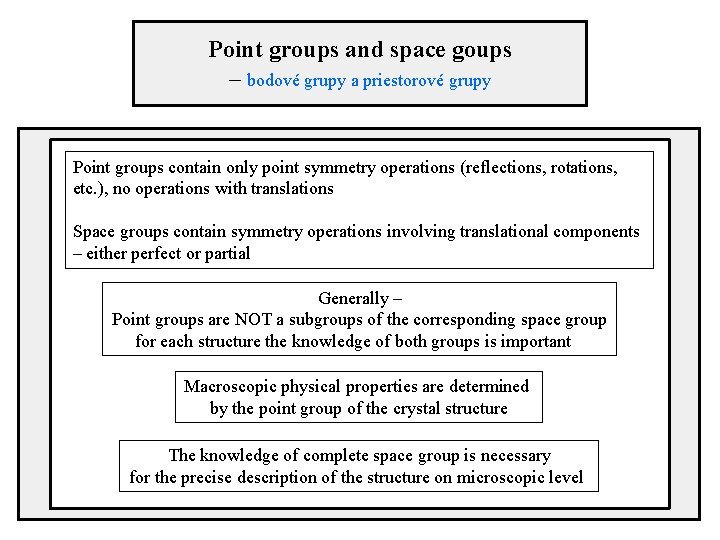
Point groups and space goups – bodové grupy a priestorové grupy Point groups contain only point symmetry operations (reflections, rotations, etc. ), no operations with translations Space groups contain symmetry operations involving translational components – either perfect or partial Generally – Point groups are NOT a subgroups of the corresponding space group for each structure the knowledge of both groups is important Macroscopic physical properties are determined by the point group of the crystal structure The knowledge of complete space group is necessary for the precise description of the structure on microscopic level
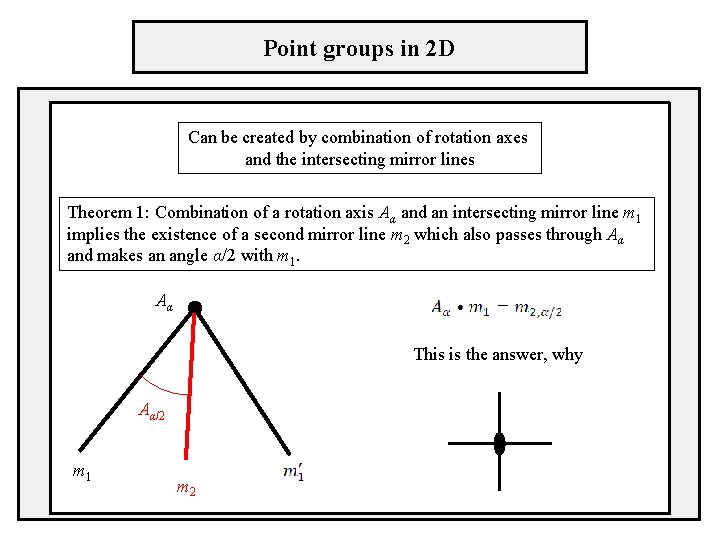
Point groups in 2 D Can be created by combination of rotation axes and the intersecting mirror lines Theorem 1: Combination of a rotation axis Aα and an intersecting mirror line m 1 implies the existence of a second mirror line m 2 which also passes through Aα and makes an angle α/2 with m 1. Aα This is the answer, why Aα/2 m 1 m 2
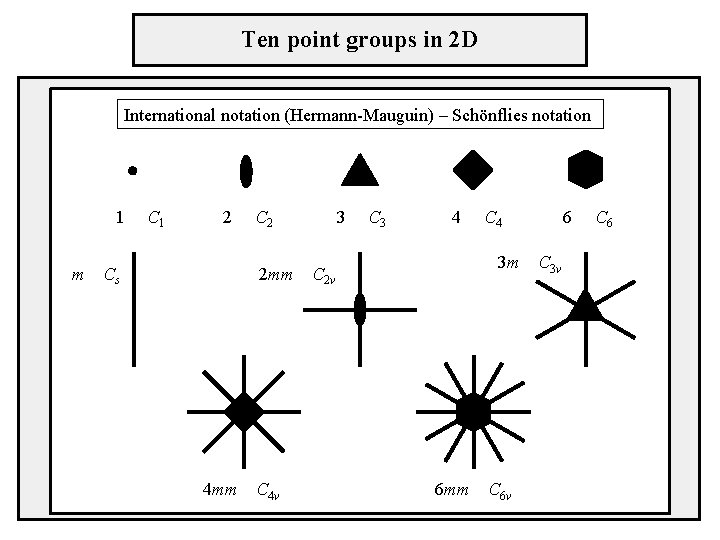
Ten point groups in 2 D International notation (Hermann-Mauguin) – Schönflies notation 1 C 1 m 2 Cs 2 mm 4 mm C 4 v 3 C 3 4 C 4 3 m C 2 v 6 mm C 6 v 6 C 3 v
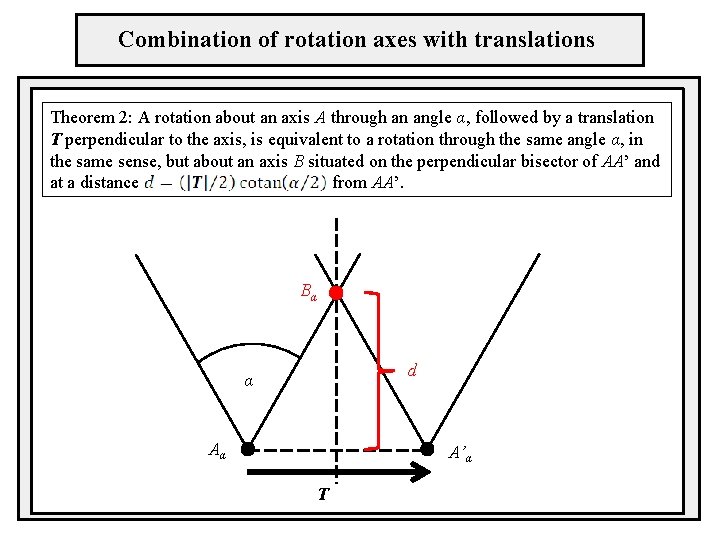
Combination of rotation axes with translations Theorem 2: A rotation about an axis A through an angle α, followed by a translation T perpendicular to the axis, is equivalent to a rotation through the same angle α, in the same sense, but about an axis B situated on the perpendicular bisector of AA’ and at a distance from AA’. Bα d α Aα A’α T
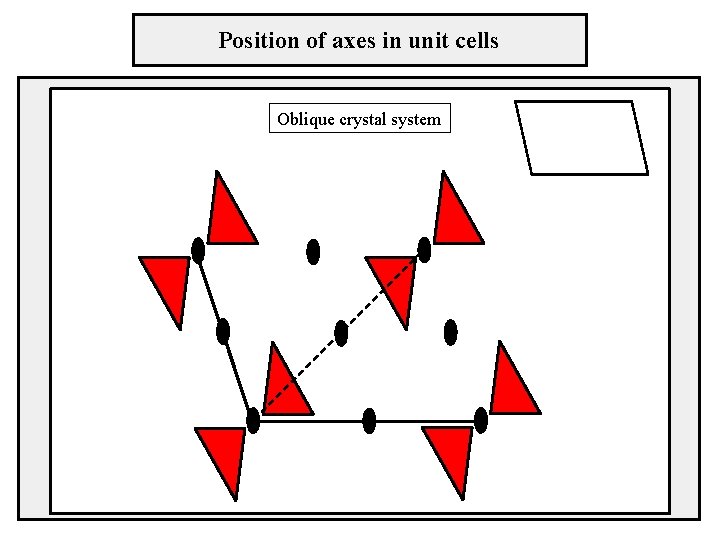
Position of axes in unit cells Oblique crystal system
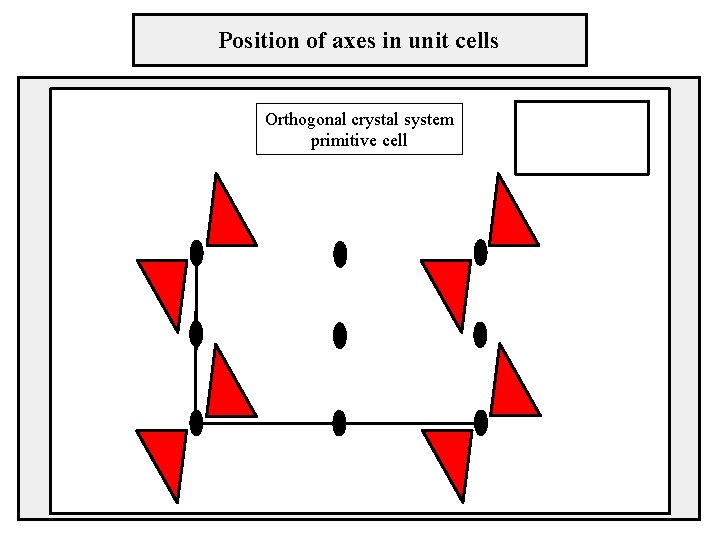
Position of axes in unit cells Orthogonal crystal system primitive cell
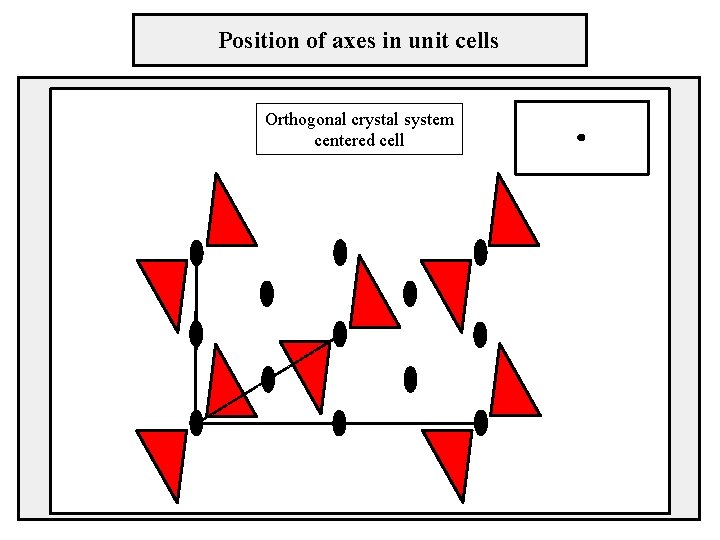
Position of axes in unit cells Orthogonal crystal system centered cell
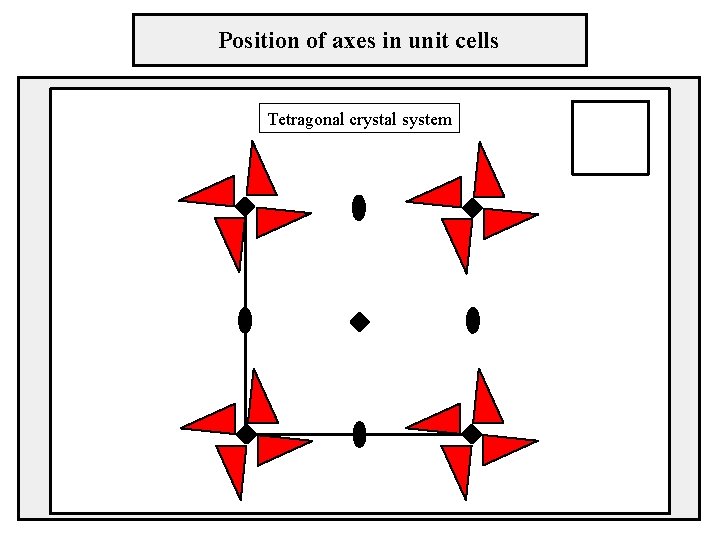
Position of axes in unit cells Tetragonal crystal system
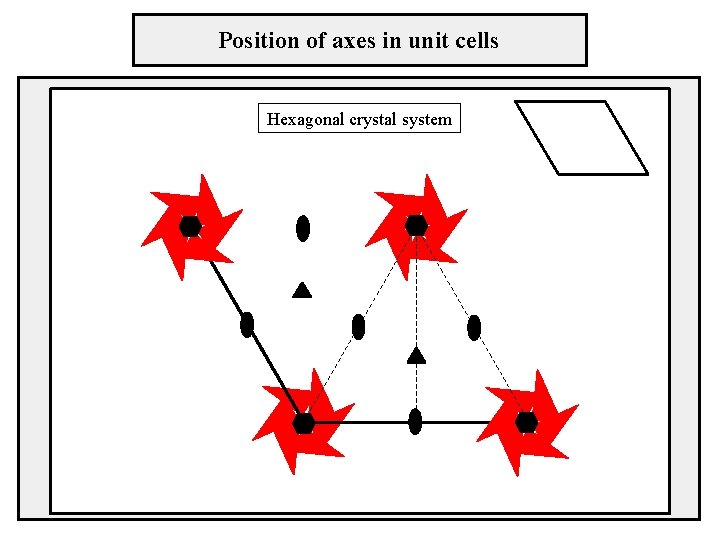
Position of axes in unit cells Hexagonal crystal system
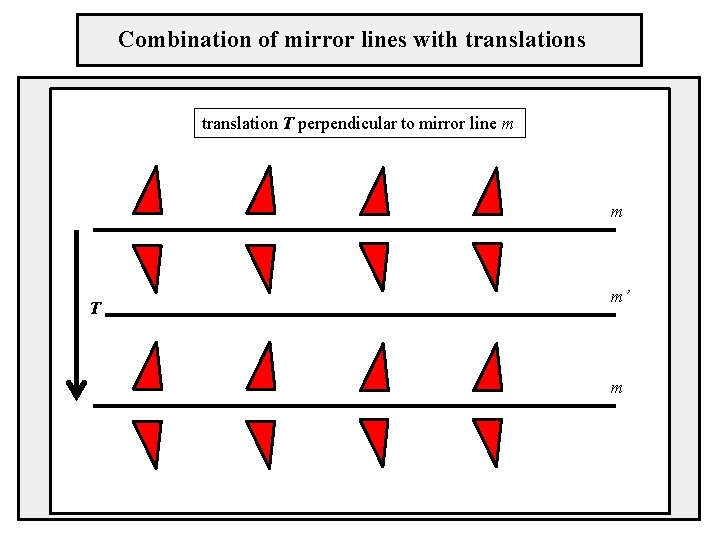
Combination of mirror lines with translations translation T perpendicular to mirror line m m T m’ m
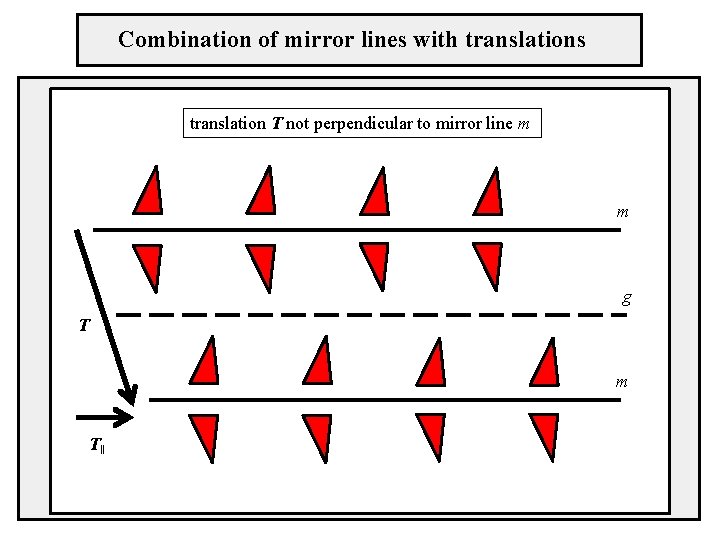
Combination of mirror lines with translations translation T not perpendicular to mirror line m m g T m T‖
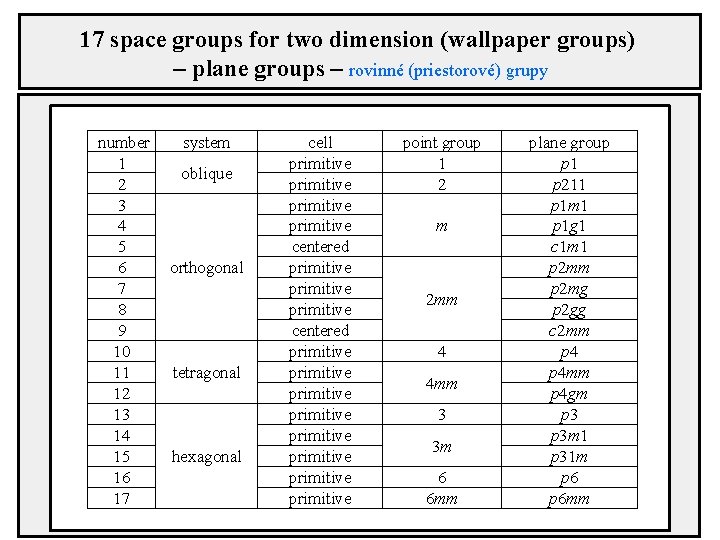
17 space groups for two dimension (wallpaper groups) – plane groups – rovinné (priestorové) grupy number 1 2 3 4 5 6 7 8 9 10 11 12 13 14 15 16 17 system oblique orthogonal tetragonal hexagonal cell primitive centered primitive primitive primitive point group 1 2 m 2 mm 4 4 mm 3 3 m 6 6 mm plane group p 1 p 211 p 1 m 1 p 1 g 1 c 1 m 1 p 2 mm p 2 mg p 2 gg c 2 mm p 4 mm p 4 gm p 3 m 1 p 31 m p 6 mm