
Crystal Growth Control of Inorganic Phase by Organic
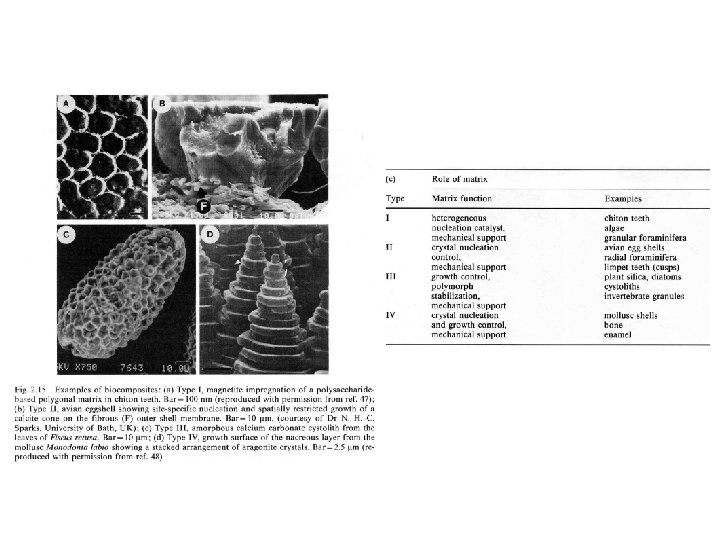
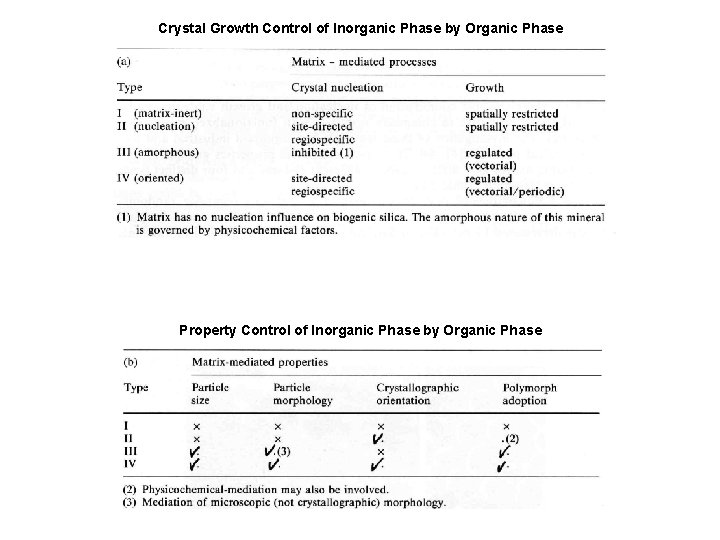
Crystal Growth Control of Inorganic Phase by Organic Phase Property Control of Inorganic Phase by Organic Phase
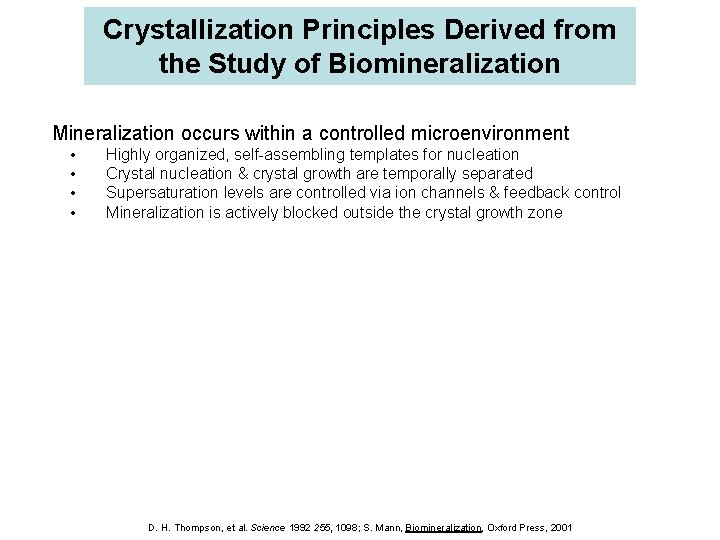
Crystallization Principles Derived from the Study of Biomineralization Mineralization occurs within a controlled microenvironment • • Highly organized, self-assembling templates for nucleation Crystal nucleation & crystal growth are temporally separated Supersaturation levels are controlled via ion channels & feedback control Mineralization is actively blocked outside the crystal growth zone D. H. Thompson, et al. Science 1992 255, 1098; S. Mann, Biomineralization, Oxford Press, 2001
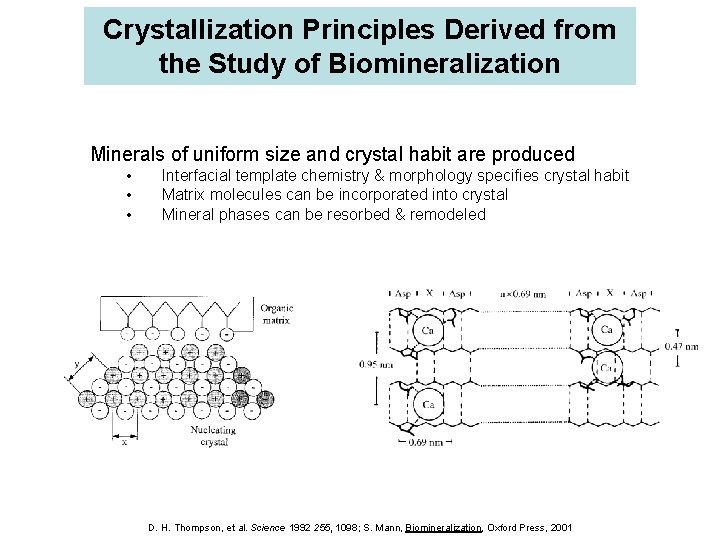
Crystallization Principles Derived from the Study of Biomineralization Minerals of uniform size and crystal habit are produced • • • Interfacial template chemistry & morphology specifies crystal habit Matrix molecules can be incorporated into crystal Mineral phases can be resorbed & remodeled D. H. Thompson, et al. Science 1992 255, 1098; S. Mann, Biomineralization, Oxford Press, 2001
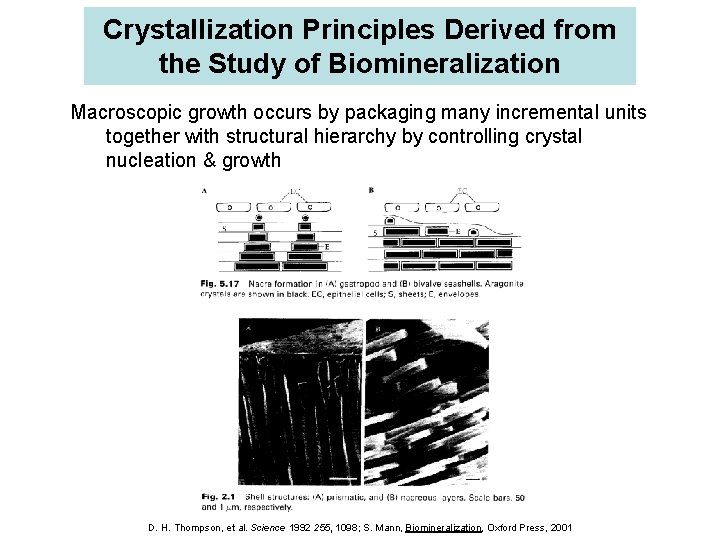
Crystallization Principles Derived from the Study of Biomineralization Macroscopic growth occurs by packaging many incremental units together with structural hierarchy by controlling crystal nucleation & growth D. H. Thompson, et al. Science 1992 255, 1098; S. Mann, Biomineralization, Oxford Press, 2001
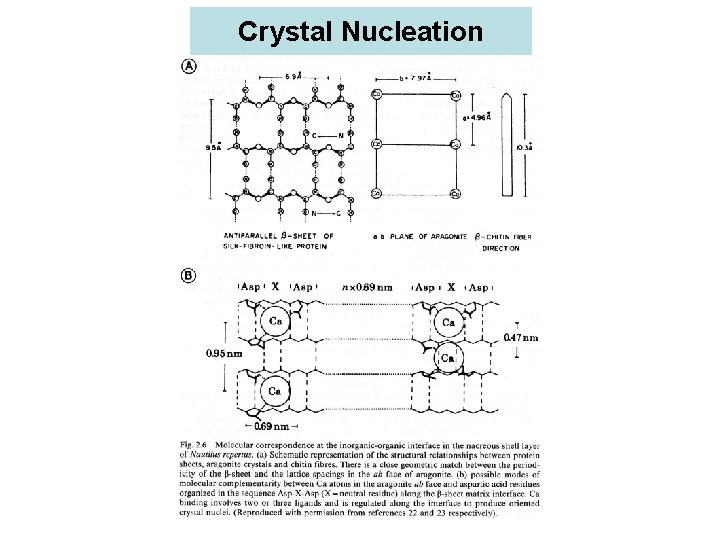
Crystal Nucleation
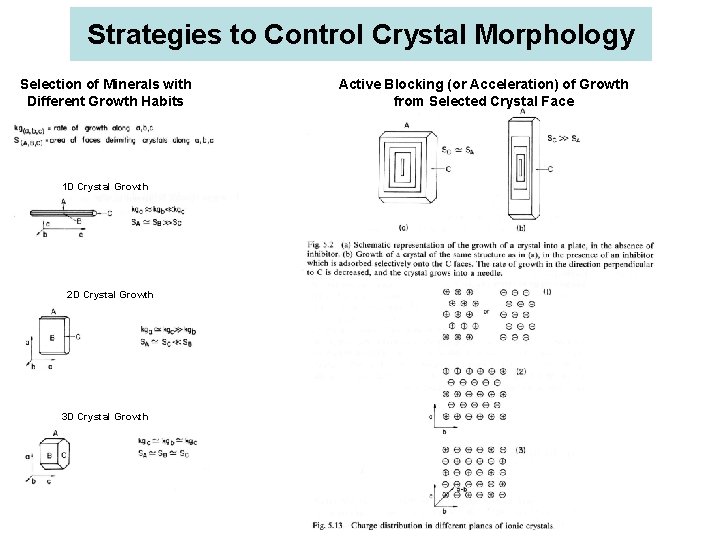
Strategies to Control Crystal Morphology Selection of Minerals with Different Growth Habits 1 D Crystal Growth 2 D Crystal Growth 3 D Crystal Growth Active Blocking (or Acceleration) of Growth from Selected Crystal Face
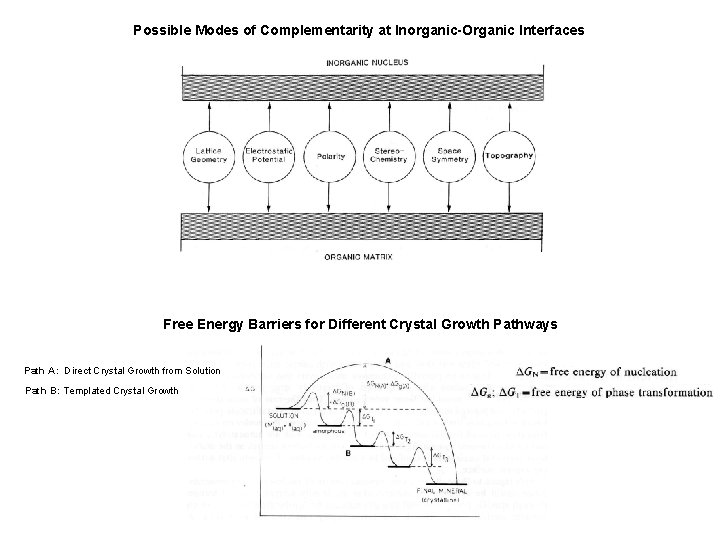
Possible Modes of Complementarity at Inorganic-Organic Interfaces Free Energy Barriers for Different Crystal Growth Pathways Path A: Direct Crystal Growth from Solution Path B: Templated Crystal Growth
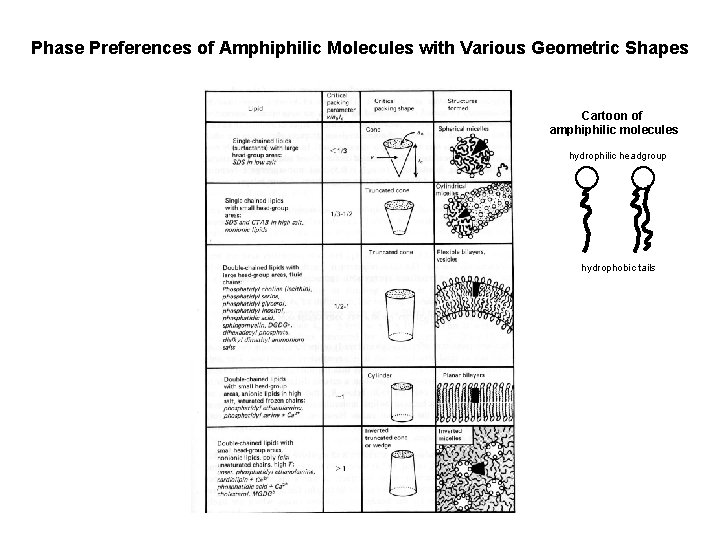
Phase Preferences of Amphiphilic Molecules with Various Geometric Shapes Cartoon of amphiphilic molecules hydrophilic headgroup hydrophobic tails
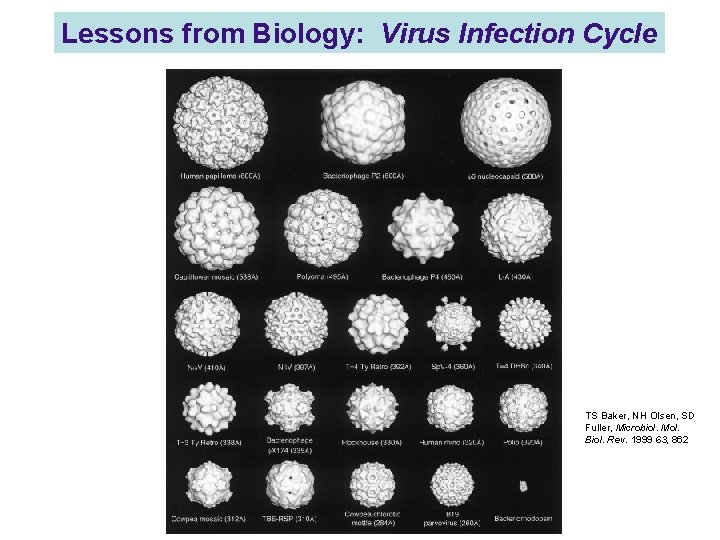
Lessons from Biology: Virus Infection Cycle TS Baker, NH Olsen, SD Fuller, Microbiol. Mol. Biol. Rev. 1999 63, 862 M. G. Rossman, Protein Sci. 1994 3, 1712 -1725
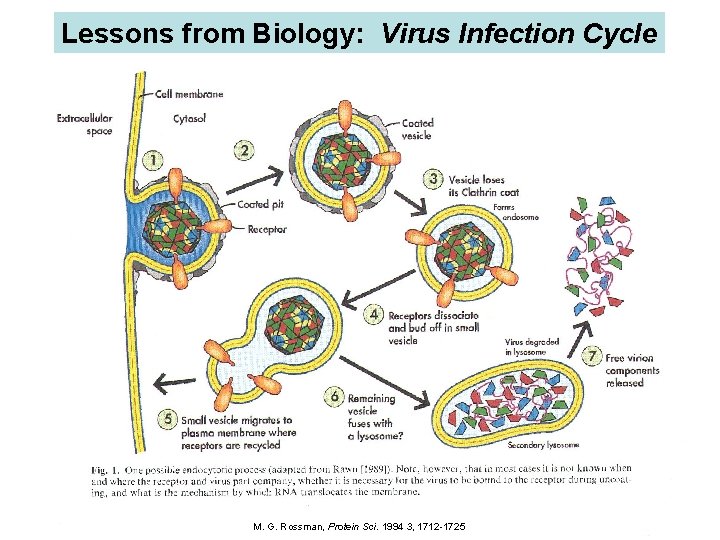
Lessons from Biology: Virus Infection Cycle M. G. Rossman, Protein Sci. 1994 3, 1712 -1725
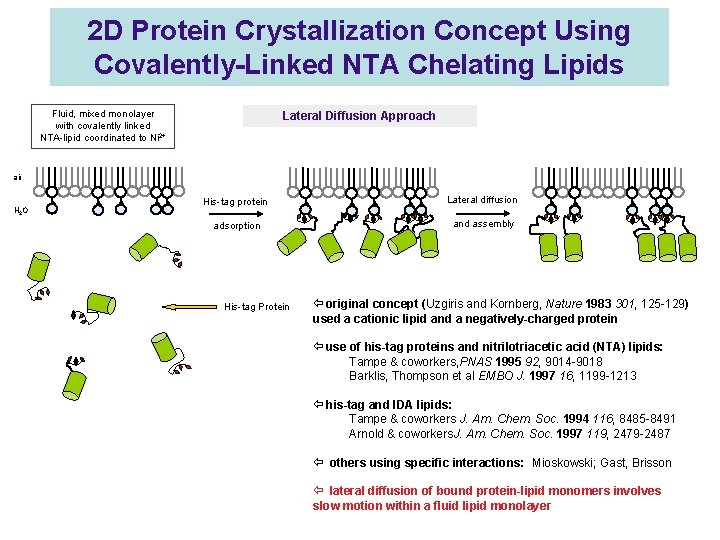
2 D Protein Crystallization Concept Using Covalently-Linked NTA Chelating Lipids Fluid, mixed monolayer with covalently linked NTA-lipid coordinated to Ni 2+ Lateral Diffusion Approach air H 2 O His-tag protein Lateral diffusion adsorption and assembly His-tag Protein ï original concept (Uzgiris and Kornberg, Nature 1983 301, 125 -129) used a cationic lipid and a negatively-charged protein ï use of his-tag proteins and nitrilotriacetic acid (NTA) lipids: Tampe & coworkers, PNAS 1995 92, 9014 -9018 Barklis, Thompson et al EMBO J. 1997 16, 1199 -1213 ï his-tag and IDA lipids: Tampe & coworkers J. Am. Chem. Soc. 1994 116, 8485 -8491 Arnold & coworkers. J. Am. Chem. Soc. 1997 119, 2479 -2487 ï others using specific interactions: Mioskowski; Gast, Brisson ï lateral diffusion of bound protein-lipid monomers involves slow motion within a fluid lipid monolayer
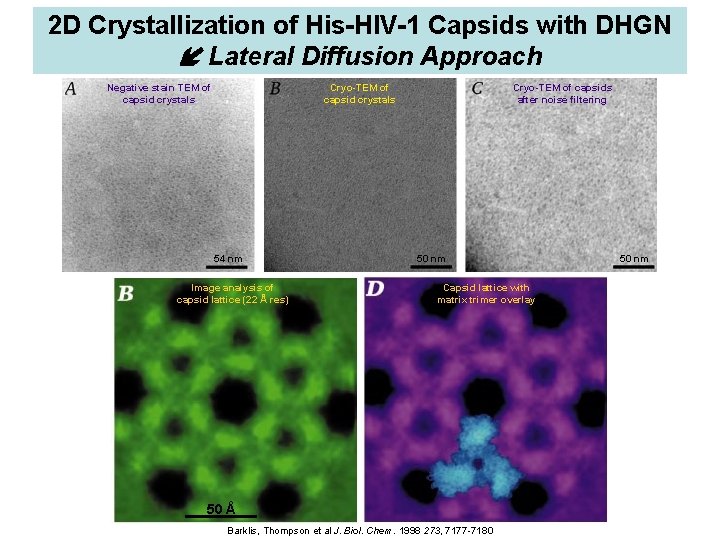
2 D Crystallization of His-HIV-1 Capsids with DHGN Lateral Diffusion Approach Negative stain TEM of capsid crystals Cryo-TEM of capsid crystals 54 nm Image analysis of capsid lattice (22 Å res) Cryo-TEM of capsids after noise filtering 50 nm Capsid lattice with matrix trimer overlay 50 Å Barklis, Thompson et al J. Biol. Chem. 1998 273, 7177 -7180 50 nm
- Slides: 13