
CRYPTOCOCCUS Dr Manoj Kumar Taxonomy Kingdomfungi Division Basidiomycota

CRYPTOCOCCUS Dr Manoj Kumar

Taxonomy • Kingdom-fungi • Division- Basidiomycota • Genus: Cryptococcus • Species: Cryptococcus neoformans • Cryptococcus gatii
Introduction • Cryptococcus neoformans is an encapsulated yeast and an obligate aerobe that can live in both plants and animal • C. neoformans usually infects the lungs or the central nervous system (the brain and spinal cord), but it can also affect other parts of the body.
• Cryptococcus spp. Are fungi in the division basidiomycota. • Two species – c. Neoformans and C. Gattii - commonly affect animals. • Cryptococcus spp. Are dimorphic fungi – occurs in hyphae and yeast form • Mainly occur in the yeast form • Reproduce by budding • Mating produces the perfect (mycelial) stage of the fungus.
Habitat • Found in soil contaminated with pigeon droppings • Cryptococcus neoformans grows easily in pigeon feces, however the birds are not naturally infected due to high body temp

Species: • The genus Cryptococcus includes around 37 species. • Among these, Cryptococcus neoformans and Cryptococcus gatii are the only species that is pathogenic to animals.
Serotypes-Cryptococcus neoformans • It has four serotypes (A to D). • Serotyping is based on capsular agglutination reactions. • All types can cause animal disease • Infection due to serotypes A and D common • Serotypes A and D found in excreta of wild and domesticated birds throughout world • Serotypes B and C found in flowers Eucalyptus camaldulensis • The two varieties, neoformans and gattii are morphologically similar, except that basidiospores of var. neoformans are round and those of var. gattii are more elliptical in shape.

Morphology • The typical vegetative form of C. neoformans is the yeast form with a cell diameter of 2. 5 μm to 10 μm. • A characteristic polysaccharide capsule of variable thickness (130μm) surrounds these yeasts. • In its natural environment the capsule is thinner and the yeast smaller, while thicker capsules tend to be found from infected tissues. • The capsules stain pink by the Meyer’s mucicarmine technique.
Virulence Factors • Virulence ‒ The polysaccharide capsule ‒ Melanin production ‒ Mannitol production ‒ Different enzymes : superoxide dismutase, proteases, phospholipase B, and lysophospholipase the phenoloxidase , urease ‒ The organism's ability to grow at 37°C • These factors increase the degree of pathogenicity of a microbe

Mode of Infection: ‒ Inhalation of the organism( basidiospores) from environment. ‒ No animal to Animal transmission
Species Affected • Clinical cases found in most species of domesticated animals including: ‒ Cattle ‒ Sheep & goats ‒ Buffalo ‒ Dogs ‒ Horses ‒ Donkeys ‒ Pigs
Birds • Clinical cases are uncommon in birds, althoughpsittacines are occasionally affected by C. neoformans var. gattii. • Cryptococcosis seems to be very rare in poultry and pigeons • C. neoformans can temporarily colonize the intestinal tract of some avian species. • This organism is especially prevalent in droppings from columbiform birds (e. g. , pigeons) • Humans can be affected by both C. neoformans and C. gattii.
• C. neoformans and C. gattii have been divided into serotypes, and also into “molecular” (genetic) types. • four serotypes, A through D, based on the capsular antigens.
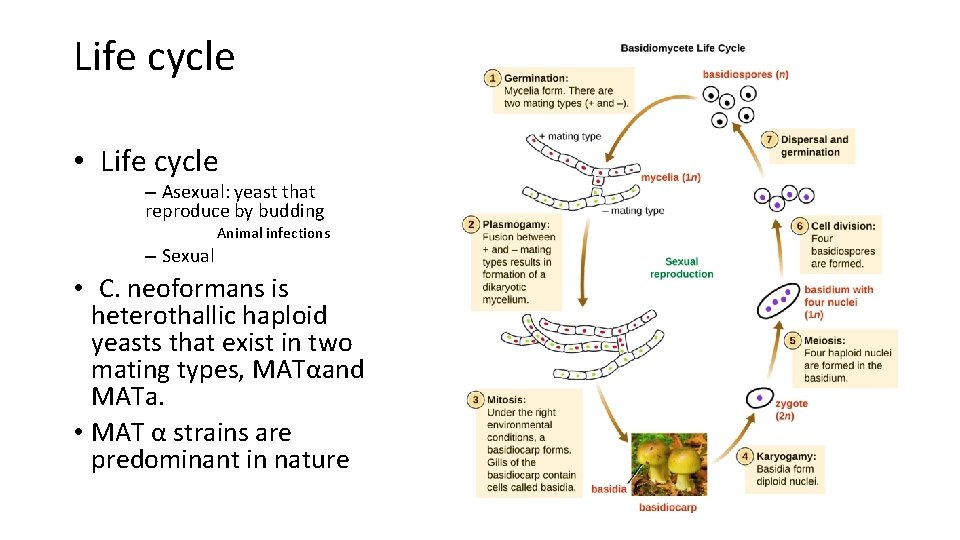
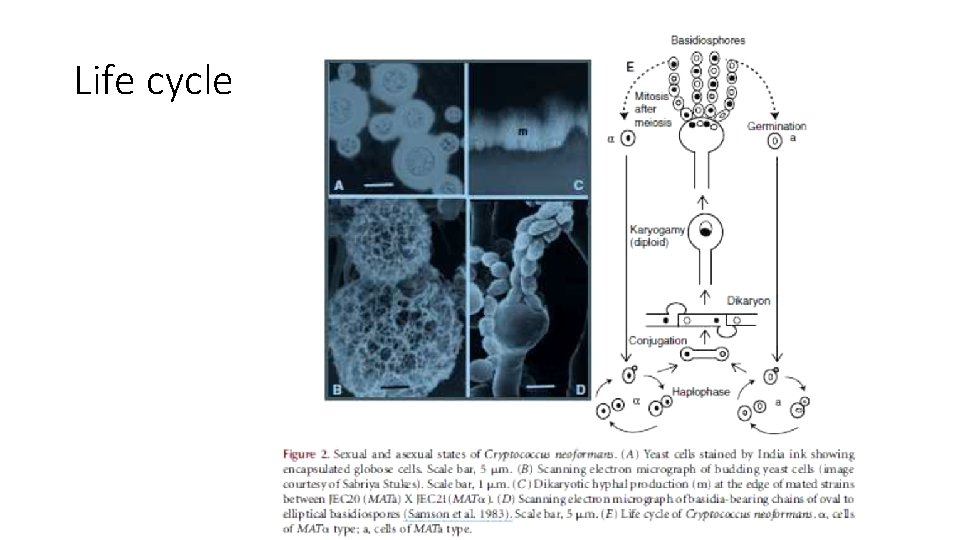
Life cycle • Life cycle – Asexual: yeast that reproduce by budding Animal infections – Sexual • C. neoformans is heterothallic haploid yeasts that exist in two mating types, MATαand MATa. • MAT α strains are predominant in nature
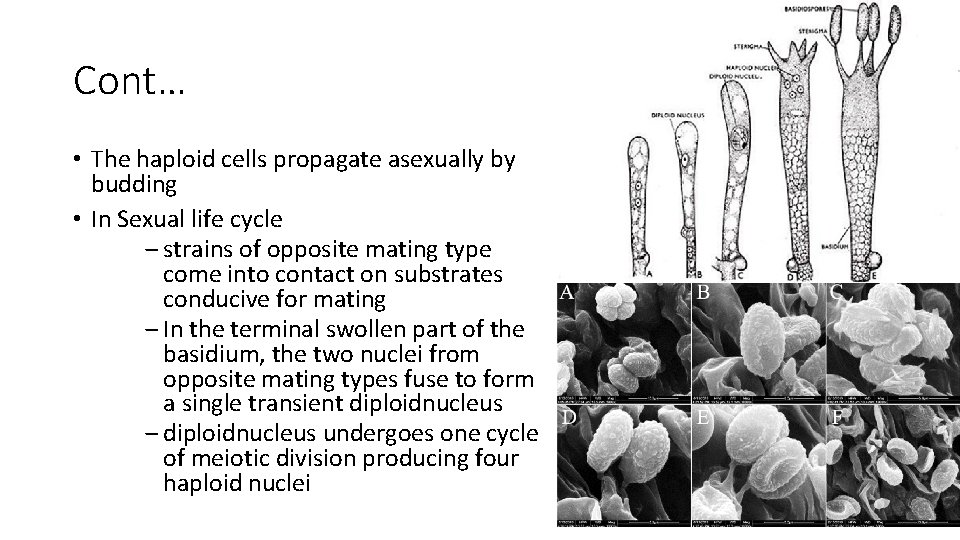
Cont… • The haploid cells propagate asexually by budding • In Sexual life cycle ‒ strains of opposite mating type come into contact on substrates conducive for mating ‒ In the terminal swollen part of the basidium, the two nuclei from opposite mating types fuse to form a single transient diploidnucleus ‒ diploidnucleus undergoes one cycle of meiotic division producing four haploid nuclei
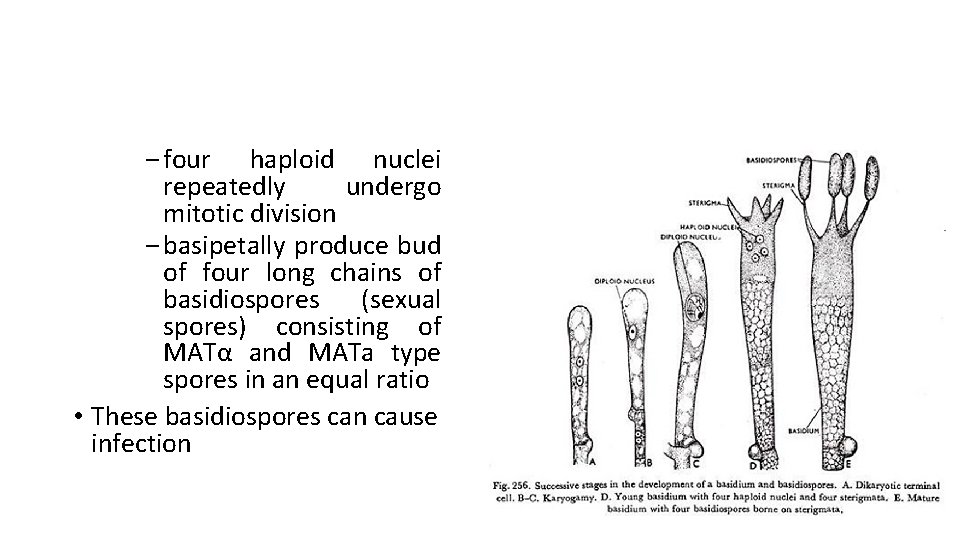
‒ four haploid nuclei repeatedly undergo mitotic division ‒ basipetally produce bud of four long chains of basidiospores (sexual spores) consisting of MATα and MATa type spores in an equal ratio • These basidiospores can cause infection
Life cycle
Pathogenesis • Cryptococcus spp. are almost always acquired from environmental sources, mainly by inhalation. • organisms usually replicate initially in the lungs • primary colonization might also occur in the nasal cavity and sinuses of some animals. • Cryptococcal organisms occasionally enter the body through breaks in the skin, • In cattle with cryptococcal mastitis, they enter the mammary gland through the teat. • Other routes (e. g. , ascending infections via the urinary tract) • Latent infections occurs n animals: small numbers of viable organisms, encapsulated in granulomas in the lungs or lymph nodes • Both of these organisms grow as yeasts inside the body, and reproduce by budding.
Transmission • Direct transmission between animals in unusual circumstances (although infections can be acquired from bird droppings).
Infections in Animals • Clinical Signs • Ruminants ‒ Pulmonary infections, CNS involvement and cryptococcal ‒ mastitis have been reported in cattle. ‒ Mastitis: ‒ clinical signs may include ‒ Anorexia ‒ decreased milk production ‒ enlargement of the supramammary lymph nodes ‒ affected quarters are usually swollen and firm ‒ milk may be viscid, mucoid and grayish-white, or it may be watery with flakes.
Birds • Psittacine birds have signs of an upper respiratory tract obstruction • Often have proliferative lesions, which may resemble neoplasia, around the beak or nares • Cryptococcosis - rare in pigeons
Diagnostic Tests • Samples ‒ Blood, or in other samples from biopsies ‒ Impression smears ‒ Aspirates or swabs of affected sites ‒ Nasal secretions ‒ Bronchial washings ‒ Skin exudates ‒ Csf ‒ Urine
Observation under microscope • Observation of clinical samples under microscope after staining • C. neoformans and C. gattii are round to oval yeasts, surrounded by large capsules that stain strongly with Mayer’s mucicarmine. • In an India ink preparation, the capsule appears as a clear halo around the yeast cell. • latex agglutination test can used to detect C. neoformans capsular antigens in blood, CSF or urine.
Confirmatory diagnosis • By culture. On fungal media such as sabouraud dextrose agar without cycloheximide. • Colonies usually appear within 2 to 5 days • The organism is identified by its appearance, ability to grow at 37°C and biochemical tests • By molecular methods such as DNA sequencing; • By commercial yeast identification systems.

Thanks
- Slides: 25