
Cryotherapy Addition of cryotherapy to intermittent compression has
- Slides: 8
Cryotherapy • Addition of cryotherapy to intermittent compression has shown the best results in the reduction of post acute injury edema
Intermittent Compression Treatment Parameters • • • Inflation Pressure On/Off Time Sequence Total Treatment Time
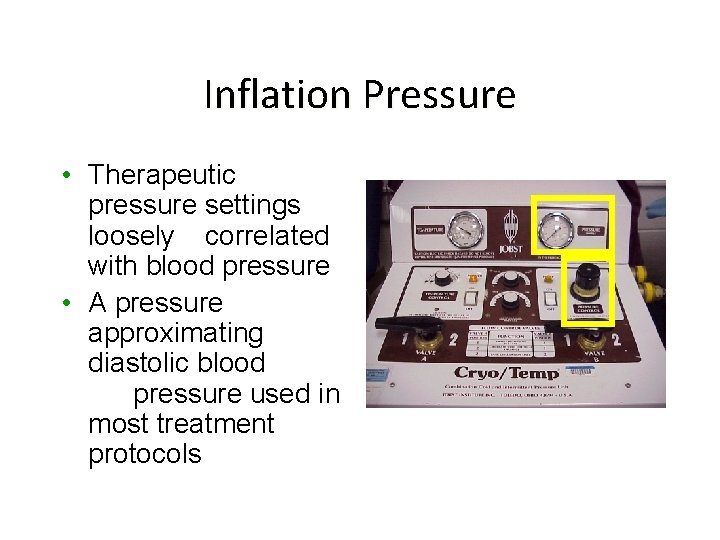
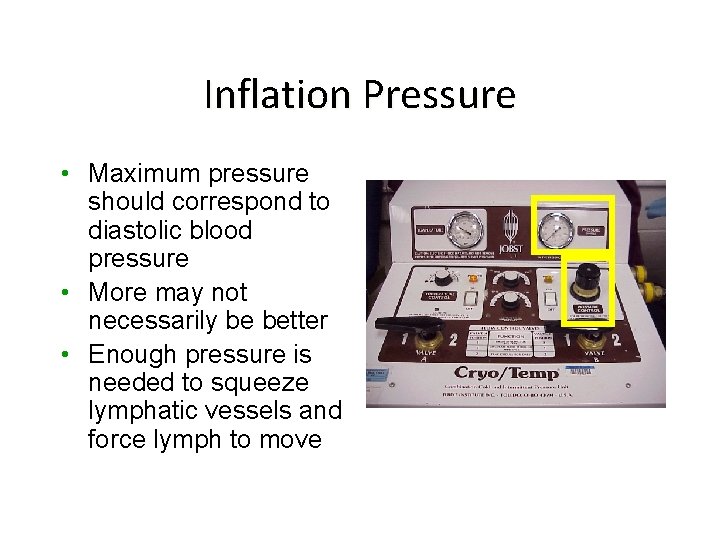
Inflation Pressure • Therapeutic pressure settings loosely correlated with blood pressure • A pressure approximating diastolic blood pressure used in most treatment protocols
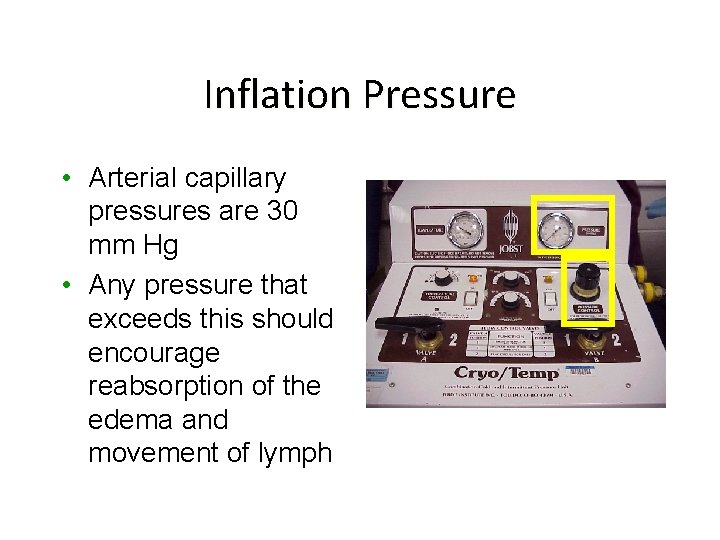
Inflation Pressure • Arterial capillary pressures are 30 mm Hg • Any pressure that exceeds this should encourage reabsorption of the edema and movement of lymph
Inflation Pressure • Maximum pressure should correspond to diastolic blood pressure • More may not necessarily be better • Enough pressure is needed to squeeze lymphatic vessels and force lymph to move
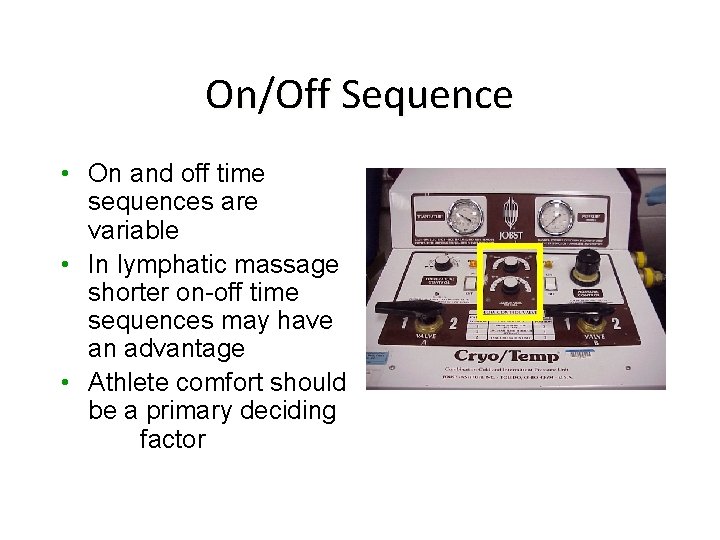
On/Off Sequence • On and off time sequences are variable • In lymphatic massage shorter on-off time sequences may have an advantage • Athlete comfort should be a primary deciding factor
Total Treatment Time • Clinical studies show significant gains in limb volume reduction after 30 minutes of compression • A 10 - to 30 -minute treatment seems adequate unless edema is overwhelming in volume or is resistant to treatment • More treatment times per day may also be an advantage in controlling and reducing edema
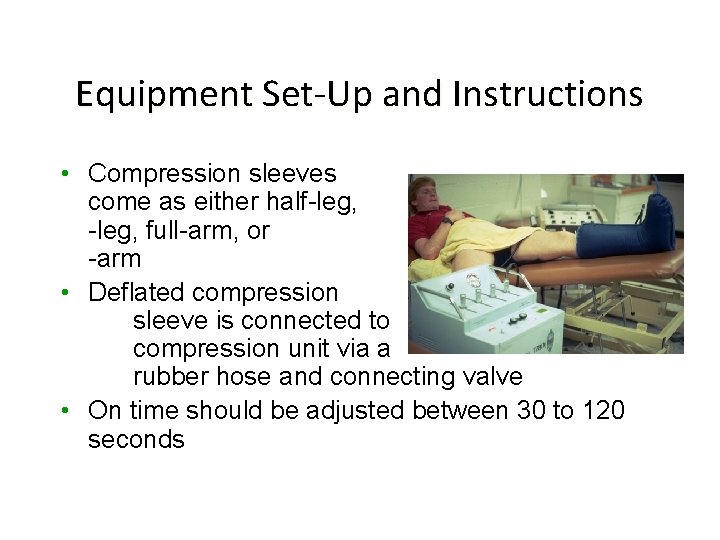
Equipment Set-Up and Instructions • Compression sleeves come as either half-leg, full-arm, or half -arm • Deflated compression sleeve is connected to compression unit via a rubber hose and connecting valve • On time should be adjusted between 30 to 120 seconds