
Cryogenic Distillation Column Mass Transfer ESCOVER JHEAL UZ
- Slides: 25
Cryogenic Distillation Column Mass Transfer ESCOVER , JHEAL UZ J 5 CH E-A GR OU P 5
Cryogenic distillation v. Fractional distillation done under cryogenic or very low temperature in order to separate components from one another. v. Most common method used for air separation process since air is a gaseous substance.
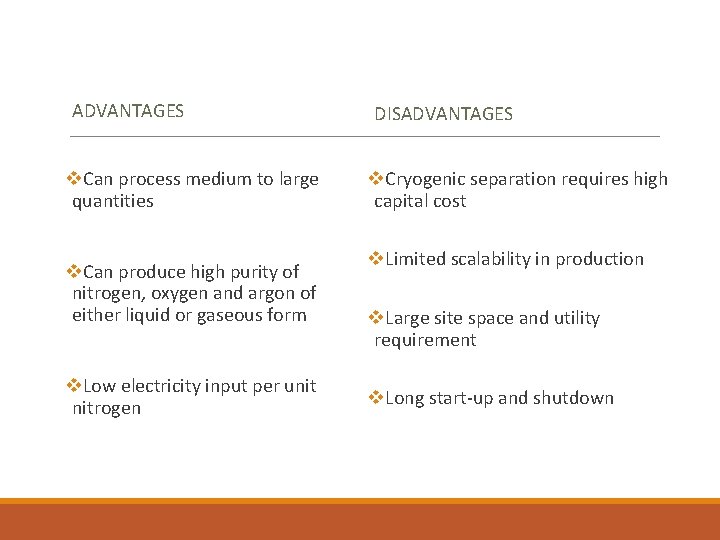
ADVANTAGES v. Can process medium to large quantities v. Can produce high purity of nitrogen, oxygen and argon of either liquid or gaseous form v. Low electricity input per unit nitrogen DISADVANTAGES v. Cryogenic separation requires high capital cost v. Limited scalability in production v. Large site space and utility requirement v. Long start-up and shutdown
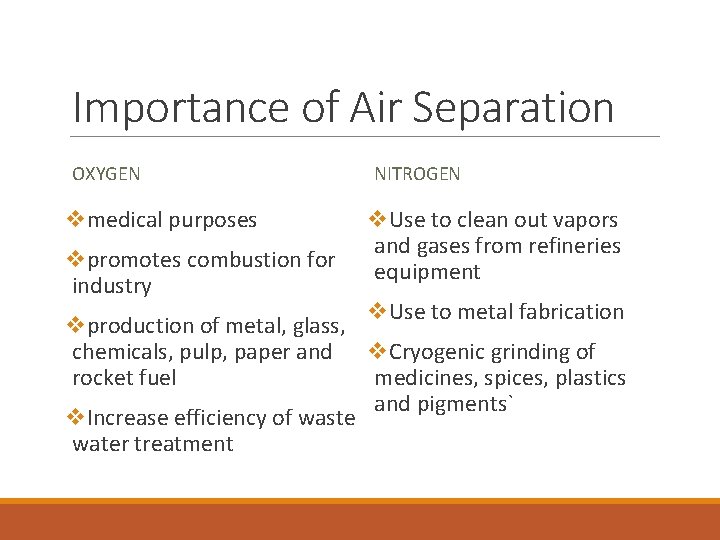
Importance of Air Separation OXYGEN vmedical purposes vpromotes combustion for industry NITROGEN v. Use to clean out vapors and gases from refineries equipment v. Use to metal fabrication vproduction of metal, glass, chemicals, pulp, paper and v. Cryogenic grinding of rocket fuel medicines, spices, plastics and pigments` v. Increase efficiency of waste water treatment
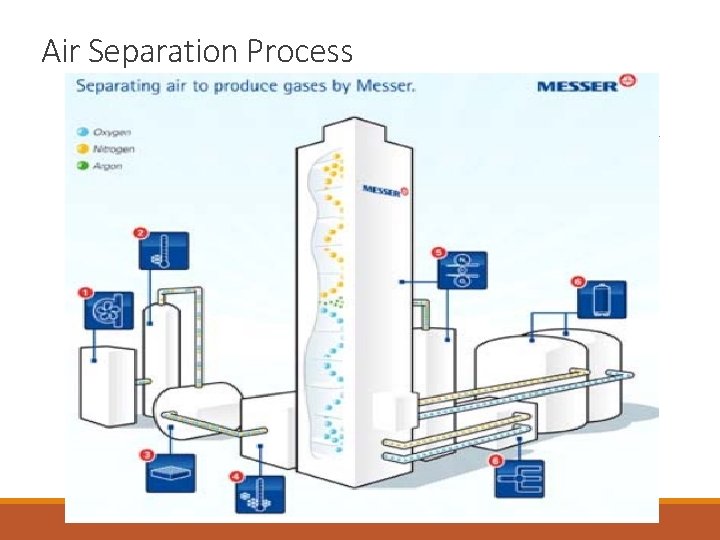
Air Separation Process
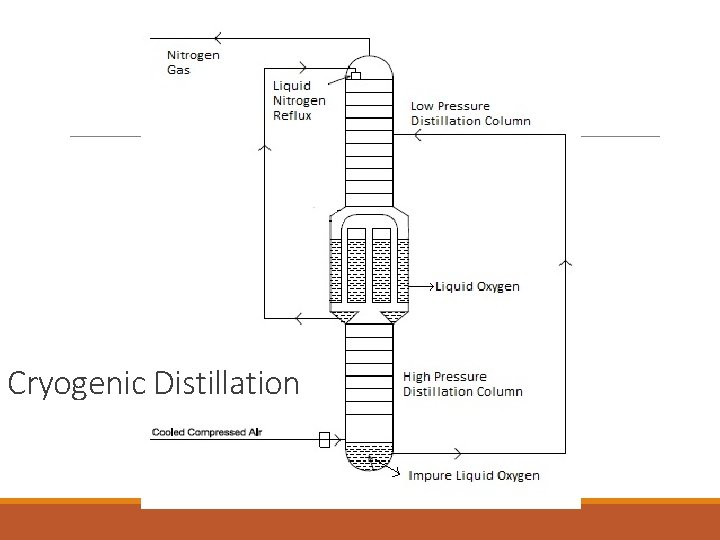
Cryogenic Distillation
Objective vto effectively separate components of air using air separation through cryogenic distillation. v. Desired products to consider are of high purity of gaseous nitrogen and liquid oxygen only.
Assumptions v. Mc. Cabe-Thiele method is used thus equilibrium for all plates are assumed, therefore leaving streams are saturated v. No maintenance access way or manhole are to be used. For safety purposes, pressure relief valves, pressure gauge and sensors will be placed for monitoring. v. Equipment under cryogenic conditions are inside a cold box for insulation using perlite and therefore negligible heat losses are obtained.
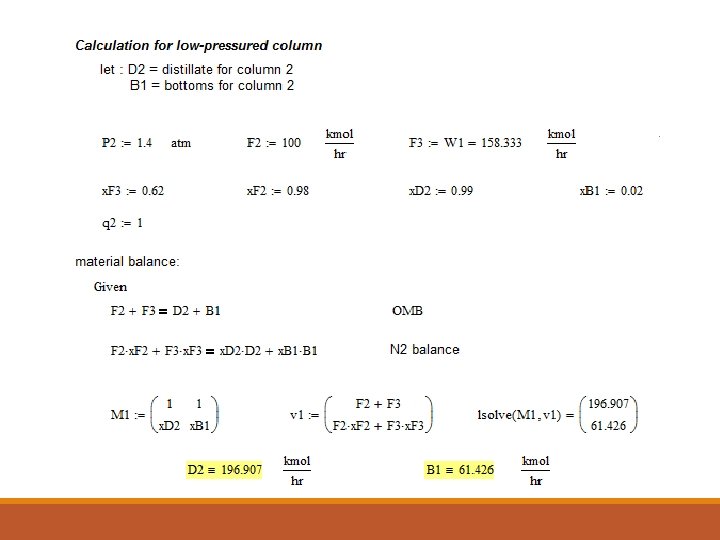
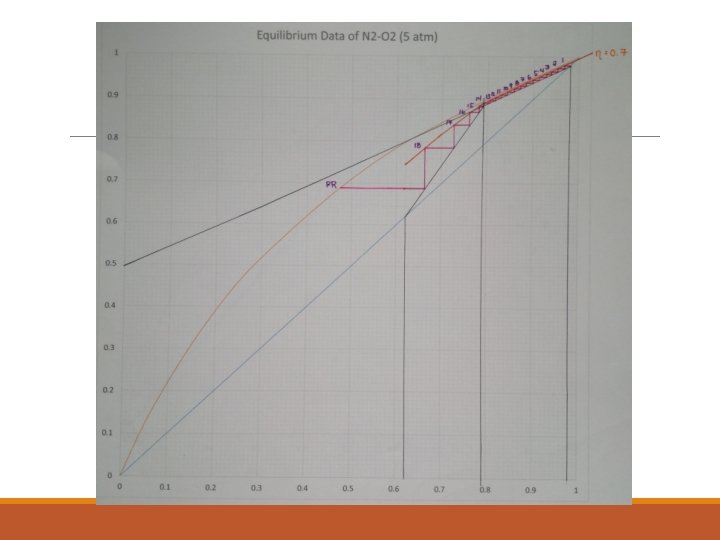
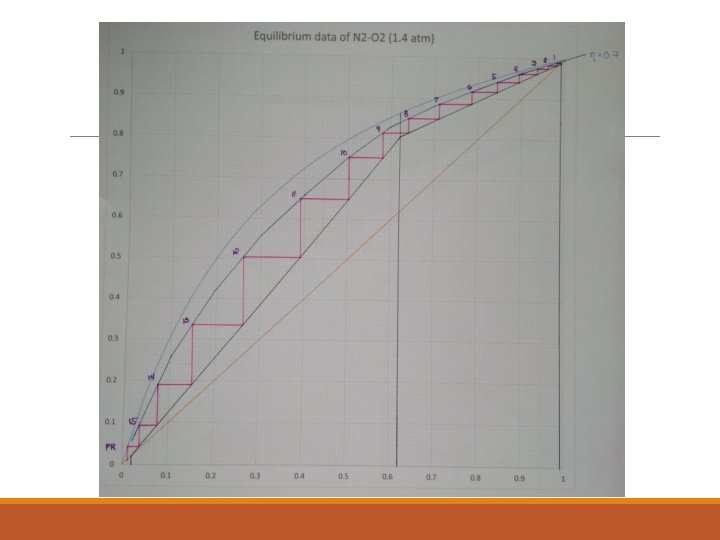
v. The column requires refrigeration cycle and will occur at the condenser-reboiler system found at the middle of the high pressure and low pressure column. v. The process will consider oxygen and nitrogen gases only thus argon will be accounted to the oxygen concentration. v. The equilibrium data to be used will be for N 2 -O 2 equilibrium data at a pressure of 5 atm and 1. 4 atm.
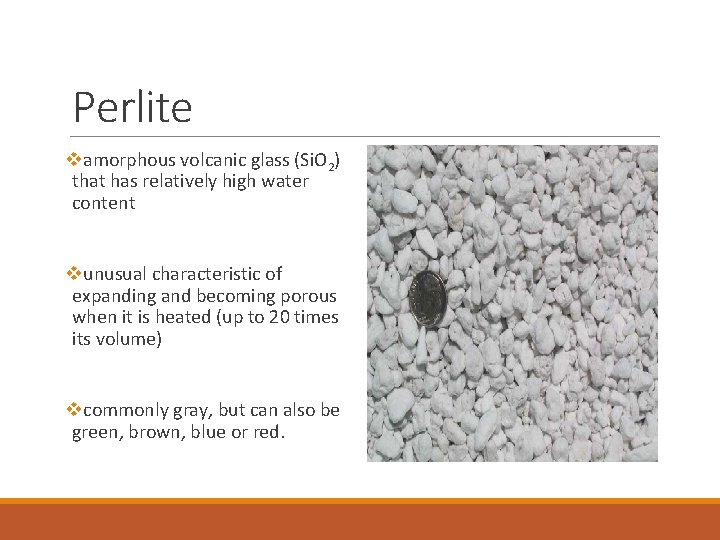
Perlite vamorphous volcanic glass (Si. O 2) that has relatively high water content vunusual characteristic of expanding and becoming porous when it is heated (up to 20 times its volume) vcommonly gray, but can also be green, brown, blue or red.
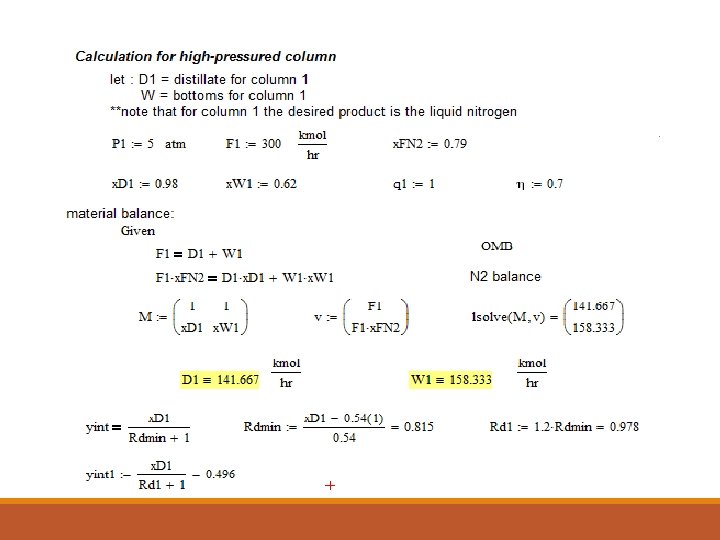
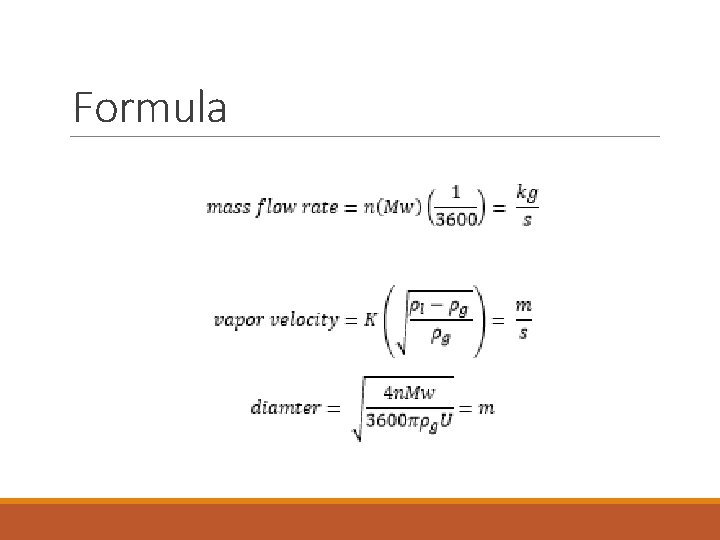
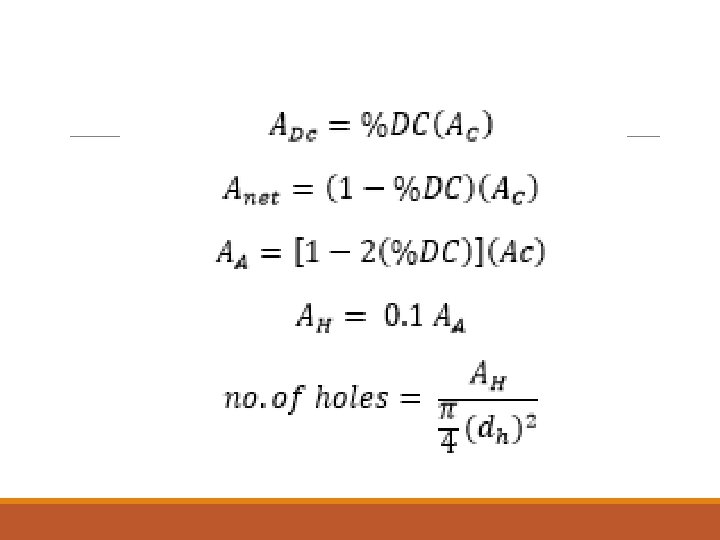
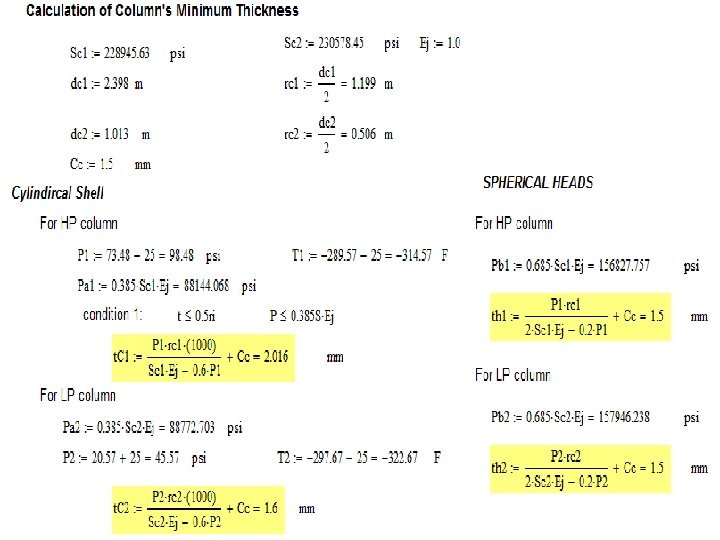
Formula
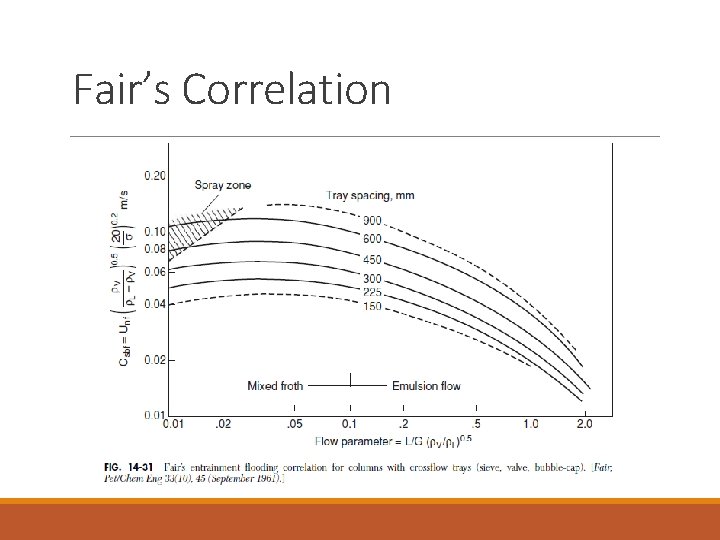
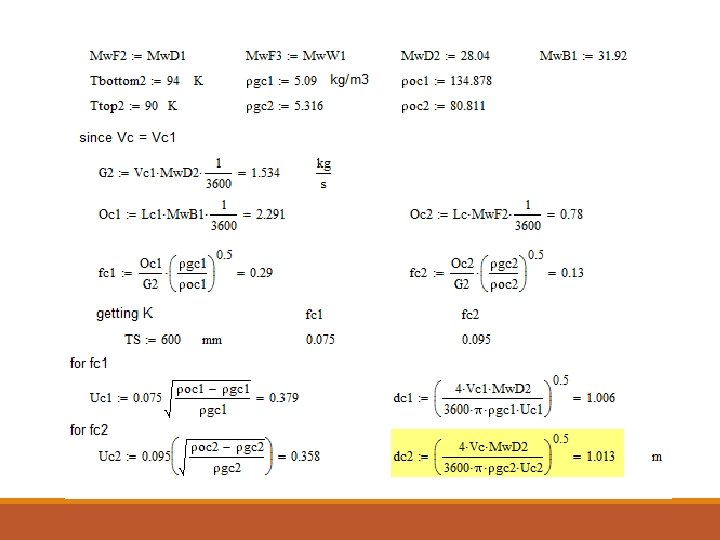
Fair’s Correlation
Material of Construction Austenitic Stainless Steel (A 304) vstainless steel alloy that are strong, light, ductile, aesthetically pleasing and readily available in a variety of forms vexhibited good strength and toughness when exposed to cryogenic conditions v. Accounts for half of the total production of stainless steel along with A 304 L