
CRUSTACEANS CRAYFISH DISSECTION NAMING CRAYFISH Kingdom Phylum ANIMALIA
- Slides: 35
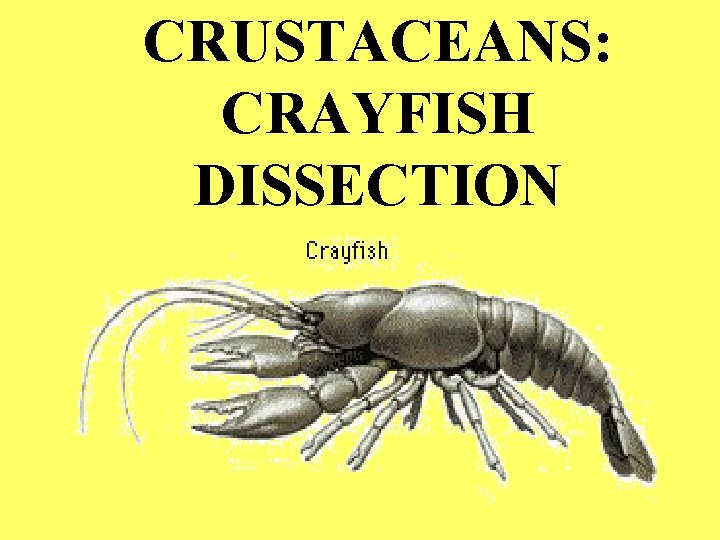
CRUSTACEANS: CRAYFISH DISSECTION
NAMING CRAYFISH Kingdom: Phylum: ANIMALIA Arthropoda “jointed foot” CLASS: CRUSTACEA crusta = “flexible shell”
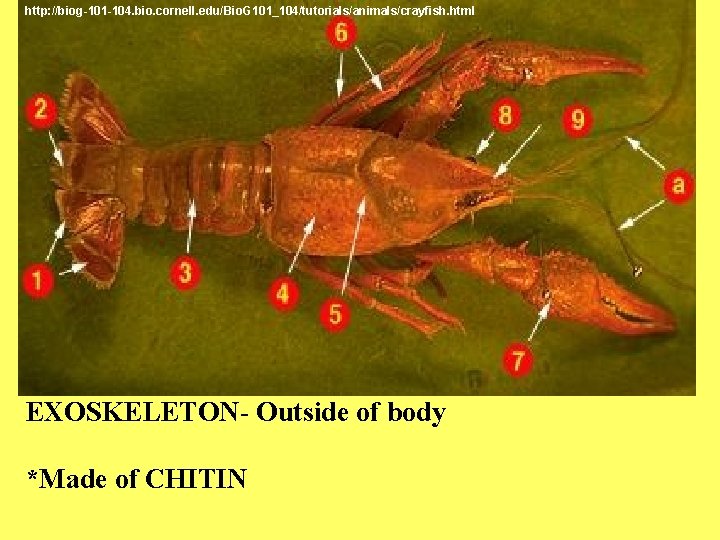
http: //biog-101 -104. bio. cornell. edu/Bio. G 101_104/tutorials/animals/crayfish. html EXOSKELETON- Outside of body *Made of CHITIN
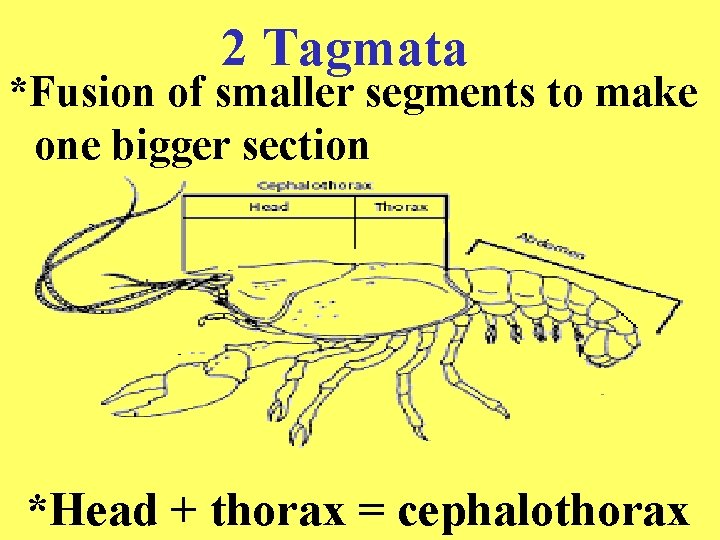
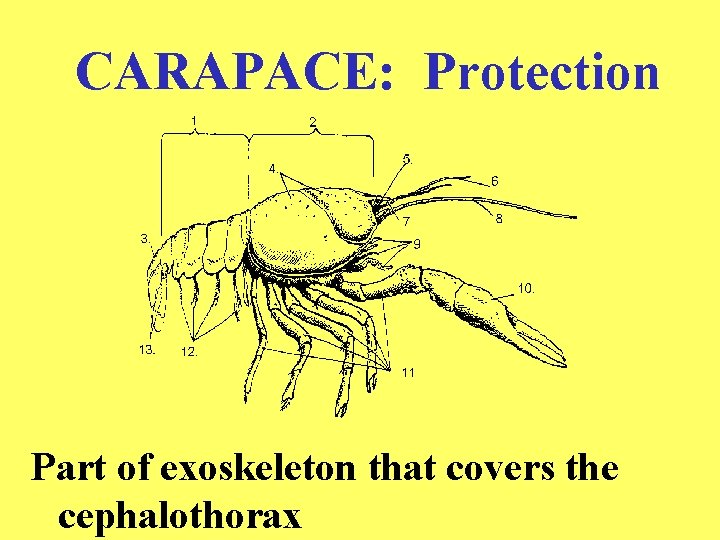
2 Tagmata *Fusion of smaller segments to make one bigger section *Head + thorax = cephalothorax
CARAPACE: Protection Part of exoskeleton that covers the cephalothorax
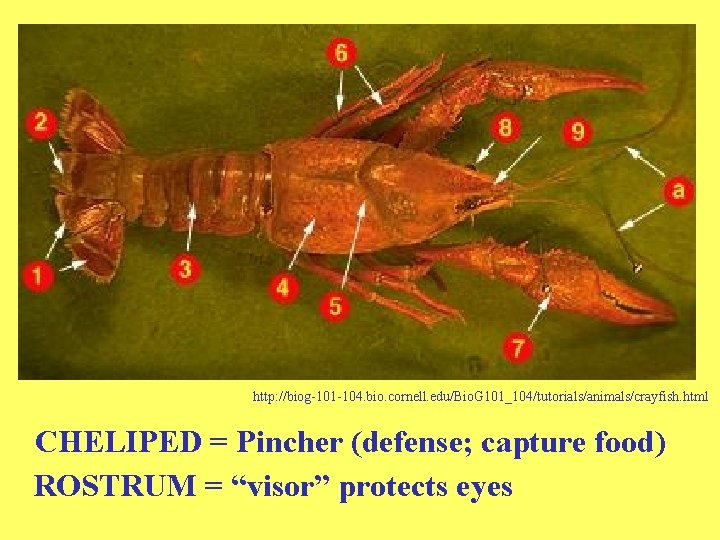
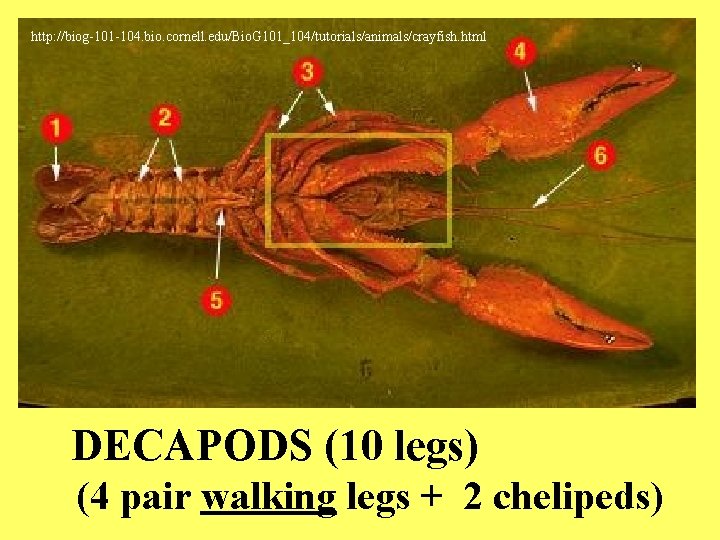
http: //biog-101 -104. bio. cornell. edu/Bio. G 101_104/tutorials/animals/crayfish. html CHELIPED = Pincher (defense; capture food) ROSTRUM = “visor” protects eyes
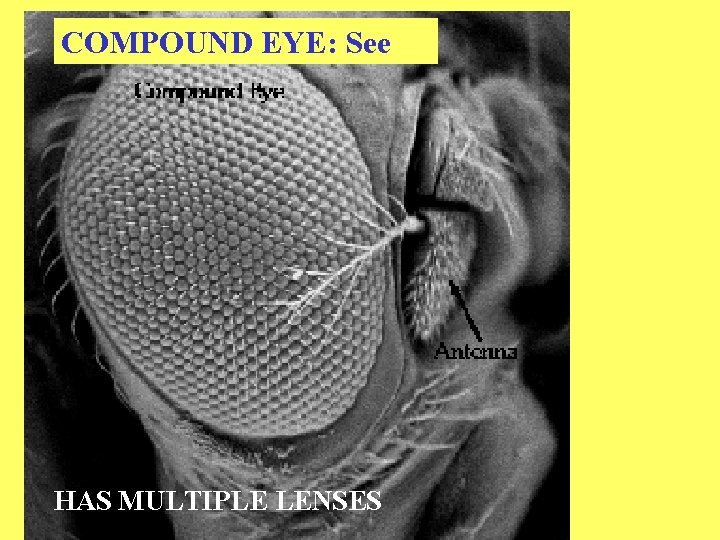
COMPOUND EYE: See HAS MULTIPLE LENSES
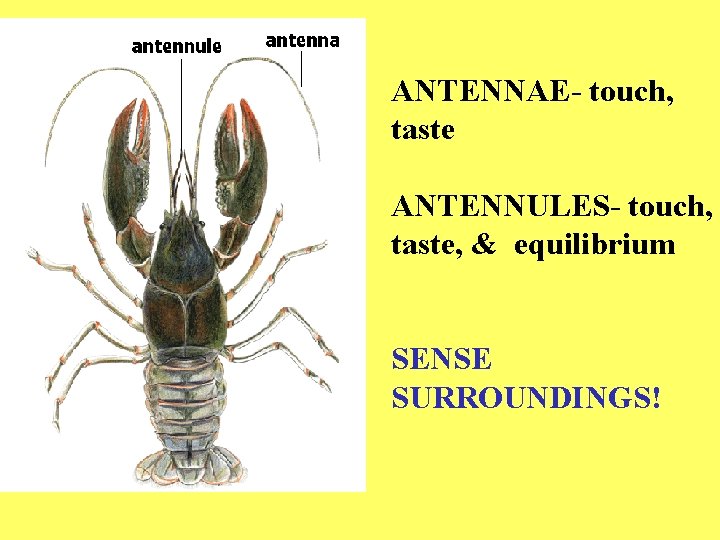
ANTENNAE- touch, taste ANTENNULES- touch, taste, & equilibrium SENSE SURROUNDINGS!
http: //biog-101 -104. bio. cornell. edu/Bio. G 101_104/tutorials/animals/crayfish. html DECAPODS (10 legs) (4 pair walking legs + 2 chelipeds)
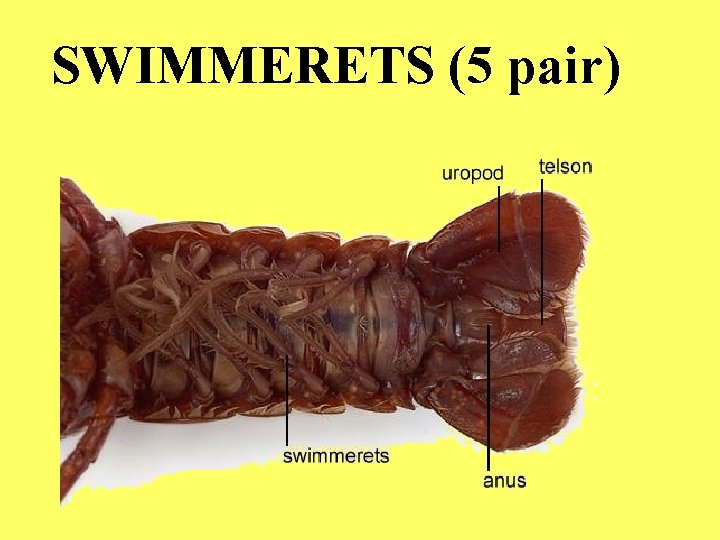
SWIMMERETS (5 pair)
SWIMMERETS HELP with REPRODUCTION Males – transfer sperm Females – carry eggs/young Create water currents
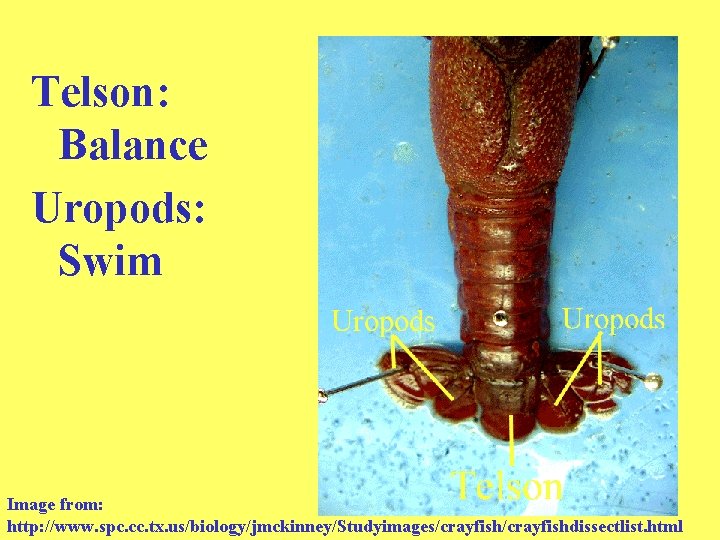
Telson: Balance Uropods: Swim Image from: http: //www. spc. cc. tx. us/biology/jmckinney/Studyimages/crayfishdissectlist. html
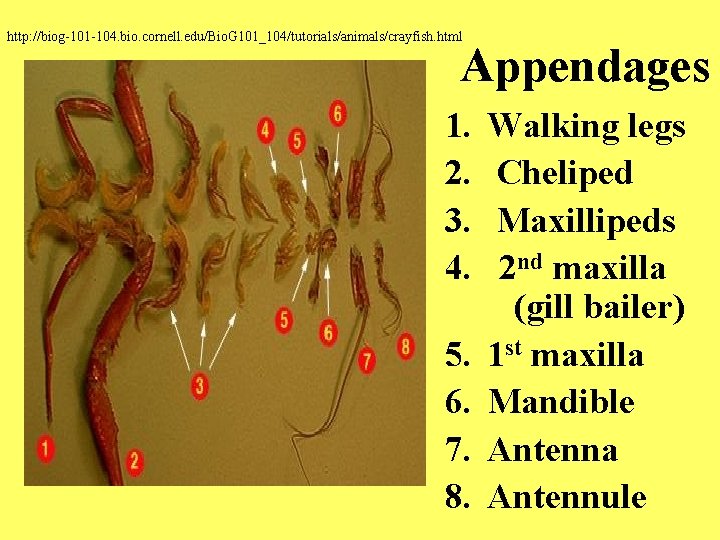
http: //biog-101 -104. bio. cornell. edu/Bio. G 101_104/tutorials/animals/crayfish. html Appendages 1. Walking legs 2. Cheliped 3. Maxillipeds 4. 2 nd maxilla (gill bailer) 5. 1 st maxilla 6. Mandible 7. Antenna 8. Antennule
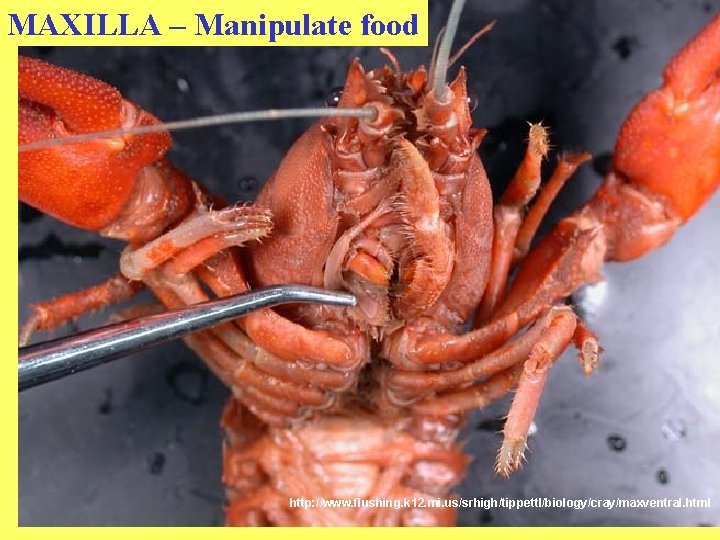
MAXILLA – Manipulate food http: //www. flushing. k 12. mi. us/srhigh/tippettl/biology/cray/maxventral. html
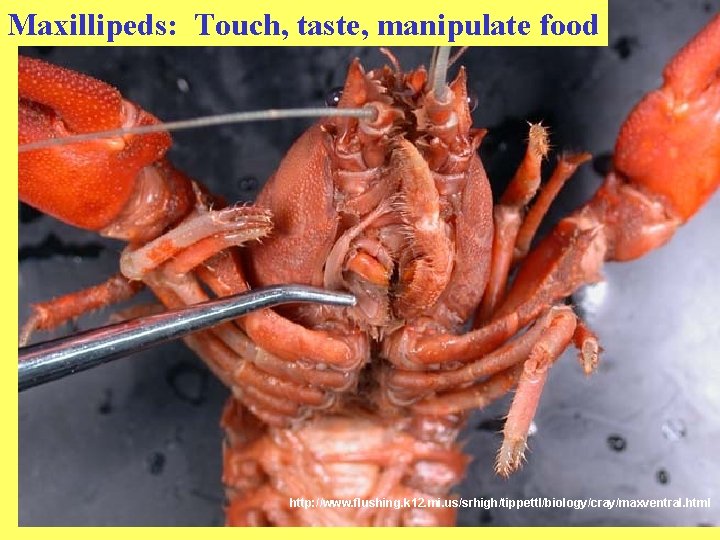
Maxillipeds: Touch, taste, manipulate food http: //www. flushing. k 12. mi. us/srhigh/tippettl/biology/cray/maxventral. html
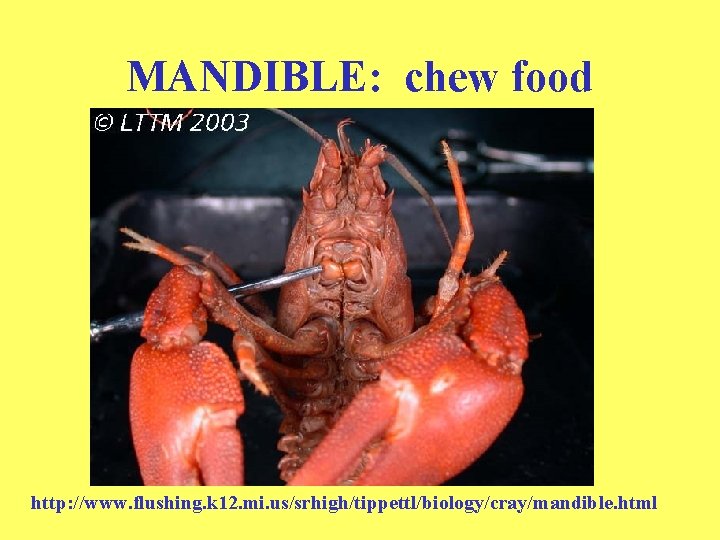
MANDIBLE: chew food http: //www. flushing. k 12. mi. us/srhigh/tippettl/biology/cray/mandible. html
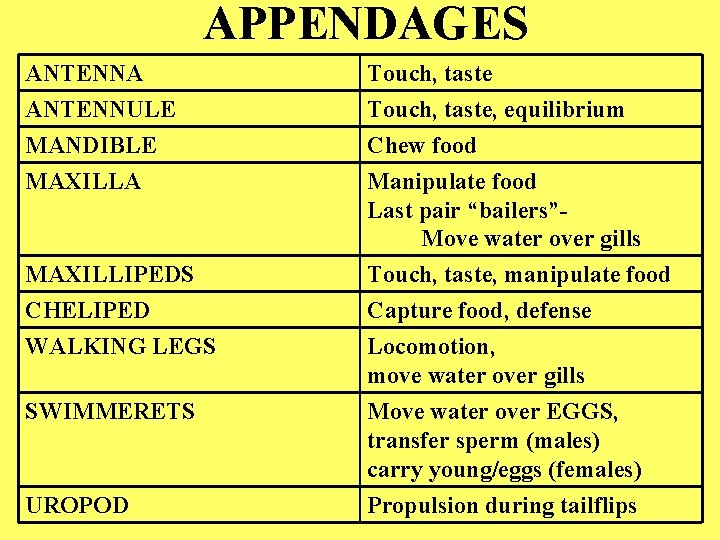
APPENDAGES ANTENNA ANTENNULE MANDIBLE MAXILLA Touch, taste, equilibrium Chew food Manipulate food Last pair “bailers”- Move water over gills MAXILLIPEDS CHELIPED WALKING LEGS Touch, taste, manipulate food Capture food, defense Locomotion, move water over gills SWIMMERETS Move water over EGGS, transfer sperm (males) carry young/eggs (females) Propulsion during tailflips UROPOD
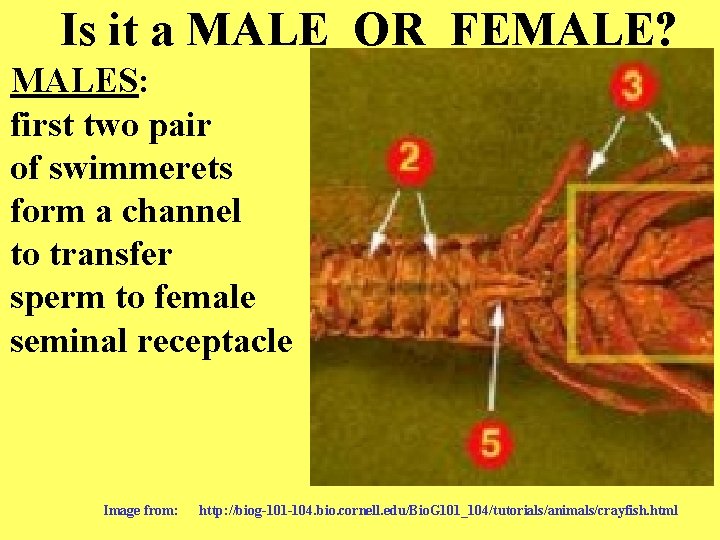
Is it a MALE OR FEMALE? MALES: first two pair of swimmerets form a channel to transfer sperm to female seminal receptacle Image from: http: //biog-101 -104. bio. cornell. edu/Bio. G 101_104/tutorials/animals/crayfish. html
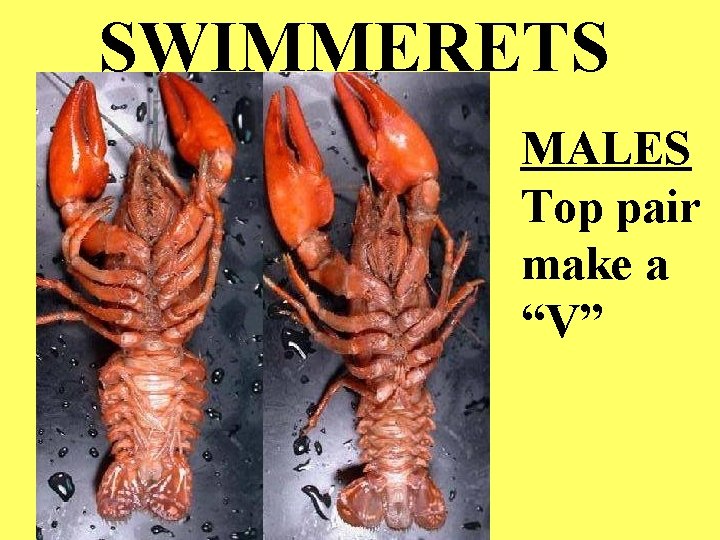
SWIMMERETS MALES Top pair make a “V”
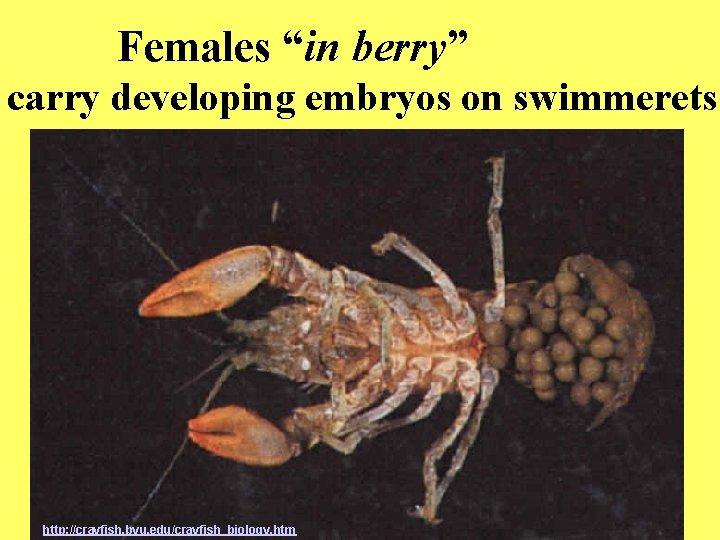
Females “in berry” carry developing embryos on swimmerets http: //crayfish. byu. edu/crayfish_biology. htm
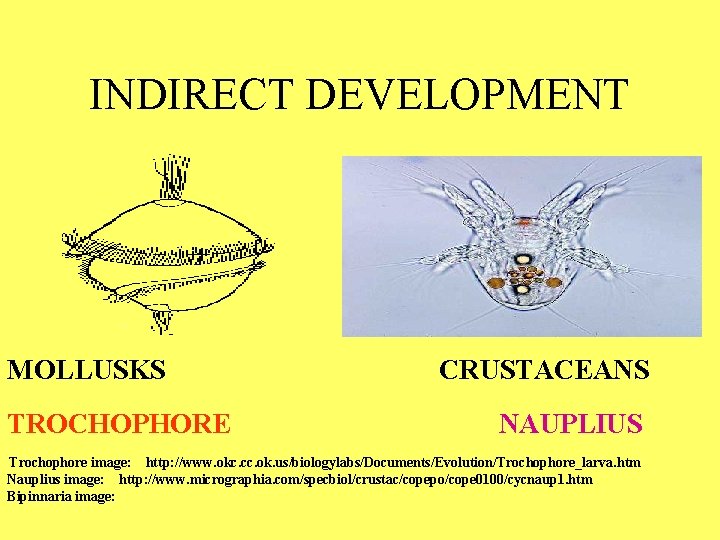
REPRODUCTIVE SEPARATE SEXES Male and Female EXTERNAL FERTILIZATION sperm & eggs join outside body INDIRECT DEVELOPMENT Starts as a LARVA
INDIRECT DEVELOPMENT MOLLUSKS TROCHOPHORE CRUSTACEANS NAUPLIUS Trochophore image: http: //www. okc. cc. ok. us/biologylabs/Documents/Evolution/Trochophore_larva. htm Nauplius image: http: //www. micrographia. com/specbiol/crustac/copepo/cope 0100/cycnaup 1. htm Bipinnaria image:
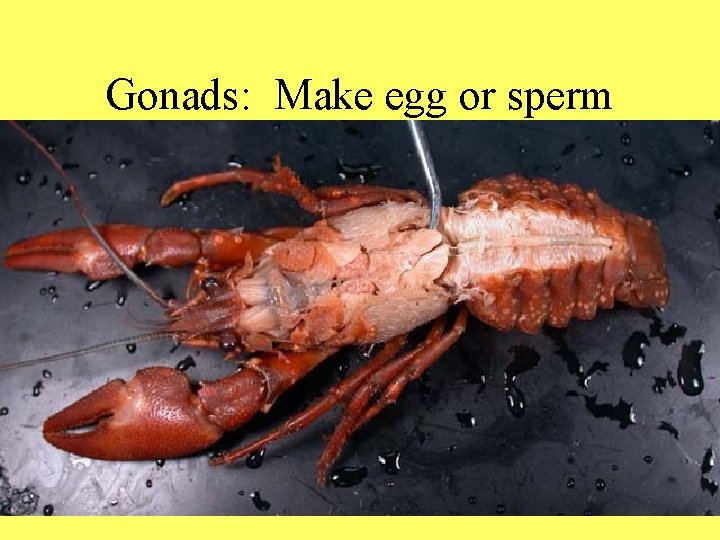
Gonads: Make egg or sperm
Females: OVARIES – make eggs SEMINAL RECEPTACLES-store received sperm Males: TESTES – make sperm VAS DEFERENS- tubules inside that carry sperm from testes to exit opening ENDOCRINE SYSTEM: controls sexual development Also: molting, heart rate
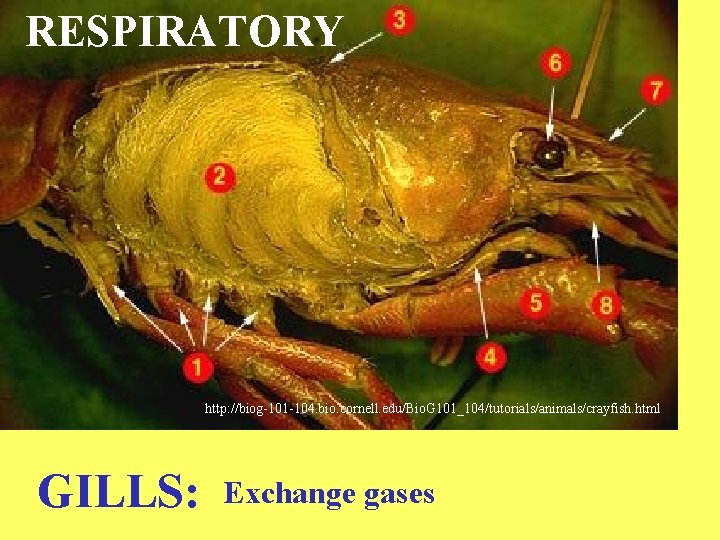
RESPIRATORY http: //biog-101 -104. bio. cornell. edu/Bio. G 101_104/tutorials/animals/crayfish. html GILLS: Exchange gases
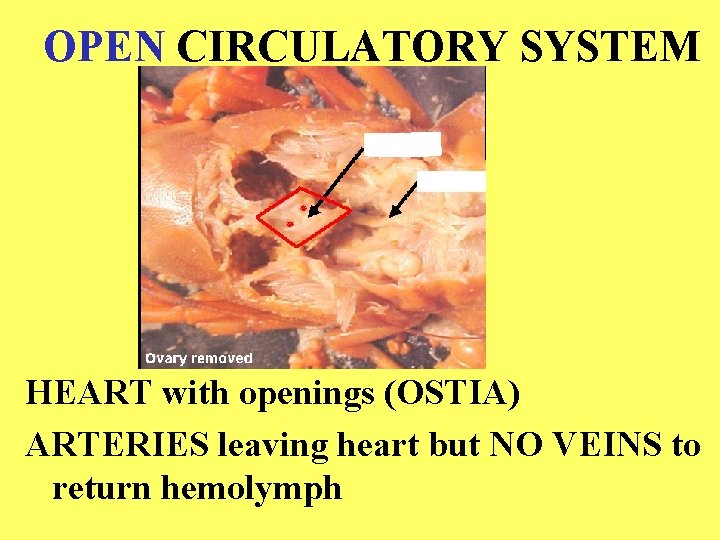
OPEN CIRCULATORY SYSTEM HEART with openings (OSTIA) ARTERIES leaving heart but NO VEINS to return hemolymph
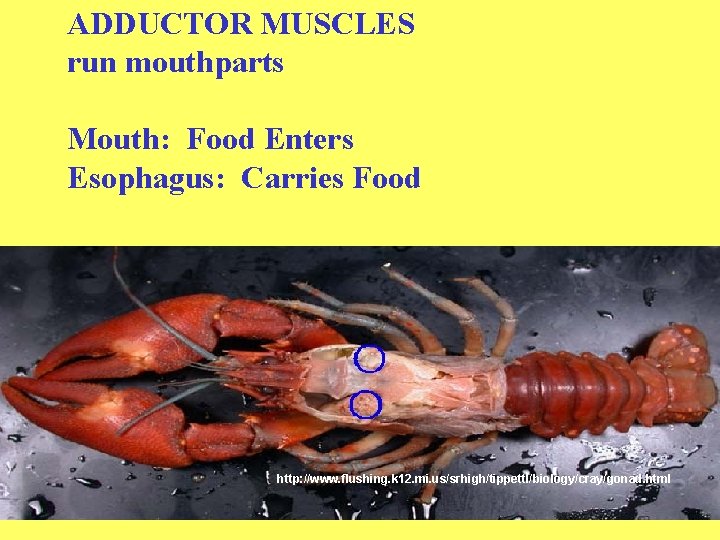
ADDUCTOR MUSCLES run mouthparts Mouth: Food Enters Esophagus: Carries Food http: //www. flushing. k 12. mi. us/srhigh/tippettl/biology/cray/gonad. html
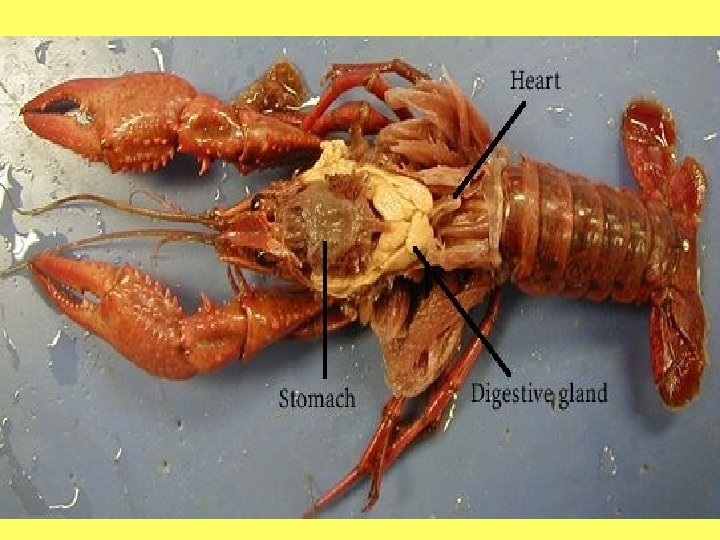
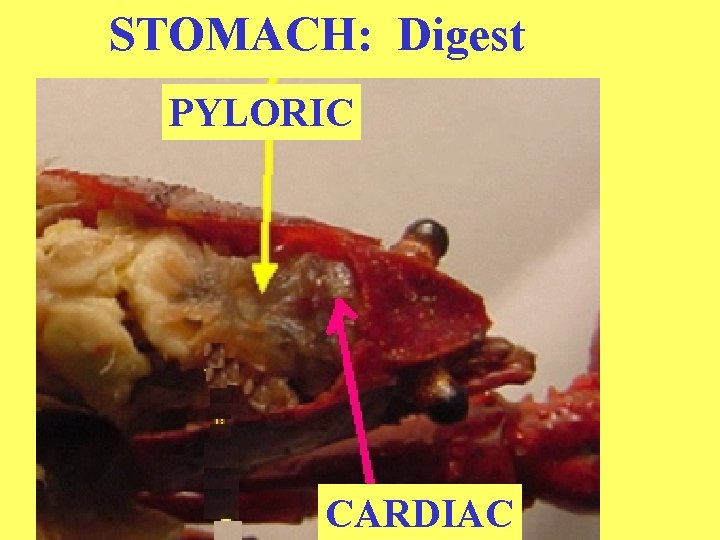
STOMACH: Digest PYLORIC CARDIAC
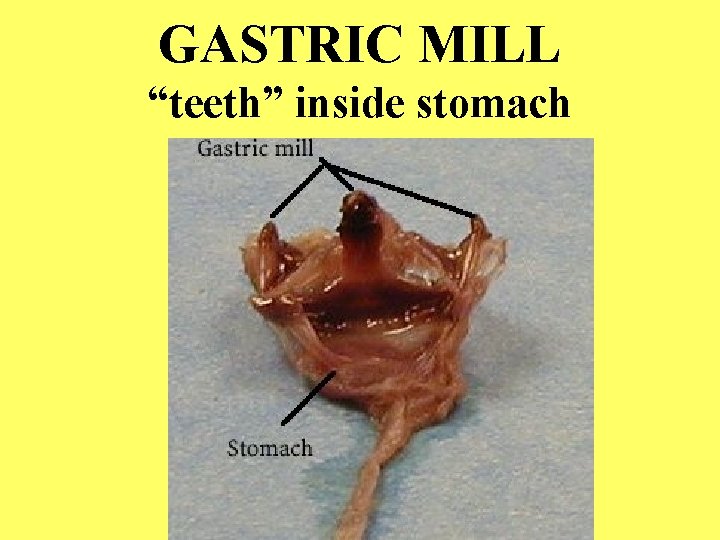
GASTRIC MILL “teeth” inside stomach
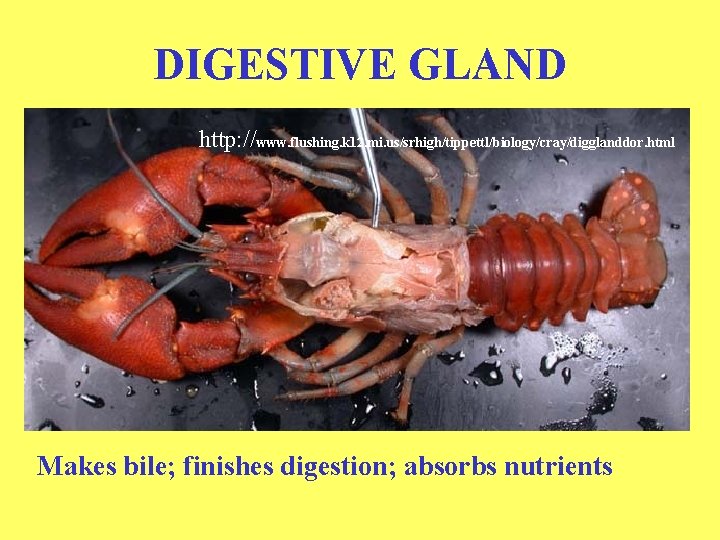
DIGESTIVE GLAND http: //www. flushing. k 12. mi. us/srhigh/tippettl/biology/cray/digglanddor. html Makes bile; finishes digestion; absorbs nutrients
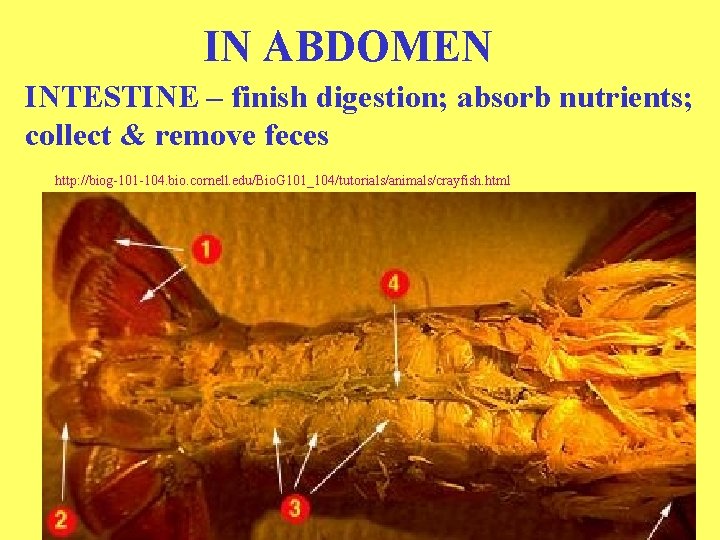
IN ABDOMEN INTESTINE – finish digestion; absorb nutrients; collect & remove feces http: //biog-101 -104. bio. cornell. edu/Bio. G 101_104/tutorials/animals/crayfish. html
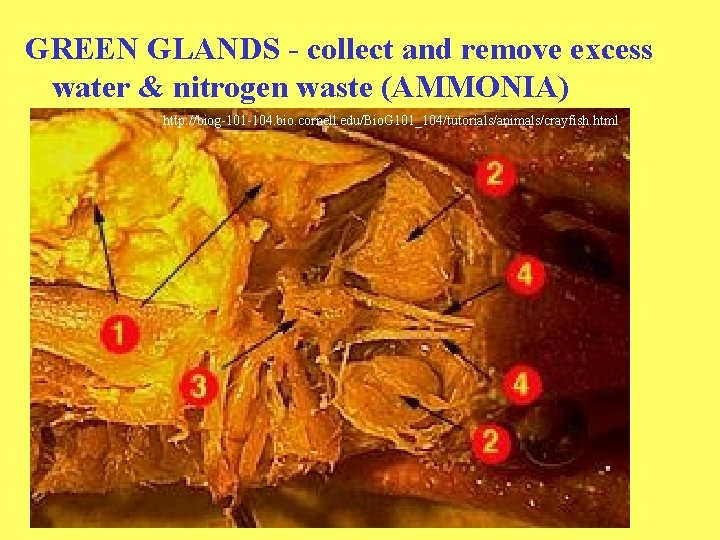
GREEN GLANDS - collect and remove excess water & nitrogen waste (AMMONIA) http: //biog-101 -104. bio. cornell. edu/Bio. G 101_104/tutorials/animals/crayfish. html
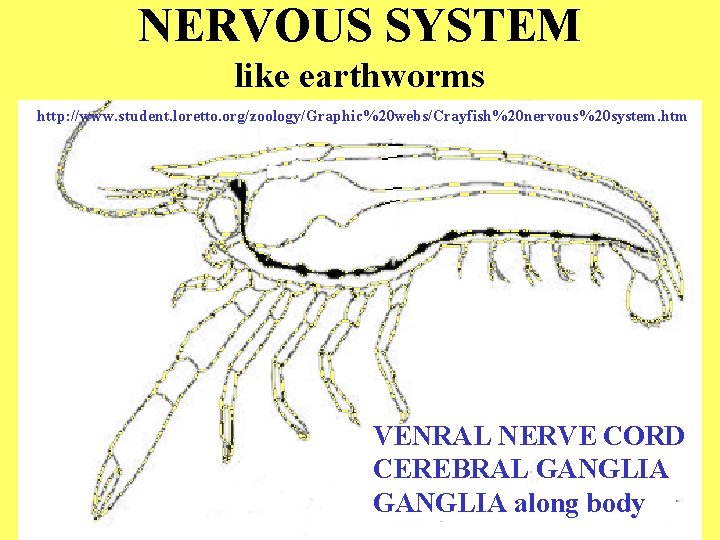
NERVOUS SYSTEM like earthworms http: //www. student. loretto. org/zoology/Graphic%20 webs/Crayfish%20 nervous%20 system. htm VENRAL NERVE CORD CEREBRAL GANGLIA along body
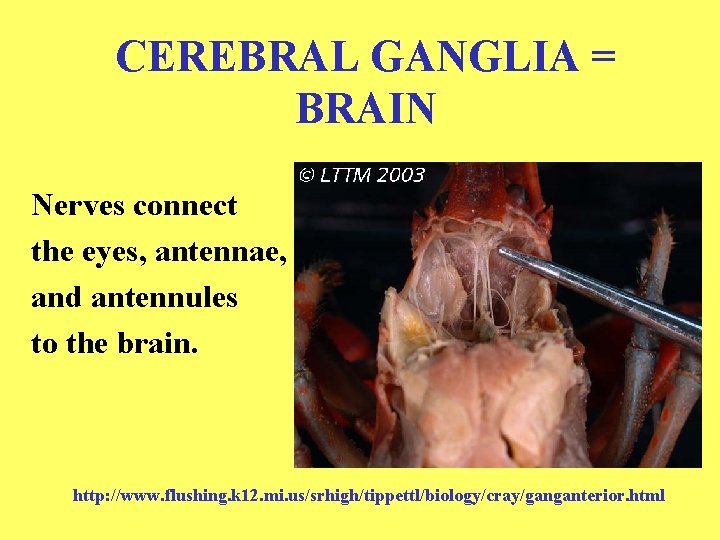
CEREBRAL GANGLIA = BRAIN Nerves connect the eyes, antennae, and antennules to the brain. http: //www. flushing. k 12. mi. us/srhigh/tippettl/biology/cray/ganganterior. html