
CRUSH SYNDROME ICD 10 T 79 5 Mohit







- Slides: 12
CRUSH SYNDROME ICD 10: T 79. 5 Mohit Chhabra Roll no. : 47
OBJECTIVES �Define and understand the pathophysiology of Crush Syndrome �Clinical diagnosis and relevant investigation �Management
A Case of Crush Syndrome….
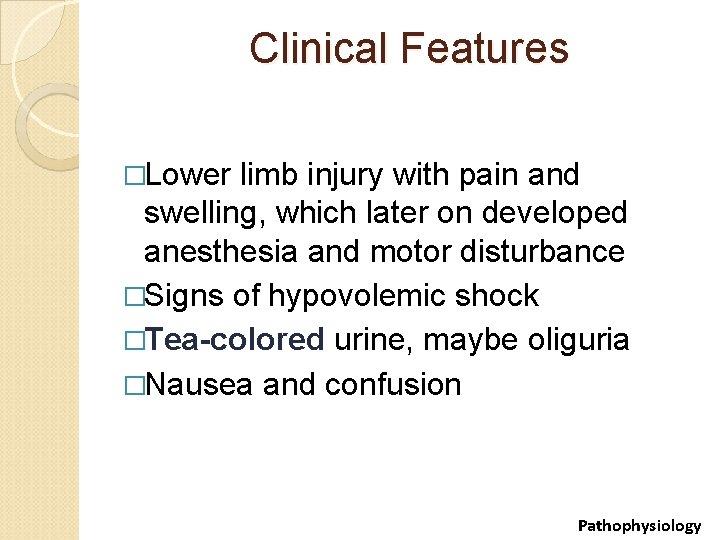
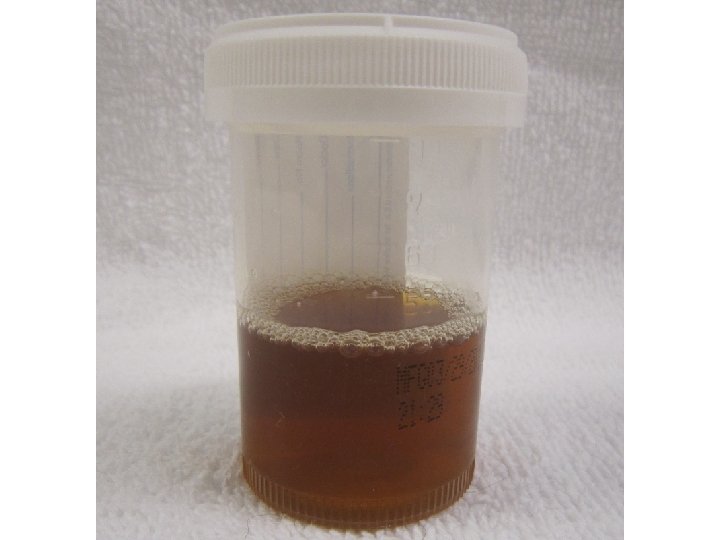
Clinical Features �Lower limb injury with pain and swelling, which later on developed anesthesia and motor disturbance �Signs of hypovolemic shock �Tea-colored urine, maybe oliguria �Nausea and confusion Pathophysiology
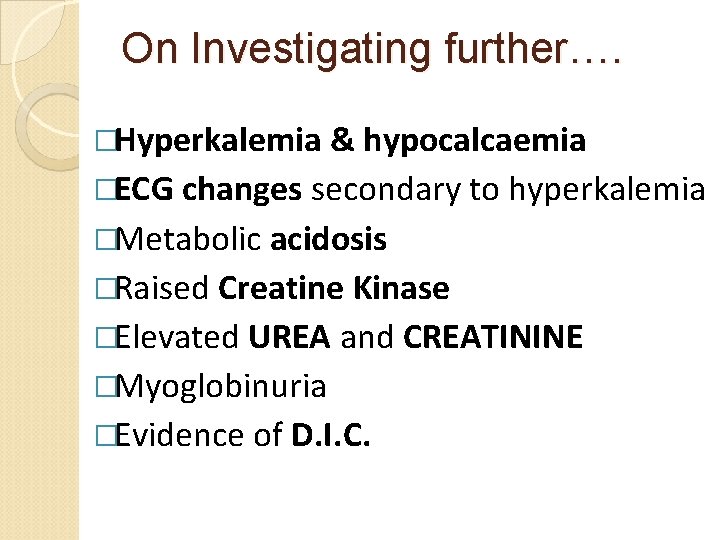
On Investigating further…. �Hyperkalemia & hypocalcaemia �ECG changes secondary to hyperkalemia �Metabolic acidosis �Raised Creatine Kinase �Elevated UREA and CREATININE �Myoglobinuria �Evidence of D. I. C.
Diagnosis: Crush Syndrome Definition: ◦ A severe, often fatal condition that follows a severe crushing injury, particularly involving large muscle masses, characterized by fluid and blood loss, shock, hematuria, and renal failure. Also known as compression syndrome. (Mc. Graw Hill Dictionary) ◦ In a nutshell: TRAUMATIC RHABDOMYOLYSIS due to crushing ◦ Also known as Bywaters Syndrome/ Reperfusion injury
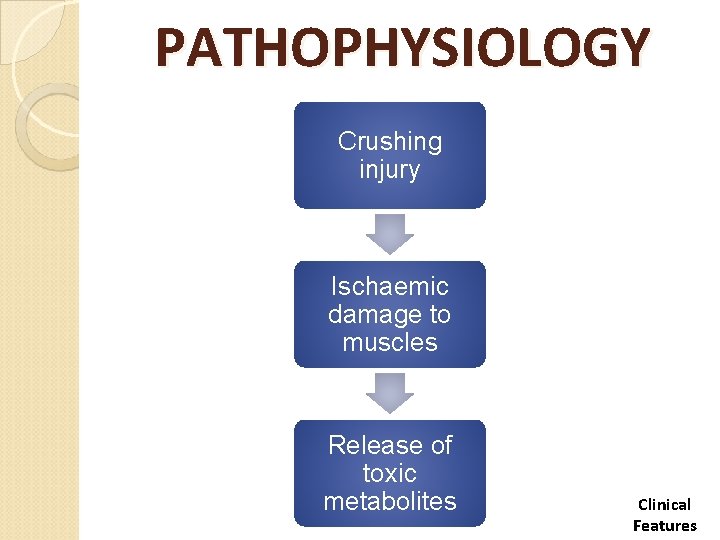
PATHOPHYSIOLOGY Crushing injury Ischaemic damage to muscles Release of toxic metabolites Clinical Features
KIDNEY IS IN DANGER AS SOON AS WE RELIEVE THE COMPRESSION Renal hypoperfusion + Renal Tubular Necrosis = Renal Failure
MANAGEMENT �Initial Management: 1. Follow the usual criteria of A-B-C as injuries are massive and high chances of poly-trauma 2. Early and rapid rehydration 3. Venous access preferably before the limb is decompressed 4. CVP and urinary catheterization for monitoring
�Further Management 1. Large amount of saline infusion with forced diuresis 2. Debridement of crushed tissue and a fasciotomy for compartment syndrome 3. Dialysis if renal failure sets in 4. Amputation as the last resort if massive limb injury is there and we have to prevent crush syndrome