
Crucial Conversations Chapter 6 Master My Stories Chapter


- Slides: 25
Crucial Conversations Chapter 6: Master My Stories Chapter 7: State My Path Brian Freeman, John Kinsella, Mike Phillips, Stephanie Salatin, Holli Thomas
Chapter 6: Master My Stories How to Stay in Dialogue When You’re Angry, Scared or Hurt
Gaining Control � Take charge of your emotions ◦ Emotions don’t settle upon you like a fog. ◦ Other’s don’t make you mad � Once you’ve created your emotions, you have only two options: ◦ You can act on them ◦ Be acted on by them
Think it through � “The best at dialogue…aren’t held hostage by their emotions, nor do they try to hide or suppress them. Instead, they act on their emotions. ” � “…they influence their emotions by thinking them out. ” � “As a result, they choose their emotions, and by doing so, make it possible to choose behaviors that create better results. ”
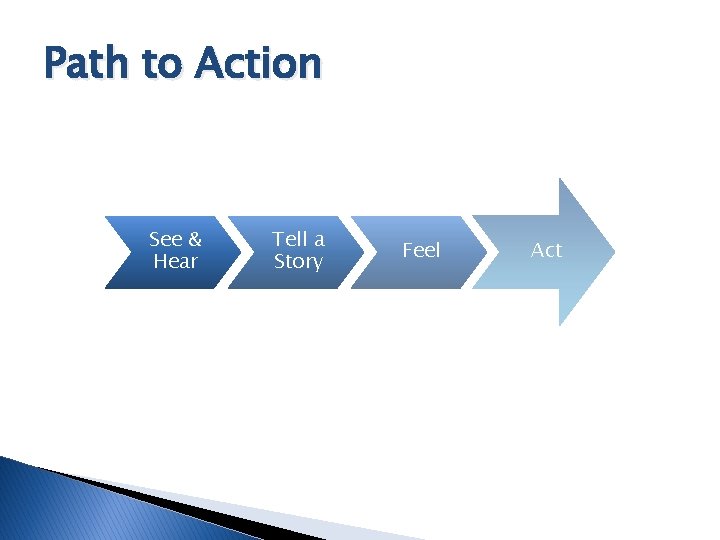
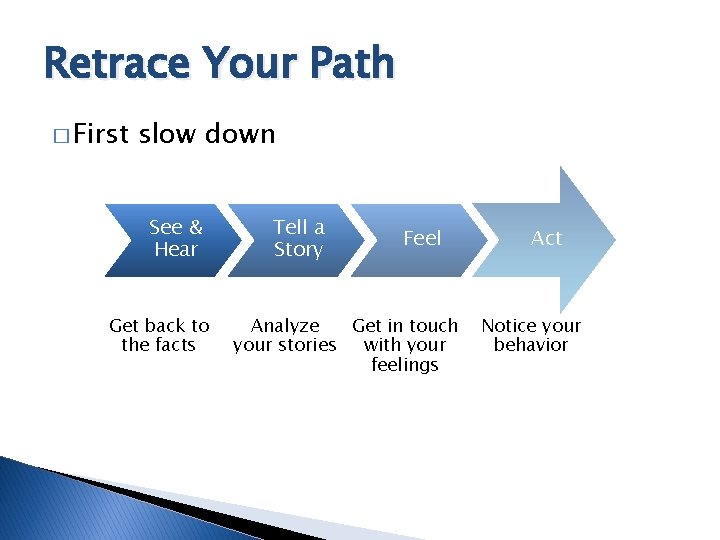
Path to Action See & Hear Tell a Story Feel Act
Stories Explain What’s Going On � Stories create feelings � Stories are our interpretations of the facts � Even if you don’t realize it, you are telling yourself a story � Stories explain: ◦ What’s going on ◦ How ◦ Why
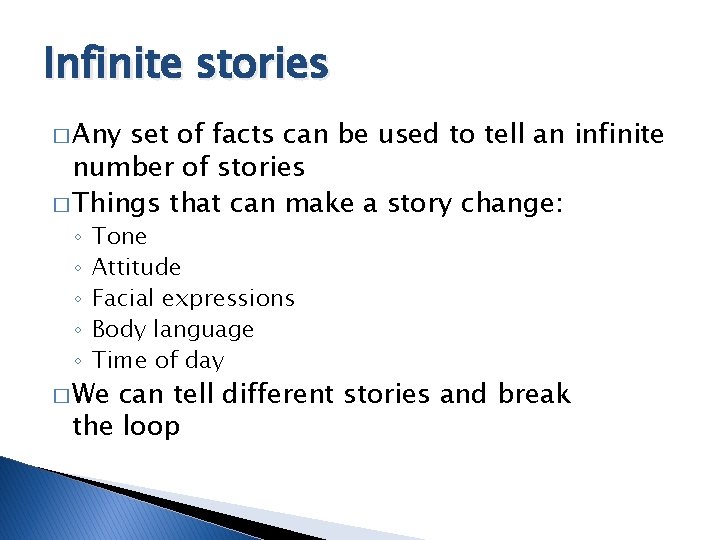
Infinite stories � Any set of facts can be used to tell an infinite number of stories � Things that can make a story change: ◦ ◦ ◦ Tone Attitude Facial expressions Body language Time of day � We can tell different stories and break the loop
Retrace Your Path � First slow down See & Hear Get back to the facts Tell a Story Feel Analyze Get in touch your stories with your feelings Act Notice your behavior
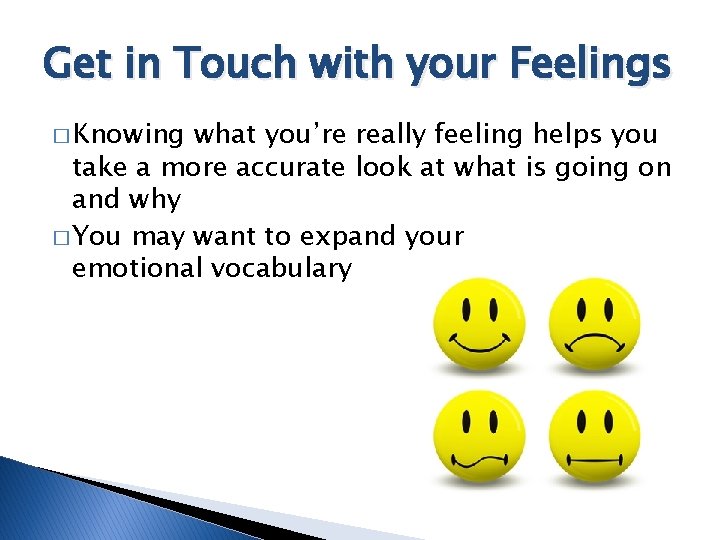
Get in Touch with your Feelings � Knowing what you’re really feeling helps you take a more accurate look at what is going on and why � You may want to expand your emotional vocabulary
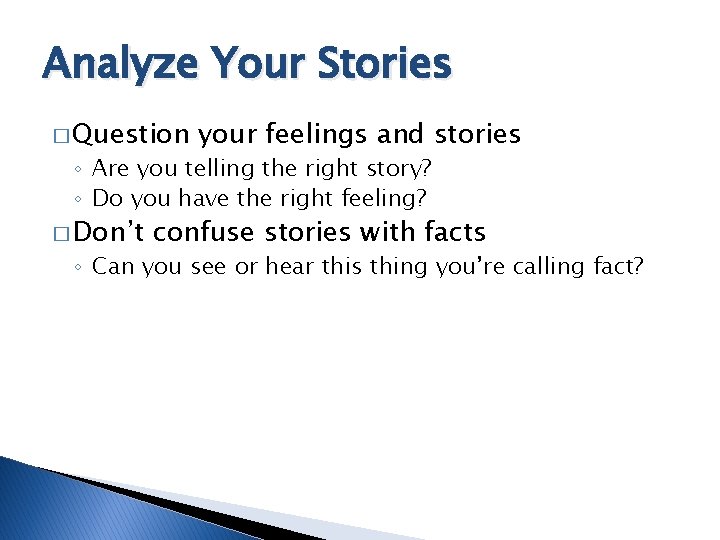
Analyze Your Stories � Question your feelings and stories ◦ Are you telling the right story? ◦ Do you have the right feeling? � Don’t confuse stories with facts ◦ Can you see or hear this thing you’re calling fact?
Victim Stories – “It’s not my fault” � Make us out to be innocent sufferers ◦ The other person is bad and wrong and we suffer as a result � Victim stories are told in a way that avoids facts that might have contributed to the problem � Exaggerate the innocence
Villain Stories – “It’s all your fault” � We turn normal, decent human beings into villains � Overemphasize the other person’s guilt � Watch for the double standard
Helpless Stories – “There’s nothing else I can do” � We make ourselves out to be powerless to do anything ◦ There are no healthy alternatives ◦ Explain why we can’t do anything to change our situation
Useful Story � Creates emotions that lead to healthy action – such as dialogue � Include crucial information about us, about others, and about our options � Turn victims into actors, villains into humans and the helpless into the able
Differences � https: //youtu. be/gdp 4 s. Pvi. V 74
Chapter 7: State My Path How to Speak Persuasively, Not Abrasively
Sharing Risky Meaning � Do not dump your ideas on someone or say nothing at all � Rather…speak your mind in a safe way that others can say and respond to as well
Maintain Safety � Confidence ◦ Say what needs to be said to the person that needs to hear it ◦ Does not mean arrogant or pigheaded ◦ Realize others have valuable input � Humility ◦ New information may change minds � Skill
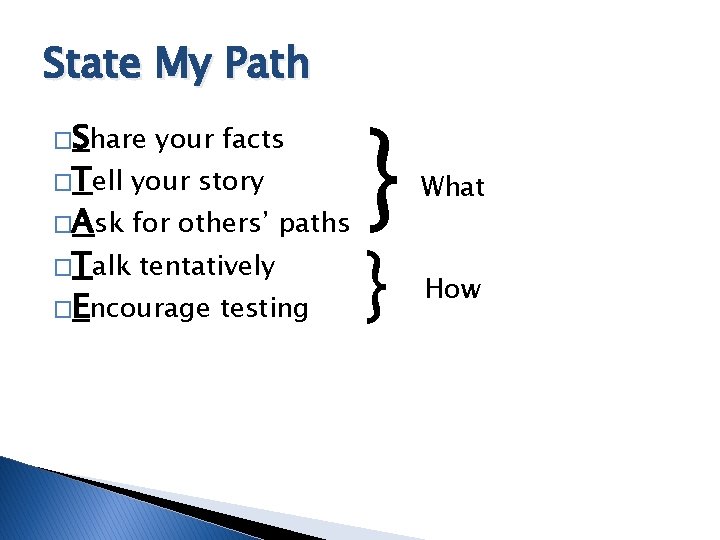
State My Path �Share �Tell �Ask �Talk your facts your story for others’ paths tentatively �Encourage testing } } What How
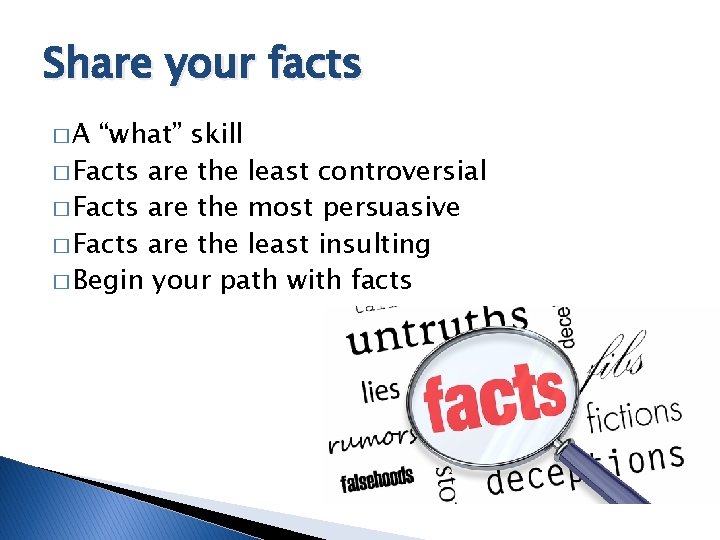
Share your facts �A “what” skill � Facts are the least controversial � Facts are the most persuasive � Facts are the least insulting � Begin your path with facts
Tell Your Story �A “what” skill � It takes confidence � Don’t pile it on � Look for safety problems ◦ People start becoming defensive or appear insulted ◦ Use contrasting words to bring it back to safety ◦ Do not apologize for your views
Ask for Others’ Path �A “what” skill � Once you’ve shared your facts and views, invite others to do the same � Encourage them to express facts, stories and feelings then listen
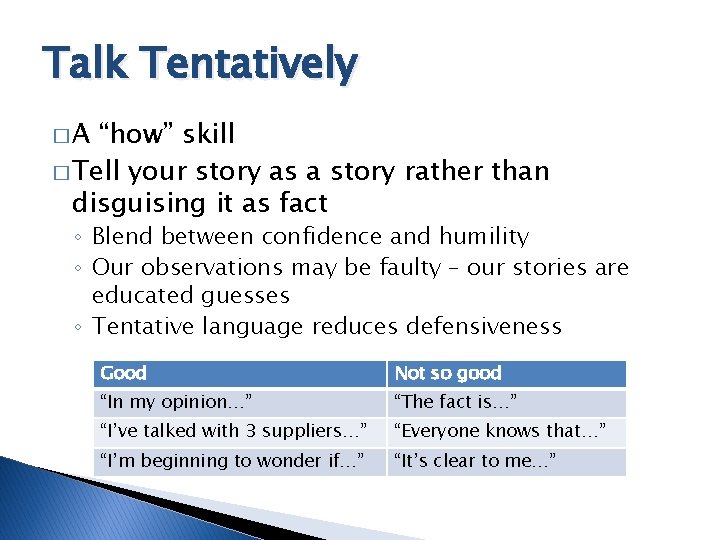
Talk Tentatively �A “how” skill � Tell your story as a story rather than disguising it as fact ◦ Blend between confidence and humility ◦ Our observations may be faulty – our stories are educated guesses ◦ Tentative language reduces defensiveness Good Not so good “In my opinion…” “The fact is…” “I’ve talked with 3 suppliers…” “Everyone knows that…” “I’m beginning to wonder if…” “It’s clear to me…”
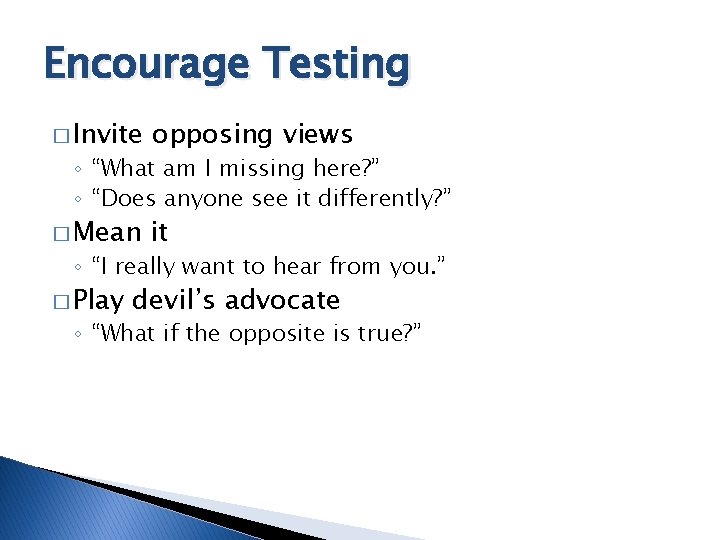
Encourage Testing � Invite opposing views � Mean it ◦ “What am I missing here? ” ◦ “Does anyone see it differently? ” ◦ “I really want to hear from you. ” � Play devil’s advocate ◦ “What if the opposite is true? ”
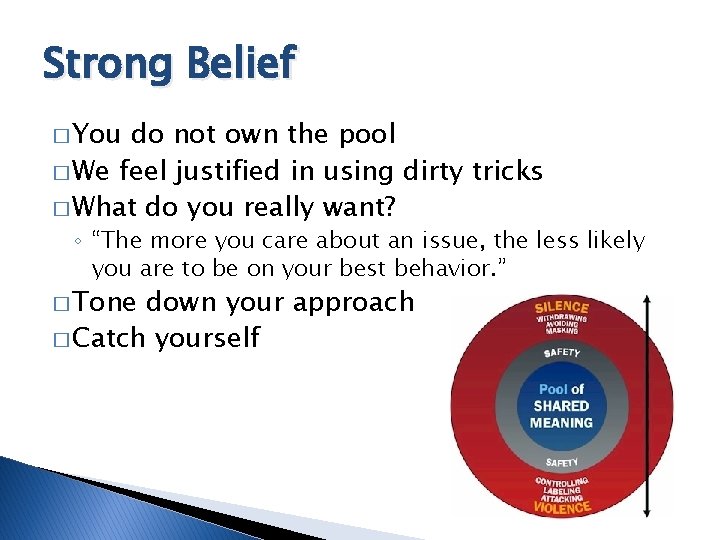
Strong Belief � You do not own the pool � We feel justified in using dirty tricks � What do you really want? ◦ “The more you care about an issue, the less likely you are to be on your best behavior. ” � Tone down your approach � Catch yourself