
CRT 2020 Transcatheter Carotid Body Denervation Cibiem FirstinMan
CRT 2020 Transcatheter Carotid Body Denervation (Cibiem): First-in-Man Results and Future Directions Felix Mahfoud Saarland University Hospital, Homburg, Germany
Potential Conflicts of Interest I have the following potential conflicts of interest to report: Research grants: Deutsche Forschungsgemeinschaft (DFG TRR 219) Deutsche Hochdruckliga Deutsche Gesellschaft für Kardiologie Saarländisches Ministerium für Wissenschaft und Forschung Medtronic, Recor Consultant/Lecture fee: Medtronic, Recor
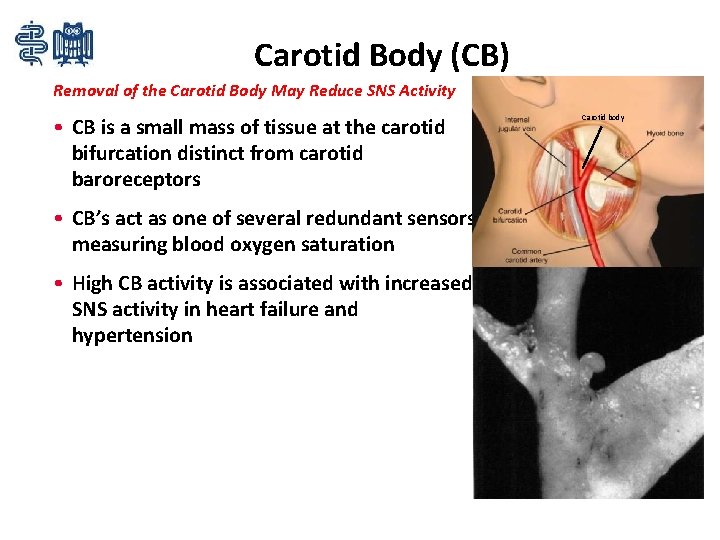
Carotid Body (CB) Removal of the Carotid Body May Reduce SNS Activity • CB is a small mass of tissue at the carotid bifurcation distinct from carotid baroreceptors • CB’s act as one of several redundant sensors measuring blood oxygen saturation • High CB activity is associated with increased SNS activity in heart failure and hypertension Carotid body
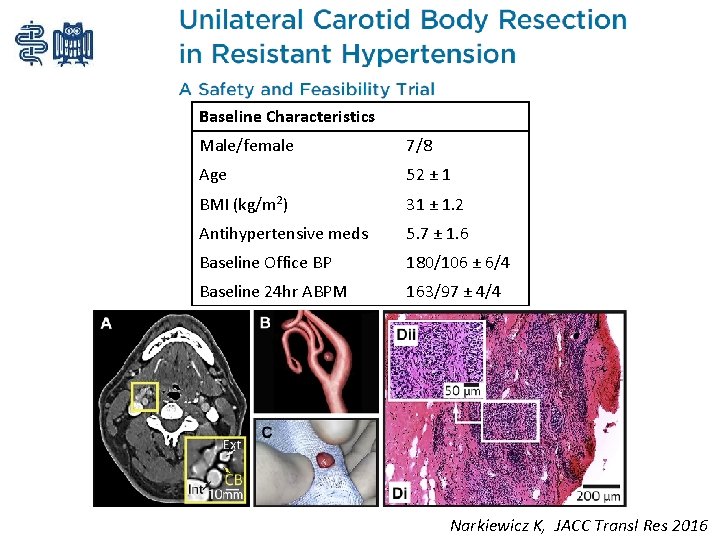
Baseline Characteristics Male/female 7/8 Age 52 ± 1 BMI (kg/m 2) 31 ± 1. 2 Antihypertensive meds 5. 7 ± 1. 6 Baseline Office BP 180/106 ± 6/4 Baseline 24 hr ABPM 163/97 ± 4/4 Narkiewicz K, JACC Transl Res 2016
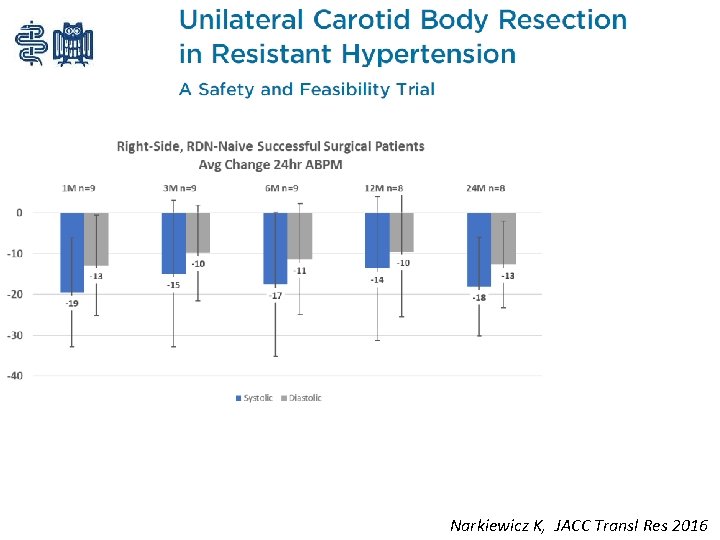
Narkiewicz K, JACC Transl Res 2016
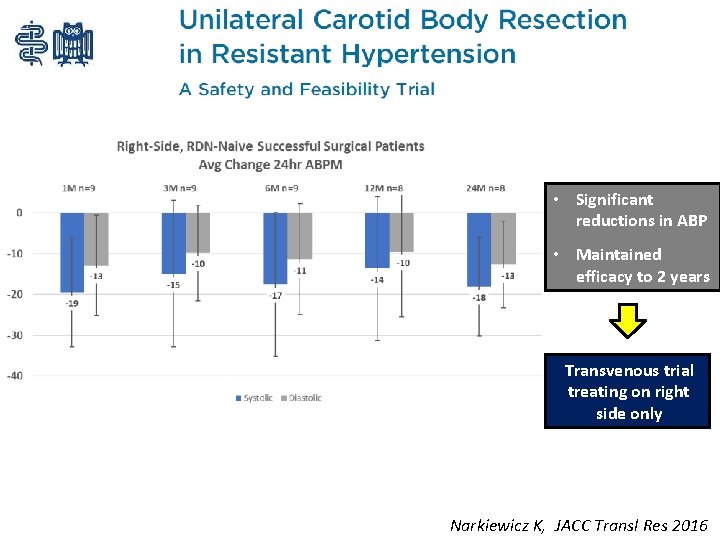
• Significant reductions in ABP • Maintained efficacy to 2 years Transvenous trial treating on right side only Narkiewicz K, JACC Transl Res 2016
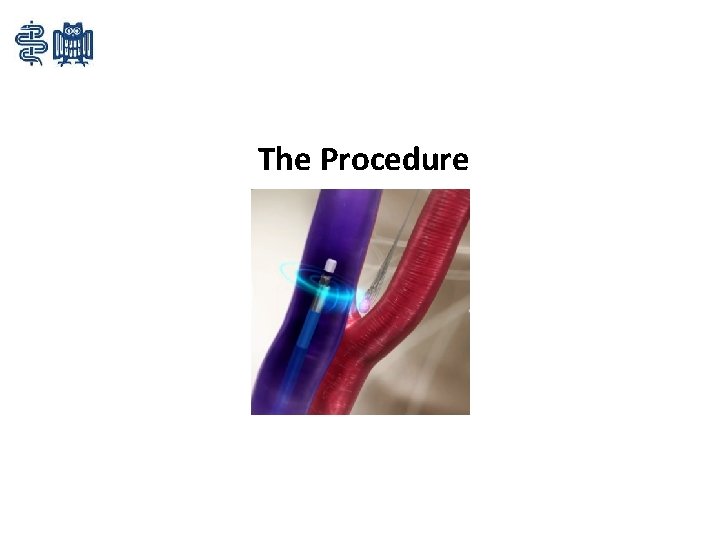
The Procedure
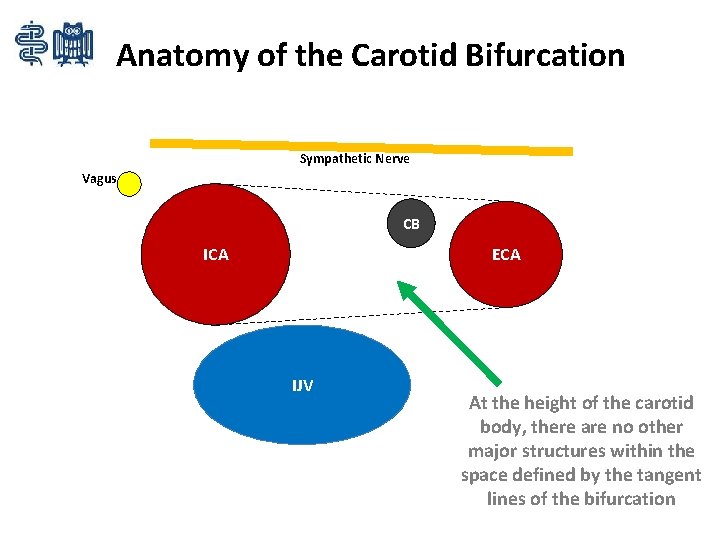
Anatomy of the Carotid Bifurcation Sympathetic Nerve Vagus CB ECA IJV At the height of the carotid body, there are no other major structures within the space defined by the tangent lines of the bifurcation
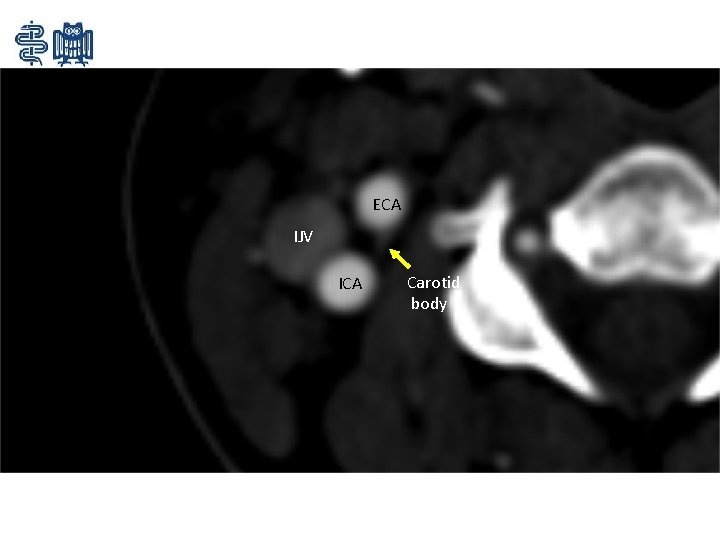
ECA IJV ICA Carotid body
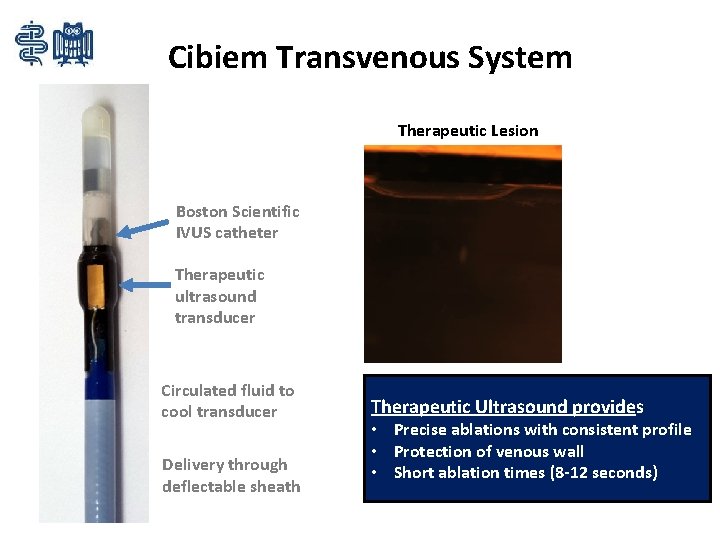
Cibiem Transvenous System Therapeutic Lesion Boston Scientific IVUS catheter Therapeutic ultrasound transducer Circulated fluid to cool transducer Delivery through deflectable sheath Therapeutic Ultrasound provides • Precise ablations with consistent profile • Protection of venous wall • Short ablation times (8 -12 seconds)
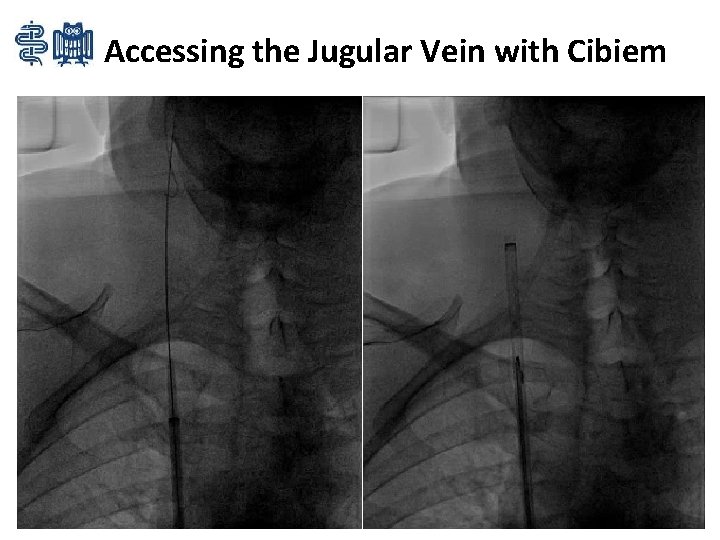
Accessing the Jugular Vein with Cibiem
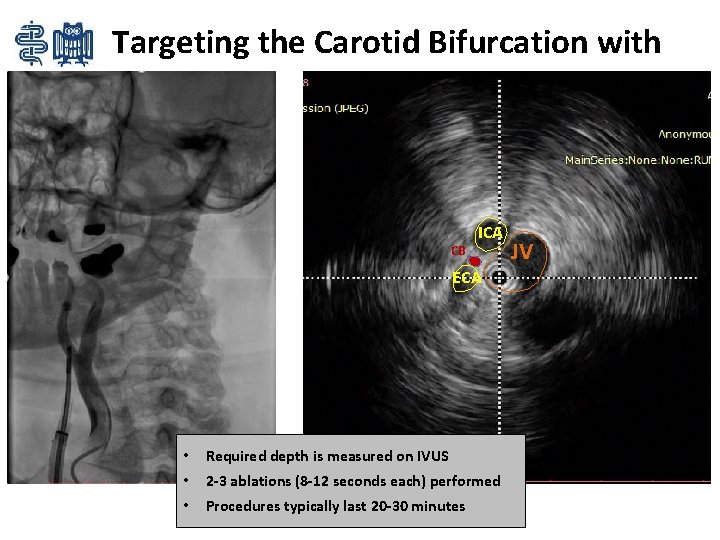
Targeting the Carotid Bifurcation with IVUS CB ICA ECA • Required depth is measured on IVUS • 2 -3 ablations (8 -12 seconds each) performed • Procedures typically last 20 -30 minutes JV
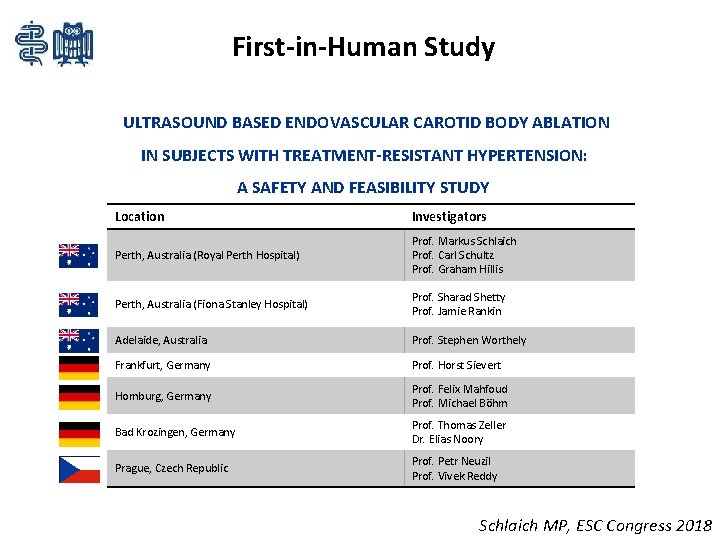
First-in-Human Study ULTRASOUND BASED ENDOVASCULAR CAROTID BODY ABLATION IN SUBJECTS WITH TREATMENT-RESISTANT HYPERTENSION: A SAFETY AND FEASIBILITY STUDY Location Investigators Perth, Australia (Royal Perth Hospital) Prof. Markus Schlaich Prof. Carl Schultz Prof. Graham Hillis Perth, Australia (Fiona Stanley Hospital) Prof. Sharad Shetty Prof. Jamie Rankin Adelaide, Australia Prof. Stephen Worthely Frankfurt, Germany Prof. Horst Sievert Homburg, Germany Prof. Felix Mahfoud Prof. Michael Böhm Bad Krozingen, Germany Prof. Thomas Zeller Dr. Elias Noory Prague, Czech Republic Prof. Petr Neuzil Prof. Vivek Reddy Schlaich MP, ESC Congress 2018
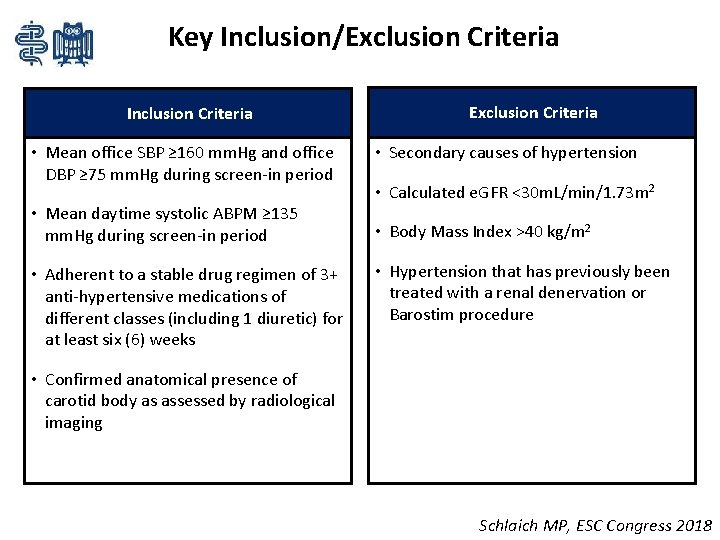
Key Inclusion/Exclusion Criteria Inclusion Criteria • Mean office SBP ≥ 160 mm. Hg and office DBP ≥ 75 mm. Hg during screen-in period • Mean daytime systolic ABPM ≥ 135 mm. Hg during screen-in period • Adherent to a stable drug regimen of 3+ anti-hypertensive medications of different classes (including 1 diuretic) for at least six (6) weeks Exclusion Criteria • Secondary causes of hypertension • Calculated e. GFR <30 m. L/min/1. 73 m 2 • Body Mass Index >40 kg/m 2 • Hypertension that has previously been treated with a renal denervation or Barostim procedure • Confirmed anatomical presence of carotid body as assessed by radiological imaging Schlaich MP, ESC Congress 2018
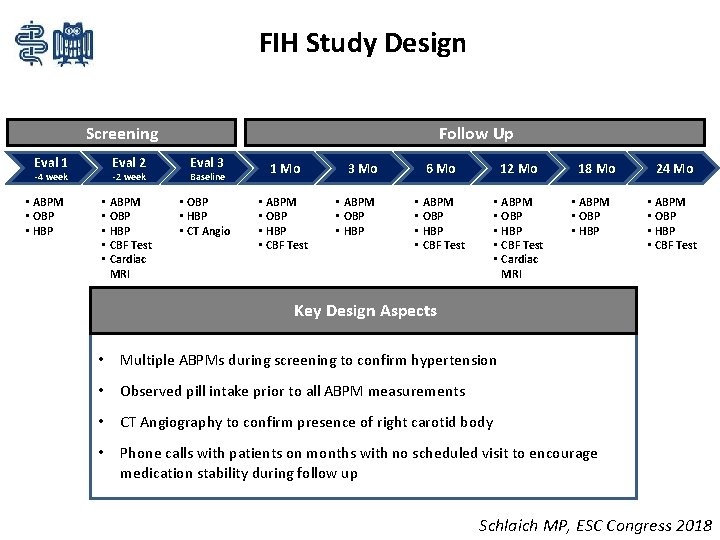
FIH Study Design Screening Eval 1 Eval 2 Eval 3 1 Mo • ABPM • OBP • HBP • CBF Test • Cardiac MRI • OBP • HBP • CT Angio • ABPM • OBP • HBP • CBF Test -4 week • ABPM • OBP • HBP Follow Up -2 week Baseline 3 Mo • ABPM • OBP • HBP 6 Mo 12 Mo • ABPM • OBP • HBP • CBF Test • Cardiac MRI 18 Mo • ABPM • OBP • HBP 24 Mo • ABPM • OBP • HBP • CBF Test Key Design Aspects • Multiple ABPMs during screening to confirm hypertension • Observed pill intake prior to all ABPM measurements • CT Angiography to confirm presence of right carotid body • Phone calls with patients on months with no scheduled visit to encourage medication stability during follow up Schlaich MP, ESC Congress 2018
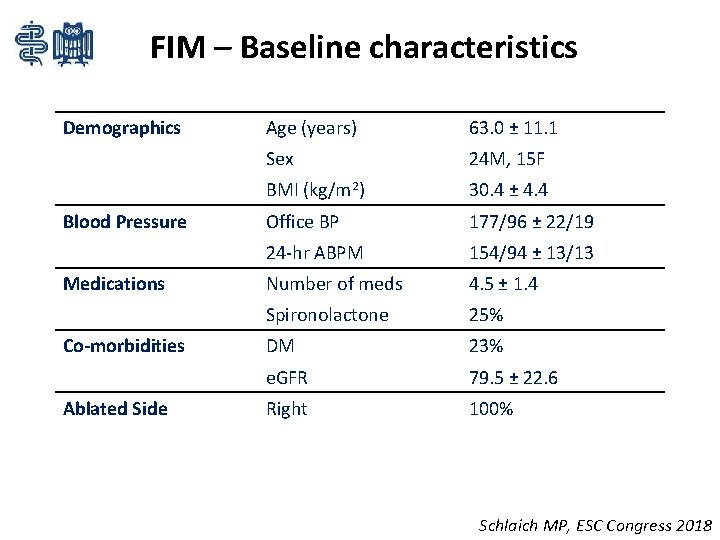
FIM – Baseline characteristics Demographics Blood Pressure Medications Co-morbidities Ablated Side Age (years) 63. 0 ± 11. 1 Sex 24 M, 15 F BMI (kg/m 2) 30. 4 ± 4. 4 Office BP 177/96 ± 22/19 24 -hr ABPM 154/94 ± 13/13 Number of meds 4. 5 ± 1. 4 Spironolactone 25% DM 23% e. GFR 79. 5 ± 22. 6 Right 100% Schlaich MP, ESC Congress 2018
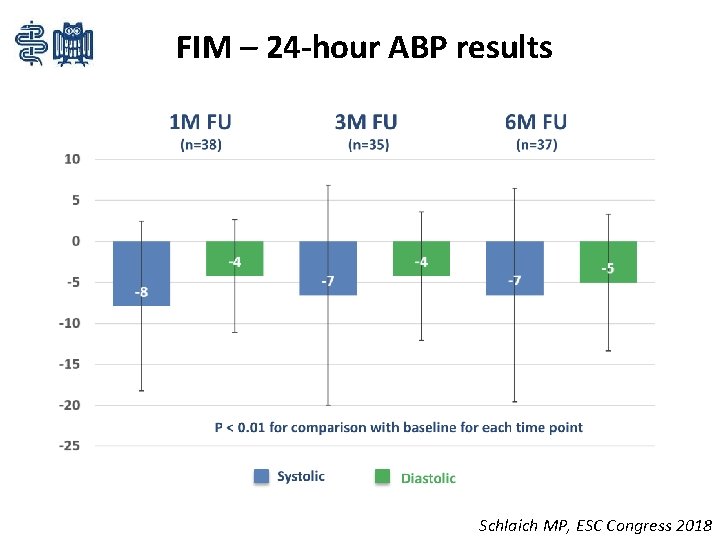
FIM – 24 -hour ABP results Schlaich MP, ESC Congress 2018
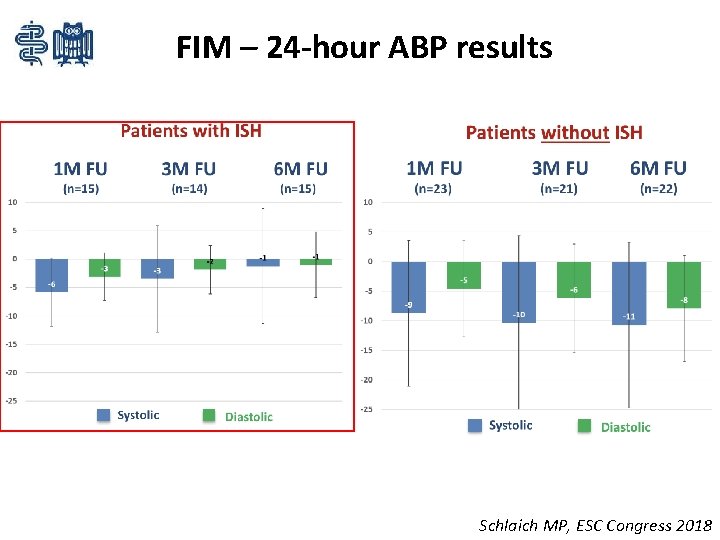
FIM – 24 -hour ABP results Schlaich MP, ESC Congress 2018
Summary • Unilateral carotid body ablation is a novel and promising therapy for patients with resistant hypertension • Proof of concept surgical resection results show dramatic ABPM reductions maintained to two years • A venous approach with IVUS guidance and therapeutic ultrasound offers a safe and effective treatment option in resistant hypertension • A companion diagnostic test is being developed to determine whether patients are likely to respond to a carotid body therapy
Thank you! Felix Mahfoud, MD FESC Internal Medicine III Cardiology, Angiology, Intensive Care Medicine Saarland University Hospital, Germany felix. mahfoud@uks. eu
- Slides: 20