
Crosshatching is basically two layers of hatching drawn
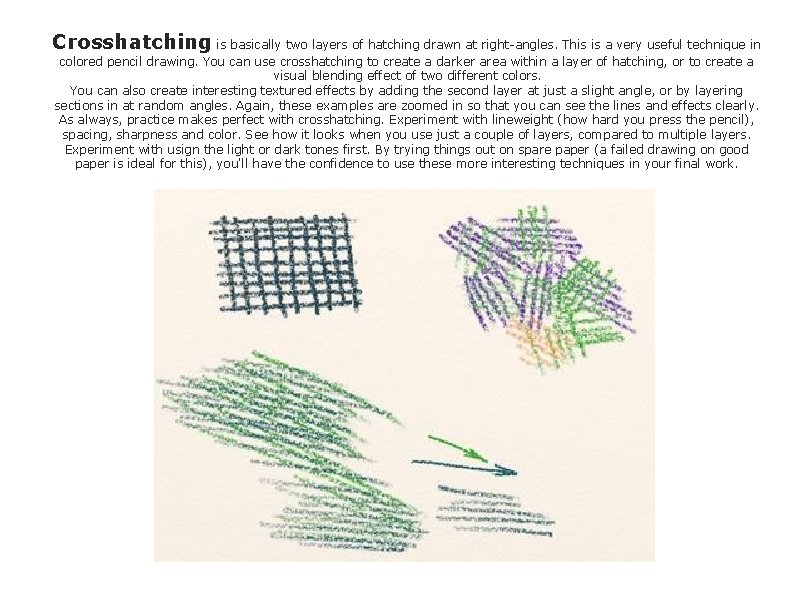
Crosshatching is basically two layers of hatching drawn at right-angles. This is a very useful technique in colored pencil drawing. You can use crosshatching to create a darker area within a layer of hatching, or to create a visual blending effect of two different colors. You can also create interesting textured effects by adding the second layer at just a slight angle, or by layering sections in at random angles. Again, these examples are zoomed in so that you can see the lines and effects clearly. As always, practice makes perfect with crosshatching. Experiment with lineweight (how hard you press the pencil), spacing, sharpness and color. See how it looks when you use just a couple of layers, compared to multiple layers. Experiment with usign the light or dark tones first. By trying things out on spare paper (a failed drawing on good paper is ideal for this), you'll have the confidence to use these more interesting techniques in your final work.

Scumbling in colored pencil means something rather different to the dry-brush painting technique. Colored pencil scumbling is a method of shading using tiny circles, sometimes called the 'Brillo pad' technique, due to the texture of that brand of steel-wire scourer. The texture created depends on the size and pressure used to draw the circles - you can create a very smooth finish or a rough and energetic surface. Scumbling can be used to layer a single color or with alternating different colors. You can also use a more 'concave' scumble technique to create textures. Using a sort of figure-eight or 'daisy' shaped scribble and spidery lines, rather than a round circle, creating random dark patches and a more organic looking surface.
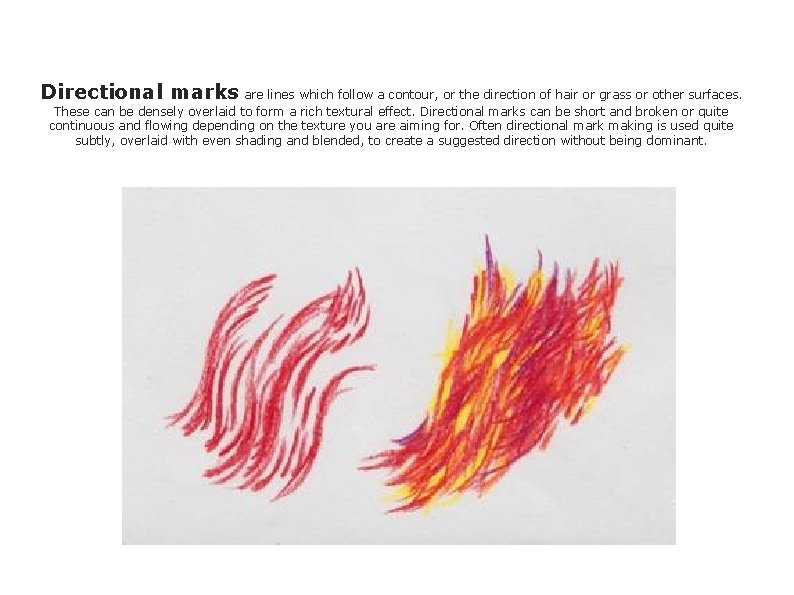
Directional marks are lines which follow a contour, or the direction of hair or grass or other surfaces. These can be densely overlaid to form a rich textural effect. Directional marks can be short and broken or quite continuous and flowing depending on the texture you are aiming for. Often directional mark making is used quite subtly, overlaid with even shading and blended, to create a suggested direction without being dominant.
- Slides: 3